Snowboard Boots
Vans Hi-Standard Pro: A Comfort-First Snowboard Boot Worth Trying On
How the Vans Hi-Standard Pro addresses the most common snowboard boot pain points, from pressure spots to heel lift, and who it suits best.
Introduction
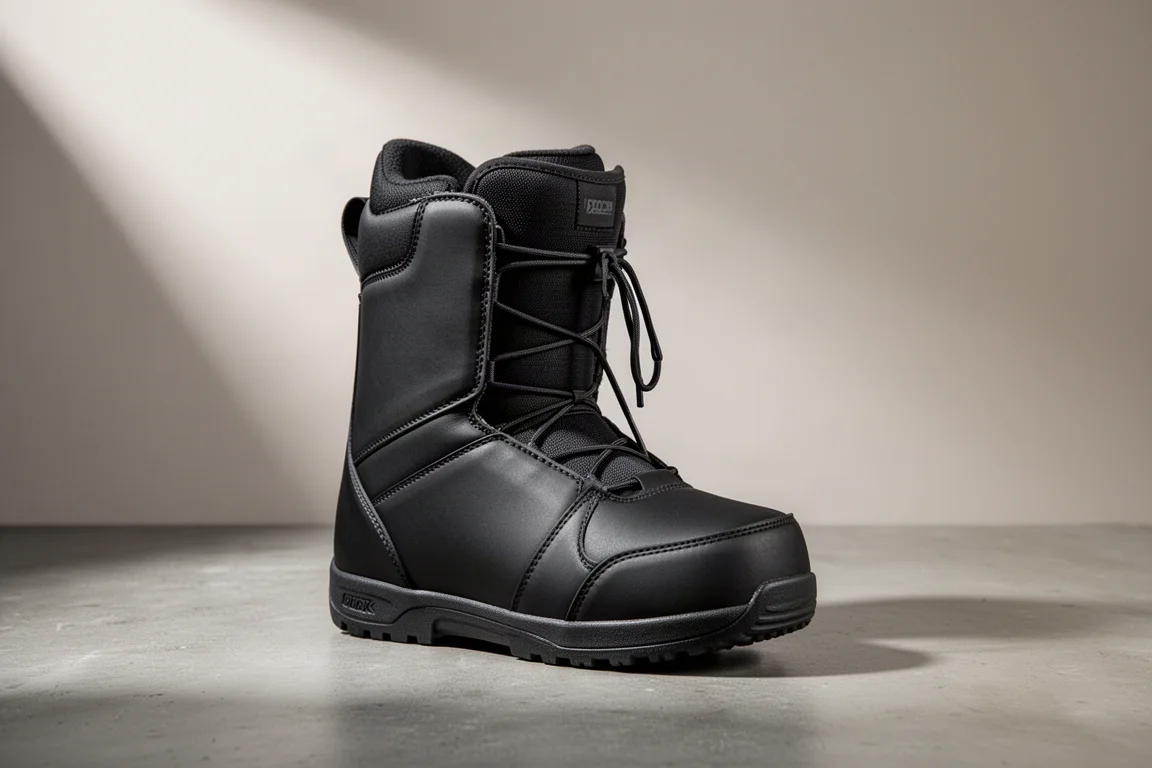
Boot pain is probably the most common complaint in snowboarding, and it stops a lot of people from enjoying their time on the mountain. Pressure points along the sides or back of the boot, aching arches from poor support, and toes cramped at the front are the recurring problems, and boots that feel slightly tight in the shop often never stretch out the way people hope. The Vans Hi-Standard Pro is worth a look because it keeps showing up in conversations with riders as one of the most comfortable boots they have ridden, and the design choices behind it line up well with what makes a boot pain-free.
Why Boot Sizing Matters
One of the worst sources of boot pain is buying too small. If your toes are not just touching the end of the liner but pressing against it, that squeeze often does not disappear with break-in. Plenty of riders have bought boots that hurt for weeks or months and eventually had to sell or give them away. A useful starting approach is to try your normal shoe size first, then a half size down, then a full size down, and compare how each feels. In the Hi-Standard Pro, a good fit means your toes touch the end of the liner without being squished, and your heel stays locked in place when you rock back and forth. If the heel lifts, the boots are likely too big.
What Makes the Hi-Standard Pro Comfortable
The outer shell is a mid-flex construction. That matters for comfort because a shell that is too stiff and restrictive locks the muscles in your foot in place, which can lead to real foot and ankle pain. A mid-flex boot lets your foot move a little inside, and the shell is finished cleanly on the inside so there are no sharp or unfinished edges creating pressure points. The inner liner is a big part of the story too. It features an X-cage design that keeps your heel locked into the back of the boot while extra foam padding sits around the ankle bone. The liner is decently thick and slightly rigid, so it cushions your foot from the hard shell and contributes some structure to the boot.
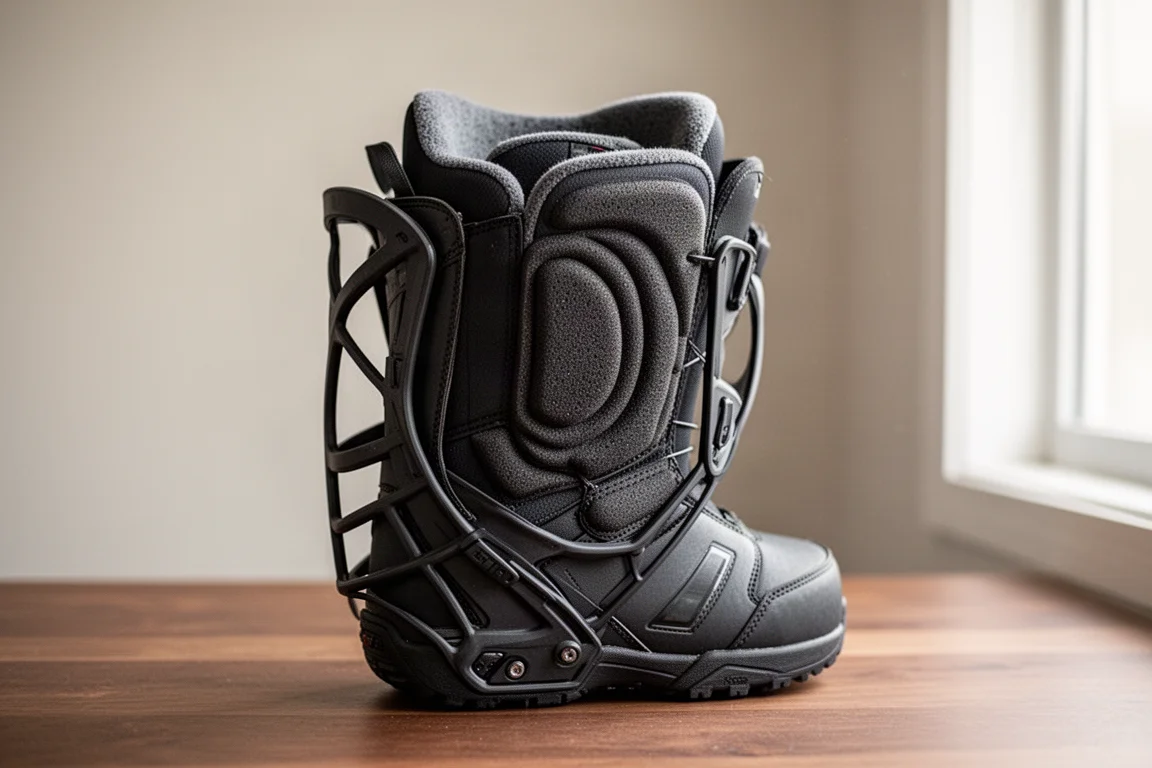
Inside the shell, the rivets where the lacing system anchors are the kind of hardware that can cause pain in some boots, but with a well-padded liner they were never felt during riding. The footbed provides arch support and extra cushioning, and it is easy to swap out. If you have a high arch, an aftermarket footbed from a drugstore for around $30, or a custom footbed up to $300, are both options. The stock footbed has been comfortable as is.
Lacing and Fit
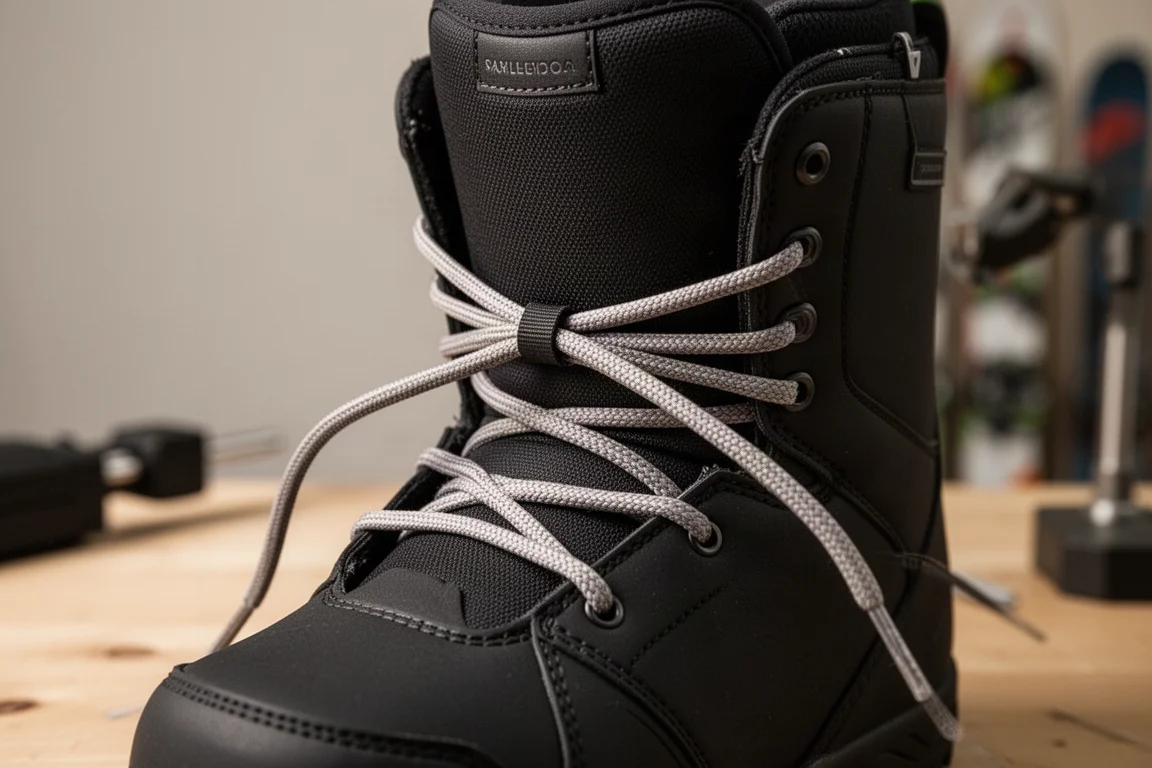
The Hi-Standard Pro uses traditional laces with a power strap at the top. Laces are a deliberate comfort choice: the soft lace feels more forgiving when done up tight compared with metal or stiff rope-style systems used in some other boots. The trade-off is about a minute of extra time doing them up, which many riders find worth it. Tightness near the top of the boot, around the shin, is especially important because that is where a lot of your movement transfers into the snowboard.
The Sole
The sole is another underrated comfort factor. A slightly thinner sole lets you feel what is happening with your snowboard, while still providing cushioning for landings and absorbing vibration. A very hard, rigid sole transfers every vibration straight up through your foot, so the balance between board feel and shock absorption is worth checking when you try boots on.
How to Try Boots On Without Regret
Bring your own snowboard socks to the shop, or use the ones stores typically provide. Start with the inner liner: slide your foot in straight, tighten the inner laces while rocking your foot into place, then lock the liner and centre the tongue. When lacing the outer boot the first time, go as tight as you can, rock your knee forward, and make sure your heel settles at the back. Then spend real time in them, at least 20 minutes, walking around and bending into a snowboard stance. Ideally there should be no pain in the shop, because pain there usually becomes pain on the mountain. If you feel pressure across the top of your foot, the laces may simply be too tight; loosen that section while keeping the upper part snug.
Buying Advice
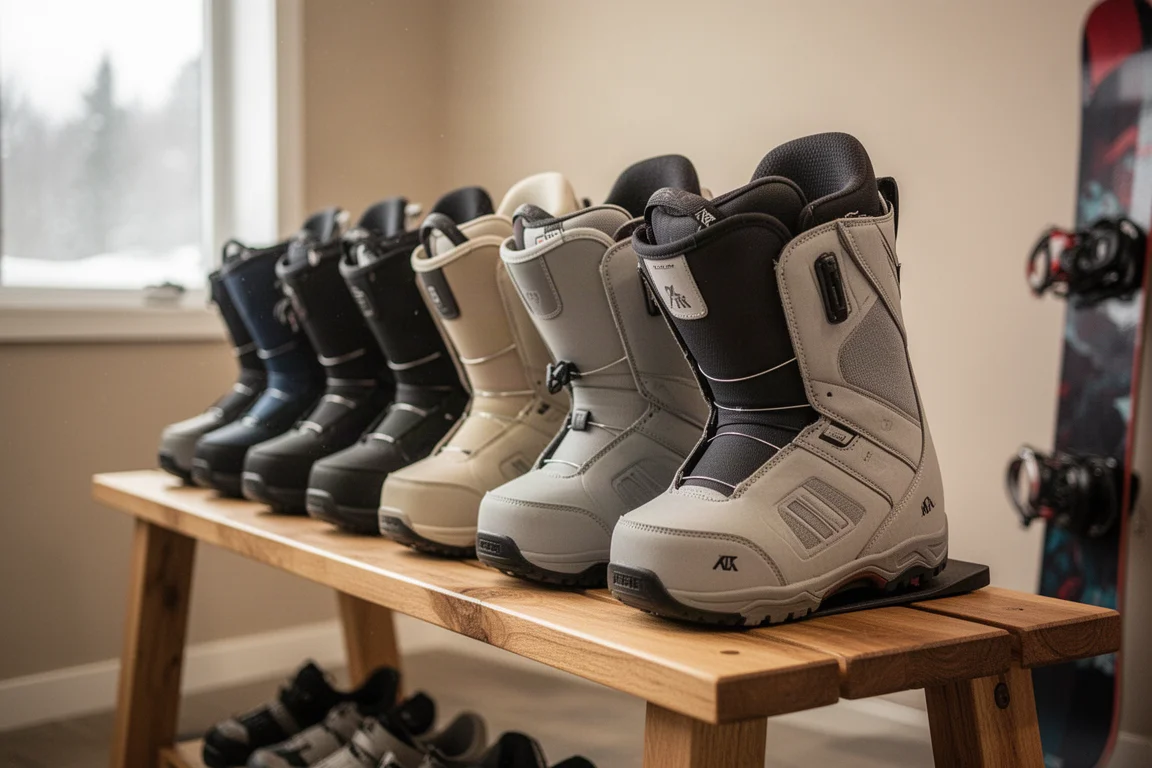
Do not let a pushy salesperson talk you into a pair of boots. Sales staff often have good intentions, but you know your feet better than anyone, and if something hurts in the store, trust that feeling. Talking to friends about which boots they love is one of the best ways to narrow your options; that is how the Hi-Standard Pro ended up on the shortlist here, with many riders calling it the most comfortable boot they have ever ridden. New pairs of these boots have been worn all day straight out of the box, with feet still feeling fine by the end of the day, whether that means errands, dinner, or a full day of riding.

Conclusion
The Vans Hi-Standard Pro stands out for comfort-focused details: a mid-flex shell that lets your foot move, a padded X-cage liner that locks the heel in place, soft traditional laces, and a balanced sole for board feel and cushioning. Combine that with careful sizing, patient in-store testing, and trusting your own feet over anyone else’s opinion, and you have a strong chance of finding a boot you can ride pain-free all season.
Product link
View more details for Vans Hi-Standard Pro
This product is mentioned in the review. Check the specifications, options, and compatibility before buying.
View more details for Vans Hi-Standard ProFurther reading
Related Reviews

Snowboard Boots
32 Team Two Double Boa Review: 32's Highest-End Women's Snowboard Boot
A closer look at 32's top-tier women's snowboard boot, from the 3D molded toe box and double Boa lacing to the Performance Fit liner and heat-reflective footbed.

Snowboard Boots
Bataleon Acid BOA Snowboard Boot Review: A Serious First Entry from a Board Brand
Bataleon's first snowboard boot, designed by a former Burton boot designer, brings a stiff flex, dual BOA closure, and a heel hold system worth a closer look.

Snowboard Boots
Battalion Acid Boot Review: A Stiff, Aggressive Boot Built to Last
The Battalion Acid Boot is the brand's highest-end offering, built with seamless construction, TPU reinforcement, dual BOA lacing, and a heat-moldable liner. Here is what to know before buying.