Backpacking Tents
Vango Tryfan 200 Review: A Four-Pole Two-Person Backpacking Tent
A close look at the Vango Tryfan 200, a four-pole two-person backpacking tent with a roomy interior, high waterproofing ratings, and a packed weight to plan around.
Introduction
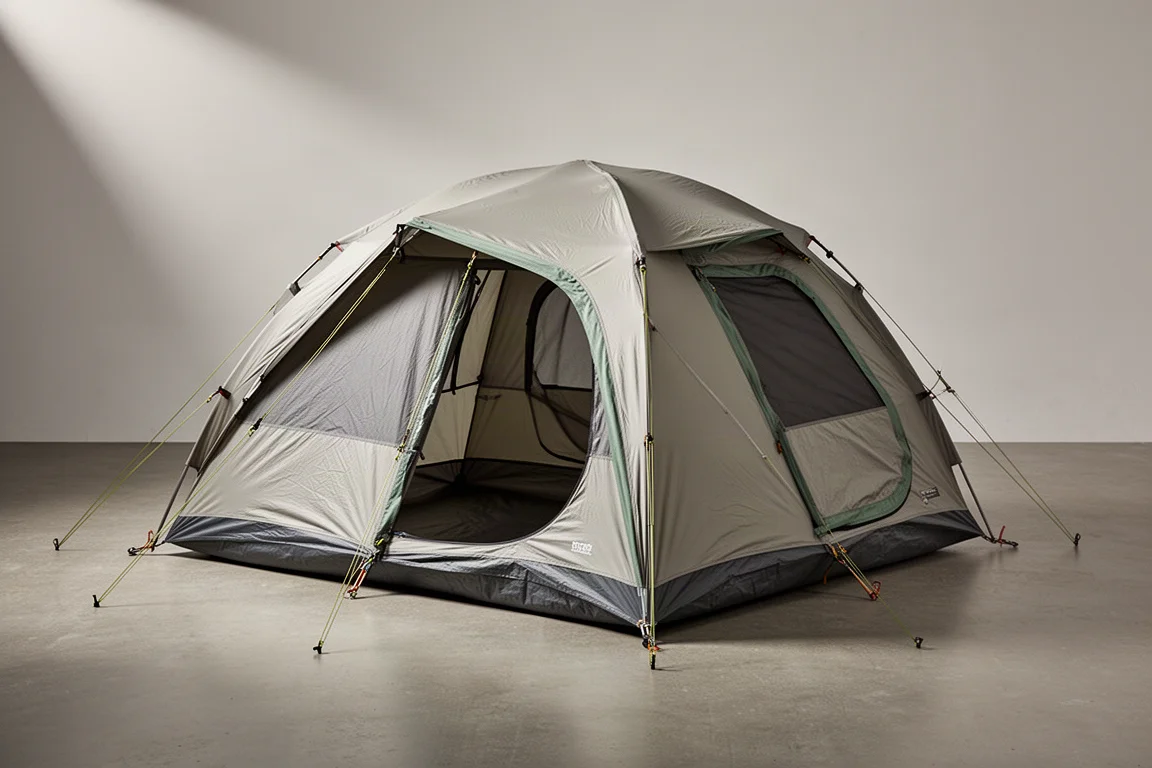
The Vango Tryfan 200 is a two-person backpacking tent that takes a different route from the usual lightweight formula. Instead of trimming poles and fabric to save grams, it relies on a four-pole frame and heavier 70D nylon throughout. The result is a tent that weighs 3.6 kg all in and packs down to 50 cm by 20 cm by 20 cm, yet stands noticeably more rigidly than many shelters in the same class.
Both the inner and the fly are made from 70D nylon, and the waterproofing figures are high for a backpacking tent: a 6,000 mm hydrostatic head on the groundsheet and 3,000 mm on the fly. At a full retail price of around £210, it is aimed at campers who would rather carry a little more and sleep in something that feels solid.
Who the Vango Tryfan 200 Is For
This is a genuine two-person tent rather than a solo shelter with room for a guest. It suits pairs who split the load, with one person carrying the tent and the other covering the rest of the shared kit.
It also makes sense for campers who pitch from a vehicle base or walk shorter distances and want a comfortable, weather-resistant space at the end of the day. The trade-off is straightforward: at 3.6 kg, it is a lot of tent for one person to carry alone on a long backpacking route.
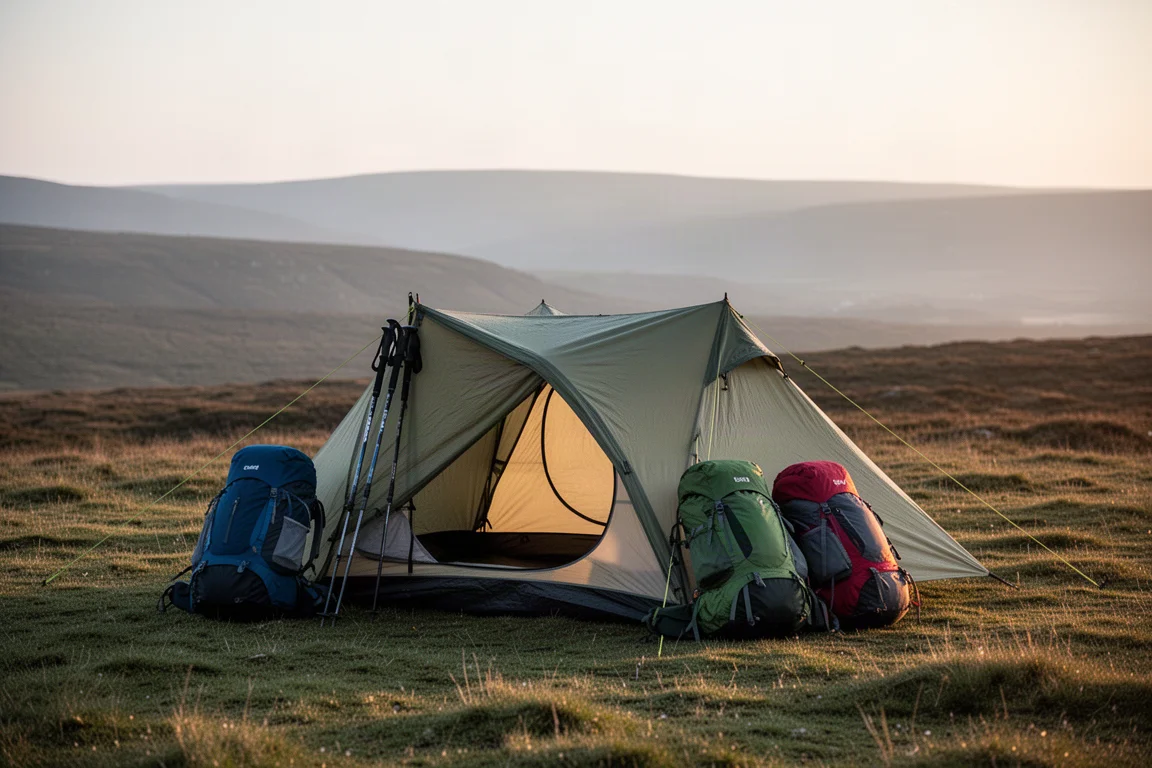
The interior dimensions reinforce that positioning. With 130 cm of internal width and 230 cm of internal length, there is enough room for two full-length sleeping pads with space left between them.
Weather Protection and Structure
Four poles do most of the work here. Two are blue and two are bronze, and the pole sleeves are colour coded to match, so threading order is easy to follow even in poor light. The fly attaches with four clips, and there is a guy point at each corner.
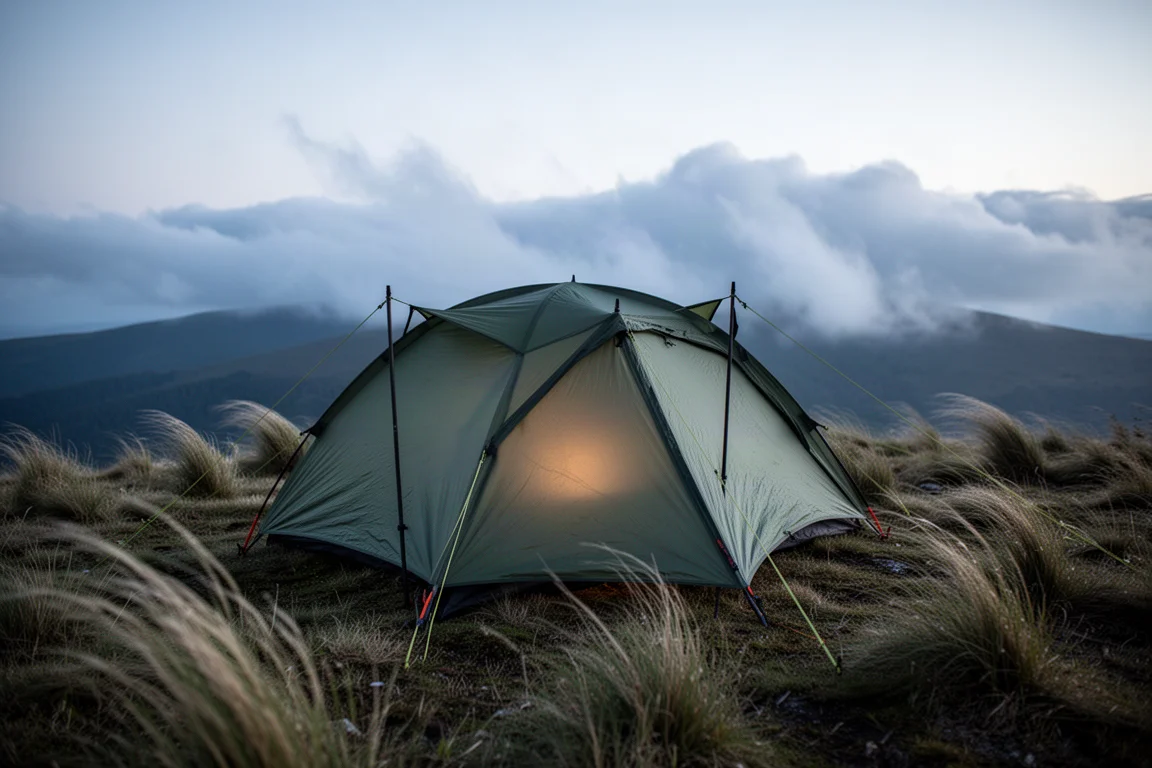
The structure is the standout. Pitched without guylines, the tent barely moves, and with the corners guyed out properly it becomes one of the more stable designs you can carry. That rigidity comes from the pole count and the fabric weight working together.
Ventilation is handled at both ends. The end panels open to reveal mesh, can be opened fully for airflow, and can be closed down to leave only mosquito mesh when you want protection without losing the breeze. There are also vents higher up on the tent body.
Living Space and Interior Comfort
Head height is quoted at 115 cm, and it holds across the width rather than peaking in the middle. For reference, someone around 172 cm tall has a clear margin above their head, and campers up to roughly six foot should still be able to sit up and move around without ducking.
The shape matters as much as the numbers. The walls are unusually straight, particularly along the sides, so the usable floor area feels considerably larger than the measurements alone suggest. Two people can lie side by side with their arms out and still have space left over.
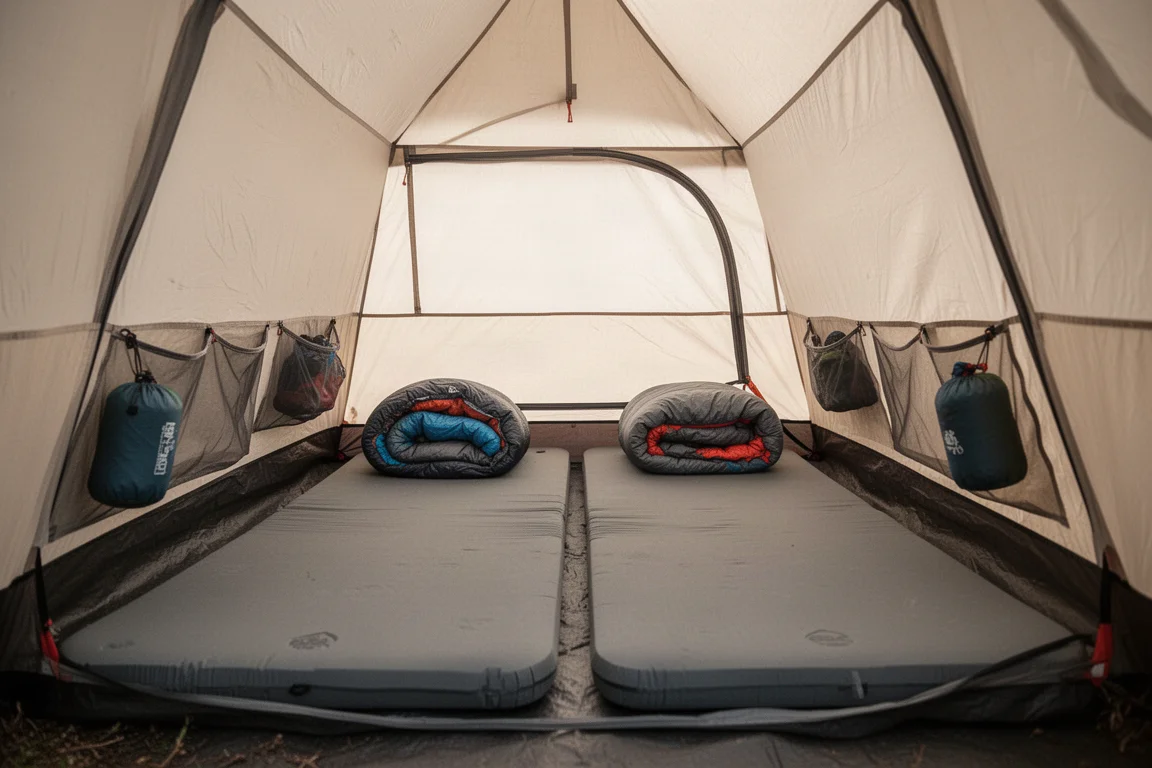
Storage is generous. There are two pockets on each side of the inner, plus loops for a lantern or a small washing line, a pocket at the door, and a stash pocket inside the inner door. Two vents, one at each end, keep air moving through the sleeping area.
Doors, Ventilation, and Storage
The Tryfan 200 has two doors and two vestibules, and the two doors work differently on purpose.
One door rolls up only as far as the middle. That partial opening is one of the tent’s best ideas: with wind coming from one side, you can leave that door closed and open the other, giving yourself a sheltered spot for cooking or sitting without exposing the whole interior. The other door is a more conventional full roll-back design. Both use toggles with elastic loops, and trekking poles can be used at the doors for extra support or to hold an opening.
Layering is another practical detail. The inner panels combine solid fabric, mesh, and mosquito mesh, so you can tune the balance between privacy, warmth, and airflow to suit the conditions. Between the door arrangement and the end vents, this is a tent that handles both a warm, still night and a damp, breezy one without much compromise.
Pitching and Packing
This is an inner-first design. The groundsheet and inner go down first, then the poles thread through colour-coded sleeves and clip into place, and the fly goes over the top with four clips.
Despite the inner-first layout, pitching is quick. In wet weather that matters, because the inner is only exposed for the short time it takes to get the poles in and the fly on.
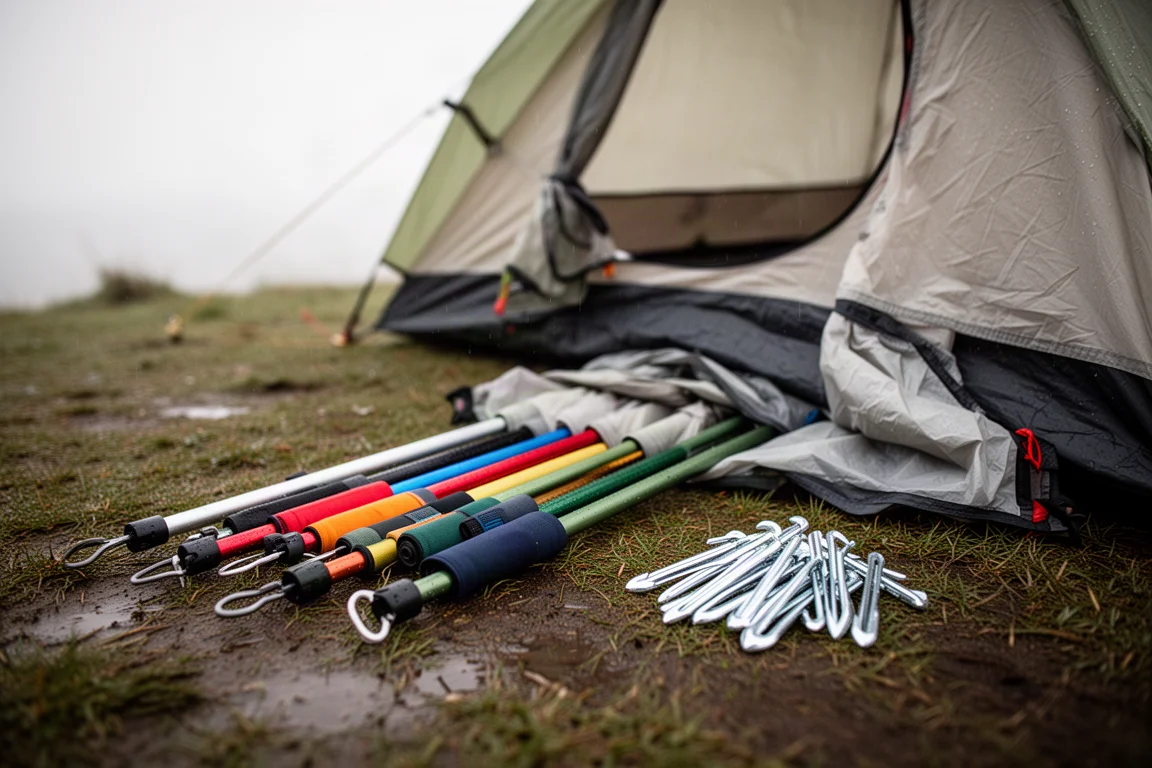
The tent ships with an oversized bag that makes packing away easier than a tight stuff sack would, along with lightweight alloy pegs, a repair kit containing a square of each fabric used, and printed instructions.
Things to Consider Before Buying
Weight is the main one. At 3.6 kg all in, this is a heavy tent by backpacking standards, and it takes up a fair amount of room in a pack. If you are a solo hiker who likes the extra space of a two-person tent, this is probably not the model to choose.
For two people, the maths changes. Split between two packs, the load is manageable, and what you get in return is a stable, roomy shelter that can handle exposed pitches.
It is also worth thinking about how you camp. The Tryfan 200 works just as well for ordinary field camping from a car as it does on a backpacking trip, so it can cover more than one role.
Buying Advice
At a full retail price of around £210, the Tryfan 200 sits at a reasonable point for a tent of this construction. The four-pole frame, the 70D fabrics, and the 6,000 mm groundsheet are the kind of specification usually associated with more expensive shelters, and pricing does come down from time to time, so it is worth checking the current figure before you buy.
If low weight is your priority, look elsewhere. If your priority is a two-person tent that stays planted in wind, offers real living space, and does not need to be treated gently, this one earns its place.
Conclusion
The Vango Tryfan 200 is a big, stable two-person backpacking tent built around four poles and substantial fabrics. Its strengths are clear: a genuinely roomy interior with straight walls, strong waterproofing ratings, clever door design, and plenty of storage and ventilation. Its compromise is equally clear: 3.6 kg and a bulky pack size, which makes it a tent to share rather than to carry alone. For pairs who value stability and comfort over minimum weight, it is a sensible and well-equipped choice.
Product link
View more details for Vango Tryfan 200
This product is mentioned in the review. Check the specifications, options, and compatibility before buying.
View more details for Vango Tryfan 200Further reading
Related Reviews
Backpacking Tents
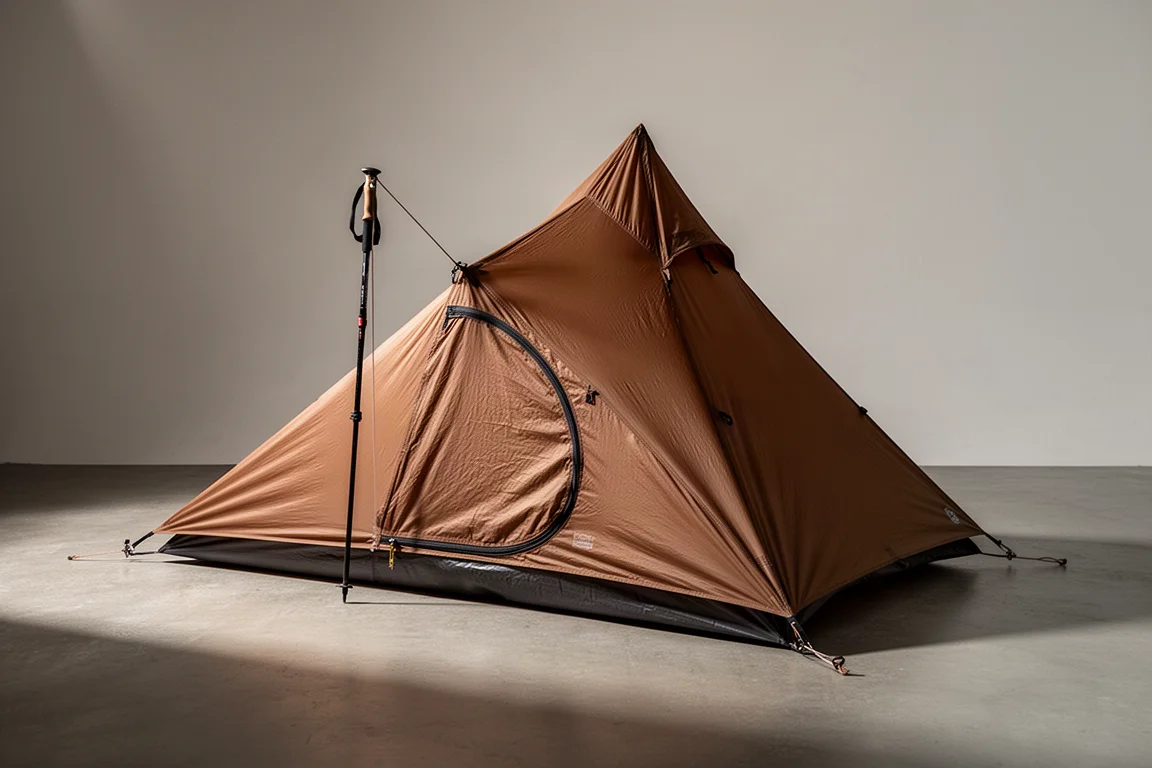
3F UL Lanchan Pro 1 Review: A 1 lb 8 oz Single-Wall Trekking Pole Tent
A practical look at the 3F UL Lanchan Pro 1, a single-wall trekking pole shelter with a 1 lb 8 oz weight, 20D silnylon fabrics, and a roomy 90 x 31 x 49 inch interior.
Backpacking Tents
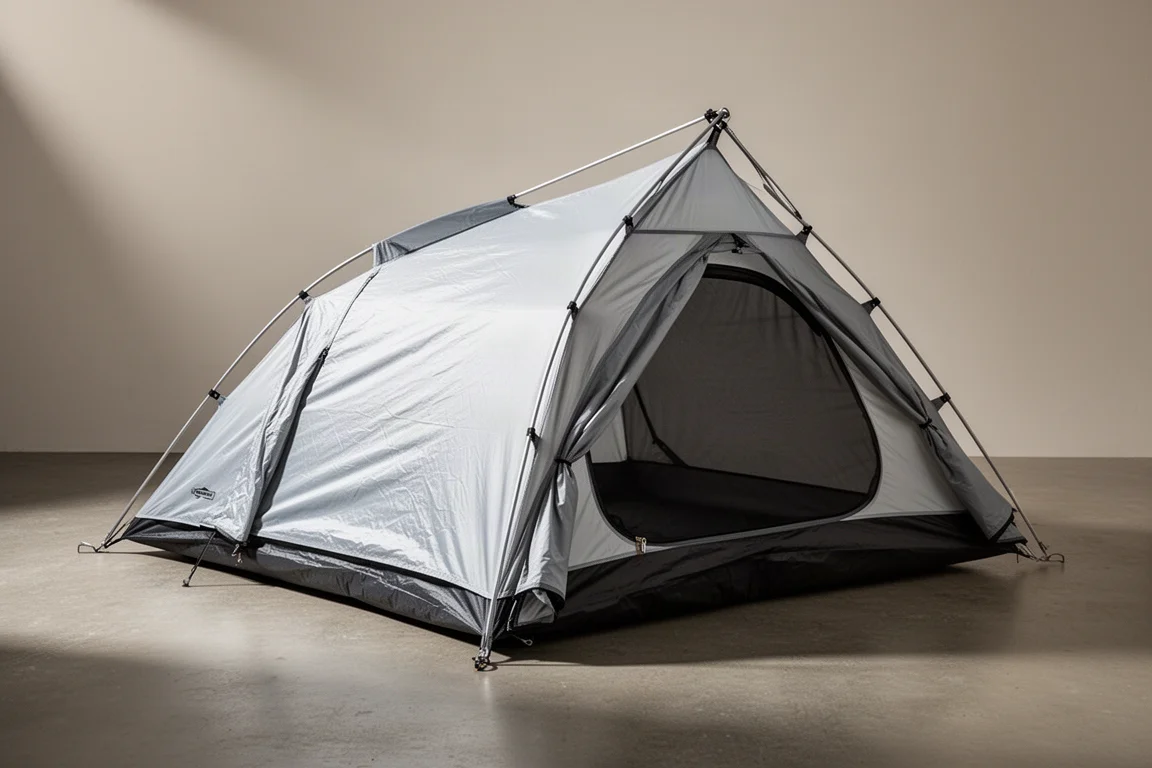
3F UL Taiji 2-Person Tent: A Convertible Backpacking Shelter Worth a Closer Look
A practical look at the 3F UL Taiji two-person tent, covering its materials, true two-person interior, fly-first pitching, and the seasonal inner swap that lets one shelter cover more of the year.
Backpacking Tents
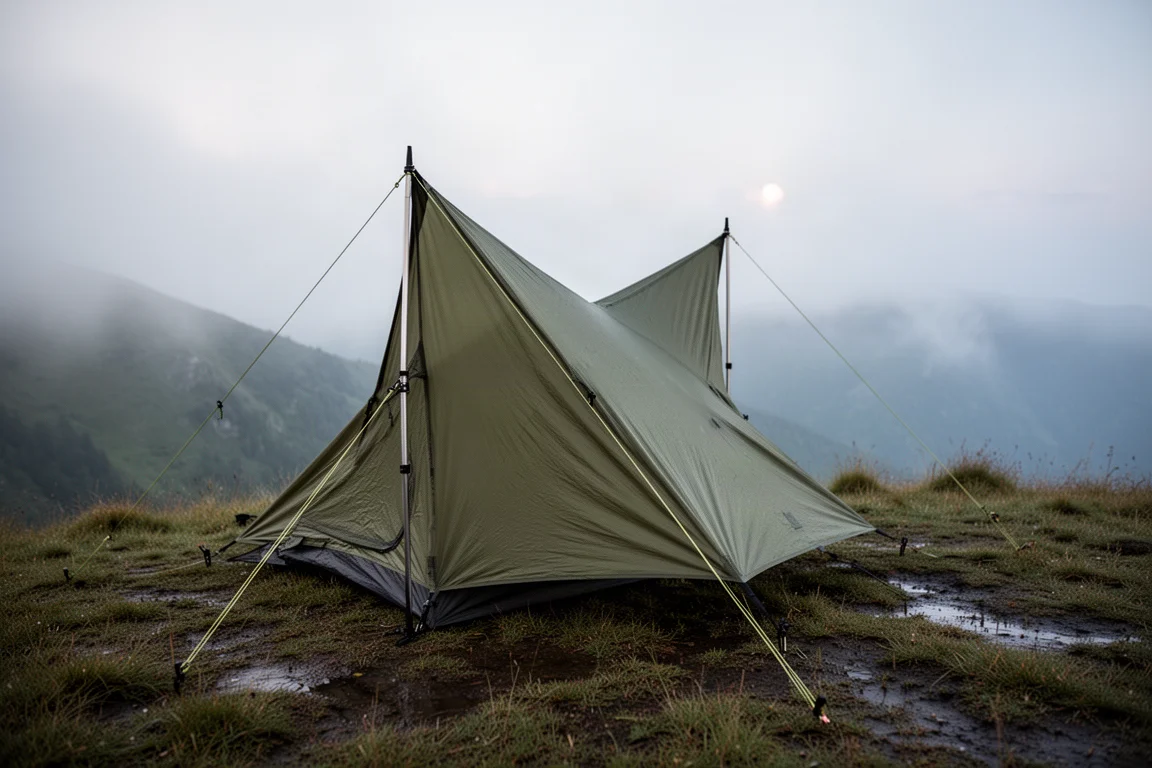
3FUL Lanshan Twoerson Pro Review: A Light Trekking Pole Shelter That Struggled in Rain
A two-person trekking pole shelter with a 2026 redesign, pitched with sticks and put through a night of steady rain. Here is what worked, what did not, and what to check before buying.