Backpacking Tents
Vango Banshee 210 Review: A Storm-Ready Two-Person Tent That Packs Small
A practical look at the Vango Banshee 210, a compact tunnel tent with 70D fabrics, a 6,000 mm bathtub floor, an oversized fast pack bag and a genuinely well-organised interior.
Introduction
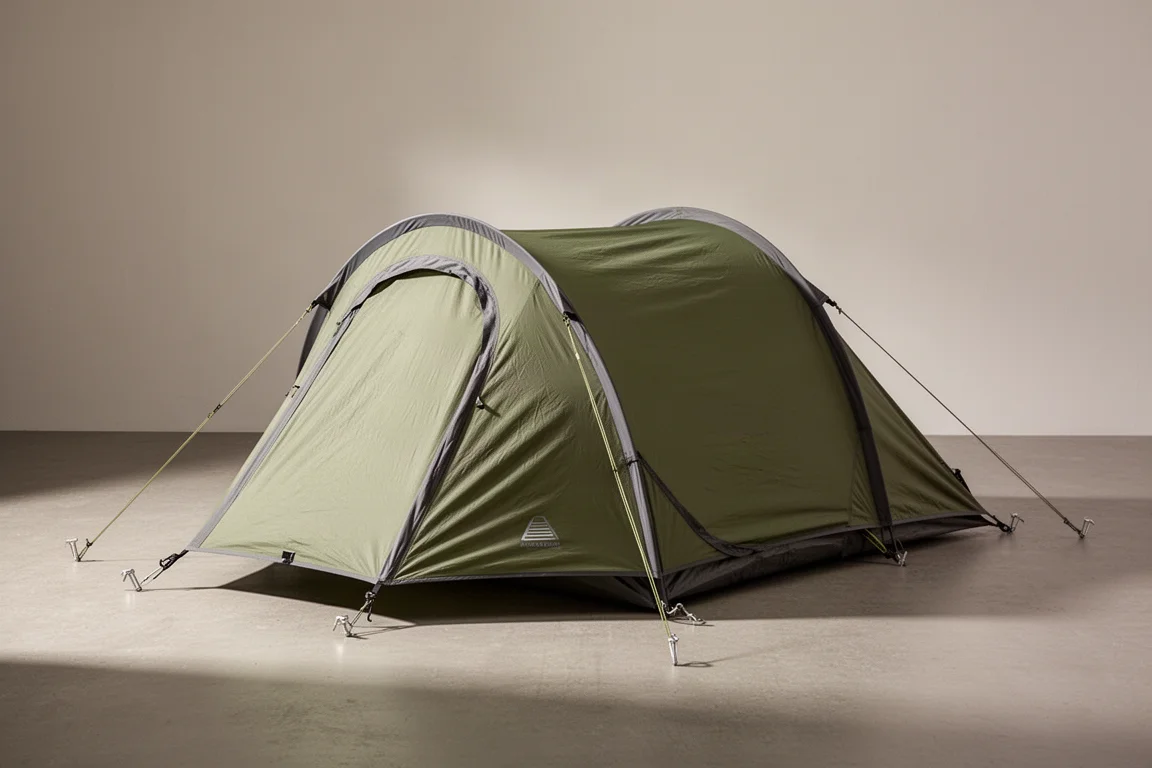
The Vango Banshee 210 has earned a reputation as one of the most dependable small backpacking tents you can buy, and it is easy to see why. It is a two-person tunnel tent that pitches inner and outer together, uses genuinely substantial fabrics, and carries Duke of Edinburgh approval, a useful signal of how it copes with demanding conditions. At 2.4 kg all in and 46 x 16 cm packed, it stays within reach of most backpackers, and the layout shows a level of thought that is rare at this price.
This review covers what the Banshee 210 does well, where it makes compromises, and who should choose it rather than a larger shelter.
Who the Vango Banshee 210 Is For
The Banshee 210 is sold as a two-person tent, but the honest answer is that it works best as a spacious one-person shelter, or as a tent for one adult plus a child or a dog. Two adults can sleep in it diagonally, though they will be lying very close together. For two adults who want genuine room, the Banshee 300 is the model to consider, since it offers a higher internal height alongside its extra floor area.
It is also a natural fit for Duke of Edinburgh expeditions and three-season camping, where a compact footprint and reliable weather protection matter more than living space.
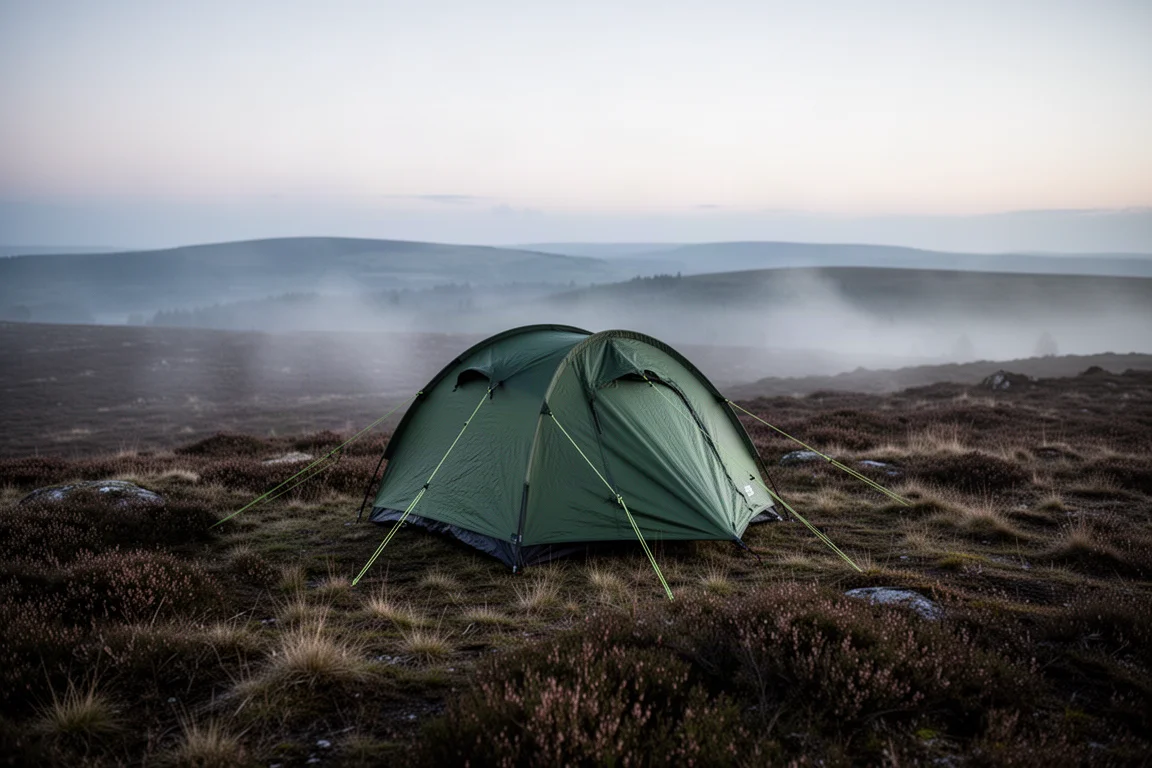
The whole design assumes you will be carrying it on foot rather than driving to a pitch, which explains the modest packed size and the deliberate weight saving elsewhere in the specification.
Main Strengths
Very few tents at this price feel this solid. The Banshee 210 is built around durability first, and that becomes obvious the moment you unfold the fly.
Weather Protection and Build Quality
The fly and the groundsheet both use 70D fabric, which is thick and hard wearing compared with the lightweight shells used on many backpacking tents. The bathtub floor carries a 6,000 mm hydrostatic head rating and the fly is rated at 3,000 mm, so heavy rain and storm conditions sit well within its comfort zone. The shape is a tunnel, which sheds wind efficiently, and the combination of thick fabric and a taut pitch means the tent holds its form when the weather turns.
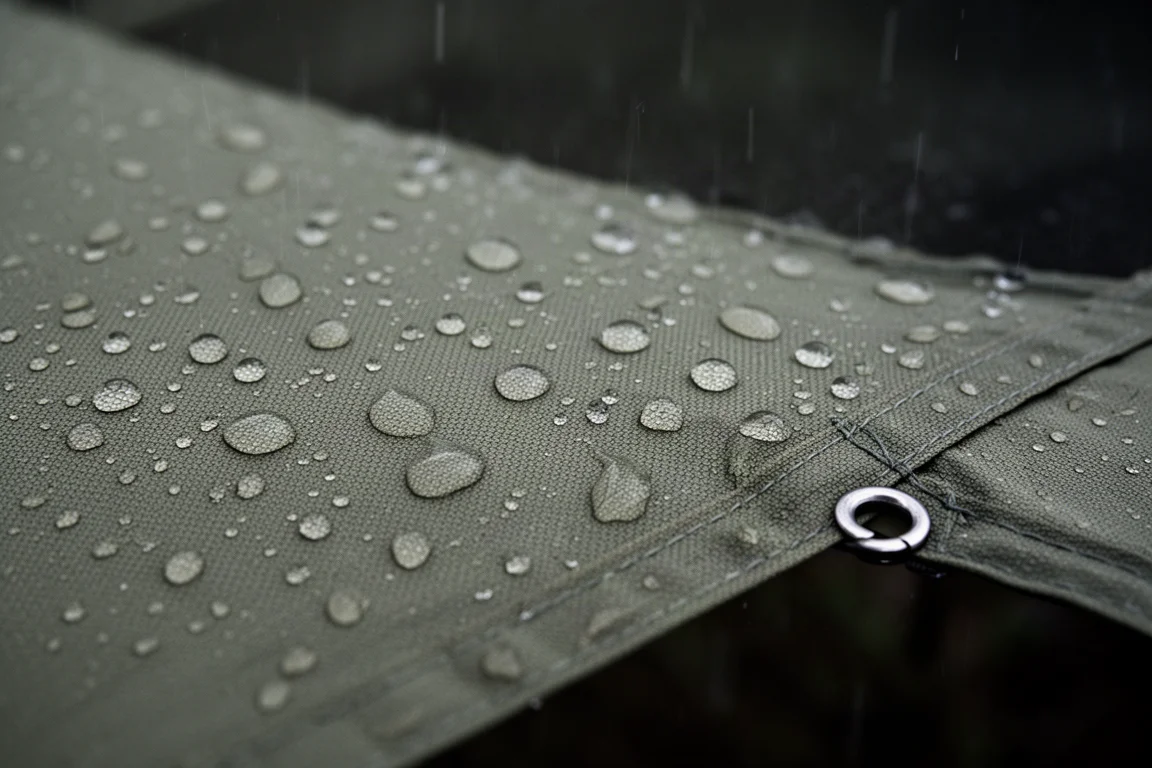
Vents at the base of the fly stay open to keep air moving and reduce condensation, and there are plenty of guy points around the shell, including one at the rear that helps keep the whole tent standing tall.
Pitch, Poles and Pegging
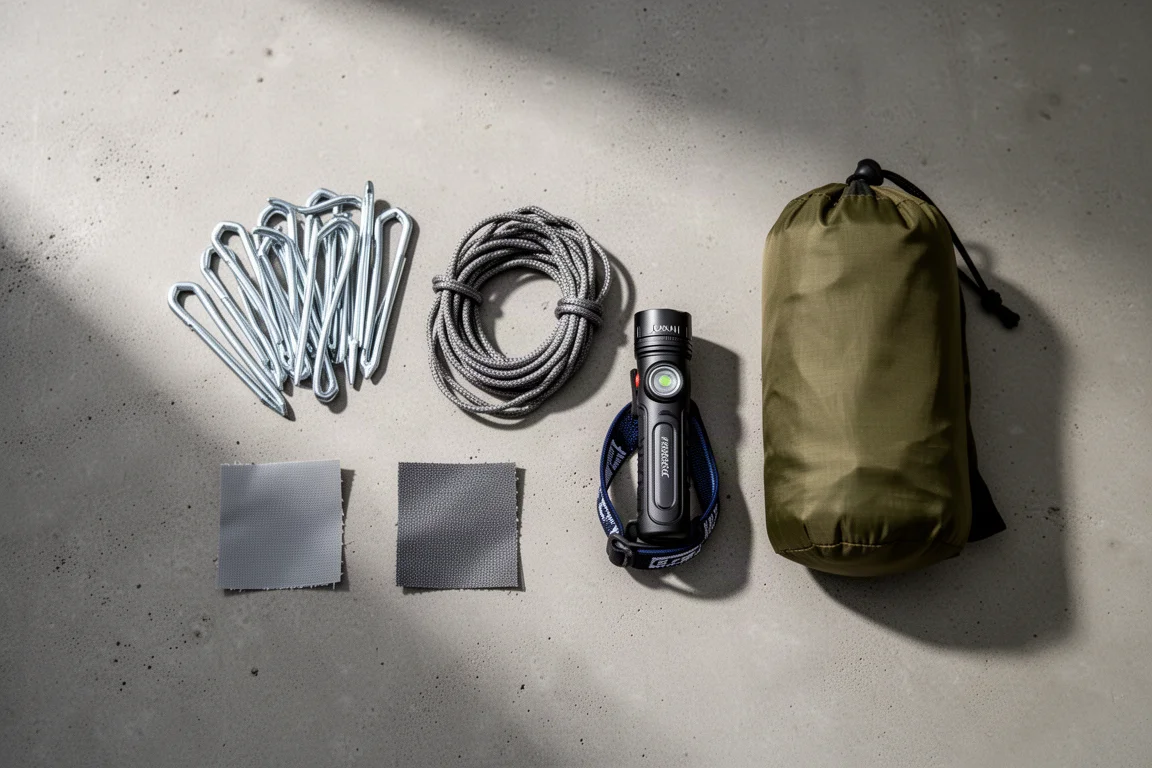
The Banshee 210 pitches inner and outer together, which is a real advantage when you arrive at a pitch in the rain, because the sleeping area never has to be exposed. Two alloy poles do the structural work, a larger one at the rear and a smaller one at the front, and they are colour coded (blue at the back, brown at the front) and pre-angled to give the tunnel its shape. The tent uses pole sleeves plus clips, and it comes with a generous set of alloy pegs, a repair kit containing a square of every fabric used, and a fast pack bag that is deliberately oversized so you never have to fight the tent back into its stuff sack.
Living Space and Storage
Inside, the layout is unusually well organised for a small tent. There are two pockets on each side, one of which doubles as a stash for the internal door, plus a high pocket in each corner for a phone or a head torch, a lantern loop near the roof, mesh and ventilation at the rear, and internal fixing straps on both sides. The two doors are genuinely useful: one side opens inside and out with no vestibule, while the other adds a vestibule large enough for packs or for cooking under cover.
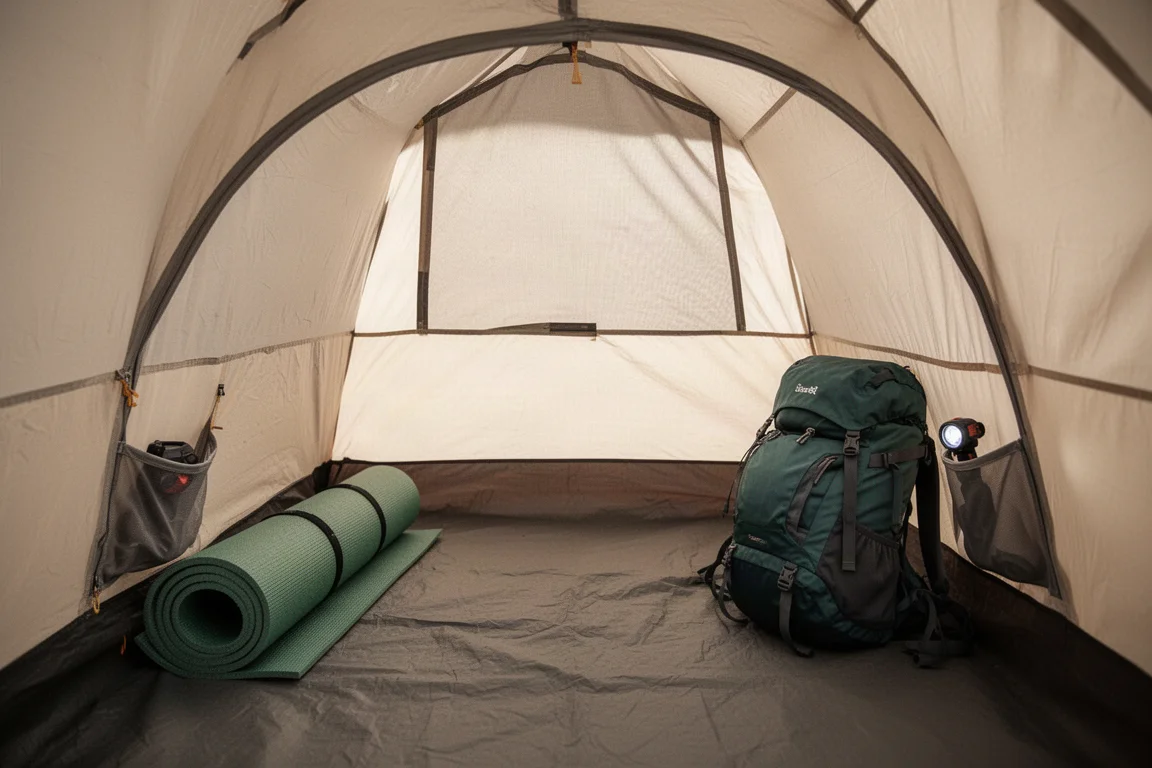
The quoted floor plan is 225 cm long by 120 cm wide at the widest point, and the width feels about right in practice.
Things to Consider Before Buying
The main compromise is height. The quoted 90 cm is measured to the highest point of the fly, and usable headroom inside is noticeably lower, so taller campers will find the inner close to their face once they are lying on a mat. The front of the tent slopes inward slightly and the rear slopes in considerably, which eats into space at both ends.
There are smaller niggles too. The pole sleeves are on the thin side, and the pole clips do not seat as cleanly as they could. At 2.4 kg the Banshee 210 is also not the lightest two-person tent available, though that weight buys a much tougher shell and a full set of accessories. None of these points undermine the design; they are simply the trade-offs that come with the price.
Buying Advice
At an RRP of around £155, and frequently discounted to about £100, the Banshee 210 represents a lot of tent for the money. If you are shopping for a first backpacking tent, a Duke of Edinburgh kit list, or a dependable shelter for solo trips in changeable weather, it is a straightforward recommendation. The fabric, the waterproofing ratings and the quality of the detailing all sit well above what the price suggests.
If your trips usually involve two adults sharing, put the budget toward the Banshee 300 instead. It solves the headroom question and gives two people the space the 210 only really offers to one.
Conclusion
The Vango Banshee 210 is a well-thought-out, storm-ready backpacking tent that makes the most of a compact footprint. Buy it as a roomy one-person shelter or as a tent for an adult and a child, and it will look after you in weather that would send lighter tents home early. Buy it expecting comfortable two-adult camping and you will want the larger model.
Product link
View more details for Vango Banshee 210
This product is mentioned in the review. Check the specifications, options, and compatibility before buying.
View more details for Vango Banshee 210Further reading
Related Reviews
Backpacking Tents
3F UL Lanchan Pro 1 Review: A 1 lb 8 oz Single-Wall Trekking Pole Tent
A practical look at the 3F UL Lanchan Pro 1, a single-wall trekking pole shelter with a 1 lb 8 oz weight, 20D silnylon fabrics, and a roomy 90 x 31 x 49 inch interior.
Backpacking Tents
3F UL Taiji 2-Person Tent: A Convertible Backpacking Shelter Worth a Closer Look
A practical look at the 3F UL Taiji two-person tent, covering its materials, true two-person interior, fly-first pitching, and the seasonal inner swap that lets one shelter cover more of the year.
Backpacking Tents
3FUL Lanshan Twoerson Pro Review: A Light Trekking Pole Shelter That Struggled in Rain
A two-person trekking pole shelter with a 2026 redesign, pitched with sticks and put through a night of steady rain. Here is what worked, what did not, and what to check before buying.