Ski Travel
Vail vs Park City: Which Epic Pass Ski Resort Should You Choose?
A practical comparison of Vail and Park City covering access, snow, terrain, lifts, crowds, lodging, and how the Epic Pass and Epic Local Pass change the decision.
Introduction
Vail and Park City are the two biggest ski resorts in the United States measured boundary to boundary, and both sit near the top of the list for destination interest in North America. For anyone planning one significant ski trip, they tend to end up on the same shortlist.
They also belong to the same pass program, which means the decision is rarely about access alone. This comparison covers travel, snow, terrain, lifts, crowds, lodging, and pass structure, so you can match a mountain to the kind of trip you are actually planning.
The short version: Park City offers more skiable acres, a genuine town, easier beginner terrain, and the better freestyle setup. Vail offers a cleaner layout, faster lifts, more distinctive terrain, and snow that holds up longer. Both are excellent choices, and neither is a mistake.
What Vail and Park City Have in Common
Start with what does not separate them. Both resorts regularly receive high-quality snow with good preservation through the season, and both see their share of powder days with light, dry accumulation.
Both also offer a wide range of lodging across multiple base areas, from condos and upscale inns to luxury hotels, with some properties ski-in and ski-out and others located in the village or town. Each mountain has just over 3,000 feet of front-side vertical rise, and both are covered by the Epic Pass, which makes it practical to ski one and then the other in the same season.
The differences, then, come down to layout, terrain, and the kind of day you want to have.
Vail Ski Resort: Larger Boundary to Boundary and Faster Lifts
Vail’s skiable footprint is 5,300 acres, smaller than Park City’s 7,300, yet the resort is actually larger from boundary to boundary, because a big chunk of its front side is not skiable. In practice, that combination produces a mountain that feels bigger than its acreage suggests.
Snow is where Vail holds a genuine edge. It sits at a higher elevation than Park City and retains its base better as a result. It also has some remarkably removed lift-served areas that can take days to get tracked out when conditions stay consistent.
Terrain variety is another strength. The back bowls host miles of wide open high alpine slopes that seem to extend forever, and intermediate skiers get wide open blues with big vistas that simply do not exist at Park City. Blue Sky Basin adds thinly wooded pine glades, and advanced skiers find demanding front-side chutes hiding rocks and small cliffs, plus mid-mountain double blacks that run on and on.
Beginners are served from every base at Vail, though the lower-mountain greens are mostly unenjoyable catwalks. That makes it hard for less experienced guests to ski to the bottom without downloading a lift. Terrain parks are the weak point: they exist, but they are modest for a flagship resort, the mountain operations team is often slow to open them, and there is not always a large park or a half-pipe in a given season.
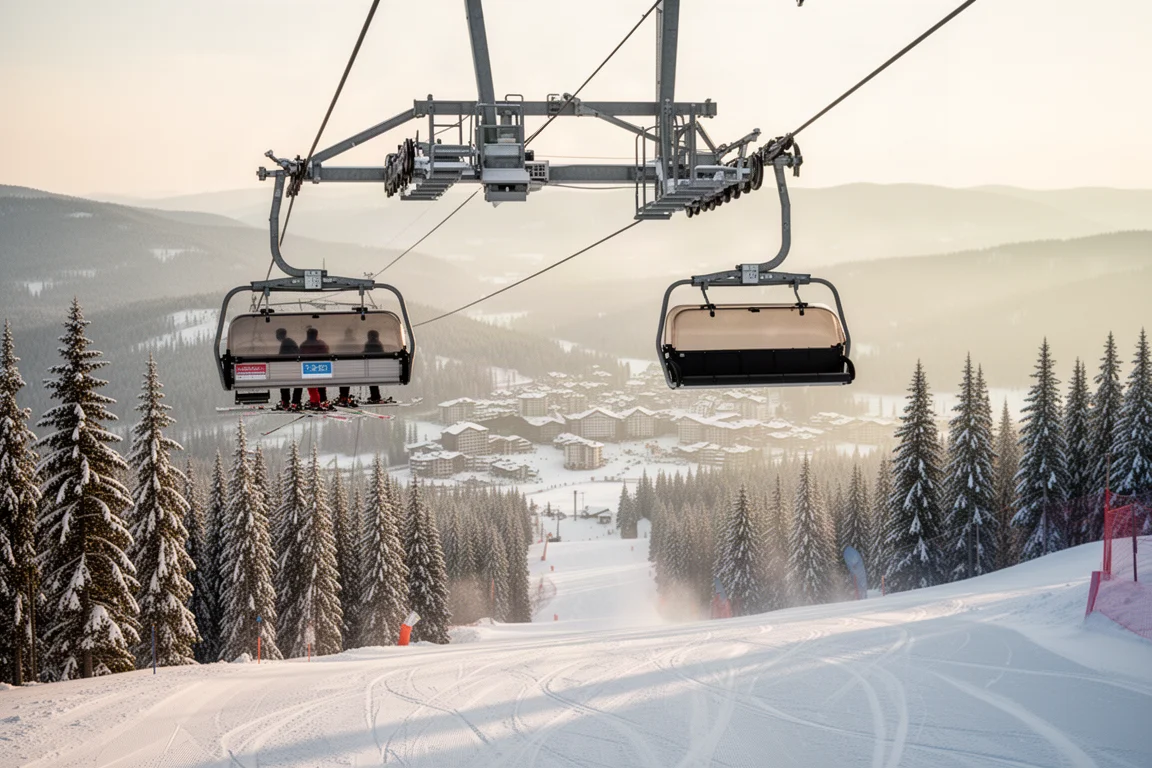
Lifts are a clear Vail advantage. Essentially every area is served by a high-speed lift, and while many of those lifts are long, they deliver you directly where you want to go. The front side’s 3,000-plus foot rise typically takes about 15 minutes to climb. Base lifts can be busy in the morning and back bowl chairs become choke points on powder days, but lines remain far more manageable than at Park City.
Getting there is the trade-off. Vail is over two hours from Denver Airport assuming no traffic, and the Interstate 70 drive involves steep grades, twisty turns, and variable weather. The Eagle County Regional Airport is about half an hour away, which shortens the trip considerably if the fares work for you. Once you are there, Beaver Creek is 20 minutes away, and Copper, Breckenridge, Keystone, and Arapahoe Basin are all under an hour when road conditions cooperate. Parking is the other cost to plan for, since even remotely convenient parking runs at least $30 a day.
Lodging spreads across what is effectively one base village that stretches along for a considerable distance, with options ranging from condos to luxury hotels. Lift tickets run around $200 a day, and Park City’s tickets undercut that by only a small margin.
Park City Ski Resort: More Skiable Acres and a Real Town
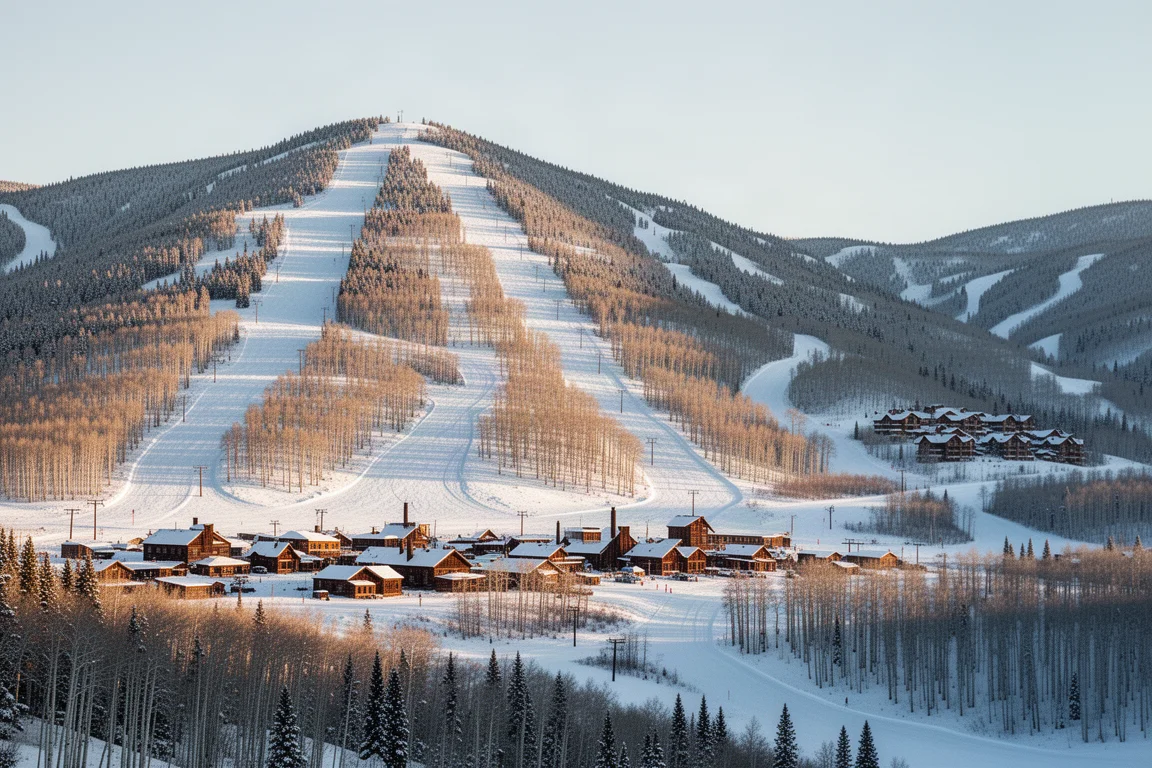
Park City wins the acreage battle with 7,300 skiable acres against Vail’s 5,300. The catch is that its boundary-to-boundary footprint is only comparable to its skiable terrain rather than much greater, so the advertised size is real but the surrounding land is not the story.
Its terrain character is different too. Park City is chiefly a below-tree-line resort, and none of its true bowls are lift accessed; all of them require hiking. A few hike-to areas stand out for holding up well after other terrain is tracked out. What the lifts do serve is surprisingly varied glade terrain and a handful of open, bowl-like areas.
Navigation is the biggest practical drawback. The resort has a wide, long footprint, and moving between the main mountain zones requires multiple lift rides. From the One Park City base, reaching the other base takes at least four lifts. If you end up in the wrong zone after 3 PM, a shuttle bus is usually the only way back. Part of that is history: the resort as it exists today was two separate mountains, Park City and Canyons, and they are connected by a single gondola that sits well away from the base. For many guests, it makes sense to treat the two sides as separate ski areas.
Beginners are arguably better off here. The beginner footprint is congregated across lower and mid-mountain terrain, and it is easy to ski back to the bottom from those areas. The catch is that all the worthwhile green runs sit on the Park City side; the Canyons side offers little more than a single bunny hill.
Intermediates have days worth of groomed cruisers, plus widely spaced aspen glades in the Dreamscape Zone. Advanced skiers get a solid mix of steep ungroomed terrain and advanced-level groomers suited to serious speed, and the Jupiter and 9990 areas serve double blacks exclusively, with tricky pitches and obstacles. The toughest terrain between the two resorts is arguably here, where the Jupiter Peak chutes offer tight turns and very little room for error, but reaching them requires a 20 to 30 minute hike.
Freestyle is Park City’s clearest win. Its terrain parks are world class, with features ranging from small to extra large and setups desirable enough that professional competitors choose to train there.
Lifts and crowds are where the resort struggles. Some areas are still served by slow fixed-grip chairs, the lift network is surprisingly indirect with out-of-the-way detours, and the 3,000-plus foot front-side rise typically takes about half an hour rather than 15 minutes. Lines of more than 20 minutes are now common at key lifts, and the Quicksilver Gondola, which provides the only connection between the Park City and Canyons sides, is one of the worst offenders. One genuine advantage: the expert-only chairs never see lines.
On the practical side, lodging generally offers better value than Vail for what you get, and the resort pairs a true downtown with a smaller village in the Canyons area. Park City remains the clear winner for driving access and still offers free, if limited, lift-served parking on the Canyon side, though paid parking is expanding to more areas next winter. It is also well placed for variety, with Deer Valley just down the street, Alta, Snowbird, Brighton, and Solitude less than an hour away, and Snowbasin and Powder Mountain just over an hour out.
Epic Pass: Unlimited Season Access to Both Mountains
Because Vail and Park City sit on the same pass, it is realistic to ski both in a single season. The full Epic Pass provides unlimited season-long access to both mountains, along with access to around three dozen regional and destination ski resorts across North America.
For travelers who plan more than one trip, that breadth is the main argument. You are not choosing a single mountain so much as buying a season of them, and both of these resorts stay available for the entire season.
The practical effect is that the Vail versus Park City decision becomes less permanent. Ski one in December and the other in March, or split a longer trip between the two.
Epic Local Pass: Lower Cost With Holiday Restrictions
The base Epic Local Pass is the more restricted tier. It carries holiday blackout dates and a combined cap of 10 days at Vail, Beaver Creek, and Whistler Blackcomb. Park City access, however, remains unrestricted outside holiday periods.
That structure matters if Park City is your priority. The cap lands on Vail rather than Park City, so a season built around Park City stays largely intact while Vail days become a limited bonus.
For skiers who know they will spend most of their time at Park City, this is the more efficient way into the Epic network. For anyone planning repeated Vail trips, the full Epic Pass removes the friction.

Overall Buying Advice
Choose Park City if you want a more down-to-earth town, a larger skiable footprint, better freestyle terrain, and lodging that delivers better value. It is also the easier resort to reach, sitting less than an hour from Salt Lake City Airport under good conditions, and the beginner progression is simpler thanks to lower and mid-mountain green terrain.
Choose Vail if layout, lift speed, and terrain distinctiveness matter more to you than acreage. The mountain is easier to move around, the high alpine bowls are unlike anything Park City offers, and the higher elevation helps the base hold up through the season. For a wide range of destination skiers, it is the stronger overall mountain.
Cost is closer than it looks. Park City’s lift tickets undercut Vail’s, but only slightly, so if you are already paying around $200 a day the difference is unlikely to be the deciding factor. Parking is worth factoring in as well, since convenient Vail parking starts at $30 a day while Park City still offers some free lift-served slots on the Canyon side.
If you cannot decide, the pass structure solves it. A single Epic Pass covers both, and the Epic Local Pass keeps Park City open all season while limiting Vail days, which is a sensible compromise for anyone whose priority is Park City but who still wants a taste of Vail.
In our Rockies rankings, Vail places sixth while Park City comes in at 23rd, scoring below a range of lower-priced Colorado competitors. Park City’s only category win is size.
Conclusion
Both resorts deserve their reputations, and the right answer depends on what you want from the trip. Park City delivers scale, character, freestyle terrain, and easier logistics. Vail delivers a better-designed mountain, faster lifts, more distinctive terrain, and snow that lasts.
If you are optimizing for the strongest overall mountain and you are already committed to destination-level pricing, Vail is the more rewarding choice. If you want a real town, more terrain to spread out across, and the simpler airport transfer, Park City is the one to book. And with both on the Epic Pass, you do not have to treat the decision as permanent.
Further reading
Related Reviews
Ski Travel
Best Ski Resorts in Western Canada: 8 Standout Mountains Ranked
A ranked guide to eight standout ski resorts in Western Canada, covering terrain, snowfall, lift flow, and which kind of skier each mountain suits best.
Ski Travel
Best Value Ski Resorts in North America: 13 Destinations Worth Booking
Thirteen North American ski resorts that deliver strong snow and terrain for less than their best-known competitors, plus the trade-offs to weigh before you book.
Ski Travel
Canada's Best Ski Trip Options: Seven Ways to Plan Your Next Mountain Getaway
From Whistler's big-resort buzz to the quiet Powder Highway, seven Canadian ski trip styles worth planning around, with honest trade-offs for each.