Camping Gear
US Military Poncho Liner vs a $60 Copycat: What to Check Before You Buy
A zippered US military poncho liner compared with a $60 copycat. What the label, the hardware, and the packed size reveal before you spend.
Introduction
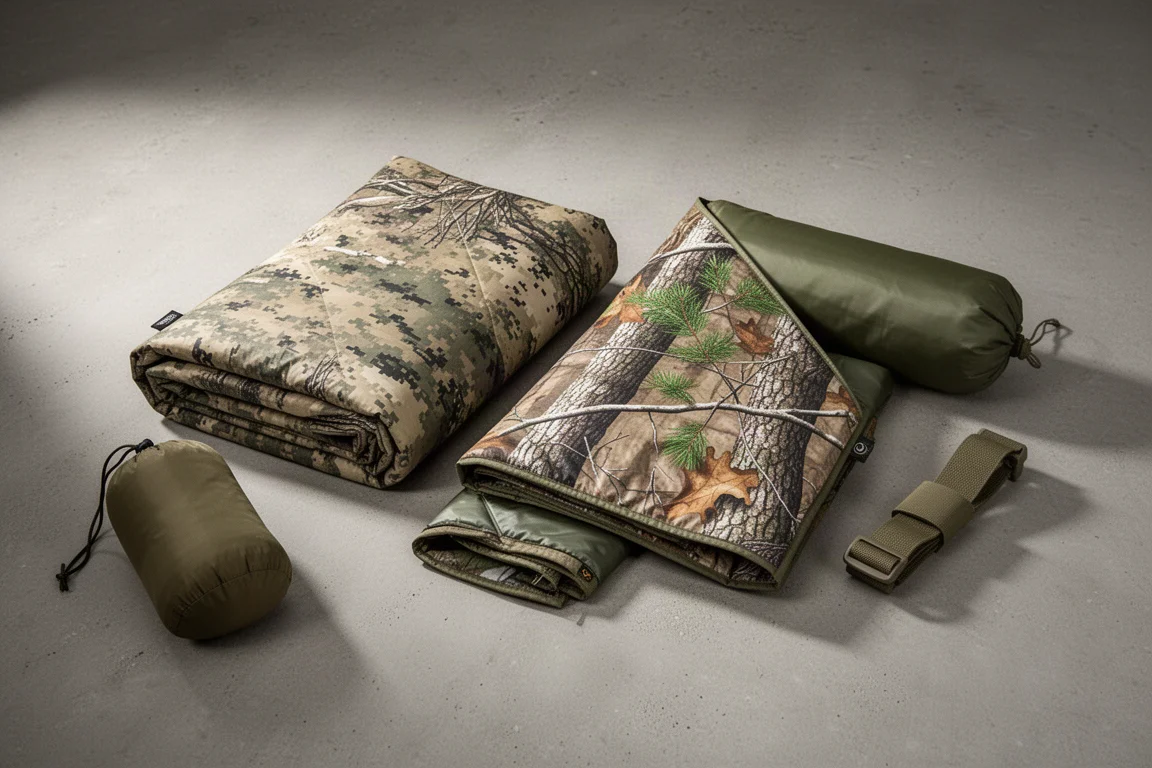
The US military poncho liner is one of the most recognisable pieces of field equipment ever issued. It arrived during the Vietnam era and has changed remarkably little since. It can be used underneath a poncho in wet or cool weather, wrapped or worn as a blanket, used as a sleeping bag, or pressed into service as a protective cover.
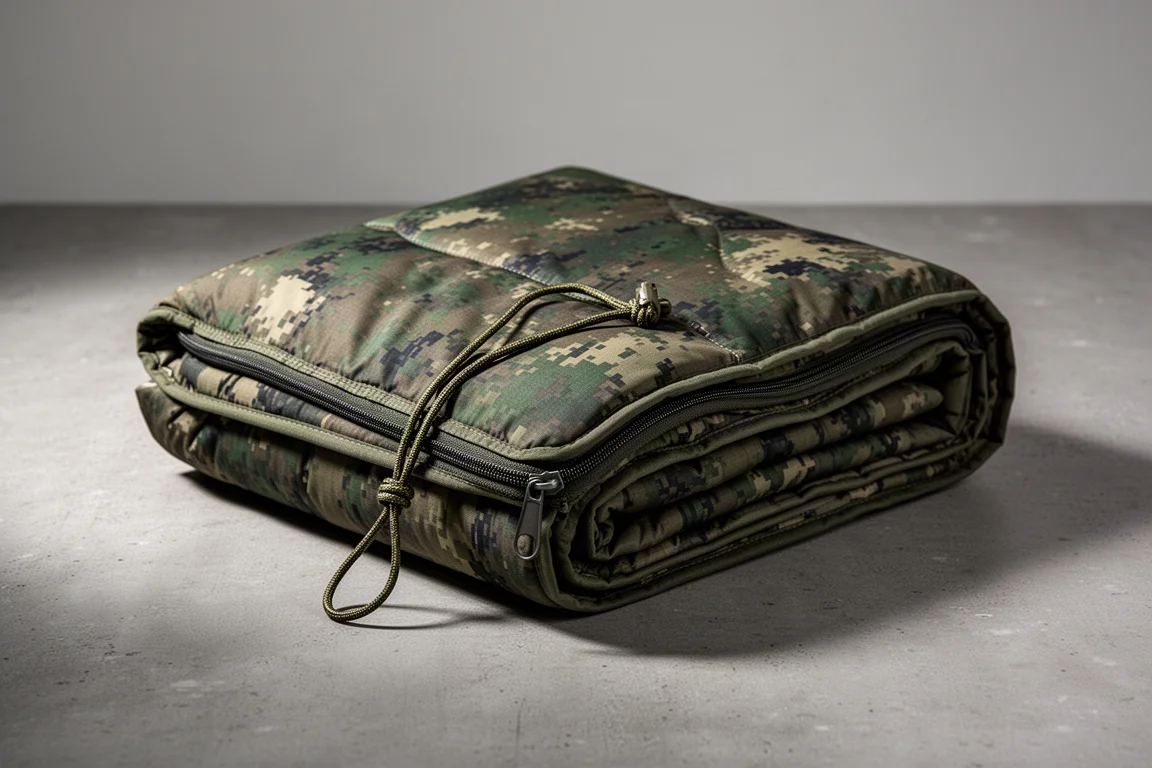
The most recent issue version adds a zipper that runs around the body, so the liner can be closed up and used more like a sleeping bag. It is a genuine improvement: the liner holds warmth better and blocks wind more effectively.
That reputation has made the poncho liner a target for lookalikes. Some sellers are upfront about it, listing their products as “poncho style” or “poncho type” liners. Others go to considerable lengths to make a copy look indistinguishable from the real thing, right down to the label.
This comparison covers two products: a zippered liner sold under the Brooklyn Armed Forces name for around $60, and the genuine liner made by Winston-Salem Industries for the Blind.
What to Check Before Buying a Poncho Liner
Two things separate genuine military surplus from a lookalike: the documentation attached to the product, and the way the materials behave once you handle them.
Documentation comes first. Real surplus carries a proper tag with the item name and a National Stock Number, usually shortened to NSN. A copycat can reproduce that format closely enough to fool a casual buyer. One clear giveaway is a UPC barcode tag, the kind used for retail inventory control in department stores and grocery stores. That is a civilian retail marker, and it does not appear on genuine military surplus. A storage bag printed with a country of origin that has nothing to do with US military supply is another signal worth taking seriously.
Then there is the fabric. Genuine liners are treated with a water repellent finish. Copies frequently are not. Hardware matters as well: the issue version uses two-way zippers so the liner can be opened from either end for a quick exit, and the pull is a corded loop rather than a metal tab. If a liner is not reversible, the inside and outside are the same colour, so there is no advantage to turning it inside out.
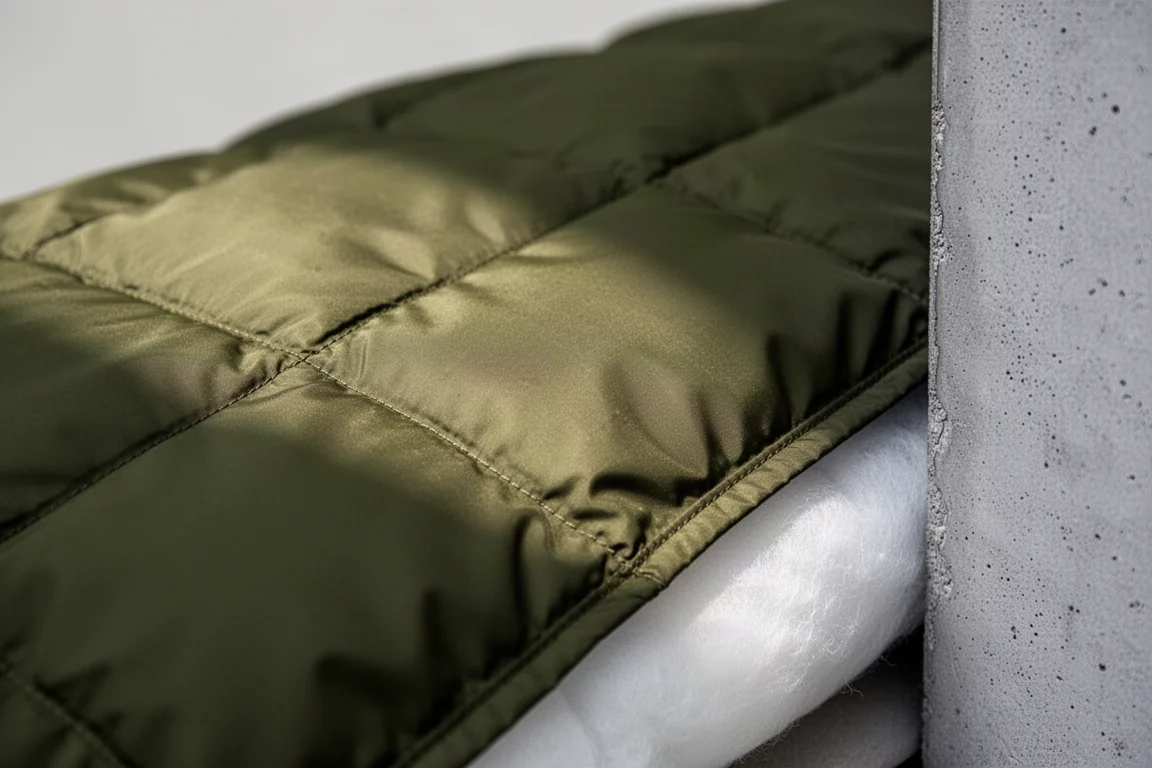
Packed size is the last and often the most revealing check. Lower-grade insulation has to be used in greater volume to reach comparable warmth, so a cheap liner compresses into a much larger bundle. A genuine liner rolls down to roughly the size of a small blanket. A copy can fold up to about the size of a small sleeping bag, which is a significant difference if the liner has to fit into a pack or a vehicle.
Brooklyn Armed Forces Poncho Liner: A $60 Copycat
The Brooklyn Armed Forces liner sells for around $60. It is a zippered design, and the storage bag it arrives in measures roughly 18 inches long and 8 to 9 inches wide, far larger than the liner itself needs. The bag is printed with “Made in China.”
The label reads “liner wet weather poncho” and carries grammar and punctuation errors. It also lists an NSN number, but that number does not correspond to this product; it traces back to a liner produced by Winston-Salem Industries for the Blind. A UPC tag is present on the product as well, which is a retail inventory marker rather than a military one.
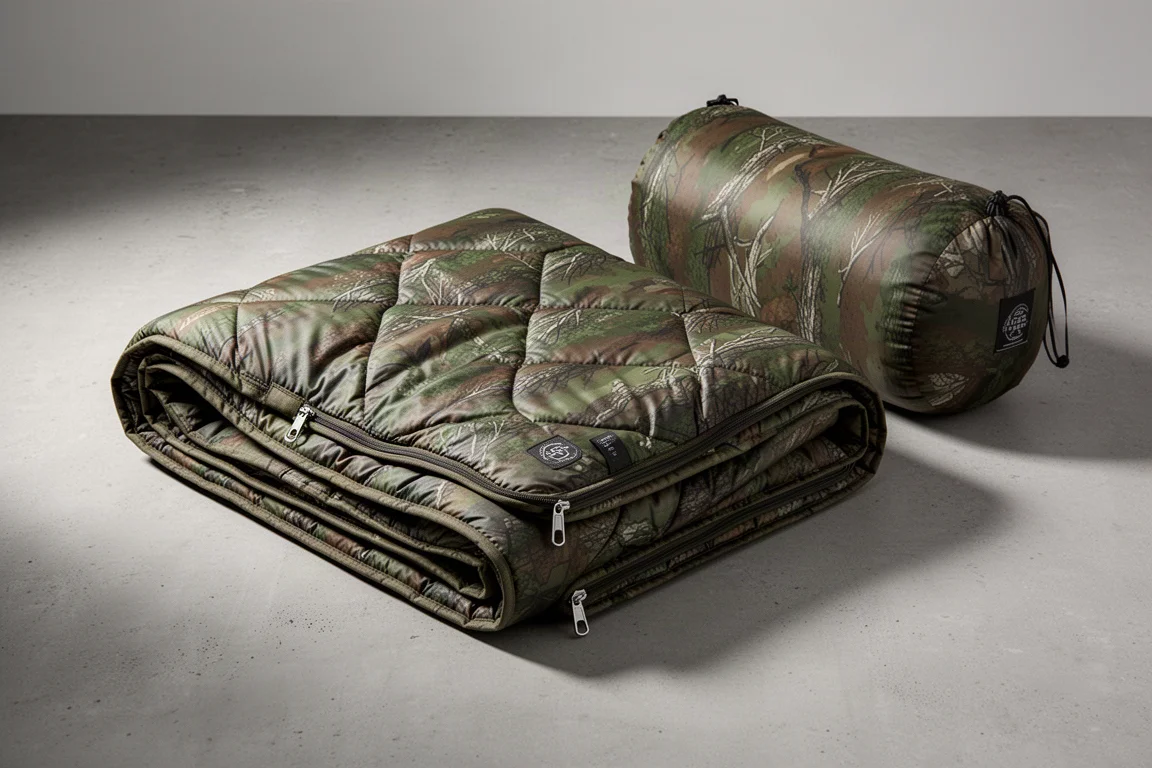
The company describes the shell as nylon. In hand it feels closer to a low-grade polyester, with polyester batting inside, and it does not compress the way an issue liner does. The zipper is a single pull marked YKK with a metal tab. The camouflage is a woodland print that does not match a military pattern. Stitching is uneven in places and there are loose threads. No water repellent treatment has been applied.
Laid flat, the liner measures about 85 by 32 inches and weighs a little over two pounds, which is heavier than the genuine version. The tie-off points do match the standard layout, so it will attach to a poncho, and the zipper does allow it to be used as a sleeping bag. The differences sit in the materials, the hardware, and the documentation rather than in the basic design.
Materials and Build Quality Compared
Side by side, the gap between the two liners is obvious within seconds. The genuine liner has the dense, slightly stiff hand of a treated military fabric. The copycat feels thin and slick, closer to the cheapest sleeping bags sold in discount stores decades ago than to anything built for field use.
That difference has a practical consequence. Cheaper insulation has to be used in greater volume to deliver similar warmth, which is why the copycat compresses to roughly twice the size of the genuine liner. Weight follows the same pattern: more material, more bulk, more to carry.
Construction tells a similar story. The genuine liner’s stitching is consistent and the edges are finished cleanly. The copycat shows uneven seams and loose threads in several places, and the zipper installation is not as tidy. None of this makes the liner unusable, but it does explain why the two products feel so different in the hand.
The materials question also affects how the liner behaves over time. A treated shell sheds light moisture and holds up to repeated stuffing and unstuffing. An untreated, thinner shell has less margin for that kind of use, and the loft of cheaper batting tends to collapse faster.
Winston-Salem Industries for the Blind Poncho Liner: The Legitimate Version
The genuine poncho liner is made by Winston-Salem Industries for the Blind, a manufacturer of legitimate military surplus for the US military. That provenance is what the NSN number on a real label points to, and it is the detail worth checking before you buy.
Pricing depends heavily on condition and supply. Used military surplus liners generally sell for around $20, while brand new examples run closer to $40. The zippered version is still relatively new, so stock is limited and prices move with availability: a grade D example came in at $32 and needed some repairs, while grade B examples were around $100 at the time. As more zippered liners reach the market, those prices should ease.
The zippered issue liner has a few features that matter in daily use. Two-way zippers open from either end for a quick exit, the pull is a corded loop rather than a metal tab, and the fabric carries a water repellent treatment. The camouflage is a digital woodland pattern, and the liner compresses down to about the size of a small blanket. One thing to expect: the military version does not ship with a storage bag, so plan your own stuff sack or compression strap.
Zippers and Packed Size: Side by Side
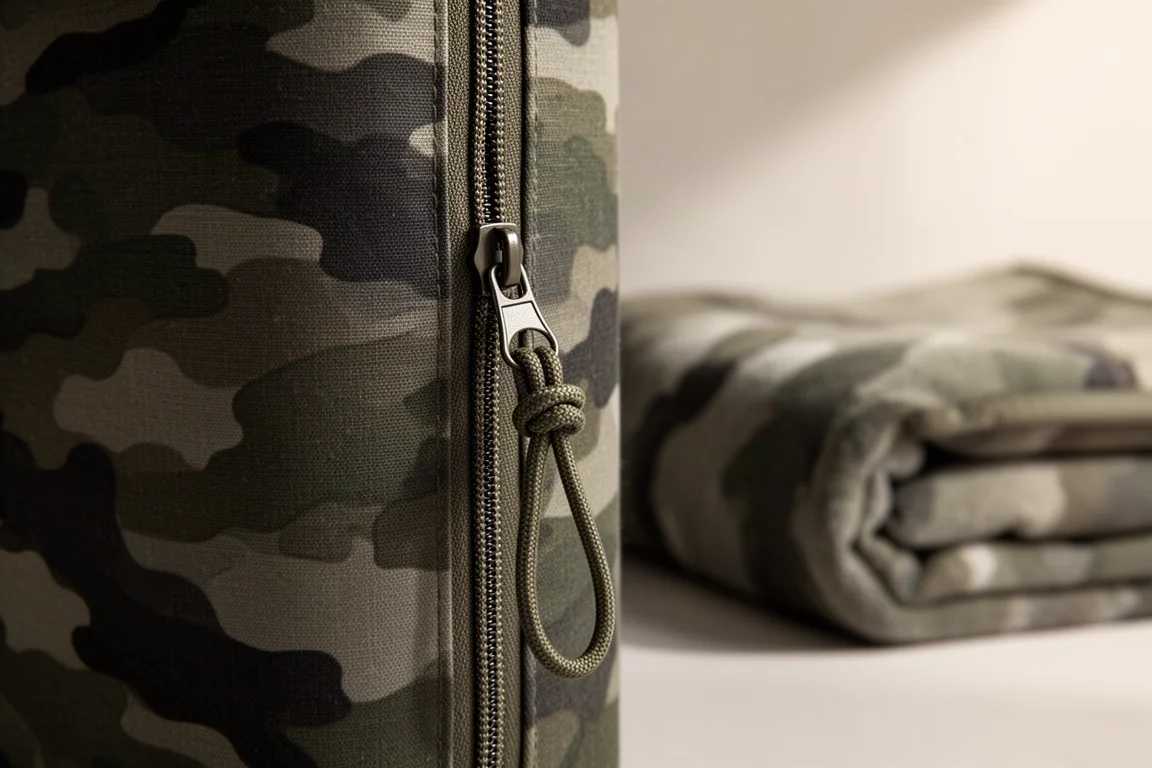
The zipper is where the two products diverge most clearly. The issue liner uses two-way zippers, which means it can be opened from the top, from the bottom, or from both ends at once. That matters when you want ventilation without losing coverage, or when you need to get out of a closed liner quickly. The copycat uses a single pull, so the liner opens from one direction only.
The pull itself is a smaller detail with real consequences. A corded loop is easy to grab with cold or gloved hands, and it does not rattle against other gear. A metal tab is heavier and noisier, and it is the kind of hardware that tends to be the first thing to fail.
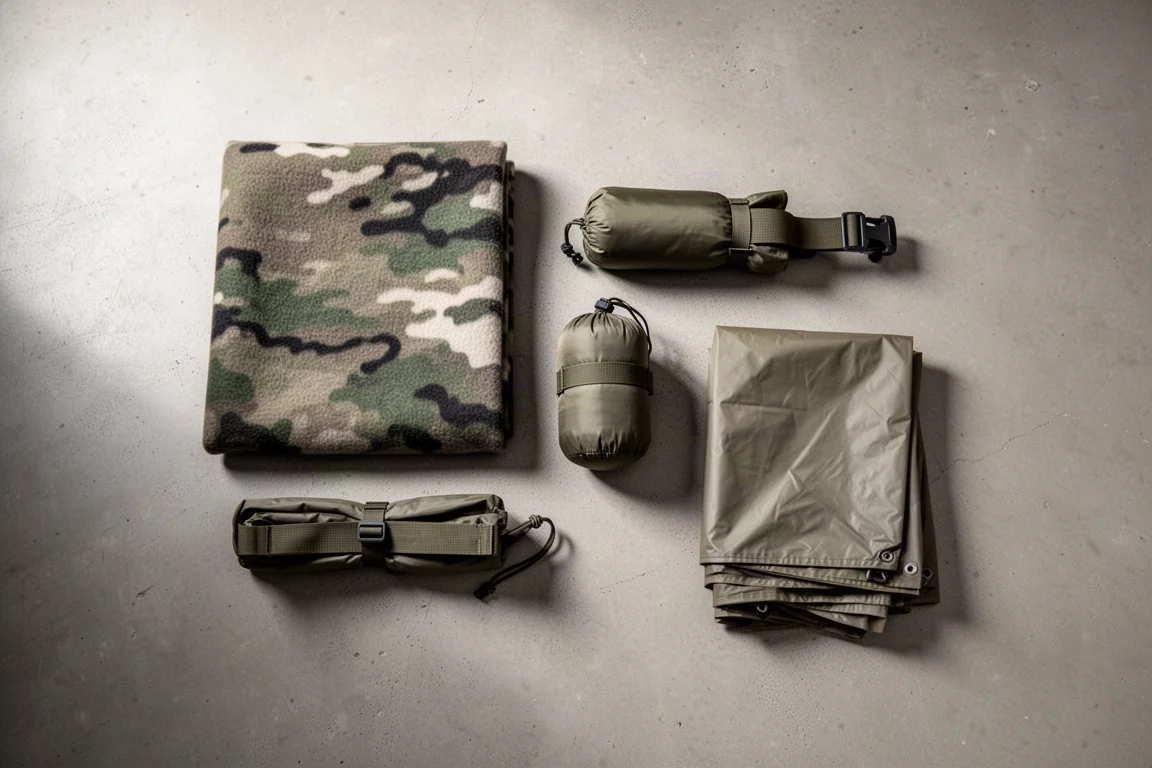
Packed volume is the other decisive difference. The genuine liner rolls down small enough to sit at the bottom of a pack without crowding anything else. The copycat, with its greater bulk and cheaper batting, folds up to roughly the size of a small sleeping bag, which is a lot of space to give up for a liner.
Also worth noting: the copycat is not reversible. The inside and the outside are the same colour, so there is no second surface to use when one side gets dirty or damp. The issue liner’s construction and finish make it more practical in that respect as well.
Water Repellency and Long-Term Use
The genuine liner is treated with a water repellent finish. That treatment is not waterproofing, but it does help the fabric shed light rain, condensation, and damp ground, and it keeps the liner usable underneath a poncho in wet conditions. The copycat has no such treatment, so it wets out more readily and takes longer to dry.
Longevity follows the same pattern. A treated, densely woven shell tolerates being stuffed, unfolded, and stuffed again over many seasons. Thinner fabric with cheap batting loses loft over time, and once a liner stops trapping air, it stops keeping you warm. Loose stitching and a single-zipper design also mean more points of failure in the parts you touch most often.
For a piece of kit that lives in a pack, gets dragged across the ground, and is used in bad weather, that difference is the whole argument. A poncho liner is meant to be dependable, and dependability is mostly a question of materials and hardware rather than features on a spec sheet.
Overall Buying Advice
If you are shopping for a poncho liner, buy on provenance first and price second. Look for a label with the correct item name and an NSN that matches the product, and be wary of a UPC barcode tag, a storage bag naming a country of origin unrelated to US military supply, or a listing that never shows the tag at all. If the seller does not include a photo of the label, ask for one before you commit.
On price, a used surplus liner at around $20 and a new one at around $40 are both reasonable. The zippered version is still scarce, so expect to pay more and expect condition to vary. A grade D zippered liner at $32 can be good value if you are willing to make small repairs; a grade B example at around $100 is harder to justify unless you specifically want the newer design in better condition.
The $60 copycat is the awkward case. It costs more than a new genuine liner, weighs more, packs larger, carries no water repellent treatment, and its label documentation does not line up with the product. The tie-off points and the zipper do work, so it is not useless, but there is no version of the maths where it beats the real thing.
Conclusion
The US military poncho liner has stayed in service for decades because the design works. The zippered version improves on it by closing the liner around the body, which makes it warmer and more wind resistant.
That reputation is exactly why copycats exist, and the $60 Brooklyn Armed Forces liner is a clear example. It looks like the real thing from a distance, but the materials, the hardware, and the label tell a different story. The genuine liner made by Winston-Salem Industries for the Blind is the one to look for, and at used-surplus prices it is also the cheaper option.
Check the tag, check the zipper, and check how the liner compresses. Those three checks will tell you almost everything you need to know.
Further reading
Related Reviews
Camping Gear
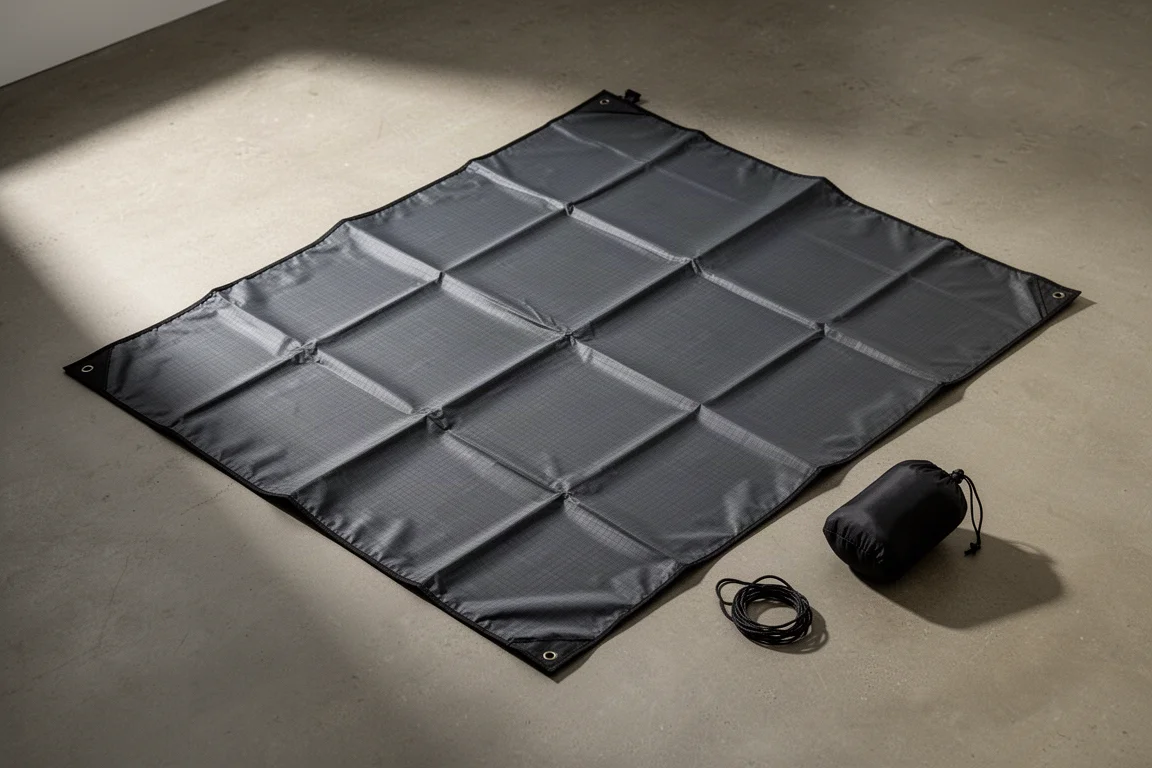
3FUL Ultralight Ground Sheet Review: A Two-Person Footprint Worth Packing
A 6.7 oz two-person ground sheet in ripstop silnylon, priced around $30. Here is what it protects, what it does not do, and who should pack it.
Camping Gear
Backcountry Light Dual-Function Tarp and Floor Review: A Footprint First
A dual-purpose tent floor and tarp that keeps falling rain off you, but cannot block wind. Here is where it works and where it does not.
Camping Gear
Best 2-Person Camping Mattresses for Couples: 10 Options Compared
A practical comparison of ten two-person camping mattresses, covering self-inflating pads, air pads and air mattresses for couples.