Cycling Upgrades
Upgrading an Entry-Level Road Bike: Seven Changes That Transform How It Rides
A practical order of upgrades for an entry-level road bike, from tyres and bar tape to brake calipers and carbon wheels, with real prices and honest trade-offs.
Introduction
Entry-level road bikes are built to a price, and the savings usually show up in the same handful of places: hard compound tyres, cork bar tape, a basic saddle, mechanical disc brakes and heavy alloy wheels. None of those parts is expensive to improve, and the order in which you tackle them matters far more than the total you spend.
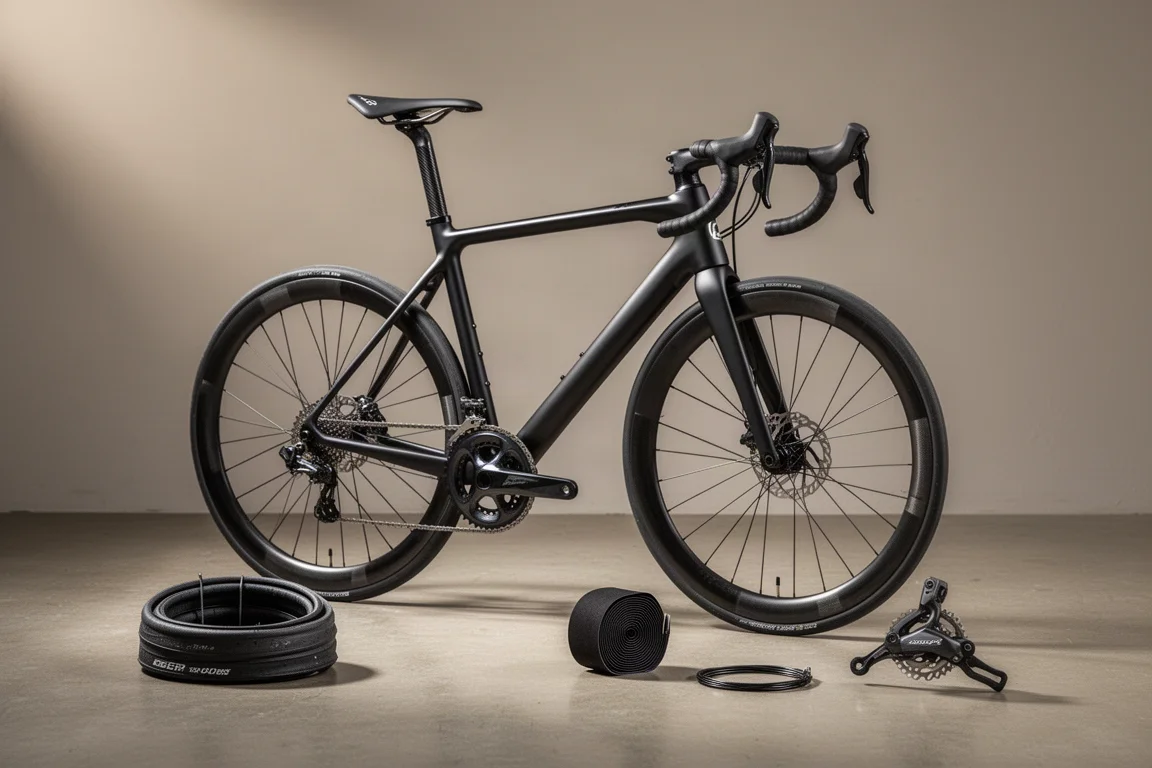
This build is based on the Specialized Allez, the cheapest road bike the brand makes at £1,000. It is an excellent example of a modern entry-level bike in every way except the price. As ridden, with pedals, a computer, an out-front mount and a saddle bag, it weighed 11.35 kg. Once the upgrades below were fitted it weighed 10.87 kg. That modest change is the point: the goal was never weight, it was ride feel.
The Base Bike: Specialized Allez
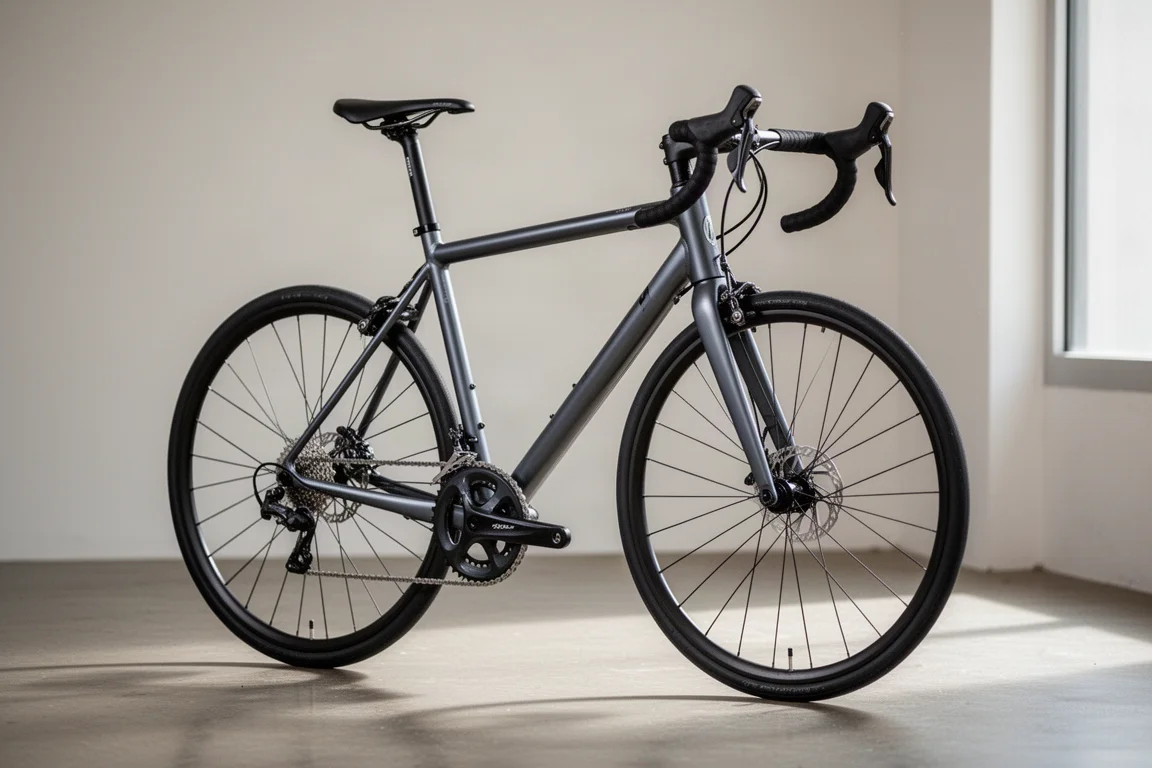
For £1,000 you get a modern entry-level platform rather than a bargain. The aluminium frame accepts tyres up to 35 mm, the brakes are mechanical discs with 6-bolt rotors, and the drivetrain is Shimano Claris. The stock wheels are better than the price suggests, running true with even spoke tension and smooth bearings after several rides, and the tyres that come fitted are not the worst in this class.
That mix shapes the upgrade plan. Clearance for 35 mm tyres means wider and more comfortable rubber is an option, the wheels are good enough to keep while money goes elsewhere, and the groupset already does its job.
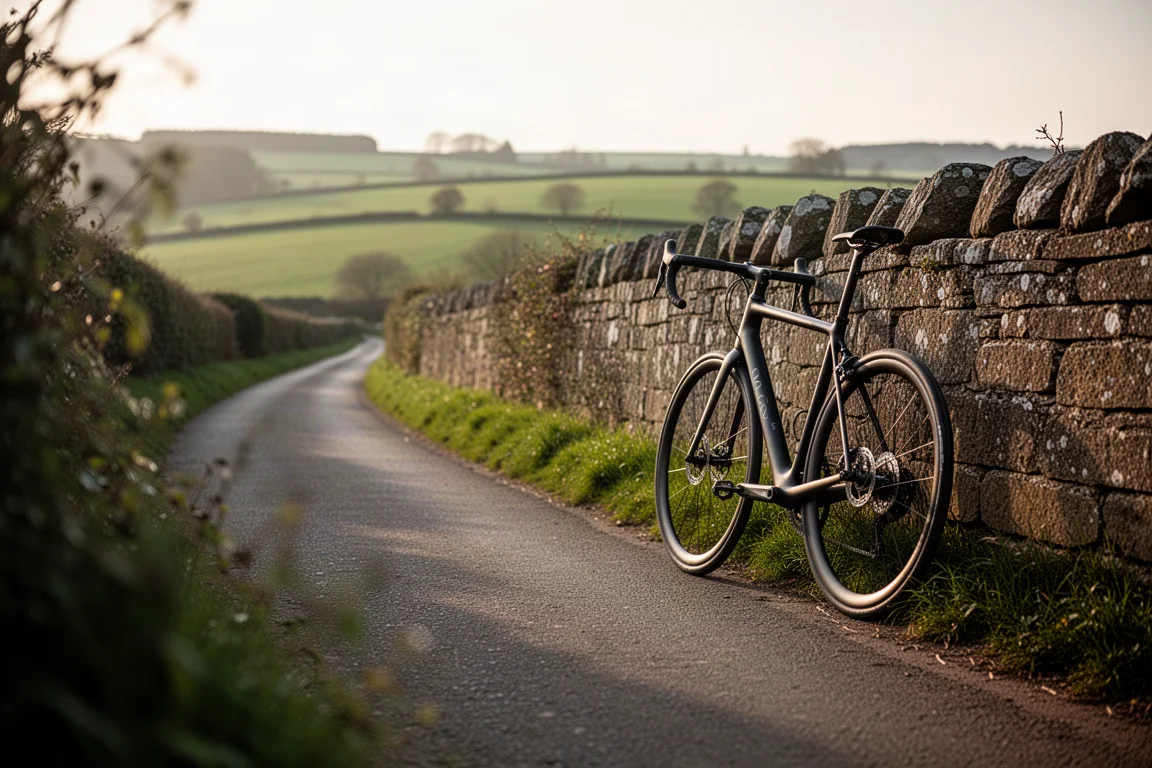
It is worth noting how much the accessories contribute. Pedals, a computer, a mount and a saddle bag added roughly two and a half kilograms, which is why two identical bikes can feel very different depending on how they are set up.
Upgrade 1: Tyres Are the Biggest Single Change
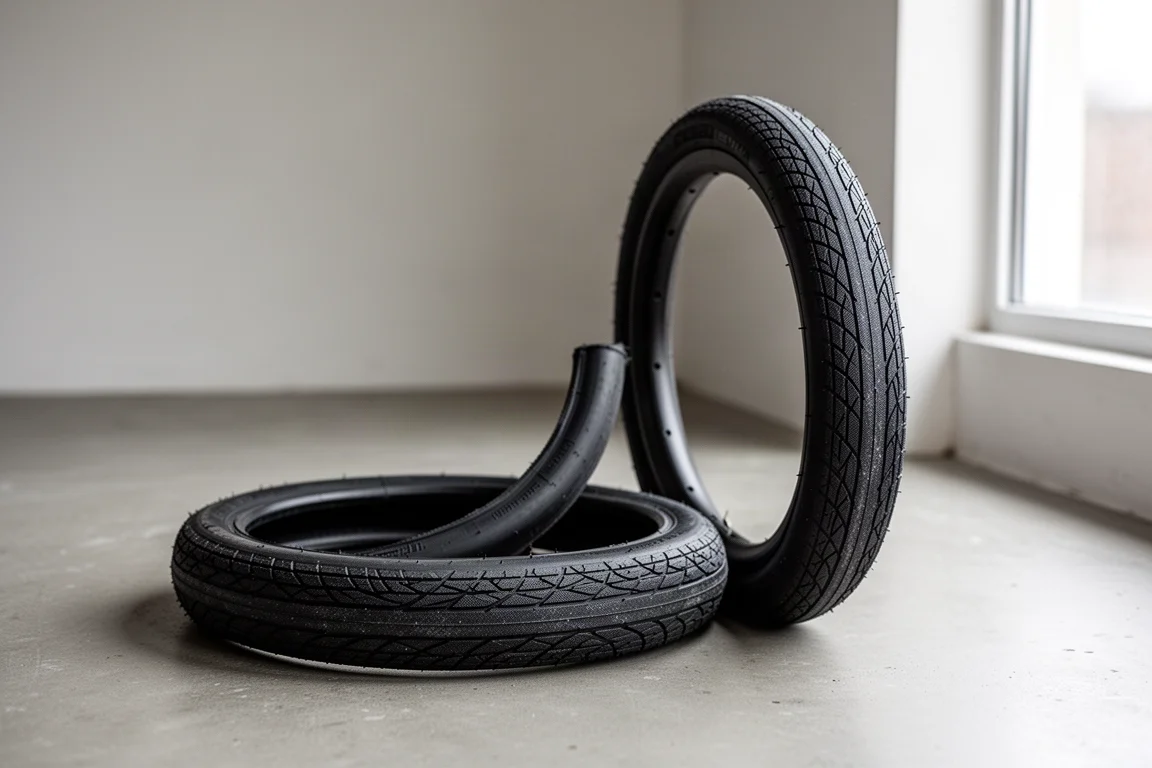
Tyres sit at the top of the list because they change how a bike feels more than anything else you can buy. Most entry-level bikes ship with hard compound rubber, and it is a particular problem on bikes around the £500 to £600 mark. A supple tyre inflated to the correct pressure can make almost any bike feel remarkable.
The Vittoria Corsa N.EXT is the tyre used here, priced between £30 and £50 online. It is a supple tyre in the same class as the Continental GP 5000 and the Schwalbe One, and any of those is a strong upgrade once the original tyres are worn out.
There is a trade-off to understand before you spend. The thinner and more supple a tyre becomes, the more easily it punctures, so the higher price brackets generally carry a higher risk of flats. With clearance for 35 mm tyres there is also no reason to stay narrow, particularly on rough road surfaces. Because tyres are consumable, this is a cost you will repeat, so a sensible middle ground beats chasing the most expensive option.
Upgrade 2: Bar Tape Is Cheap Comfort
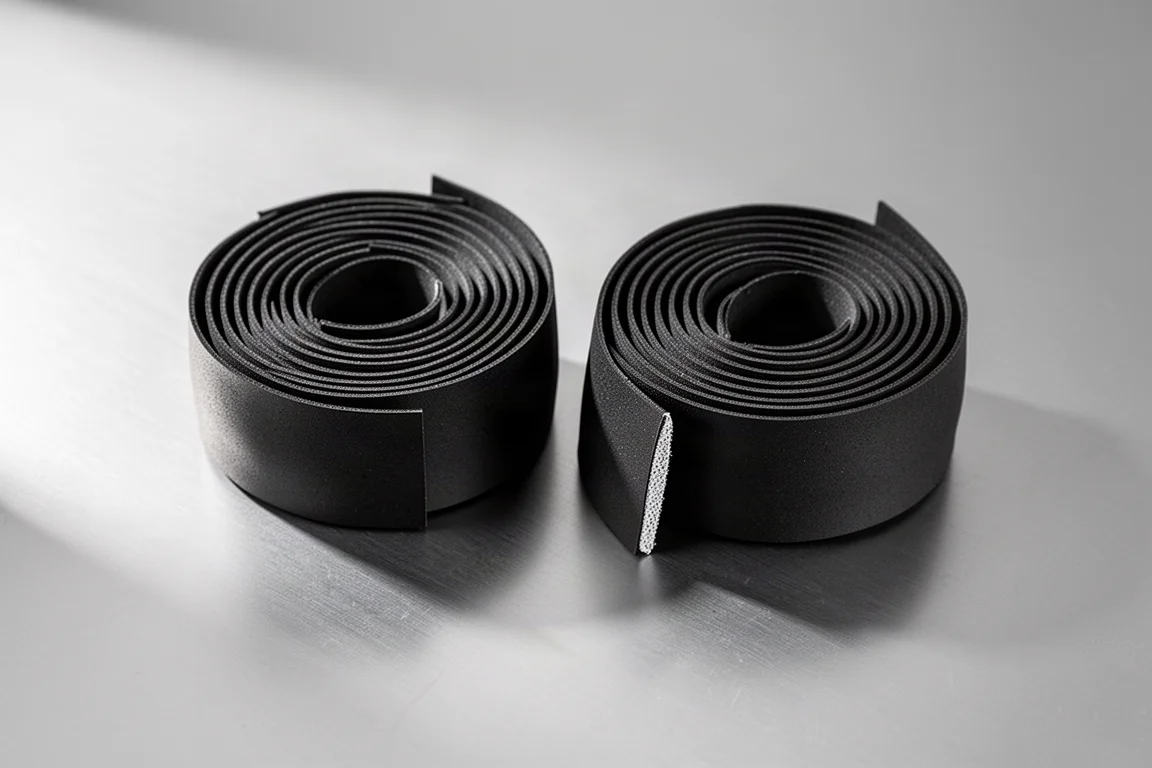
Cork bar tape is standard on most entry-level bikes, and there is nothing wrong with it, but it does not feel as good as it could. Riders spend a lot of time holding the tops and the drops, so bar tape is one of the cheapest ways to improve comfort.
BBB FlexRibbon costs about £16 online and is easy to recommend. It lasts a long time, and the backing is not too sticky, so it can be unwrapped and rewrapped when you change lever position or swap handlebars. A gravel version is available for riders who want extra thickness.
Other brands make good tape, including some premium options, but you often pay more for the name. For value and performance, this is a sensible first choice.
Upgrade 3: A Saddle With Pressure Relief
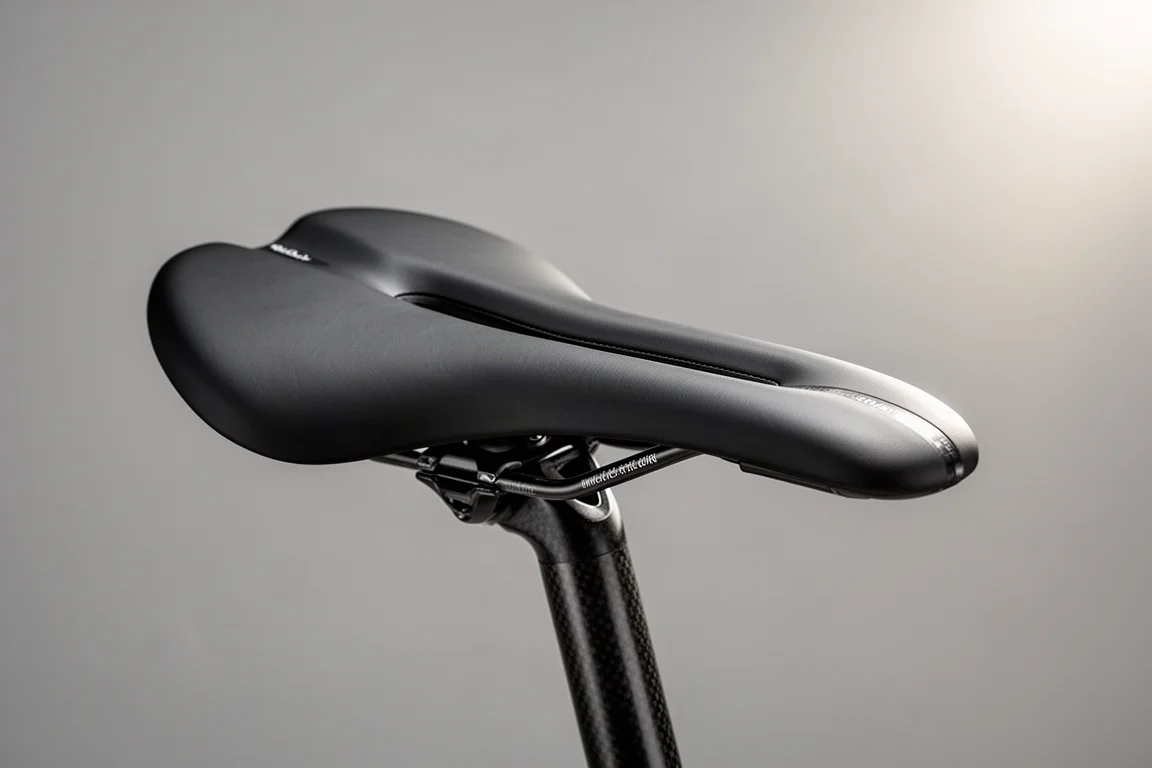
Saddles on affordable bikes are usually fine for a half hour ride to the shops and less pleasant once you are in the saddle for hours. The single feature worth prioritising is a pressure relief channel, and there are good options at lower price points, not only on high-end bikes.
The saddle used here is a classic shaped Selle Italia with a large central channel. This particular version has carbon rails, which is an expensive choice, but the shape is identical across the range and only the materials change. Lower-priced versions with aluminium rails are available, and there are plenty of other saddles with significant pressure relief systems, including the Pro Turnix, the Pro Griffon and the Ergon SR for female riders.
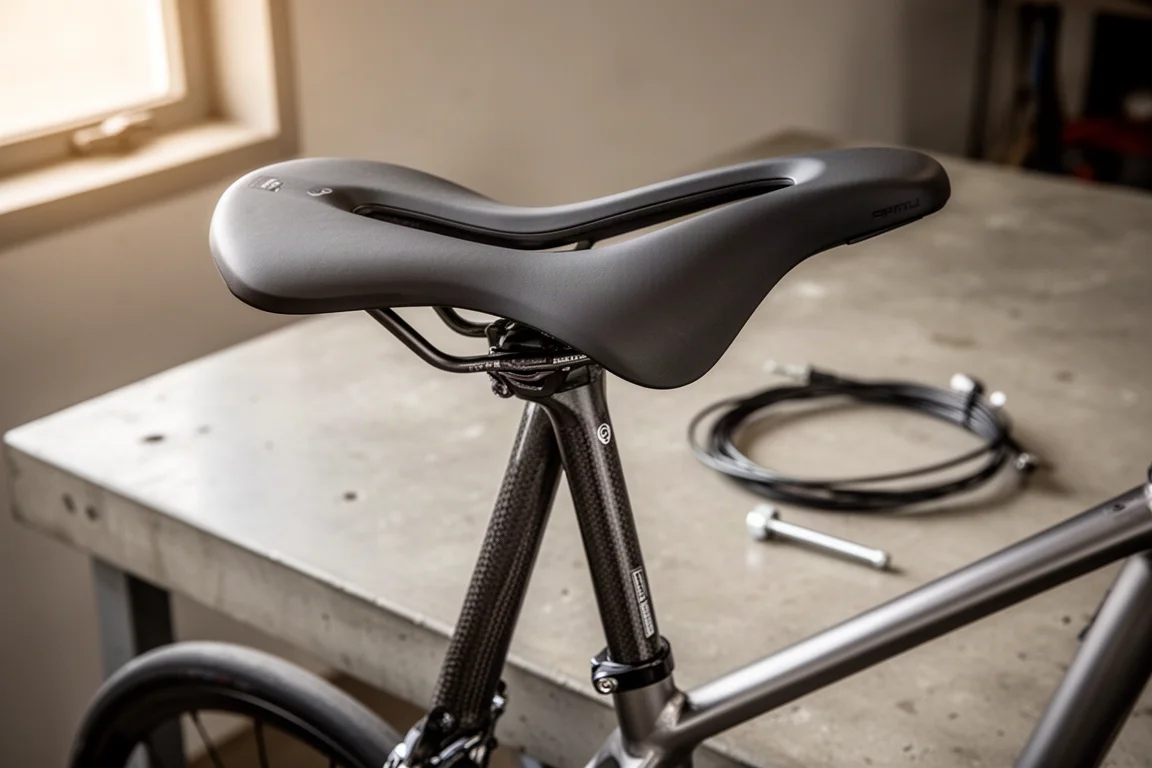
Before buying, check that the saddle rails suit your seatpost. Oval rails, which are common on carbon saddles, will not fit every standard round-rail clamp, so confirm compatibility first or budget for a new seatpost at the same time. If you are trying a shape for the first time, buy the cheapest version or ask a bike shop about demo saddles, which many shops lend out.
Upgrade 4: Brake Calipers for Mechanical Disc Bikes
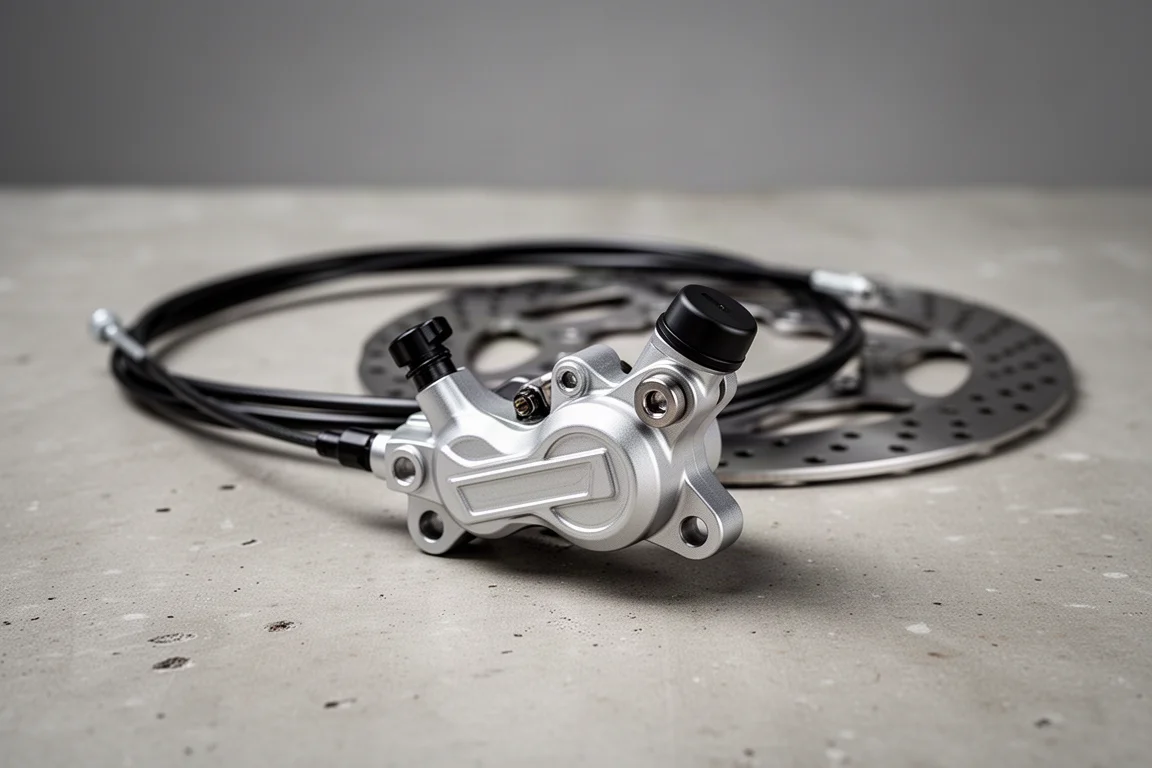
Mechanical disc brakes pull a cable that engages the caliper and squeezes the rotor. They almost always feel squishy and are often weak, which is a common complaint on entry-level bikes. Upgraded pads and compressionless cable housing both help, but the biggest single improvement is a different caliper.
The TRP Hy/Rd is cable actuated, so it swaps directly for the calipers already on the bike, yet it contains a small hydraulic reservoir inside the body. The result is power and modulation much closer to a full hydraulic setup. Installation is surprisingly straightforward, though new brake cables are needed, and the calipers are sold individually at a price that reflects the performance.
Smoother cable routing makes these calipers work better still, so if you are already replacing cables, it is a good moment to do both jobs at once.
Upgrade 5: Wheels Are the Biggest Spend
Entry-level wheels are a mixed bag. Some, like the ones on this bike, run true with even spoke tension and smooth bearings. Others develop rough bearings or go out of true within weeks of riding. If your wheels are in the second group, a reliable alloy wheelset with a reputation for serviceability and tubeless readiness is the sensible fix.
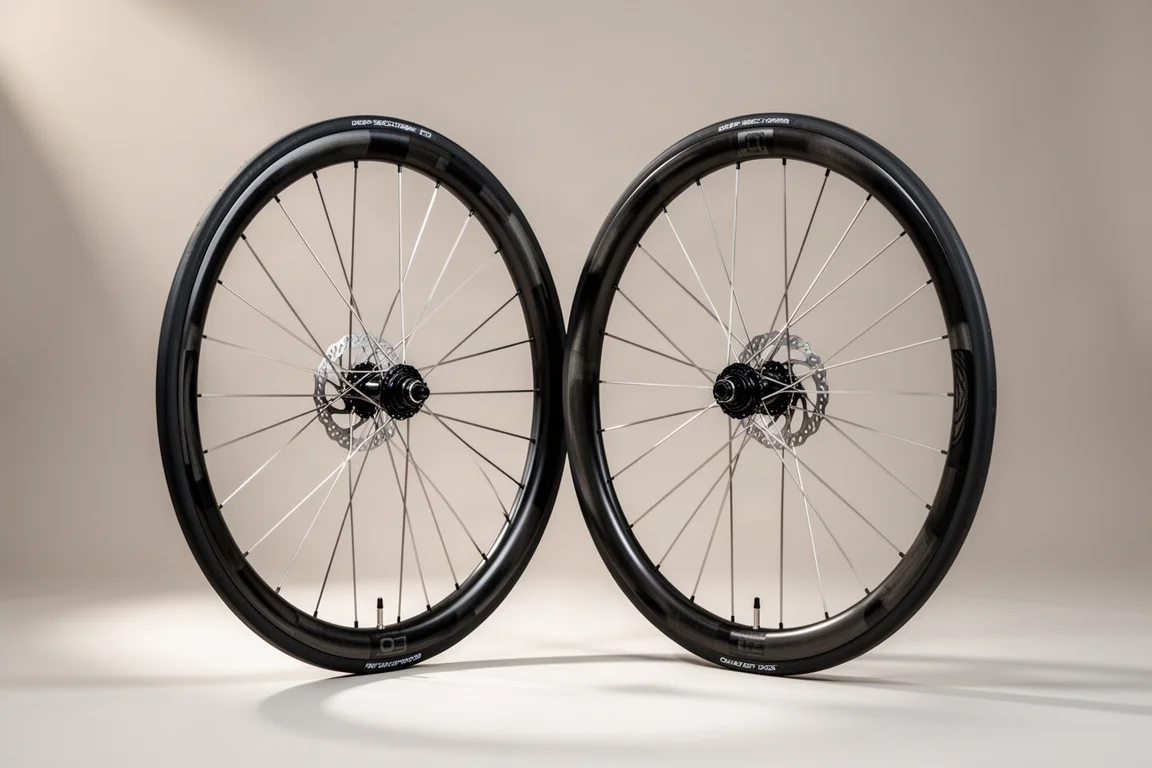
If your wheels are fine and you simply want a faster bike, carbon is the next step. Low to mid-price carbon wheels are the sweet spot, because returns diminish quickly past a certain price. The Zipp 303 S retails at £1,090, and Shimano’s 105-level C50 and Ultegra wheelsets sit at similar prices, with the Ultegra option slightly lighter and fitted with better hubs. All of them are significantly lighter than the alloy wheels on the bike.
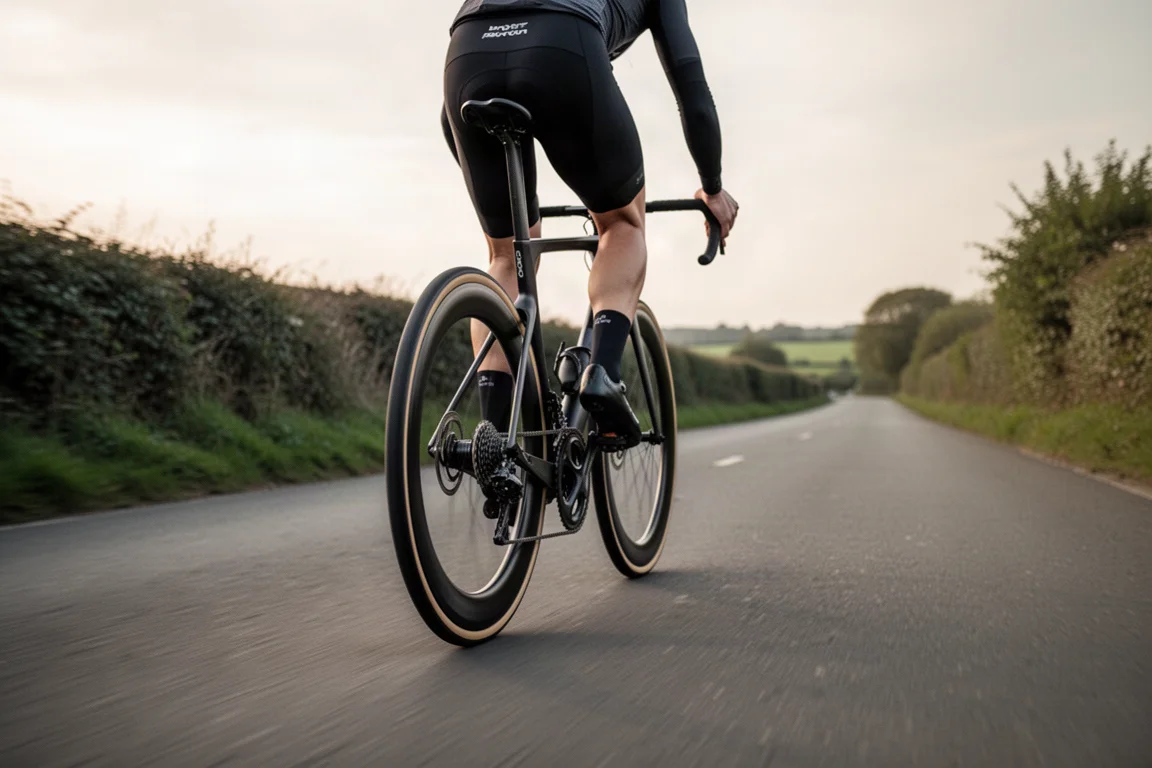
One detail catches people out. More affordable bikes, including this one, use 6-bolt rotors, while many premium wheels use a centre-lock mounting. Check which standard your rotors use before ordering, and budget for new rotors if you are switching.
Upgrade 6: Finishing Kit, Bars, Stem and Seatpost
Bars, stem and seatpost sit low on this list for a good reason. Unless you are changing them for fit, to shorten or lengthen your position or to change bar width, they are not a high priority. Weight savings are real but small: the difference between the two finishing kits compared here was 210 g.
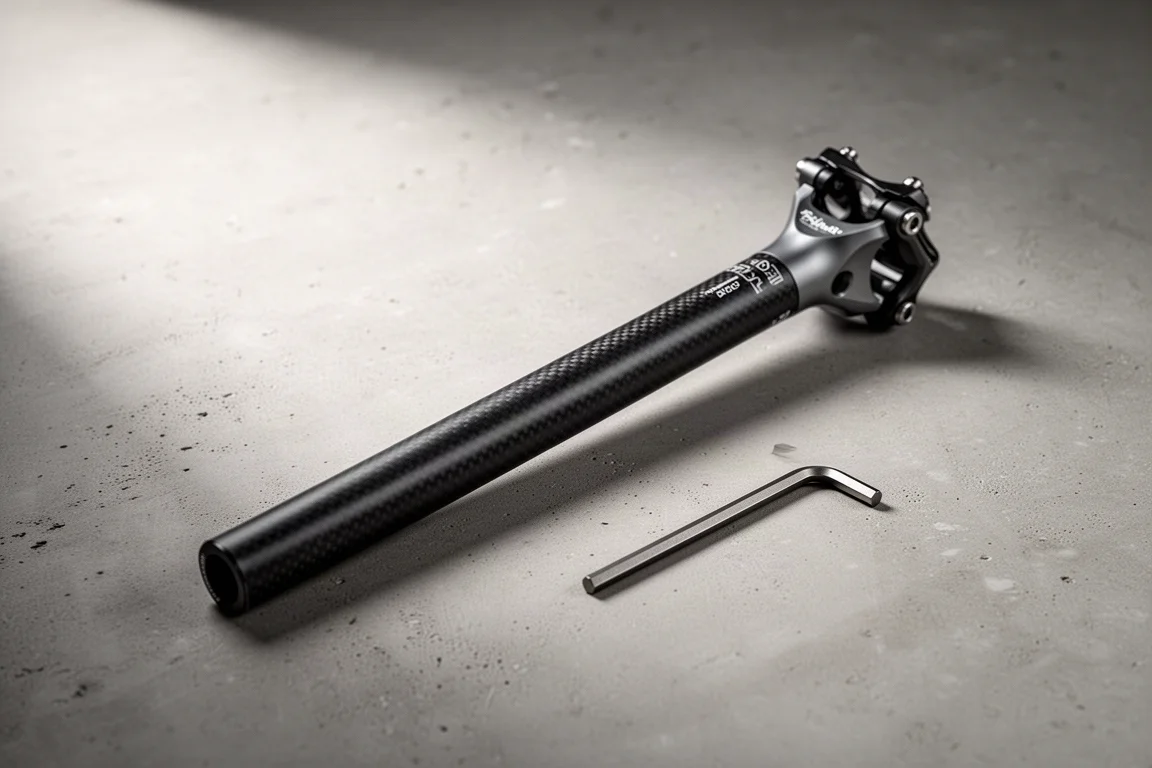
Where they do earn their place is comfort, aesthetics and adjustability. The USE Duro carbon seatpost is £80 at retail, which is unusual for the weight, since comparable posts from other brands cost considerably more. The Specialized Comp stem is adjustable, so the handlebar angle and height can be tuned, and it is lighter than the stock part; it can be found online for around £20. Carbon handlebars start at roughly £60, and aluminium bars remain a perfectly good option.
Handlebar choice deserves more attention than it usually gets. Bars vary in width, but also in reach, and that measurement can change your effective reach by up to 3 cm.
Upgrade 7: Tubeless Conversion
Tubeless is the final step, and it only makes sense once tyres and wheels are sorted. It divides opinion, but it works well with the wider tyres and lower pressures that modern bikes run. The process removes the inner tube, seals the rim with tubeless tape and a valve, adds sealant, then inflates quickly so the tyre seats. The sealant then closes most punctures as they happen.
The benefit is being able to run lower tyre pressures without risking a pinch flat when you hit rocks, bumps or potholes. Lower pressure means a smoother ride and more grip on rough surfaces.
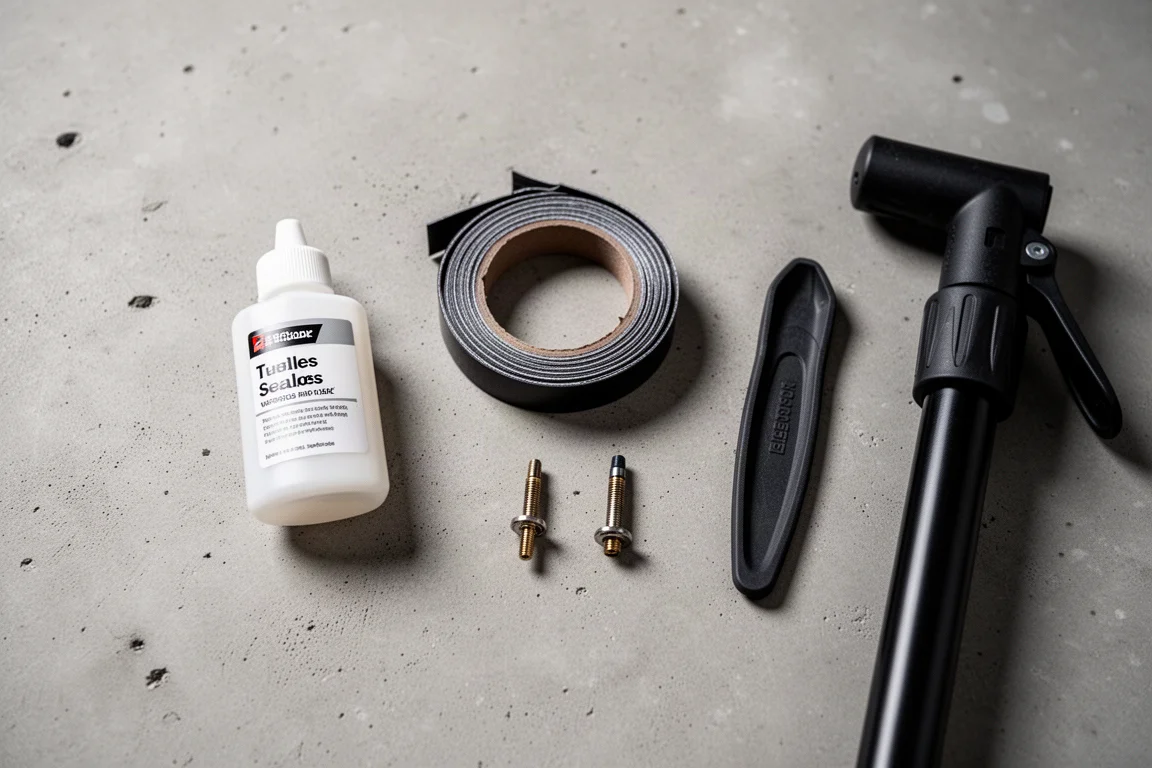
A do-it-yourself kit costs around £30 online, and some wheels arrive with tubeless tape and valves already installed, including the Zipp 303 S mentioned above. If you would rather not do the work, bike shops offer the service for around £10 to £30 per wheel.
Overall Buying Advice
Start with tyres, because nothing else changes ride feel as much for the money. Then sort your saddle, and treat bar tape as cheap comfort you can refresh at any time. Brake calipers come next if your bike has mechanical discs, and wheels are the final and most expensive step.
What you should not do is upgrade the groupset. The Shimano Claris on this bike works well, and paired with the hydraulic-assisted calipers the stopping power is genuinely strong. If you have saved a budget that is not quite enough for a good set of wheels, keep the money and enjoy the bike as it is rather than spending it on a new groupset. Wheels can follow later.
Two practical reminders. Tyres are consumable, so plan for repeat spending. And the overall weight change on this build was small, from 11.35 kg to 10.87 kg, which confirms that these upgrades are about feel, comfort and confidence rather than the number on the scale.
Conclusion
The order matters more than the budget. Tyres transform the ride immediately, a saddle with pressure relief makes long distances comfortable, and bar tape is a small cost for a noticeable gain. Brake calipers bring mechanical discs much closer to hydraulic performance, and wheels deliver the biggest change in speed once the rest is in place. Choose the parts that match your riding, fit them in that order, and an entry-level bike can feel far more expensive than it is.
Further reading
Related Reviews
Cycling Upgrades
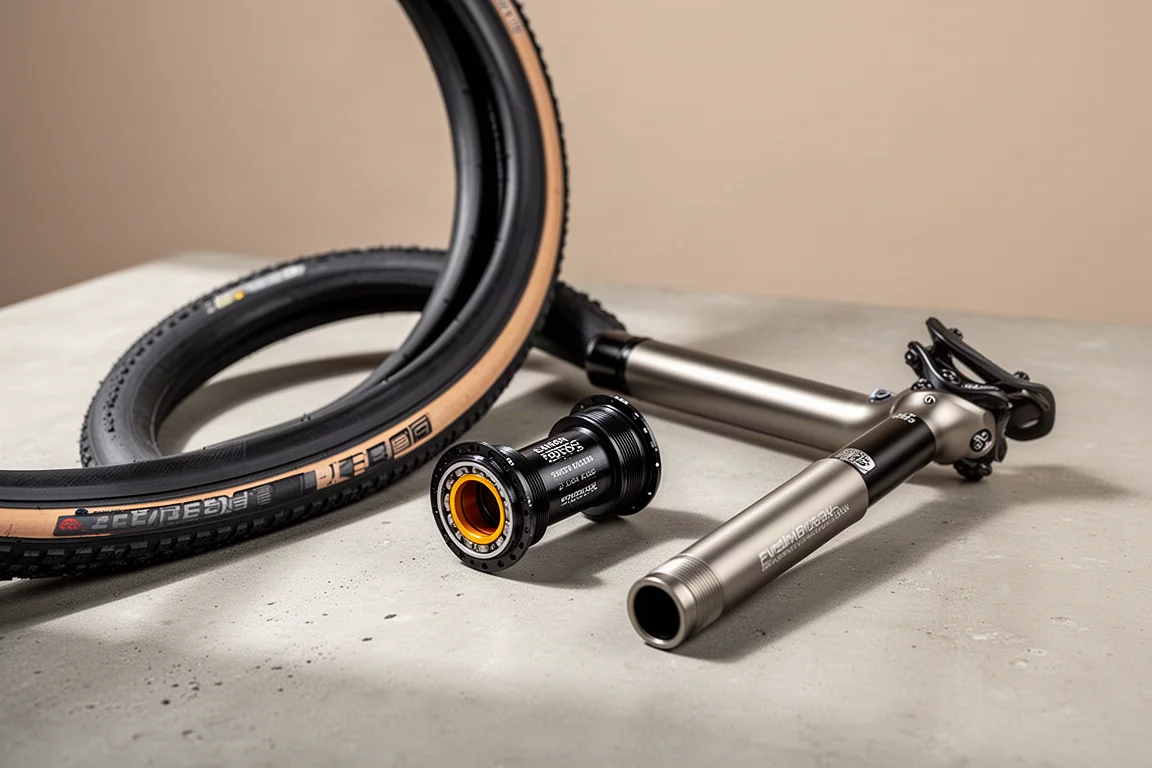
Best Bike Upgrades 2026: Three Practical Upgrades for Better Riding
A supple race tire, a durable ceramic bottom bracket, and a suspension seat post each offer distinct benefits and trade-offs.
Cycling Upgrades
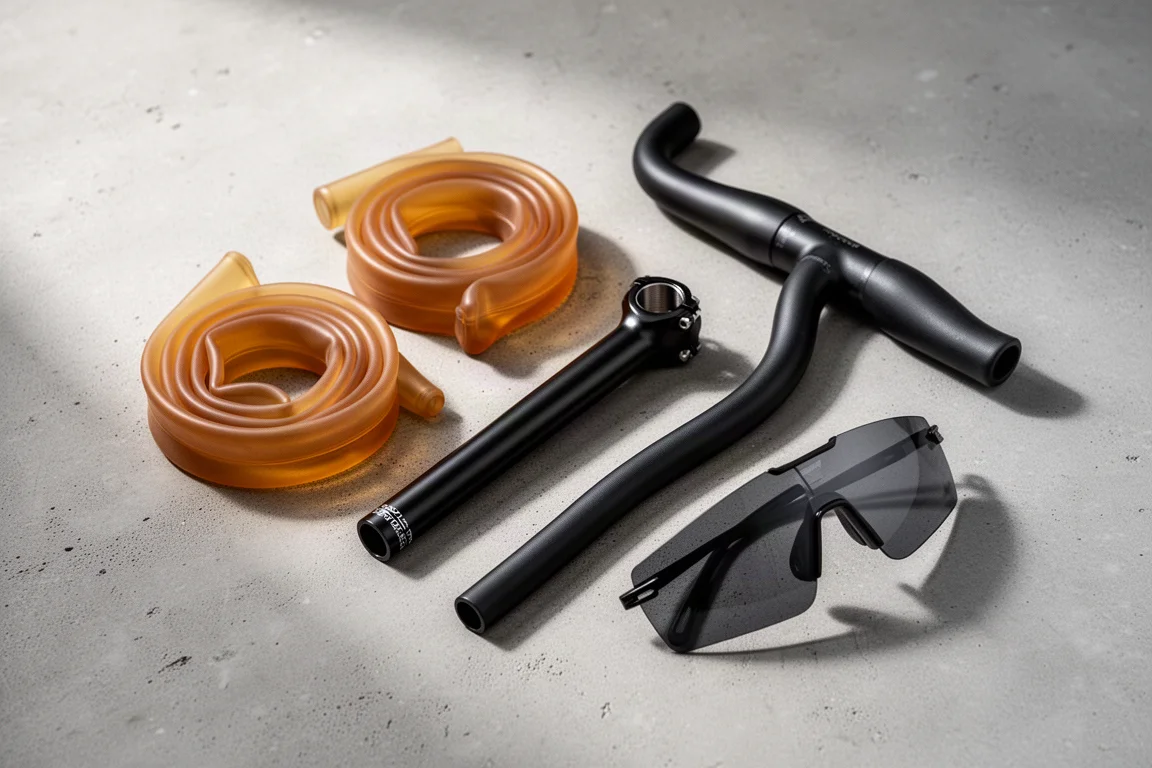
Cheap Road and Gravel Bike Upgrades: Five Budget Picks Worth Buying
Five low-cost upgrades for road and gravel bikes, from latex inner tubes with a measurable speed gain to budget stems, handlebars and sunglasses.
Cycling Upgrades
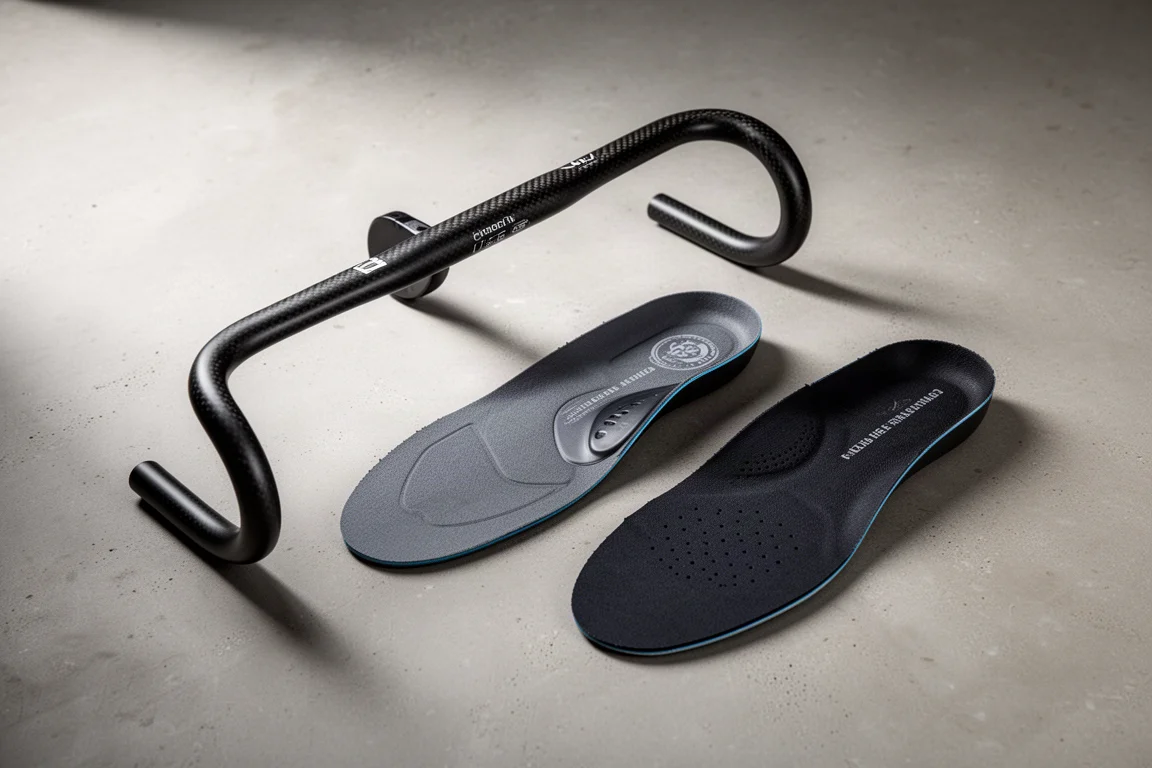
Best Value Bike Upgrades: Handlebars and Arch Support Insoles Worth Buying
Three low-cost cycling fit upgrades that change how a bike feels: a narrow internally routed handlebar and two arch support insole options.