Backpacking Tents
Underwood Aggregator Trekking Pole Tent Review: A $55 Shelter With a Pitch Problem
A 2.5 lb trekking pole tent for $55 with a compact packed size, workable materials, and a floor-to-wall construction that makes a clean pitch nearly impossible.
Introduction
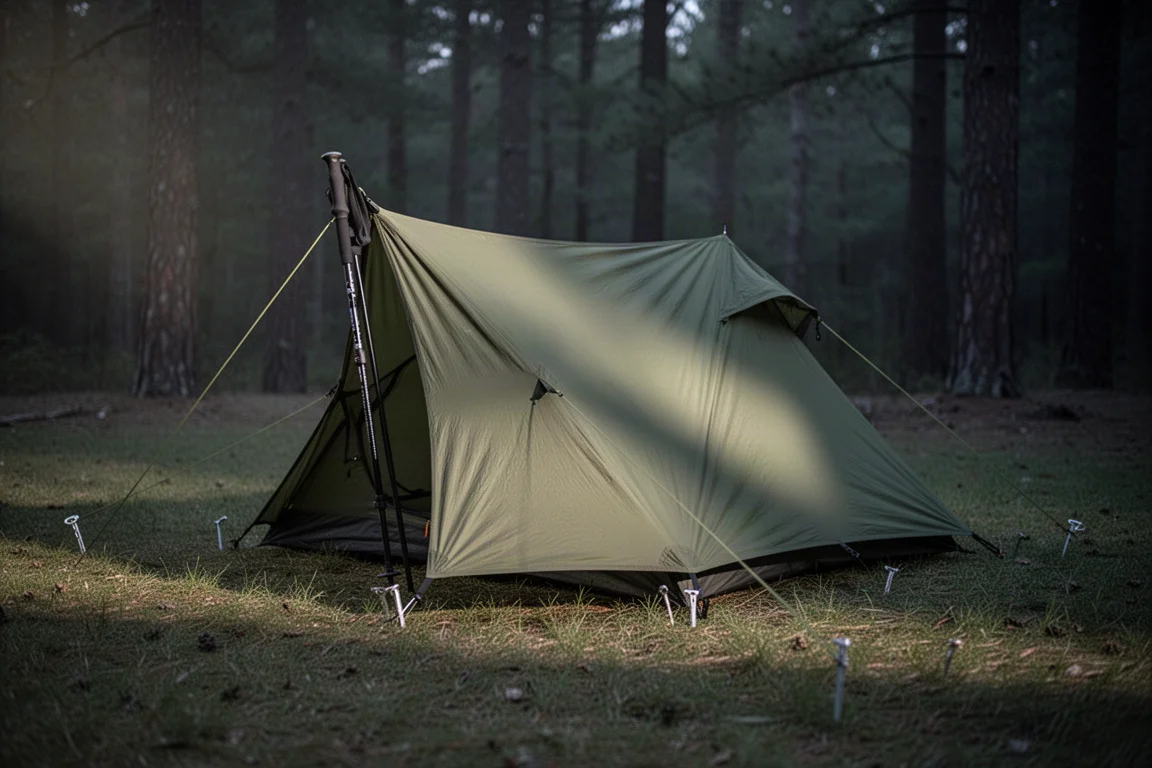
Trekking pole shelters make a simple promise: leave the poles at home, use the ones you already carry, and save weight. The Underwood Aggregator Trekking Pole Tent follows that formula closely. It weighs roughly 2.5 pounds, packs to about 14 inches by 5.5 inches, and sells for around $55. On paper, that is a considerable amount of shelter for very little money.
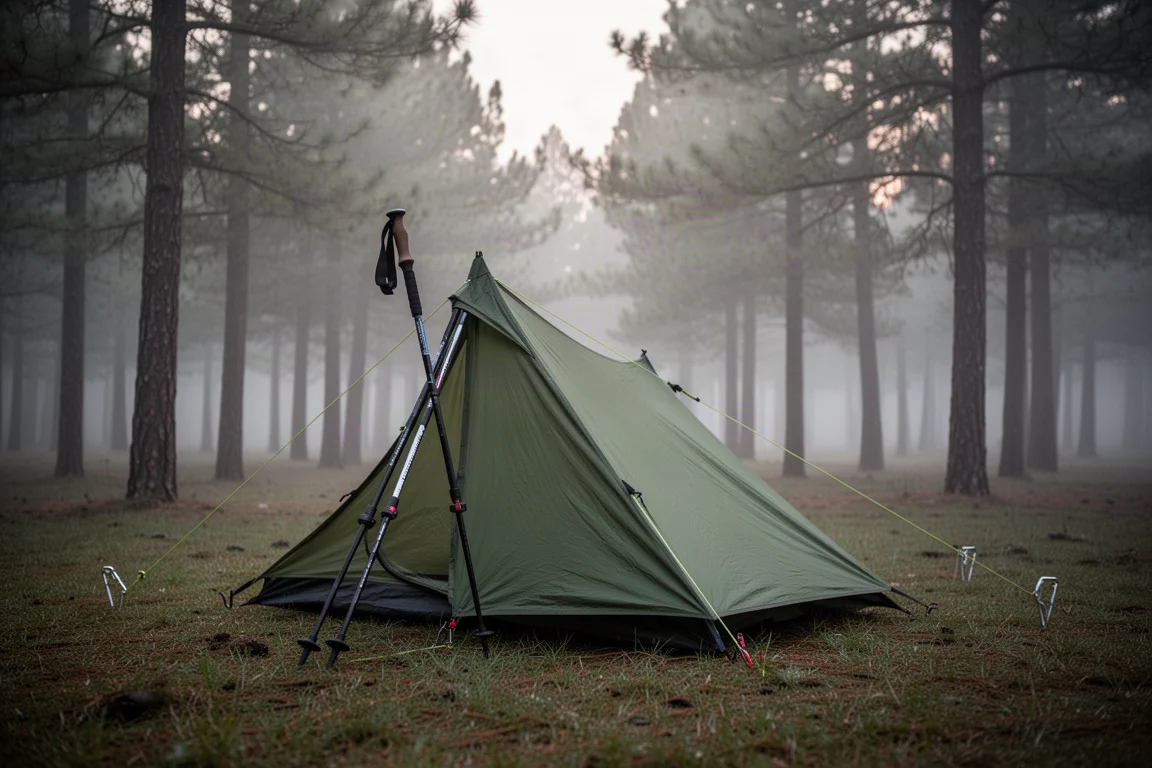
In use, the value proposition is where things get complicated. The floor and the wall are cut and sewn as one continuous piece of fabric that wraps from the ground, up the side, and over the top. The guy line attachment points sit lower than the material they are meant to pull outward. The practical result is a shelter that is hard to pitch cleanly and that feels closer to a bivy than a tent, because the fabric sits so close to the body.
This is a product with a genuinely unusual design, and that design is the main reason to think carefully before buying.
Who This Tent Is For
This is a non-freestanding shelter. It has to be staked out to stand, and it needs a trekking pole or a stick at least 46 inches long to hold the apex. There is also a loop at the top, so the tent can be hung from an overhead branch and staked out from there instead.
The version assessed here is the one-person model, which is the version sold with the fabric set described below. A two-person version exists, but it uses a completely different design, so nothing here should be read as a judgement on that model.
Realistically, this tent is aimed at backpackers who are comparing the cheapest possible trekking pole shelters and want to know whether the low price hides a catch. It is also relevant to anyone who wants a very small, very light package and is willing to accept a tight interior and a fabric-heavy single-wall build. Anyone who values a fast, repeatable pitch, generous living space, or strong ventilation should look elsewhere.
Main Strengths
The headline numbers are genuinely appealing. At about 2.5 pounds and a packed size of 14 by 5.5 inches, this is a compact load that disappears into a pack. The price of roughly $55 places it at the very bottom of the trekking pole tent market.
The materials are not the weak point. The body uses a 210 denier polyester with a 5,000 mm hydrostatic head rating and a PU coating. The seams are taped. The zippers are aluminium short-pull SBS units. The tent ships with twelve aluminium stakes, setup instructions, and a warranty card, and it can be pitched with a trekking pole, with a stick, or hung from an overhead branch.
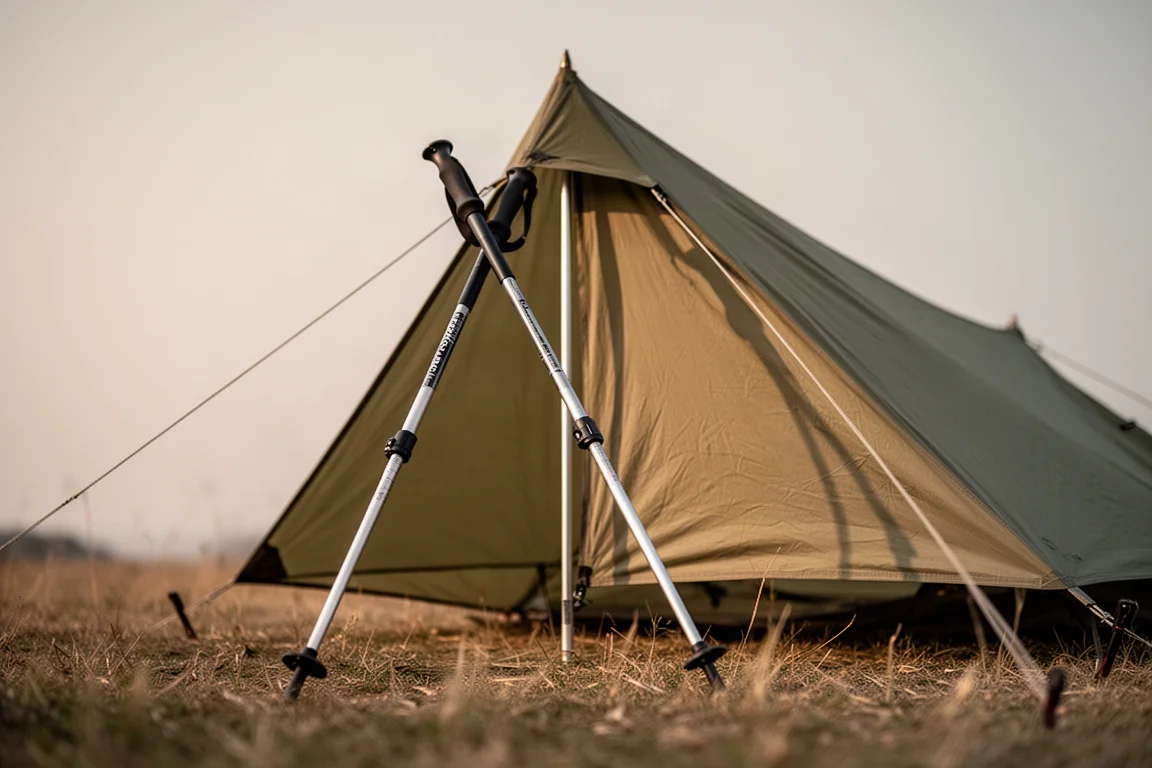
Setting the tent up is not especially difficult. It takes time rather than skill, mainly because of the number of stakeout points and guy lines involved, but the process itself is straightforward enough for a first attempt.
Design and Pitch Problems
The core issue is the construction of the shell. Because the floor material is connected directly to the wall material, the fabric runs down the inside of the wall, under the floor, and back up the other side as one piece. Pulling one section tight pulls another section out of shape.
The guy line points make this worse. They sit below the midpoint of the fabric they are supposed to tension, so they cannot lift the wall away from the occupant. The tent has twelve stakeout points, three of them at the foot box, plus three guy lines at the rear and two further stakeout points. Adjusting any one of them visibly disturbs the others, which makes a taut, even pitch effectively unachievable no matter how much time is spent on it.
There are other finishing concerns. The fabric carries an unusual amount of loose thread across the panels and seams. The door zipper begins at the top, so opening the door means reaching down and bending into an awkward position from inside, particularly when the lower panel is attached to the ground. Rolling back both door panels is not possible either, since the tent will not stay erect with both open.
Interior Space and Ventilation
The published dimensions look more generous than the usable space. Overall length is 87 inches, but usable length is closer to 67 inches, which is about 5 feet 7 inches. Overall width is 47 inches, while usable width is around 35 inches. Head height reaches 40 inches at the top end and drops to about 9 inches at the foot.
In practice, the usable zone is small. A person of around 5 feet 4 inches fills the floor area, with feet touching the wall at the bottom and head touching the wall at the top. Sitting upright is only partly possible. Inside a sleeping bag, the bag and the occupant’s head will contact the walls, and there is no way to avoid that in a shelter this tight.
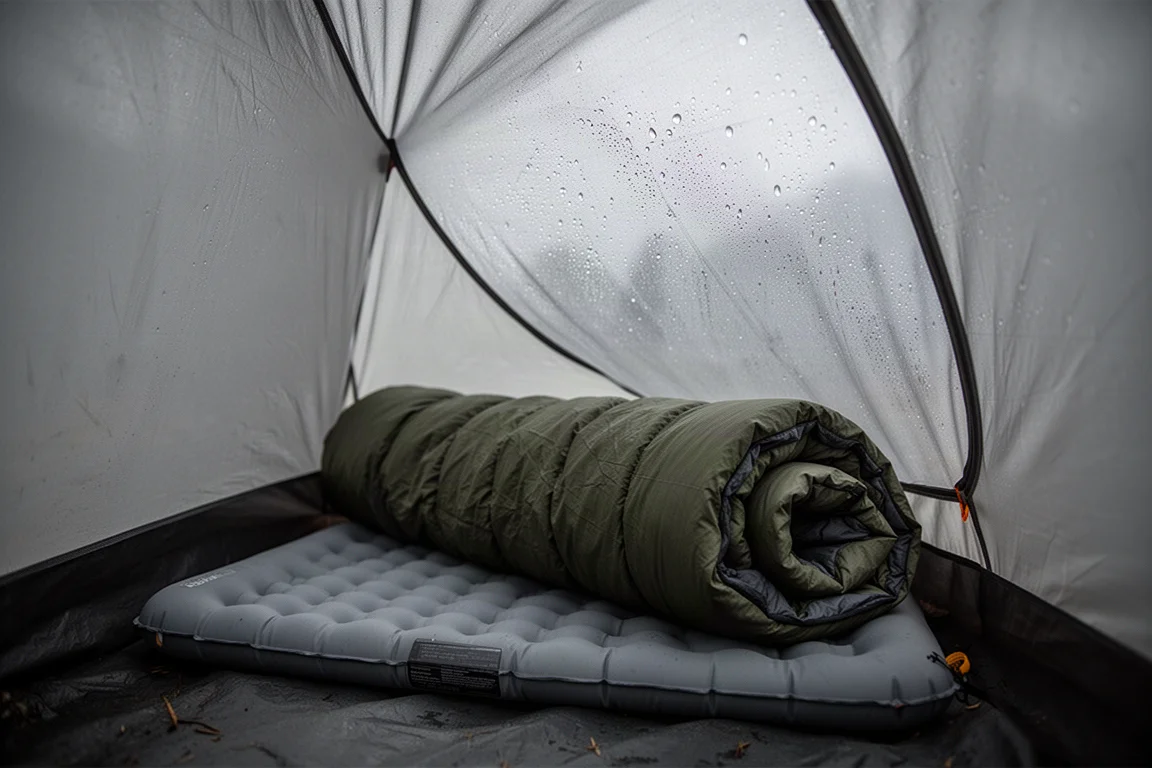
Ventilation is the other structural worry. This is a single-wall tent with very little mesh, and the fabric sits close to the sleeper on all sides. That combination points strongly toward heavy condensation on cool, still nights, especially with the door closed.
Weather Protection and Setup Notes
On paper, the weather numbers are respectable for the price: a 5,000 mm hydrostatic head, a PU coating, and taped seams. The door has a storm flap over the zipper that can be secured with velcro, which helps keep driven rain out of the main opening.
The weak point is the vent at the foot end. It sits low, near where the sleeper’s feet rest, and the storm flap cannot be secured over it. That vent is also tied to a stakeout point that has to remain in place, because without it the front of the tent collapses. In a heavy rain event, that arrangement leaves the foot of the sleeping area exposed, with no way to close the gap.
Buying Advice
Approach this one as a project rather than a finished shelter. If the appeal is the $55 price and the 2.5 pound packed weight, the trade-offs are the pitch quality, the cramped usable interior, the loose threads, and the likelihood of condensation on any night that requires a closed door. Those are design-level issues rather than things a buyer can fix with better staking.
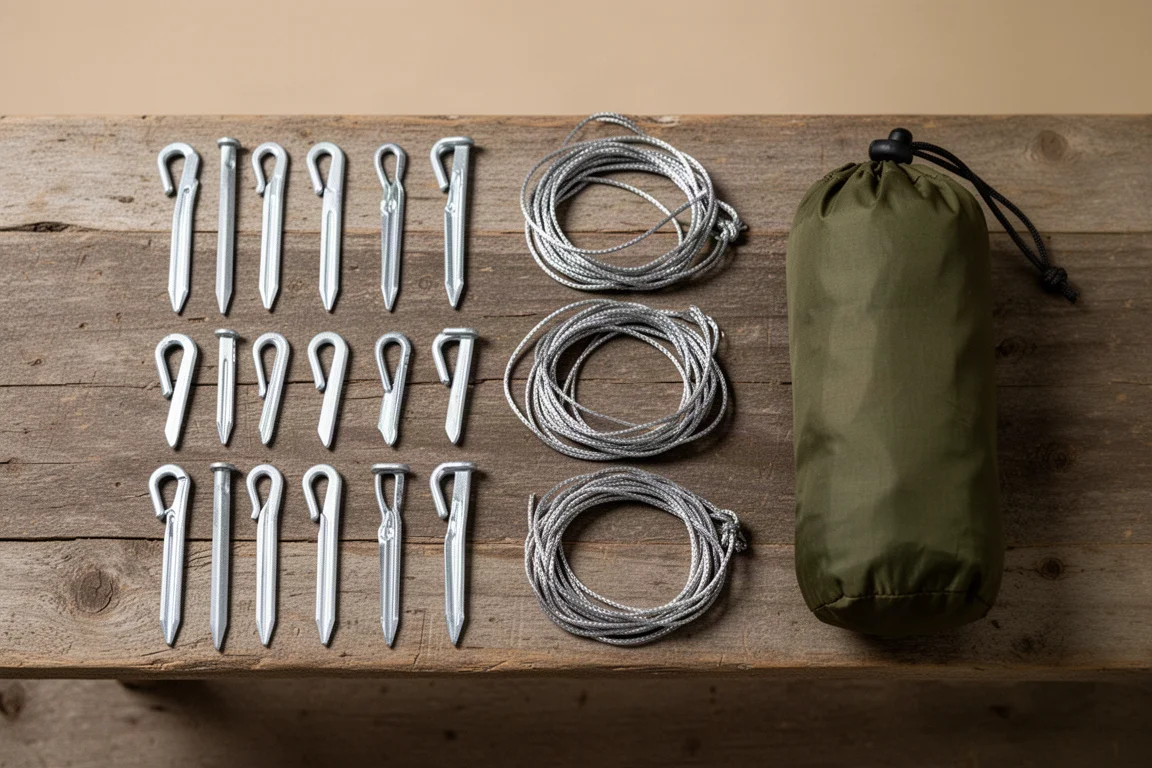
A few practical notes for anyone still weighing it up. The twelve included aluminium stakes are heavy, so replacing them with lighter ones is the obvious way to trim carried weight. The warranty card lists a company web address that does not resolve, which is a poor sign for after-sales support. The brand’s own listing describes an origin tied to a college students mountaineering association established in 2010, although the company is based in China. The colours listed are green and yellow, though the yellow option reads as orange in person.
There is also a geometry question that no amount of practice solves. If a taut pitch and a dry foot end matter to you, this tent does not deliver them, and the two-person version should be evaluated separately because its design differs entirely.
Conclusion
The Underwood Aggregator Trekking Pole Tent gets the easy parts right: low weight, small packed size, low price, and materials that are acceptable for the money. It gets the hard part wrong. The floor-to-wall construction and the placement of the guy line points prevent a clean pitch, the interior is smaller than the numbers suggest, the foot-level vent cannot be closed against heavy rain, and condensation is a real risk in a single-wall shell this tight.
For a shopper on a strict budget who wants a very compact trekking pole shelter, this is a design to understand fully before committing. For most backpackers, the money is better spent on a shelter with a more conventional floor and wall construction.
Product link
View more details for Underwood Aggregator Trekking Pole Tent
This product is mentioned in the review. Check the specifications, options, and compatibility before buying.
View more details for Underwood Aggregator Trekking Pole TentFurther reading
Related Reviews
Backpacking Tents
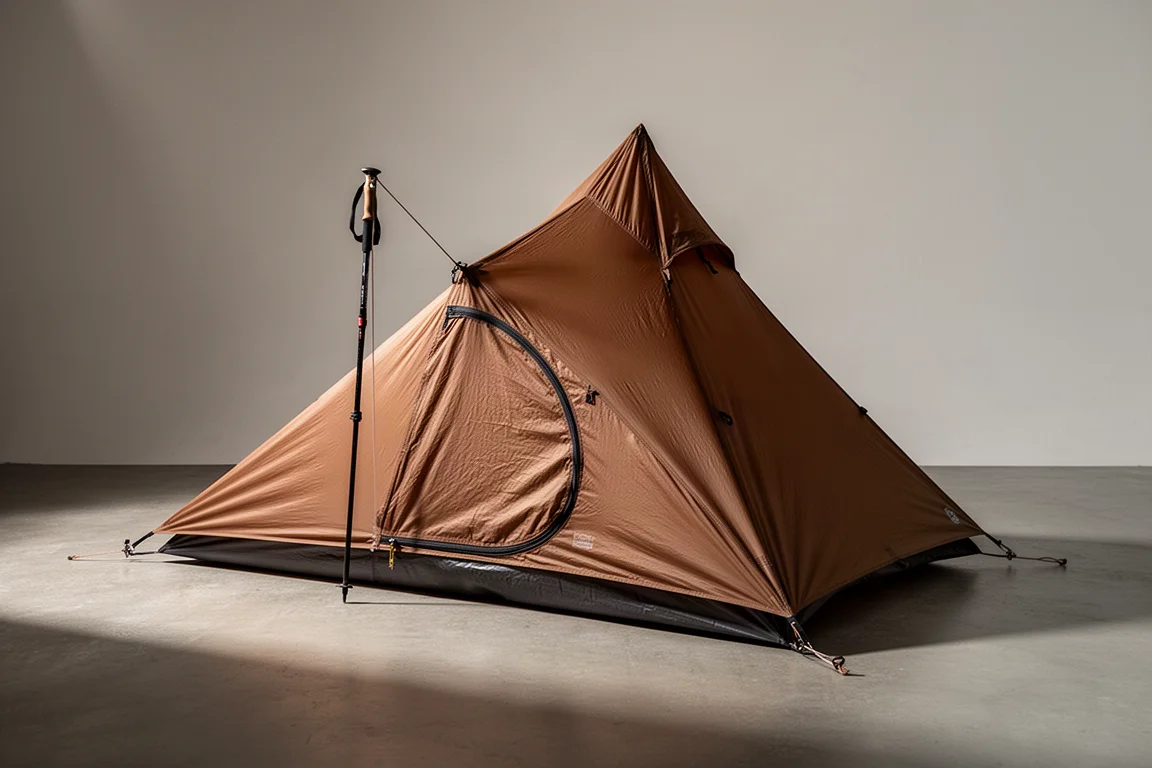
3F UL Lanchan Pro 1 Review: A 1 lb 8 oz Single-Wall Trekking Pole Tent
A practical look at the 3F UL Lanchan Pro 1, a single-wall trekking pole shelter with a 1 lb 8 oz weight, 20D silnylon fabrics, and a roomy 90 x 31 x 49 inch interior.
Backpacking Tents
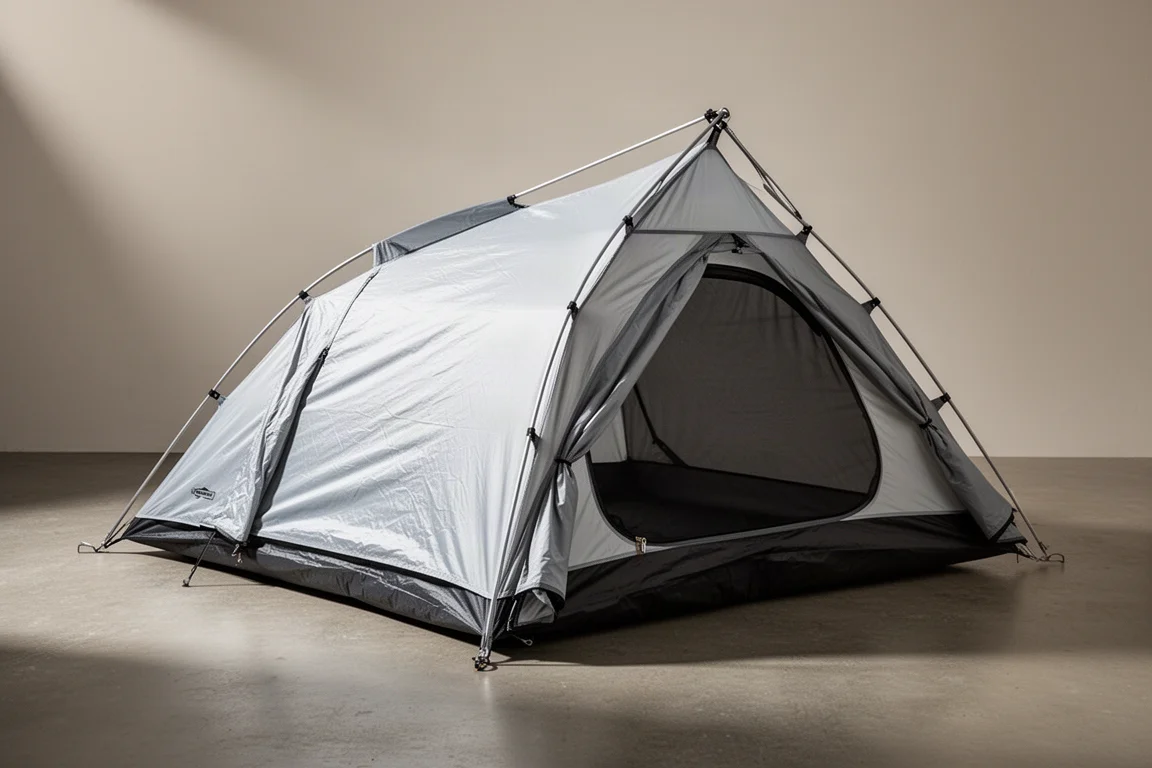
3F UL Taiji 2-Person Tent: A Convertible Backpacking Shelter Worth a Closer Look
A practical look at the 3F UL Taiji two-person tent, covering its materials, true two-person interior, fly-first pitching, and the seasonal inner swap that lets one shelter cover more of the year.
Backpacking Tents
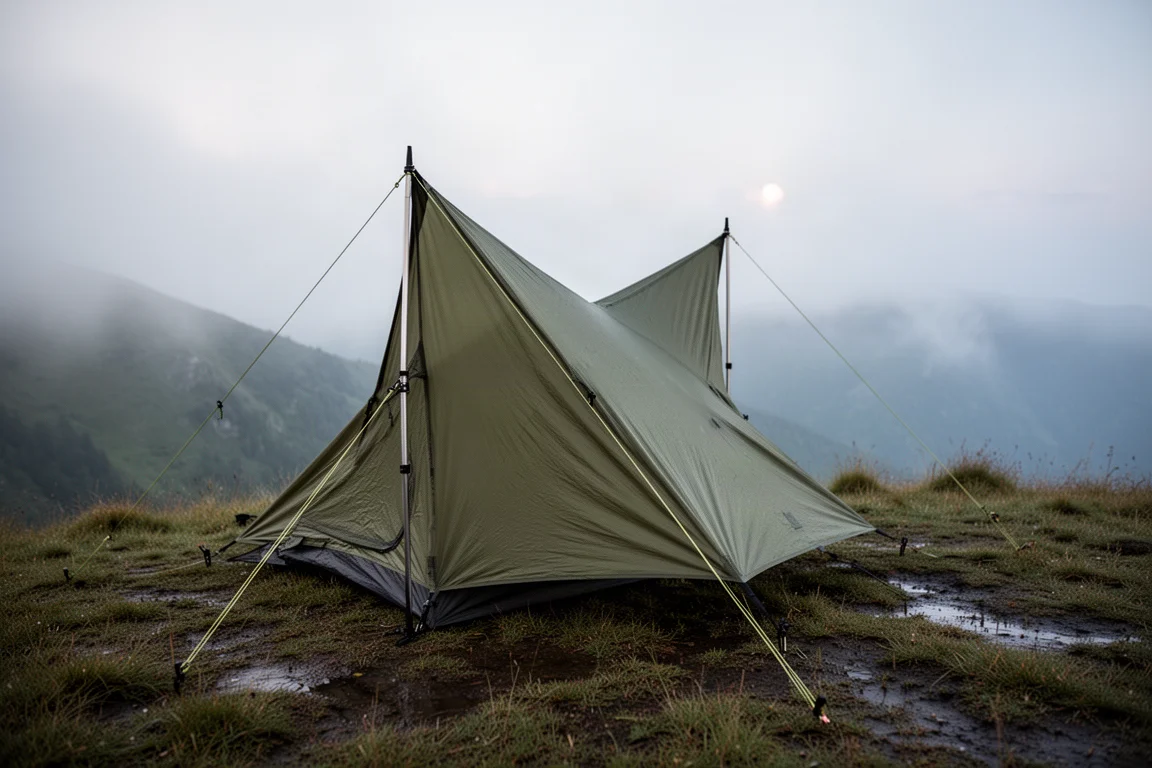
3FUL Lanshan Twoerson Pro Review: A Light Trekking Pole Shelter That Struggled in Rain
A two-person trekking pole shelter with a 2026 redesign, pitched with sticks and put through a night of steady rain. Here is what worked, what did not, and what to check before buying.