Outdoor Gear
UCO Torch Lighter: A Compact Butane Torch Alternative to the Soto Pocket Torch XT Extended
The UCO Torch Lighter is a $17 butane torch with a telescoping barrel, a 2,300°F flame and a larger fuel chamber than the Soto Pocket Torch XT Extended. Here is what early field use shows.
Introduction
The Soto Pocket Torch XT Extended has earned a strong reputation as a compact butane torch for outdoor use. It comes from a Japanese company with a solid track record, and for a long time it was easy to buy on Amazon. That is no longer the case: the lighter has disappeared from Amazon, and although it is still available through the Soto Outdoors US page, many buyers prefer not to order imported products anywhere other than Amazon, where returns and warranty issues are simpler to resolve.
The UCO Torch Lighter is the closest alternative available right now, and it costs substantially less. It is a butane torch with a telescoping barrel, a 2,300°F flame and a design that shares obvious DNA with the Soto. At around $17 on Amazon, it sits roughly $10 below the Soto’s typical $27. This is an initial look based on limited field time rather than a final verdict, but the early signs are encouraging.
What the UCO Torch Lighter Offers
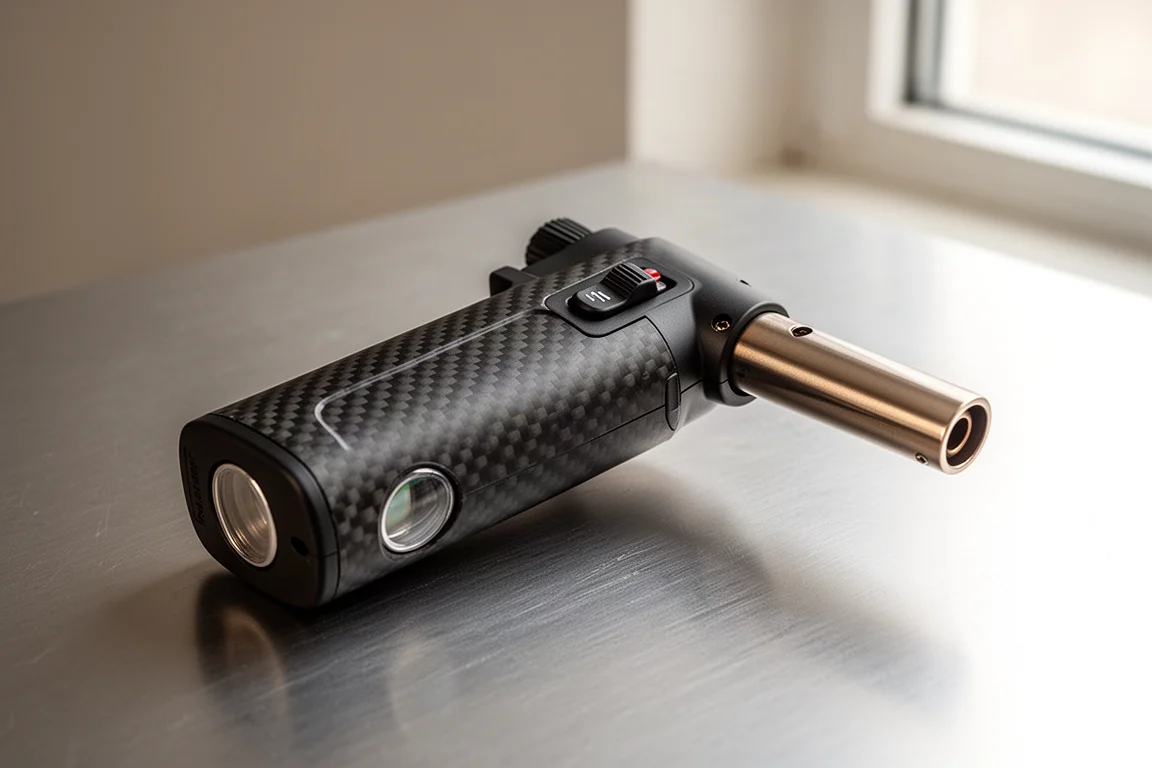
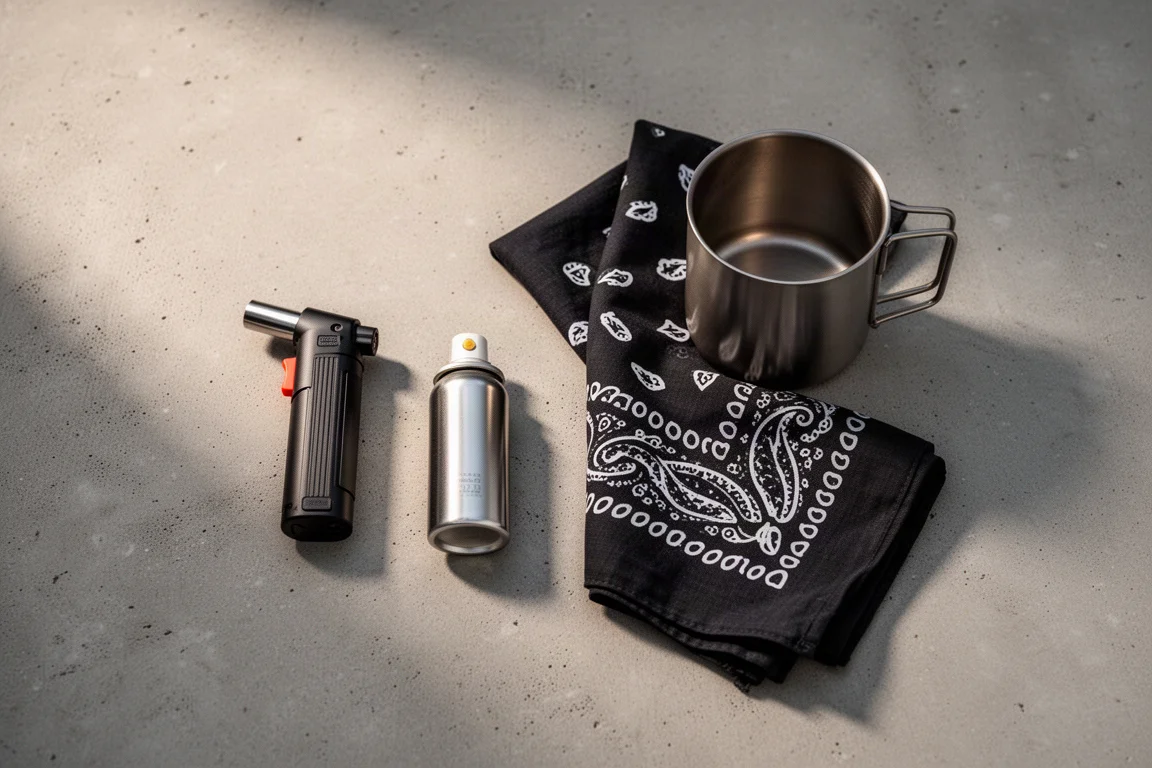
At its core the UCO is a butane torch lighter built for lighting stoves, campfires and anything else that needs a focused flame. The headline specification is a 2,300°F flame output, identical to the Soto’s. The burner head is the same diameter, even though the UCO’s outer body is slightly larger, and the flame shape is the same fine, centralised jet on both.
Measurements are straightforward. Closed, the UCO is about 4.5 inches long and 1.5 inches wide. Fully extended, the telescoping barrel brings it to roughly 6.5 inches, which is about half an inch shorter than the Soto at full extension. Weight is around 2 ounces, so it adds almost nothing to a pack.
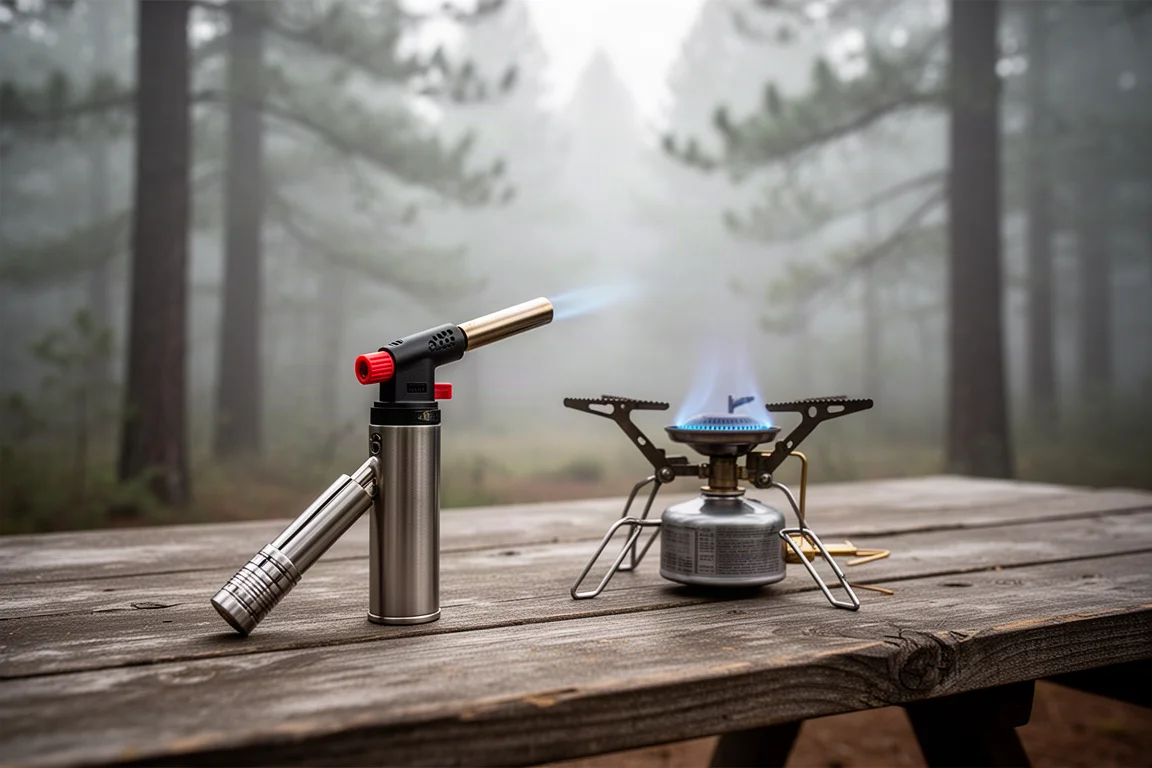
The telescoping barrel is the feature that justifies carrying a torch rather than a standard lighter. It keeps your hand at a safe distance from the flame when you are reaching into a stove or a fire pit, and it makes the lighter genuinely useful in situations where a fixed lighter would be awkward.
Design and Handling
The most noticeable difference from the Soto is the control layout. The UCO puts its ignition switch on the side of the body, while the Soto places it at the top. More importantly, the UCO uses a dedicated safety switch on the side rather than building the safety into the igniter itself. That switch can be locked so the ignition button cannot be pressed, which is a small detail that makes a real difference when you are wearing gloves.
Both lighters use the same materials: plastic and a zinc alloy. The UCO body has a carbon-fibre style finish, though it is plastic rather than carbon fibre, and it looks tidy for the price. A fuel window sits at the base, air intake slits are cut near the top, and the flame adjuster is positioned at the bottom, where it protrudes just enough to be turned easily by hand. Leaving it on the highest setting works well for most outdoor tasks.
Real-World Performance
So far the UCO has been used on one trip, which is not enough to draw final conclusions, but the conditions were far from gentle. Overnight lows sat around 40°F, daytime temperatures stayed below 50°F, and the weather was windy and extremely wet, with heavy rain and plenty of moisture in the air. The lighter lit every time and never failed to ignite a stove.
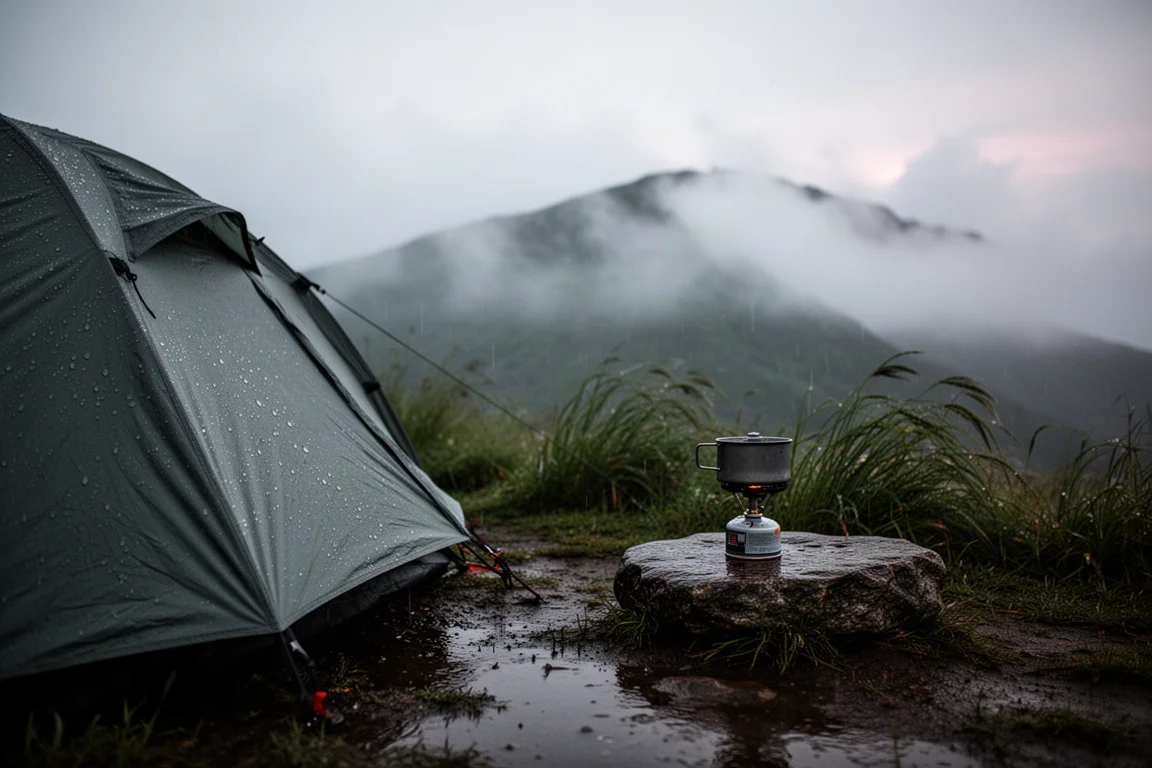
Roughly two dozen ignitions have gone through it. It occasionally takes more than one click, but it fires up every single time, and the igniter feels precise. Wind resistance is good: it is wind resistant rather than windproof, which puts it well ahead of a typical disposable lighter without overpromising. It also stays lit when shaken.
Fuel, Refilling, and Running Costs
The UCO runs on standard butane, and refuelling is refreshingly simple. A 75ml Zippo canister connects directly to the fill port on the base with no adapter required. You press the canister down, watch the fuel window, and you are done.
Running costs are low. A 75ml canister costs about $4, or two for $8, and they last a long time. The fuel chamber is noticeably larger than the Soto’s, which means more fuel on board, longer runtime between fills and fewer interruptions on a trip. Combined with the fuel window, it is easy to top up before you leave and then forget about it for months.
Things to Consider Before Buying
Two limitations apply to this class of lighter, and the UCO is no exception. The first is cold weather: below roughly 30°F, performance drops off. The practical fix is to keep the lighter in a pocket to warm it before use, after which it works normally. The second is elevation. These lighters generally do not perform well above 5,000 feet, although both the UCO and the Soto have been used at 6,000 feet without issues. The higher you go, the more likely you are to run into trouble.
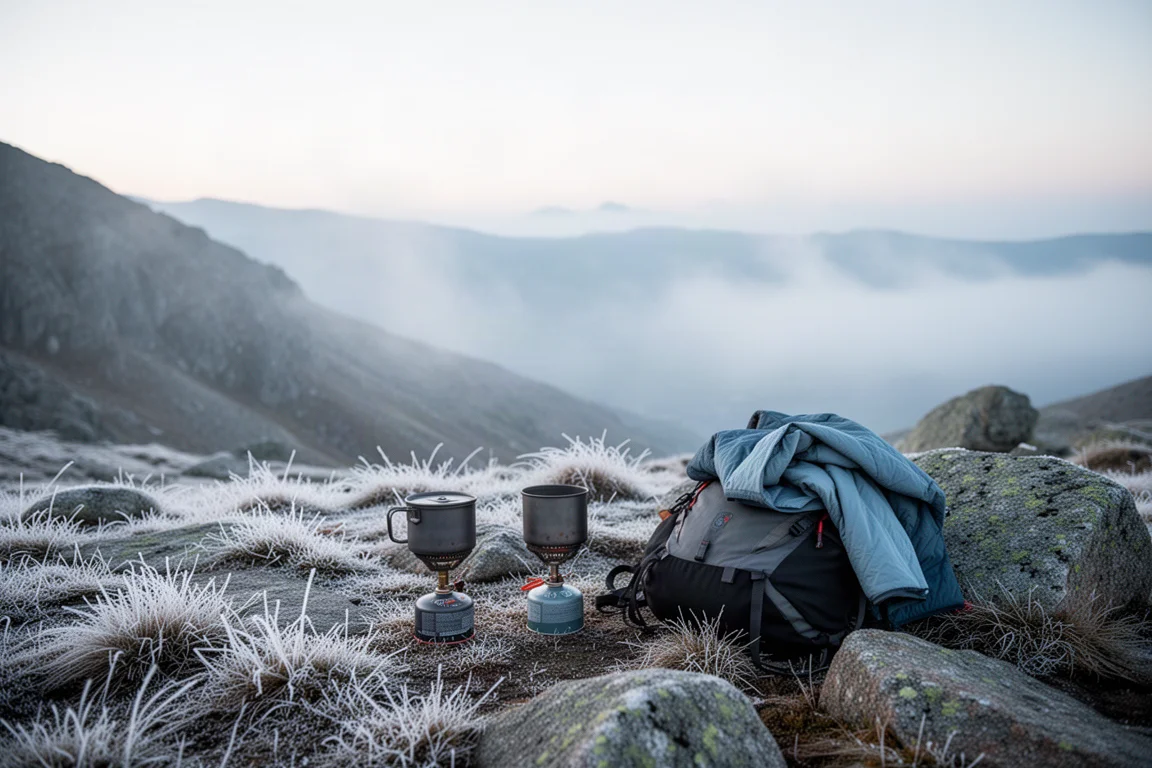
It is also worth setting expectations on a few smaller points. The lighter is wind resistant, not windproof. The body is plastic with a carbon-fibre look rather than real carbon fibre. And because testing so far covers a single trip and about two dozen ignitions, long-term durability is still unproven.
How It Compares and Who It Suits
Side by side, the two lighters share the same flame output, the same burner diameter, the same flame shape and the same materials. The differences are in the details. The UCO is slightly bigger, longer, wider and thicker, and it is about half an inch shorter than the Soto when both are fully extended.
Where the UCO pulls ahead is usability and value. The side-mounted ignition and dedicated safety switch are easier to operate with gloves, the fuel chamber holds more, the flame adjuster is simpler to reach, and the price is around $17 against the Soto’s roughly $27. For anyone who wanted the Soto but found it missing from Amazon, or who simply wants a compact torch that is easy to buy and easy to return, the UCO is the more practical choice. Buyers who already own the Soto have little reason to change, and the Soto remains available through the Soto Outdoors US page for those who prefer it.
Buying Advice
At around $17, this is a low-risk purchase. It covers the core jobs a compact torch needs to handle, from lighting a stove in wet, breezy conditions to reaching into a fire pit without putting your hand near the flame. Purchasing through Amazon keeps the returns process simple if anything goes wrong.
If your trips regularly involve temperatures below 30°F or sustained time above 5,000 feet, plan around those limits rather than expecting the lighter to shrug them off. Warmer conditions and lower elevations are where it performs at its best. Treat this as an early look rather than a long-term verdict: the first trip went well, and more field time will tell whether that holds up.
Conclusion
The UCO Torch Lighter does what the Soto Pocket Torch XT Extended does, for around $10 less, and it improves a few of the details along the way. The dedicated safety switch, larger fuel chamber and side-mounted ignition make it easier to live with, while the 2,300°F flame and telescoping barrel cover the same ground. Its limits in cold weather and at altitude are shared with the lighter it stands in for, so they are worth planning around rather than worrying about. For anyone who needs a compact butane torch and wants to buy it on Amazon, this is a straightforward option to consider.
Product link
View more details for UCO Torch Lighter
This product is mentioned in the review. Check the specifications, options, and compatibility before buying.
View more details for UCO Torch LighterFurther reading
Related Reviews
Outdoor Gear
Backpacking Gear Evolution: 100 Years of Technology Compared
We tested backpacking gear from 1925, 1975, and 2025 across a three-day hike in Yosemite. Here's how technology has transformed comfort, weight, and the outdoor experience.
Outdoor Gear
Best Affordable Hiking Watches: Five Rugged Options for Outdoor Adventures
Five durable hiking watches that balance ruggedness, functionality, and value for outdoor enthusiasts who need reliable GPS tracking and weather resistance.
Outdoor Gear
Best Backpack Coolers 2026: Five Practical Options for Outdoor Adventures
Five backpack coolers with distinct cooling capabilities, storage features, and design trade-offs to help you choose the right one for your outdoor needs.