Fountain Pens
TWSBI Diamond 580 vs TWSBI Eco: Which Fountain Pen Should You Buy?
Two demonstrator piston-fillers with very different price tags. We compare design, nibs, filling systems, and value to help you choose.
Introduction
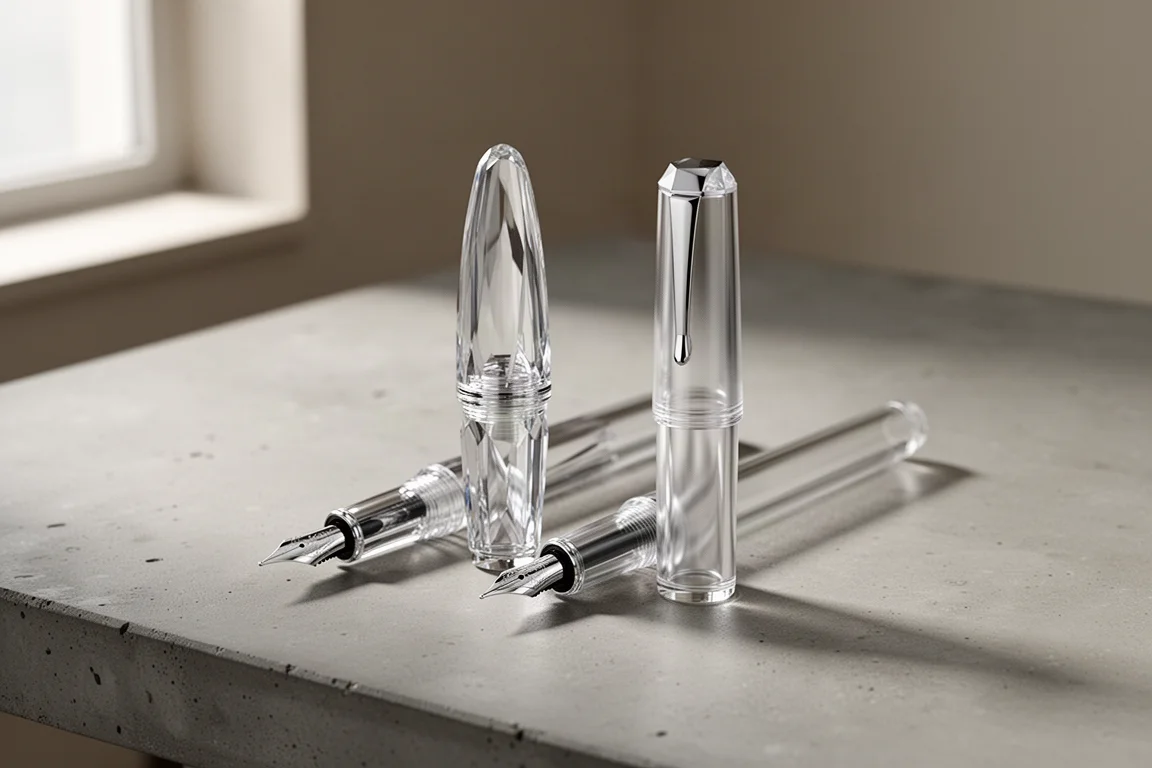
TWSBI has made a name for itself with piston-filling demonstrator pens that offer enormous ink capacity at prices most brands cannot touch. Two models dominate the conversation: the Diamond 580 and the Eco. They look related, they behave similarly on paper, and yet they are separated by meaningful differences in refinement, weight, and price.
TWSBI’s story is interesting in its own right. Founded in 1959 as Ta Shin Precision, the company spent decades producing OEM components for other pen makers before releasing its own fountain pen around 60 years later. The name itself is an anagrammatic construction: it traces back to a Chinese phrase meaning Hall of Three Cultures, which evokes a memorial to three masterpieces of Chinese calligraphy, with the final letters referring to writing instruments.
The Diamond 580 grew out of the company’s first pen, the 530, and became the flagship of the brand. The Eco arrived in 2015 as a more affordable sibling. The question is whether the Eco is simply a budget version of the 580 or a genuinely distinct pen. Here is how they compare.
Two Pens, One Design Language
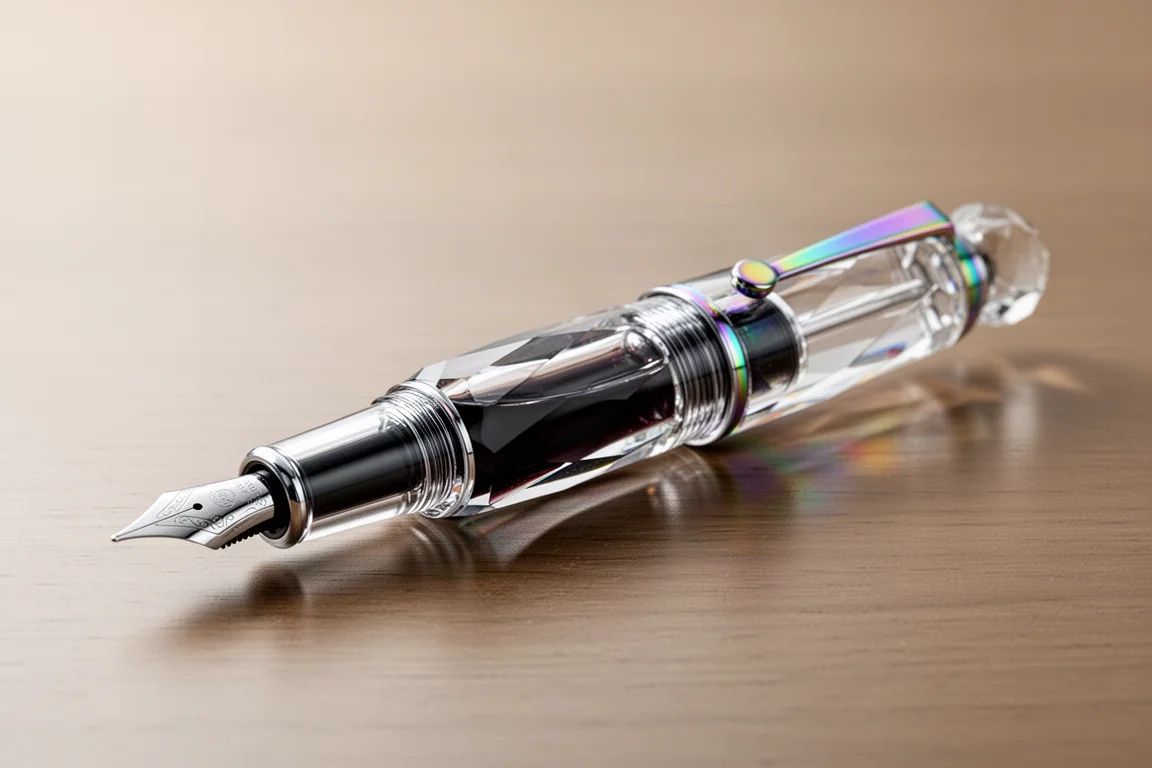
Both pens are classic TWSBI demonstrators, which means you can watch the ink sloshing inside the barrel. The 580 is slightly longer, and it wears its refinement more openly: a faceted barrel that catches the light, a more sculpted cap, and a generally more polished presence. The Eco, by contrast, is almost brutalist. It is a clear cylinder with no-nonsense lines, pared down to its essence.
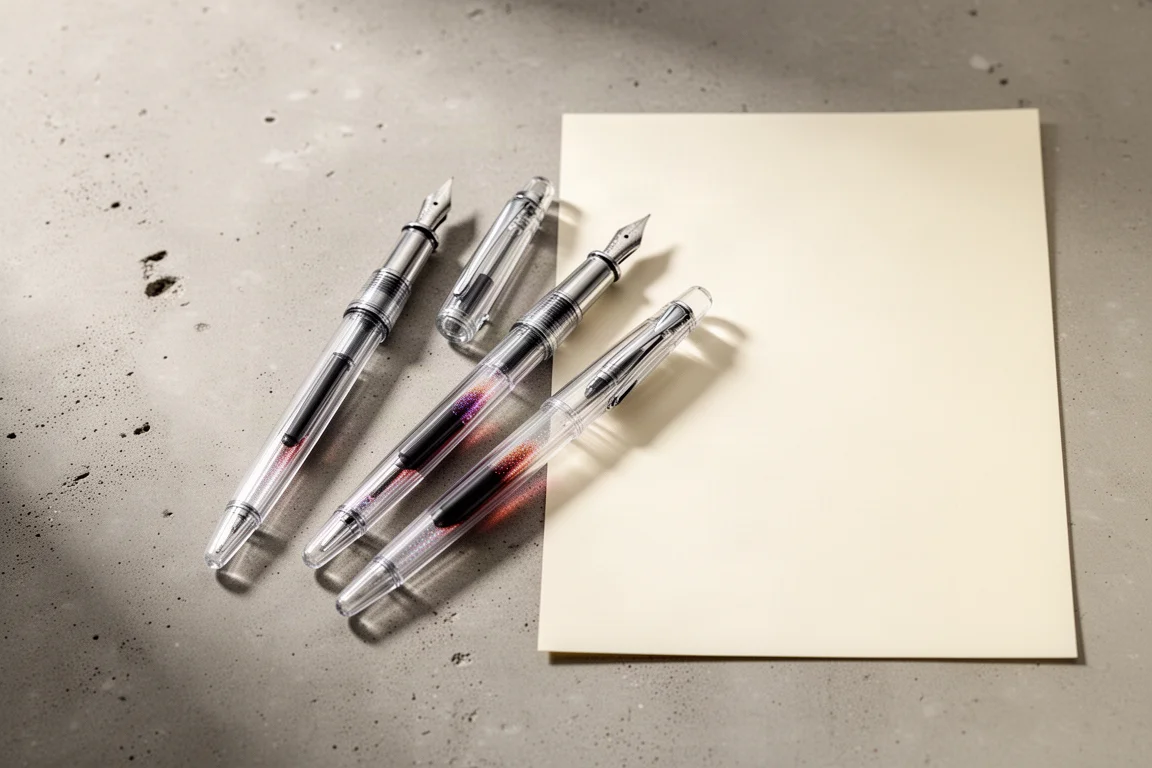
Neither pen chases decoration, but the 580’s faceting and tapered cap clearly elevate it from a design standpoint. If you value visual elegance, the 580 wins that round. If you like the honest, utilitarian charm of a pen that does exactly one thing well, the Eco has a certain earnest beauty of its own.
Clips and Caps
The Eco’s clip is refined down to the essence of what a clip should be: minimal, hollowed out in the center to reduce weight, with a gentle curve at the tip. It grips clothing securely and works without fuss. The 580’s clip is more elegant, with a softer curve and a gentler bite, and it is anchored just as firmly. Which one is better is largely a matter of taste.
The caps follow the same pattern. The Eco has a flat, faceted cap with no taper, protective metal around the edge, and an inner cap seal that keeps the nib from drying out. The 580 offers the same fundamentals, but with a gently rounded tapered top, more metal protection, and tighter fit and finish. Everything on the 580 feels like the same idea, executed with a bit more care.
Nibs: Small vs Slightly Larger
The Eco comes with a Joowo number four nib, while the 580 steps up to a number five. Both are sleek, reliable, and consistently on the wet side, with excellent ink flow. TWSBI’s nibs have a strong reputation for dependability, and swapping one out is straightforward if you ever need to.
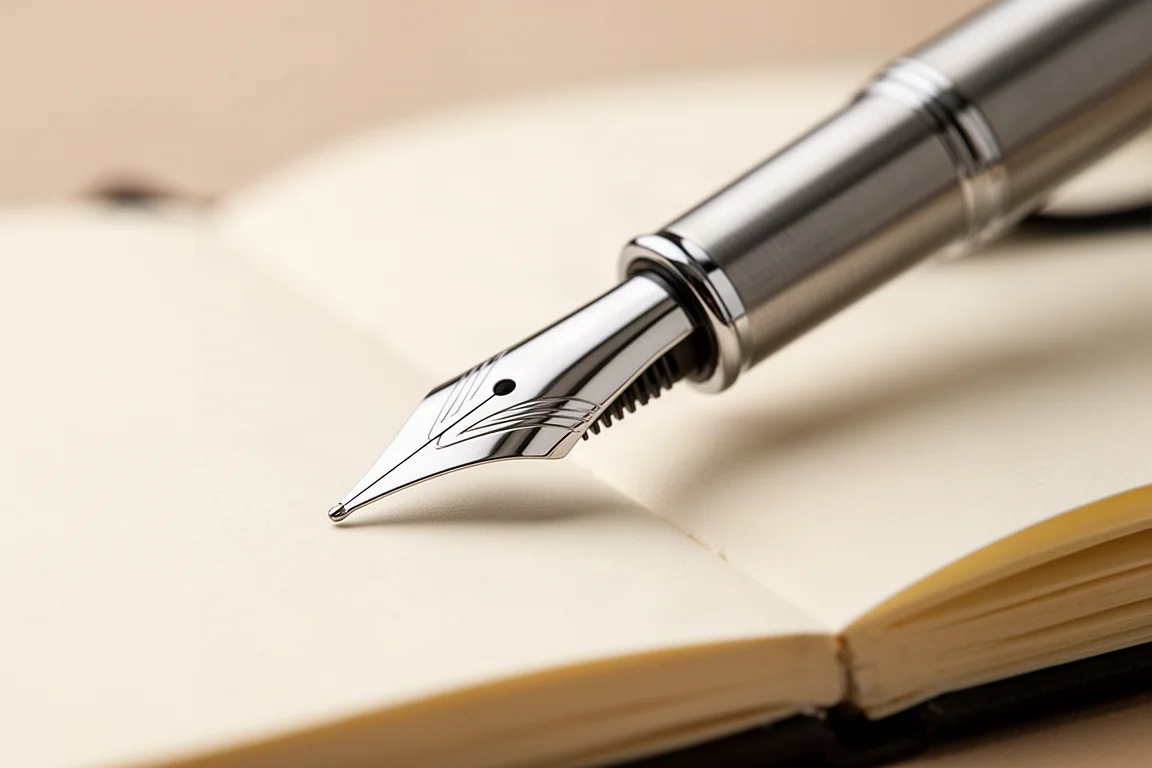
If you prefer a slightly larger nib, the 580 has the edge. In practice, though, both nibs perform in a very similar way, and neither is likely to disappoint.
Grips and Filling Mechanisms
This is where the two pens genuinely diverge. On the Diamond 580, the grip section unscrews as a single piece with the nib and feed attached, making cleaning and swapping trivially easy. Depending on the model, that grip is aluminium or plastic. On the Eco, the nib and feed slide into the molded plastic grip and are held by friction. Pulling them out can take some effort, and you need to be careful not to bend or damage the fins of the feed.
Both pens use internal piston-filling systems, and both are excellent. The 580’s mechanism feels tighter, more precise, and more robust. Ink capacity is close: about 1.98 ml on the 580 versus 1.76 ml on the Eco. Either way, these are journaling monsters. Fill one up and you are committed to that ink for a very long time, which is the only real downside for people who love switching colors.
Weight, Posting, and Everyday Feel
The 580 weighs 28 g, while the Eco comes in at 21 g. If you prefer a lighter pen, that difference is noticeable and, for many writers, decisive. In actual writing, the two feel remarkably similar; the 580 just sits a little heavier and a little longer in the hand.
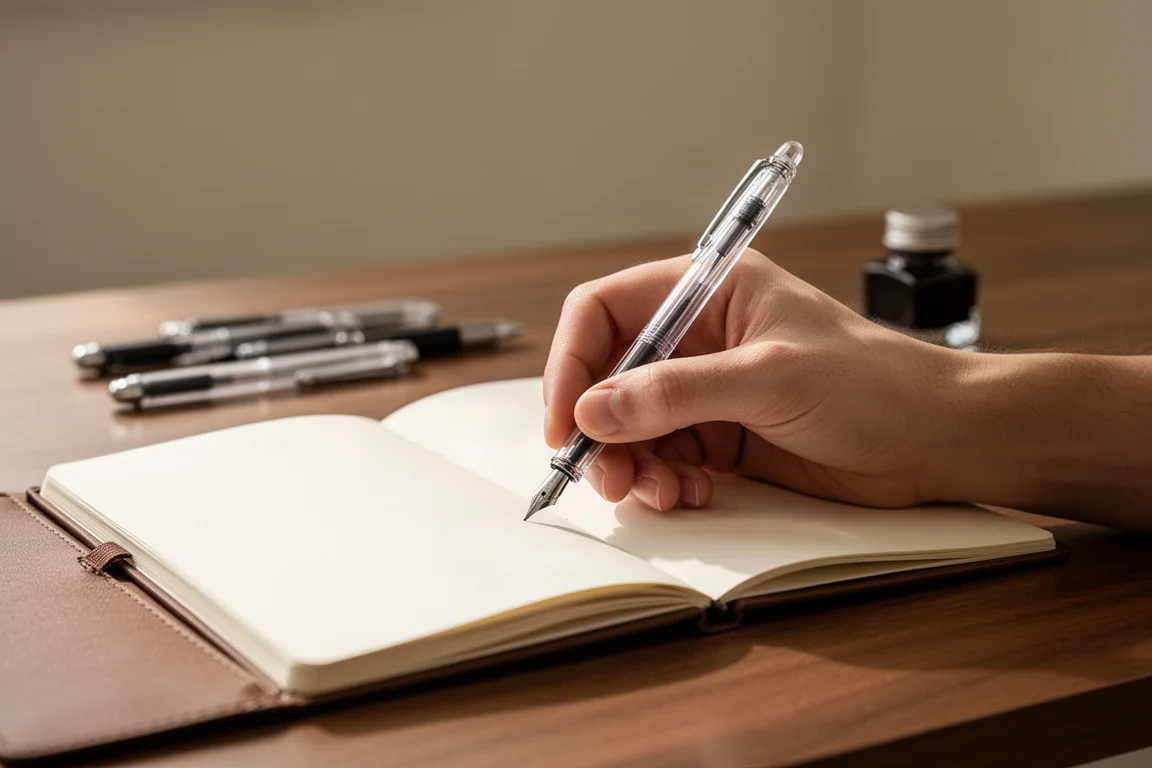
Posting tells a similar story. The 580 can technically be posted, but doing so puts weight on the piston mechanism and risks loosening it over time, and it makes the pen comically long. The Eco posts somewhat more gracefully, though still awkwardly for most hands. If posting matters to you, the Eco is the safer choice; otherwise, neither pen really wants to be posted.
Value: Is the Upgrade Worth It?
The Eco starts around $33, with some special colorways reaching closer to $50. The Diamond 580 costs $80. That is a significant premium for a pen that, in day-to-day writing, performs much the same as its cheaper sibling.
What the extra money buys is refinement: the faceted barrel, the tapered cap, better fit and finish, a larger nib option, a swap-out grip, and a more robust piston. The 580 competes comfortably with pens that cost far more, so it is still excellent value in absolute terms. But measured directly against the Eco, which is lighter and more comfortable for many writers, the price gap is hard to justify purely on writing performance.
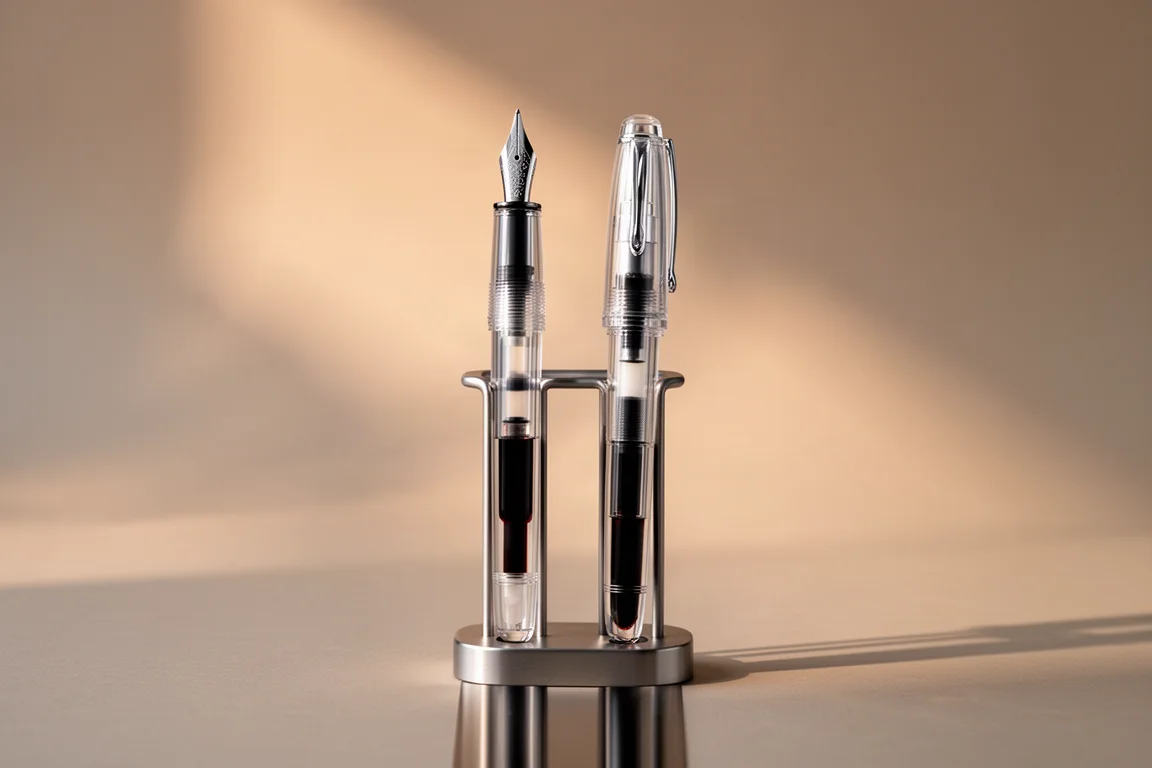
If you want the most refined demonstrator TWSBI can build, the 580 is a lovely object and worth its price. If you want maximum function per dollar, the Eco is the smarter buy.
Conclusion
The Diamond 580 and the Eco share the same DNA: huge ink capacity, reliable wet nibs, and honest piston-filler design. The 580 adds refinement and a more premium feel, while the Eco strips everything back and costs less than half as much. For most buyers, the Eco is the easier recommendation; for those who want a touch of elegance in a demonstrator, the 580 remains a genuinely great pen. Many enthusiasts end up owning both, and it is easy to see why.
Further reading
Related Reviews
Fountain Pens
Best Budget Fountain Pens Tested: 9 Pens, One Clear Winner
A hands-on comparison of nine affordable fountain pens for everyday writing, calligraphy, and sketching, with a clear standout for flexible nib fans.
Fountain Pens
Aurora Optima Review: An Italian Piston Filler That Punches Above Its Price
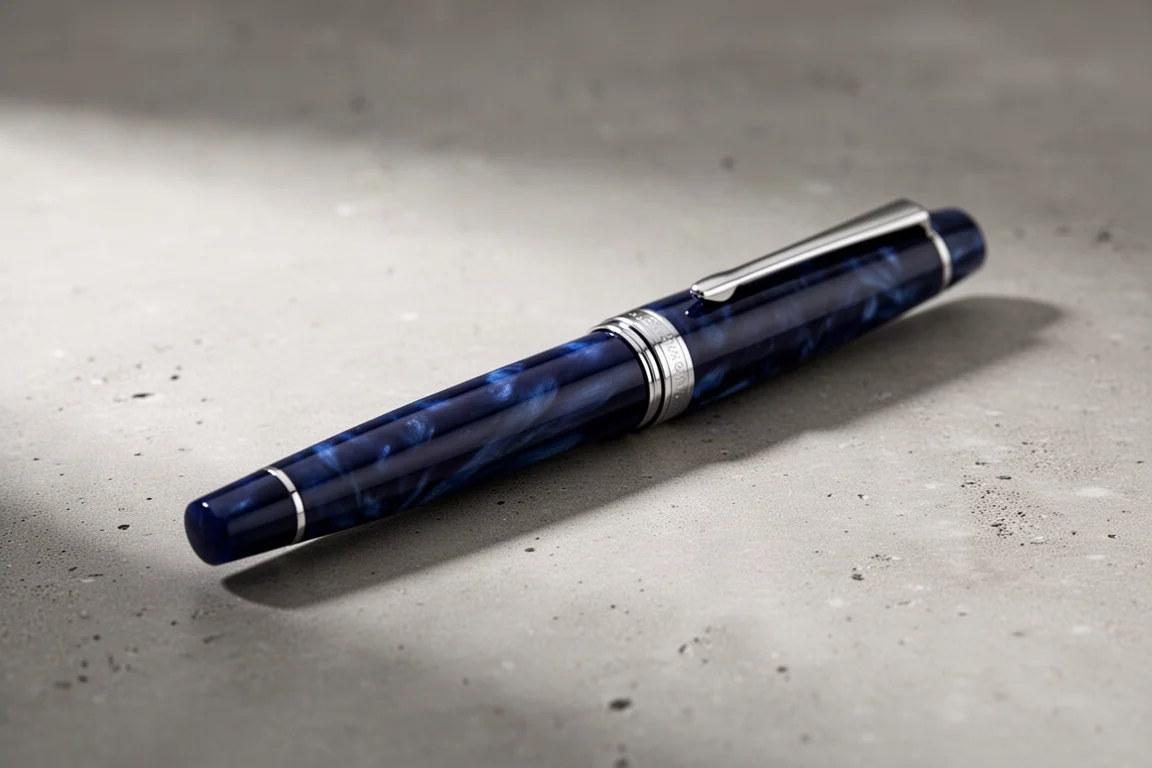
A 14k gold nib, ebonite feed, and a beautifully deep oraloid body make the Aurora Optima one of the most rewarding piston fillers around.
Fountain Pens
Cross Bailey Light Review: The Entry-Level Fountain Pen Worth Keeping at the Office
A plastic-bodied Cross with a metal clip, snap cap, and famously smooth extra fine steel nib. Around $15, available almost everywhere, and easy to recommend.