Aquarium Adhesives
Tunze Coral Gum Instant Review: A Faster Way to Mount Frags and Scape Rock
A silicone-based coral putty that kneads easily, grips wet surfaces, sets in about a minute, and skips the cloudy water and skimmer problems common with two-part epoxy.
Introduction
Two-part epoxy has been the default for mounting frags and joining rockwork for years, and it still works. It is also slow, tiring to knead, and messy the moment your fingers are wet. Tunze Coral Gum Instant approaches the same job from a different direction. It is a silicone-based putty rather than an epoxy, and that one change reshapes almost every part of the workflow, from how the material feels in your hands to how long a freshly mounted frag needs to be held in place.
This review covers what the putty is, where it performs best, and what to weigh before you commit to it.
Why Silicone-Based Coral Gum Changes the Workflow
Standard two-part epoxy is stiff. Kneading it can wear out your hands and it is hard on fingers, especially wet ones. When your fingers are wet, epoxy has a tendency to go grainy and crumble apart mid-mix, and it leaves residue behind on your skin.
The effects inside the tank matter just as much. Many epoxies cloud the water, can push a protein skimmer into overflowing, and take a long time to cure fully, which means a frag or a rock often needs to be propped and supported for hours while it firms up.
Coral Gum Instant is silicone based, so it is considerably softer and easier to knead without exhausting your fingers. It has better grippiness, it holds its shape, and it presses easily into crevices and around uneven surfaces. It does not cloud the water, it does not set the skimmer off, and it has no smell. Because it keeps its consistency with wet fingers, it can even be mixed and cured underwater.
Who This Product Is For
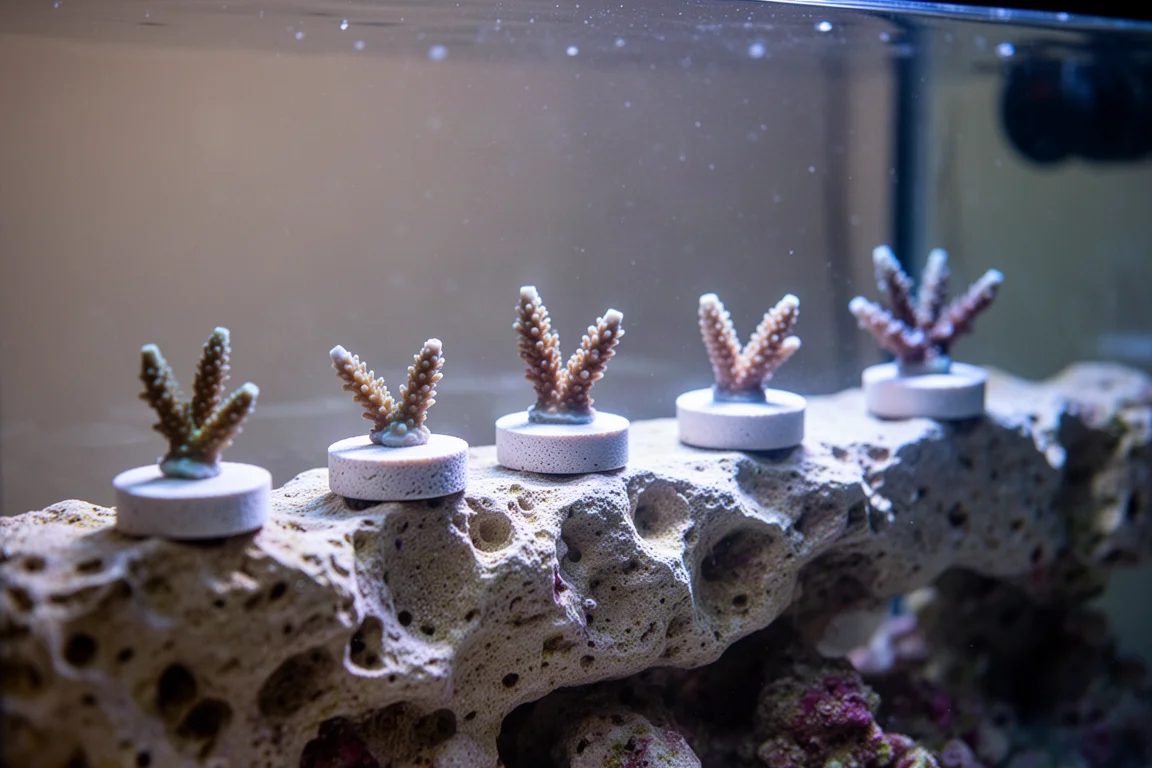
This is a putty for reefers who work with their hands in the tank. If you frag corals, mount frags onto plugs, attach colonies to rock, or build up rockwork, it slots directly into what you already do. It is also a good fit for anyone who has gotten frustrated with epoxy going grainy on wet fingers, or who has had to babysit a frag for hours because the epoxy was still soft.
It suits aquarists who value speed and clean handling over the lowest possible cost. If your main concern is stretching every dollar of consumables, standard epoxy still has an advantage there, and that trade-off is worth understanding before you buy.
It is less of a fit for anyone who wants to mix a large batch and work slowly through a long scaping session. This material does not tolerate that kind of pacing.
Main Strengths: Fast, Clean, and Easy to Shape
The most obvious strength is how the putty feels. It is soft enough to knead comfortably, with a tackiness that lets it hold onto a surface instead of sliding off, and it can be worked into different shapes or pressed into tight gaps where a stiff epoxy would rather crumble than conform.
Speed is the second advantage. Within roughly 30 seconds of being completely mixed, it begins to firm up, and after about a minute it is pretty well cured. That means far less time holding and supporting a frag or a rock while you wait for a bond to set, and less risk of a coral shifting out of position.
Handling is the third. It does not fall apart while you mix it with wet fingers, it does not smell, it does not leave the tank cloudy, and it does not send a skimmer crazy. Working with it feels closer to handling a soft putty than fighting a stiff compound, and that difference shows up over a full fragging session when your hands would otherwise be tired.
Ways Reefers Put Coral Gum Instant to Work
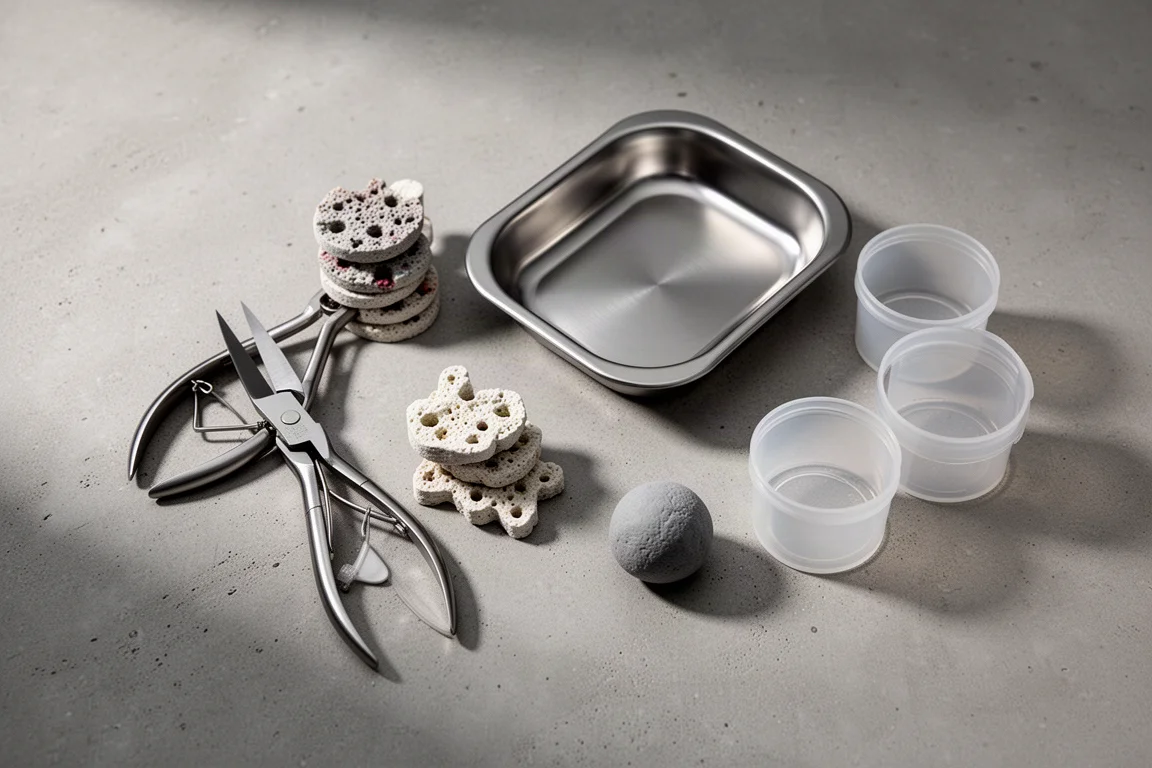
Fragging and aquascaping are the headline uses, but aquarists have found a longer list of practical applications:
- Separating colonies that are crusting into one another, to control where each one grows.
- Building small ledges that shade areas where you do not want encrusting corals to spread.
- Covering aiptasia holes.
- Covering dead areas on larger colonies with center die-off, which helps speed tissue regrowth over that zone.
- Providing a growth surface on rock that is not yet hospitable to encrusting corals.
- Covering problem algae patches after cleaning, to prevent or slow regrowth.
Each of these leans on the same traits: the putty is shapeable, it stays where you press it, and it sets quickly enough that the tank is not left in limbo.
How to Use It Like a Pro
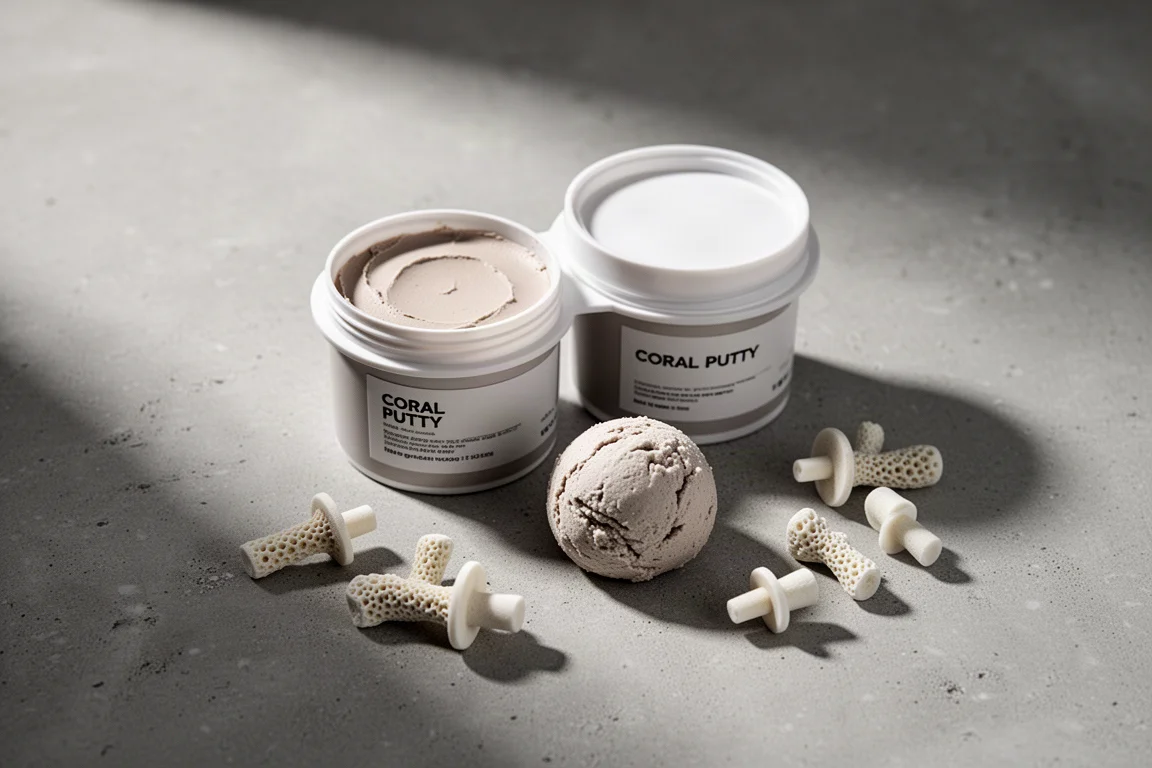
The kit contains two joined containers, Part A and Part B, along with a set of instructions. The process is simple. Take equal amounts of each part and knead them together in your hands for 15 to 20 seconds until the color is completely uniform, then apply the putty immediately to the frag plug or rock and push the frag into it, or place it between the contact points of your rockwork to form a solid bond.
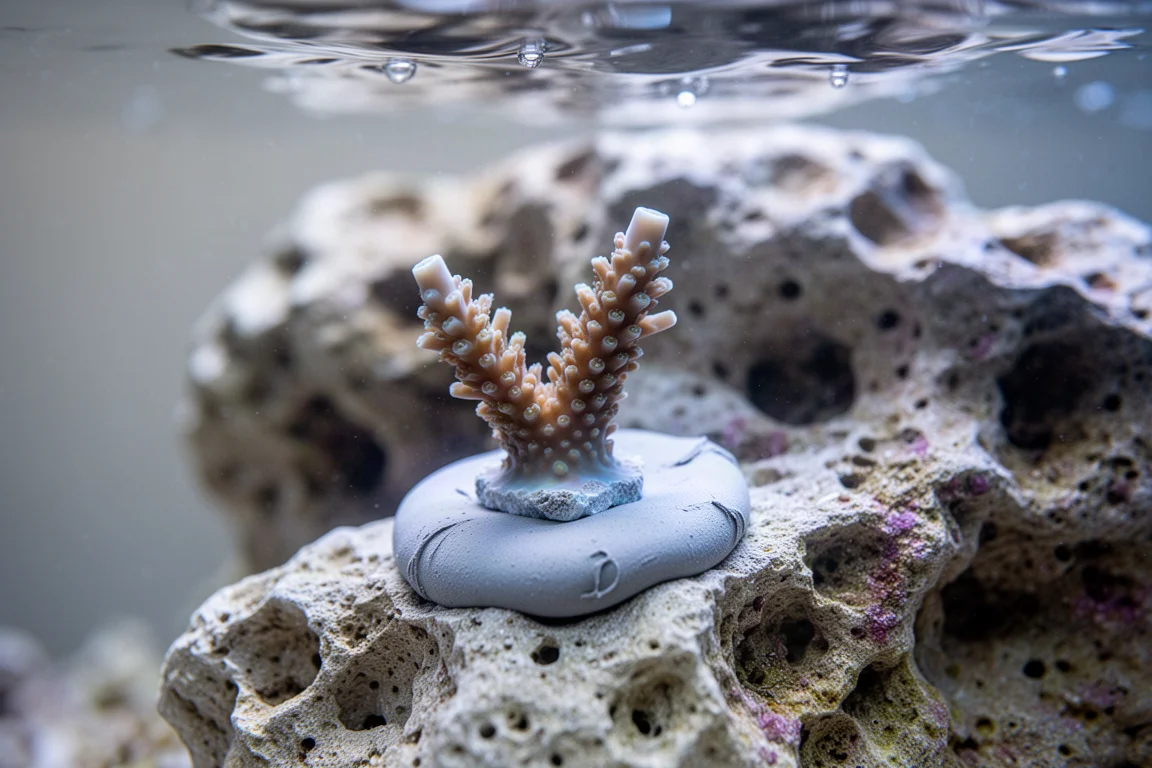
Three habits get the most out of the material. First, only mix as much as you need at one time, because it cures fast and over-mixing simply wastes it; the putty is not hard on the hands, so rolling small balls as you go is easy. Second, when bonding rocks or frags to rock, use enough putty to push into the crevice so it fills the gaps and wraps around the structures for a firm hold; the material is tacky, but the best bonds come from it hugging the coral or rock. Third, when attaching fresh-cut corals to smooth frag plugs or joining other smooth surfaces, use the gel, epoxy, gel method, which helps the putty stick to the flat surface and the flat base of the coral while adding a supportive wall around it.
Things to Consider Before Buying
The main consideration is cost. Coral Gum Instant is priced higher than standard two-part epoxy, so it is worth thinking about where you actually need the faster, cleaner material and where a cheaper epoxy would do. For many reefers the answer is that faster setting and easier handling are worth it precisely because they reduce wasted frags and wasted time.
The second consideration is the working window. Because it starts firming up within about 30 seconds of a complete mix and is largely cured at around a minute, there is very little time for repositioning. You need to know where the frag or rock is going before you start kneading, and mixing a large batch in advance is not a good idea.
The third is that this is a handling and workflow improvement, not a substitute for good technique. Filling gaps and wrapping the contact points still matter, and the bonding tips above are what turn the fast cure into a reliable hold.
Buying Advice
Buy it if the parts of epoxy you dislike are the parts you deal with most: the stiff kneading, the grainy mess on wet fingers, the cloudy water, the skimmer reaction, and the long support times. The faster cure is the feature that changes daily practice the most, simply because it shortens the most tedious stretch of any mounting job.
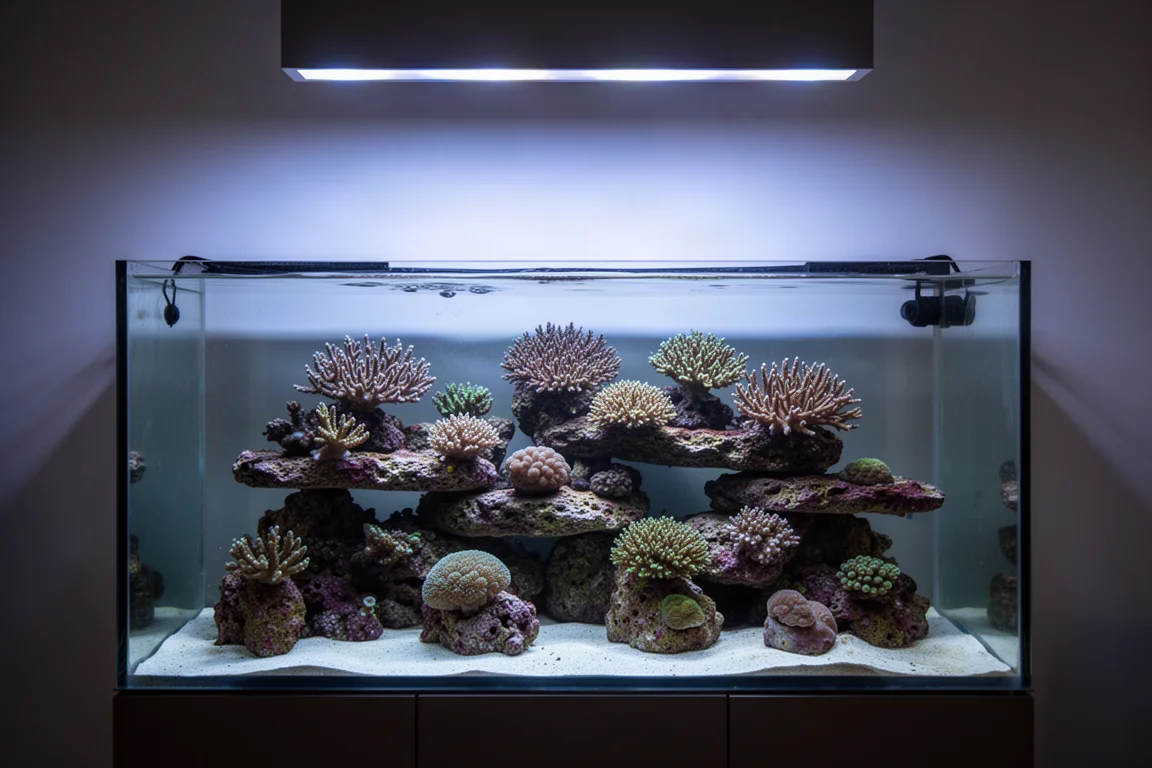
It also makes sense as a kit to keep on hand rather than a single-purpose purchase. The same putty that mounts a frag can cover a dead patch on a colony, build a shading ledge, or seal over a cleaned algae spot, which means a tub tends to get used rather than sit on a shelf.
If you have gotten comfortable with the gel, epoxy, gel approach for smooth surfaces and you mix only what you need, small amounts go a long way. Start with a single kit, work through a few frags with it, and let your own handling experience decide whether it replaces epoxy in your routine or supplements it.
Conclusion
Tunze Coral Gum Instant targets the friction points of two-part epoxy directly. It is softer to knead, grips better, holds together with wet fingers, keeps the water clear, leaves the skimmer alone, and cures in about a minute instead of hours. The trade-off is a higher price than standard epoxy, and a working window short enough that you need to plan the placement before you mix. For reefers who frag and scape regularly, that is a reasonable exchange.
Product link
View more details for Tunze Coral Gum Instant
This product is mentioned in the review. Check the specifications, options, and compatibility before buying.
View more details for Tunze Coral Gum InstantFurther reading
Related Reviews
Aquarium Adhesives
DD's Aquascape Epoxy Review: A Two-Part Putty Built for Wet Reef Work
A closer look at DD's Aquascape Epoxy, a two-part aquarium putty that grips wet surfaces, cures underwater, and handles frag mounting, aquascaping, and small reef repairs.

Aquarium Equipment
Adaptive Reef Controller Cabinet Review: A Practical Home for Reefing Gear
A flat packed, reefing specific controller cabinet with a waterproof PVC build, magnetic front access, and a customizable faceplate system.
Aquarium Equipment
AF4 Review: An Automatic Frozen Food Feeder That Keeps Feeding on Schedule
A closer look at the AF4 automatic frozen fish food feeder, covering its 50-cube reservoir, 21-day food life, self-rinsing cycle, and the accessories that shape a real setup.