Snow Pants
TSLA Snow Pants Review: Abrasion-Resistant Fabric, Weak Water Protection
A close look at the TSLA snow pants: ripstop durability and solid seam work on one side, minimal waterproofing and a paper-thin boot gaiter on the other.
Introduction
The TSLA snow pants show up in the budget end of the winter gear market, priced low and marketed toward snowboarders shopping on Amazon. That combination is always worth a closer look, because low-cost outerwear can hide either a genuinely smart bargain or a set of shortcuts that only appear once the snow starts falling.
This review breaks down what the pants actually get right and what they do not. The short version: the outer fabric is more abrasion-resistant than the price suggests, several seams are assembled with real care, and the boot gaiter is where the design gives up ground. Water protection is the weakest link, and it is worth understanding exactly why before you decide.
Who These Pants Are For
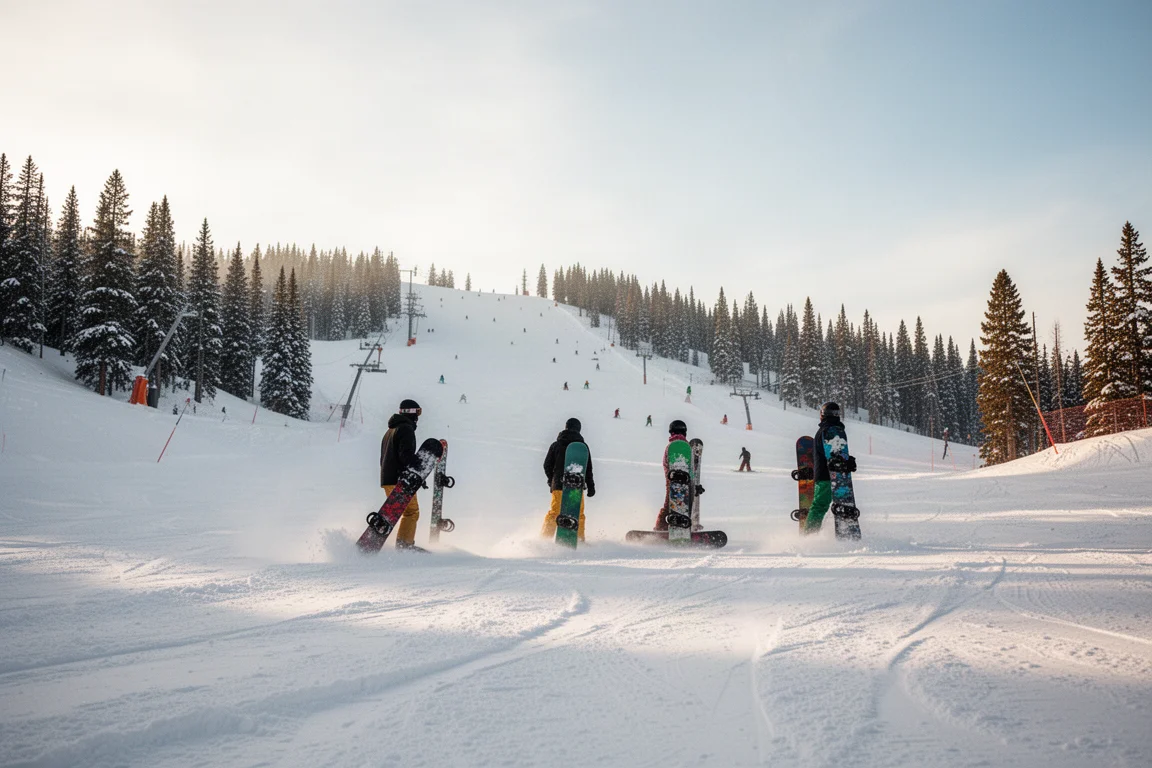
These pants make the most sense for riders and winter travelers who want a spare pair without spending much. If you are building a first setup, keeping a backup layer in the car, or riding in dry, cold conditions where you are not sitting in wet snow, the low price makes them easy to justify.
They are a harder recommendation for anyone who rides in wet, heavy snow, spends long days sitting on lifts, or expects a shell to keep them dry through repeated exposure. Riders who treat waterproofing as the single most important feature should look at this pair last rather than first.
Main Strengths: Ripstop Fabric and Reinforced Stitching
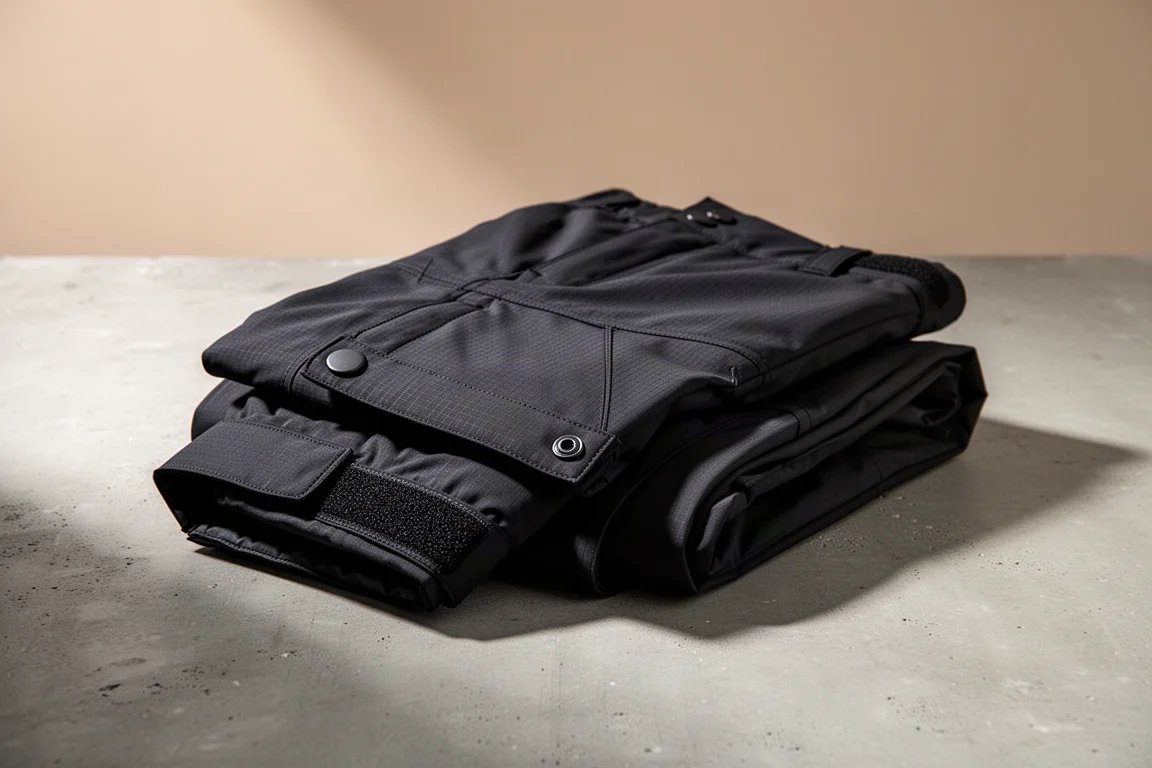
The standout quality here is the outer fabric. It uses a ripstop construction, and abrasion testing left it looking largely untouched, with no obvious scuffing or fraying where the material was rubbed. That is a meaningful result at this price point, because fabric that resists tearing and surface damage is usually the first thing budget pants sacrifice.
The zipper is a third-party component rather than a no-name part, and the seam running alongside it is double-stitched, which is exactly what you want in a high-stress area. The seam under the waist closure is also assembled neatly. Inside, the lining is a plain nylon and polyester blend, and the insulation is basic polyfill, but a stitch runs through the internal material into the insulation itself. That detail matters more than it sounds: it holds the fill in place so it does not bunch or shift around inside the leg over time.

Double stitching also appears at the rear flap and other flex points, which suggests the manufacturer knew where the stress concentrates. It is an uneven effort rather than a consistent one, but the places that received extra attention are the right places.
Where the Construction Falls Short
Pocket seams are the clearest weak point. Several of them are held together with single stitching, which is not a durable arrangement over seasons of use, especially on a pocket that gets loaded with keys, a phone, or a lift pass. There is also an unusual rear cargo pocket that adds bulk without adding much obvious function.
The materials themselves are ordinary. The polyfill insulation is the cheap, simple kind, and the internal nylon and polyester lining is nothing special. The external drawstrings are another odd choice: they pull the pant over a velcro closure, but there is no elastic in them at all. Instead of tightening the fit, they mostly gather and bunch the fabric, so you end up with a lumpier silhouette rather than a better seal at the waist.
Waterproofing Performance in Real Conditions
This is where the pants lose most of their appeal. When water was applied to the fabric, it did not bead up or pool on the surface. It soaked straight in and left a large, spreading wet patch. That behavior points to minimal or effectively absent waterproofing rather than a coating that simply needs refreshing.
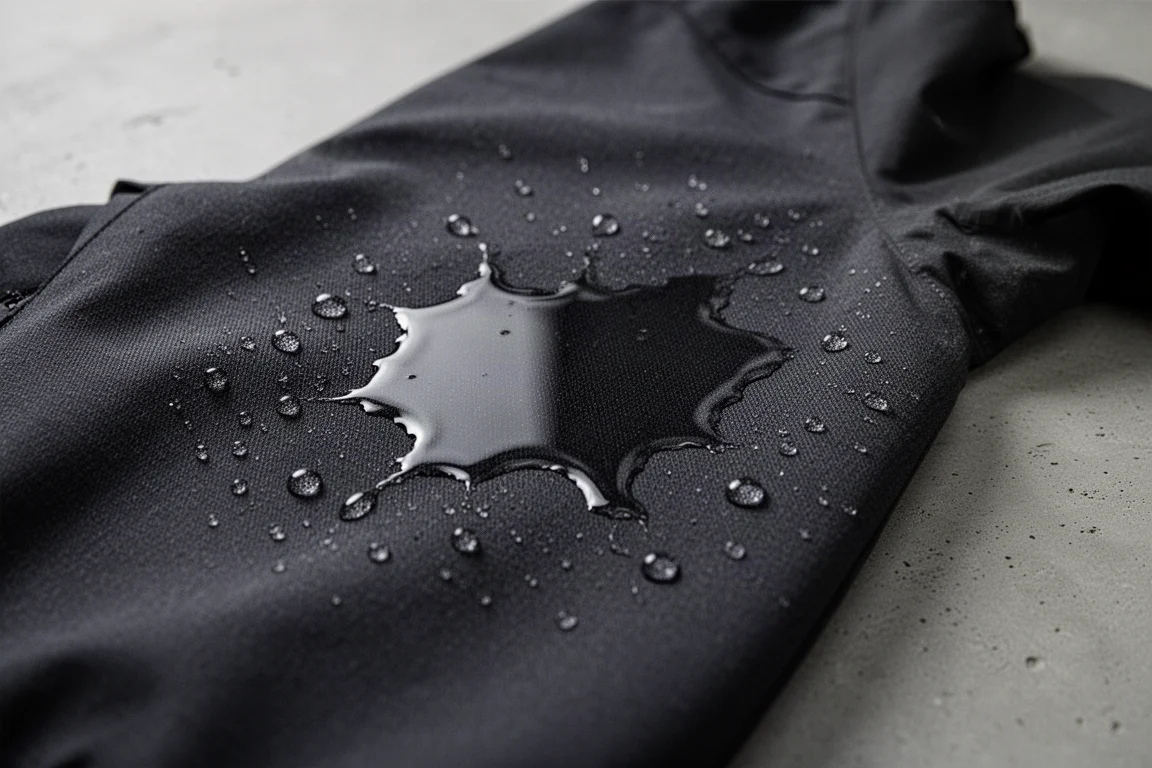
Reports from people who wore them follow the same pattern: getting wet was the common outcome. The boot gaiter compounds the problem. Its material is remarkably thin, thin enough that light passes through it, and snow that works its way up between the pant leg and the boot will melt and can leak through the gaiter rather than being blocked by it. A gaiter that cannot hold back meltwater removes one of the main reasons to wear a snow pant in the first place.
Fit, Waist Adjustment, and Cuff Details
The cuff hardware is a mixed bag. There is a single snap and a small storm flap that lets you expand the opening, plus a reinforcement panel at the back of the cuff, a feature borrowed from ski-oriented designs. The boot gaiter has a snap that expands it to fit over a boot, and four rubber grip patches are sewn in to help it stay put.
Those are sensible ideas, and they show the design was not an afterthought. The execution is the problem. The gaiter fabric is the flimsiest material on the entire pant, and the waist drawstrings add bulk instead of adjustment. In practice, the fit you get out of the box is close to the fit you keep.
Buying Advice
Buy these pants if your priority is a durable outer fabric at a very low price and your riding happens in dry, cold snow. The ripstop shell and the reinforced seams at the zipper and rear flap are genuine value at this price, and as a backup or spare pair they can make sense.
Skip them if staying dry matters more than saving money. The fabric absorbs water quickly, the boot gaiter is too thin to block meltwater, and the pocket stitching is a long-term durability question mark. If you ride in wet snow or spend full days on the mountain, put the money toward a shell with real waterproofing instead. For a low-cost second pair used in the right conditions, the trade-off is at least an honest one.

Conclusion
The TSLA snow pants are a clear example of a budget product that got some things right and one critical thing wrong. The ripstop outer fabric resists abrasion well, the zipper seam and rear flap are double-stitched, and the internal stitching that keeps the insulation from bunching is a thoughtful touch. Against that, the waterproofing is minimal, water soaks in and spreads rather than beading, and the boot gaiter is thin enough to let meltwater through. As a cheap spare pair for dry, cold days they can work. As your main pant for wet conditions, they will leave you wet.
Product link
View more details for TSLA Snow Pants
This product is mentioned in the review. Check the specifications, options, and compatibility before buying.
View more details for TSLA Snow PantsFurther reading
Related Reviews
Snow Pants
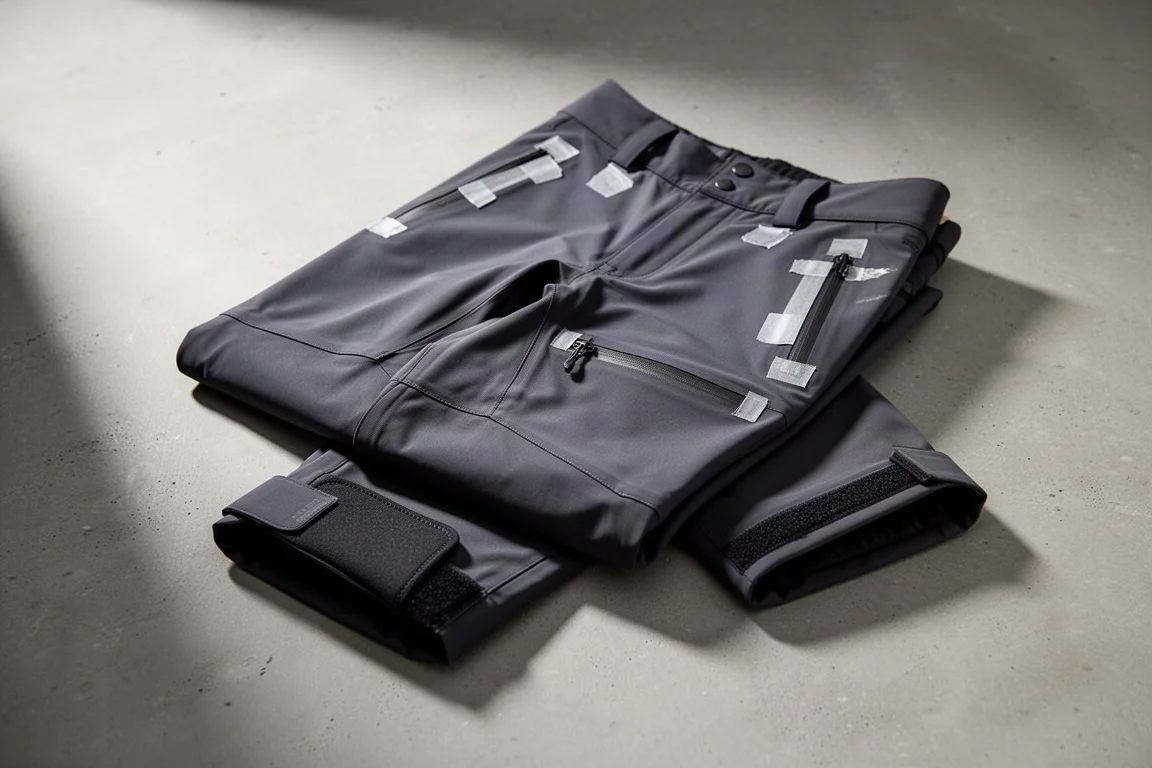
Columbia Bugaboo 2 Pant Review: Thick Fabric and Taped Seams at a Mid-Level Price
A mid-level insulated snow pant with a thick shell, fully taped seams, and solid zippers. Here is where it earns its price and where the fit and features fall short.
Snow Pants
DC Division Pants Review: A 15K Shell With Details That Hold Up
The DC Division Pants pair a 15K waterproof and breathability rating with taped seams, waist cinches, and a pant-leg lift drawstring, at a closeout price of $109.
Snow Pants
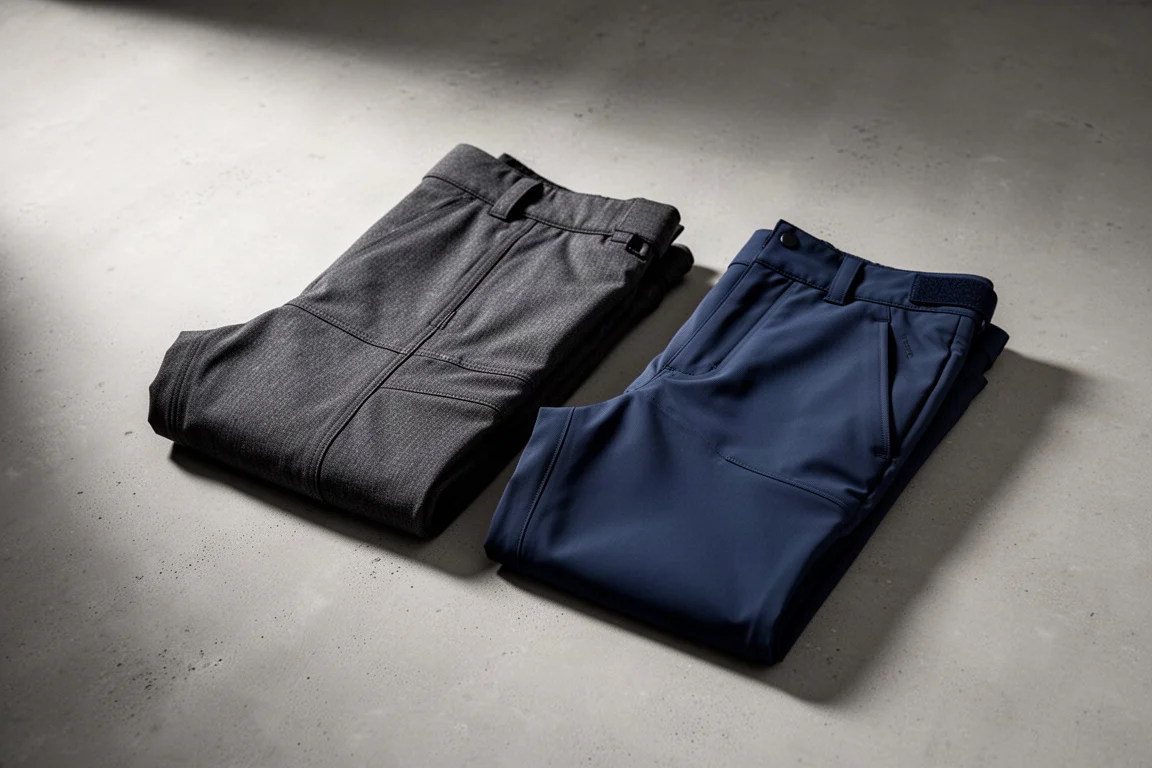
Dope Snow Pants vs 686 Standard Pant: Which Build Actually Holds Up
A side-by-side look at the Dope Iconic Snow Pant and the 686 Standard Pant, covering seam construction, waterproofing method, hardware, and real value.