Backpacking Tents
Trekking Pole Tents for Backpacking: Zpacks Plex Solo and Outdoor Vitals 40th One-Person Tent
A practical look at non-freestanding trekking pole shelters, with the Zpacks Plex Solo and the Outdoor Vitals 40th one-person tent as two strong examples.
Introduction
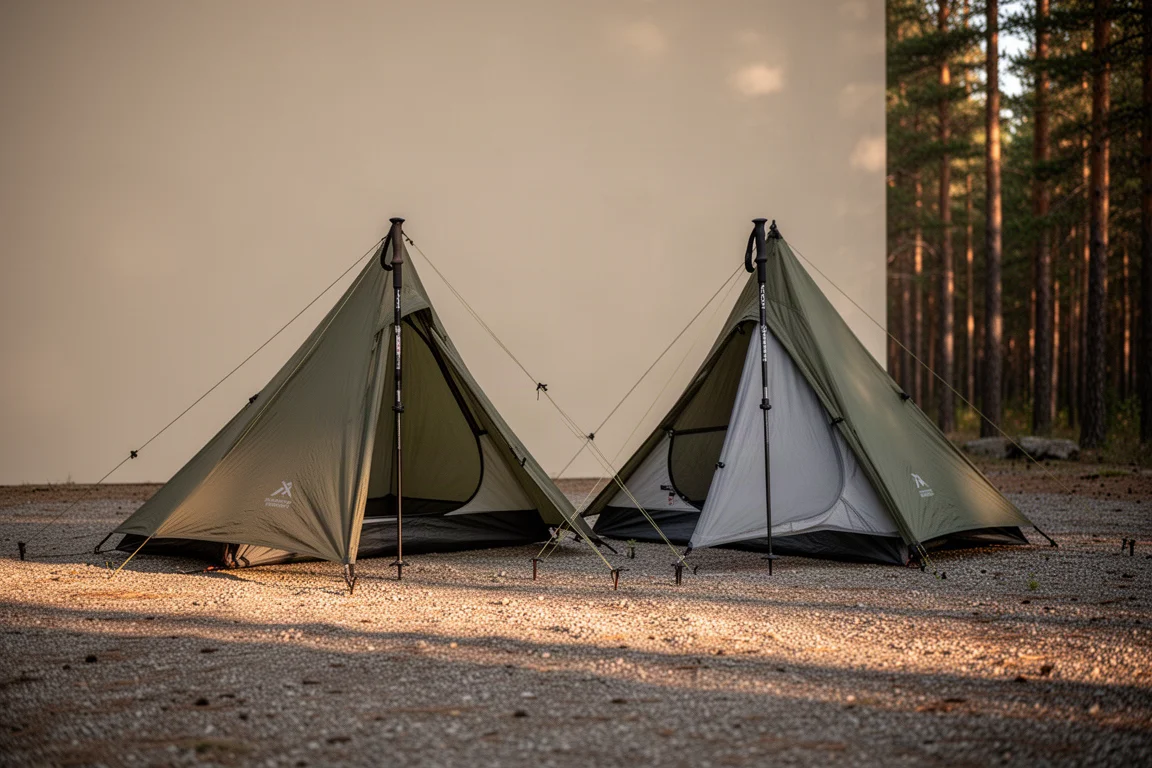
Trekking pole shelters carry a reputation problem. Many backpackers assume a non-freestanding tent is fiddly, slow to pitch, and only comfortable in fair weather. In practice the opposite is often true. Once you understand how one pitches, a trekking pole tent can be lighter, more compact, and more stormworthy than the dome tent it replaces.
Two one-person options make that case clearly: the Zpacks Plex Solo and the Outdoor Vitals 40th one-person tent. Both rely on the poles you already carry, and both reward a little preparation.
Why Trekking Pole Tents Save Weight
A freestanding tent carries its own structure. Dedicated poles run into every corner so the shelter stands without stakes. A trekking pole tent, also called a non-freestanding tent, supplies that structure from your trekking poles instead, which means it has to be staked out to stand and to hold a taut pitch.
That single change compounds across the whole design. Fewer seams, less fabric, and a more minimal overall build all add up. The Zpacks Plex Solo is a sub-one-pound Dyneema Composite Fabric tent, and a number like that is only reachable because the frame comes from your poles rather than the tent itself. Across the category, trekking pole shelters weigh less than freestanding and semi-freestanding alternatives for exactly this reason.
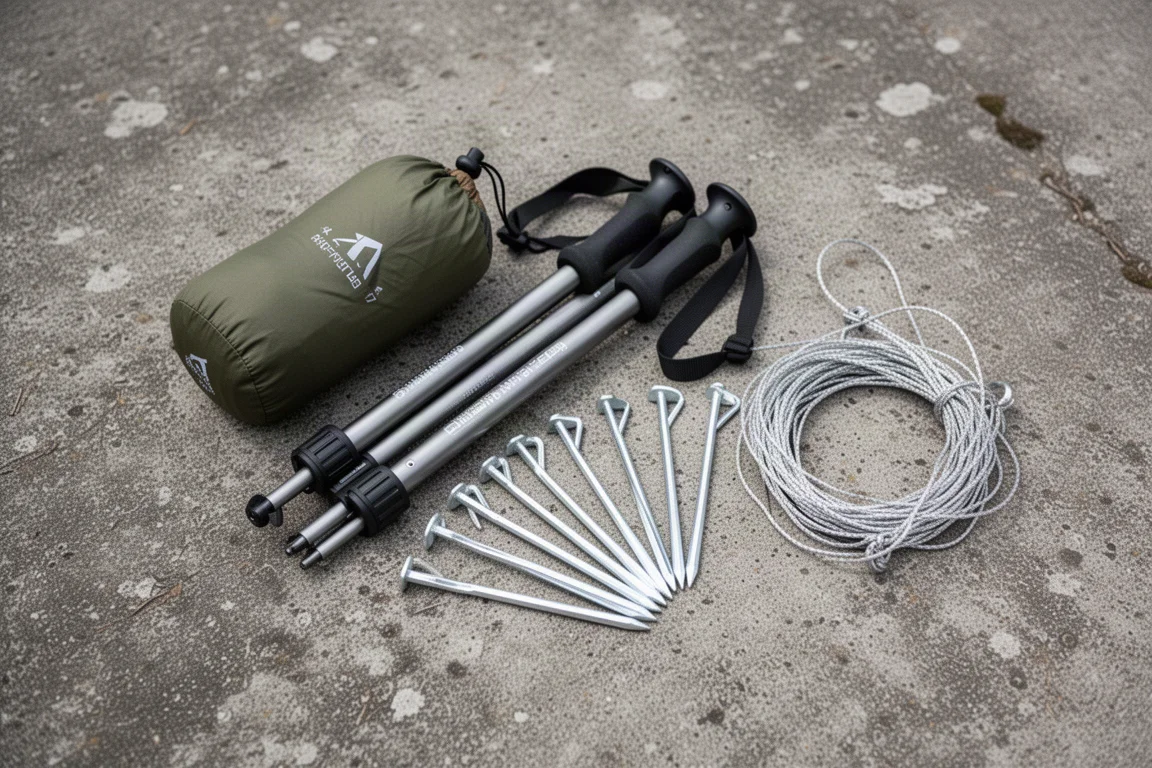
The trade-off is that setup depends on you. There is no internal frame to fall back on, so pitch quality matters far more than it does with a dome tent.
Zpacks Plex Solo: A Sub-One-Pound Dyneema Shelter
The Plex Solo is a one-person Dyneema Composite Fabric tent that comes in under one pound. Despite that figure it is genuinely roomy for a solo shelter, and it performs well across a wide range of weather conditions.
The obstacle is cost. The Plex Solo runs over $600, which places it at the top of the category. For backpackers whose priority is removing every possible gram from their pack, that premium buys a different weight class rather than a marginally lighter version of the same thing.
One detail is worth knowing before ordering. The Plex Solo does not include stakes. That is common among ultralight shelters, and it is not really a drawback. Different soils call for different stakes, so many backpackers prefer to choose their own rather than accept whatever comes in the box.
Outdoor Vitals 40th One-Person Tent: Steep Walls and Storm Performance
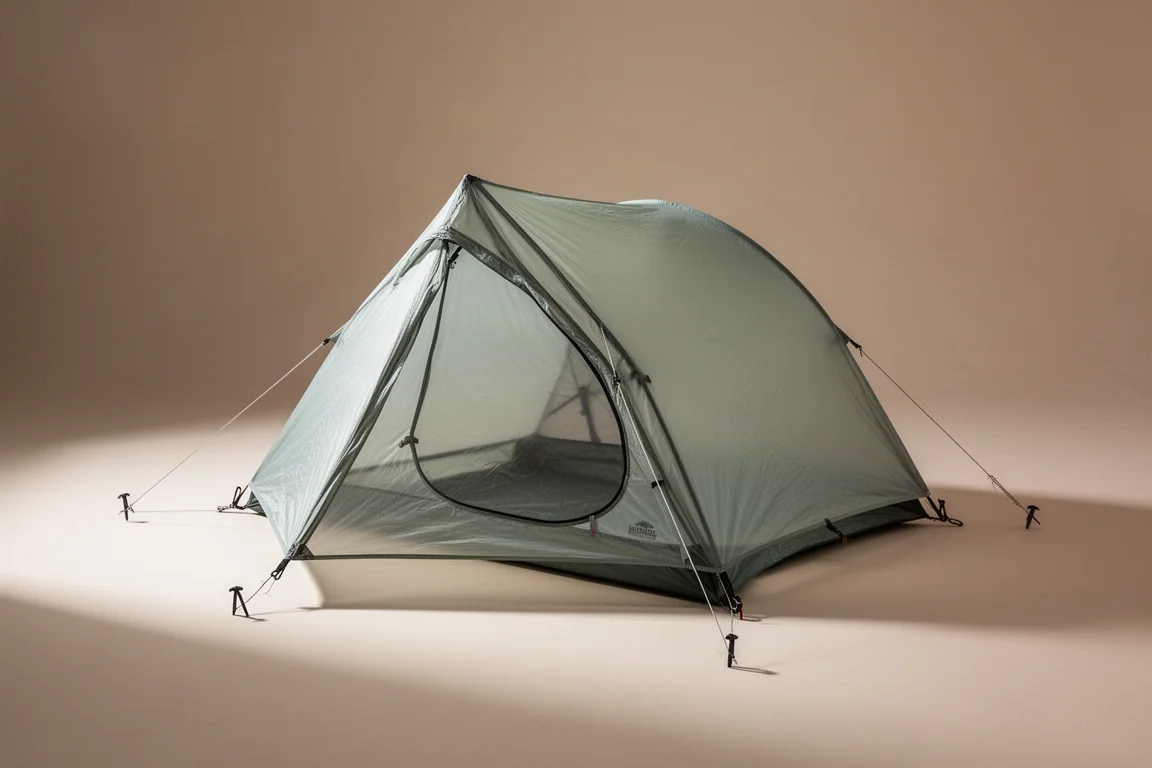
The Outdoor Vitals 40th one-person tent approaches the same problem from a different angle. Its defining trait is the shape of its walls. They are steep rather than broad, and that profile is what lets the shelter shed hard wind when it is staked out fully and pitched thoughtfully.
A typical freestanding dome has wide, rounded panels that can behave like a sail when the wind picks up. Steep walls with a good pitch location move air around the shelter instead of catching it, and a generally smaller footprint makes it easier to find a spot where the tent is protected. Stake out every guy line and the 40th becomes a very stormworthy shelter, which is not what most people expect from a tent with no poles of its own.
How Trekking Pole Tents Perform in Wind and Rain
It would be reasonable to assume a freestanding tent with a full pole structure is always the better choice for heavy rain, hard wind, and snow load. In some situations that is true, and a freestanding shelter remains the simpler answer when you cannot stake anything out.
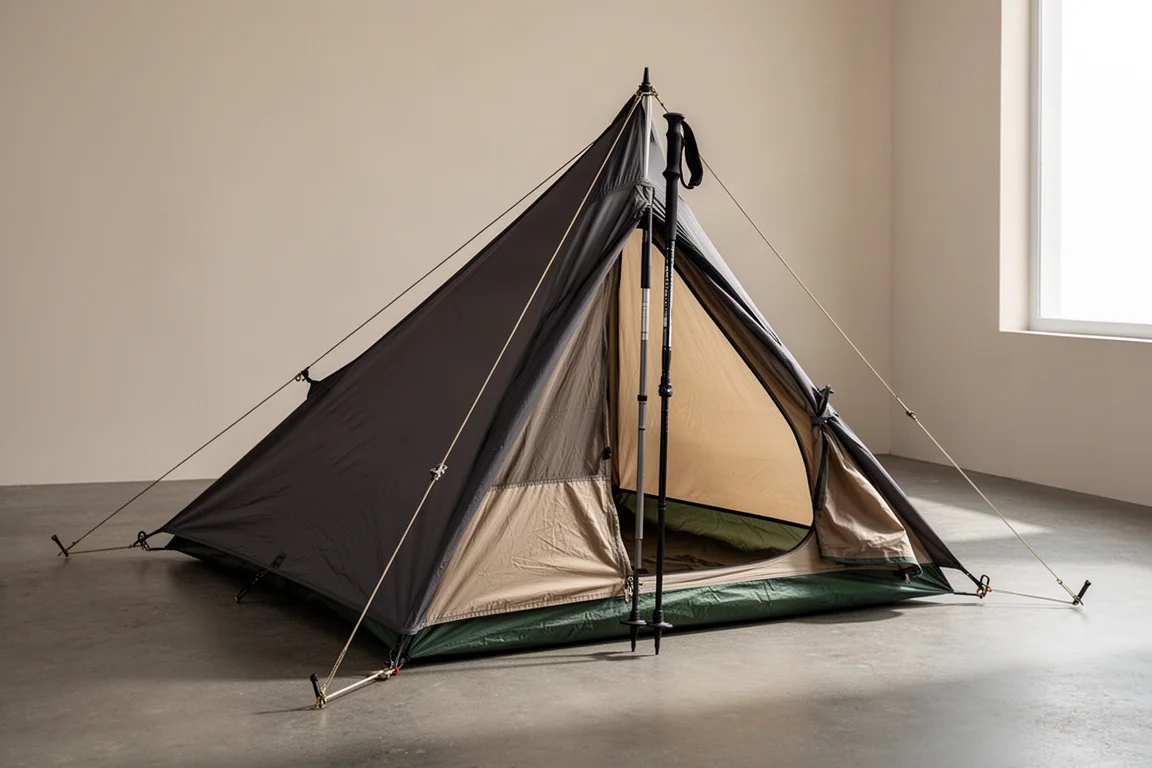
What makes a trekking pole tent competitive is geometry. Because the walls are steep and the shape is driven by tension rather than by a fixed frame, you can orient the shelter and tune the pitch to shed wind. A broad-walled dome tends to catch gusts across its largest surface. A steep-walled shelter pitched with all lines tensioned presents far less resistance, and the smaller footprint gives you more options for a sheltered site in the first place.
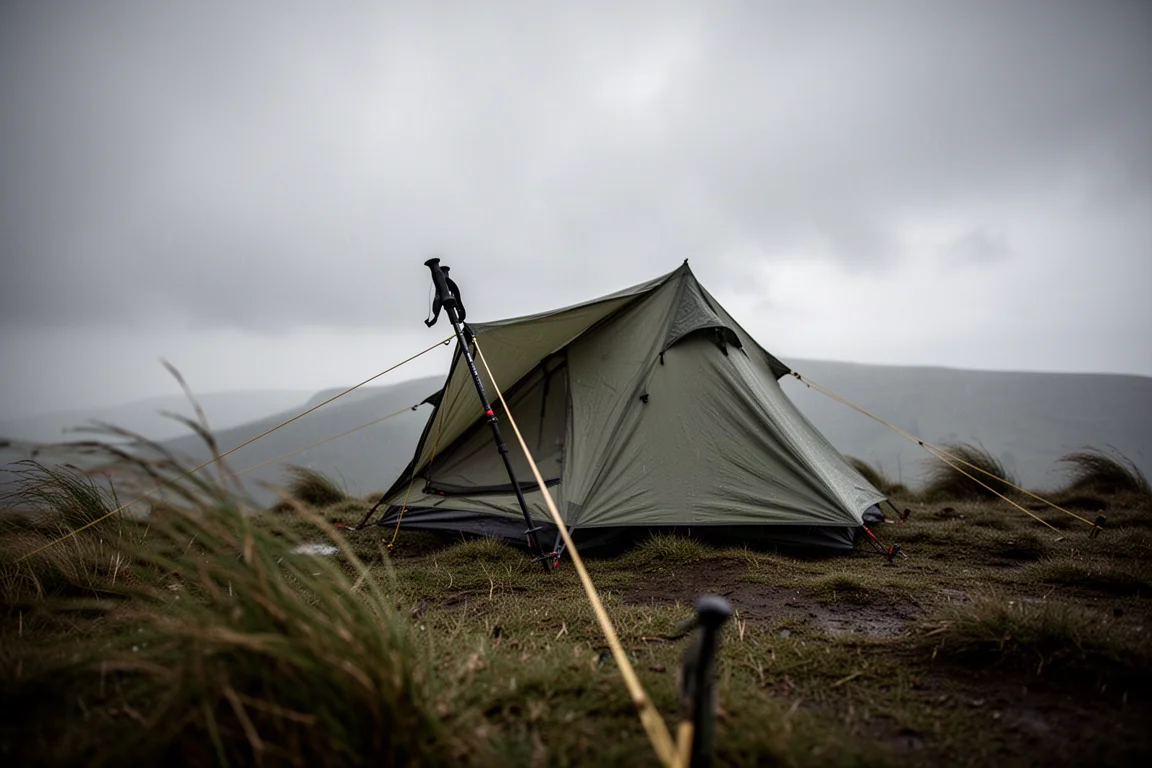
The practical takeaway is that weather performance is not determined by whether a tent is freestanding. It is determined by shape, tension, and where you choose to pitch.
Pitch Quality: The Skill That Decides Performance
A trekking pole tent can be a miserable experience if it is not set up correctly. There are usually particular ways a shelter needs to be pitched to perform at its best, and skipping those details shows up immediately in the field.
If the fabric is floppy, if the poles are not at the correct height, and if the overall pitch does not match the way the shelter was designed to sit, then it will not handle wind. It will not handle heavy rain. You will end up with a shelter that is neither comfortable nor confidence-inspiring, and it will feel like the tent’s fault when it is really the pitch.
The fix is simple and cheap. Set the tent up at home before a trip, work through the different configurations you might need, and try it on uneven ground to see how that changes things. That preparation makes a large difference once you are actually in the backcountry.
Versatility: Raising and Lowering Your Pitch
Because the height of the shelter is set by an adjustable trekking pole, you can tune the tent to the conditions rather than accepting a single fixed shape.
On calm, mild nights, raise the pitch and roll the doors back for maximum airflow. When severe wind and weather are coming, lower the height and close things off. Lowering the shelter also cuts down on splashback, the rain that hits bare ground and bounces back under the door. Anyone who has spent a night with blowing sand or dirt drifting under the entrance of a fixed-height tent knows how annoying that becomes, and here you simply drop the apex and tighten the lines.
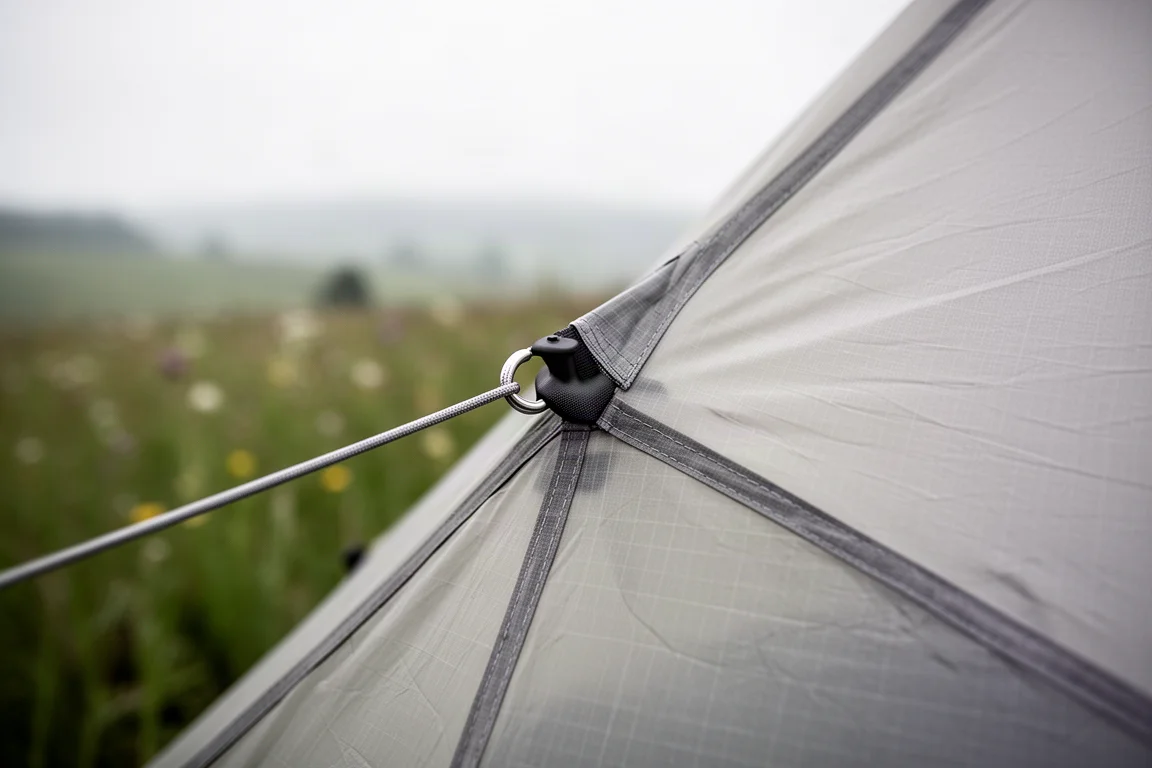
That adjustability is what makes a trekking pole shelter more versatile than a fixed freestanding design, and it costs nothing beyond learning your tent.
Stakes and Accessories: What May Not Be Included
Many trekking pole tents ship without stakes, and a few other accessory items may need to be added to get the best performance out of the shelter. Sometimes this comes down to personal preference, whether that is a particular style of pole, a different set of stakes, or a different line for the guy lines.
It helps to think of this as a feature rather than a shortfall. Stake choice changes dramatically with terrain. A carbon fibre cylindrical stake, for example, holds less securely in loose or sandy ground than a wider, flatter stake designed for soft soil. Picking the right style and the right number of stakes for the ground you expect is one of the biggest single factors in how well a shelter performs.
Buying Advice: Matching the Shelter to Your Trips
Both of these one-person shelters are strong options, and the right pick depends on what you want from your pack weight and your campsites.
Choose the Zpacks Plex Solo if weight savings is the whole point. It is a sub-one-pound Dyneema Composite Fabric tent that stays roomy for a solo shelter and handles a wide range of weather, and the over $600 price is the cost of that position. Budget for stakes separately.
Choose the Outdoor Vitals 40th one-person tent if you want a shelter you can tune. Steep walls, a small footprint, and an adjustable pitch height give it a wider operating range, and it rewards the time you put into learning its setup.
Whichever you pick, plan on two things: carry trekking poles, since they are the structure, and practise the pitch before your first trip. Do that, and you save weight, save space in your pack, and end up with a shelter that is genuinely solid in the backcountry.
Conclusion
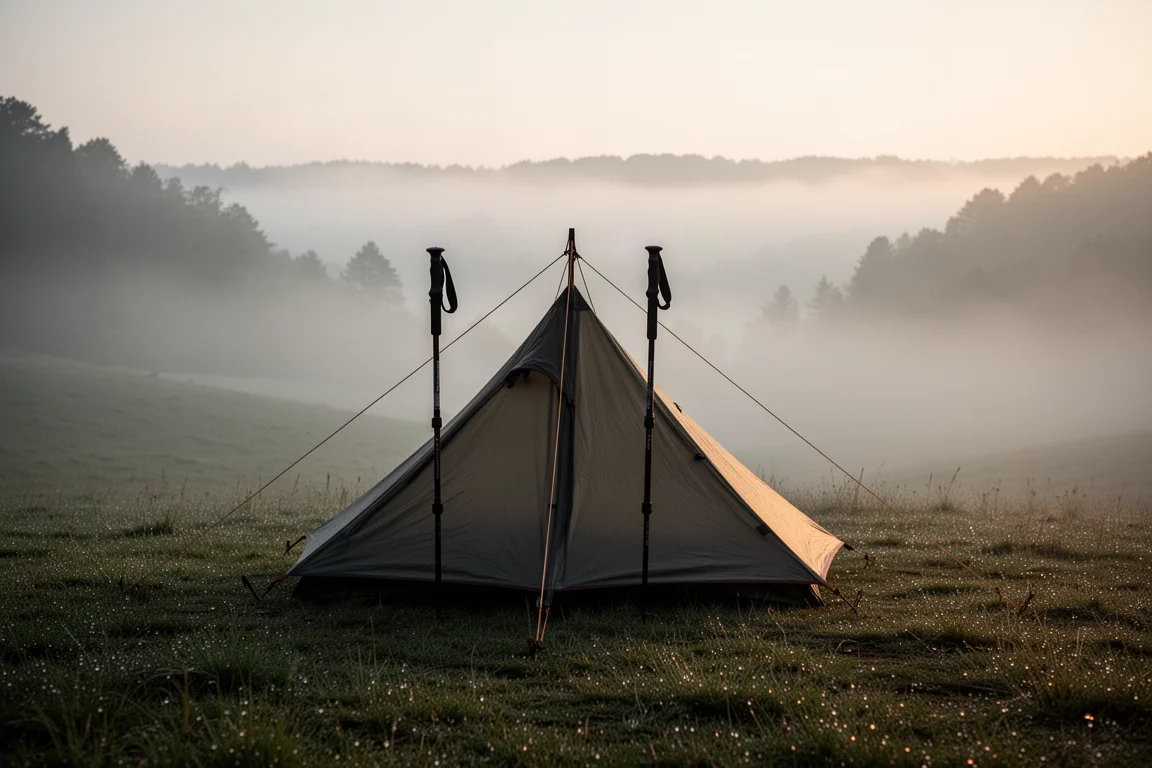
Trekking pole tents are not a compromise for experienced backpackers. They are a deliberate trade: you give up the internal frame and take on the responsibility of a good pitch, and in return you get less weight, less bulk, and a shape that can be tuned to the weather. The Zpacks Plex Solo and the Outdoor Vitals 40th one-person tent both deliver on that promise, and both are easy to recommend to backpackers willing to learn them.
Further reading
Related Reviews
Backpacking Tents
3F UL Lanchan Pro 1 Review: A 1 lb 8 oz Single-Wall Trekking Pole Tent
A practical look at the 3F UL Lanchan Pro 1, a single-wall trekking pole shelter with a 1 lb 8 oz weight, 20D silnylon fabrics, and a roomy 90 x 31 x 49 inch interior.
Backpacking Tents
3F UL Taiji 2-Person Tent: A Convertible Backpacking Shelter Worth a Closer Look
A practical look at the 3F UL Taiji two-person tent, covering its materials, true two-person interior, fly-first pitching, and the seasonal inner swap that lets one shelter cover more of the year.
Backpacking Tents
3FUL Lanshan Twoerson Pro Review: A Light Trekking Pole Shelter That Struggled in Rain
A two-person trekking pole shelter with a 2026 redesign, pitched with sticks and put through a night of steady rain. Here is what worked, what did not, and what to check before buying.