Backpacking Tents
Trekking Pole Tents for Backpacking: What to Know Before You Buy
A practical look at non-freestanding shelters, plus three pieces of gear that make the switch easier: a sub-one-pound tent, a storm-worthy one-person option, and stakes that hold.
Introduction
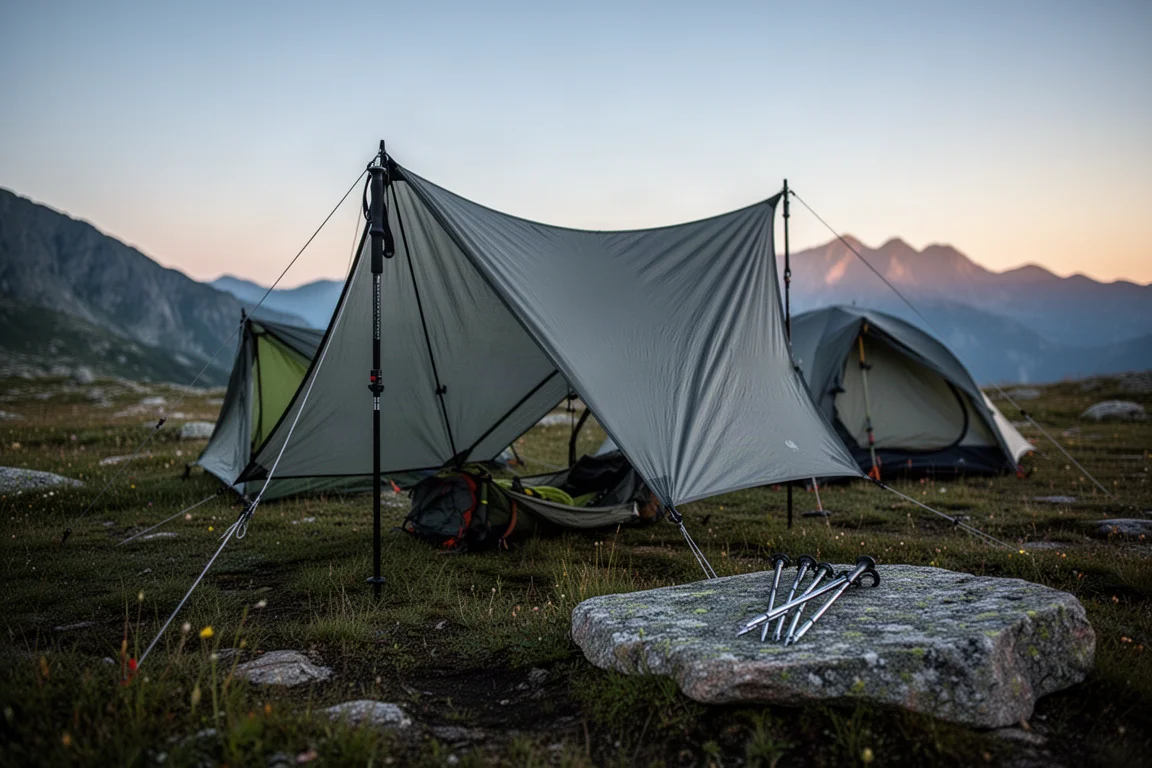
Non-freestanding shelters have a reputation problem. Many backpackers assume a tent without its own pole structure will be fussy to pitch and awkward on uneven ground, so they stay with a freestanding dome. The reality is more straightforward: a trekking pole tent asks you to stake it out properly, and in return it gives you a lighter, smaller, and often more weather-capable shelter.
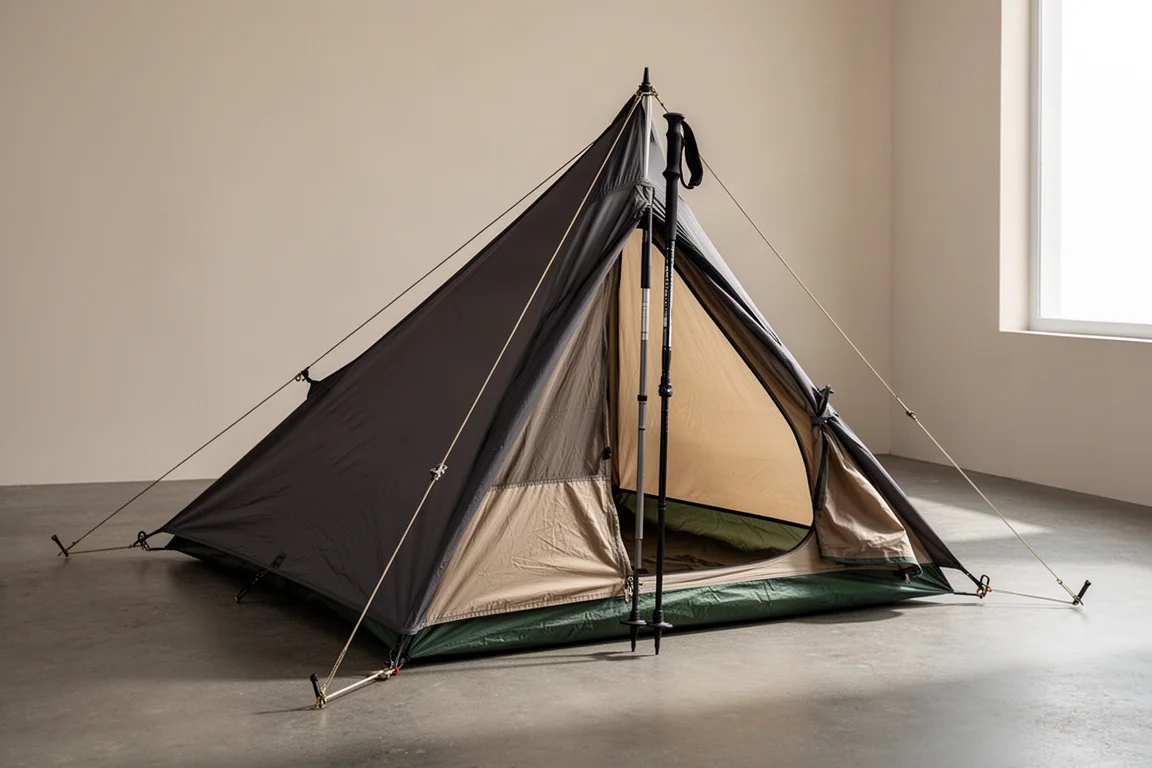
The difference comes down to structure. A freestanding tent carries its own pole set that runs into every corner, so it stands on its own before you drive a single stake. A non-freestanding, or trekking pole tent, uses the poles you are already carrying. You stake it out, tension the guylines, and set your poles to the right height to get a taut pitch.
That trade is worth understanding before you buy, because the payoff is real: less weight in your pack, less bulk, and more control over how the shelter handles wind and rain.
Why Trekking Pole Tents Save Weight
Weight is the headline. A trekking pole tent skips the entire internal pole structure, and the design tends to be more minimal overall: fewer seams, less fabric, fewer hardware pieces. Removing all of that is what drops the number on the scale.
That also means less packed volume. A shelter that stuffs down smaller leaves room in your pack for the rest of your kit, which matters on longer trips where every liter counts.
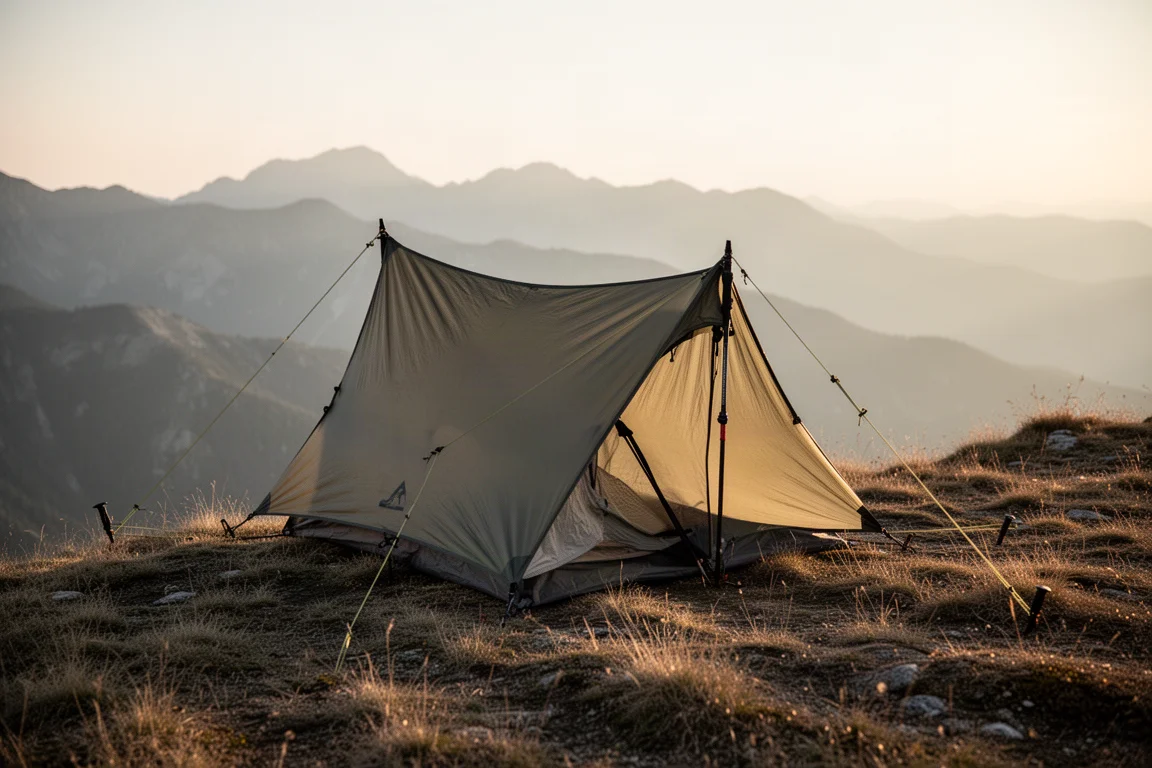
The saving is not a marketing trick. It is the direct result of not carrying something you already have in your hands. If minimizing pack weight is the goal, this is one of the clearest places to find it.
Zpacks Plex Solo: A Sub-One-Pound Shelter
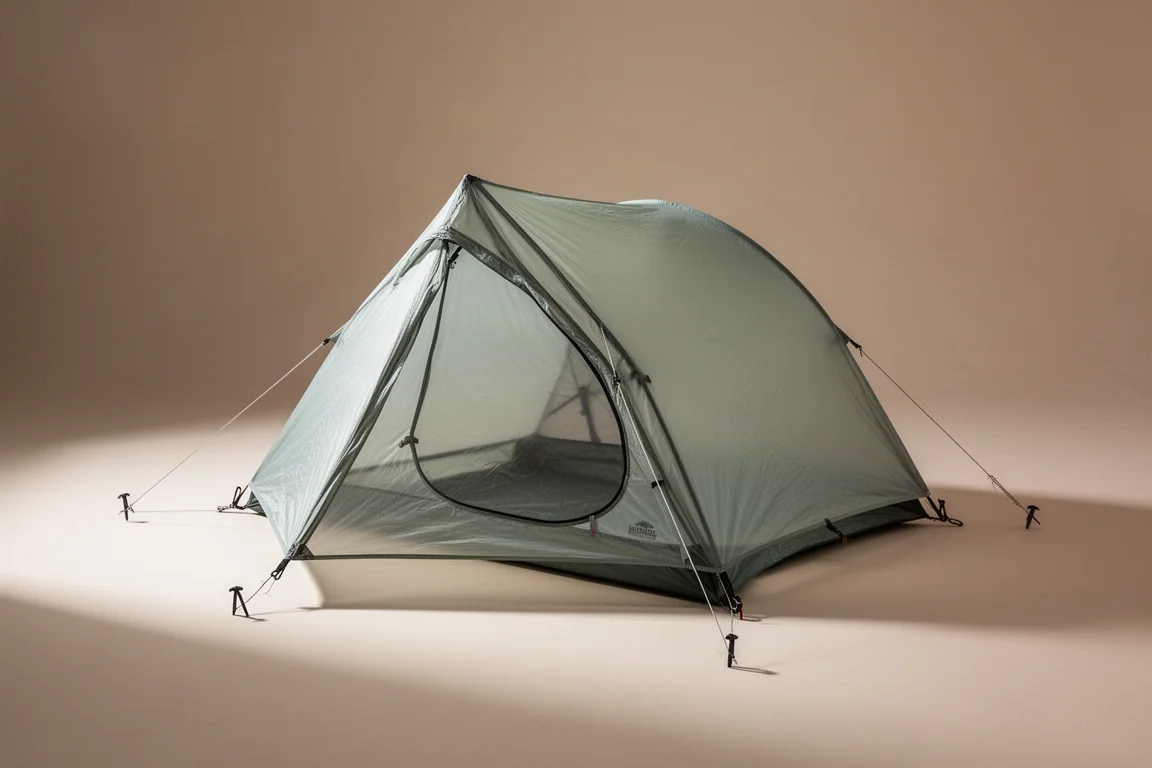
The Zpacks Plex Solo is the clearest example of what a trekking pole tent can do for weight. It is a sub-one-pound shelter built from composite fabric, and despite that number it is genuinely roomy for a one-person tent. It also handles a wide range of weather conditions well.
The trade-off is price. The Plex Solo sits above $600, which places it at the upper end of the shelter market. For backpackers whose priority is shaving as much weight as possible from their setup, that cost buys a meaningful reduction.
One detail worth knowing before you order: the Plex Solo does not come with stakes. That is common for ultralight shelters, and it is not an oversight. Stakes are a personal choice, and the right set depends on the ground you expect to pitch on.
Pitching Matters More Than You Think
A trekking pole tent rewards attention. Pitch it well and it is stable, quiet, and weather-ready. Pitch it sloppily and the experience goes downhill fast: floppy fabric, poles at the wrong height, and a shelter that will not hold up when the wind picks up or the rain settles in.
The fix is preparation, not gear. Set the tent up at home before a trip, ideally more than once, and experiment with pole height and guyline tension. Try it on uneven ground to see how the pitch changes when the terrain is not flat. Learning those nuances in a controlled setting makes the first night out far more comfortable.
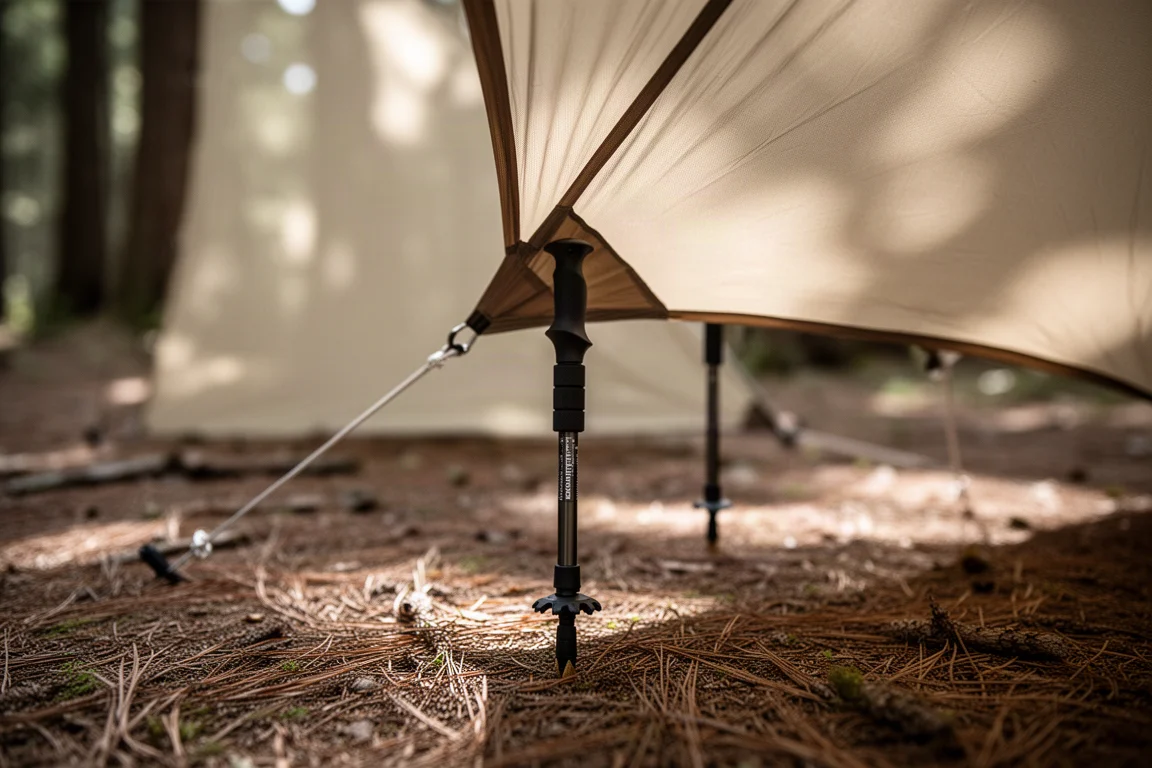
Every trekking pole tent has its own quirks and a preferred sequence for setup. Understanding yours before you are tired, cold, and pitching in the dark is the single biggest improvement you can make to the experience.
Outdoor Vitals 40th: Adjustable Height and Storm-Worthy Shape
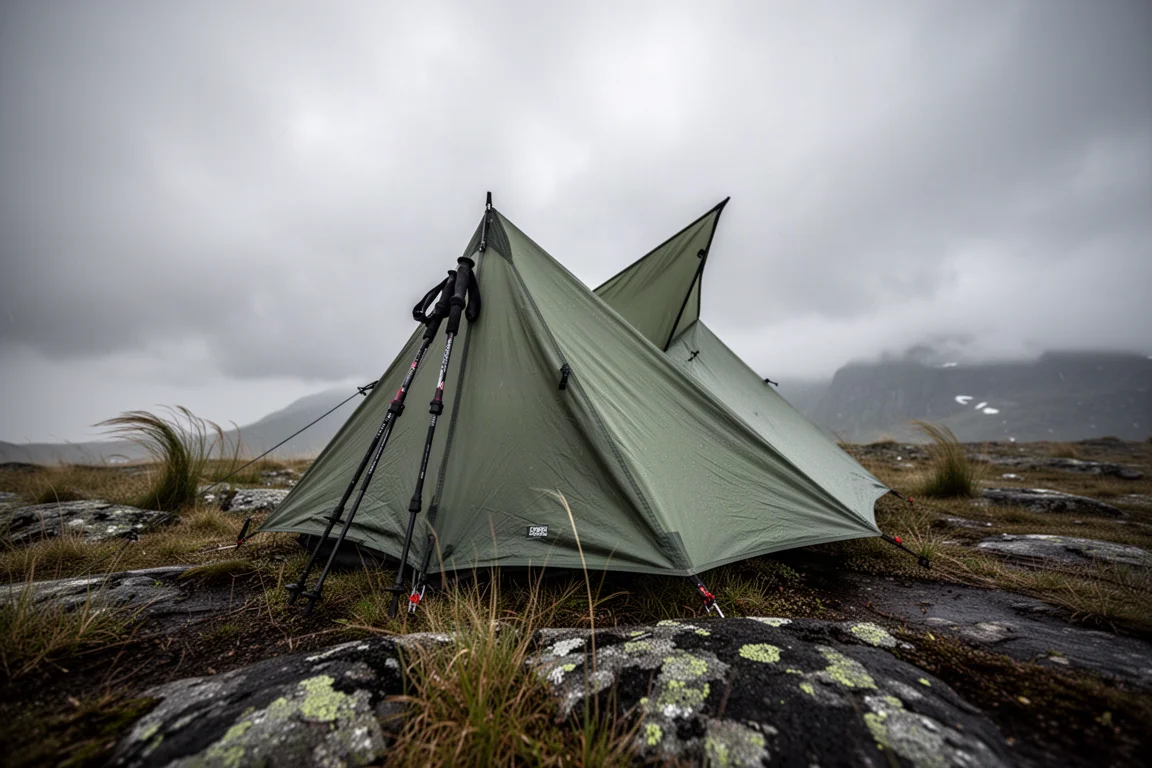
The Outdoor Vitals 40th one-person tent shows off what steep walls can do. A dome-shaped freestanding tent presents broad panels to the wind, and in strong gusts those panels behave like a sail. A shelter with steep walls and a well-chosen pitch direction moves air around it instead of catching it.
Staking out every guyline is what turns this tent into a genuinely storm-worthy shelter. With the full set of lines tensioned, the shape works with the wind rather than against it.
The footprint is another advantage. A smaller footprint gives you more options for where to pitch, and more freedom to rotate the shelter so its steepest wall faces the weather. Because the poles are adjustable, you can also raise the shelter for maximum airflow on calm nights and drop it lower when wind and rain are in the forecast. A lower pitch cuts down on splashback from rain hitting the ground and blowing under the door, and it helps keep drifting sand and dirt out.
Stakes and Accessories: MSR Mini Groundhog and Alternatives
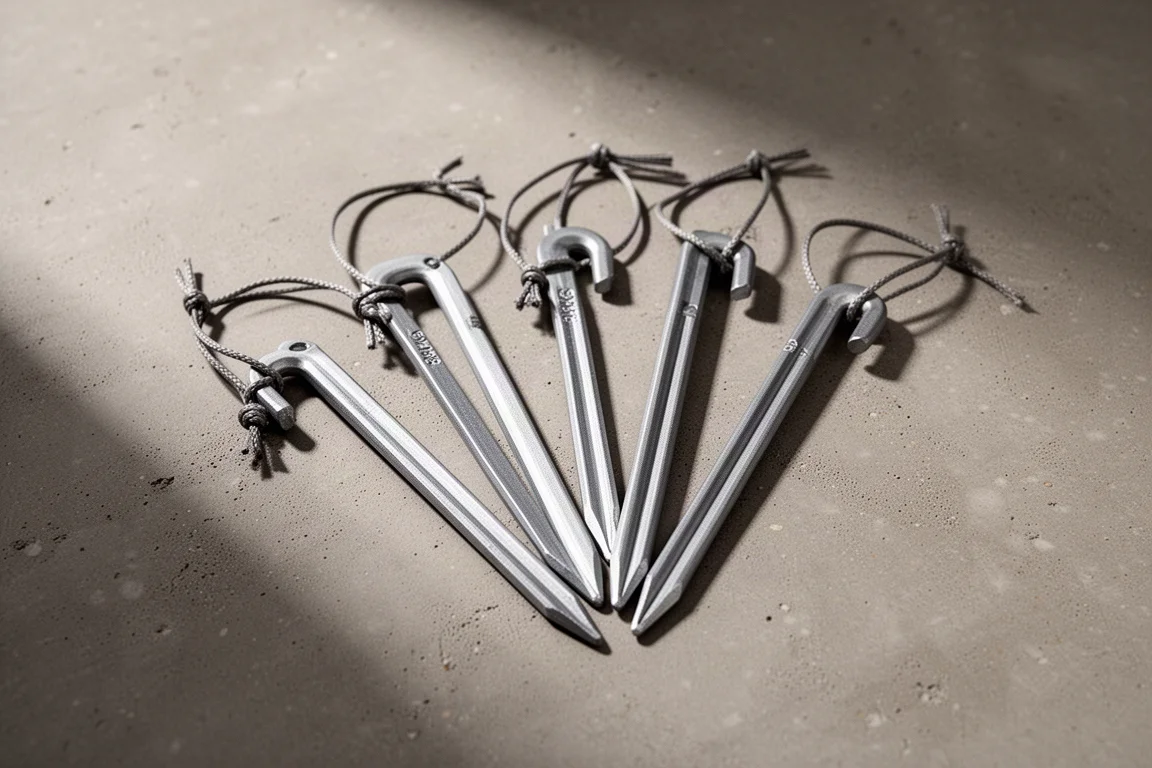
Stakes deserve more thought than most backpackers give them. Since many trekking pole tents do not include them, you get to choose, and the right choice depends on where you pitch. Sandy soil, hard-packed trail, and rocky ground all reward different stake designs.
Holding power is the variable that matters most. A cylindrical carbon fiber stake can be light and easy to spot, but a cylinder has less surface area to grip loose ground, so it can pull free in sand. A wider, angled stake such as the MSR Mini Groundhog bites into a range of soils and holds better when the ground is soft.
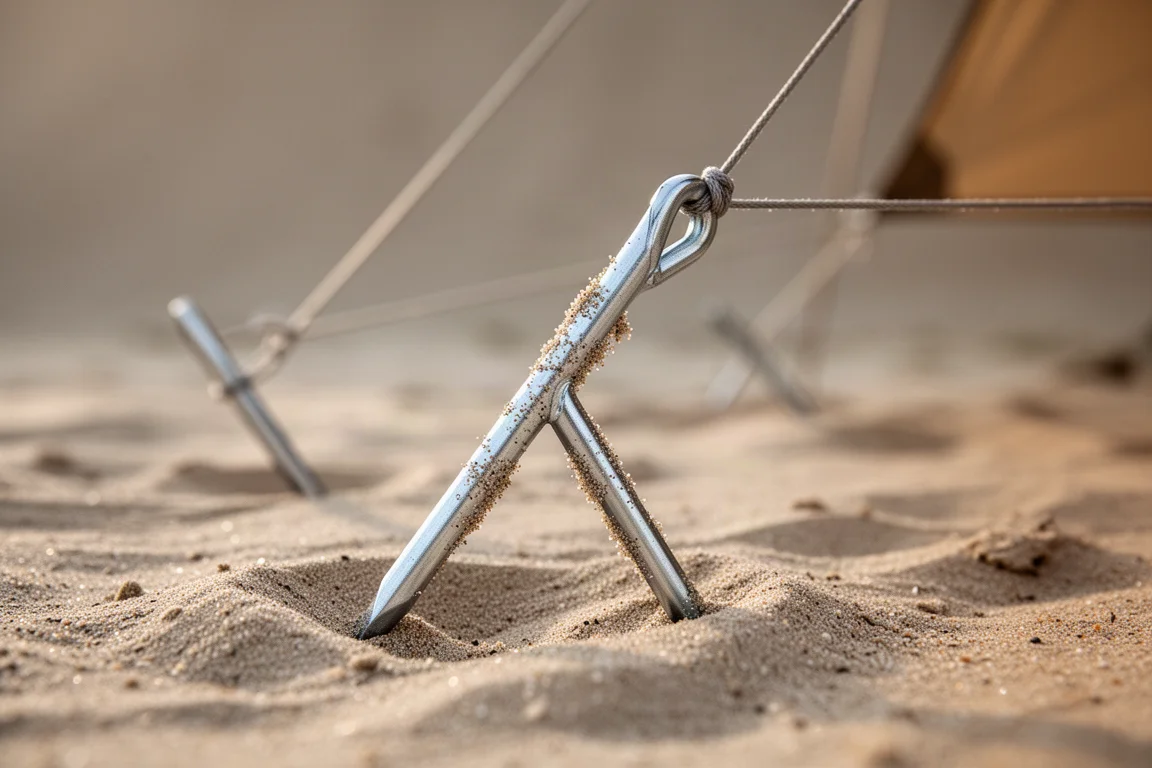
Beyond stakes, small accessories shape how a shelter performs: the type of line used on the guylines, the pole you pair with the tent, and the number of stakes you carry. Getting those details right is what lets a trekking pole tent perform the way it was designed to in the terrain you actually hike.
Weather Performance and Real-World Versatility
The assumption that a full pole structure always wins in bad weather does not hold up. In some conditions a freestanding tent is the better tool. But a well-staked trekking pole tent with steep walls handles heavy rain, strong wind, and snow load better than its minimalist look suggests.
Versatility is the underrated part. Because the pole height is adjustable, the same shelter can be tuned for a calm night with the doors rolled back for maximum ventilation, or dropped low and closed down when the forecast turns. That range of adjustment is something a fixed-pole design cannot offer.
The common thread is understanding the shelter you bought: how it pitches, how it handles wind direction, and which small adjustments make the biggest difference.
Buying Advice: Matching a Shelter to Your Terrain
Start with the honest question: what are you optimizing for? If pack weight is the priority and budget is flexible, the Zpacks Plex Solo delivers a sub-one-pound shelter with room to live in. If you want a one-person shelter that can be tuned for storm conditions and a smaller footprint, the Outdoor Vitals 40th is built around steep walls and adjustable pitch.
Then plan the supporting pieces. Budget for stakes if your shelter does not include them, and match the design to the ground you expect. The MSR Mini Groundhog is a sensible default for mixed terrain because it holds in a range of soils.
Finally, accept the learning curve. Trekking pole tents ask for a good pitch, and a good pitch comes from practice. Once you have that, the weight savings, the smaller packed size, and the weather performance all follow.
Conclusion
Trekking pole tents are not difficult to live with. They are different, and the differences are worth the trade: less weight and bulk in your pack, a smaller footprint on the ground, and a shelter that can be tuned to the conditions around it. Take the time to learn how yours pitches, choose stakes that suit your terrain, and the setup becomes second nature.
Further reading
Related Reviews
Backpacking Tents
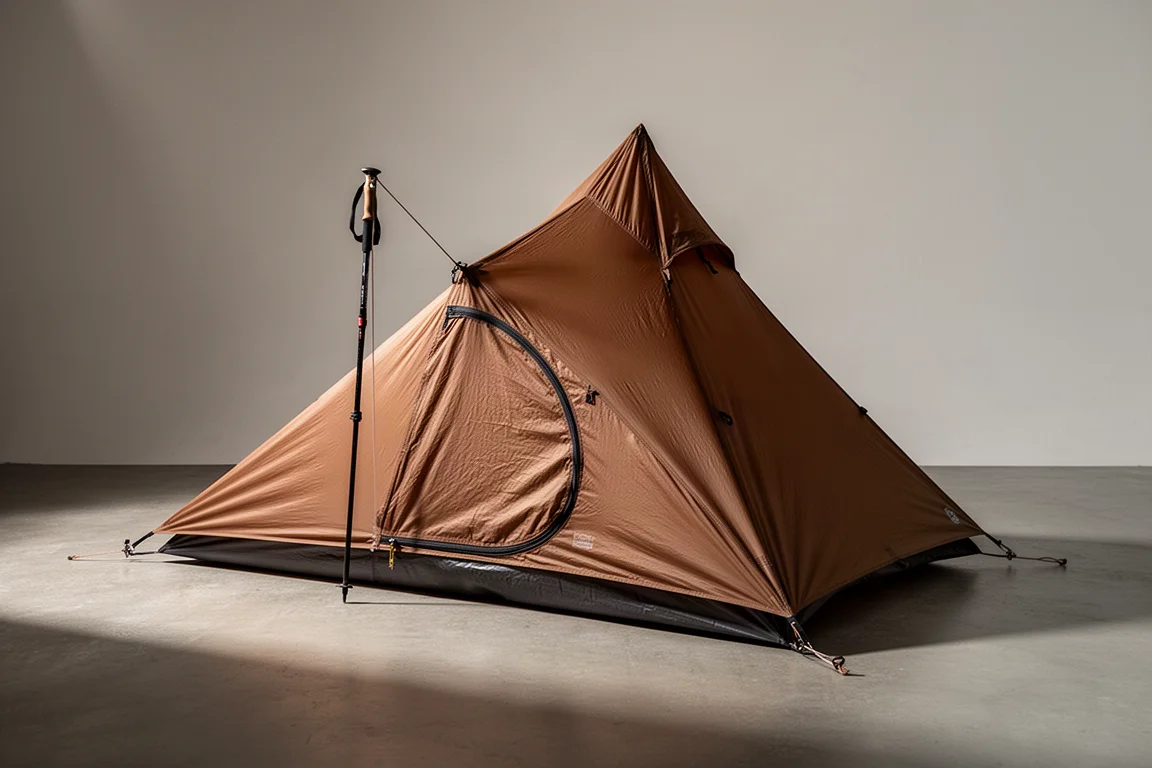
3F UL Lanchan Pro 1 Review: A 1 lb 8 oz Single-Wall Trekking Pole Tent
A practical look at the 3F UL Lanchan Pro 1, a single-wall trekking pole shelter with a 1 lb 8 oz weight, 20D silnylon fabrics, and a roomy 90 x 31 x 49 inch interior.
Backpacking Tents
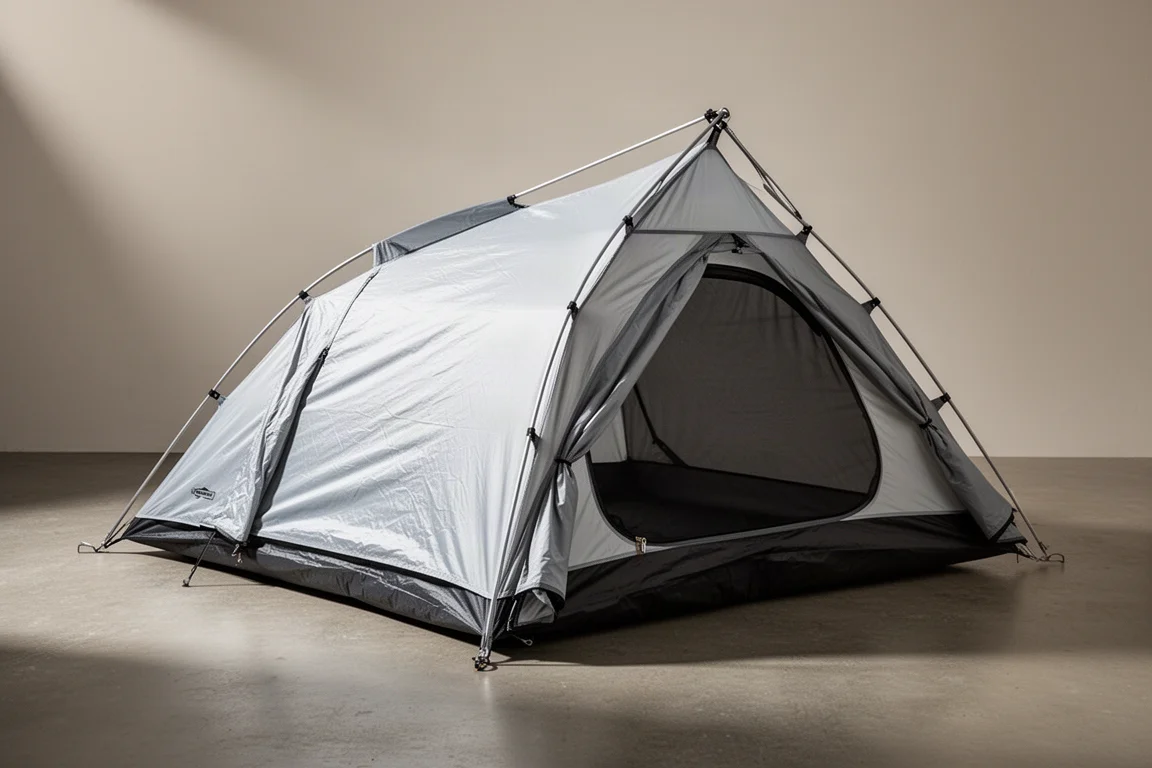
3F UL Taiji 2-Person Tent: A Convertible Backpacking Shelter Worth a Closer Look
A practical look at the 3F UL Taiji two-person tent, covering its materials, true two-person interior, fly-first pitching, and the seasonal inner swap that lets one shelter cover more of the year.
Backpacking Tents
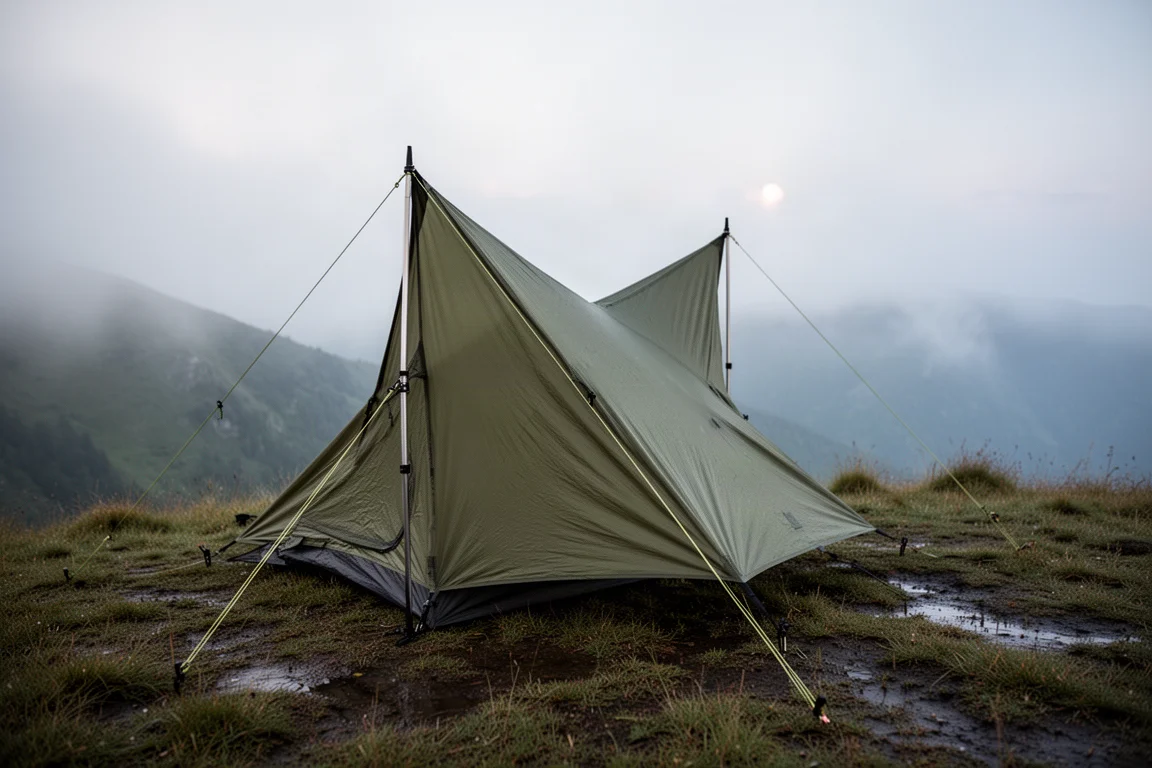
3FUL Lanshan Twoerson Pro Review: A Light Trekking Pole Shelter That Struggled in Rain
A two-person trekking pole shelter with a 2026 redesign, pitched with sticks and put through a night of steady rain. Here is what worked, what did not, and what to check before buying.