Hi-Fi Components
Topping LA90 Discrete and D90 3 Discrete: Two Measurement-Led Hi-Fi Components
A practical look at Topping's LA90 Discrete amplifier and D90 3 Discrete DAC, covering build, connectivity, sound character, speaker pairing, and the trade-offs worth knowing before buying.
Introduction
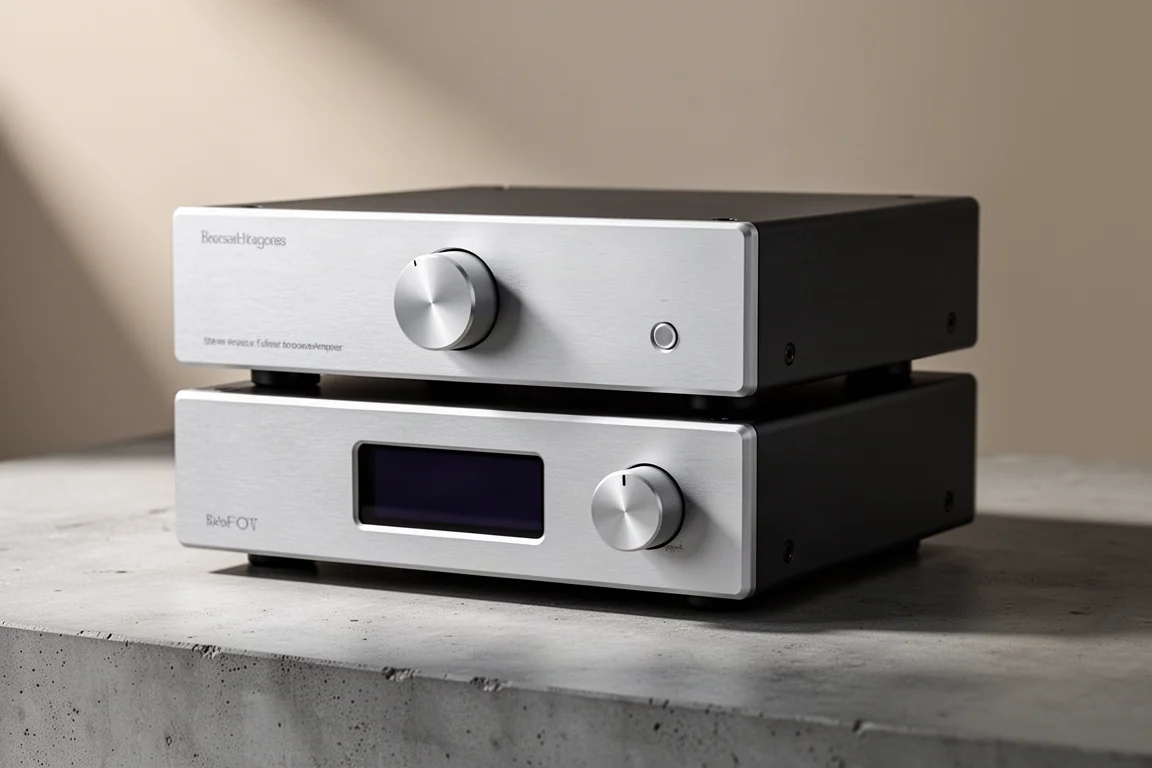
Topping has built a reputation around components that measure exceptionally well, and the two units here take that idea in different directions. The LA90 Discrete is a stereo power amplifier with a volume control and three inputs, which means it can also be used as a straightforward integrated amplifier. The D90 3 Discrete is a DAC that revisits one-bit conversion, a technique first developed in the 1990s, and rebuilds it with discrete components instead of an integrated circuit.
Both are compact, both share the same half-rack width, and both sit inside machined aluminium cases. The more interesting question is whether strong objective performance translates into a satisfying listen. The answer here depends heavily on what you ask each component to do, and on the speakers you ask the amplifier to drive.
What These Two Topping Components Have in Common
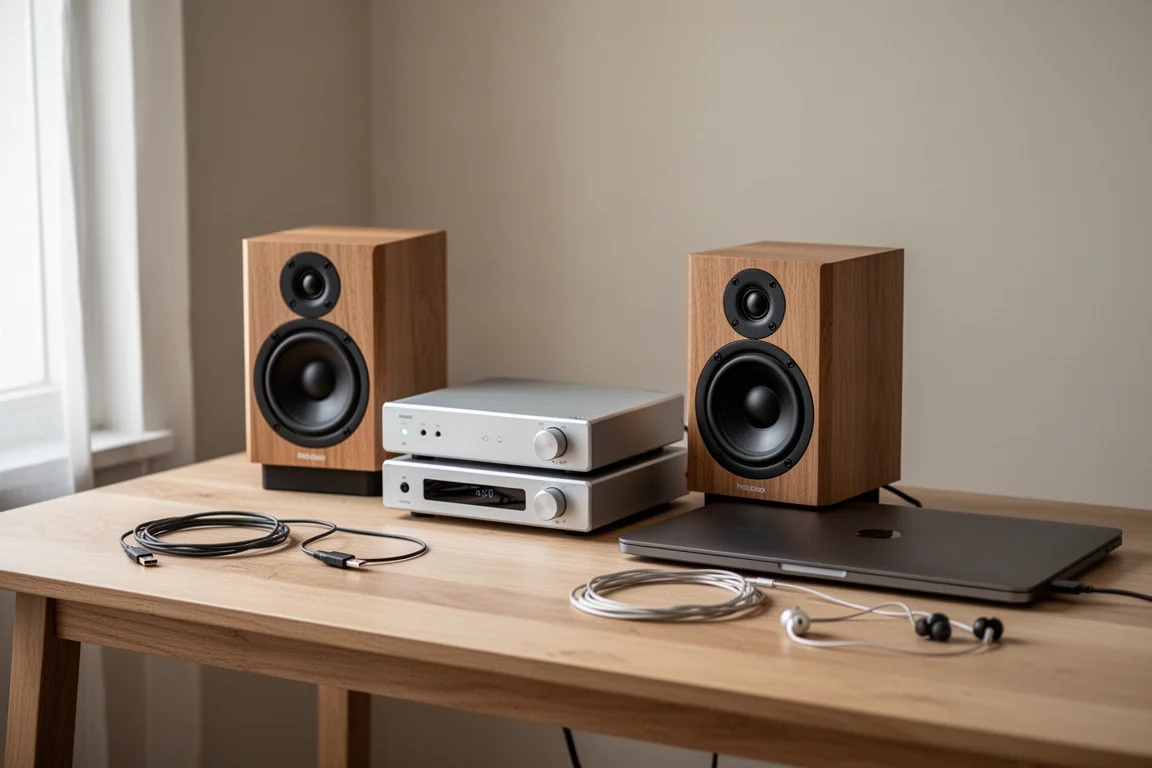
The two units share a half-rack width footprint, which means they can be stacked directly on top of each other, and the preamplifier in the range follows the same dimensions. The CNC machined aluminium chassis is good quality on both, and both are offered in silver as well as black. For anyone building a compact desktop or nearfield system, that shared footprint is a genuine practical advantage rather than a cosmetic detail.
Measurements are central to how these products are designed, but they only indicate aspects of performance, never the whole picture. A component can measure relatively poorly and still be appealing to listen to, because limitations or design faults revealed by measurement do not necessarily impede a listener’s preferences and can sometimes flatter them.
Part quality and engineering expertise also play a large part in whether something is likely to sound good, and occasionally a design is genuinely innovative as well. That combination of solid engineering and unusual thinking is what makes these two Topping units worth a closer look.
Topping LA90 Discrete: Design, Inputs, and Power
The LA90 Discrete is a stereo power amplifier with a volume control and three inputs, so it can be used as a no-nonsense integrated amplifier. The substantial aluminium plate work forming the chassis is of a quality not often seen at the £799 asking price, and it is available in black as well as silver.
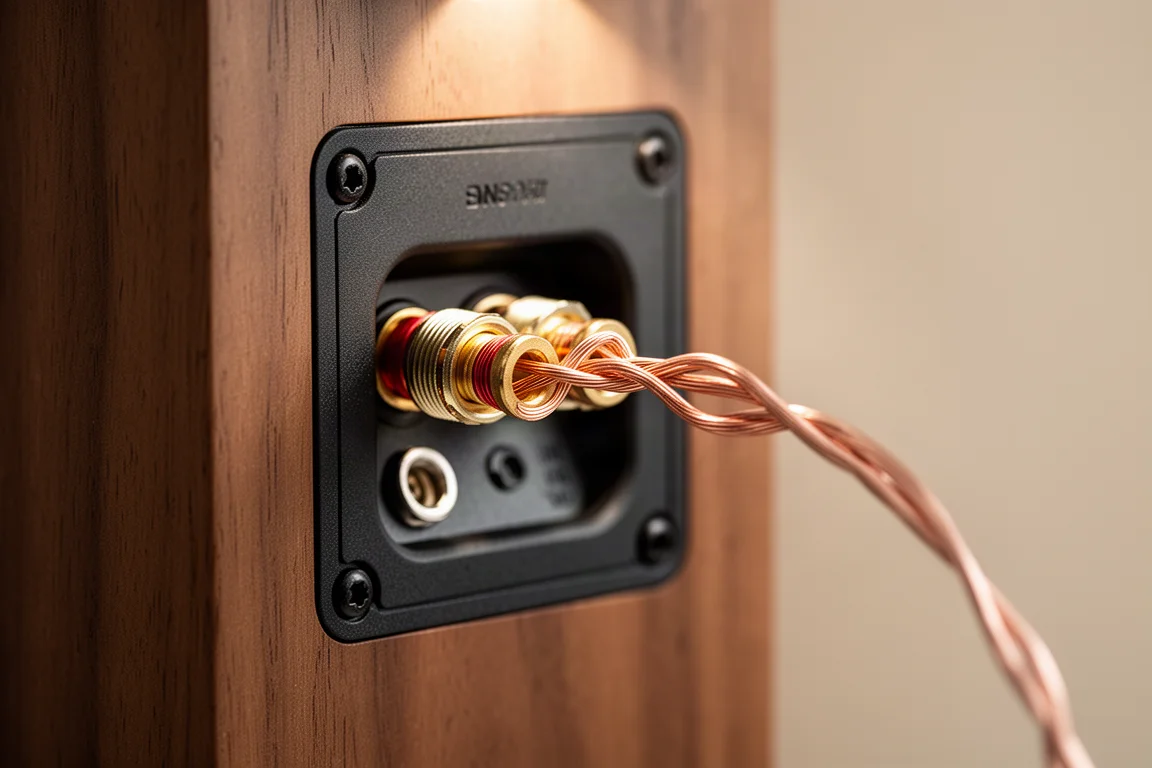
Controls are deliberately minimal. A single universal button handles power up, power down and input selection, and volume is set with a potentiometer-based control. That control is not motorised, so there is no remote, which points to a component intended primarily for desktop duties. The three inputs are balanced, and the unusual looking connectors double up to accept cables terminated with either XLR or TRS plugs. Speaker binding posts are of a reasonable standard, and three dip switches handle settings. Volume can be bypassed entirely.
The amplifier can also be switched to run in bridge mono mode, raising output from a stated 56 watts per channel into 8 ohms to 180 watts. Two gain settings are offered, 9.4 dB and 19.4 dB, which is low compared with the roughly 26 dB that is standard for a power amplifier.
Power comes from an external switch mode supply rather than an internal one, a choice that avoids expensive certification for different markets, and the brick itself is generously rated at 64 volts and 4 amps. This version of the LA90 moves to a discrete topology where the earlier model relied on integrated circuits. It is a class AB design built around Topping’s proprietary nested feedback composite technology, where nested refers to the use of multiple smaller feedback loops and composite refers to a combination of voltage and current feedback. The result is a distortion and noise figure of 0.0001% and a signal to noise ratio of 143 dB.
Topping LA90 Discrete: How It Sounds
The background from which details emerge is remarkably dark, and that lets a lot of information through. Just as importantly, the vanishingly low distortion does not produce the clinical character often associated with class D designs. This is a proper class AB amplifier that sounds like one. Tonality is neutral, and resolution with laid-back recordings is excellent.
With simple material such as a jazz quartet, the amplifier throws out a wide sound stage with a modicum of depth. Bass is tight but lacks weight, the midrange is surprisingly natural and stunningly open, and the highs are detailed and refined.
Demanding music exposes a different side. With hard rock, and even with speakers that are relatively forgiving to drive, the sound stage shrinks and performers blend into one another. The amplifier shows some signs of strain once current delivery becomes a limiting factor. Compared with the Audiolab 6000A it is clearly the cleaner of the two, although the 6000A Mark II stays more consistent regardless of genre. The Exposure 2510 closes the fidelity gap and copes better with demanding recordings while offering a richer tone, yet the LA90 Discrete still sounds cleaner when current delivery is not the constraint. The same pattern held with current-hungry speakers: stunning with simple acoustic recordings, less composed as the music became more complex.
Pairing matters enormously. Highly resolving, easy to drive mini monitors play directly to the strengths of this amplifier, allowing the resolution and natural tone to shine while masking the lack of dynamics and bass weight. Efficient small monitors combined with desktop or nearfield listening are where this amplifier makes most sense. Moving away from an external power supply brick would be the logical next step if Topping wants the LA90 to be taken seriously beyond desktop and nearfield use, and that is the main reason it does not score higher.
Topping D90 3 Discrete DAC: Design and Connectivity
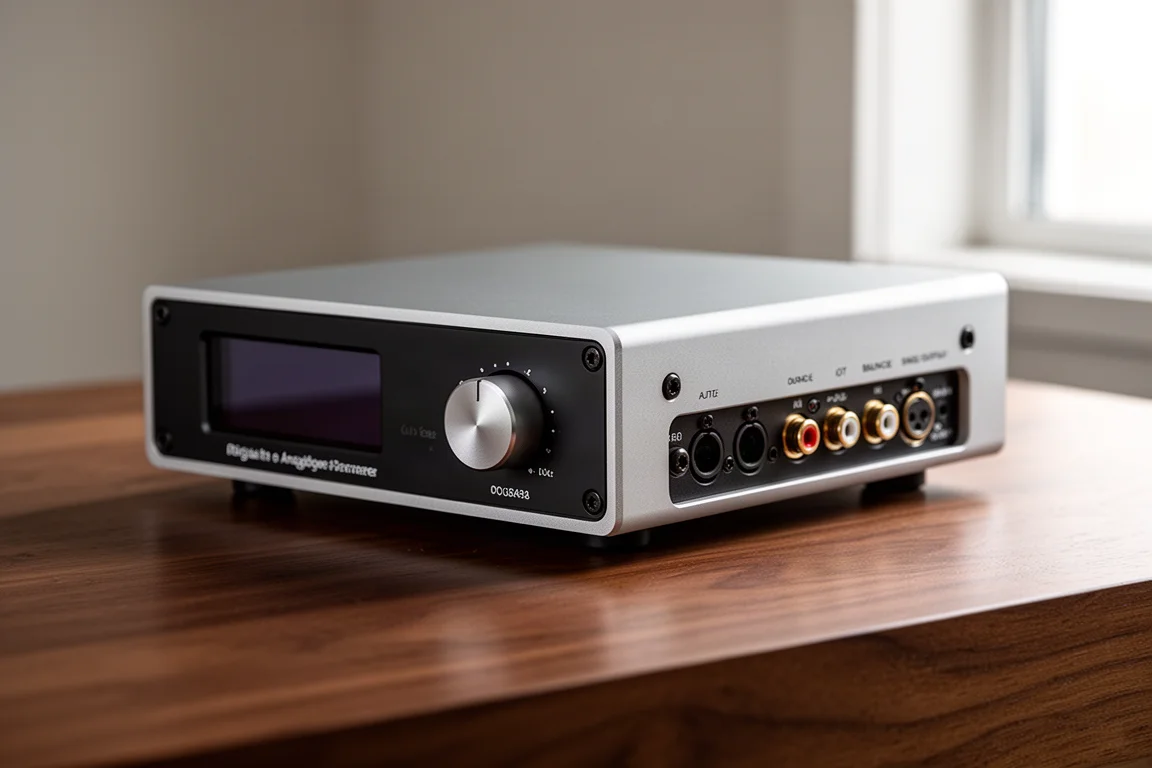
The D90 3 Discrete shares the same half-rack width footprint as the LA90 amplifier and the preamplifier in the range, so the units can be stacked directly on top of each other. The CNC machined aluminium chassis is good quality and is available in silver and black.
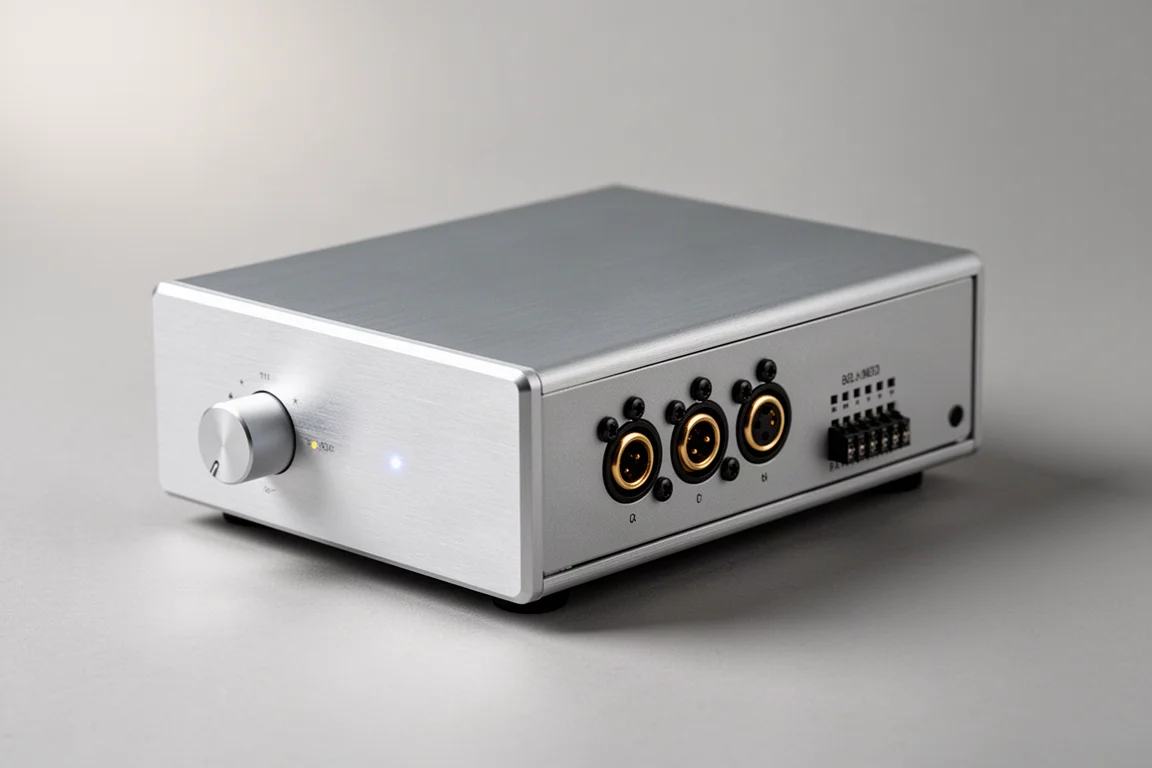
The power button doubles as input selection, and the rotary dial can be used to attenuate volume. It is a decent digital volume control, though it does not compete with a high-quality analogue preamp. Pressing the dial changes the output from RCA to XLR to both. Display settings and filter selection appear to be relegated to the remote control, with no way of reaching them directly on the unit.
A 10-band parametric equaliser allows fine adjustments to the frequency response by altering gain and the severity of the slope, but it requires Topping Tune software on a Windows or Mac device with the DAC connected over USB. Connectivity is comprehensive: balanced XLR and single-ended RCA analogue outputs, Bluetooth, and digital inputs covering AES/EBU, USB, coaxial, optical and I2S configurable to various formats.
The conversion stage is the unusual part. Most modern delta-sigma DACs are multi-bit, using three to six-bit internal conversion through integrated circuits. This DAC uses one-bit logic array switching at extremely high speeds. One-bit, or bitstream, conversion was invented by Philips in the 1990s and was later replaced by multi-bit designs, which brought reduced quantization noise and less dependency on the low sample rates that were susceptible to jitter. The D90 3 Discrete updates the approach by using individual components rather than a chip, with 16 phase modules per channel and a precision voltage reference, reaching a 131 dB signal to noise ratio. An FPGA handles signal processing to reduce jitter to a stated minus 157 dB, which is vanishingly low.
Topping D90 3 Discrete DAC: How It Sounds
This DAC does not sound like other Topping DACs. A clean, neutral presentation would be the natural expectation, but there is a degree of coloration here. The result is organic rather than analytical.
The most useful reference point is the ESS Sabre version of the same model, which uses two 9038 Pro chips for conversion. That version delivers exactly what you would expect: excellent resolution and focus, with tighter bass, crisper midrange transient attack, more open upper registers and superior imaging. The discrete version is a little more diffuse, softer and more laid-back. The differences are not dramatic, but they are noticeable once you know what to listen for. Both have limited sound stage width, although the discrete version offers slightly more sound stage depth.
Value is worth weighing carefully. The £279 FiiO K13 R-2R ladder DAC offers stupendous value and surpasses the discrete version for fidelity, if only by a small margin, with a clarity that rivals the Sabre version, even though the two present music very differently. For a slightly relaxed presentation, the £690 Denafrips Ares 15th adds layers to the sound stage and increases spatiality in all directions, and is softer with transients. Through its I2S input in particular it delivers superior temporal information in a fluid, natural manner. The D90 3 Discrete shares a similar tonality with the Denafrips, but not its resolution or spatial abilities, and the other DACs discussed here are more resolving overall.
What the discrete version offers instead is a midrange that sits back, providing some sound stage depth, with edges that are rounded rather than sharpened.
How to Shortlist Components for an Audition
Measurements indicate aspects of performance, but they never tell the whole picture. A component can measure relatively poorly and still be appealing to listen to, because measurements may reveal limitations or design faults that do not impede a particular listener’s preferences and could even flatter them. Equally, a product can measure brilliantly and still be less enjoyable than a rival in a specific system.
Part quality and engineering expertise also play a large part in whether something is likely to sound good, and design innovation is worth paying attention to as well. Branding and reputation are reasonable starting points, but the more reliable approach is to decide what you actually need. A desktop amplifier for efficient mini monitors and a DAC whose presentation you find easy to live with over long sessions are two quite different requirements, and they should drive the shortlist rather than a single specification figure.
Buying Advice: Matching These Components to Your System
For the LA90 Discrete, the safest route is to pair it with highly resolving, easy to drive speakers, and a lot of mini monitors fall into that category. Desktop and nearfield use is the sweet spot. The external power supply and the way the amplifier behaves when current delivery becomes a constraint are the two things to weigh before committing to it for a larger room or with demanding speakers.
For the D90 3 Discrete, the decision is mostly about character. Choose the discrete version if you want a softer, more laid-back, organic presentation with a bit of sound stage depth and a midrange that sits back. Choose the Sabre version of the same model if resolution, focus and imaging matter more. If value is the priority, the FiiO K13 R-2R is worth an audition, and if you want a relaxed presentation with wider spatiality, the Denafrips Ares 15th is the alternative to consider.
Both Topping units are easy to recommend for the right system. The LA90 Discrete delivers clarity and a remarkably quiet background that many far more expensive amplifiers struggle to match, while the D90 3 Discrete offers a genuinely different flavour of conversion rather than another variation on the same sound. Match them to the right speakers and the right expectations, and both make a convincing case.
Conclusion
The LA90 Discrete and the D90 3 Discrete show two different sides of the same engineering-led approach. The amplifier is at its best with efficient, highly resolving speakers in a desktop or nearfield setup, where its low distortion, dark background and neutral tonality have room to shine. The DAC trades a little resolution for a softer, more organic presentation with a touch of sound stage depth, which will suit some listeners more than the more focused Sabre version of the same model.
Measurements are a useful indicator of performance, but the listening character and the system you pair a component with matter just as much. Buy either of these for what it does well, not for what a specification sheet alone promises.
Further reading
Related Reviews
Hi-Fi Components
Best Hi-Fi Components Under $500: Nine Standout Picks Worth Buying
Nine hi-fi components under $500 that earn their place, covering bookshelf speakers, a streaming preamp, a turntable, a CD player, two DACs, an integrated amplifier, and a value subwoofer.
Hi-Fi Components
Leak Stereo 230, Stereo 130 and CDT: Vintage Hi-Fi With Modern Features
A practical look at the Leak Stereo 230 and Stereo 130 integrated amplifiers and the CDT CD transport, covering power, DACs, connections and who each one suits.
Hi-Fi Components
Pretty Hi-Fi: Six Components That Make You Want to Listen Longer
Six hi-fi components that pair real capability with a look worth keeping in the room, plus affordable ways to add visual interest to a modest system.