Running Shoes
Topo Spectre 3 First Run Review: A Speed-Tuned Super Trainer With a Wide Forefoot
Topo's new max-cushion trainer swaps firm dual foam for soft, snappy aliphatic TPU, drops to 40mm of stack, and leans aggressively toward speed. Here is what a first run revealed.
Introduction
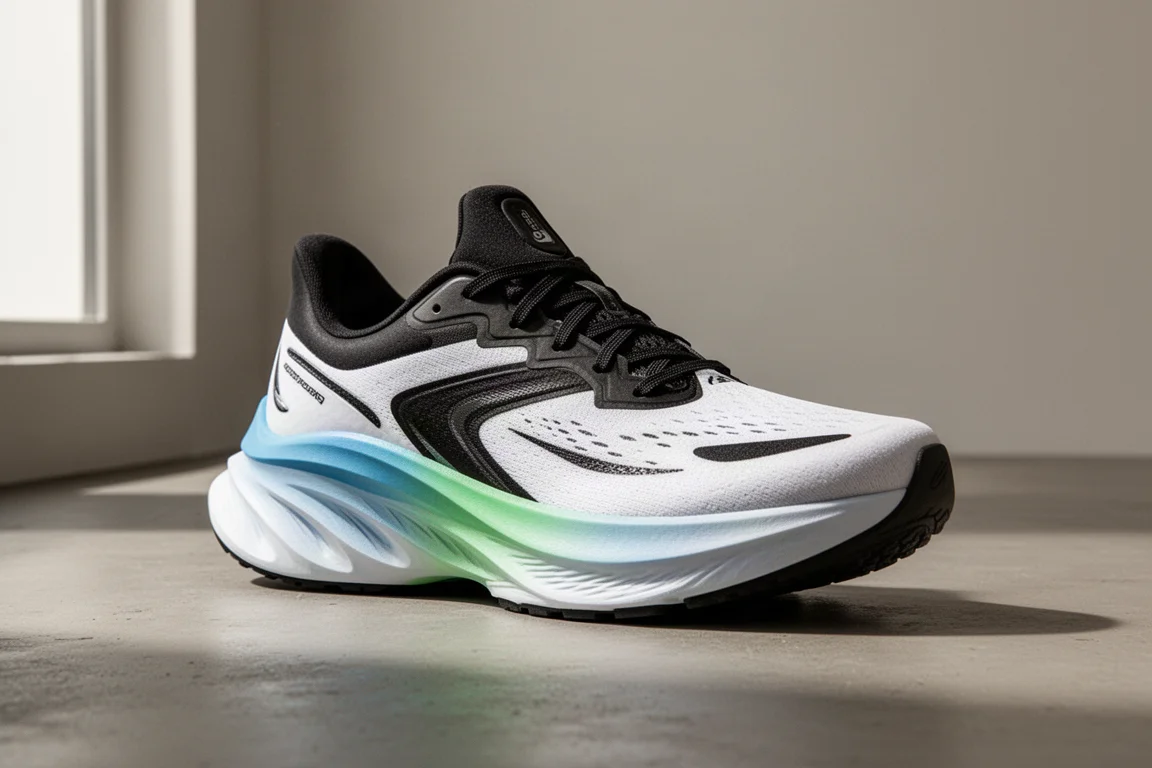
The Topo Spectre line has always been the brand’s take on the max cushion super trainer, and the Spectre 3 represents the biggest pivot yet. The Spectre 2 moved to a full race foam but paired it with a stiff plate-like insert, and the result was a shoe that looked aggressive on paper but rode firmer and less lively than expected. The Spectre 3 ditches that approach entirely. It keeps the 100% race foam, now in a new aliphatic TPU compound called Rev Foam, drops the weight to 242.5 grams in the tested size, and trims the stack to roughly 40mm in the heel with a 5mm drop.
After a first run of about seven miles at relaxed effort, the picture is clear: this is less a plush daily cruiser and more a speed-oriented trainer with real protection up front. Whether that works for you depends almost entirely on what you want from a super trainer, and on how you feel about Topo’s famously wide forefoot.
From Spectre 2 to Spectre 3: What Changed
The original Spectre used a dual foam setup with EVA and a race foam drop-in. The Spectre 2 went all-in on a race foam but added a stiff insert, which produced a ride that was firmer than the spec sheet suggested. Many testers found it fine for marathon pace work but lacking bounce at slower paces, and it never became a true daily trainer.
The Spectre 3 removes the stiffener and lets the new Rev Foam, an aliphatic TPU compound, do the work on its own. Pressing into the foam by hand, it reads soft and snappy, noticeably softer than its predecessor, in the same way the Super Blast 3 softened relative to the Super Blast 2. Importantly, aliphatic TPU covers a wide range of rides: the same compound family can feel very different in a Hurricane, a Triumph, or a race shoe, and this one lands on the softer, springier end without going to mush.
Specs, Weight, and Stack Height
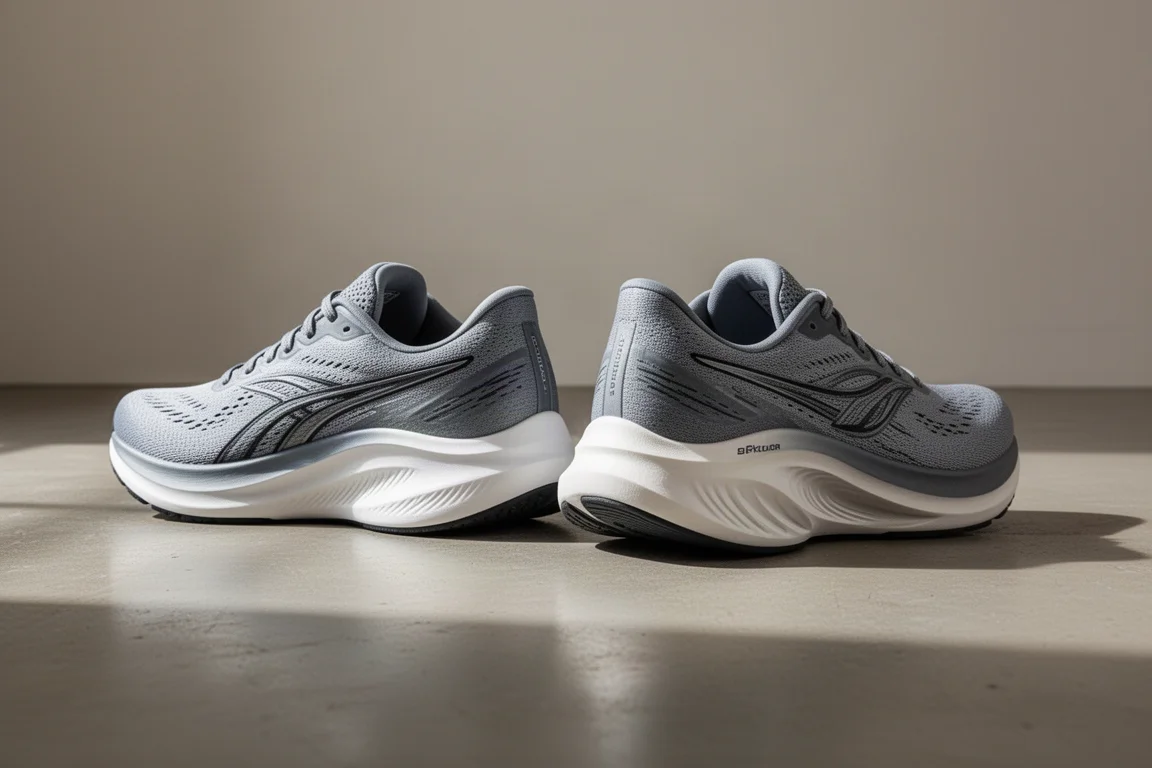
On the scale, the Spectre 3 came in at 242.5 grams on one side and 239.5 on the other, about 10 grams lighter than the Spectre 2 at 255. That puts it essentially level with the ASICS Super Blast 2’s successor territory and lighter than the adidas Hyperboost Edge at 268 grams.
The interesting part is how that weight is achieved. Measured on a size 10.5, the Spectre 3 has almost no rear foam overhang (about 5mm versus 20-25mm on the Super Blast), a midsole width around 90mm versus roughly 98mm, and about 55mm of foam height at the outside of the heel versus 68mm. In short, there is less total foam than the Super Blast, but the weight is the same.
Stack height measured just under 41mm in the heel, so roughly 40mm at the back and 35mm at the forefoot. Because of the low drop and an aggressive rocker, there is still about 40mm of foam under the push-off point before the platform tapers sharply. The overall impression is a hybrid between a super trainer and a speed trainer, somewhere between an Evo SL and a Super Blast in character.
Fit: Wide, Voluminous, and Surprisingly Long
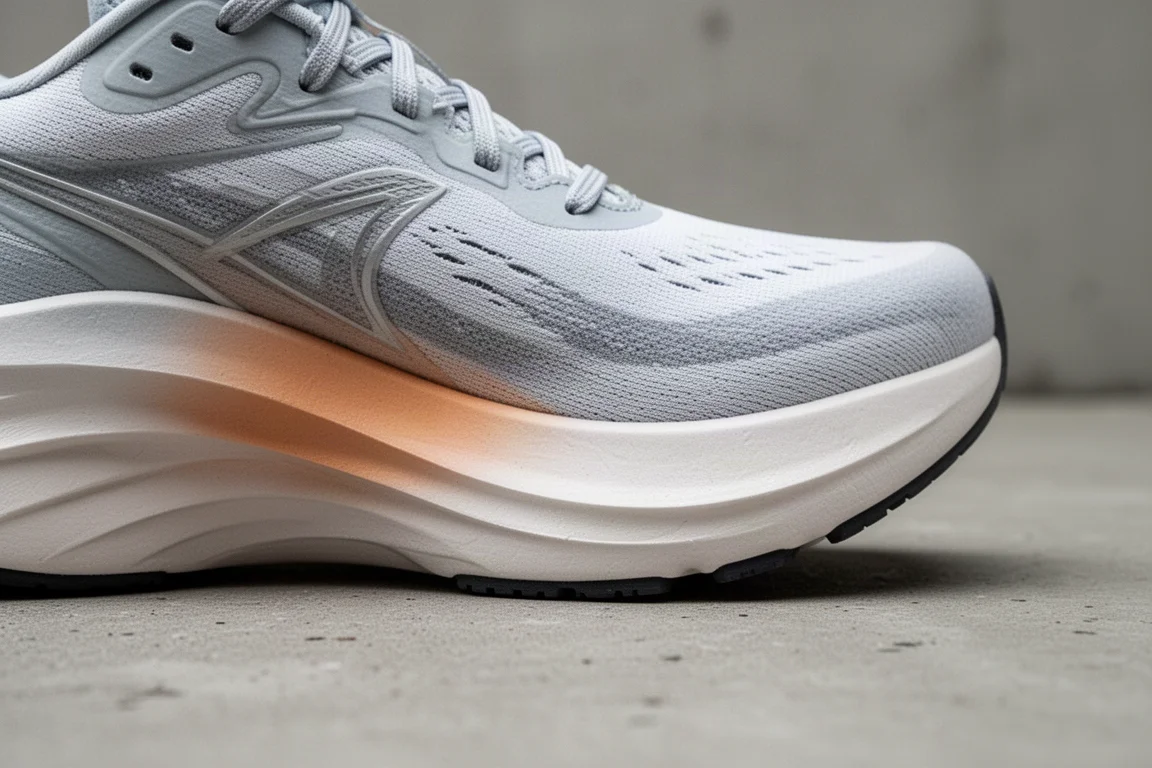
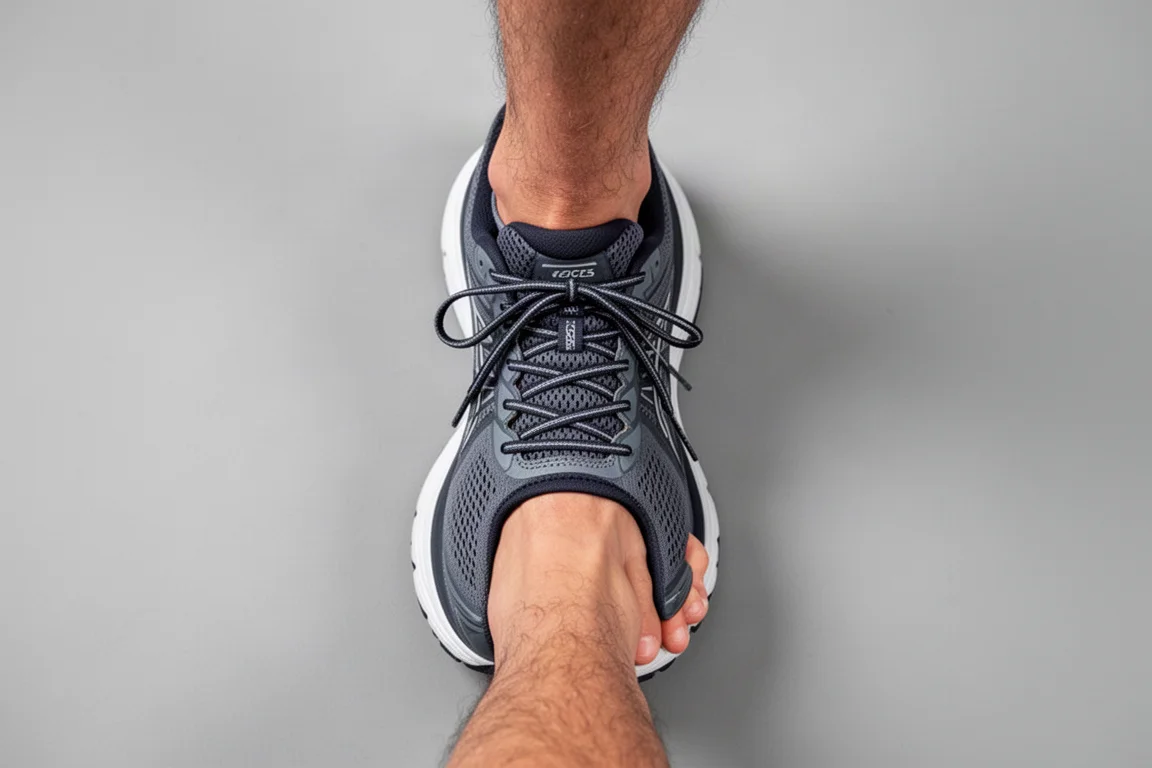
Fit is always the deciding factor with Topo, and the Spectre 3 breaks with recent history in one important way: it does not fit short. Testers found the Spectre 2 ran short, with feet banging against the front of a very flat, wide toe box, which made sizing up half a size risky given how voluminous the forefoot is. The Spectre 3 fixes that. On foot, the tested pair offered nearly an inch of toe space, fitting true to size if anything slightly long.
The trade-off is width. The forefoot is extremely wide and voluminous, with roughly three-quarters of an inch or more of upper overhanging the foot on the lateral side. Visually the shoe reads narrow through the midfoot and heel and dramatically ballooned up front, closer to 40% wider at the widest point. Wide-footed runners will love this. Everyone else may feel like they are swimming in the front of the upper, and that extra width doubles as a landing platform: when you stomp the midfoot, there is a defined, trampoline-like bounce spot, similar in spirit to the Alphafly 3 or Adios Pro 4 feel.
The rest of the package is well executed: a performance upper with a nicely balanced padded tongue, a plastic heel counter, and pillow padding at the heel.
Ride Impressions From a First Run
The first run was a 7-mile recovery-pace effort, which turned out to be the wrong assignment for this shoe. Even at slower paces, the geometry pushes you toward the midfoot and forefoot, and the ride constantly hints at tempo rather than relaxation. It is not punishing, but it is not a comfort-first cruiser either.
When the pace briefly picked up, the shoe responded. Landing up on the midfoot produced genuine bounce and pop, and the Rev Foam felt smooth, protective, and energetic for a full hour without tiring. The rocker geometry stands out as one of the best in the training shoe category, aggressive through the toe-off with substantial foam at the push-off point.
The comparison that kept coming up was the adidas Hyperboost Edge: similar non-plated race foam character, with a possible edge in foam and geometry to the adidas for daily use. Against the Super Blast 3, the Spectre 3 is more streamlined and speedier, though likely less protective for long runs. It is not the shoe for recovery days, and it is not a one-shoe rotation candidate. It is a zone 3 shoe: tempo work, steady marathon training miles, and even shorter faster reps for runners who dislike low-stack racers.
Who Should Consider the Spectre 3
The Spectre 3 sits in a crowded non-plated super trainer segment alongside the adidas Hyperboost Edge, Nike Mega Blast, adidas Evo SL, and the ASICS Super Blast 3, plus comfort-first options like the Hurricane and Neo Vista 3. Its clearest niche is speed for wider feet. Most wide-foot-friendly trainers skew boring; this one has a genuinely exciting colorway with a sharp white, black, and gradient design, a performance-minded ride, and a forefoot that gives true wide-footed runners room to spare.

Pricing is expected around $170, the lower end of the premium trainer range, which feels fair for the foam quality and construction. Skip it if you want a soft, versatile daily trainer or a recovery day cruiser; the aggressive rocker and speed bias will fight you on easy days. Consider it if you want something faster and funkier than an Evo SL or Mega Blast, especially if wide shoes usually leave you cramped.
Conclusion
The Topo Spectre 3 is a promising first step in a new direction: lighter, softer, and more speed-focused than its predecessor, with one of the best rocker geometries in the training category and an unusually generous forefoot. The first run suggests its best miles are still ahead of it in tempo and marathon-training use, and the Rev Foam alone is reason to keep running in it. Wide-footed runners looking for a speedy trainer have a genuinely new option worth watching.
Product link
View more details for Topo Spectre 3
This product is mentioned in the review. Check the specifications, options, and compatibility before buying.
View more details for Topo Spectre 3Further reading
Related Reviews

Running Shoes
Best Road-to-Trail Running Shoes: Three Versatile Options for Mixed Terrain
A practical guide to three road-to-trail running shoes that handle both pavement and mild trails, with clear strengths and trade-offs for different runner types.

Running Shoes
Best Running Shoes for Achilles Tendonitis: Three Options Explained
Three running shoes with different heel drops and support features designed to help reduce Achilles tendon pain during walking and running.

Running Shoes
Best Running Shoes for Women: Five Top Choices Ranked
A ranked guide to five women's running shoes, from versatile daily trainers to high-performance racing options, with real strengths and trade-offs for each.