Art Supplies
Top 5 Graphite Pencils: The Best Graphite Ranges for Drawing
Five graphite pencil ranges tested across H and B grades, comparing smoothness, darkness, and how the sets are put together.
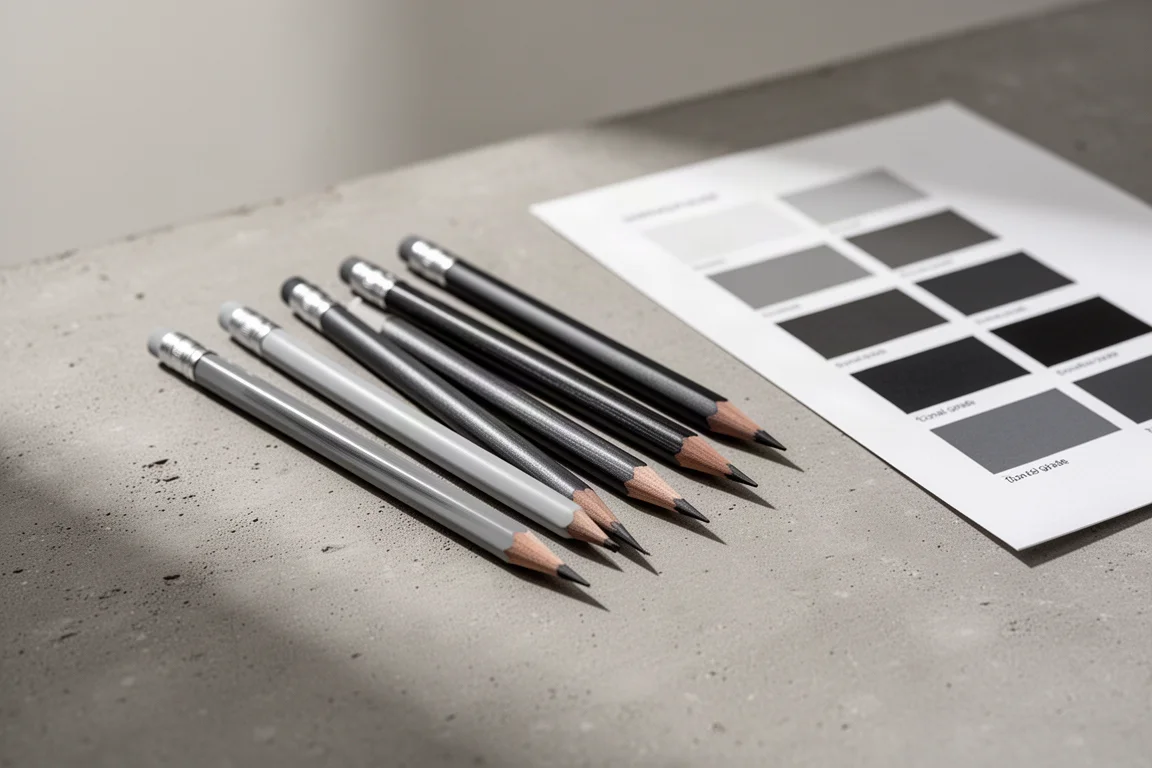
Introduction
Graphite is the foundation of most drawing practice, yet the differences between pencil ranges are easy to underestimate until you swatch them side by side. Some ranges stay silky all the way into the hard H grades, while others turn gritty and scratch the paper before you reach 6H. Darkness in the B grades varies just as much, and some sets are simply laid out more thoughtfully than others.
This comparison brings together five graphite pencil ranges, ranked from fifth to first, based on how they performed across a common set of grades: H, HB, 2H, 4H, B, 2B and 4B. If you have been buying pencils individually and wondering whether a full set is worth it, this should help you narrow the field.
How These Ranges Were Compared
To keep the comparison fair, the same grades were lifted from every range: H, HB, 2B, 4B, 2H and 4H. That gives a decent cross-section of both the soft, dark end and the hard, light end of each set, and it makes smoothness and tonal depth easy to judge like for like.
Set structure also played a role in the ranking. Some brands split their range into several thoughtful 12-pencil sets, while others offer one comprehensive 24-pencil set or only sell single grades in bulk. Sketch sets and mixed sets were left out of consideration entirely, so only pure graphite sets counted here.
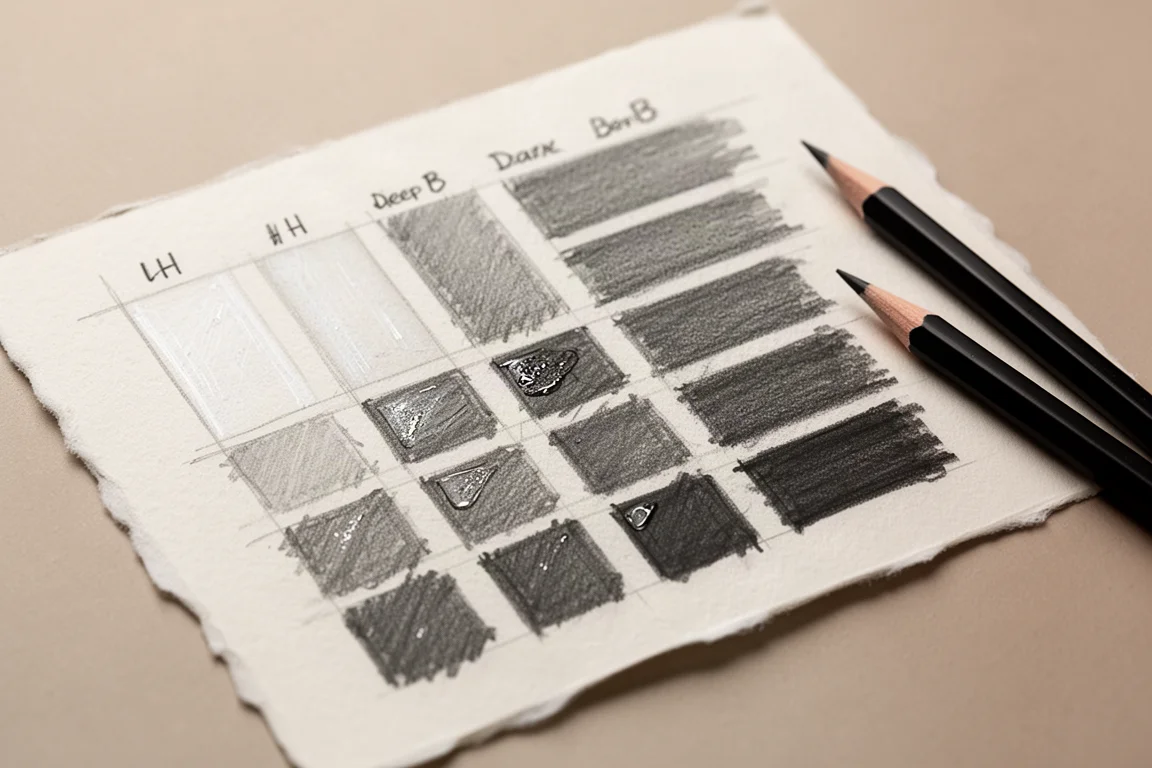
One general note before the list: as you climb into the harder H grades, there is less graphite in the core and more clay, which is why almost every brand starts feeling gritty somewhere around 6H and above. How gracefully a range handles that transition matters a lot.
5. Derwent Graphite
The Derwent graphite range takes fifth place, and it has nothing to do with any wider brand drama. The issue is the H grades: once you get up around 6H and above, Derwent’s hard grades feel distinctly gritty, sometimes so much that scratch marks show on smooth surfaces like Bristol paper.
What Derwent does well is set layout. Alongside a 24-pencil set covering 9H to 9B, the range is offered as three separate 12-pencil sets: one for the darks (9B to H), one for the lights (H to 9H), and a genuinely useful mid-range set spanning 6B to 4H. There is also a six-pencil set covering 6B, 4B, 2B, HB and 2H. If you lean heavily toward lighter or darker grades, you can buy exactly the cluster you need instead of paying for grades you will never touch.
4. Faber-Castell 9000 Graphite
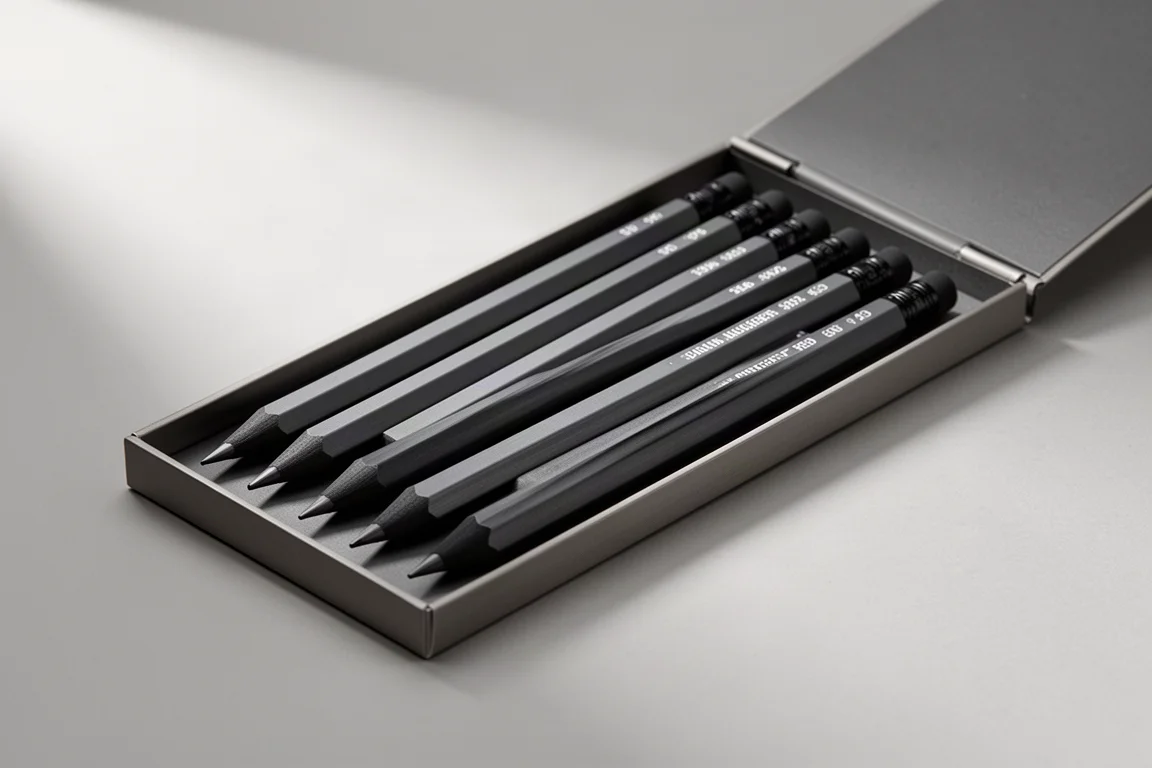
The Faber-Castell 9000 range lands in fourth, largely because of what sits above it. The pencils themselves perform well: the laydown is solid, the darks are rich, and although the 4H shows some grit, it is noticeably less gritty than Derwent at the same grade. The 2H in particular is a lot smoother than Derwent’s equivalent.
The current set situation is a bit of a question mark. A long 24-pencil set of the 9000 series may have existed at some point, but it is difficult to find now. What is readily available are two 12-pencil sets, one running 8B to 2H and the other 5B to 5H. Note that this ranking covers only the pure graphite 9000 range, not the Pitt range.
3. Caran d’Ache Grafwood Graphite
Caran d’Ache Grafwood coming in third might surprise some, but the two ranges above it simply edged it out. The standout strength here is the B range: the darks are really super dark and a pleasure to work with, and completed artwork made with these pencils holds up beautifully.
Grafwood also handles the hard end well, with a smooth laydown right up to 4H, which is a strong result for that grade. The set structure is unusual though: the flagship set is a 15-pencil set running 9B to 4H, and there is a six-pencil set covering 2H, HB, 3B, 5B, 7B and 9B. It is a slightly odd spread, so check which grades you actually use before committing.
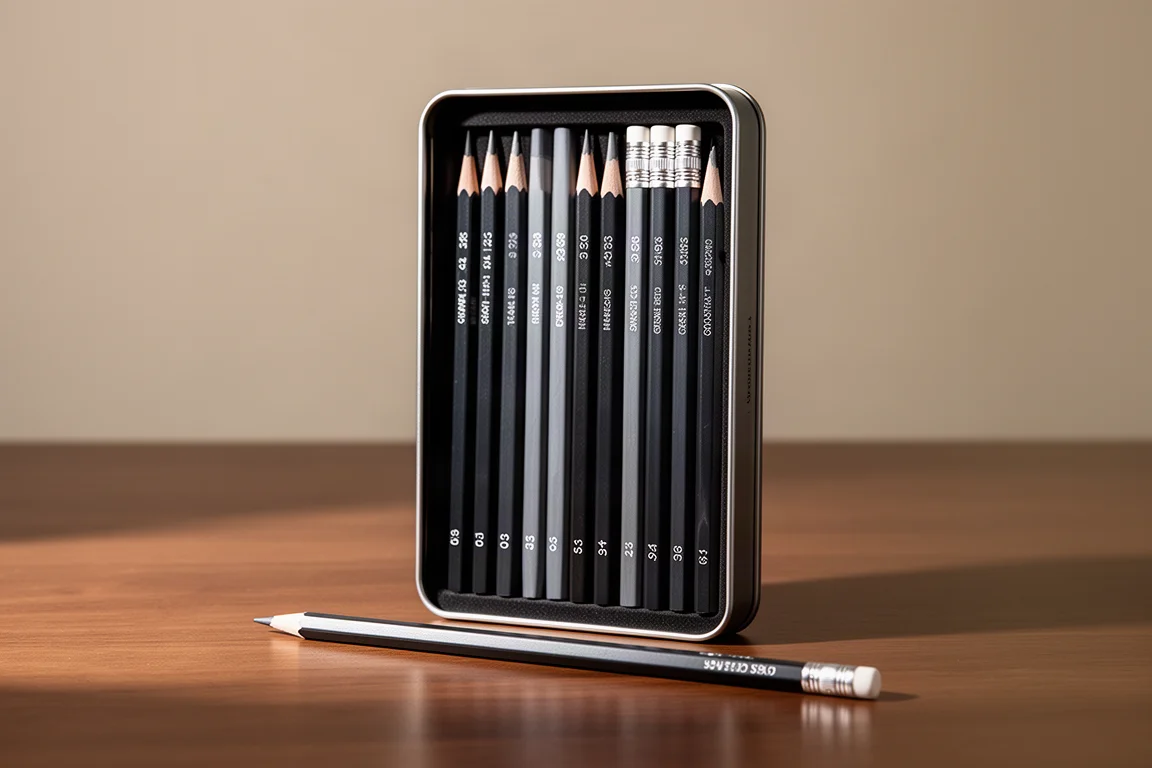
2. Staedtler Mars Lumograph Graphite
The Staedtler Mars Lumograph is likely to be many artists’ favourite, and it is easy to see why. The laydown is gorgeous and very smooth, and Staedtler has managed something rare: even the grades leading up to 10H stay smooth, at the point where most pencils are essentially just clay.
The 24-pencil set is the real showpiece here, covering an enormous 12B to 10H. Those 12B and 10B grades deliver deep, rich graphite tones. Two 12-pencil sets are also available (8B to 2H and 6B to 4H), though the split is less useful than Derwent’s arrangement. A six-pencil set covers 8B, 7B, 6B, 4B, 2B and HB, with no H grades at all, and open-stock pencils are available individually too.
1. Mitsubishi Hi-Uni Graphite
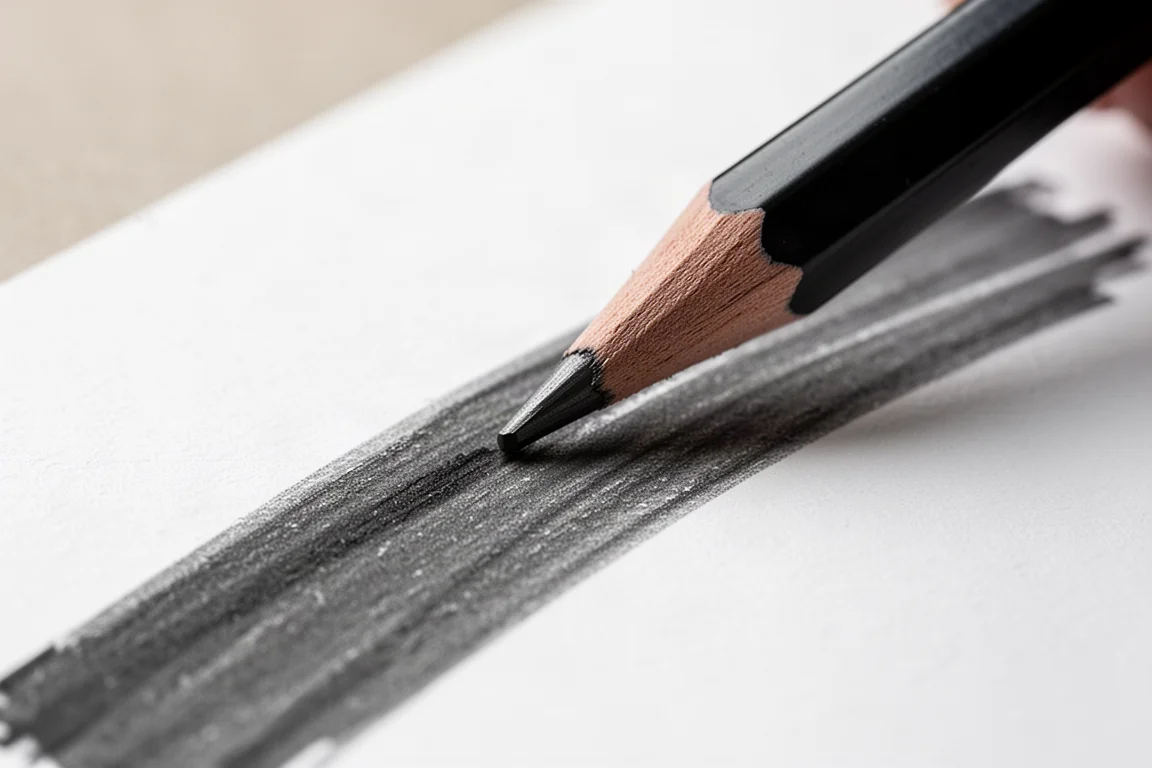
Number one is the Mitsubishi Hi-Uni graphite range, and it blew away the competition. The smoothness of the graphite is exceptional from end to end, and once the range enters the B grades the darkness is simply amazing.
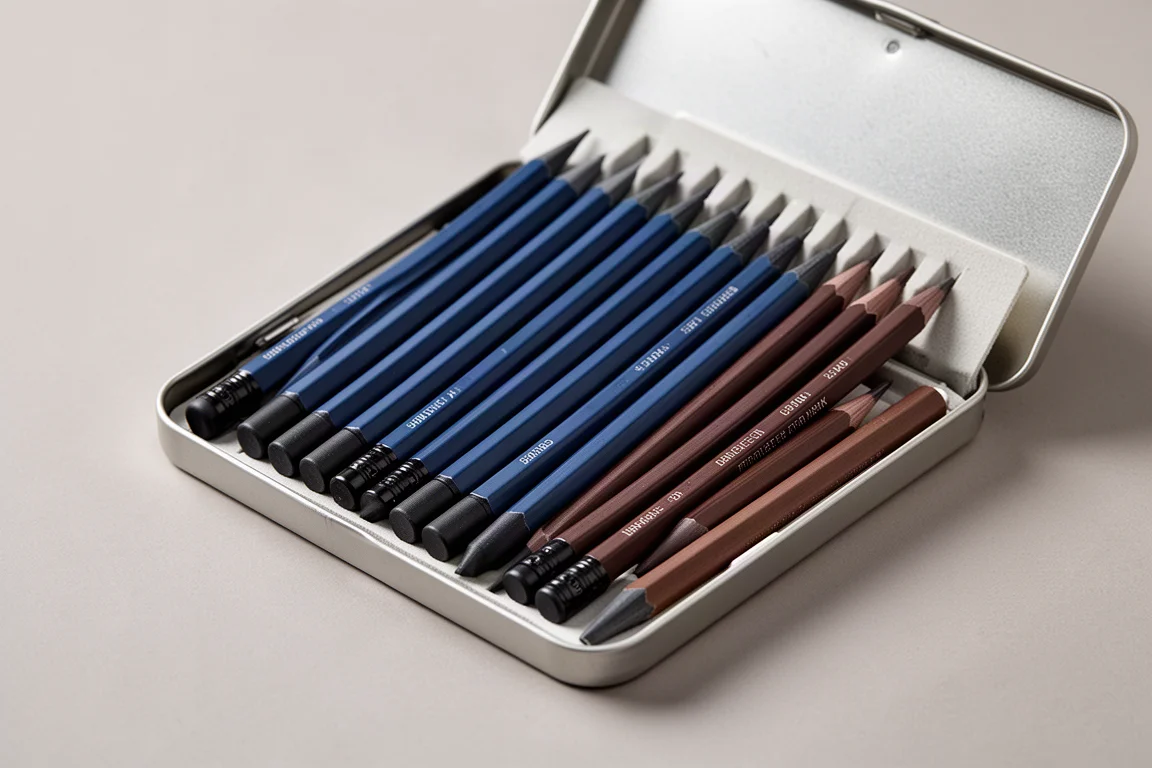
There are two practical differences worth knowing about. First, Hi-Uni is a little pricey, though the same can be said for Caran d’Ache and Faber-Castell. Second, the set structure is unusual: smaller sets exist but as twelve pencils of a single grade (twelve HBs, twelve 2Bs and so on), so the real option is the 22-pencil set running 10B to 10H. It may sound like overkill, but it covers everything with fewer near-duplicate grades than the widest Staedtler set.
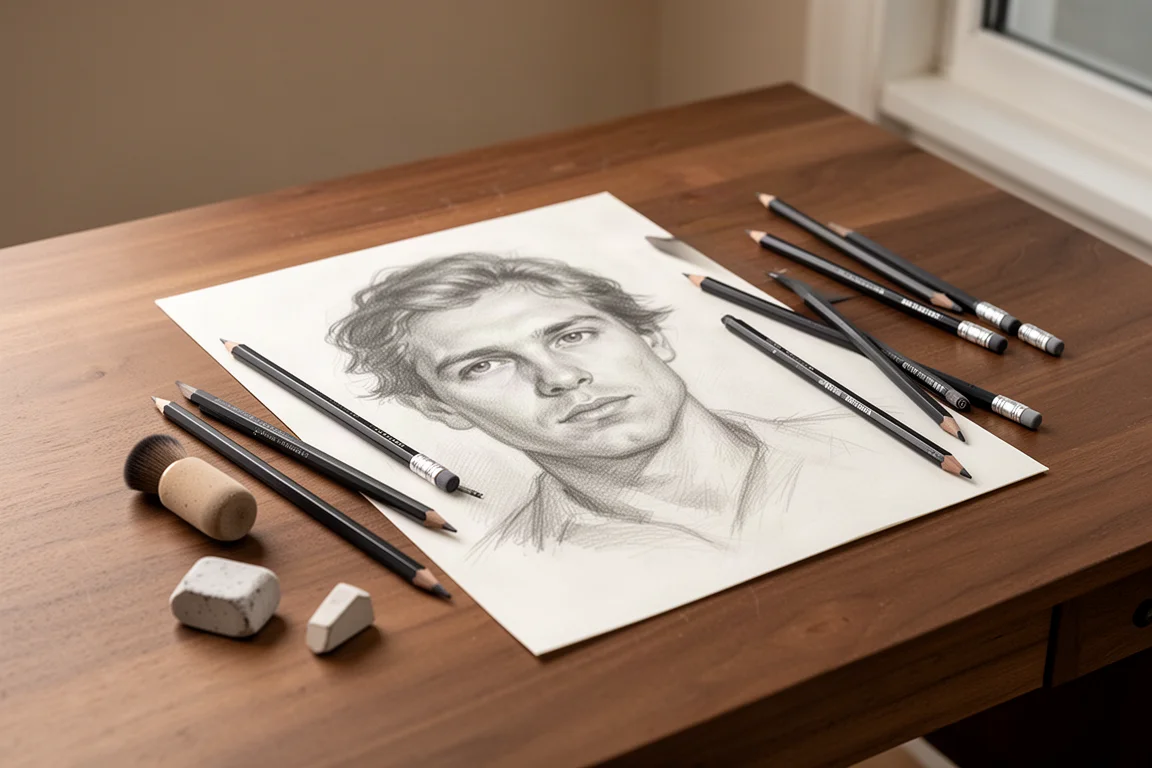
One more detail sets Hi-Uni apart: graphite sheen. Carbon-based pencils such as Staedtler Mars Lumograph Black and Faber-Castell Pitt have less metallic sheen under light, which is why so many artists use them for deep darks. Yet Hi-Uni, while remaining a true graphite, shows less sheen on its dark tones than the other ranges compared here, with the darkest tonal values of the group. That combination of depth and low sheen is what earns it the top spot.
Buying Advice
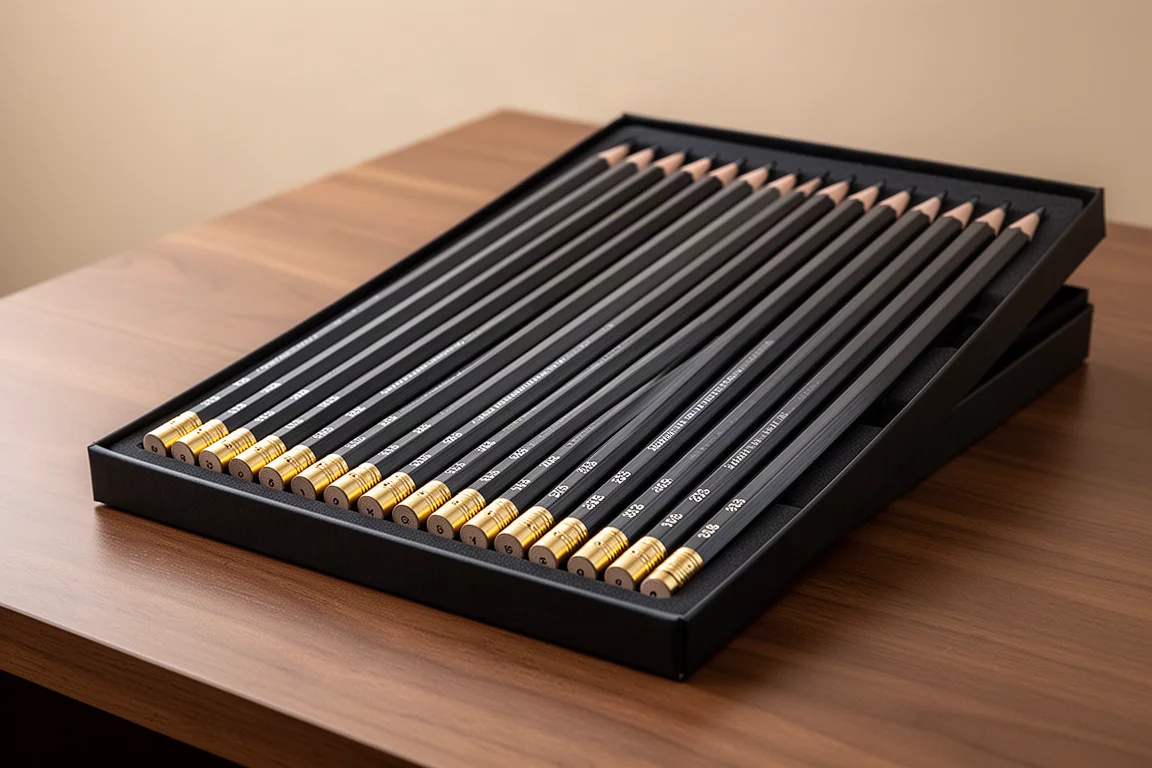
If you want the widest grade coverage in one box, the Staedtler Mars Lumograph 24-pencil set is hard to beat, and its 10H stays remarkably smooth. If you want the smoothest, darkest graphite and do not mind paying for it, the Mitsubishi Hi-Uni 22-pencil set is the strongest overall performer.
For a mid-range-focused artist, Derwent’s 6B to 4H twelve set is a clever buy, as long as you avoid its hardest H grades. Caran d’Ache Grafwood suits anyone chasing really dark B grades and is content with a 15-pencil span, while Faber-Castell 9000 remains a dependable all-rounder if the sets currently available match the grades you use.
Conclusion
All five ranges are capable, but the differences become obvious once you swatch them together: Derwent struggles in the hard grades, Faber-Castell 9000 is smooth but limited by its set availability, Caran d’Ache Grafwood excels in the darks, Staedtler Mars Lumograph offers the widest smooth coverage, and Mitsubishi Hi-Uni combines the best laydown with the deepest, lowest-sheen darks. Choose based on whether you need breadth, darkness, or a well-chosen middle ground, and you will not go far wrong.
Further reading
Related Reviews
Art Supplies
Art Pop Watercolor Pencils 48-Color Set: A Thoughtfully Designed Student-Grade Option
The Art Pop 48-color watercolor pencil set blends well, dissolves smoothly, and includes artist-friendly details like barrel-printed color names, all at an affordable price.
Art Supplies
Artics Acrylic Markers 3mm Review: Versatile Paint Markers With a Few Caveats
A 48-color set of water-based acrylic paint markers that blend while wet, dry permanent, and keep the price low, though safety transparency remains a question.
Art Supplies
Best Art Supplies Worth Your Money: Pencils, Pens, Paints, and Paper That Earned Their Spot
After years of daily use and testing, these are the pencils, pens, watercolors, gouache, brushes, sketchbooks, and erasers that stand above the rest.