Art Supplies
Tombow Mono Stick Eraser Review: The Precision Eraser That Adds Highlights and Texture
A thin stick eraser built for precision work: how it performs on graphite and charcoal, and why it earns a permanent place in an art kit.
Introduction
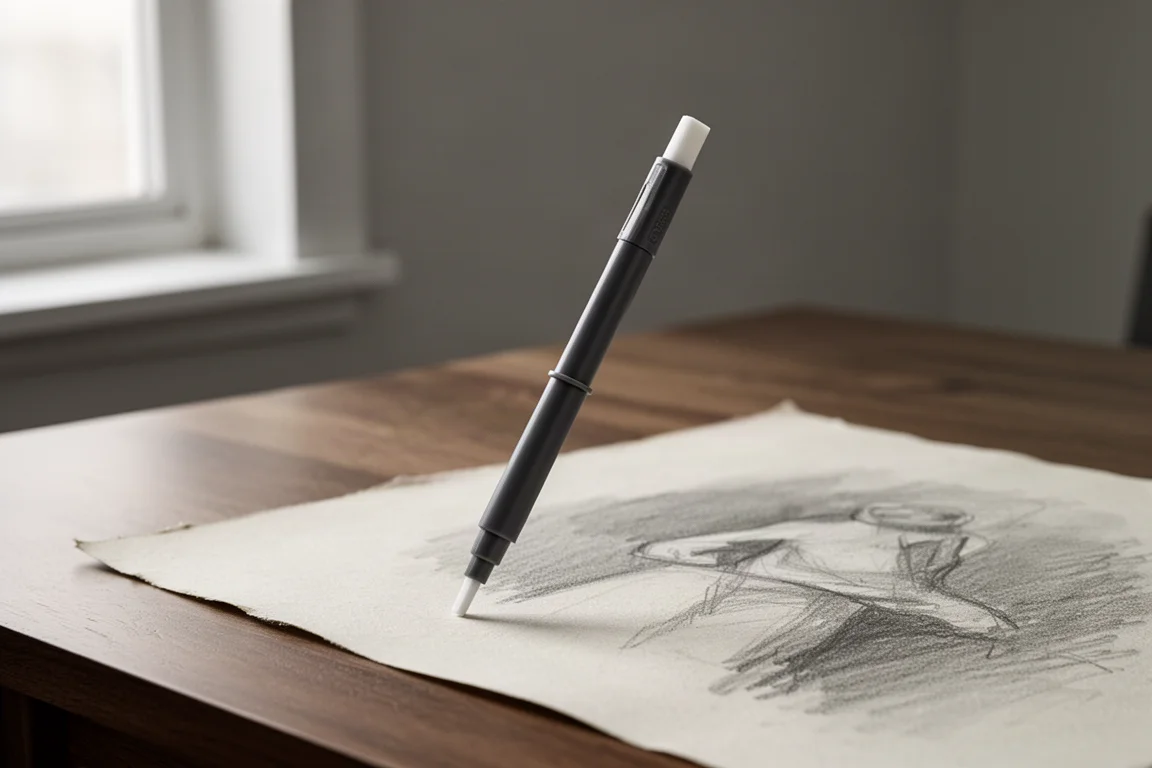
The Tombow Mono Stick eraser is a drawing tool that many artists end up calling a must-have supply, and it is easy to see why once you use it. A stick eraser, sometimes called a retractable eraser or pencil eraser, is simply an eraser with really thin rubber that can erase small details and handle precision work. For pencil drawings of any kind, graphite or charcoal, that thin tip opens up techniques a chunky block eraser simply cannot manage.
This eraser has earned a permanent place in the art kit for years of use, and the way it adds detail and texture is often what takes a drawing to the next level. Erasers are not just for mistakes, and that is the core idea this review explores.
Who This Product Is For
This eraser suits anyone drawing in graphite or charcoal who wants to add fine highlights, texture, and detail. If your drawings feel like they are lacking detail or texture, a stick eraser is one of the most direct ways to change that. It is especially useful for portrait work, fur, hair, and any subject where tiny bright accents make a drawing pop. There are cheaper stick erasers available too, so it is worth knowing what the Tombow option does well before deciding.
Why a Stick Eraser Belongs in Your Art Kit
The basic idea is simple: shade an area, blend it out smoothly with a blending stump so the paper tooth is filled in, then use the thin eraser tip to pull highlights and texture back out of that shading. Out of all the supplies used in pencil drawing, this eraser makes the biggest difference. It turns a flat, smooth tonal field into something with sparkle, contrast, and movement.
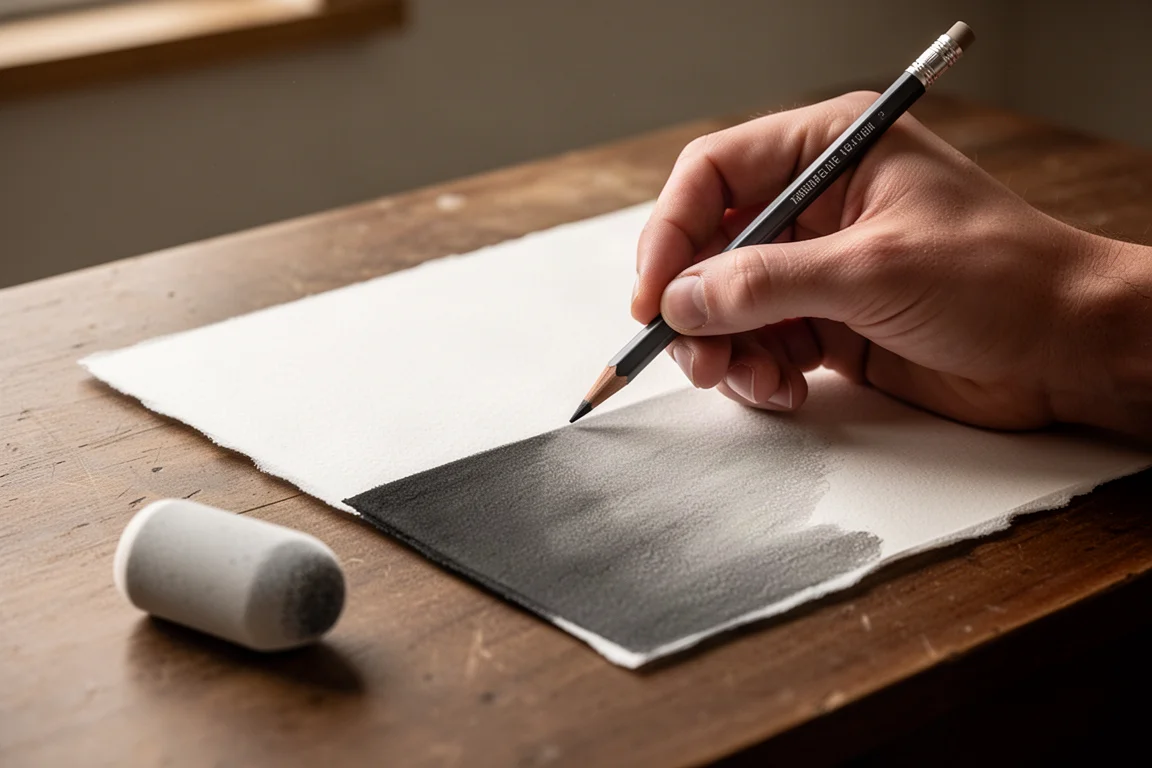
Because the tip is so thin, you can erase really fine lines. For a portrait, that means adding a sparkle highlight to an eye or brightening the waterline, jobs that are genuinely hard with a large eraser. Those tiny highlights are often the difference between a good drawing and a great drawing.
Graphite vs Charcoal: How It Performs in Each Medium
Graphite is probably the easiest medium to use a stick eraser with. It pulls graphite up so easily that you can get back to the white of the paper very readily. Charcoal is a little bit harder. The eraser will lift a decent amount and create highlights, but it will not pull the charcoal back to pure white the way it does with graphite.
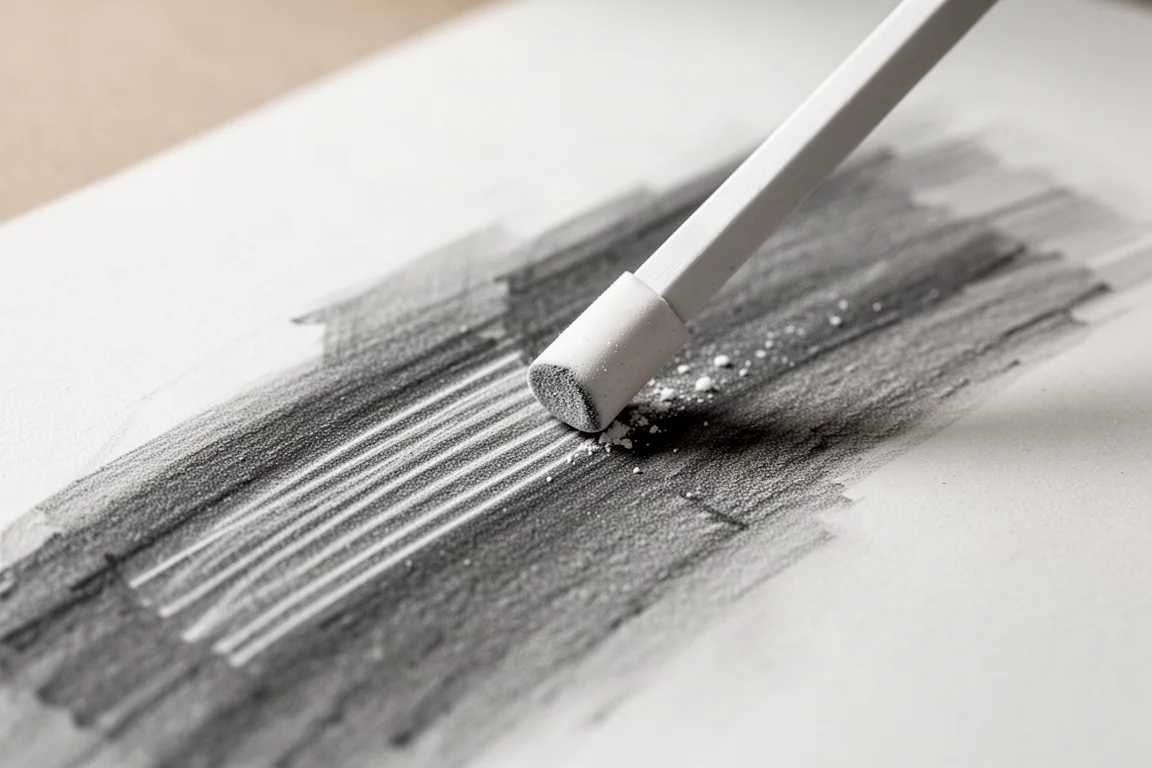
That is not a flaw so much as a characteristic to plan around. In really dark charcoal areas, the goal is usually to add a bit of texture rather than trying to pull up bright highlights. For the brightest highlights, keep those areas as light as possible throughout the drawing process so the eraser has less work to do.
Using the Eraser to Add Texture
Adding texture is one of the biggest uses for this eraser. In a hair study, a few quick lines drawn in the direction the hair flows, plus a few flyaway hairs pulled up with the eraser, immediately add movement and make the hair look dynamic and realistic.
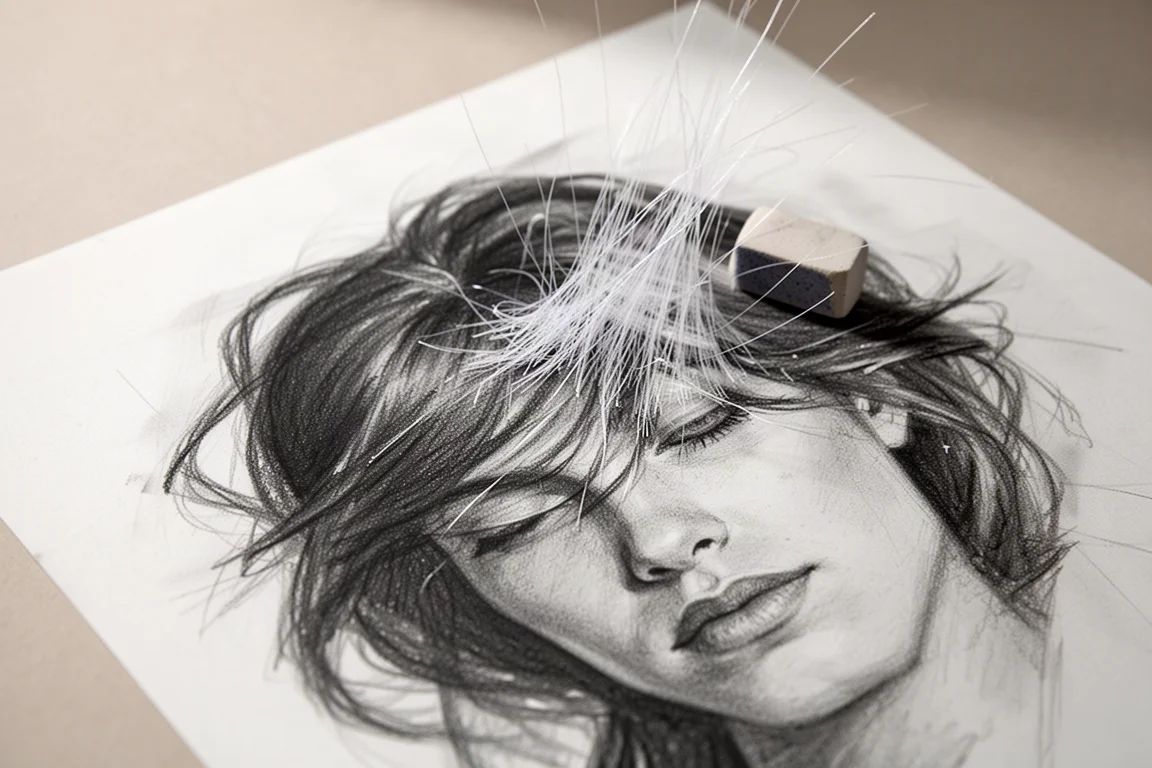
It is also a much more efficient workflow. Instead of trying to work around every little flyaway hair during shading, you can shade the whole area, then pull up individual hairs afterwards. The same trick works for surfaces: a base layer of graphite blended out with a stump, some darker detail on top, then dots and lines with the eraser to create a bumpy, brick-like texture with a full range of values.
If you want texture that is not bright white, you can deliberately blend over the erased marks afterwards to create a darker, softer look.
The Drawing Process: Highlights as the Final Step
A practical workflow for using this eraser: sketch the main structures, shade the midtones with a light HB or 2B pencil, build up the darker values with a charcoal pencil, blend with a tissue, and only then bring in the stick eraser to pull highlights and texture. Leaving the eraser as the final step keeps the highlights as bright as possible, because blending or shading over erased highlights can easily darken them back up.
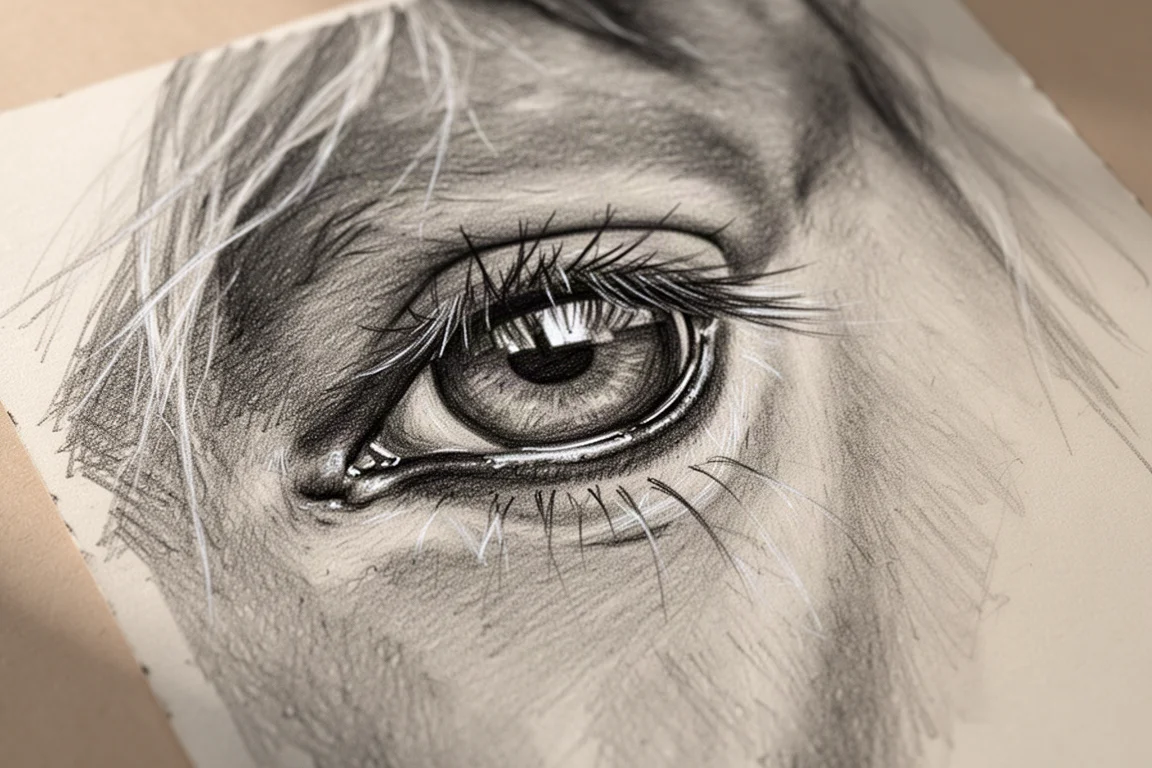
One tip when layering: charcoal sticks on top of graphite only if there is not too much graphite already on the paper, since graphite has a shiny, slippery surface. Blending with a tissue helps the charcoal grip. And if you do find some highlights got darker after adding more shadow, it is perfectly fine to go back in with the eraser afterward to clean up and brighten those highlights again.
Things to Consider Before Buying
The Tombow Mono Stick is not the cheapest stick eraser on the market, and cheaper alternatives exist. Its mechanism is simple: push the end and the eraser extends out. The main consideration is medium choice. If you work mostly in charcoal, expect softer highlights rather than pure white, and plan your brightest accents around the charcoal rather than through it.
Buying Advice
For graphite work, this is an easy recommendation: it lifts cleanly back to paper white and excels at fine lines, eye highlights, hair, and surface texture. For charcoal-heavy drawings, it still earns its place as a texture tool, but manage expectations about how bright the erased areas can get. If you are new to stick erasers, this is a low-risk upgrade that will change how you finish drawings.
Conclusion
The Tombow Mono Stick eraser is a small, inexpensive-feeling tool with an outsized effect on finished drawings. It turns erasing from damage control into a drawing technique: highlights, sparkle, fur, flyaway hairs, and surface texture all become quick, deliberate marks. For graphite artists in particular, this is one of those supplies that, once tried, becomes impossible to work without.
Product link
View more details for Tombow Mono Stick Eraser
This product is mentioned in the review. Check the specifications, options, and compatibility before buying.
View more details for Tombow Mono Stick EraserFurther reading
Related Reviews
Art Supplies
Art Pop Watercolor Pencils 48-Color Set: A Thoughtfully Designed Student-Grade Option
The Art Pop 48-color watercolor pencil set blends well, dissolves smoothly, and includes artist-friendly details like barrel-printed color names, all at an affordable price.
Art Supplies
Artics Acrylic Markers 3mm Review: Versatile Paint Markers With a Few Caveats
A 48-color set of water-based acrylic paint markers that blend while wet, dry permanent, and keep the price low, though safety transparency remains a question.
Art Supplies
Best Art Supplies Worth Your Money: Pencils, Pens, Paints, and Paper That Earned Their Spot
After years of daily use and testing, these are the pencils, pens, watercolors, gouache, brushes, sketchbooks, and erasers that stand above the rest.