Fountain Pens
Titan Pens Torpedo vs Opus 88 Omar: Two Big Fountain Pens Compared
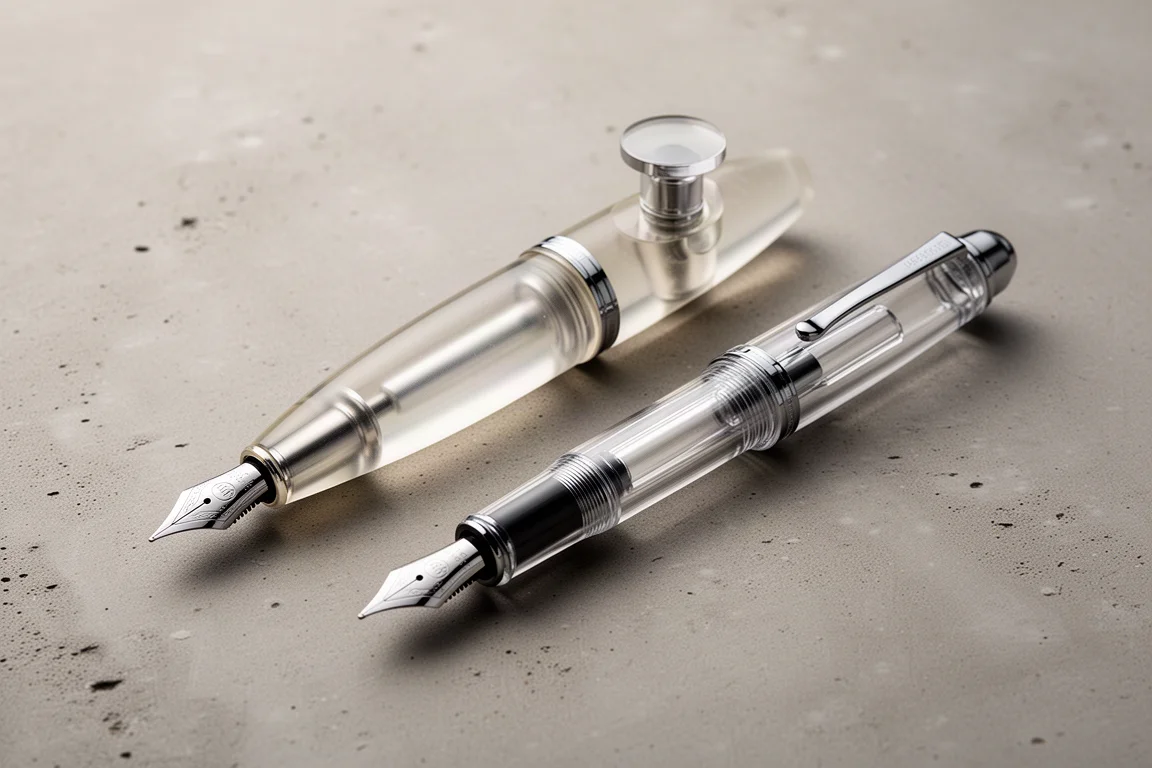
A side-by-side comparison of two large fountain pens: a 3D-printed piston filler with a size 8 Bock nib and an eyedropper-style shut-off valve pen with a large ink capacity.
Introduction
Large fountain pens have a devoted following, and two models in particular keep coming up in conversations about big writers with generous ink capacity: the Titan Pens Torpedo and the Opus 88 Omar. Both are larger-than-average pens, both can be had in translucent finishes, and both deliver a comfortable, wet writing experience. But they take very different paths to get there: one is a 3D-printed piston filler with a size 8 nib, the other a classic eyedropper-style pen with a clever one-way shut-off valve.
Two Large Pens, Two Different Approaches
The core appeal of this comparison is simple: both pens are big, both offer huge ink capacity, and both are pleasant writers. Where they differ is in filling mechanics, nib options, ergonomics, and price. The Opus 88 Omar comes in at $150 and uses an eyedropper filling system with a shut-off valve, while the Titan Pens Torpedo is a piston filler built through 3D printing with unusually good polish for that process.
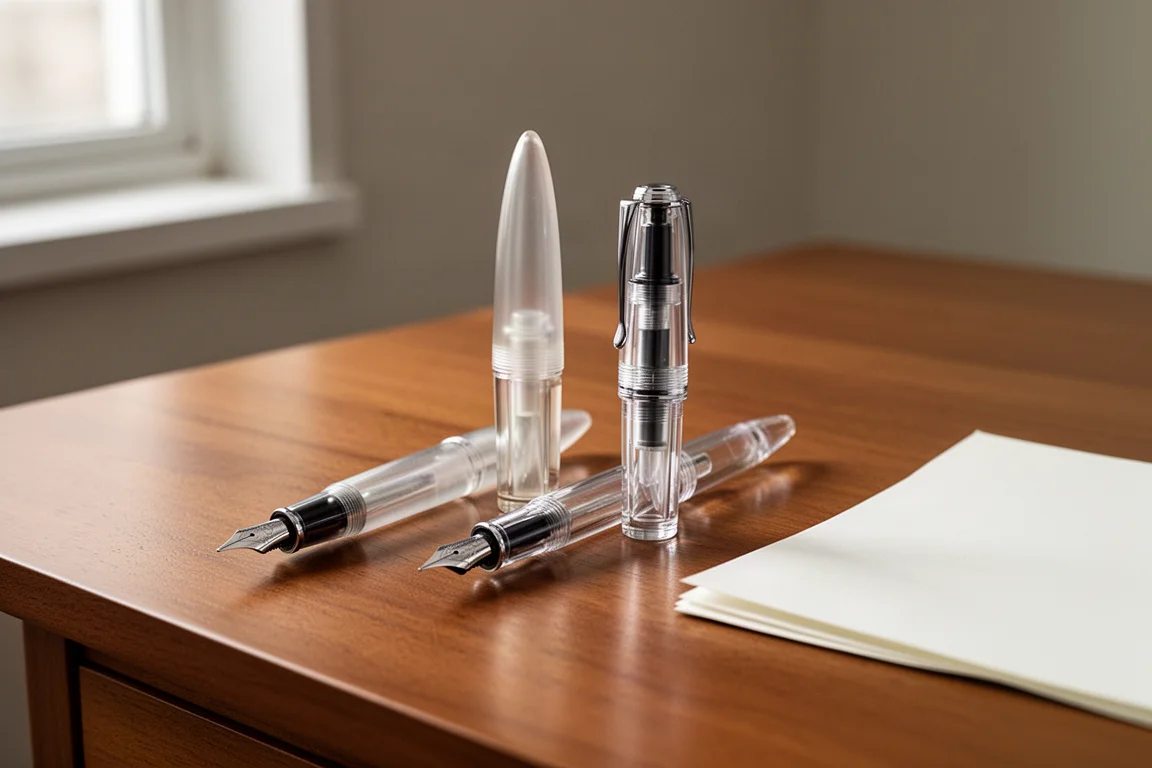
If you have smaller hands, it is worth knowing upfront that the Torpedo is the girthier of the two. The Omar is also a large pen, but many writers will find it comfortable, while the Torpedo really demands a preference for oversized pens.
Opus 88 Omar
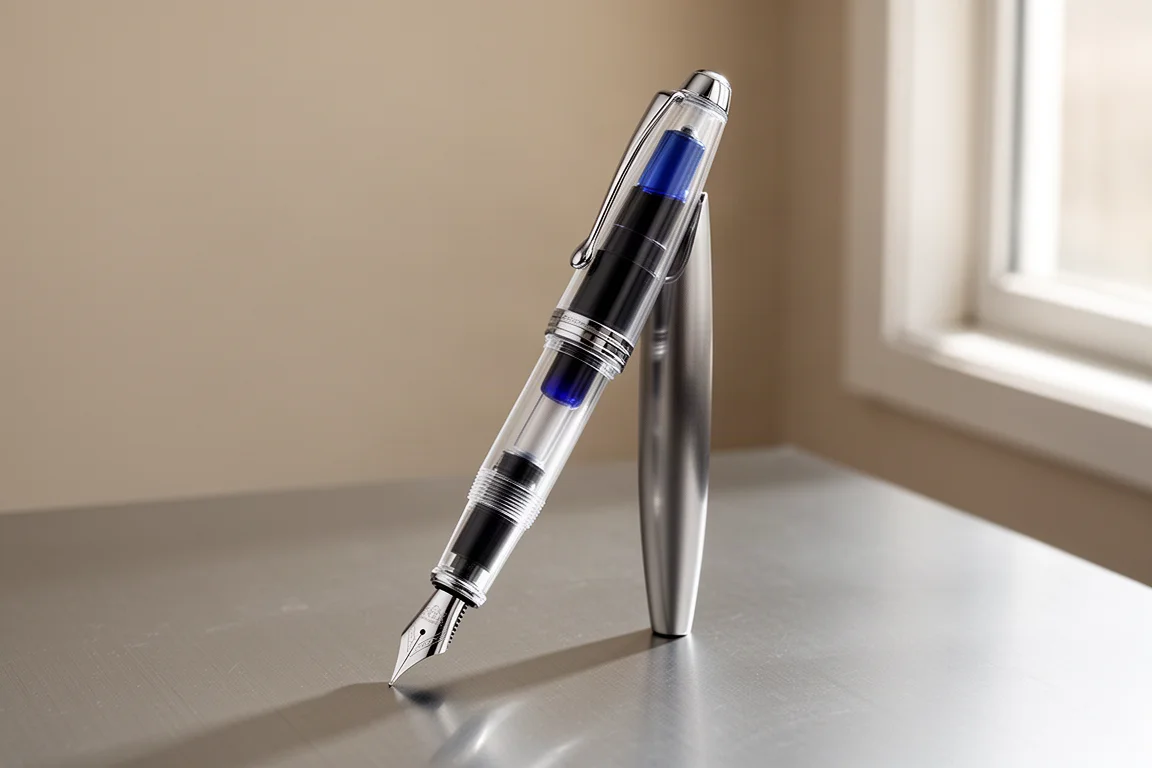
The Omar is a larger pen available in several finishes, with the clear version being particularly appealing because you can watch the ink chambers. Its defining feature is the one-way shut-off valve filling system. A piston at the bottom screws down a seal that separates a primary ink chamber from a secondary one. You fill the barrel with an eyedropper, and as you write, the secondary reservoir runs dry, at which point you open the valve to let ink flow in again. It also lets you regulate wetness somewhat, taking the pen from fairly wet to a bit wetter. It is not a night-and-day difference, but it is a useful bit of control.
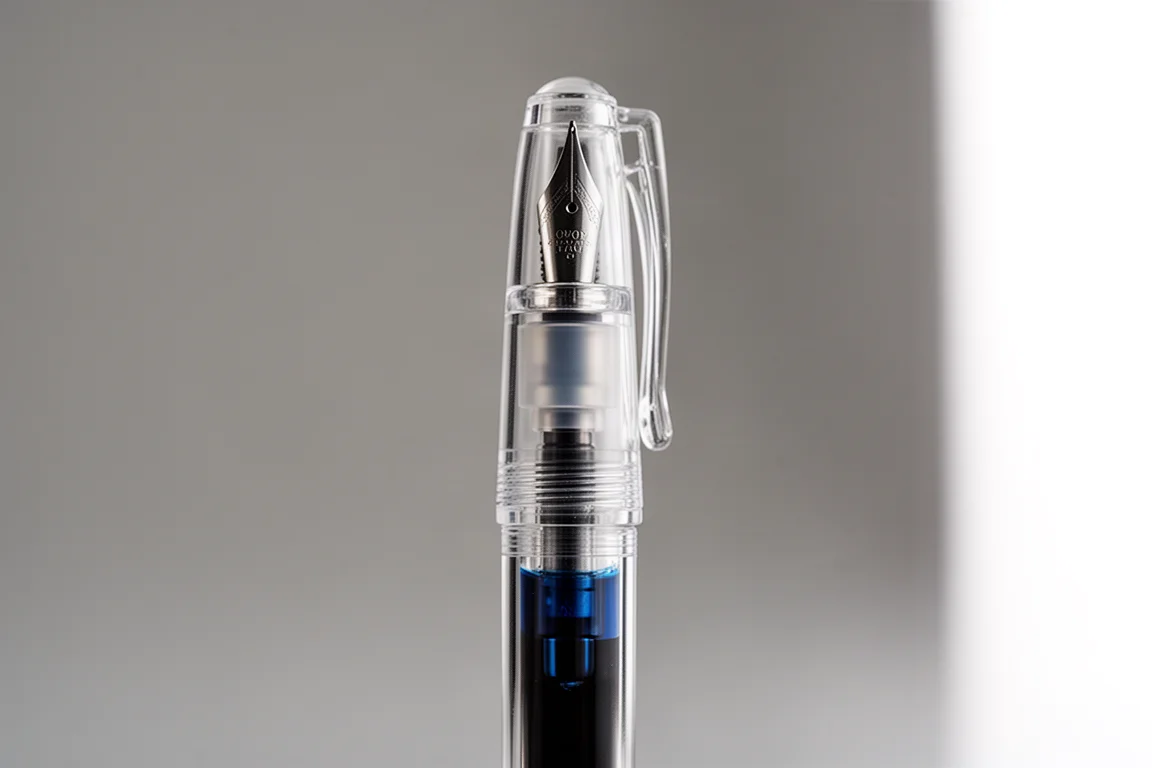
Filling is done by unscrewing the section and using an eyedropper. A practical trick: screw the section in about halfway over the ink, then finish screwing it in the rest of the way. A bit of ink travels down and primes the feed, so you can start writing immediately. Cleaning is refreshingly easy, since the section and nib unit both unscrew for flushing with a syringe, and even the cap interior disassembles for rinsing.
The test unit has a broad steel JoWo number 6 nib. Because it is a standard JoWo unit, you can swap in other number 6 nibs if you have them. It writes smoothly and fairly wet. The cap posts, though not very reliably. At $150 it is not cheap, but the large ink capacity and robust valve system make it a genuinely attractive option.
Titan Pens Torpedo
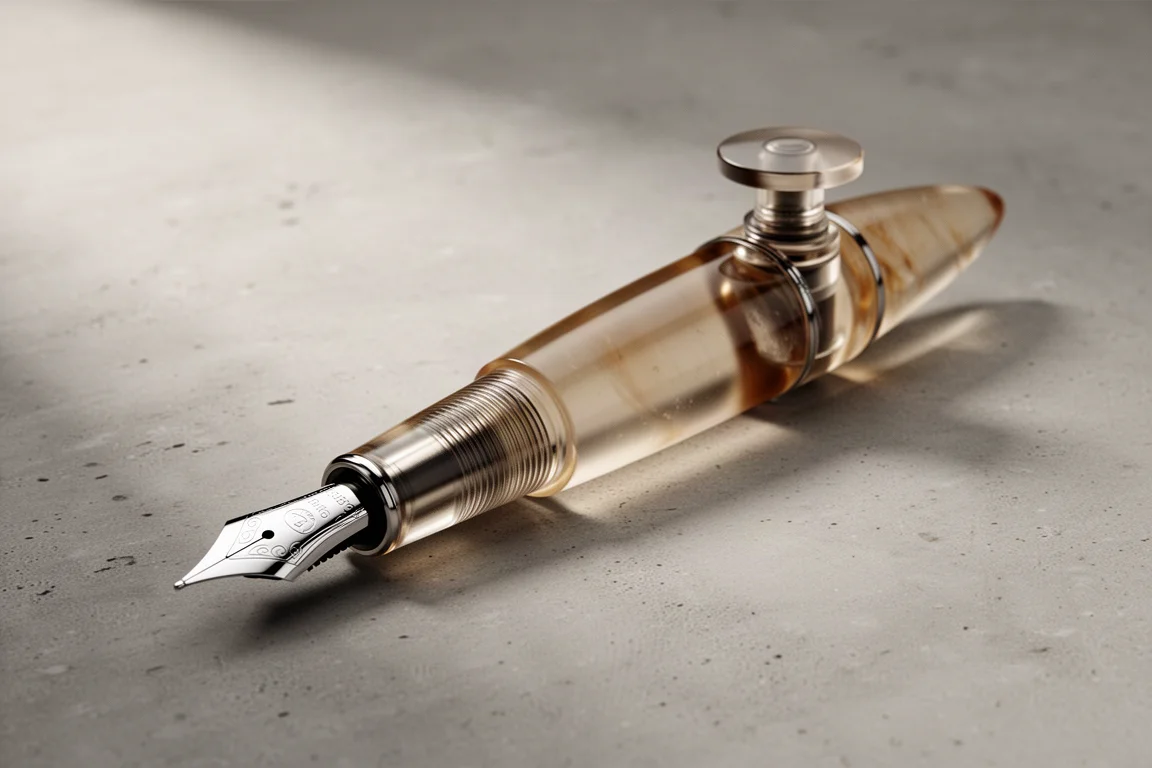
The Torpedo is made by William of Titan Pens, who 3D prints these pens and achieves an impressively high level of polish. It is a torpedo or cigar-shaped pen with a flat-top piston turning knob and a large reservoir, so ink capacity is generous. The threads are cut wide, so any ink trapped when dip-filling cleans out easily.
The standard configuration includes a size 8 Bock nib with an ebonite feed, available in titanium or steel. The sample unit here has been fitted with a special nib and a nylon feed, both made by the same maker, and the nylon feeds keep up very well with ink demand. The piston knob operates smoothly, and unlike the Omar, this model posts securely for a genuinely large in-hand length.
One thing to be honest about: this is a big, girthy pen with no clip. If you prefer slimmer pens, you can safely pass it by. The section has no shaping beyond its natural curve, unlike the Omar’s taper-and-flare profile. If oversized pens suit you, though, it is a very pleasant writer, and pairing it with one of the matching 3D-printed pen rests keeps it secure on the desk.
Writing Comparison
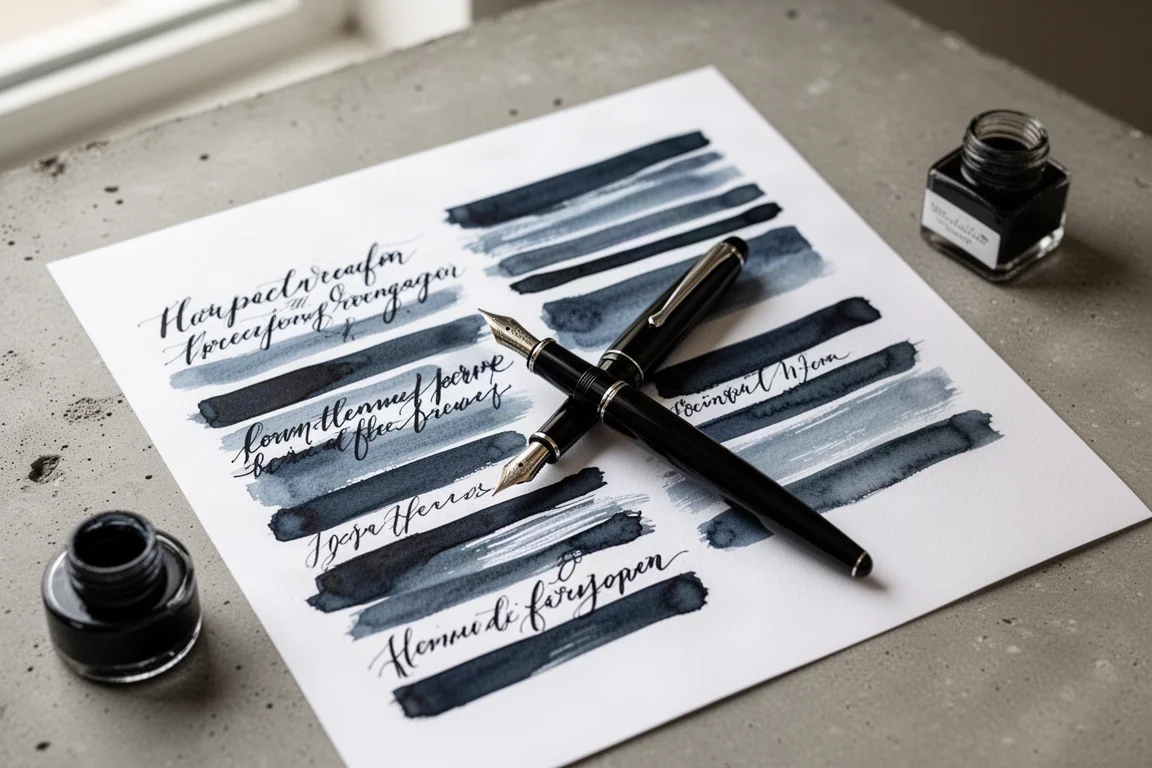
Tested side by side on moderate paper with the same ink, both pens perform well. The Omar’s broad steel JoWo nib writes smoothly and fairly wet, and the fully open valve increases flow slightly without transforming the experience. The Torpedo’s stub nib also writes wet and comfortably, though that particular nib was not fond of the ink used that day, which says more about the pairing than the pen.
In terms of feel, the Torpedo is noticeably girthier and better suited to larger hands, while the Omar, despite its size, will work for a lot of people. Both are lovely, comfortable writers.
Buying Advice
If filling convenience and easy cleaning top your list, the piston-filled Torpedo is hard to beat: filling is quick and flushing is simple. If you prefer a lower price, a clip, standard JoWo nib swapping, and that satisfying shut-off valve system, the Omar is the stronger pick. Both offer big ink capacity, so that advantage roughly evens out between them.
Conclusion
Both of these large pens are genuinely nice, and they are different enough that the right choice depends on your hands, your filling preferences, and your budget. If forced to choose, the Torpedo edges ahead thanks to its piston filler, but the Omar remains a very comfortable, very capable pen that deserves a serious look.
Further reading
Related Reviews
Fountain Pens
Best Budget Fountain Pens Tested: 9 Pens, One Clear Winner
A hands-on comparison of nine affordable fountain pens for everyday writing, calligraphy, and sketching, with a clear standout for flexible nib fans.
Fountain Pens
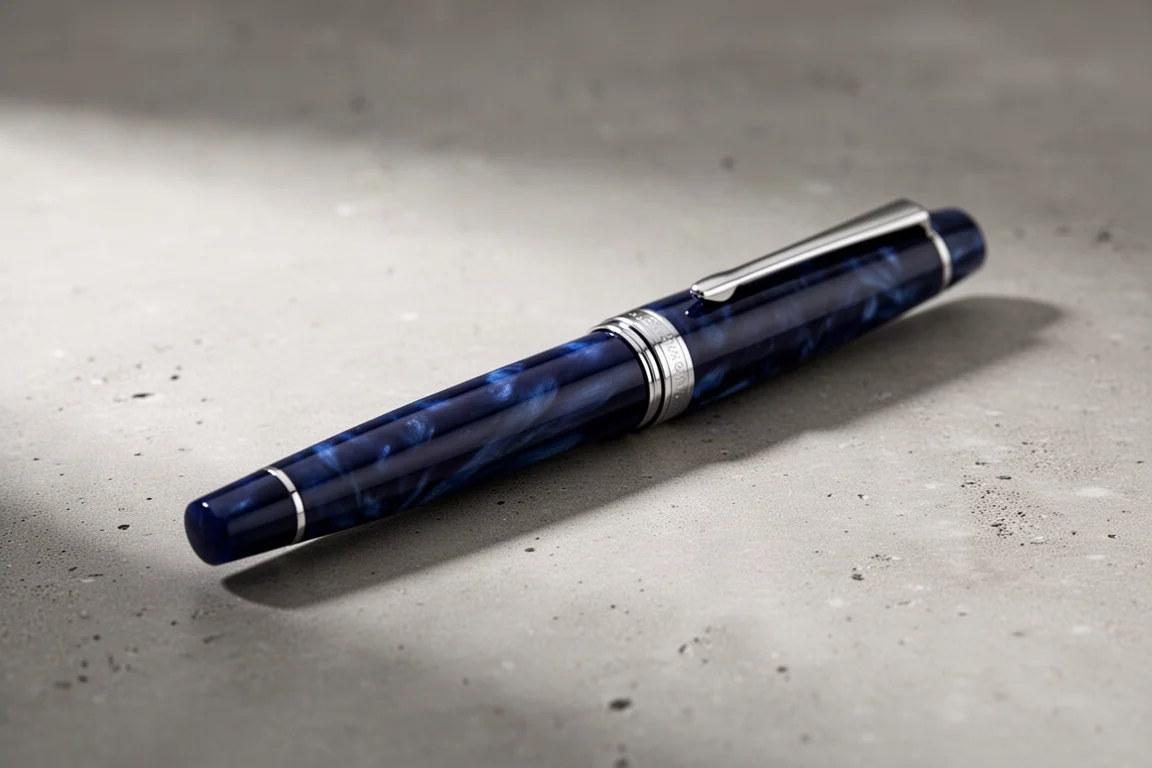
Aurora Optima Review: An Italian Piston Filler That Punches Above Its Price
A 14k gold nib, ebonite feed, and a beautifully deep oraloid body make the Aurora Optima one of the most rewarding piston fillers around.
Fountain Pens
Cross Bailey Light Review: The Entry-Level Fountain Pen Worth Keeping at the Office
A plastic-bodied Cross with a metal clip, snap cap, and famously smooth extra fine steel nib. Around $15, available almost everywhere, and easy to recommend.