Flight Sim Hardware
Thrustmaster HOTAS Warthog in 2026: Is the Legend Still Worth It?
A detailed look at the Thrustmaster HOTAS Warthog, weighing its legendary build and replica design against modern alternatives.
Introduction
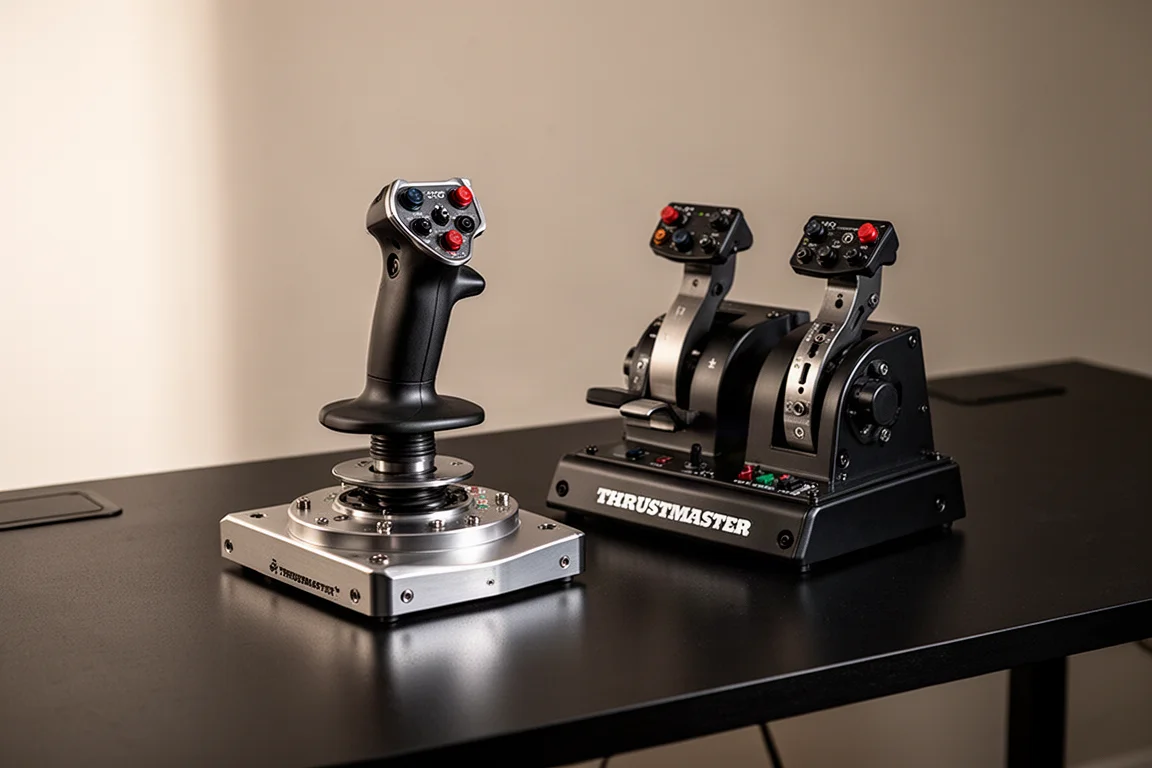
The Thrustmaster HOTAS Warthog has been a fixture in flight simulation for nearly 16 years. A replica of the iconic A-10 attack aircraft, it features 55 buttons and switches, an all-metal construction, and a design that has remained largely unchanged since its launch. The question isn’t whether this hardware is good; it’s whether it’s worth your money in 2026.
Who This HOTAS Is For
The Warthog is aimed at flight sim enthusiasts who want a premium, authentic replica of the A-10’s controls. It’s a system that feels substantial on a desk, with a heavy metal stick and a throttle unit that weighs in at 4.3 kg. If you fly the A-10 in DCS and want the most authentic experience possible, this is a strong contender.
However, it’s also a product that has been on shelves long enough that a new generation of simmers is now old enough to buy one. For those who grew up with modern HOTAS systems featuring cam-based gimbals, adjustable springs, and modular grips, the Warthog may feel dated.
The Stick: A Heavyweight With a Classic Feel
The stick itself is one of the heaviest and most solid that has been reviewed. At just over a kilo, it has an all-metal construction with a metal trigger and plastic buttons elsewhere. The two-stage trigger has a nice click at the halfway point, with the second stage in the last 5% of the pull.
The button layout is comprehensive. There’s an eight-way trim switch, a four-way DMS switch, a TMS switch with a different texture to help distinguish it during flight, and a weapons release button. The master mode switch sits where your index finger naturally rests, and the side of the stick has a four-position countermeasure switch with a center detent. A pinky switch and a paddle switch round out the controls.
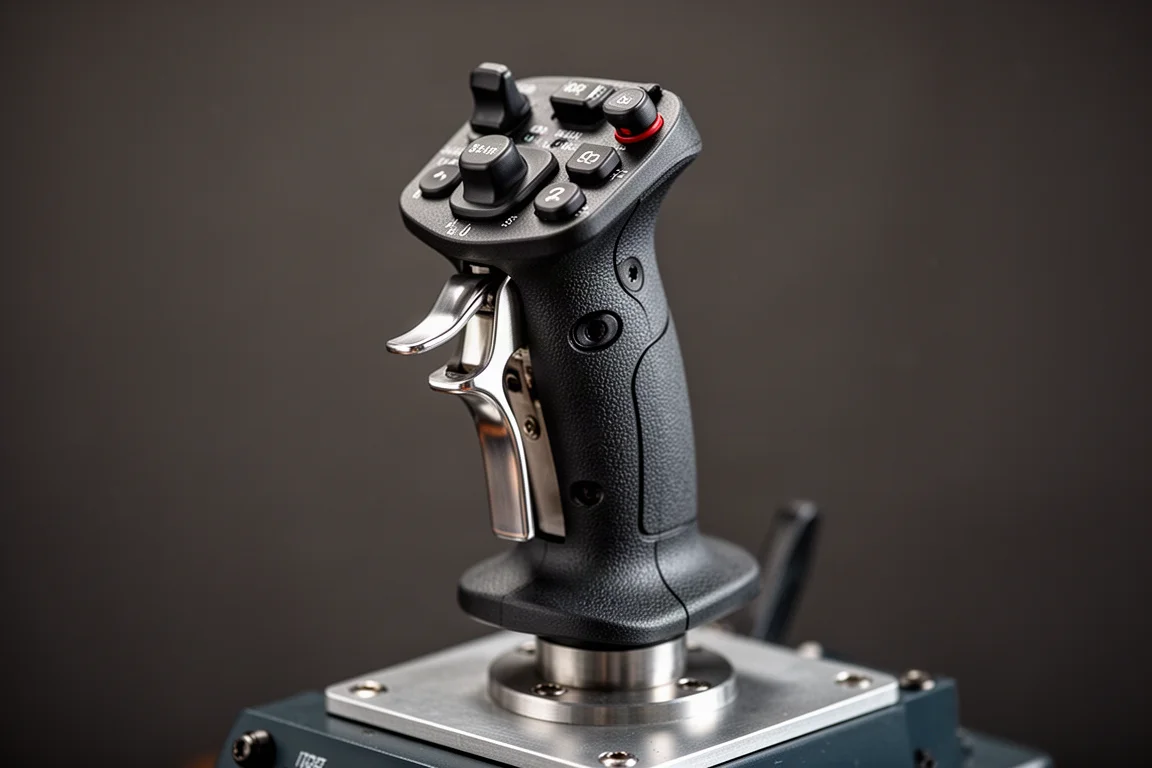
The stick has a fixed palm support, which works well for standard-sized hands. Those with smaller hands might find it challenging to reach all the controls comfortably. The stick connects to the base via a rotating metal ring and a fixed mini-DIN connector. This connector is delicate, and given the weight of the stick, care is needed when mounting it to avoid damage.
One notable omission is the lack of a yaw or twist Z-axis on the stick or base. If you need rudder control, you’ll need separate pedals.
The Base: Where the Age Shows
The base uses magnetic hall effect sensors with 16-bit resolution, providing about 65,536 positions in both the X and Y axes. This was groundbreaking in 2010, when most consumer HOTAS systems relied on potentiometers that physically wore down over time.
However, the gimbal design is where the age of the system becomes apparent. The Warthog uses an older style gimbal with a plastic articulation sphere, rather than the all-metal bearing and cam systems found in modern alternatives from companies like Virpil, VKB, or WinWing. There’s no adjustability: no cams, no springs, no dampening. What you get is what you get.
The center detent is quite pronounced. During normal flight, this isn’t an issue, but during delicate maneuvers like aerial refueling, the force needed to break out of the center position can result in larger control inputs than intended. This makes precise corrections much harder.
The base plate has a slight rocking on one diagonal, though this wouldn’t be an issue if mounted to a rig. The USB cable is pre-attached and cannot be disconnected, so care is needed when handling it.
The Throttle: Solid, But Showing Its Age
The dual throttle unit is heavy and solid, with an all-metal construction and thick metal plates fastened by exposed rivets. It’s well-weighted and doesn’t pivot easily on a desk. The throttle arms have metal inserts wrapped in plastic housing.
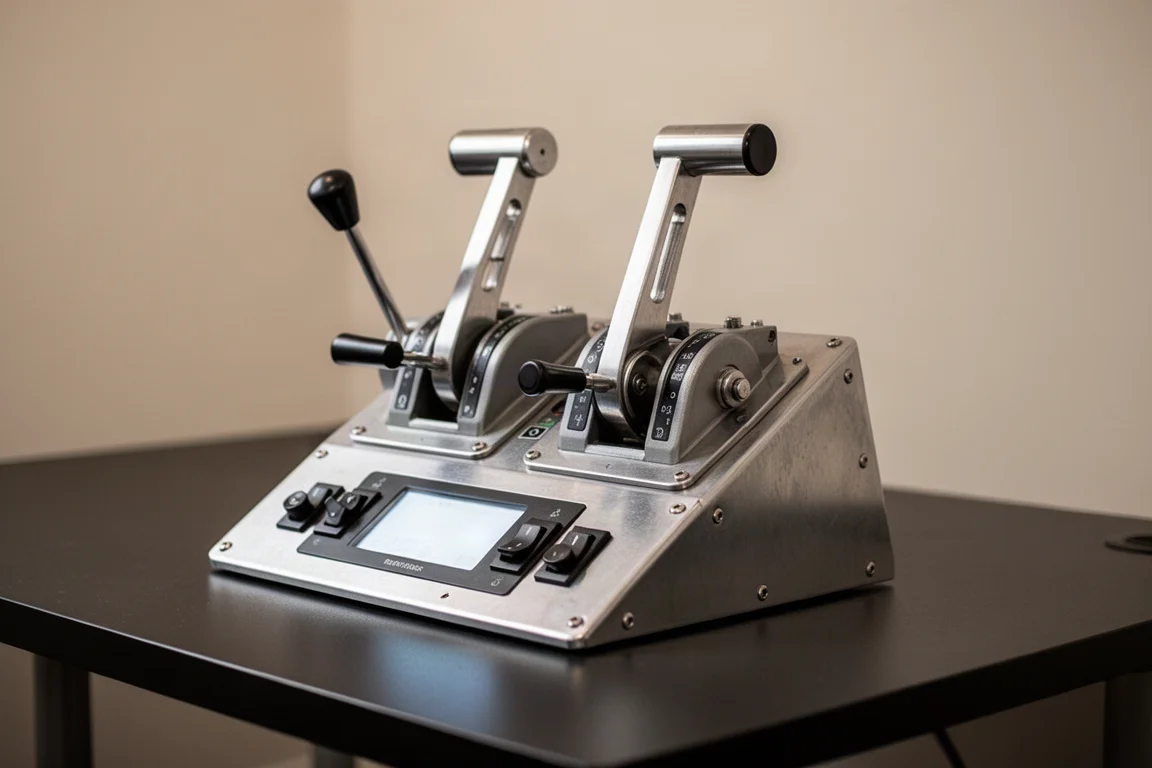
The throttles use a 14-bit sensor, providing around 16,384 positions. This is perfectly adequate for throttle control, where you’re not making the same tiny micro-corrections as with the stick. The movement feels premium and consistent through the entire range, with no grabbing or grinding.
Out of the box, you get the shutdown movement, where you lift the throttle up and over a gate to enter the shutdown position. There’s also a hidden adapter that provides an afterburner detent, simulating the afterburner mode for aircraft like the F-18 Hornet.
The throttles can be joined or separated using a metal ring. When locked together, there’s a noticeable sloppiness in the sideways movement of the throttle arms. This was a concern when the product first launched, and it appears not to have been corrected in the years since.
The base of the throttle has a backlit panel, though it wasn’t illuminated during testing. There are switches for autopilot, flaps, landing gear warning silence, and APU. A potentiometer slider on the right side is weighted nicely with a center detent, but it’s a potentiometer, so you can feel the texture through its movement. This slider was used for zoom, and it caused slight variations in zoom during flight, a problem that has persisted for over a decade.
Software and Setup
The Thrustmaster software experience is mixed. The firmware update tool refused to work, reporting version zero on the stick and version 12 available, but failing to update on multiple PCs. The Target software, which allows for device configurations, profiles, and macros, also failed to load, sitting on a splash screen indefinitely.
That said, most flight simulators like DCS recognize the hardware natively, so the software isn’t central to the overall experience. Most Warthog owners likely won’t miss it.
Alternatives Worth Considering
If you’re looking for a flight stick in this price bracket, there are modern alternatives worth considering. The Moza offering is noticeably lighter than the Thrustmaster stick but has a few extra features. It has an eight-way trim switch with a push button in the center, and most of the four-way and eight-way position switches have center push buttons for added versatility. It also has adjustable palm support, which is a nice feature.
The WinWing offering feels a bit nicer in the hand. It follows a similar design philosophy with push buttons in the center of the switches, and it includes an expansion module that adds a three-position switch. Both the Moza and WinWing sticks have removable expansion modules, allowing you to stay closer to the original aircraft design or add extra functionality.
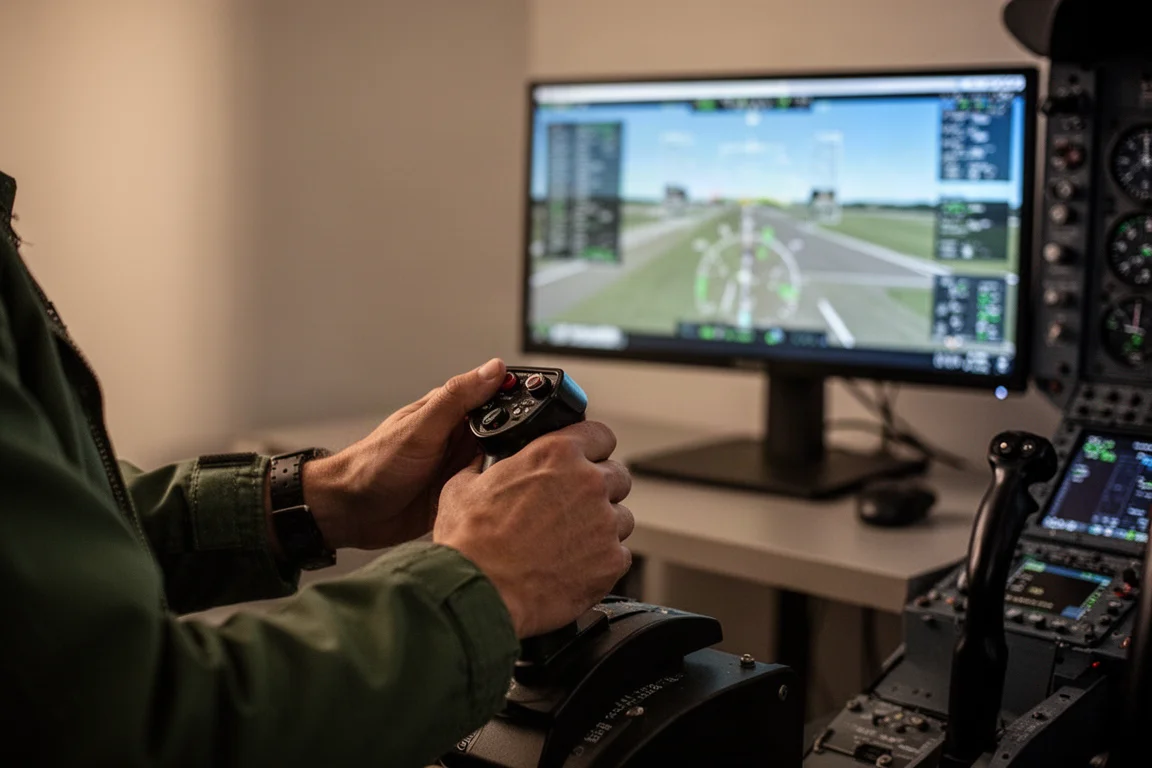
In the throttle space, the WinWing Orion 2 throttle base takes a very different approach. Instead of the sparse but accurate depiction of the A-10, the Orion 2 fills the base with as many controls as possible. This gives you more versatility depending on the aircraft you’re flying, especially if you’re not sticking to just one type.
Buying Advice
The Thrustmaster HOTAS Warthog is not a bad HOTAS. It’s far from it. The reason it’s still being discussed is that it was so good that people are still buying it nearly 16 years after its launch. Most gaming hardware struggles to stay relevant for three years. This has survived multiple generations of competitors and changing expectations.
However, if you’re looking to buy this as your first premium HOTAS in 2026 and you have no emotional connection to the A-10, there are stronger options available today. Options with better gimbals, more adjustability, more controls, and more flexibility. The Warthog is no longer the obvious recommendation it once was.
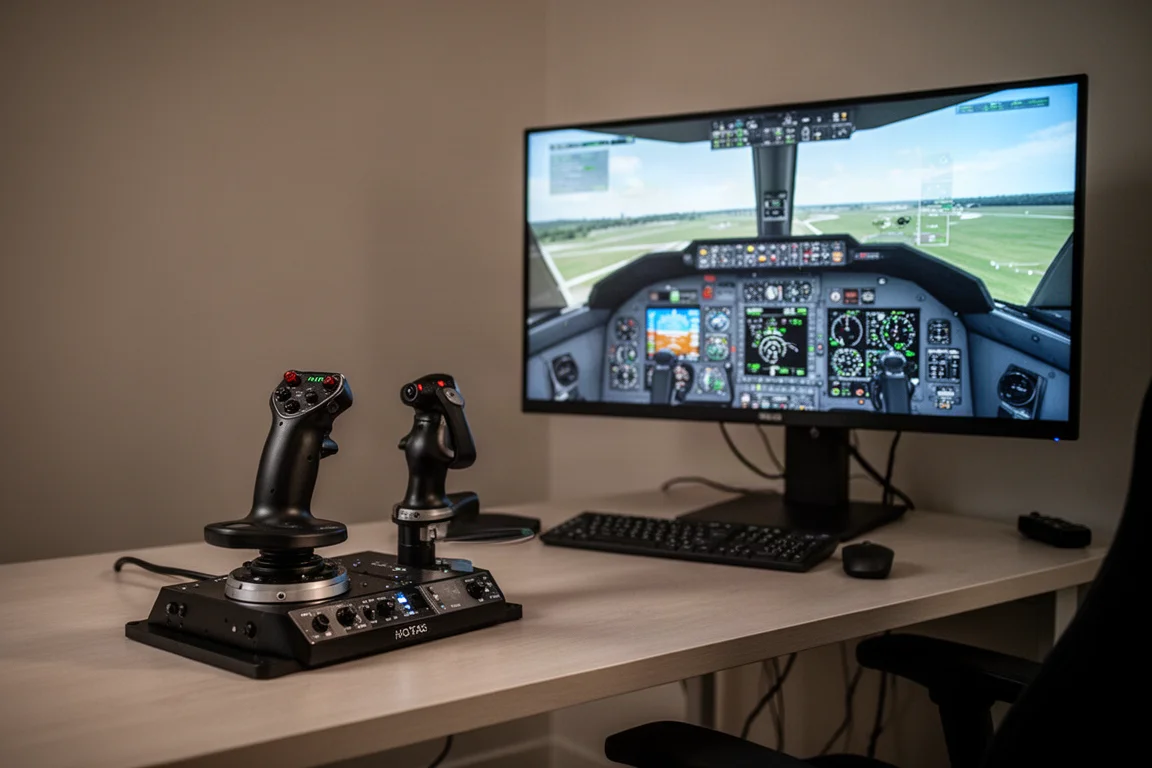
What it is, though, is a legend. A piece of flight simulator history. A HOTAS that helped define what premium flight controls look like for an entire generation of simmers. The Warthog isn’t the future anymore, but it absolutely helped create it.
Conclusion
The Thrustmaster HOTAS Warthog remains a beautiful, authentic piece of hardware. The stick is one of the nicest grips available, and the throttle unit is solid and heavy. But the base mechanics and the throttle sloppiness show their age, and the potentiometer slider remains a persistent annoyance.
If you’re an A-10 enthusiast looking for the most authentic replica experience, the Warthog is still a compelling choice. If you’re looking for the best modern HOTAS for a variety of aircraft, you’ll find better options elsewhere. The Warthog is a legend, but in 2026, it’s a legend that’s been surpassed.
Product link
View more details for Thrustmaster HOTAS Warthog
This product is mentioned in the review. Check the specifications, options, and compatibility before buying.
View more details for Thrustmaster HOTAS WarthogFurther reading
Related Reviews

Flight Sim Hardware
MOZA AB6 vs AB9: Which Force Feedback Base Fits Your Flight Sim Setup?
We compare the MOZA AB6 and AB9 force feedback bases across torque, smoothness, build quality, and value to help you choose the right one for your flying style and budget.

Flight Sim Hardware
MOZA MRP Rudder Pedals Review: A Compelling New Entry for Flight and Combat Sim
The MOZA MRP rudder pedals bring smooth rudder control, adjustable tension, and an optional damper that adds real weight to your sim setup.

Flight Sim Hardware
MOZA MTP and MTLP Review: A Closer Look at This Throttle and Expansion Panel Combo
We test the MOZA MTP throttle and MTLP expansion panel in DCS to see if this pair delivers the full virtual aviation experience.