Coloring Books
Thomas Kinkade Disney Dreams Coloring Book Review: The Love-Hate Challenge
A gorgeous but demanding adult coloring book that teaches real color and lighting skills, with a few caveats worth knowing before you buy.
Introduction
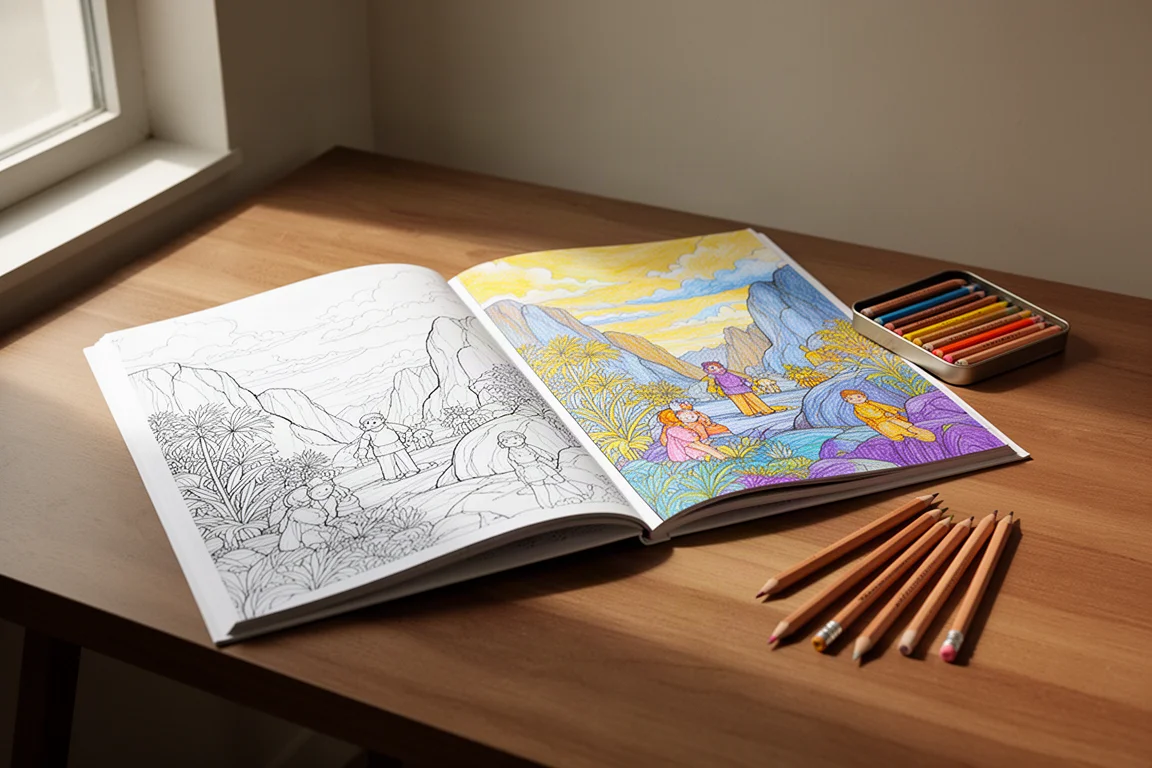
This is the book I both love and hate. The Thomas Kinkade Disney Dreams Collection coloring book has pushed me to my limits and taught me more about color and lighting than almost anything else I own. Every time I finish a new page, I love it and I hate it in equal measure, and that tension is exactly what this review is about.
The concept is simple: the book reprints Thomas Kinkade’s luminous Disney paintings as detailed coloring pages, and your challenge is to recreate those paintings with colored pencils. It sounds achievable. It rarely is, at least not at first.
Who This Product Is For
This book is for colorists who want a genuine challenge, not a relaxing wind-down. If your goal is to replicate the colors of the original paintings as closely as possible, this book delivers a puzzle that few other coloring books offer. It also suits Disney fans, because even if the coloring experience frustrates you, the book doubles as a reference of beautiful artwork.
It is not for beginners who want big open spaces and simple wins. Many pages are busy, intricate, and restrictive, and coloring them demands patience, sharp pencils, and a plan before you touch pencil to paper.
Matching Colors Like the Original Paintings
The biggest shift I made with this book was building a swatch system. Instead of picking out the right color from a range of 150 pencils mid-coloring, I laid out my Prismacolor swatches and compared each pencil against the colors in the original art, writing down numbers that looked like close matches.
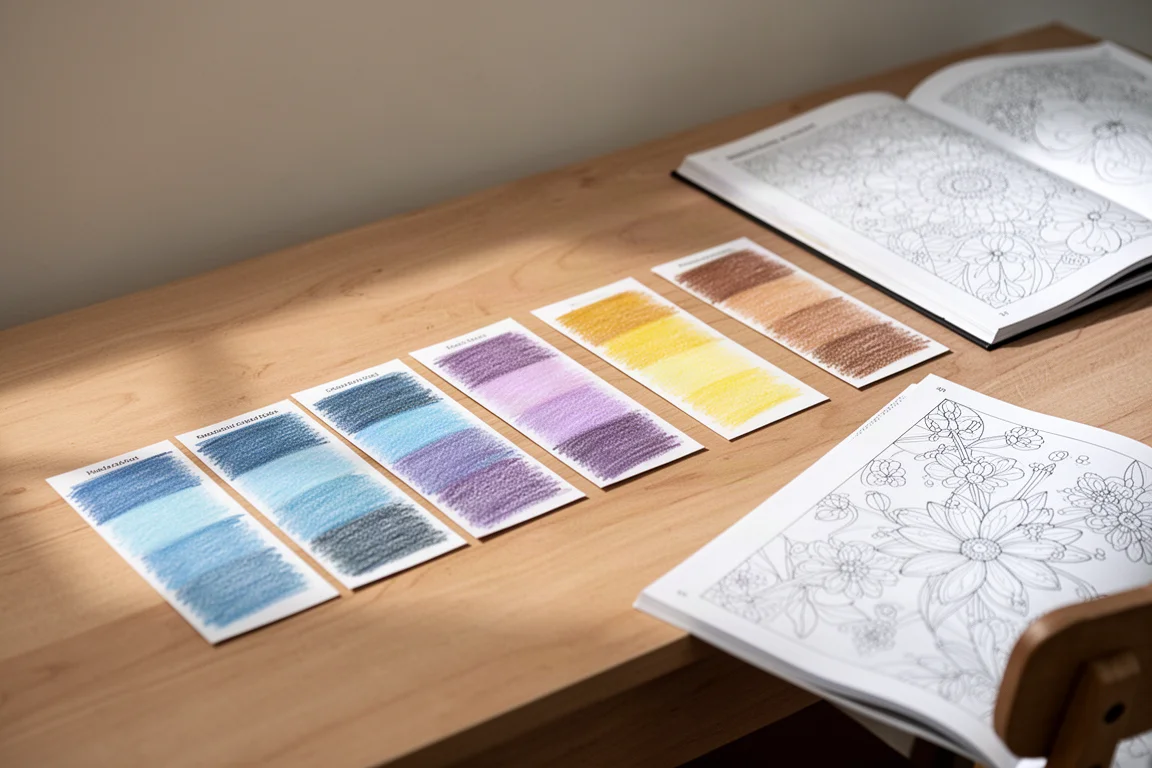
There is rarely a perfect match for every part of the picture, so the trick is to look at the biggest areas of color, the brightest highlights, and the darkest shadows first, then note any significant color changes, like a patch of blue inside a purple sky. It does not have to be perfect, but it gives you a solid starting point and makes the whole process far easier.
The Line Work: The Book’s Biggest Flaw
Here is my honest frustration: the black line work is not suited to adult coloring. Many of the lines, especially in the sky, get in the way of proper coloring. Ideally, a page like this would have large open areas that let a colorist create their own light and shading, instead of imposing restrictions through cloud lines and pre-drawn light strokes.
These lines look great in the plain black and white illustration, but when you already have the original painting beside the page as your reference, that context is redundant. Interestingly, some children’s coloring books actually offer more creative freedom here, because they keep the details simple and let you transform the page yourself. It is a common adult-coloring-book publisher mistake: assuming more intricate pages make for more interesting coloring, when often those details just confuse the person trying to color.
My advice after coloring several of these pages: stop fighting the lines and embrace them. Covering them repeatedly never worked for me.
The Lighting Lessons Are the Real Value
And yet I love this book, because of what it teaches. When I think of a rocky scene, my instinct is to grab reds and browns. This book had me reaching for yellows in one area and blues, purples, and even pinks in another. Each color looks out of context on its own, but together they are perfect for the image.
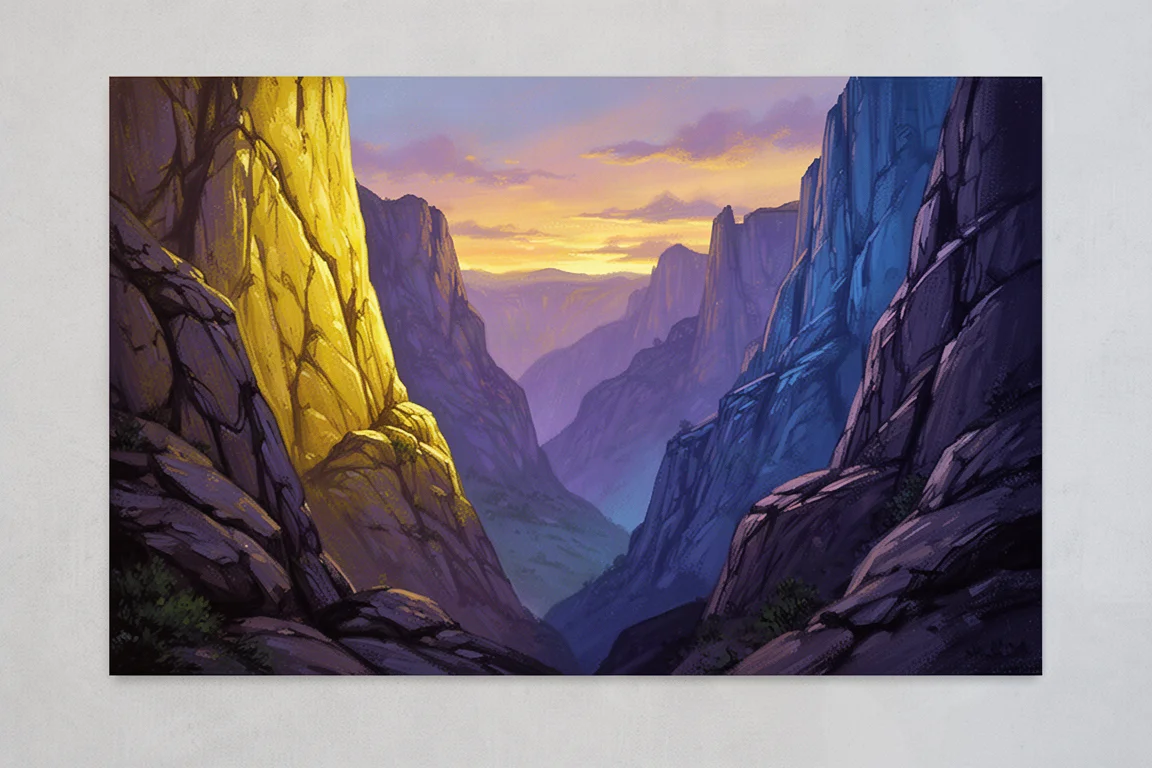
In the past, I only ever shaded with a darker and lighter version of the same color. After working through several scenes here, I found myself applying more interesting lighting techniques across my other coloring pages and artwork, bringing far more depth to everything I color. That, for me, is what makes this book special. Even if you dislike the pages themselves, it is superb color and lighting inspiration, especially for Disney fans. The challenge is hard at first and gets easier with every page.
Things to Consider Before Buying
There are two practical downsides worth weighing before you buy.
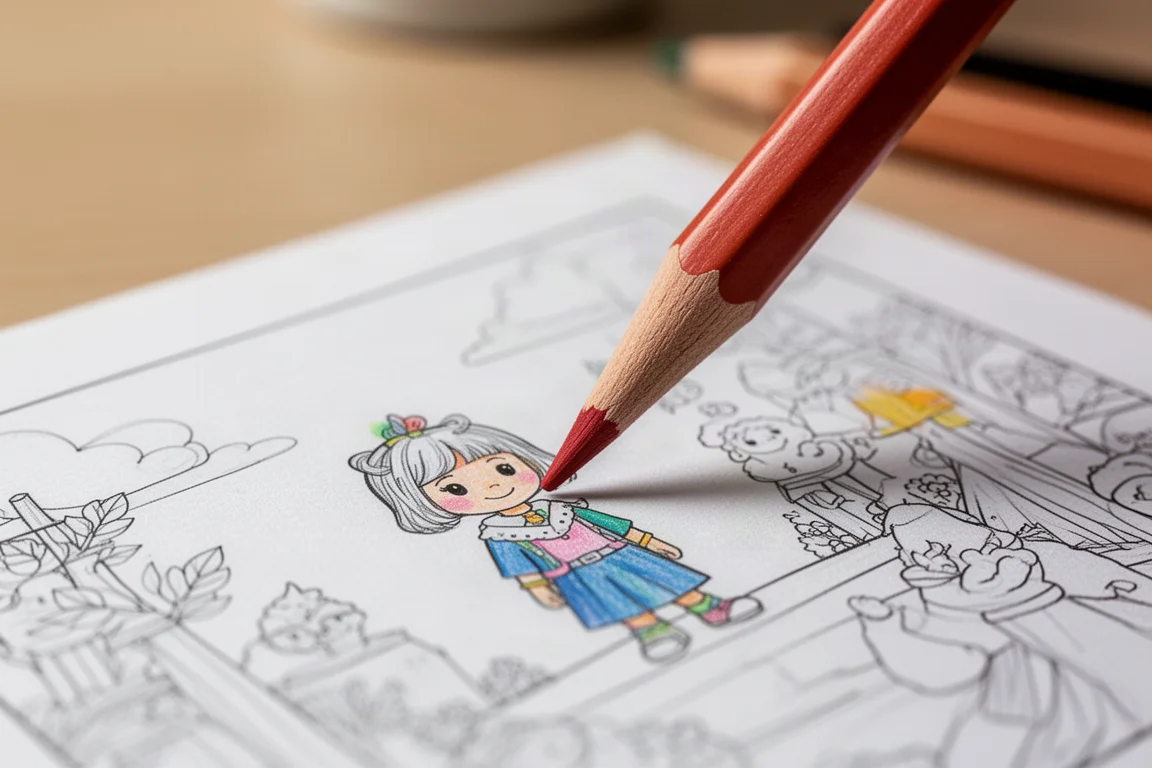
First, the characters are tiny. On some pages the main characters need barely more than one basic pencil stroke each, and there is very little room for detailed highlights or shadows. With patience and constantly sharpened pencils, you can bring them to life, but the fine details definitely get lost, and this can be the least satisfying part of the process.
Second, a darker surprise: Thomas Kinkade died in 2012 at just 54 years old, and many of the pictures in this book were painted after his death. The Thomas Kinkade studio has continued producing new artwork, and pieces like Tangled, Snow White, Aladdin, Mickey, and Dumbo were painted by the studio rather than Kinkade himself. In his final years, Kinkade painted a series of twelve paintings that made up the original Disney Dreams collection, including The Little Mermaid, Beauty and the Beast, and The Lion King. I still love the book, but it would be nice to have some kind of reference showing which pages are true originals. The Lion King page I worked on is one of the genuine ones, which was reassuring.
Buying Advice
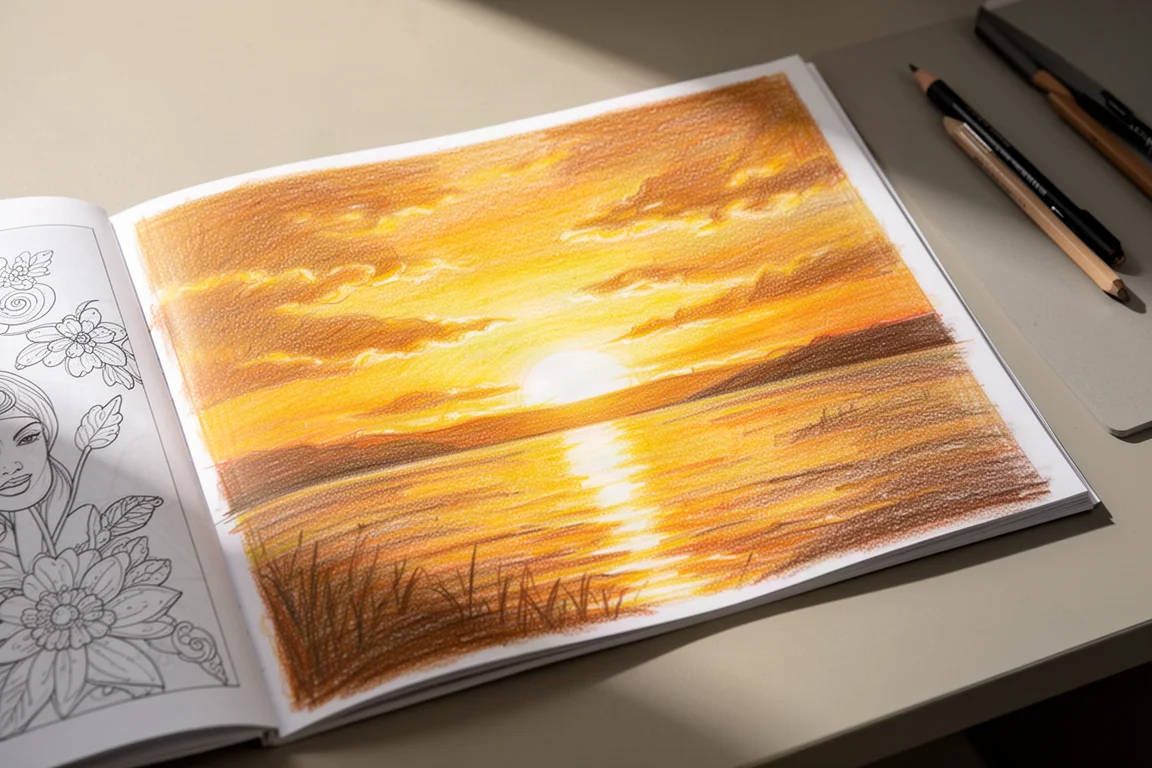
If you decide to take this book on, keep your layers light and block out the most obvious areas of color first. Overlapping colors creates new colors, which makes this a fantastic tool for practicing color mixing. A wax-based pencil behaves well here, and running a pencil blender over the finished page flattens the texture and gives a slight glossy finish that takes the result from looking like colored pencils to looking more like a print.
One more tip: paint pen highlights at the very end can lift the small details that got lost in the line work, and it is genuinely one of the most satisfying steps on any page.
Conclusion
Recreating a painting with colored pencils is a goal many people call impossible, but with this book you can come remarkably close. Yes, the line work gets in the way, the characters are often too small, and not every picture is a true Kinkade original. But the end result is always rewarding, the challenge is unlike any other book I own, and my skills have grown measurably from taking it on. My first attempt ended in a mess and an unfinished page, and this latest one is what happens when you refuse to let that failure keep you down. I do think this is one worth adding to your collection, even if you only try a few pages every once in a while.
Product link
View more details for Thomas Kinkade Disney Dreams Collection Coloring Book
This product is mentioned in the review. Check the specifications, options, and compatibility before buying.
View more details for Thomas Kinkade Disney Dreams Collection Coloring BookFurther reading
Related Reviews
Art Supplies
Caran d'Ache Swisscolor vs Supra Color II: Which Water-Soluble Pencil Fits Your Work?
A close look at two Caran d'Ache water-soluble pencil lines: the student-friendly Swisscolor and the artist-grade Supra Color II, compared side by side.
Art Supplies
Duomo 50 Artist Pencil Set Review: A Budget-Friendly Way to Start Making Art
Fifty pencils spanning colored, charcoal, watercolor, graphite, and metallic varieties, all in one oversized gift-ready box for around $19.
Art Supplies
PanPastel 80-Color Set: Is the Big Set Worth It, and Which Pencils Pair Best?
A hands-on look at the full 80-color PanPastel set, plus how Caran d'Ache Luminance and Faber-Castell Polychromos pencils perform on top of the pastel layer.