Snowboard Boots
ThirtyTwo Focus Boa Sweetin Review: A Stiff Freestyle Boot With a Backcountry Streak
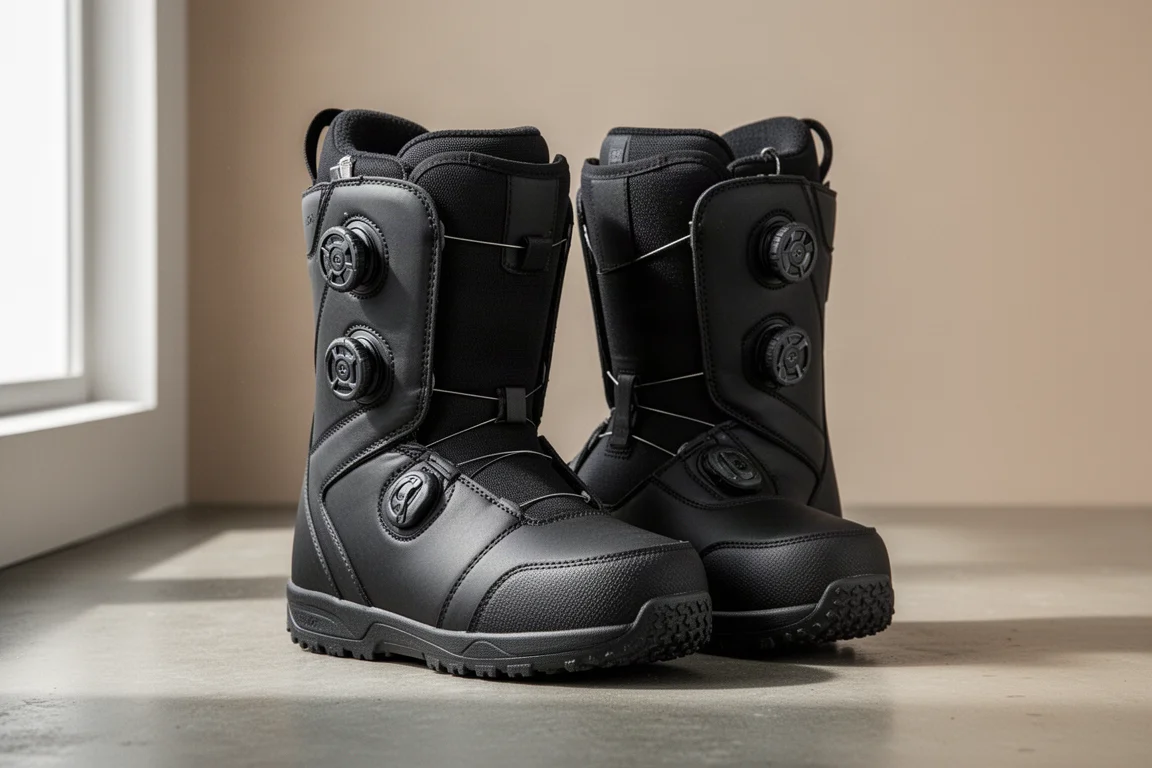
A close look at the ThirtyTwo Focus Boa Sweetin: dual Boa control, a heat-moldable XLT liner, Michelin Fiberlite outsole, and a crampon-ready heel lug.
Introduction
The Focus Boa Sweetin is ThirtyTwo’s rider-driven freestyle boot built around a dual Boa system, and it is aimed squarely at riders who want a stiff, customizable boot that can also earn its keep in the backcountry. It is not a boot for everyone, and that is obvious from the moment you pick it up: the shell is rigid, the liner is burly, and the articulation is deep. This breakdown covers what it does well, what to watch out for, and who it actually fits.
Who This Boot Is For
This is a boot for riders who want serious control and are willing to put in break-in time. The deep ankle articulation feels rigid and restrictive out of the box, and it progressively loosens as you ride. Backcountry users get a genuine bonus here: a heel lug on the back spine for crampons, and enough play in the upper cuff if you leave the top Boa slightly loose on the skin track. If you ride big lines or splitboard, this is a boot worth considering. If you just want a soft, park-comfortable boot, look elsewhere.
Shell and Durability
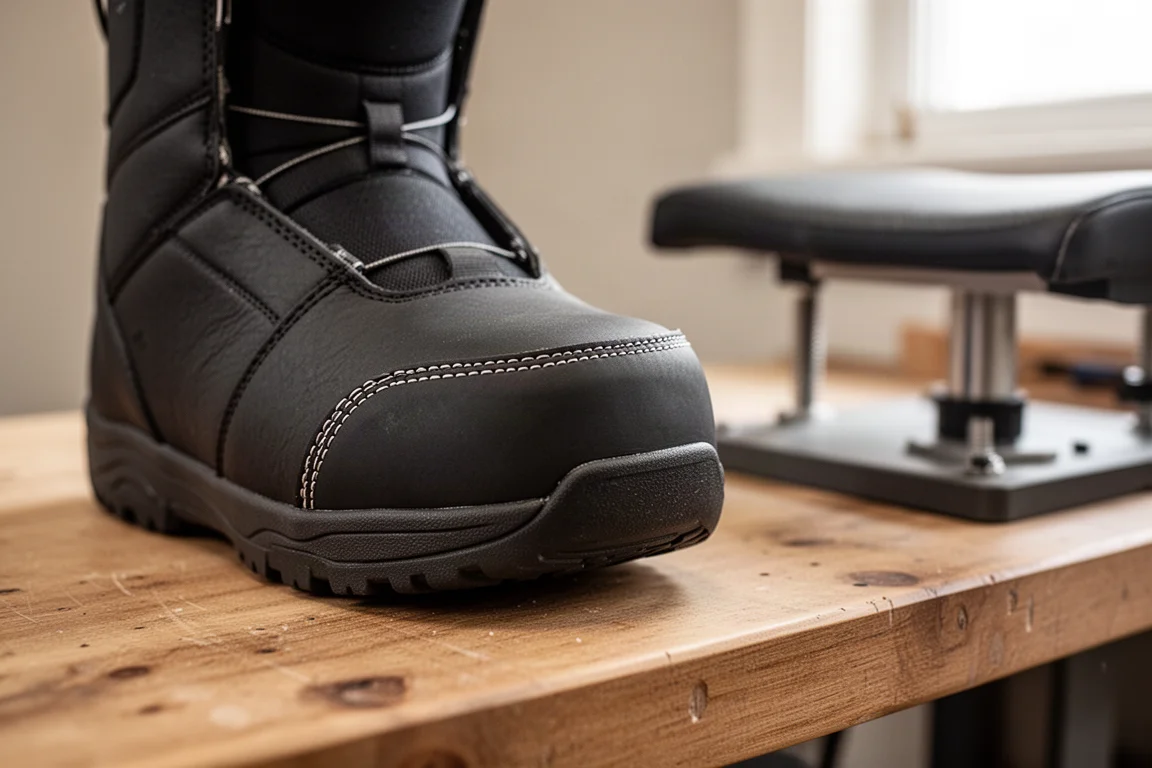
The shell uses a harder rubber toe cap that tapers back, so even when you crank your toe strap down you should not feel it pressing in. The shell resists collapsing, which keeps the fit consistent over time. The one weak point is the double stitched seam: if you habitually rest the edge of your board on chairlifts, you can cause that seam to fray.
The gator is well thought out. It has a small snap for the pull tab that keeps it riding higher, so when your heel strap crosses it you should not feel pressure from the zipper underneath.
Outsole and Grip
The Focus Boa Sweetin uses a Michelin Fiberlite outsole, the same rubber formula Michelin uses in its tires, so grip on snow and ice is a given. The lug pattern is not especially deep or aggressive, but the sole is firmer and more durable than most, which helps cut down on kinetic vibrations and lets you sit a little lower in the boot. The foam underfoot should still dampen bigger impacts reasonably well.
Dual Boa and Fit Control
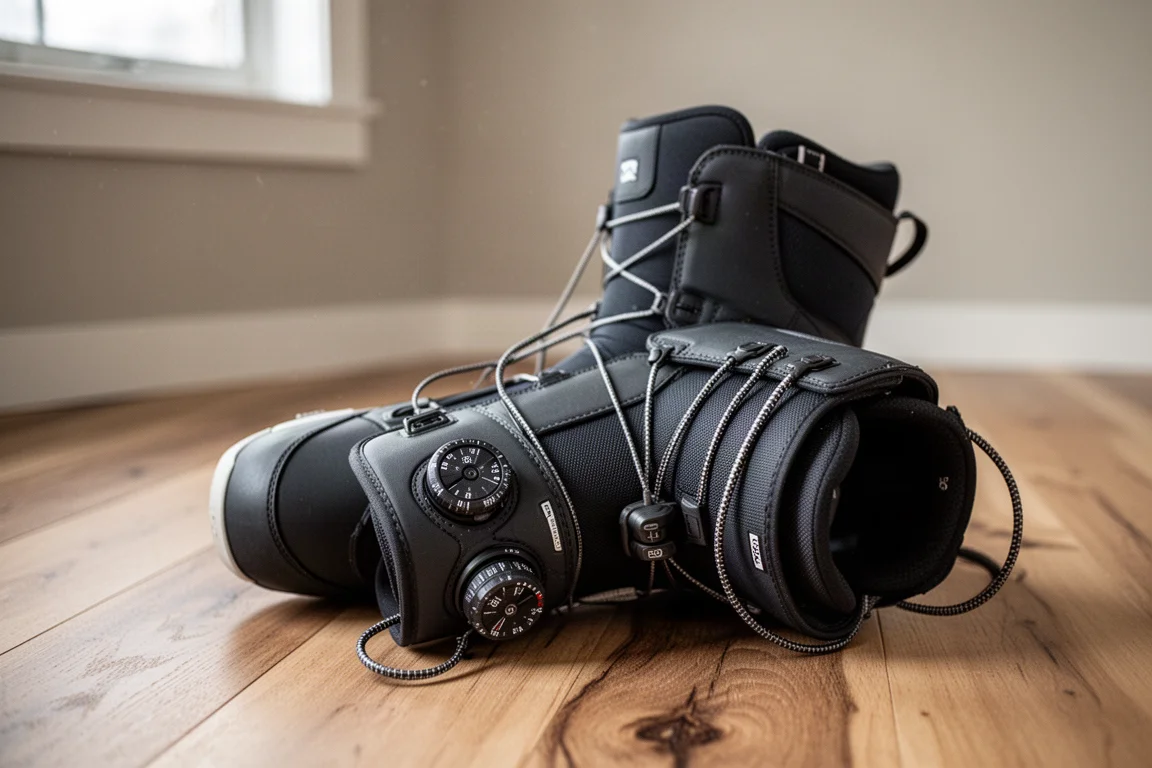
This is a dual Boa boot with the new H5 coilers, which can be backed out without popping them. The big quirk: the right boot tightens righty-tighty, while the left boot tightens lefty-tighty. That reversed orientation on the left boot is unusual and not universally loved, but the payoff is independent control of the lower and upper zones so you can dial in exactly how the boot flexes.
The internal harness is sewn into the shell, which pulls the liner back into the heel pocket and keeps it snug against the shell. That creates a more uniform flex, with shell and liner working together rather than fighting each other.
Liner, Straps and Ankle Support
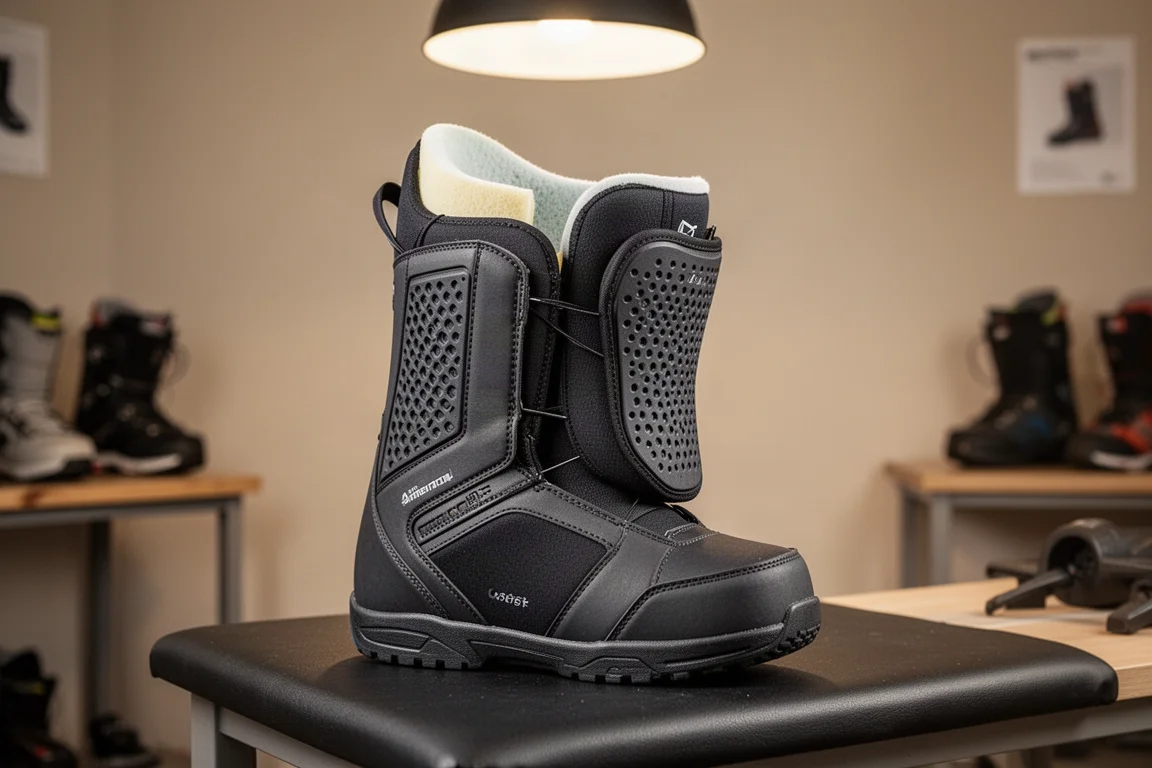
Inside you get the Performance XLT liner, a burly, heat moldable liner built with Intuition foam. Heat molding it right out of the box is strongly recommended, especially if you are heading into the backcountry, because it expedites the break-in. A note of caution: these boots are known to pack out a fair amount, so plan your sizing accordingly.
Around the toe there is a large seam that some riders will feel on the side of the foot. Neoprene foam behind it helps though: if you have a six toe, a bunion, or a pressure point, it pushes out better once heat molded or broken in, giving you a little more room.
The liner tongue has a rigid panel that stops the internal harness from cutting into the liner when you cinch it down. An external J-bar adds rigidity around the ankle pocket, and that is where your ankle bone should sit, which matters if you swap in an aftermarket insole. The rear panel where the liner branding sits is a denser material that keeps the liner from simply crumpling, and it is where most of the liner’s rigidity comes from.
Up front, a double power strap with aggressive Velcro holds the tongue exactly where you want it. Behind it, the J-bars form more of a shallow U shape rather than a pronounced J, so riders with wider heels should give this boot a serious look.
Insoles and Customization
A genuinely nice touch is the swappable arch support: the stock footbed ships with different arch inserts so you can experiment with higher or lower arches. The posting is not as aggressive as some aftermarket options and you may see a little collapse on the outside edge, but the fact that you can play with the fit at all is welcome. Realistically, a dedicated aftermarket insole will probably be better in the long run, but the stock setup is a slightly better footbed than most.
Measurements and Fit Notes
For the detail-oriented, here are the measurements taken on a US size 9 (27 mondo point) shell:
- Rear cuff height: 11.5 inches
- Front cuff height: just past 11.5 inches
- Forefoot width at the widest section: 4.5 inches
- Toe to heel length: 12 inches
- Forefoot width inside the liner: about 4.25 inches
- Footbed: 10.5 inches long, 3.5 inches wide
The shape leans toward the older, wider ThirtyTwo silhouette, which is a touch bulkier inside. If your bindings run narrow, you may run into clearance issues.
Buying Advice
Buy this boot if you want a stiff, highly adjustable freestyle boot that doubles as a credible splitboard and backcountry option, and if a wider fit or a wider heel describes your foot. Heat mold the liner immediately, expect a real break-in period before the deep articulation loosens up, and size with the knowledge that these pack out over time.
Get fitted properly if you can. The best boot is the one that fits your foot and fits your needs, and that is doubly true for a stiff, packable-out boot like this. If you do order online, use a retailer with a solid return policy so you can exchange sizes without friction.

Conclusion
The Focus Boa Sweetin packs a lot of smart engineering into one boot: a collapse-resistant shell, a snap-away gator, Michelin rubber underfoot, independent dual Boa zones, a heat moldable XLT liner, swappable arch supports, and a crampon-ready heel lug. The trade-offs are real: reversed Boa tightening on the left boot, a fraying risk on the toe seam, noticeable break-in, and pack-out over time. For riders who match its fit profile and want stiffness with a backcountry streak, it is a boot that rewards patience.
Product link
View more details for ThirtyTwo Focus Boa Sweetin
This product is mentioned in the review. Check the specifications, options, and compatibility before buying.
View more details for ThirtyTwo Focus Boa SweetinFurther reading
Related Reviews

Snowboard Boots
32 Team Two Double Boa Review: 32's Highest-End Women's Snowboard Boot
A closer look at 32's top-tier women's snowboard boot, from the 3D molded toe box and double Boa lacing to the Performance Fit liner and heat-reflective footbed.

Snowboard Boots
Bataleon Acid BOA Snowboard Boot Review: A Serious First Entry from a Board Brand
Bataleon's first snowboard boot, designed by a former Burton boot designer, brings a stiff flex, dual BOA closure, and a heel hold system worth a closer look.

Snowboard Boots
Battalion Acid Boot Review: A Stiff, Aggressive Boot Built to Last
The Battalion Acid Boot is the brand's highest-end offering, built with seamless construction, TPU reinforcement, dual BOA lacing, and a heat-moldable liner. Here is what to know before buying.