Astronomy Books
The Observer's Sky Atlas: The Field Guide Many Stargazers Have Been Waiting For
A deep dive into The Observer's Sky Atlas by Erich Karkoschka, a dense but practical reference covering 500 deep space objects, binary and variable stars, and standardized charts.
Introduction
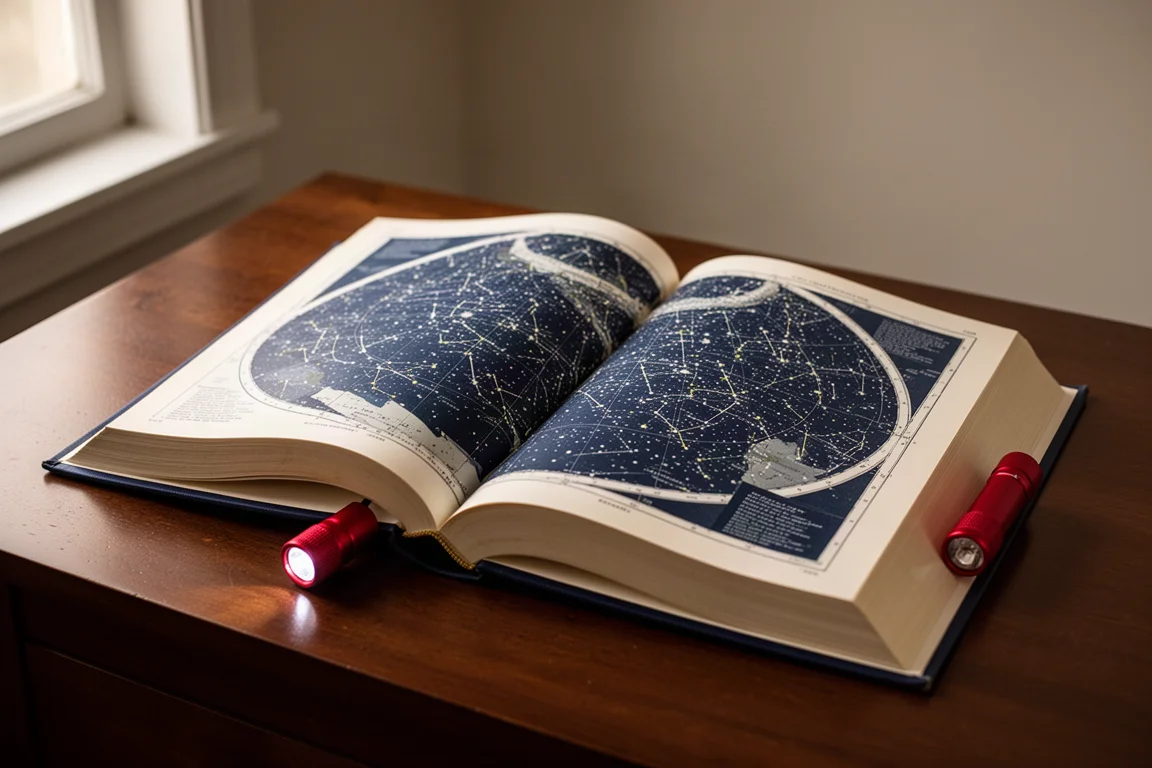
Anyone who has spent time planning a night of observing knows the problem: there are thousands of objects in the sky, and most references make you dig through page after page to figure out whether a target is even worth your time. The Observer’s Sky Atlas by Erich Karkoschka takes the opposite approach. It is built around the idea that you should be able to look up a part of the sky and immediately know what is there, how bright it is, and whether your telescope, binoculars, or camera can handle it.
After reading well over a hundred astronomy books looking for one that had everything needed and none of the clutter, this is the one that stands out as the closest to ideal. It is concise, clearly organized, and genuinely usable at the eyepiece.
What Makes This Atlas Different
The book’s content list is ambitious on paper: 500 deep space objects, 250 binary stars down to at least magnitude six, 80 variable stars with a maximum magnitude of six or brighter, and detailed information on every star of magnitude 3.5 or brighter. What makes it work in practice is how that information is presented.

Every deep space object includes surface brightness at a glance, which is the single most useful number for deciding whether an object will actually be visible in your equipment. The star charts are drawn to a standard scale, and the finder charts for the best deep space objects use that same scale, so there is no mental conversion between pages.
Photos of every deep space object include a scale bar, which answers two questions immediately: will this fit in my eyepiece field of view, and will it fit in my camera’s frame? Notes for visual observers cover binocular and six inch telescope views specifically, which keeps expectations realistic.
Built for Visual Observers and Astrophotographers
The cross-referencing is where this atlas quietly outperforms most of its competition. Every star listed on a chart appears in the table on the facing page, and every deep space object on the chart page has a full data entry on the other side. Nothing on one page is missing from the other.

That sounds like a small thing, but anyone who has chased an NGC number across a chart page only to find it absent from the object tables knows how rare this kind of consistency is. Whether you are observing visually or shooting astrophotography, the book tells you what to expect before you step outside.
The front of the book explains all of the notation briefly and succinctly, and the back contains appendices, nebula numbering references, and additional charts, so the reference material is complete without bloating the main sections.
Who Is Behind the Book
Author Erich Karkoschka has serious credentials, but the more meaningful detail for practical observers is this: he personally observed every single object in the book through his own six inch telescope and his own binoculars. The notes are not compiled from distant catalogs. They come from someone who has actually looked at every target with equipment similar to what many amateur astronomers own.
That firsthand observing shows up in the practical tone of the notes and in the confidence that the listed objects are genuinely reachable for a modest setup.
Things to Consider Before Buying
This is a reference atlas, not a beginner tutorial. It assumes you can find your way around the sky and use a chart. The strength is density and organization rather than hand-holding, and readers who want long narrative descriptions of each object will find the entries deliberately brief.
It also complements rather than replaces planetarium software. Software can surface enormous amounts of data, but it does not sort and curate targets for you. This book does that filtering work in advance, which is precisely why it pairs so well with a digital planning tool rather than competing with one.
Buying Advice
For anyone who regularly plans observing sessions, sketches at the eyepiece, or shoots deep sky targets with a modest telescope, this book earns its place on the short list of references worth keeping within reach. It slots naturally alongside a moon atlas and a yearly sky events guide as part of a small, regularly used observing library.
It is published by Firefly Publications, and the practical payoff is simple: mark what you want to see, take the book outside, and observe or photograph with confidence that the target is within reach of your equipment. For visual observers and astrophotographers alike, it is easy to recommend.
Conclusion
The Observer’s Sky Atlas is the rare reference that seems designed by someone who actually uses one. Standardized charts, surface brightness for every deep space object, matched tables on facing pages, and field-tested notes from a six inch telescope and binoculars add up to a book that solves the everyday problem of choosing what to observe tonight. For serious amateur astronomers, it belongs on the desk and in the field kit.
Product link
View more details for The Observer's Sky Atlas
This product is mentioned in the review. Check the specifications, options, and compatibility before buying.
View more details for The Observer's Sky AtlasFurther reading
Related Reviews

Astronomy Books
Night Sky Almanac by the Royal Astronomical Society of Canada: A Practical Planning Guide for Stargazers
A month-by-month guide to the night sky for the Northern Hemisphere, with clear explanations, sky charts, and beginner-friendly tips for new observers.

Art Books
Cynthia Knox Painting in Colored Pencil: Colorful Things Review
A detailed look at Cynthia Knox's Colorful Things, the second title in her Painting in Colored Pencil series, covering the projects, teaching style, and who this book is really for.

Running Books
Advanced Marathoning Review: The Best Running Book for Serious Marathon Training
Advanced Marathoning by Pete Pfitzinger and Scott Douglas strikes a rare balance between scientific depth and practical, prescriptive marathon training guidance.