Fountain Pens
The Good Blue R615 Flex Fountain Pen Review: Affordable, Sustainable Flex
A steel flex fountain pen from a UK maker focused on sustainability, with JoJo nib units, ebonite or plastic feed options, and a forgiving flex that suits newcomers.
Introduction
Finding a good flex pen is one of the most common questions in the fountain pen community, and for good reason: vintage flex is expensive and unpredictable, while modern flex options often cost a small fortune. The Good Blue R615 Flex, made by The Good Blue in the UK, aims to change that with an affordable, sustainable, and attainable flex fountain pen. After several months of regular use, it stands out as one of the friendliest entry points into flex writing.
The company’s approach is a big part of the appeal. They work hard to reduce their carbon footprint, embracing reduce, reuse, and recycle throughout their design. Even the packaging is simple, reusable, and genuinely well thought out, making it ideal for anyone who actually uses their pens rather than collecting boxes.
Design and Build
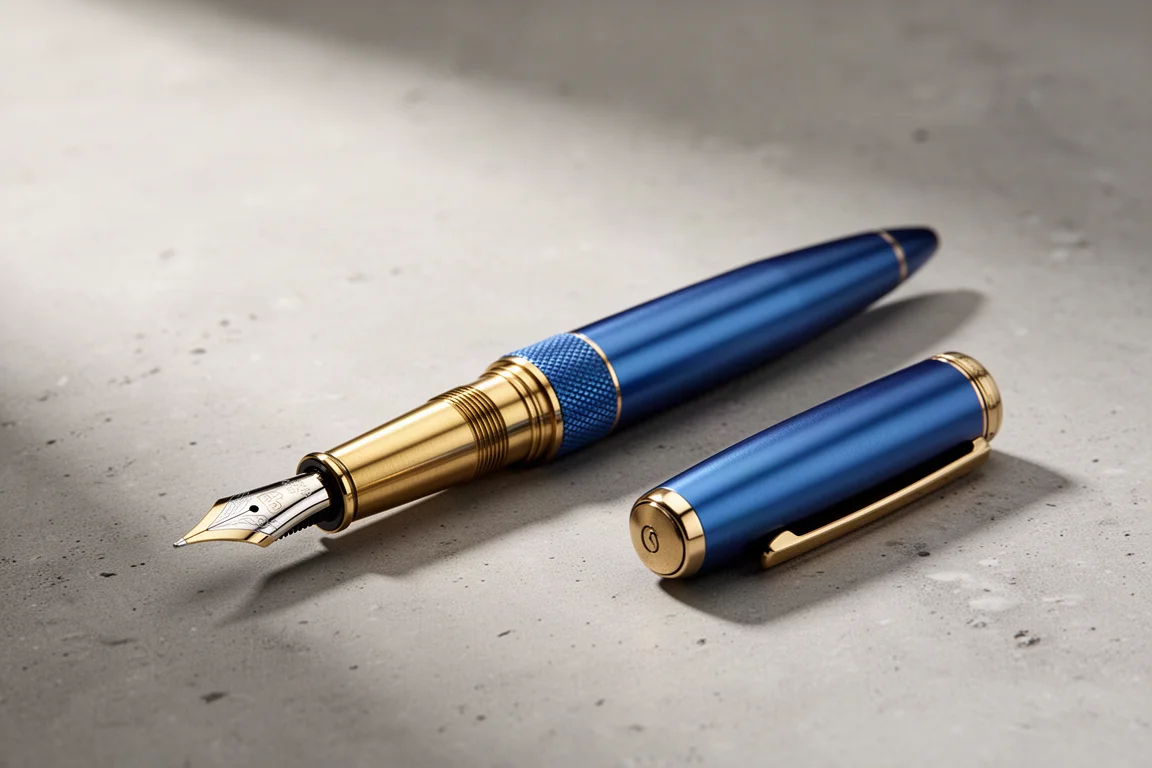
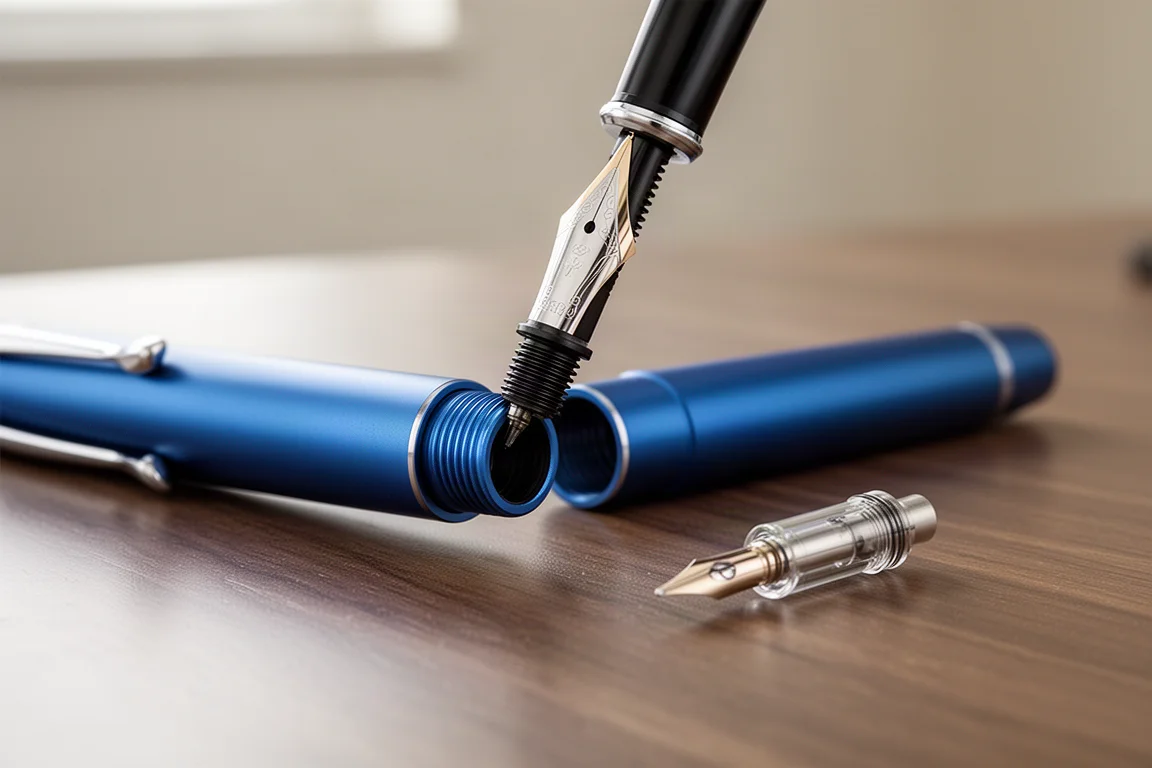
This version is part of the Raw series: blue aluminum for the cap and barrel, with a brass section and a knurled center band. The body is round and torpedo shaped, with a flat surface on both the cap and the body so it will not roll off your desk. It is a full-size pen, but not oversized; think of a good average size that feels comfortable for most hands.
The brass section and metal construction give the pen a comfortable balance and weight. One thing to know up front: the pen does not post. It also takes a standard international cartridge and converter, and a converter is included in the box.
The main design criticism is the step from the section to the barrel. It is a significant step, which makes the section feel extra skinny. The section diameter measures 10.5mm, with the skinniest part at 10.25mm. If you are particular about section width, that is worth checking before you buy. In practice, though, the brass has a slight grip to it so the pen does not slide around, and during actual writing the thin section is easy to forget about.
The Nib and Feed Options
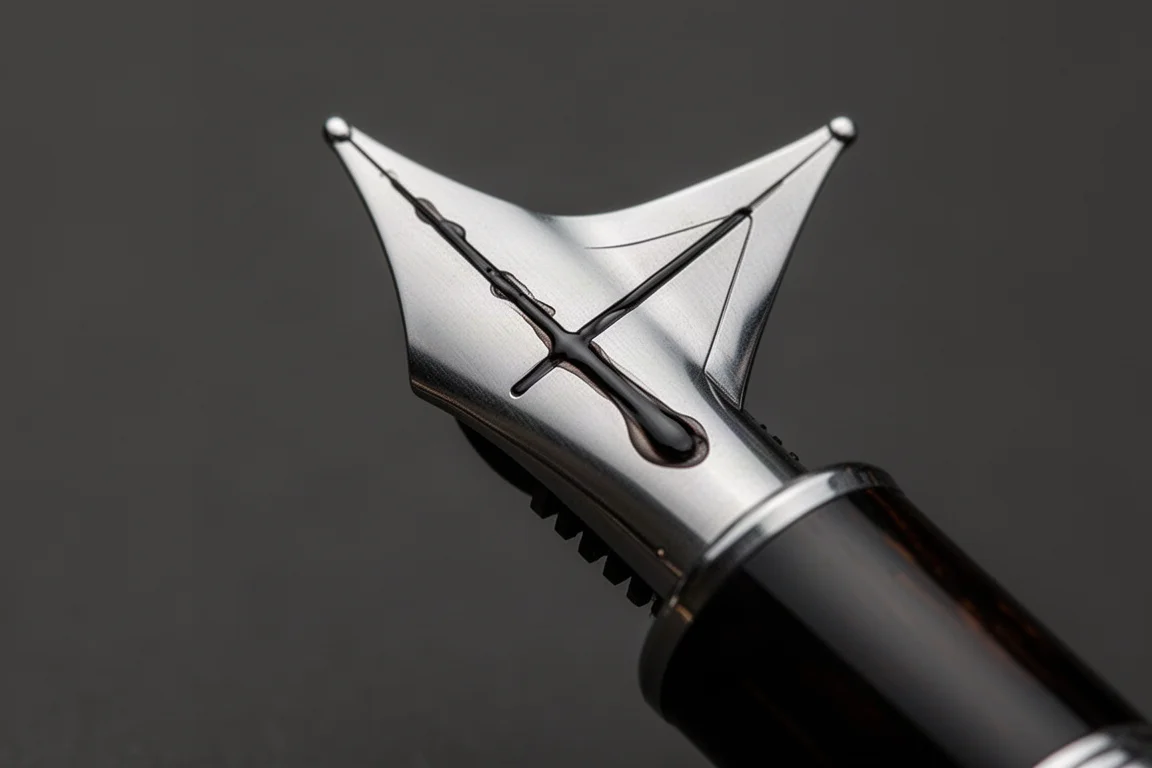
The R615 Flex takes JoJo nib units, and The Good Blue offers two feed choices: a plastic feed and an ebonite feed. The nib itself is steel and is laser engraved with “For the love of flex.” Notably, it has no breather hole, just a long slit.
Starting prices are £99 for the plastic fine flex and £114 for the ebonite version. An untipped version is also in the works.
So which feed should you choose? Forum debates about ebonite versus plastic are endless, but the practical difference here is modest. The ebonite version runs a little wetter overall and, when flexing, most consistently reaches a double broad. The plastic feed is best for a consistent broad. For roughly £15 more, the ebonite feed is the better pick for dedicated flex work. If you mainly want occasional flex flourishes in a journal or planner, the plastic feed is perfectly fine. Swapping nib units is simple: they screw in and stop on their own when fully seated.
Writing Performance and Flex
This is where the pen earns its keep. With no pressure, it writes as a wet, well-calibrated fine, not extra fine, with a consistent flow that never dumps ink. That matters, because a flex pen that soaks the page makes daily writing impossible. Without pressure you get a perfectly usable daily writer; reverse writing is possible if you push it, but that is not the point of this pen.
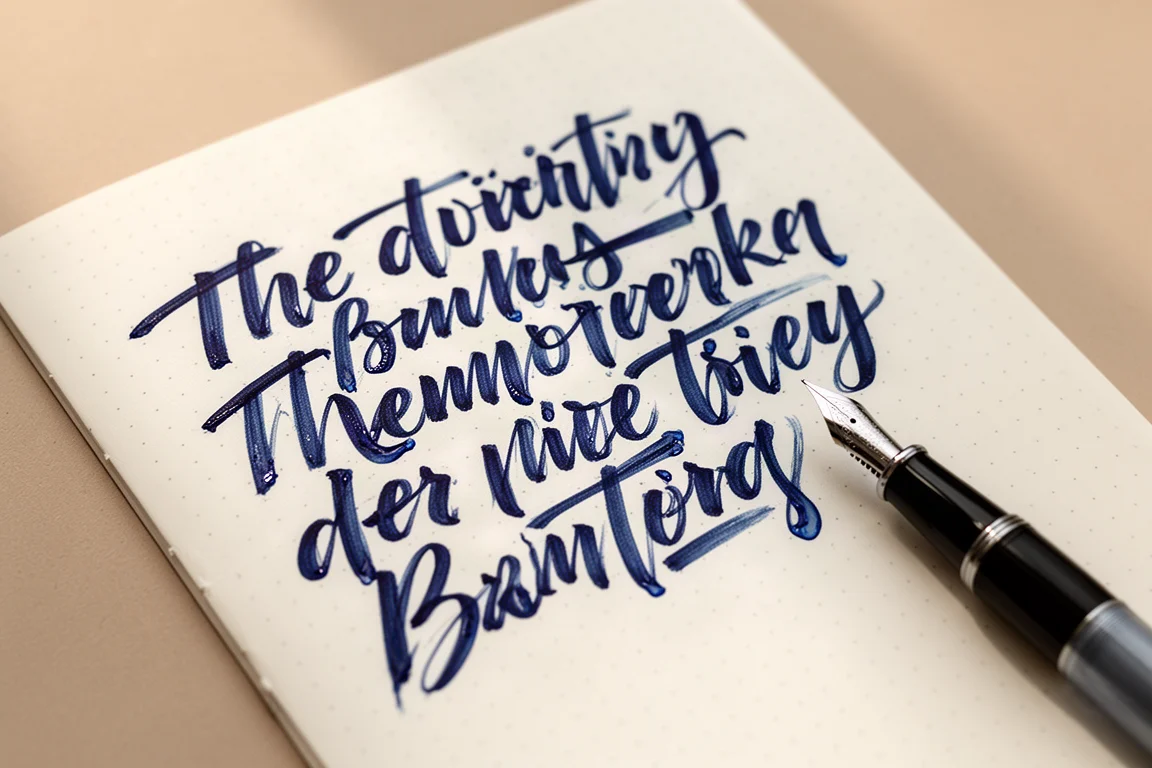
Apply pressure and the nib flexes quite easily: a double broad comes readily, and pushing slowly can squeeze out a triple broad. It is not scratchy, but it is not razor sharp either. The flex is not super snappy since it is a fairly firm steel nib without shoulder cutouts, but that firmness makes it forgiving and easier to control, which is ideal for anyone new to flex. It rails once in a while, as most flex nibs eventually do, but it keeps up well when you write slowly and steadily. After months of use, no readjustment or tuning was ever needed.
The real fun is in lettering, loops, and adding personality to your handwriting. The classic loops and flourishes are genuinely delightful with this nib.
Things to Consider Before Buying
Before committing, weigh a few practical points. The section step and slim profile will bother picky users. The pen does not post. And if you are choosing between feeds, decide whether flex is your main event or an occasional flourish: ebonite for dedicated flex, plastic for casual use.
None of these are dealbreakers given the price point. Flex pens, whether vintage or high-end modern, often cost several times more, and dip nibs, while cheap, are not practical for everyday writing. What The Good Blue has done well is make flex forgiving, controllable, and genuinely fun without a premium price tag.
Buying Advice
If you have been looking for your first real flex pen, this is one of the most sensible places to start. Choose the ebonite feed if you want the wettest, most expressive flex for lettering and practice sessions. Choose the plastic feed if you plan to keep it as an everyday journal pen that can add a quick flourish now and then.
Sign-up batches release periodically, so if it is out of stock, it is worth checking back when the next batch opens.
Conclusion
The Good Blue R615 Flex combines fair pricing, a sustainable ethos, simple reusable packaging, and a steel flex nib that is forgiving enough for beginners yet expressive enough to be genuinely fun. The thin section is the only real quibble, and even that fades once the pen is in motion. For anyone curious about flex writing, it is a great option and easy to recommend.
Product link
View more details for The Good Blue R615 Flex
This product is mentioned in the review. Check the specifications, options, and compatibility before buying.
View more details for The Good Blue R615 FlexFurther reading
Related Reviews
Fountain Pens
Best Budget Fountain Pens Tested: 9 Pens, One Clear Winner
A hands-on comparison of nine affordable fountain pens for everyday writing, calligraphy, and sketching, with a clear standout for flexible nib fans.
Fountain Pens
Aurora Optima Review: An Italian Piston Filler That Punches Above Its Price
A 14k gold nib, ebonite feed, and a beautifully deep oraloid body make the Aurora Optima one of the most rewarding piston fillers around.
Fountain Pens
Cross Bailey Light Review: The Entry-Level Fountain Pen Worth Keeping at the Office
A plastic-bodied Cross with a metal clip, snap cap, and famously smooth extra fine steel nib. Around $15, available almost everywhere, and easy to recommend.