Backpacking Gear
Teton Sports Signal 65 Review: A 65 L Pack With Real Quality Concerns
A close look at the Teton Sports Signal 65, from its PVC-coated fabric and adjustable suspension to the drawstring failures and build quality problems we found.
Introduction
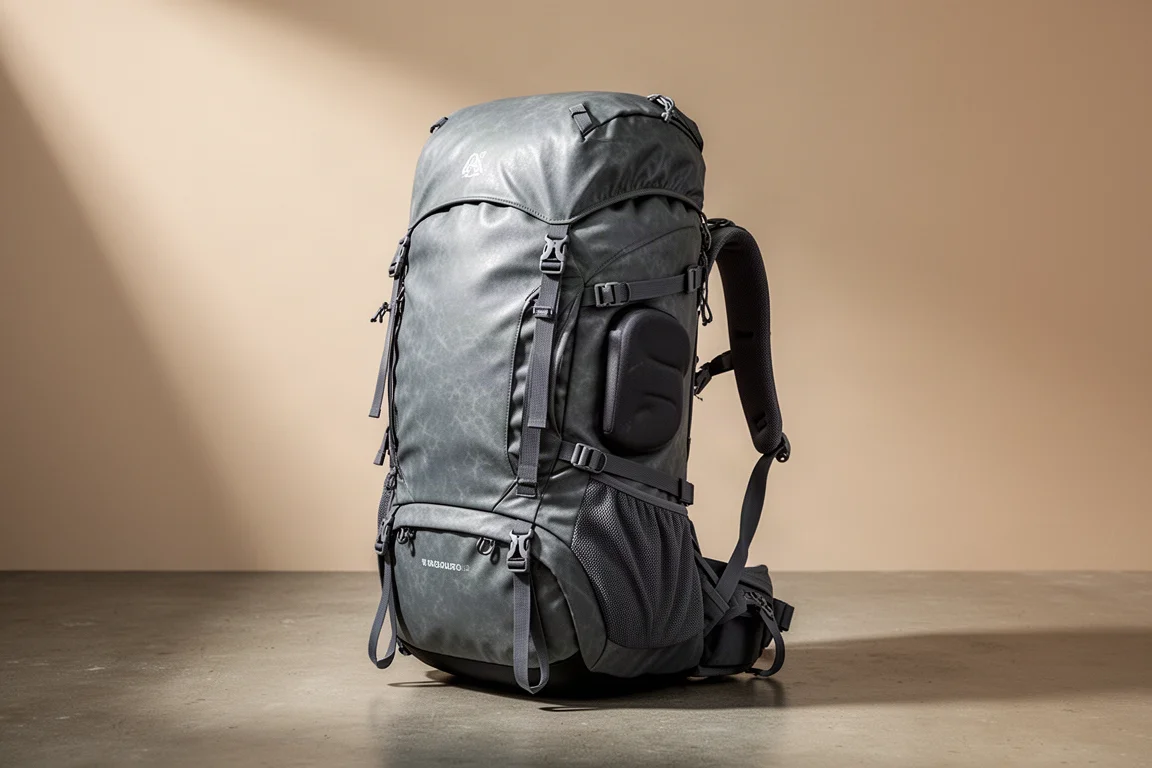
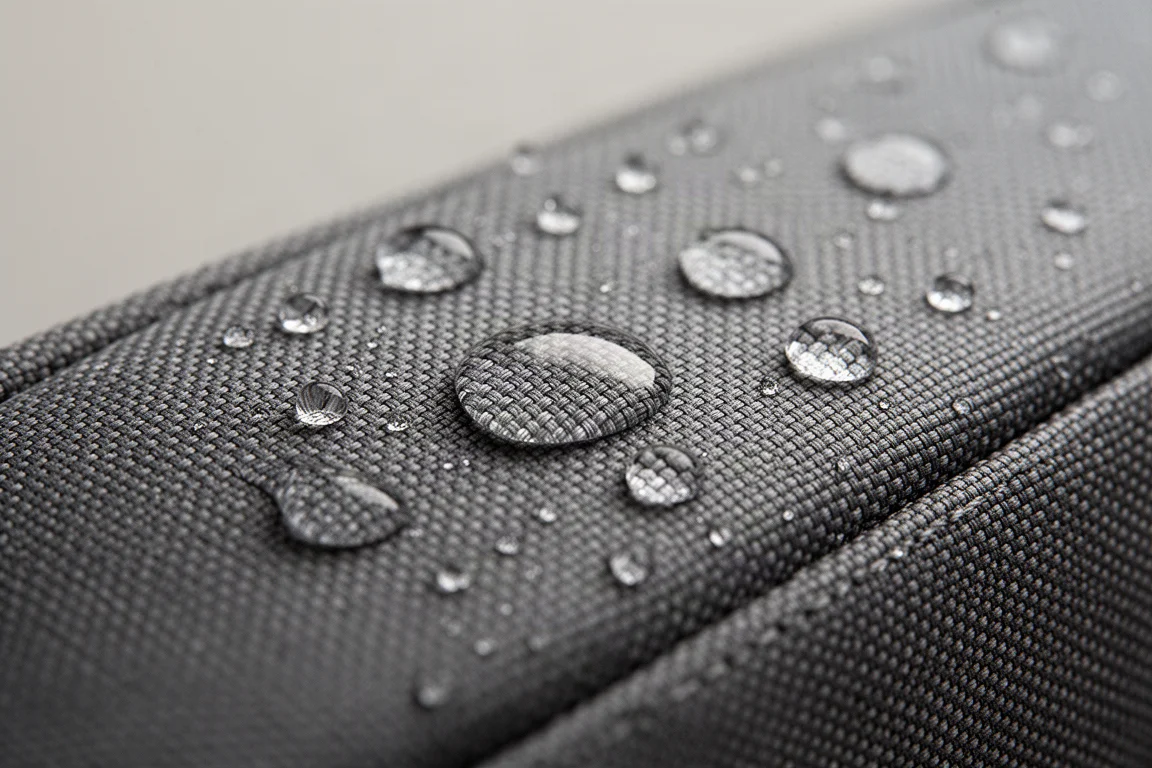
Teton Sports has spent years building a reputation for affordable outdoor gear, and the Signal 65 is its newest 65-liter backpacking pack. The headline detail is the body fabric: a 600-denier polyester finished with a PVC coating, a treatment that gives the pack a leathery, slightly glossy look and adds genuine water resistance. PVC-coated fabrics are generally tough and stand up well to rain, damp ground, and abrasion. They are water resistant rather than waterproof, but the coating is a meaningful step up from untreated nylon in wet conditions.
That combination of large capacity and a weather-resistant shell is exactly the kind of package that appeals to backpackers shopping on a budget. On paper, the Signal 65 looks like a lot of pack for the money. In practice, the unit we inspected raised serious questions about quality control, hardware durability, and the choice of materials at this price point.
Who This Pack Is For
The Signal 65 is a unisex, 65-liter pack aimed at backpackers who need volume for multi-day trips, extended weekends, and travel where a checked bag is not an option. A pack this size is built to swallow a tent, a sleeping bag, a stove, layers, and several days of food, and the organization is designed around that kind of loadout: a free-floating lid, a sleeping bag compartment, side access, and multiple compression straps.
Because the torso system is fully adjustable, Teton Sports positions the pack as a single model that can be shared across a wide range of body sizes rather than a family of fixed sizes. That is a practical idea, but a unisex shell has to compromise somewhere. It is not shaped specifically for either men or women, so fit tends to be adequate rather than ideal.

Anyone shopping in this category should treat the Signal 65 as a pack to handle in person rather than order blind, because the concerns below are not cosmetic details.
Main Strengths
The strongest argument for the Signal 65 is its main body fabric. The 600-denier polyester with a PVC coating is robust, reasonably abrasion resistant, and noticeably water resistant, which matters when you set a pack down on wet ground or walk through a day of steady rain. It is the one part of the build that feels like it belongs on a serious backpacking pack.
The suspension and carrying hardware cover the basics well. The torso length adjusts from 18 inches to 24 inches, the sternum strap is fully adjustable, and load lifters let you tune how the pack sits against your back. There is a large, very soft lumbar pad, gear straps and plastic D-rings on the harness for attaching items, and a grab handle at the top.
Storage and organization are generous. The free-floating lid has a zippered pocket plus an additional pocket on its underside, and it can be raised or lowered depending on how much you are carrying. Inside, there is a hydration sleeve with a strap to hold a 3-liter bladder, along with a hydration hose port at the top of the pack. Both sides have stretch mesh hydration pockets and two compression straps, and the right side adds a zippered access point into the main body. The base holds a Velcro pocket with an integrated pack cover, and the sleeping bag compartment uses two-way zippers.
Teton Sports offers the Signal 65 in black, gray, teal blue, and terra orange. The buckles on the unit we inspected appear to be of decent quality, though they carry no branding we recognized, and the same is true of the zippers.
Build Quality and Materials
Away from the PVC-coated body, the material story changes quickly. The lid uses a very different fabric, a thin nylon or polyester that is far lighter than the main shell. It is translucent enough that light passes straight through it, and it feels considerably cheaper than the material most budget tents are made from. That matters because the lid is exactly where a cinched-down load presses and rubs, and it is the last place you want the thinnest fabric on the pack.
Stitch work is the second problem. The pack is covered in loose threads, from the lid to the side panels to the base, and the overall construction looks like it is coming apart rather than holding together. For a pack at this price, that is difficult to look past.
Quality control is the third. On the unit we inspected, the waist belt was visibly off center, with one side sitting noticeably higher than the other. Combined with the thin lid fabric and the loose threads, it suggests these problems are not isolated to a single seam.
Closure Hardware and Drawstring Failures
The most serious issues concern the drawstring closures. The main top opening uses a drawstring with a draw pull, and the draw pull came apart the first time the pack was opened. That released the drawstring, which then pulled back inside the fabric where it cannot be retrieved. With the main closure out of action, the pack can no longer be cinched shut at the top.
A second drawstring sits roughly five inches further down, and its draw pull separated in the same way. That one was caught in time, but two failures of the same component on a single pack point to hardware that simply does not stay together.
Given how central a working top closure is to a backpacking pack, this is not a minor annoyance. A pack that cannot be secured cannot be loaded and carried with confidence, and it is the clearest single reason to look elsewhere.
Design Details Worth Checking
Several design decisions add friction. The sleeping bag compartment is very difficult to open: the storm flap over the zippers makes them stiff to start, and getting them closed again is harder still, particularly with the pack on your back. The secondary access zipper near the top is horizontal rather than an end-to-end opening, so it only lets you reach small items packed close to that point.
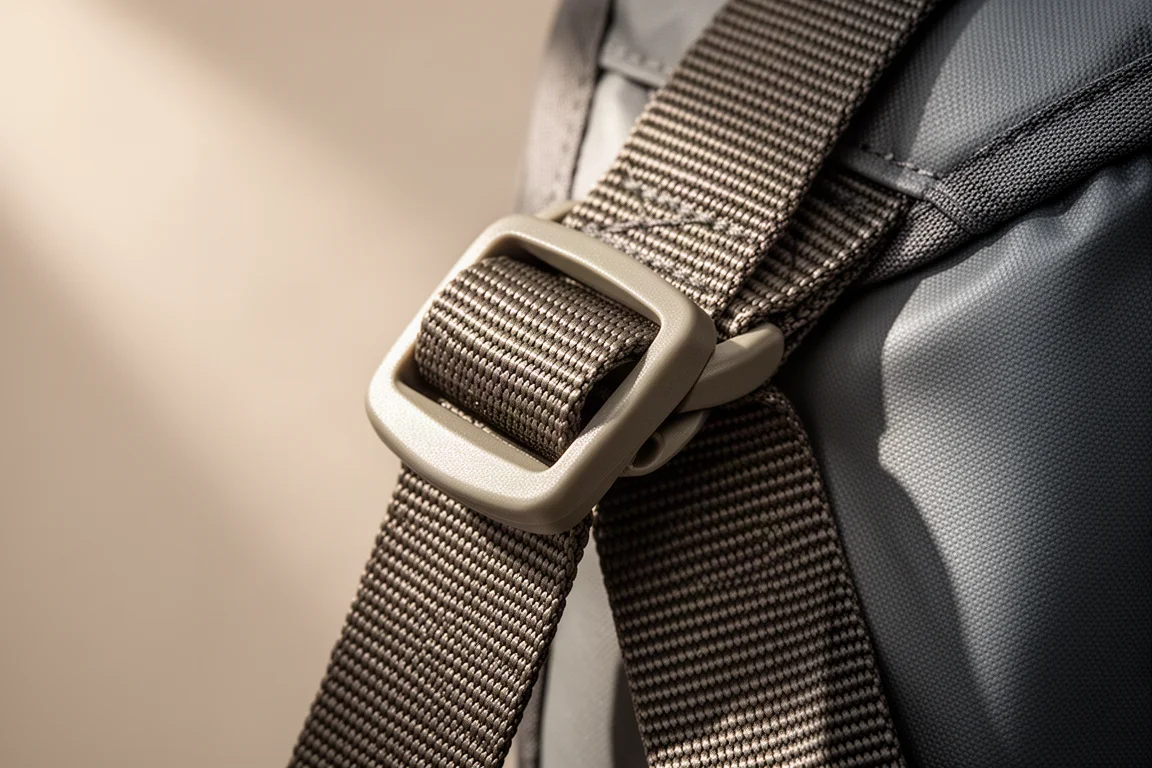
There is also no compression strap across the top of the lid, which is a shame on a pack of this size, and the waist belt has no pockets at all, a feature most backpackers use constantly. The drawstring on the sleeping bag divider looks fragile enough that it is best left alone.
Comfort, Fit, and Sizing
The frame sheet is a stiff piece of foam with cutouts covered by mesh, intended to move heat and moisture away from your back. How effective that ventilation is over a long day on the trail is difficult to judge without extended use, and the same is true of the upward-angled waist belt, which is an unusual shape worth testing on real terrain.
Sizing is worth double-checking against the published numbers. The torso adjusts from 18 inches to 24 inches, which covers a wide range of frames. Teton Sports lists the waist belt at 35 inches to 70 inches, but the measured range on the unit we inspected was closer to 30 inches to 70 inches, which is friendlier to smaller frames than the spec sheet suggests. The pack weighed 4.7 pounds on a scale, which is on the heavy side for a 65-liter design.
Buying Advice
If the Signal 65 is on your shortlist, the practical advice is to inspect it in person before you commit. Open and close the top closure several times, work the sleeping bag zippers, check the waist belt for symmetry, and run your hands along the seams for loose threads. Those checks take a few minutes and they will tell you more than any spec sheet.
Price is the other factor. The full retail price is $192, with the pack listed around $128 on the brand’s own site and around $119 on Amazon at the time of writing. Even at the discounted figure, the material and hardware concerns described here are hard to justify, and at full retail the value case is weaker still.

Budget-focused backpackers may want to compare the Decathlon 70 L pack, which uses robust materials and a torso system that adjusts on the fly with a few strap movements. Whatever you choose, buy from a retailer with a straightforward return policy, and set the pack up at home before your first trip so any problems surface early.
Conclusion
The Teton Sports Signal 65 gets one thing right: the PVC-coated 600-denier body fabric is a genuinely good choice for wet-weather backpacking, and the adjustable torso and generous organization are sensible on paper. But the execution undercuts all of it. Two drawstring failures, a thin translucent lid fabric, loose threads throughout, stiff sleeping bag zippers, an off-center waist belt, and a missing top compression strap add up to a pack that is difficult to recommend, particularly at this price.
If you already own a Signal 65 and it has held up well, that is genuinely good to hear, and the design does have real strengths worth appreciating. If you are shopping, treat this one as a pack to handle in person before buying, and compare it against other 65- to 70-liter options with a more consistent record. Readers who want a large-volume pack for multi-day trips have plenty of alternatives, and the details above should make that comparison easier.
Product link
View more details for Teton Sports Signal 65
This product is mentioned in the review. Check the specifications, options, and compatibility before buying.
View more details for Teton Sports Signal 65Further reading
Related Reviews

Backpacking Gear
Building a 10 lb Base Weight: An Ultralight Backpacking Gear List
A practical walkthrough of the ultralight pieces behind a 10 lb base weight, from a 765 g pack and a roomy one-person tent to a full camp chair and a dependable water filter.
Backpacking Gear
A 15-Pound Lightweight Backpacking Gear List for Solo Trips
A beginner-friendly 15-pound backpacking setup built from easy-to-find gear, with notes on what each piece does, how it packs, and where to spend your attention.
Backpacking Gear
8 Ultralight Backpacking Gear Upgrades Worth Carrying
Eight small, affordable backpacking upgrades that solve real trail annoyances, from a pillow that stays put to a fuel valve that rescues leftover canister gas.