Backpacking Tents
Terra Nova Laser Compact All Season 1 Review: A 1.48 kg Four Season Tent
A close look at the Terra Nova Laser Compact All Season 1, a 1.48 kg tunnel tent built for winter backpacking, with its strengths, trade-offs, and who it genuinely suits.
Introduction
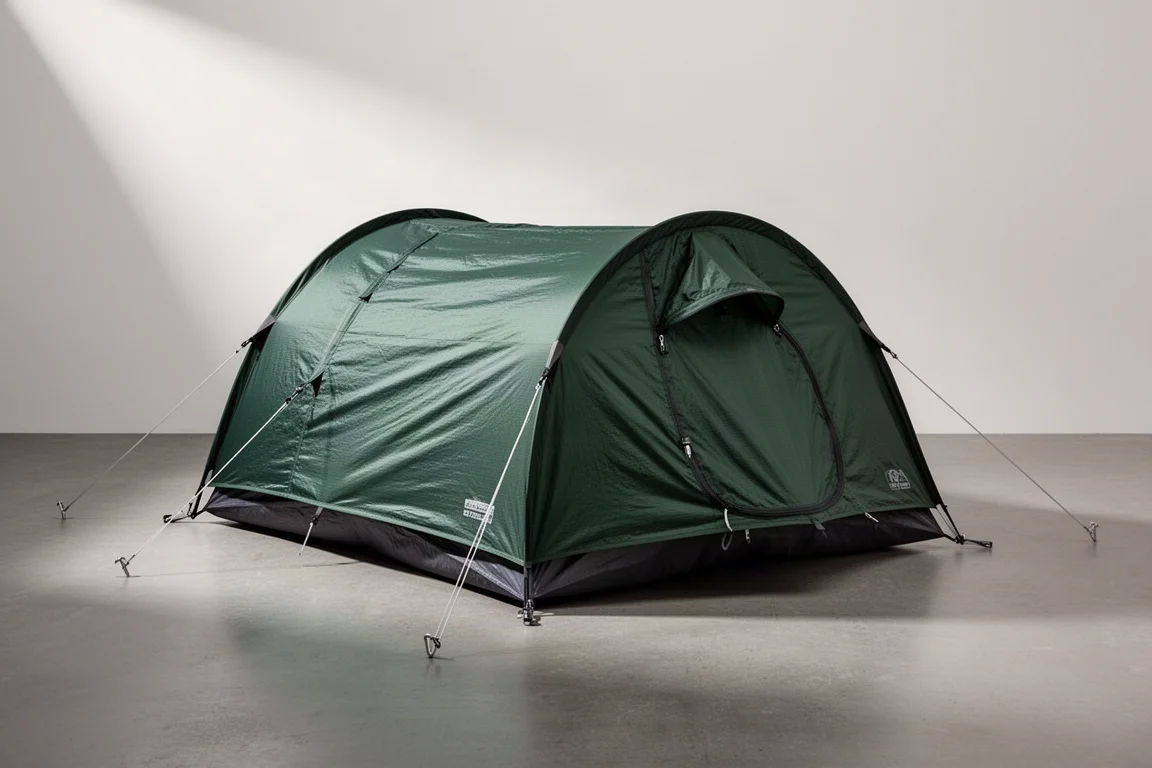
Four season backpacking tents exist for the months when a three season shelter stops being enough: hard frost, driving rain, snow underfoot and wind that shifts through the night. The Terra Nova Laser Compact All Season 1 is a new release that builds on the company’s earlier all season design, and it sits at the very light end of that category at a claimed 1.48 kg.
It is not a budget tent. It retails at £550, and that figure reflects both the materials and the way Terra Nova approaches production, keeping manufacturing local in the UK with a stated emphasis on environmental sensitivity. For anyone who would rather buy new from a brand with those priorities, that context is part of the value.
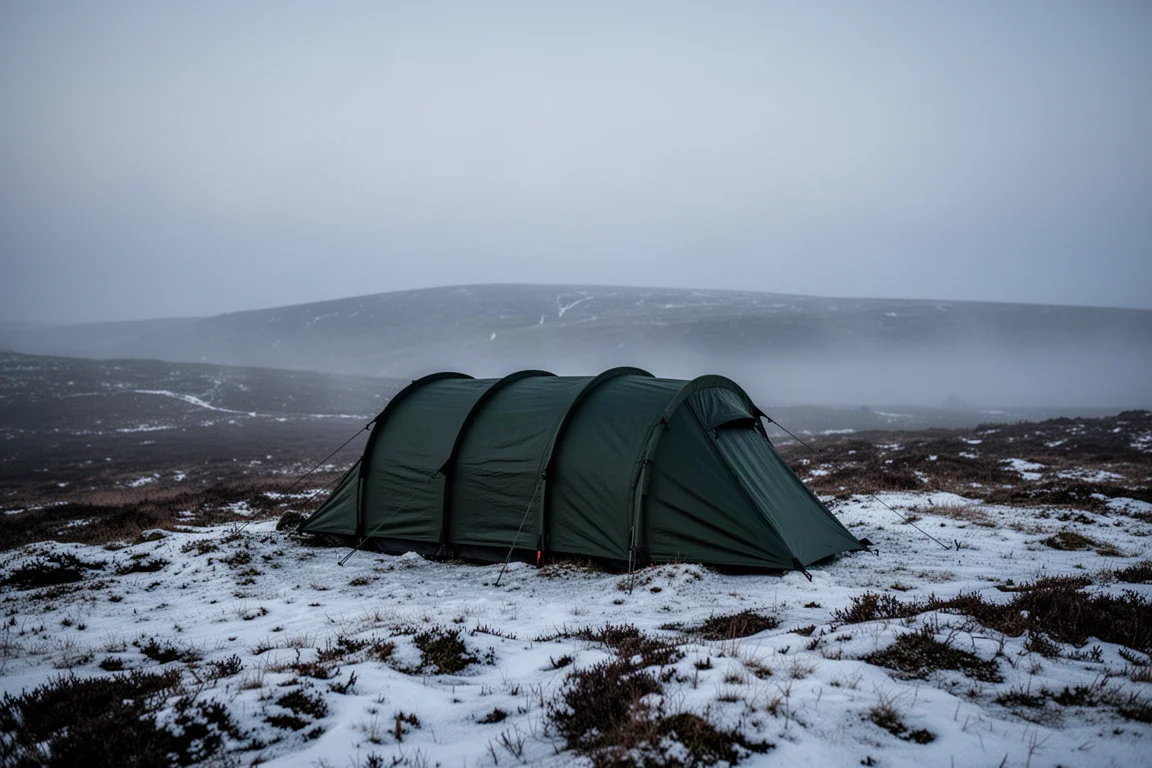
The tent is aimed squarely at year-round hill walking, lightweight backpacking and bikepacking trips where weight matters and the weather is expected to be genuinely unpleasant. It is a specialist tool rather than an all-purpose shelter, and the rest of this review explains where it earns its place and where it asks for compromise.
Who This Tent Is For
This is a shelter for people who plan to be out in winter conditions on purpose. Think exposed plateaus, open moorland in the colder months, wild camping where the forecast is uncertain, and multi-day routes where every gram in the pack is counted.
If your camping is mostly summer weekends on sheltered sites, the design choices here will feel like unnecessary compromises. The fly sheet reaches all the way to the ground, which is excellent against spindrift and heavy rain but traps more of the moisture you produce overnight. The interior is shaped for lying down rather than sitting up. Both are deliberate trade-offs for weather protection and low weight.
For the right user, though, the balance works. This tent has been used for roughly ten nights across cold and mixed conditions, and the verdict is that it is comfortable, confidence-inspiring, and a sensible weight-to-space ratio for one person travelling light. The people who will get the most from it are those who accept a little less room in exchange for a pack that stays manageable on long days.
Design and Weather Protection
The Laser Compact All Season 1 is a tunnel design with a dual skin construction. There is an outer fly sheet and an inner with the ground sheet attached, and the two can be pitched together or separately. Pitching the outer alone turns it into something close to a tarp shelter, which is useful for fast and light trips or for a quick lunch stop out of the wind.
The colour is a dark green, and that is a practical detail rather than a cosmetic one. For wild camping and stealth camping, a dark green fly blends into moorland, woodland edge and shadow far more readily than a bright technical colour, which helps when you would rather not be noticed.
Tunnel Geometry and Wind Loading
A tunnel tent uses a hoop or loop through the middle, with a pole at each end, so the structure rises into the centre and back down again. That shape allows for generous airflow, but it also means there is one large surface area facing the weather. Pitching direction matters a great deal. Get it wrong and the tent will be buffeted all night; get it right and the tunnel profile sheds wind efficiently.
Fabrics and Waterproofing
The fly sheet is 30 denier ripstop nylon with a hydrostatic head of 5,000 mm. Denier describes the density of the weave, so a 30 denier fabric is reasonably resistant to snags and cuts from rock edges, brambles or a boot eyelet. The ground sheet steps up to a 70 denier weave with a hydrostatic head of 10,000 mm, which makes sense given that it is the panel in constant contact with rough ground and, sooner or later, with a puddle of melted snow. Seams are taped throughout, which is a clear step up from the earlier Laser Compact generation.
The fly sheet runs to the ground to block spindrift and driving rain from being kicked up into your face. The flip side is condensation: in milder or humid conditions, the breath you produce has fewer places to escape, which is exactly why four season tents are best matched to four season conditions.
Poles, Pegs, and Pitching
Structure comes from three things: poles, pegs and guy lines. The centre pole is a DAC Featherlite alloy pole, chosen for low weight and a degree of flex that lets it move with the wind rather than fight it. The pole sleeve is deliberately built twice as wide as it needs to be, so a second set of poles can be added in genuinely severe conditions for extra rigidity. Only one set is included, but the option is there.
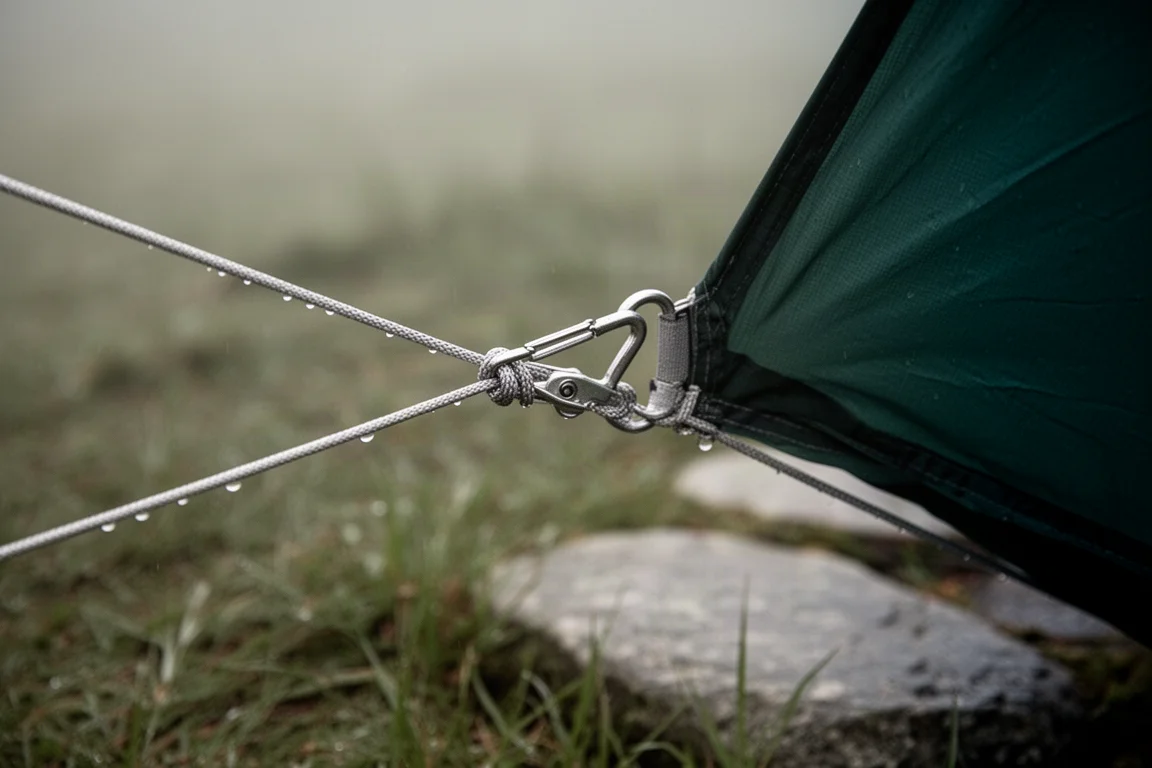
Two further alloy poles sit at either end of the tent. They can be left in place or removed, and leaving them in gives the packed tent a useful structure that you can roll the fabric around rather than stuffing it loose into a sack. The tent ships with 14 pegs at around 11 grams each in a classic hook design. They are lightweight and cleverly made, though lighter options exist if you want to swap them out. There are eight pegging points, matched by eight thin reflective guy lines with crocodile clip tensioners that slide and lock to set the tension you want.
One detail worth knowing before your first trip: the points that guy the inner out to the outer are elastic, and they are stretchy enough that it is easy to leave the inner slightly slack. If it sags it can touch the fly and get wet, so pegging out deliberately and checking tension takes a little practice.
Living Space and Ventilation
There is a single entrance on the side, covered by a rain hood over the zip. That hood can be opened from the top down to create a small vent, or from the bottom up for full access, and magnets hold the protective flap over the zip so rain is not forced through the teeth. It is a small feature that makes a real difference when you are getting in and out in bad weather.
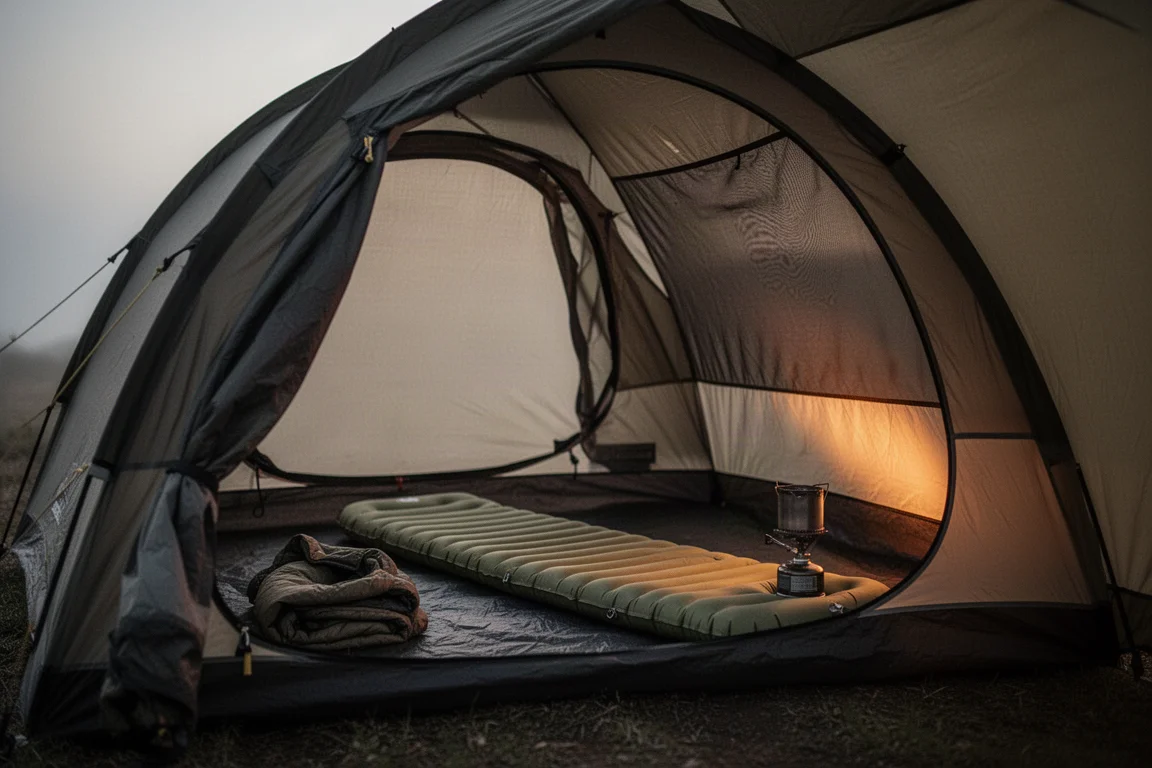
Inside, the inner has one very large side door, roughly half of which is mesh, plus a cover panel that can be tied back. There are mesh panels at both ends of the inner as well, and the outer has mesh windows that can be opened or closed. That combination lets you tune ventilation to the conditions rather than accept a single fixed setup, which is the best defence against condensation in a tent whose fly reaches the ground.
The porch gives you somewhere to put wet kit outside the sleeping area. A 48 litre rucksack fits comfortably, there is room for a small cooking setup, and boots can live there rather than outside in the weather. There is also a small side pocket inside for a phone or charger.
Height is the area where the compromises show. At 5 ft 7 in, sitting fully upright pushes against the top of the tent, so longer evenings are spent with a rounded back. Lying down is much better: feet at the bottom and a comfortable amount of clearance above, with space in front when lying on your side. Length is the limiting dimension rather than width, and anyone around six foot or using a large sleeping pad may find it tight.
Things to Consider Before Buying
- The price is high. At £550 this is a considered purchase, and Terra Nova’s local UK manufacturing and environmental stance are part of what you are paying for.
- Interior height is limited. Sitting up straight is not realistic for an average-height adult, which matters on long winter nights.
- Length suits shorter users best. Taller campers should test the fit before committing.
- Condensation builds if you use it outside its intended conditions. The ground-level fly sheet is a winter advantage and a summer annoyance.
- The elastic inner guying points need deliberate tensioning. Slack inner fabric can contact the fly and get damp.
- The supplied pegs are light but not the lightest. Some users will want to swap them.
- The weight saving comes from space and features. At 1.48 kg it is remarkably light for the category, but that is not achieved for free.
Buying Advice
The honest way to approach this tent is to start from your calendar rather than the spec sheet. If your trips genuinely run through winter, with snow on the ground and wind in the forecast, the Laser Compact All Season 1 makes a strong case: 1.48 kg, a 30 cm by 15 cm pack size, a tunnel profile that handles weather seriously, and fabrics that should last many seasons with reasonable care. For riders and walkers doing lightweight bikepacking or fast backpacking in cold conditions, the low weight is the headline.
If your trips are mostly three season, spend less and carry something roomier. This is a high-end, specialist shelter, and the sensible move is to check one in person, sit inside it, and see how the height and length feel for your body. Looking for a second-hand example through outdoor gear exchanges or borrowing one from your local outdoor community is a genuinely good way to test it on a real trip before buying new. The pack size is compact but not tiny, so think about where it will live in your rucksack as well.

Conclusion
The Terra Nova Laser Compact All Season 1 is a focused piece of kit rather than a crowd-pleaser. It trades sitting height, interior length and some condensation resistance for a very low weight, serious weather protection and durable fabrics, and it does so at a premium price.
For one person heading into cold, wet and windy conditions who values a light pack, that trade is a good one. For everyone else, it is simply the wrong tool, and there are plenty of other shelters that will suit better. Match it to the conditions you actually camp in, and it should serve you for a very long time.
Product link
View more details for Terra Nova Laser Compact All Season 1
This product is mentioned in the review. Check the specifications, options, and compatibility before buying.
View more details for Terra Nova Laser Compact All Season 1Further reading
Related Reviews
Backpacking Tents
3F UL Lanchan Pro 1 Review: A 1 lb 8 oz Single-Wall Trekking Pole Tent
A practical look at the 3F UL Lanchan Pro 1, a single-wall trekking pole shelter with a 1 lb 8 oz weight, 20D silnylon fabrics, and a roomy 90 x 31 x 49 inch interior.
Backpacking Tents
3F UL Taiji 2-Person Tent: A Convertible Backpacking Shelter Worth a Closer Look
A practical look at the 3F UL Taiji two-person tent, covering its materials, true two-person interior, fly-first pitching, and the seasonal inner swap that lets one shelter cover more of the year.
Backpacking Tents
3FUL Lanshan Twoerson Pro Review: A Light Trekking Pole Shelter That Struggled in Rain
A two-person trekking pole shelter with a 2026 redesign, pitched with sticks and put through a night of steady rain. Here is what worked, what did not, and what to check before buying.