Backpacking Tents
Terra Nova Laser Compact 2 Review: One Tent for All Four Seasons
A two-person, four-season backpacking tent with a 33 x 19 cm pack size, a 1,734 g all-in weight, and ventilation that stays usable through summer.
Introduction
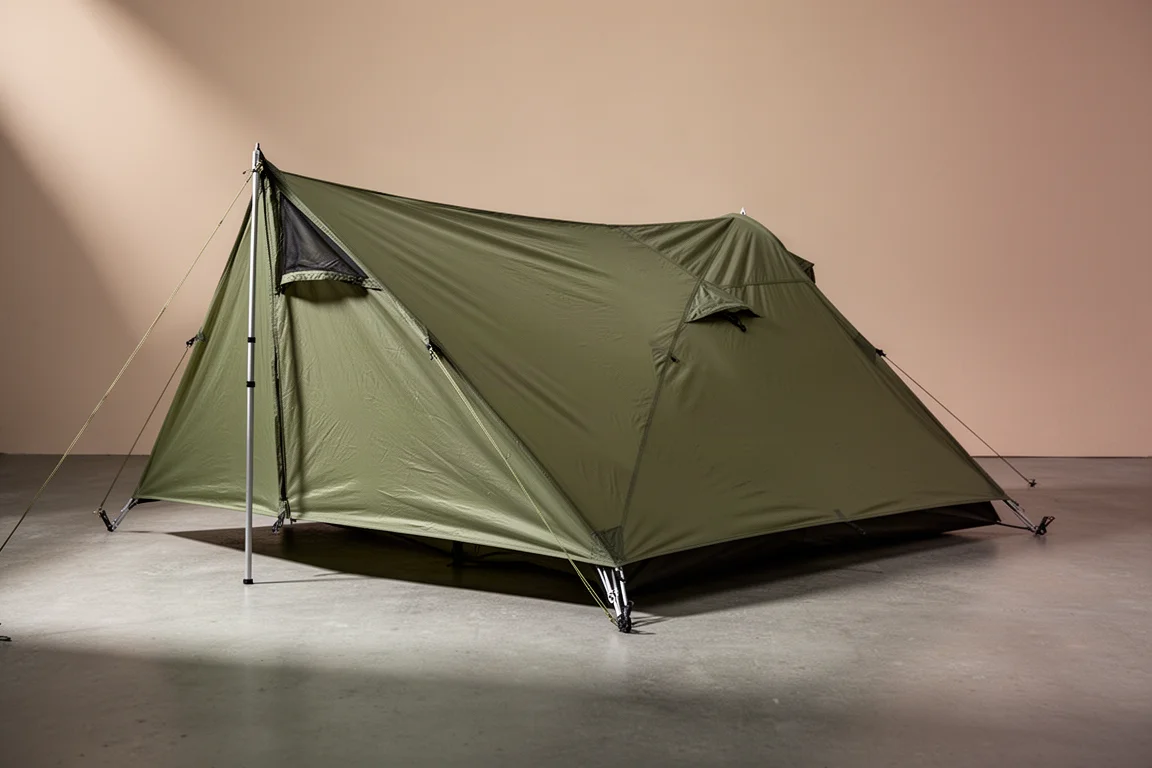
A four-season tent that stays comfortable in July is a genuinely difficult thing to design. Most shelters either seal up tight for winter and turn into a greenhouse in warm weather, or they breathe well in summer and leave you exposed when the temperature drops and the wind picks up. The Terra Nova Laser Compact 2 sets out to cover both ends of the calendar without asking you to own two tents.
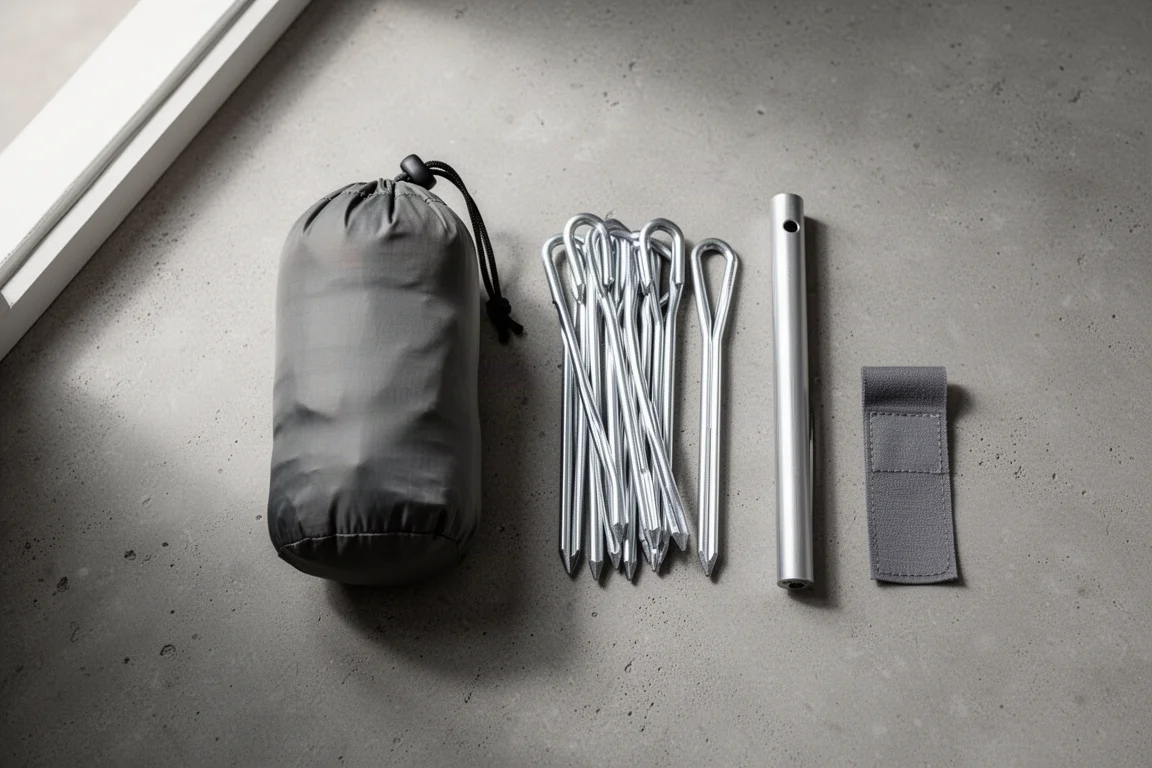
It is a two-person, all-season backpacking tent with a pack size of just 33 by 19 centimetres, which means it will slot into a smaller rucksack rather than forcing you into a larger pack. The complete package weighs 1,734 grams, and that figure already includes 14 heavy-duty pegs. For anyone counting grams on a multi-day route, that is a workable number for a shelter rated for year-round use.
The tent pitches inner and outer together, which keeps the sleeping area dry if you are putting it up in rain. In the bag you get a long main pole that runs through the centre of the tent, a short pole for each end, a pole repair tube, and the full set of pegs.
The pole set is worth noting on its own. The main pole is a 9 mm alloy section with a notably small packed length, and it slides into a thick, well-finished sleeve, so there is very little chance of a mis-threaded pitch on a dark, wet evening.
Who This Tent Is For
This is a tent for backpackers and wild campers who want a single shelter that works across the whole year rather than a summer tent plus a winter tent. The combination of a genuinely small pack size and a four-season rating is the main draw.
It also suits two people who use wider sleeping mats. The floor is 92 centimetres wide at each end and 110 centimetres in the middle, so there is room to spread out, and the 98 centimetre roof height in the centre means the inner is not pressing down on your head when you sit up.
It is less suited to anyone who treats the vestibule as a second room. If you carry a large pack, cook inside, and like to keep gear well away from the sleeping area, the storage here is functional rather than generous.
Four-Season Design and Weather Protection
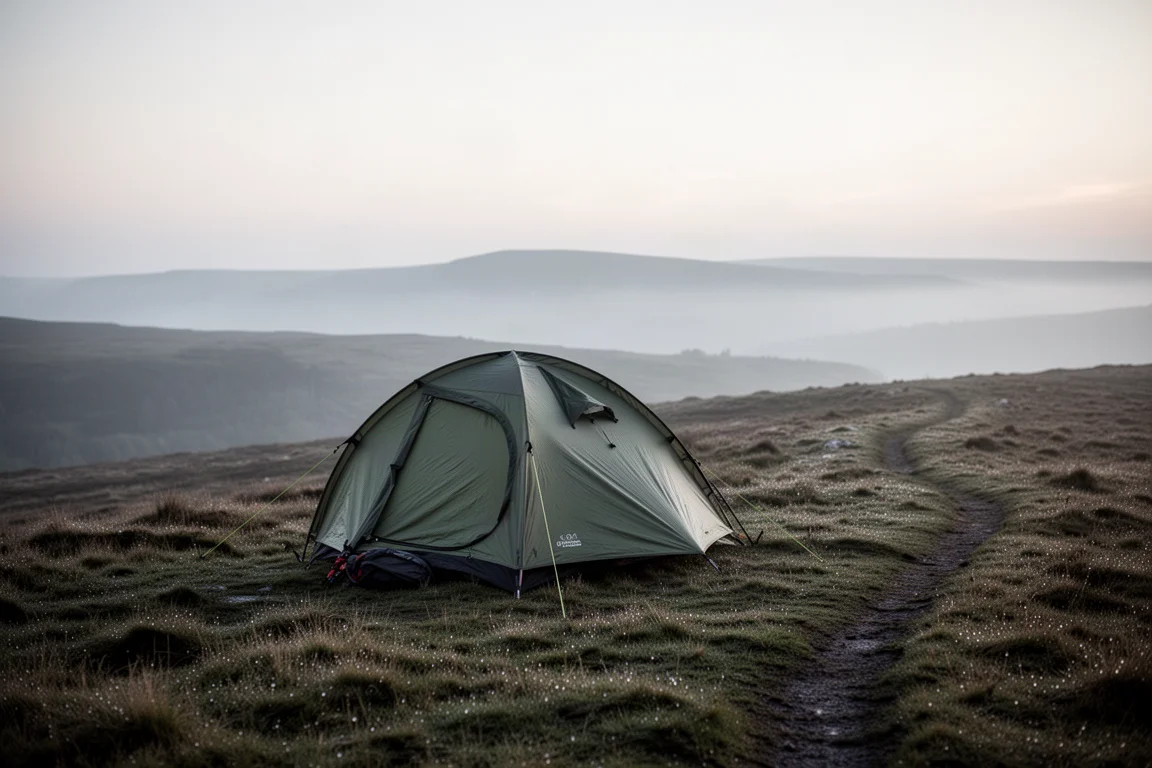
The structure is what gives this tent its year-round claim. There are three guy points at each end and a large one on each side, and the result is a shelter that is easy to tension properly. Plenty of tents are awkward to get truly taut, and this one is not among them.
The short end poles lift the ends of the tent and add rigidity where the fly would otherwise flatten out. Combined with the flysheet toggles that pull the fabric close to the ground, that gives a low, stable profile that can take wind, rain and snow without the walls collapsing inward.
The same toggles can be backed off in warmer conditions to lift the fly and open up airflow underneath, so the weather protection and the summer performance come from the same set of fittings rather than from separate parts.
Living Space, Height, and Interior Layout
The floor is 220 centimetres long, 92 centimetres wide at each end and 110 centimetres wide in the middle. Internal height runs at 48 centimetres at the ends and 98 centimetres in the centre. That shape, wide at both ends and wider still in the middle, is a good match for a wide sleeping mat and leaves a usable strip in the centre for clothing and smaller items.
There is a pocket at the door and a second pocket at the far end, and a small lantern hook at the top of the inner for a light. The inner door carries a large mesh panel, and the whole door can be pulled back when you want an open, airy feel.
The vestibule is 40 centimetres wide, which sounds modest, but it runs the full length of the tent instead of tapering into a triangle. In practice that means a backpack, a pair of boots, a cooking kit and a wet waterproof jacket can all sit outside the sleeping area, with enough room left to cook, and gear can be stowed at both ends.
Ventilation and Seasonal Flexibility
Ventilation is where this design separates itself from most four-season tents. There is a window in both the inner and the outer, and there are vents at both ends of the tent, which together create a genuine through-flow of air on warm nights.
The door can be configured two ways. Set up for winter, it closes down to keep cold air out. Set up for summer, the same door opens up with a large vent, and there is a further vent above the small canopy. Add the mesh panel in the inner door and you have a shelter that can be closed tight in a January storm and opened up in July without any compromise to the structure.
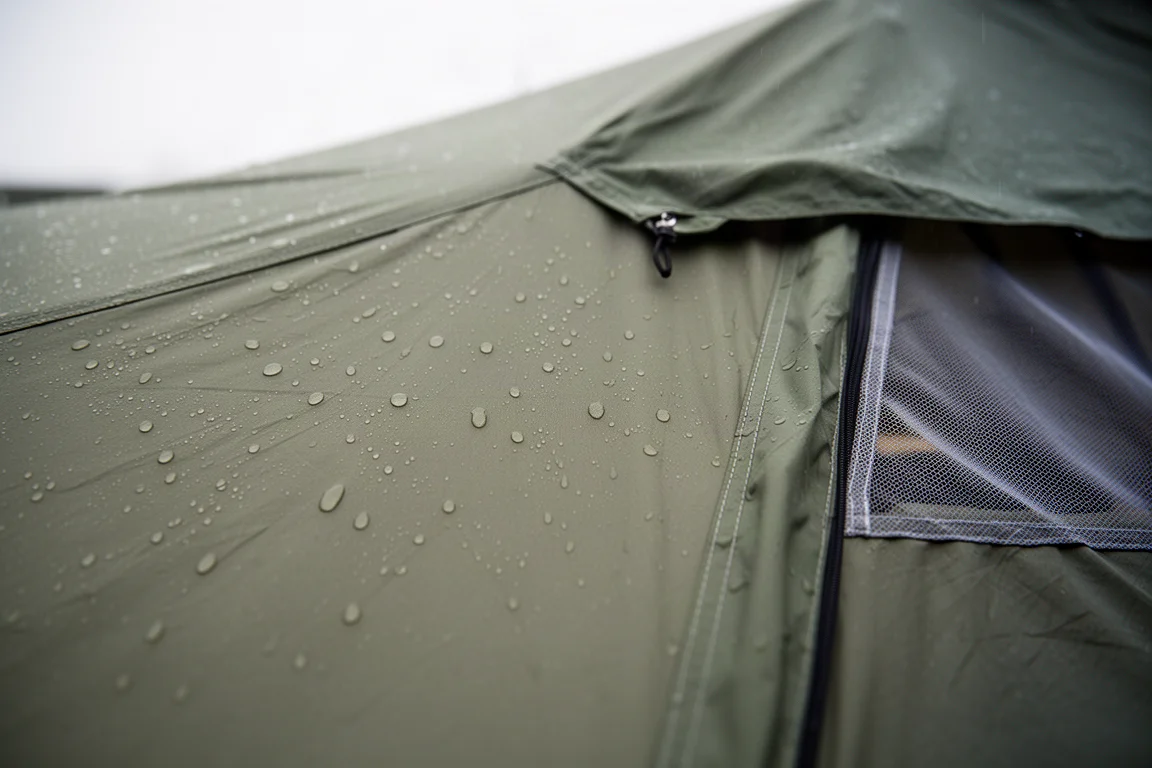
That flexibility is the reason the tent can be used straight through the year rather than being stored away once the cold passes, and it is a rare thing to be able to say about an all-season shelter.
Materials and Build Quality
The outer is a 30D fabric, the inner is also 30D, and the floor is a 70D bathtub. That is a sensible split: light and packable where weight matters, tougher where abrasion and ground moisture are the real risks.
Everything on the tent feels well made, from the pole sleeves and guy points to the fixings and toggles. There are also toggles that let you pull the inner out to the sides, which is a practical answer to the way these tents can sag slightly over time, and it lets you keep the inner walls clear of your sleeping bag.
Terra Nova builds tents to last, and the materials and finishing here reflect that. This is a shelter designed to be used hard for many seasons rather than replaced after two.
Things to Consider Before Buying
The vestibule is the most obvious trade-off. At 40 centimetres it is at its widest no more than that, and while the full-length shape recovers a lot of usable space, anyone who wants a big covered porch for two people and their packs will notice the limit.
The second point is the connection between inner and outer at the ends. They are joined with elastic cord rather than a single unified connector, and if you add a groundsheet you can end up with three elastic cords at each pegging point. It works, but it is fussier than the single-connector approach used by some other premium tents, and it is the one area that could be improved.
Neither issue undermines the tent. They are simply the compromises that come with the compact footprint, and both are worth knowing about before you commit.
Buying Advice
The tent lists at £690, and a discount currently brings that to around £550. At that lower figure it sits well clear of the upper end of the market, where some comparable four-season tents now approach the £1,000 mark. Given the build quality and the fact that one tent covers all four seasons, the value case is straightforward for anyone who camps year-round.
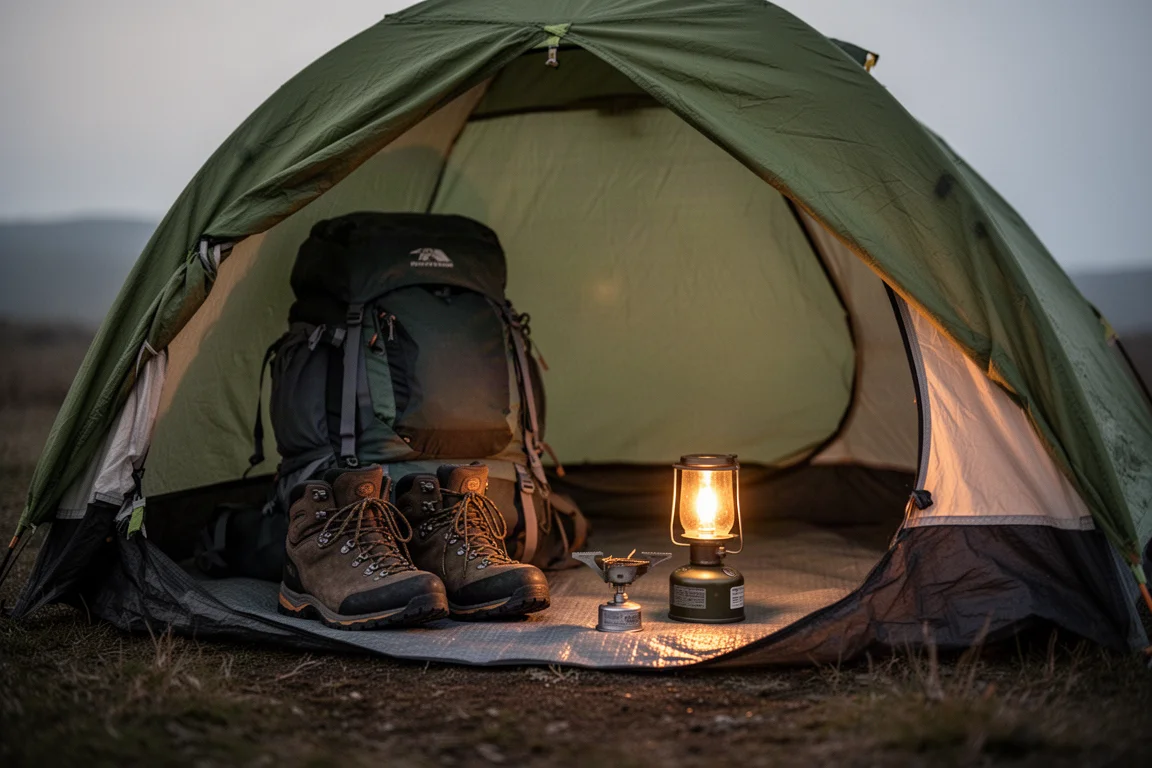
If your trips are mostly summer weekends, a lighter three-season shelter will save you weight and money. If you camp in the shoulder seasons and through winter, and you want the same tent to work in July, this is a much easier recommendation. It is also worth thinking about pack size before price: the 33 by 19 centimetre packed dimensions open up smaller rucksacks, which is a real benefit over a long route.
Conclusion
The Terra Nova Laser Compact 2 does the thing most all-season tents fail to do. It closes down properly for winter and opens up properly for summer, and it does it without a heavy penalty in weight or pack size.
The wide floor, the 98 centimetre centre height, the full-length vestibule and the quality of the materials all add up to a shelter that is easy to live with. The small vestibule and the elastic cord connections at the ends are fair criticisms, but they are minor next to what the tent gets right. For backpackers who want one tent to handle the entire year, this is a very strong option.
Product link
View more details for Terra Nova Laser Compact 2
This product is mentioned in the review. Check the specifications, options, and compatibility before buying.
View more details for Terra Nova Laser Compact 2Further reading
Related Reviews
Backpacking Tents
3F UL Lanchan Pro 1 Review: A 1 lb 8 oz Single-Wall Trekking Pole Tent
A practical look at the 3F UL Lanchan Pro 1, a single-wall trekking pole shelter with a 1 lb 8 oz weight, 20D silnylon fabrics, and a roomy 90 x 31 x 49 inch interior.
Backpacking Tents
3F UL Taiji 2-Person Tent: A Convertible Backpacking Shelter Worth a Closer Look
A practical look at the 3F UL Taiji two-person tent, covering its materials, true two-person interior, fly-first pitching, and the seasonal inner swap that lets one shelter cover more of the year.
Backpacking Tents
3FUL Lanshan Twoerson Pro Review: A Light Trekking Pole Shelter That Struggled in Rain
A two-person trekking pole shelter with a 2026 redesign, pitched with sticks and put through a night of steady rain. Here is what worked, what did not, and what to check before buying.