Snowboards
Telos DST Review: A Camber-Dominant All-Mountain Freeride Snowboard
A practical look at the Telos DST, its dual camber with tip rockers, its all-mountain freeride flex, and what to weigh before you buy.
Introduction
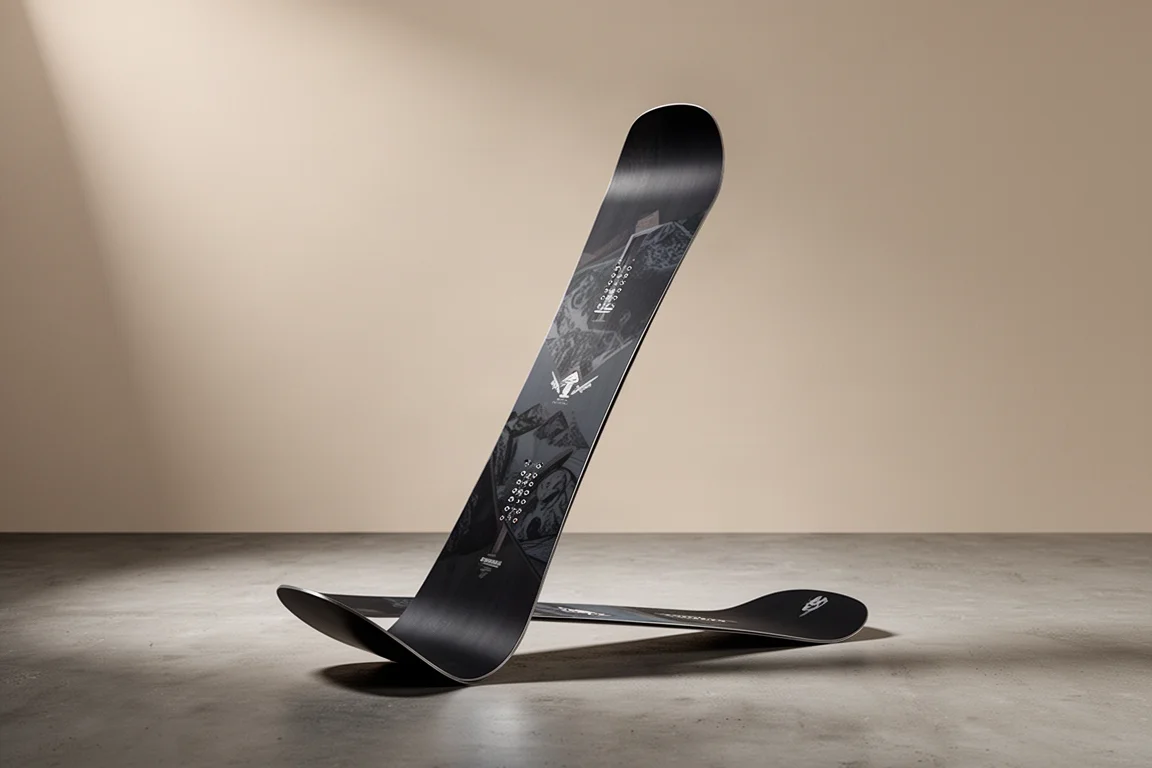
The Telos DST is a snowboard built around a dual camber profile that pairs a flattened center camber with rocker in the tip and tail. Telos describes the shape as cam rocker 2.0, and the logic behind it is easy to follow: the center camber supplies load, pop, snap, and drive, while the rocker zones in the nose and tail make it easier to enter and exit turns and improve float in powder. The board comes in 154, 158, and 162.
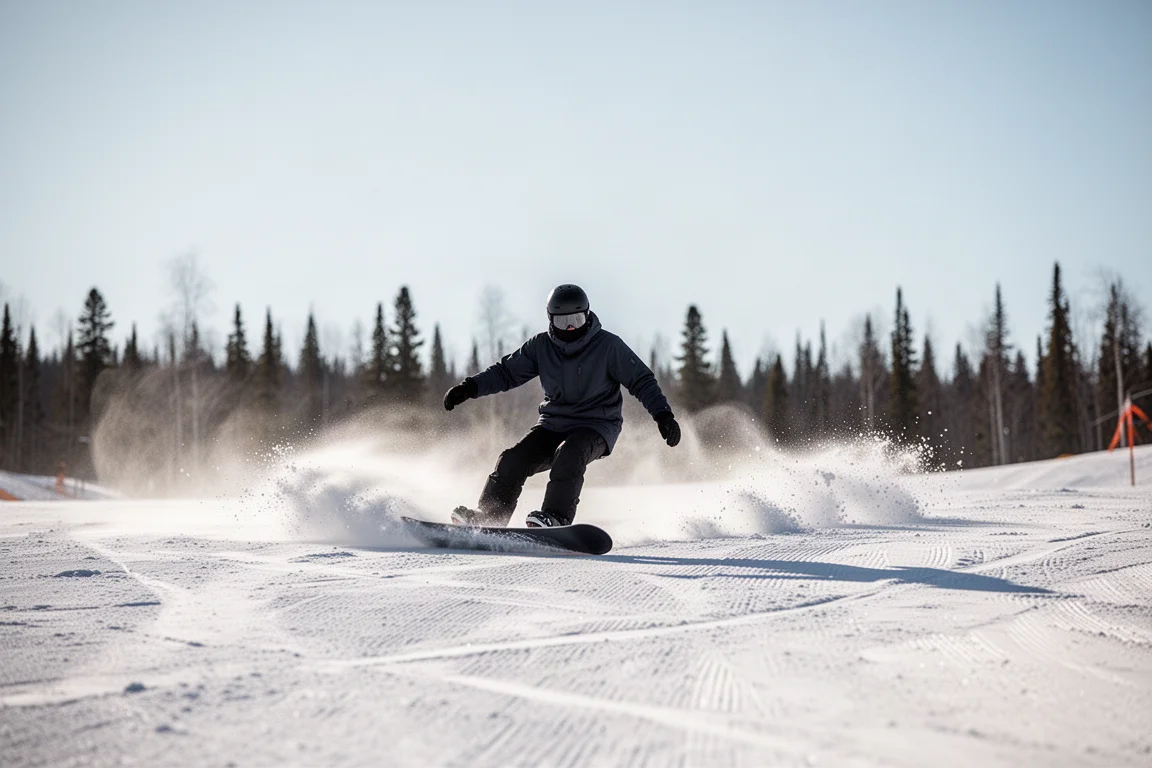
It was ridden across a wide mix of conditions, including sunny bluebird days with warm temperatures, slush, chop, chunder, firm fast groomers, and soft creamy groomers. That range matters, because the DST is positioned as an all-mountain freeride board rather than a specialist, and the interesting question is whether it genuinely handles that spread of terrain or only claims to.
Who This Board Is For
The DST is aimed squarely at the all-mountain freeride rider. Its flex sits past the middle of the road for that category, so it rewards a rider who wants a board that can be charged hard without demanding full commitment on every run. If your days are split between groomed runs, natural features, and soft snow, the mix of camber grip underfoot and rockered contact points at the ends lines up well with that routine.
Riders moving up from an entry-level all-mountain deck will notice more support underfoot and more energy coming out of turns. Riders coming from a dedicated park board may find it stiffer than they expect, particularly through the middle of the board.
It also suits riders who like to change pace within a single session rather than specialize in one style of riding.
Camber Profile and Flex
The rocker zones in the tip and tail are the softest part of the board. As soon as the profile transitions into the camber section underfoot, it stiffens up dramatically. Torsional flex tracks that same pattern, so the board twists more readily toward the ends and holds firm through the middle.
The result is a fairly predictable feel. The ends stay forgiving where you want easy turn initiation and better float, and the center stays supportive where you want edge hold and drive. That transition point, where the rocker meets the camber, is the part of the board you end up riding around most of the time, because it defines how the DST loads and releases.
Stability and Snow Feel
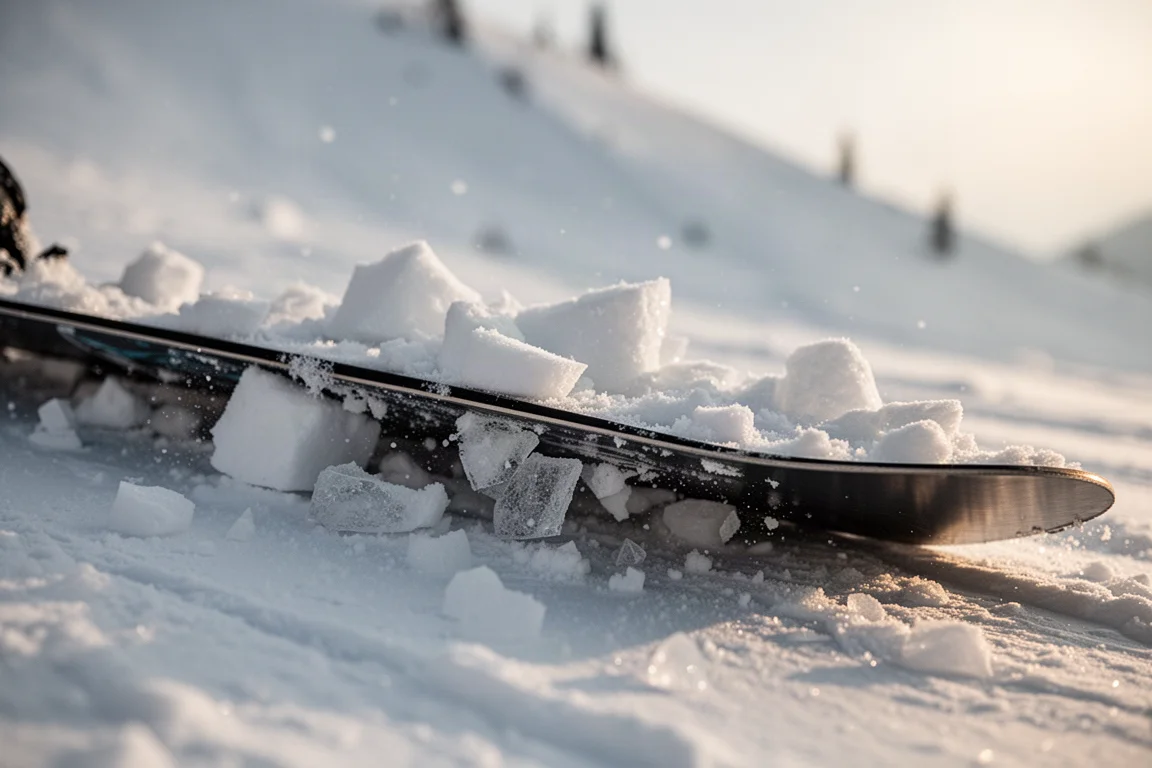
Because of the rocker in the tips, you will get some chatter up there. By and large it does not resonate back underfoot, so the ride stays composed even when the snow surface is not. On firmer snow the board tends to skip across undulations rather than get knocked off line.
The exception is a genuinely hard, jarring impact, the kind you get from a chunk of ice or a buried obstacle. You will feel that, and it is the one situation where the DST can buck you. Otherwise it stays smooth in uneven terrain, and the camber section keeps the ride from feeling vague.
That balance is the core of the board’s character: lively at the ends, settled through the middle, and honest about the limits of a rockered tip.
Carving and Edge Hold
The DST can carve, and it brings real power to the job. Edge transmission is fluid, and because there is so much support through the camber section, you can drive hard into the middle of the board and push off the tail to lay a trench. Short, tight, quick carves, medium mellow carves, and deep aggressive carves are all within reach, and the board slingshots in and out of turns when it is up on edge.
On edge you can also use a bit of ankle flexion to change the angulation of the carve without losing the platform underneath you. Overall, this is a board that rips a turn when the rider asks it to.
Playfulness, Buttering, and Pop
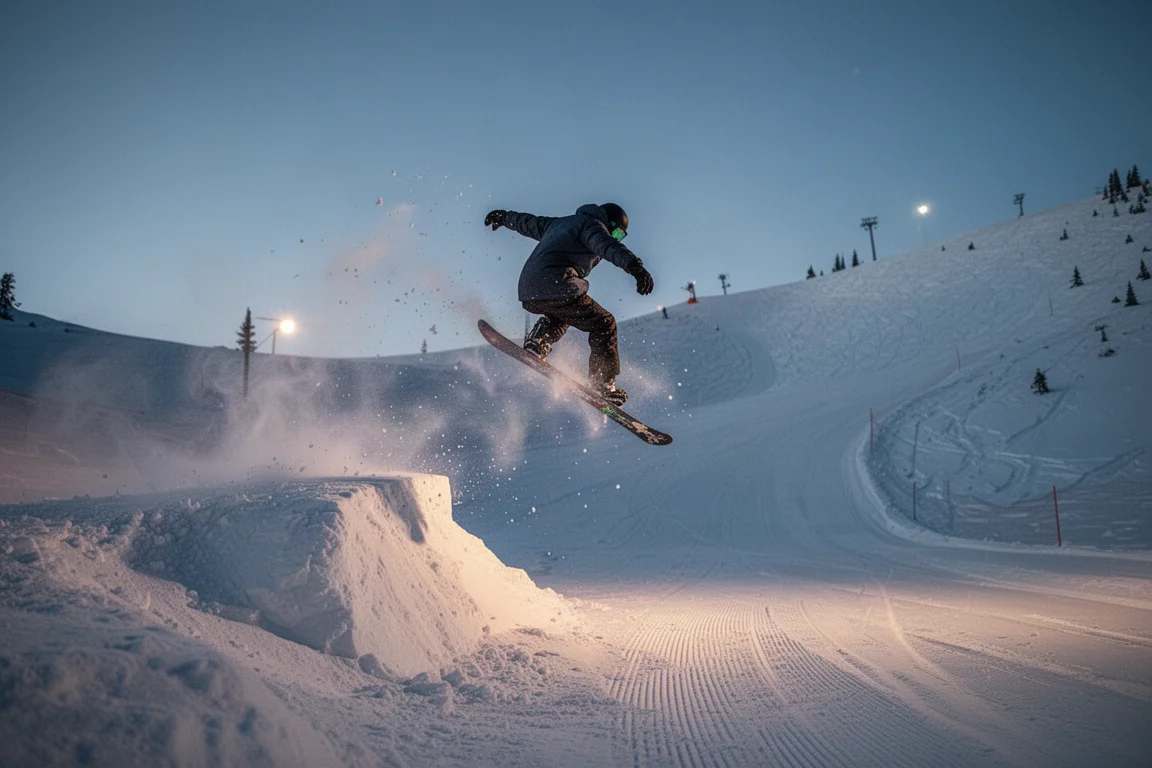
The rocker in the tail acts like a springboard. When you load the camber through the middle and roll back, you hit the flex point right where the rocker meets the camber, and the board springs from there. That makes side hits, cat track gaps, and rollers easy to launch without much setup, and popping off a roller is not something you have to think about.
Buttering takes a little more work. There is some fight from the camber section and the flex, but when you shift your weight well outside the bindings and really leverage the nose or tail, the board goes sideways and pushes soft snow out of the way like a spatula. You just need to be aware that the resistance is there, because you will snap and pop out of whatever you are doing rather than settle into it.
For riders who want a board that is playful without being loose, that combination of springy release and firm center is the main appeal.
Things to Consider Before Buying
Out of the wrapper, this particular board felt a little hooky, most noticeably right inside the inserts and directly underfoot. That feeling faded the more it was ridden and became less of a concern over time. It was also possible the board had been slightly twisted coming out of the press, which would explain the behavior, and because this was a sample it may not reflect a production board.
It was checked from every angle and laid flat, and no edge was visibly sitting higher than the other. The most likely explanation is that the board simply broke in and settled into its natural shape, which would account for the hooking dissipating. Worth knowing before you buy: if a fresh board feels hooky in the first days, it may well calm down, but it is something to keep an eye on rather than ignore.
The other practical point is impact comfort. Firm, jarring hits transmit through, so riders who spend most of their time on bulletproof snow should factor that into the decision.
Buying Advice
Matching the DST with the right binding makes a difference. Bindings such as the Rome Cleaver, the Now Select Pro, and the Nitro Phantom are sensible pairings for the board’s all-mountain freeride flex. If you are cross-shopping, boards in a similar space include the Nitro Super Team, the Yes Pick Your Line, and the Niche Aether.
Sizing across 154, 158, and 162 gives a reasonable spread for different rider weights and preferences. Riders who want the springiest feel out of the tail should lean toward the shorter end, while riders who want more float and more stability at speed will get more out of the longer options.
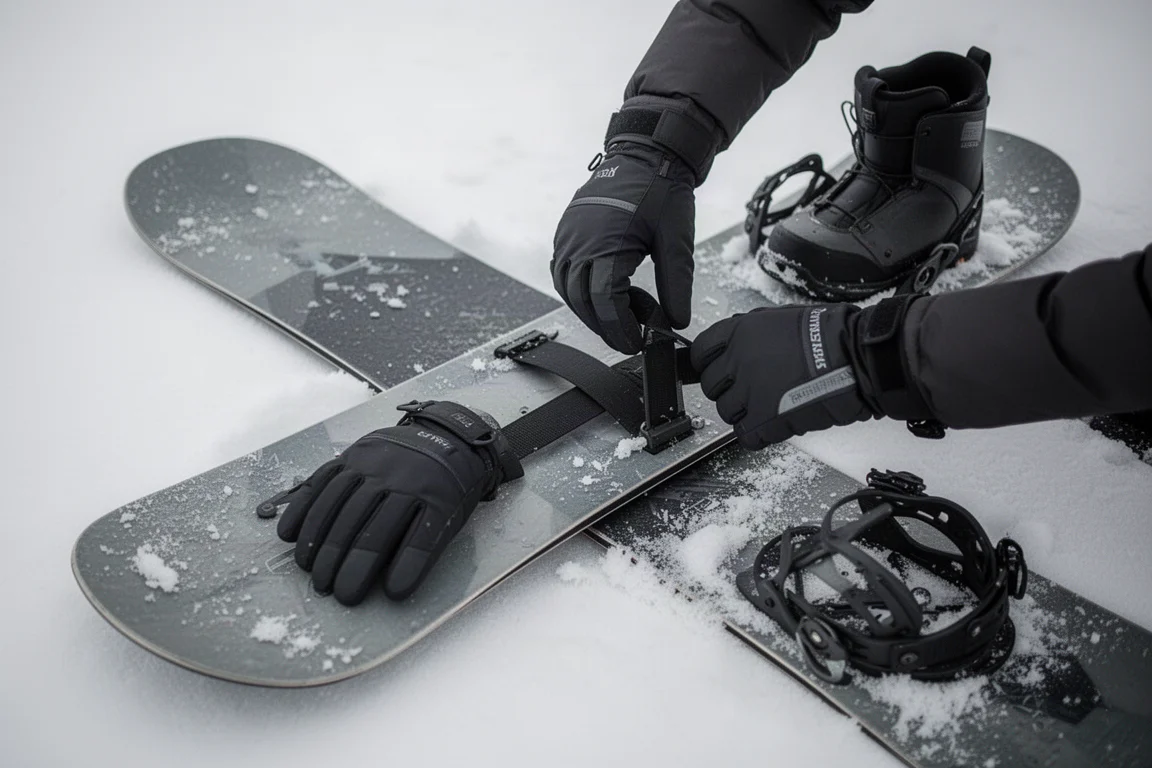
The DST is consistent in what it delivers: load and pop that is easy to engage off the tail rocker, a turn that holds when you push it, and a smooth ride across mixed terrain. You can charge on it, or you can take it easy, and it does not punish you for either choice. It is also a shape that stands out on the hill, which is part of the appeal for riders who like something a little different under their feet.
Conclusion
The Telos DST makes a clear case for itself as an all-mountain freeride board. The dual camber profile with tip and tail rocker gives it easy turn entry, useful float, and a springy release off the tail, while the camber section underfoot provides the grip and drive that make it worth pushing. The trade-offs are honest ones: some chatter in the tips, hard impacts you will feel, and a slightly hooky first impression that faded with riding.
If you want a board that can be ridden aggressively on groomers, launched off natural features, and floated through soft snow without giving up stability, the DST belongs on your shortlist.
Product link
View more details for Telos DST
This product is mentioned in the review. Check the specifications, options, and compatibility before buying.
View more details for Telos DSTFurther reading
Related Reviews

Snowboards
32 Middle Earth Scott Stevens Pro Model Snowboard Review: A Park Board With a Reversed Flex
A medium traditional camber park board with carbon V reinforcement that is stiffer in the tips and more playful between the feet. Here is how it rides and who it suits.

Snowboards
32 Snafu Review: A Directional All-Mountain Freestyle Board with Serious Pop
The 32 Snafu pairs a directional camber-rocker profile with a stiffening tail for powerful carves, big ollies, and a surprisingly damp ride.

Snowboards
32 XXX Pat Fava Pro Snowboard Review: A Stiff Camber Beast for Hard-Charging Riders
A full-width traditional camber deck that rewards aggression with stability and edge power, but demands effort everywhere else.