Snowboards
32 Middle Earth Scott Stevens Pro Model Snowboard Review: A Park Board With a Reversed Flex
A medium traditional camber park board with carbon V reinforcement that is stiffer in the tips and more playful between the feet. Here is how it rides and who it suits.

Introduction
The 32 Middle Earth Scott Stevens Pro Model Snowboard is not a board that tries to be everything. It is a park-oriented freestyle deck built around one distinctive idea: a flex pattern that behaves differently under your feet depending on how you pressure it. That idea is its greatest strength and the source of nearly every trade-off, so understanding it before buying matters more than with most boards.
Availability covers a wide spread of sizes, including 149, 152, 155, 156, 157, 158 wide, and 159, so most riders should be able to find a length that fits.
The Flex Pattern That Makes It Unique
The core talking point of this board is the flex. Even though it sits at a middle-of-the-road park flex overall, carbon fiber V inserts create a split personality: stiffer in the tips, more playful between the feet. Press your weight out over the nose or tail and you get a stiffer platform to push into that locks in and holds from inside the insert packs. Bend your knees in and pressure the center instead, and the board suddenly has more play and bends more easily between the feet.
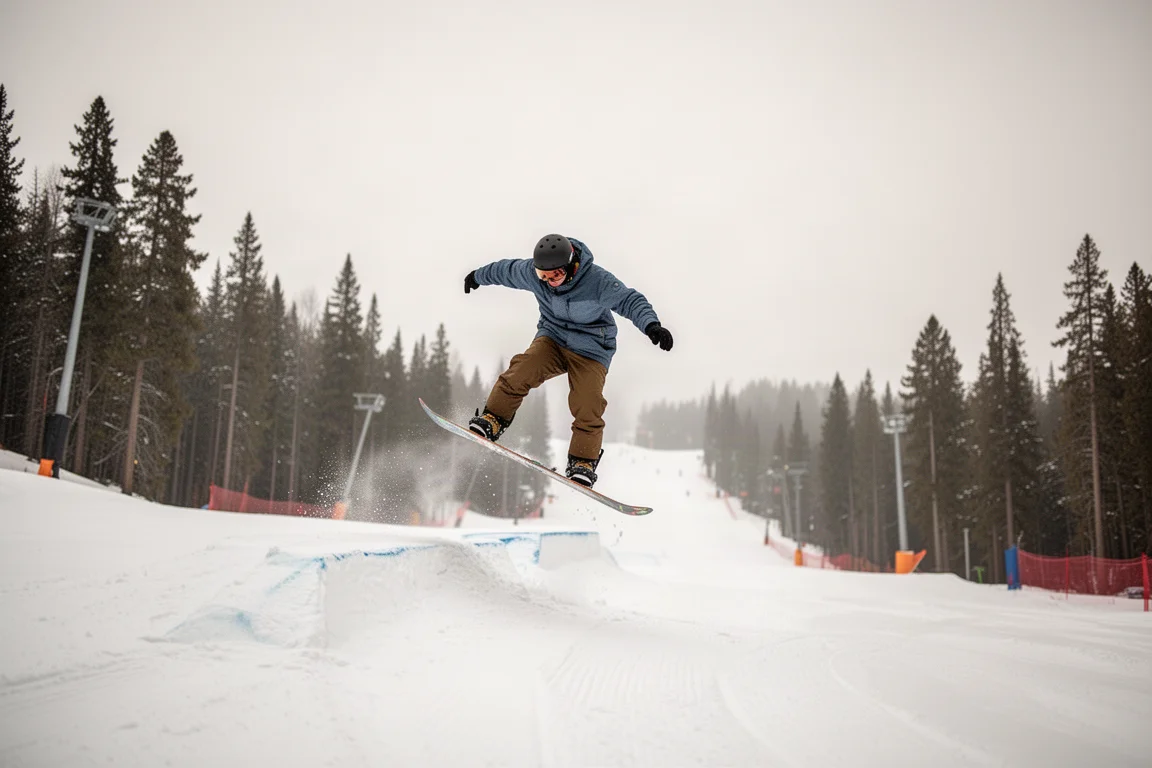
This split changes how torsional flex engages too. You get more ankle steering and the ability to twist the board right underfoot while keeping stability at speed. The carbon also dampens chatter at the front foot in choppy terrain, although you do still feel it between the feet, especially on things like death cookies.
The catch is a learning curve. If you ride it the way you would any other park board, it can feel strange at first, and it may take half a day or more to adjust how you activate presses and play. Once that clicks, the design makes sense: you push powerfully into the tips and keep the playful stuff between your feet.
Camber, Pop and Launching
Underneath it all is a medium traditional camber. From contact point to contact point you get that classic arc, which delivers load, pop, power, snap, and drive. You do have to load it up, but it does not fight you, and it is predictable and easy to engage if you already know how to ride camber.
Roll back on the tail and you activate the carbon fiber Vs, producing solid snap. Cat track gaps, side hits, and rollers all come off easily without requiring any special technique. If you load the board coming off a transition, you snap higher and travel a little further, and even if you just let the transition throw you, the carbon in the tail still kicks you out.
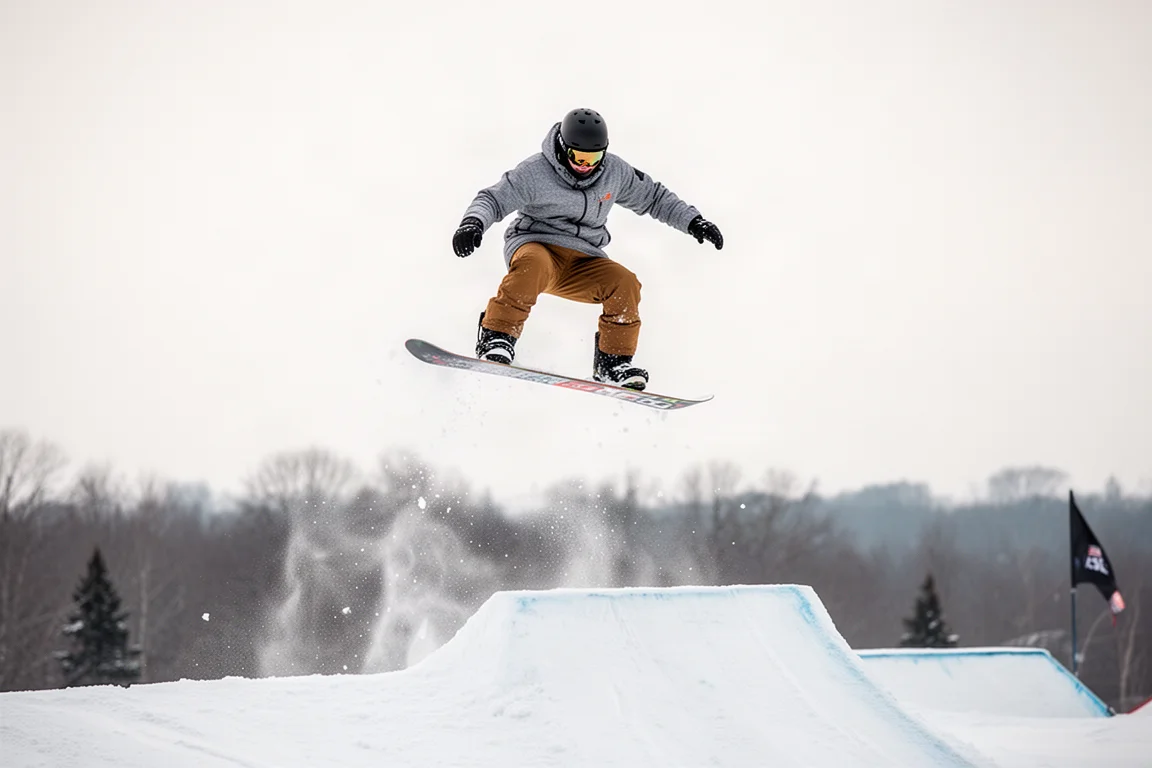
Landings have one quirk worth knowing: because of the extra play between the feet, landing deep on the tail lets the board roll forward, and if you are really on your back foot you will feel it bending more before it slaps down. It is not a dealbreaker, but it is the one slightly odd sensation.
Jibs and Presses
This is where the reversed flex really pays off. Lock into a press with your weight over the nose or tail and the carbon activates, then the camber snaps you off the feature. Approach sideways and the extra flex between the feet lets the deck cradle around rails and boxes, locking in and holding.
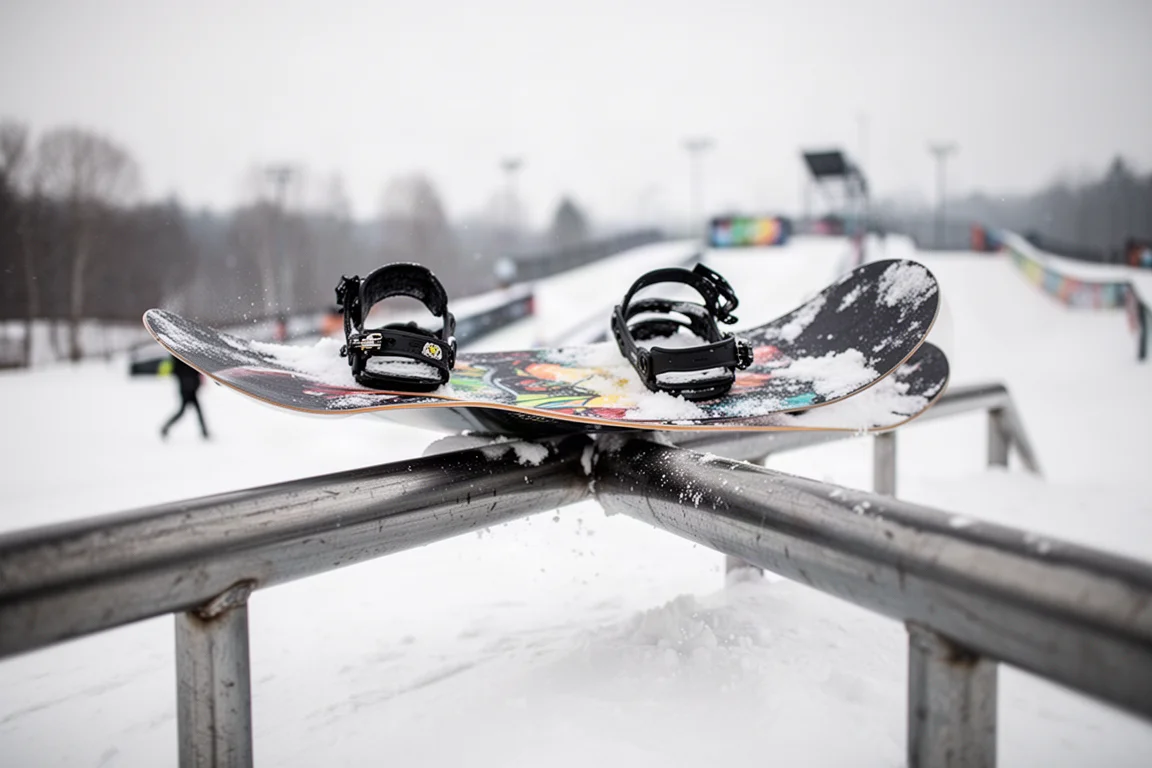
One honest caveat: heavier riders coming down hard onto features from above may feel like they are bottoming the board out and dragging the tips. Rider weight genuinely plays a role in how much play you get between the feet.
Jumps and Side Hits
Small to medium jumps are the sweet spot. Bigger jumps are possible, but that is simply not what this deck is built for. Off the lip, the carbon V activation gives you a reliable launch whether you load the transition or not, and forgiving landings between the feet help absorb the small mistakes.
Carving and Turning: The Weak Spot
This is the one area where the board genuinely stood out as lacking. Short, tight, quick carves between the feet are fine thanks to the ankle steering, but medium-length carves feel drawn out. There is power out of the tips, yet the camber and flex pattern do not want to let you push in and then slingshot off the tail. Really laying the board over onto edge is hard to achieve.
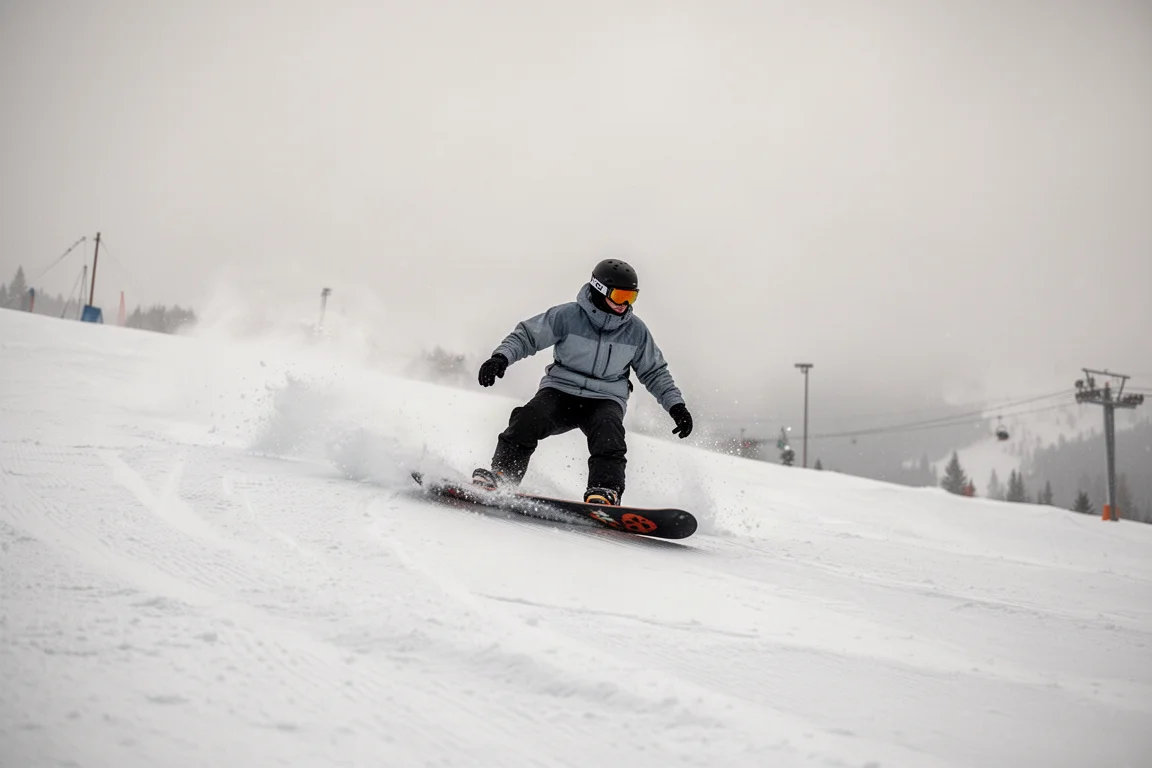
For a freestyle-focused rider, this limitation rarely gets in the way of setting up a park feature, and it is arguably just not what the board is designed for. The side cut being a little less aggressive than ideal is the main personal gripe, and riders with a more carving-heavy style should factor that in.
Who This Board Is For
The intended rider is someone who wants a slightly reversed flex park board: stiff enough in the tips to push hard and stabilize presses, playful between the feet for buttering and jibbing. If you naturally ride with power out to the tips and play in the middle, this design will click almost immediately. If you prefer to be lazy with your presses or you want a board that carves aggressively, look elsewhere.
Buying Advice
If you pick this board up, plan to spend some time finding where its limitations are, then get creative from there. It is not a bad board; it is a unique board, and going in with that understanding is the difference between loving it and fighting it.
Helpful complements mentioned alongside it include comparable boards such as the Capita Ultrafear, the Rome Party Mod, and the K2 Medium, plus binding pairings like the 32 Team Phase, the Rome Katana Asym Wrap, and the K2 Bond. And the graphic? Widely considered genuinely sick, which never hurts.
Conclusion
The 32 Middle Earth Scott Stevens Pro Model is a thoughtfully engineered park board that rewards riders willing to adapt. Strong snap, stable presses, excellent jib performance, and a distinctive flex character, offset by limited carving ability and a short adaptation period. If reversed-flex freestyle sounds like your style, it deserves a serious look.
Product link
View more details for 32 Middle Earth Scott Stevens Pro Model Snowboard
This product is mentioned in the review. Check the specifications, options, and compatibility before buying.
View more details for 32 Middle Earth Scott Stevens Pro Model SnowboardFurther reading
Related Reviews

Snowboards
32 Snafu Review: A Directional All-Mountain Freestyle Board with Serious Pop
The 32 Snafu pairs a directional camber-rocker profile with a stiffening tail for powerful carves, big ollies, and a surprisingly damp ride.

Snowboards
32 XXX Pat Fava Pro Snowboard Review: A Stiff Camber Beast for Hard-Charging Riders
A full-width traditional camber deck that rewards aggression with stability and edge power, but demands effort everywhere else.
Snowboards
Amplid Cab Driver Review: A forgiving twin for park laps and spring days
The Amplid Cab Driver is a cam-rock twin with soft-but-stable flex, easy butters, and enough snap for small and medium park features. Here is how it actually rides.