Hi-Fi Components
TEAC VRDS-701 Review: A Premium CD Player Built for Discs and Streaming
A detailed look at the TEAC VRDS-701, a high-end CD player with an in-house disc clamping transport, a discrete DAC, and digital inputs for streaming sources.
Introduction
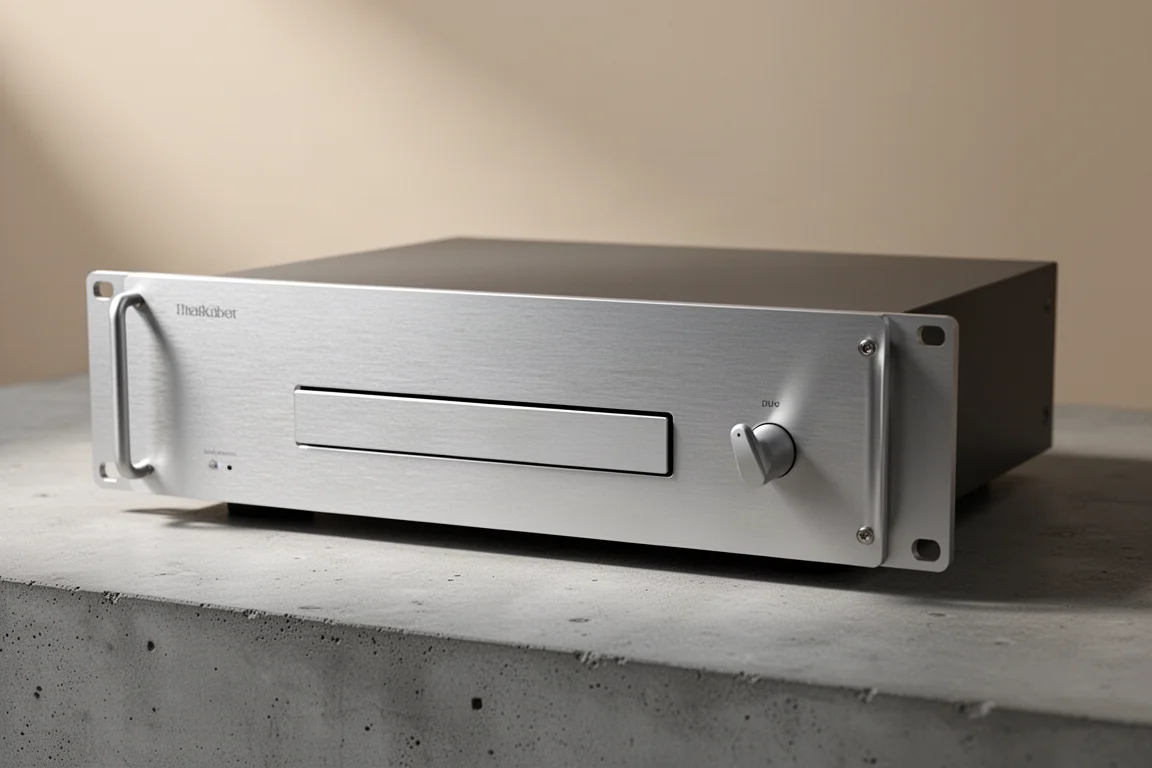
The TEAC VRDS-701 is a high-end CD player with a list price of around €2,500, and it arrives at a moment when physical discs have become interesting again to listeners who care about sound quality. What sets it apart is not simply the tray or the chassis. It is the combination of a purpose-built disc transport, a discrete digital-to-analog converter designed and built in-house, and a full set of digital inputs that let the player sit at the centre of a system that also streams.
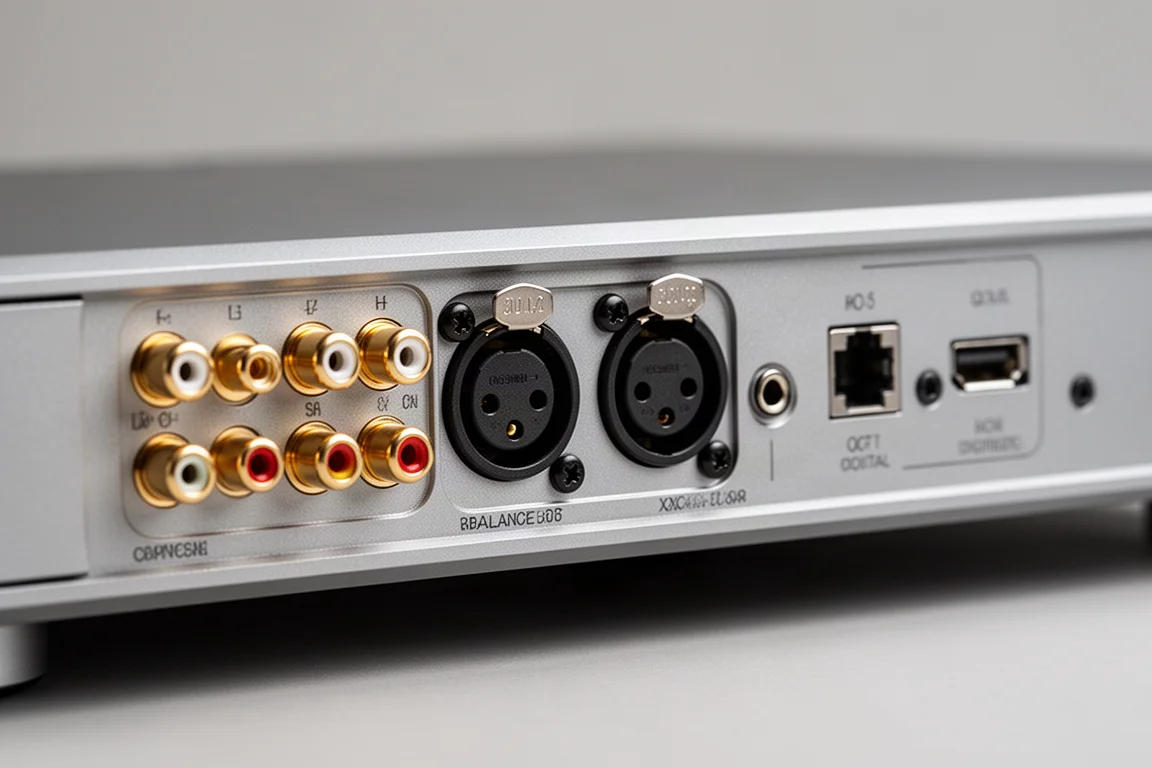
That last detail matters more than it might first appear. Many CD players offer an analog output and very little else. The VRDS-701 provides balanced and single-ended analog outputs, coaxial and optical digital outputs for feeding an external converter, and coaxial, optical, and USB digital inputs for bringing other sources into the player.
Who This CD Player Is For
This is a player for listeners who already own a substantial CD collection and want to hear more of what is on those discs. It also suits anyone who wants to improve the sound of a streaming source without adding a separate high-end converter, because the digital inputs let a network streamer pass its signal through the VRDS-701’s own conversion stage.
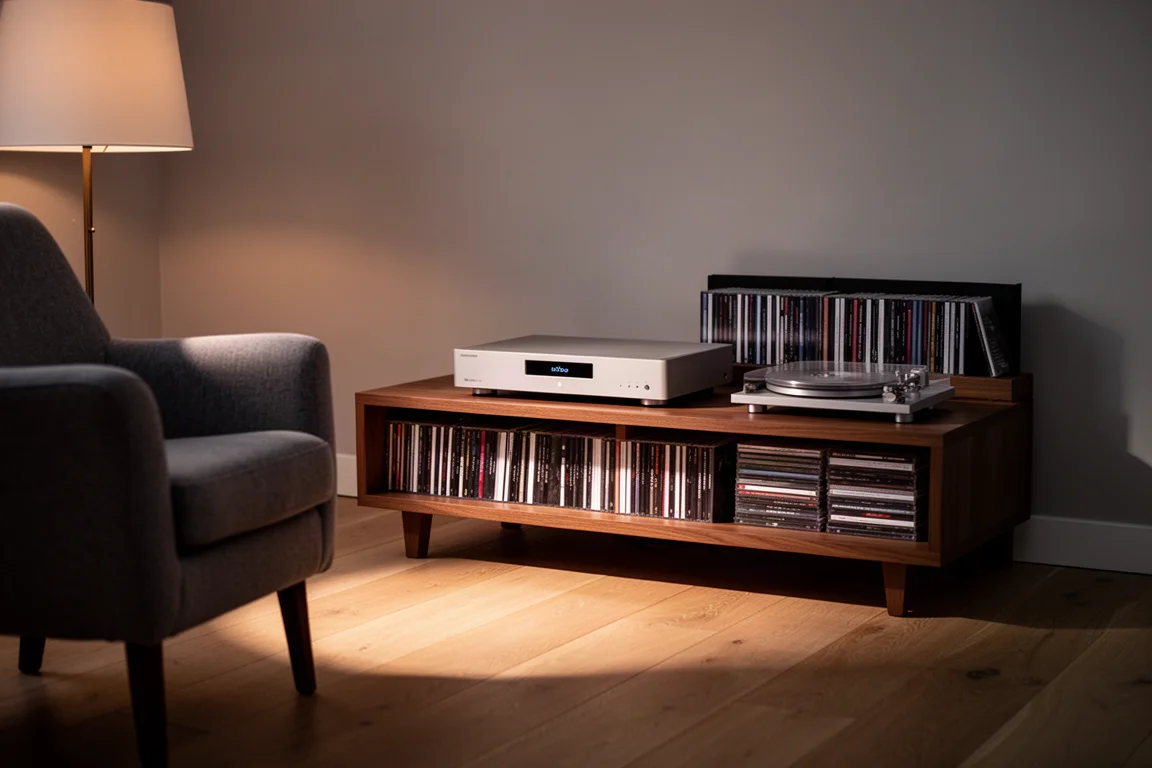
It is not aimed at someone who is perfectly happy with a basic disc player feeding an entry-level converter. At around €2,500, the VRDS-701 sits in a bracket where the improvements are real but measured, and where the rest of the system needs to be resolving enough to reveal them.
Main Strengths
The strengths here fall into three areas: the disc transport itself, the conversion stage, and the connectivity.
The VRDS Disc Clamping Mechanism
VRDS stands for vibration-free rigid disc clamping system, a long-standing in-house design. Rather than resting a disc on a conventional spindle, the mechanism clamps the CD against an aluminium turntable inside the machine, with the aim of reducing vibration during playback. It is not a third-party transport bought in from elsewhere, and units sold in the United States and Canada receive an aluminium version of the assembly.
Loading happens through a slide-out tray. That tray feels a little fragile when it is fully open, but it remains preferable to a slot-loading mechanism for anyone who likes to see and handle the disc.
An In-House Discrete DAC
The converter is just as distinctive. It is a delta-sigma design, but it is built as a discrete circuit rather than around an off-the-shelf chip from a third-party supplier, and it was designed and built in-house in Japan. The player itself is manufactured in China, which is worth knowing if country of origin matters to you.
On dense, layered recordings this conversion stage holds together well. Fed digitally from a network streamer, it can sound more coherent on busy material than the converter inside the streamer itself, and it avoids the lean quality that some affordable converters bring to the midrange. There is a sense of weight and body to voices and instruments that makes long listening sessions comfortable.
Digital Inputs and Streaming Flexibility
Connectivity is where the VRDS-701 separates itself from most rivals. Alongside the analog outputs, it offers coaxial and optical digital outputs and, unusually for a CD player, coaxial, optical, and USB digital inputs. A streaming source can therefore be connected directly and routed through the player’s converter.
Getting a network stream into the player does not require expensive hardware. A small single-board computer running a network bridge and connected over USB is enough to feed the player, so a modest streaming setup can benefit from a considerably better conversion stage. Sources that support a network streaming protocol can also be connected digitally, which keeps the signal path simple.
Listening Notes and Side-by-Side Comparisons
The VRDS-701 sounds open, alert, and detailed. Its top end is finessed rather than forward, and it gives a clear view of small details in a mix without tipping into harshness. On a well-recorded album such as Steely Dan’s Gaucho, that blend of clarity and control is easy to appreciate.
Set against a competing high-end CD player that costs roughly twice as much, the VRDS-701 came across as the more open and more detailed of the two, with a better grip on low-level information, while the more expensive player had a darker tonal balance. The TEAC could reasonably be called analytical, but not cold or bright, and that distinction is the important one.
The system used for those comparisons was built around a Cambridge Audio Edge preamplifier and power amplifier driving Monitor Audio Silver 107G speakers. It is worth remembering that differences between CD players are much smaller than differences between speakers or rooms, so anyone expecting a transformation should adjust their expectations. Playing a disc directly also tended to sound more alive in small dynamic shifts than streaming the same music through the player from a separate source.
Build, Controls, and Everyday Use
Fit and finish are very good. The front panel is brushed aluminium and it looks and feels the part, although it picks up skin marks quite easily. The rack-mount handles will not be to everyone’s taste, and they are the one styling element likely to divide opinion.
Buttons and rotaries have a reassuring stiffness, and the large toggle switch is a pleasure to use. The feet deserve a mention too. Rather than a simple rubber insert, each unit sits on a multi-part floating design that partially decouples it from the supporting surface in order to limit the influence of unwanted vibration.
Inside the menu system there are options for different digital filters and different levels of upsampling. The upsampling modes produce the more noticeable change of the two, though both effects are small and best treated as fine-tuning rather than transformation.
Things to Consider Before Buying
A few practical points are worth weighing before committing.
- The disc tray feels fragile when fully open. It works, and it is preferable to slot loading, but it does not feel as substantial as the rest of the machine.
- The brushed aluminium front panel shows skin marks easily.
- The headphone output is more than satisfactory with easy-to-drive headphones, but it is not as robust or authoritative as the headphone outputs on some dedicated network streamers.
- The internal filter and upsampling options make only tiny differences in a typical system.
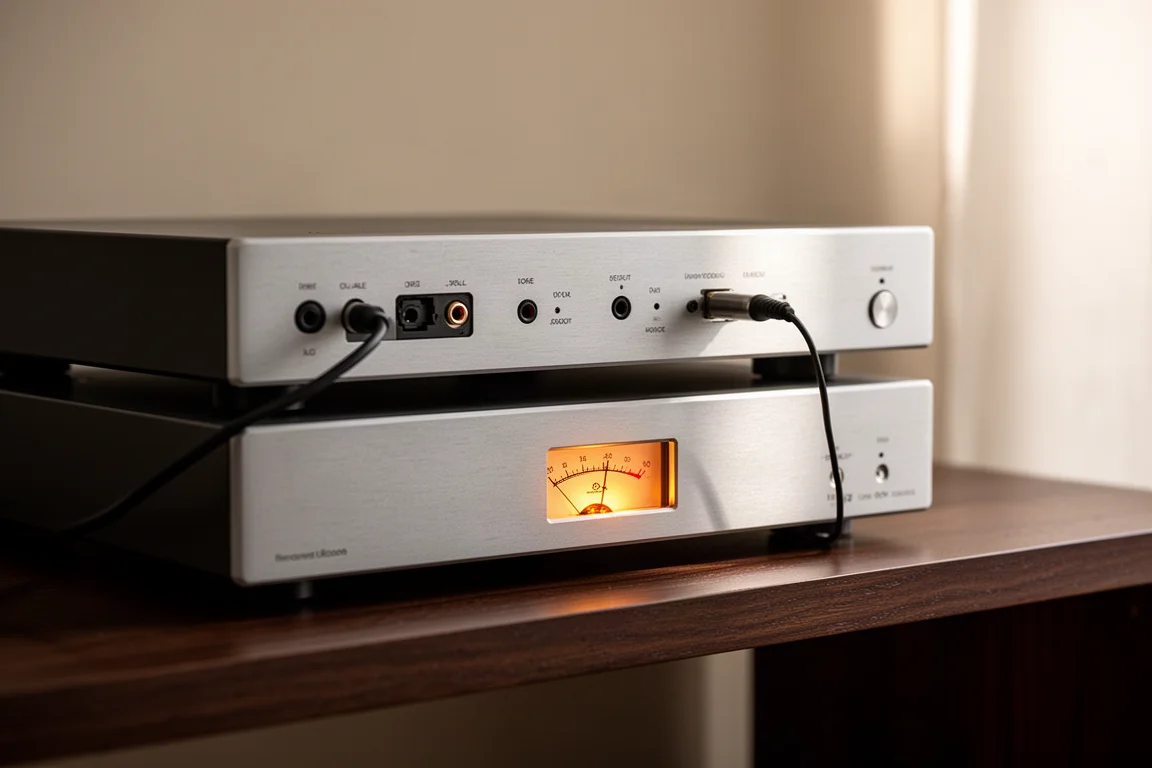
- An optional matching external clock is available for around $1,600. It is designed to time data into the converter more accurately, and its front panel meter shows how much heat is generated by a small oven that stabilises the clock’s operating temperature. After letting it settle for at least ten minutes, the improvement was a slight gain in image solidity and a touch more top-end refinement. It is not a night-and-day change, and it is hard to justify at that price. The VRDS-701 is already an impressive player without it.
- Differences between CD players are small. If you already own a capable player, this is an upgrade of nuance rather than of kind.
Buying Advice
The VRDS-701 makes the most sense for a listener who plays discs regularly, wants a well-built player with a genuinely good converter, and would like to improve a streaming source at the same time. Buying one box that does both is simpler, and often cheaper, than buying a high-end player and a separate high-end converter.
If you are starting from a basic player, the step up will be clear. If you already run a serious disc player, the gains will be smaller and more about character than about resolution. Either way, the digital inputs are the feature that keeps the player useful as a system evolves, and they are the strongest argument for choosing it over a simpler alternative.
Conclusion
The TEAC VRDS-701 is a convincing high-end CD player. Its in-house disc clamping mechanism, discrete converter, and generous digital connectivity add up to a machine that treats compact discs as a serious format while remaining relevant to listeners who also stream. The tray could feel more solid and the front panel could resist fingerprints better, but neither issue undermines the performance. For anyone building a system around a CD collection and a network streamer, it is a strong, coherent choice.
Product link
View more details for TEAC VRDS-701
This product is mentioned in the review. Check the specifications, options, and compatibility before buying.
View more details for TEAC VRDS-701Further reading
Related Reviews
Hi-Fi Components
Best Hi-Fi Components Under $500: Nine Standout Picks Worth Buying
Nine hi-fi components under $500 that earn their place, covering bookshelf speakers, a streaming preamp, a turntable, a CD player, two DACs, an integrated amplifier, and a value subwoofer.
Hi-Fi Components
Leak Stereo 230, Stereo 130 and CDT: Vintage Hi-Fi With Modern Features
A practical look at the Leak Stereo 230 and Stereo 130 integrated amplifiers and the CDT CD transport, covering power, DACs, connections and who each one suits.
Hi-Fi Components
Pretty Hi-Fi: Six Components That Make You Want to Listen Longer
Six hi-fi components that pair real capability with a look worth keeping in the room, plus affordable ways to add visual interest to a modest system.