Fountain Pens
Tatcha Flowers of the Four Seasons Erica Review: A Hand-Painted Fountain Pen with a Sailor Music Nib
A faceted, hand-painted Japanese fountain pen with Sailor-made nib options, four seasonal finishes, and a few trade-offs to weigh before spending nearly $700 CAD.
Introduction
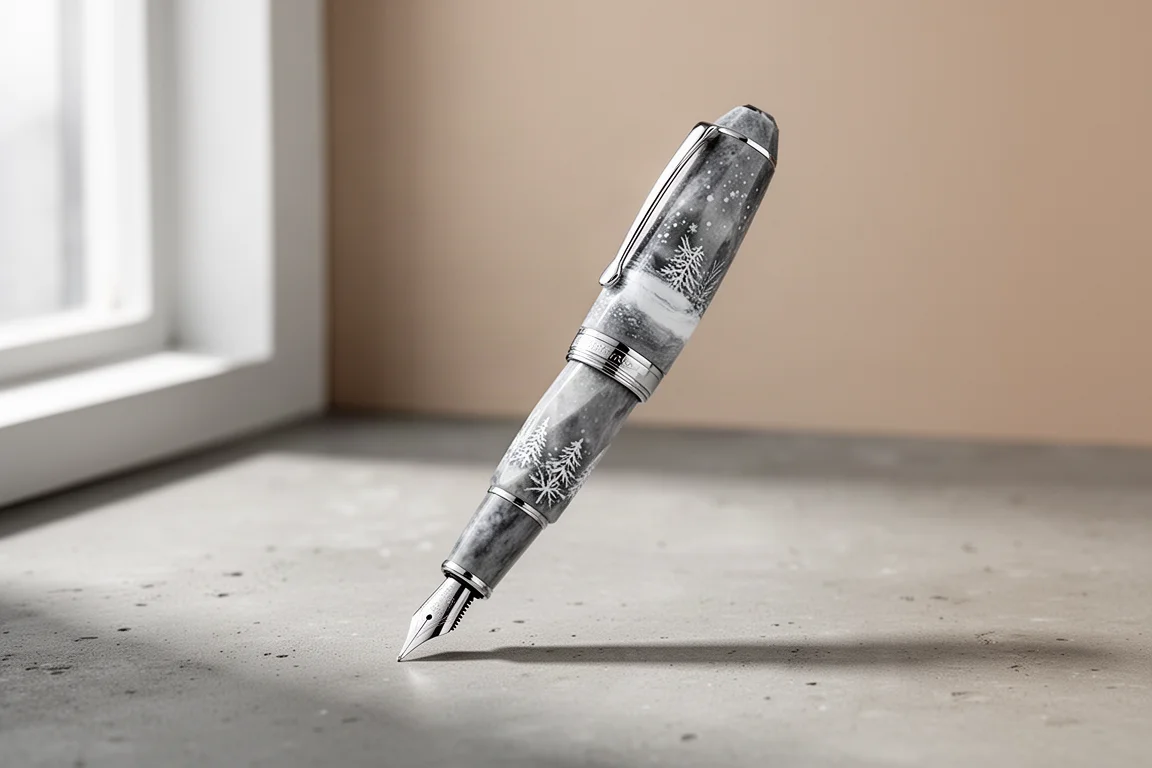
Tatcha is a Japanese fountain pen brand whose nibs are made by Sailor, and that connection shapes much of what makes this pen interesting. The Flowers of the Four Seasons Erica is the winter finish in a four-pen seasonal collection, and it is a faceted, hand-painted writer with some unusual nib choices available. This particular example is a school-style pen fitted with a Sailor music nib, and it packs a few surprises, both good and questionable, into a very light body.
What’s in the Box
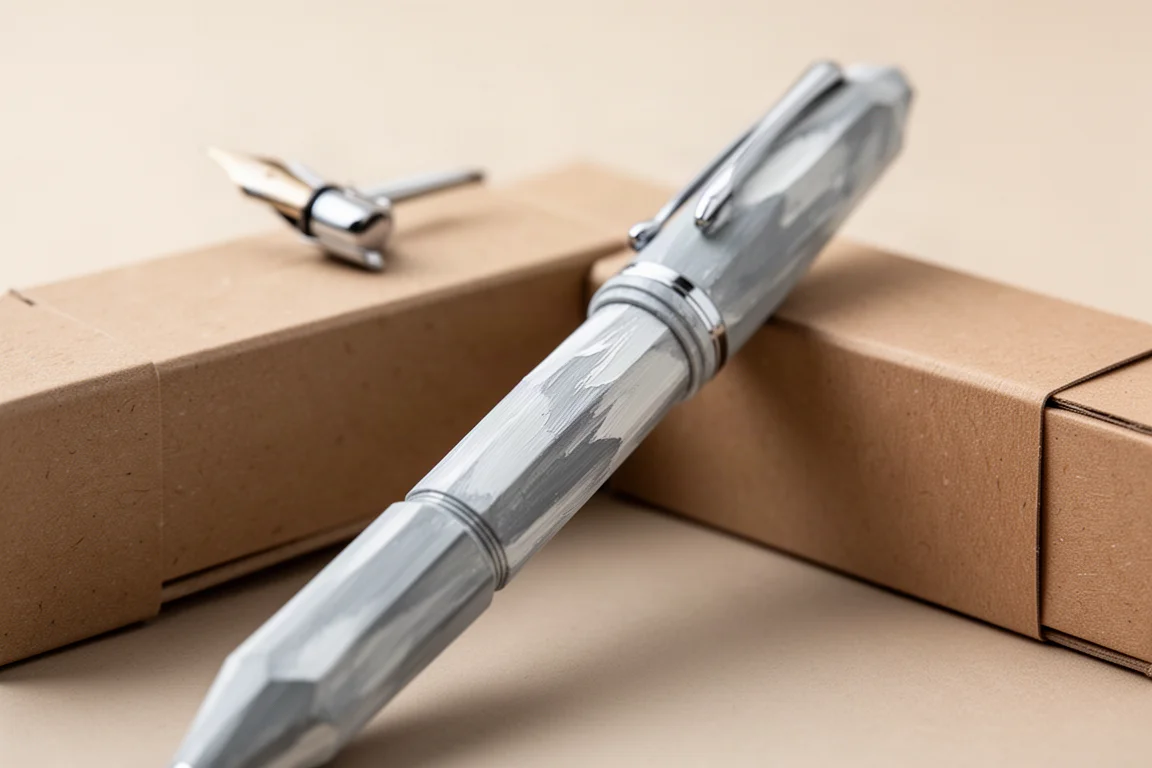
Packaging is simple and tasteful: a cardboard box, a pamphlet with filling instructions written entirely in Japanese, what appears to be a warranty card also in Japanese, and two ink cartridges. Two practical details matter here. First, Tatcha nibs are made by Sailor, so the cartridge and converter system is Sailor proprietary. Standard international cartridges will not fit, so keep that in mind if you already own a drawer full of inks. Second, the pen ships with a Sailor converter included, which is welcome at this level.
Design and Build
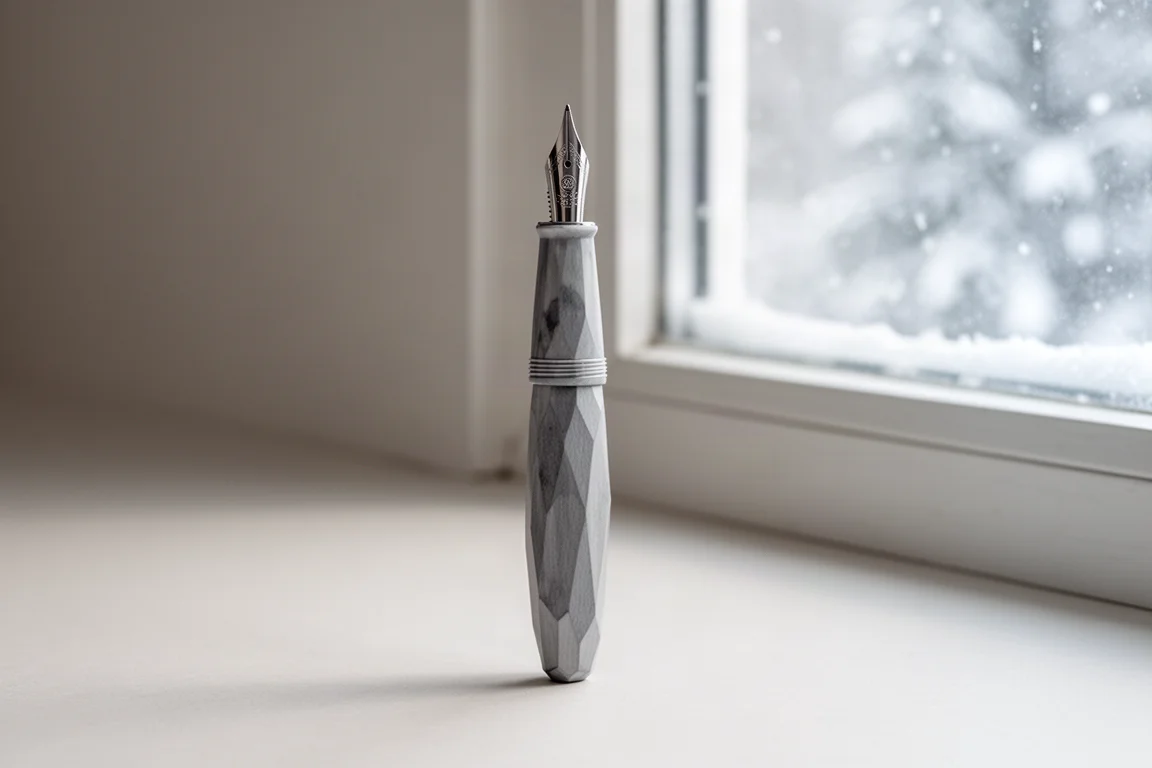
The Erica is one of four finishes: Sakura for spring, Asagao for summer, Kinmokusei for autumn, and Erica for winter. The hand-painting style is recognized by the Kawaguchi Chamber of Commerce as an excellent traditional craft, and it is applied to the finial, cap, barrel, section, and finial base alike. The finish is meant to symbolize flowers of the season, though on the Erica the effect reads more as visual texture than literal flowers. It is not coarse or rough to the touch, but there is a clear tactile quality, and the faceted body adds to the feel.
The clip is an oddity: it is difficult to tell what material it is. It feels like plastic, though it may simply be painted. The only black element on the pen is a small highlight near the barrel end, which stands out against the otherwise uniform painted finish.
Specifications at a Glance
- Diameter: 13.8 mm
- Length: 150 mm (about 6 inches)
- Weight: 30 g
- Nib: steel, Sailor-made, roughly a #5 size
- Fill: Sailor proprietary cartridge/converter
- Price: 691 CAD (excluding tax)
The nib grade marking on this unit reads MS for music. Sailor also offers extra fine, fine, medium, and broad, plus their zoom nib. Remember that Japanese nibs tend to run about one grade finer than Western equivalents, so a Japanese broad is roughly a Western medium.
Nib Options and the Music Nib
The Sailor connection is the real draw here. Because the nibs are Sailor-made, you get access to nibs you rarely see on other pens, including the zoom nib and the music nib. The Sailor music nib is unusual: it is a stub, but a two-tined music nib rather than the three-tined design used by Platinum and some other brands. Traditionally, a music nib is meant to write completely perpendicular to the paper for musical notation, and this one actually does.
How It Writes
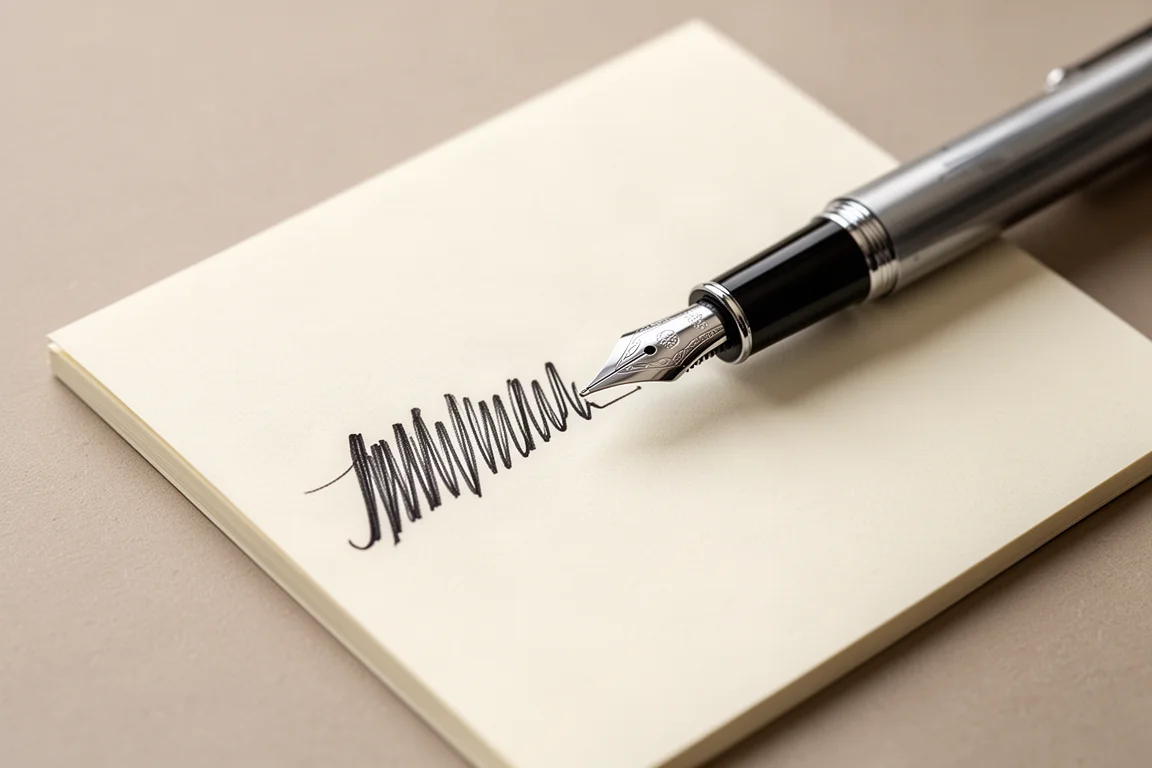
Sailor nibs are known for their feedback, and this one is no exception. Do not expect an ultra-buttery-smooth writing experience; there is a distinct pencil-like texture, though it never felt scratchy or unpleasant. The feed keeps up with ink demand fairly well during fast writing, with no skips observed, though it is not the wettest nib around.
The line character is where the music nib shines. Because of the stub-like shape with a fairly sharp division between the broad downstrokes and narrow side strokes, line variation is natural with no pressure at all, provided you align the pen properly to the paper. If you enjoy expressive, calligraphic-adjacent line variation without pressing, this nib delivers it quietly and consistently.
Comfort and Everyday Handling
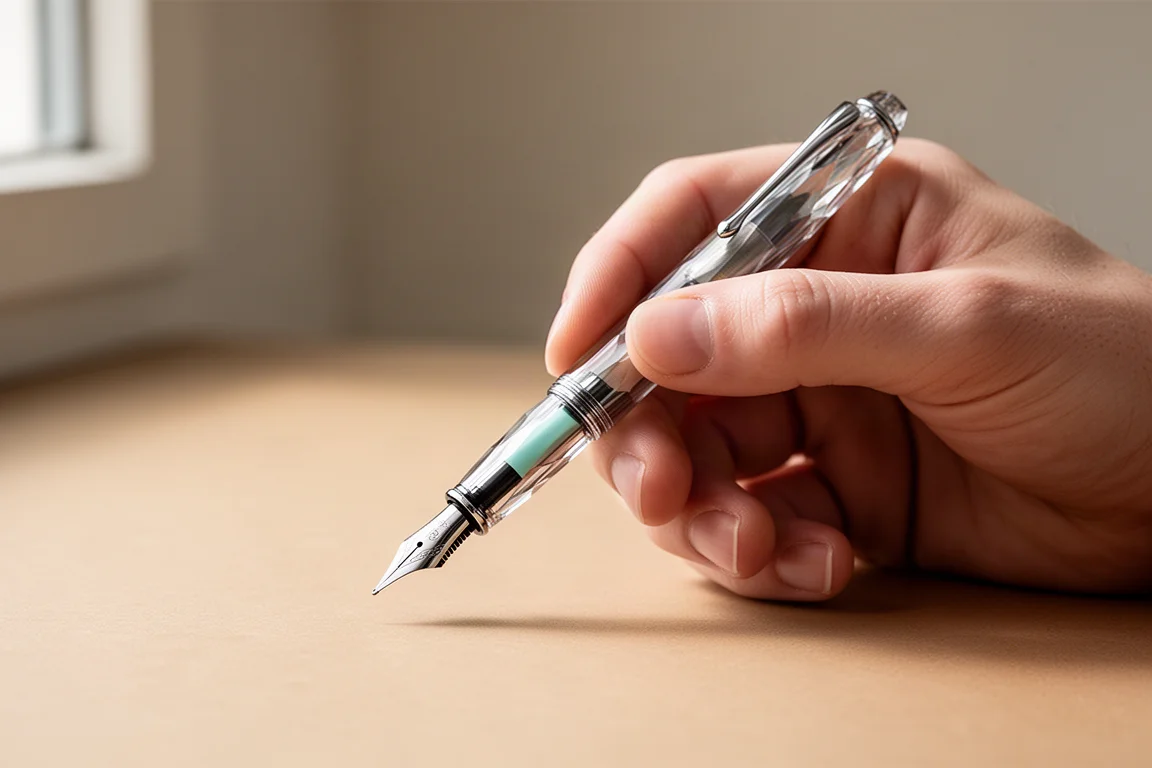
At 30 g, this is a very light pen, and at 150 mm long it is a comfortable size for most hands, noticeably larger than a Pilot Metropolitan but by no means oversized. The problem is the section. It is very skinny, and for writing more than a couple of sentences, it can become uncomfortable depending on hand size. Posting is not possible, so there is no workaround there either. For longer writing sessions, this is a pen to try in person first if you can.
Things to Consider Before Buying
The biggest consideration is price versus feel. At 691 CAD, this is an expensive pen with a steel nib, a small nib, and a fairly light, almost plasticky feel that some may compare to a 3D-printed pen, even though it is not. The hand painting clearly justifies part of the cost, since hand-applied craft always raises the price, but the immediate impression may not match the price tag for everyone.
On the positive side, the four-season concept gives the pen genuine collectible appeal, and the Erica winter finish hits its theme well: it genuinely evokes grey, snowy days. If winter is not your aesthetic, three other seasonal finishes exist, which is a thoughtful touch for collectors.
Buying Advice
This pen makes the most sense for collectors who value traditional Japanese hand-painted craft and want a Sailor music or zoom nib in a distinctive body. A 10% discount code at the retailer that loaned this example brings the effective price down to a more interesting level, so it is worth looking for that before ordering. If your priority is writing comfort over long sessions, or you want the heft and material feel of a premium pen, test the section size first or consider alternatives.
Conclusion
The Tatcha Flowers of the Four Seasons Erica is a genuinely interesting pen: faceted, hand-painted, feather-light, and fitted with a Sailor music nib that produces natural line variation without any pressure. It captures its winter theme beautifully and has real collectible appeal. The trade-offs are a very skinny section, a lightweight feel that may not match expectations at nearly $700 CAD, and a steel nib at a gold-nib price. If the seasonal concept and the Sailor nib options speak to you, it is a rewarding and unusual pen; if you buy pens primarily on material value per dollar, look carefully before committing.
Product link
View more details for Tatcha Flowers of the Four Seasons Erica
This product is mentioned in the review. Check the specifications, options, and compatibility before buying.
View more details for Tatcha Flowers of the Four Seasons EricaFurther reading
Related Reviews
Fountain Pens
Best Budget Fountain Pens Tested: 9 Pens, One Clear Winner
A hands-on comparison of nine affordable fountain pens for everyday writing, calligraphy, and sketching, with a clear standout for flexible nib fans.
Fountain Pens
Aurora Optima Review: An Italian Piston Filler That Punches Above Its Price
A 14k gold nib, ebonite feed, and a beautifully deep oraloid body make the Aurora Optima one of the most rewarding piston fillers around.
Fountain Pens
Cross Bailey Light Review: The Entry-Level Fountain Pen Worth Keeping at the Office
A plastic-bodied Cross with a metal clip, snap cap, and famously smooth extra fine steel nib. Around $15, available almost everywhere, and easy to recommend.