Backpacking Tents
Tarptent Stratospire Review: Ultra TNT and the Future of Backpacking Tents
A close look at the Tarptent Stratospire, its offset pole design, and the new Ultra TNT fabric that could reshape how ultralight backpacking tents are built.
Introduction
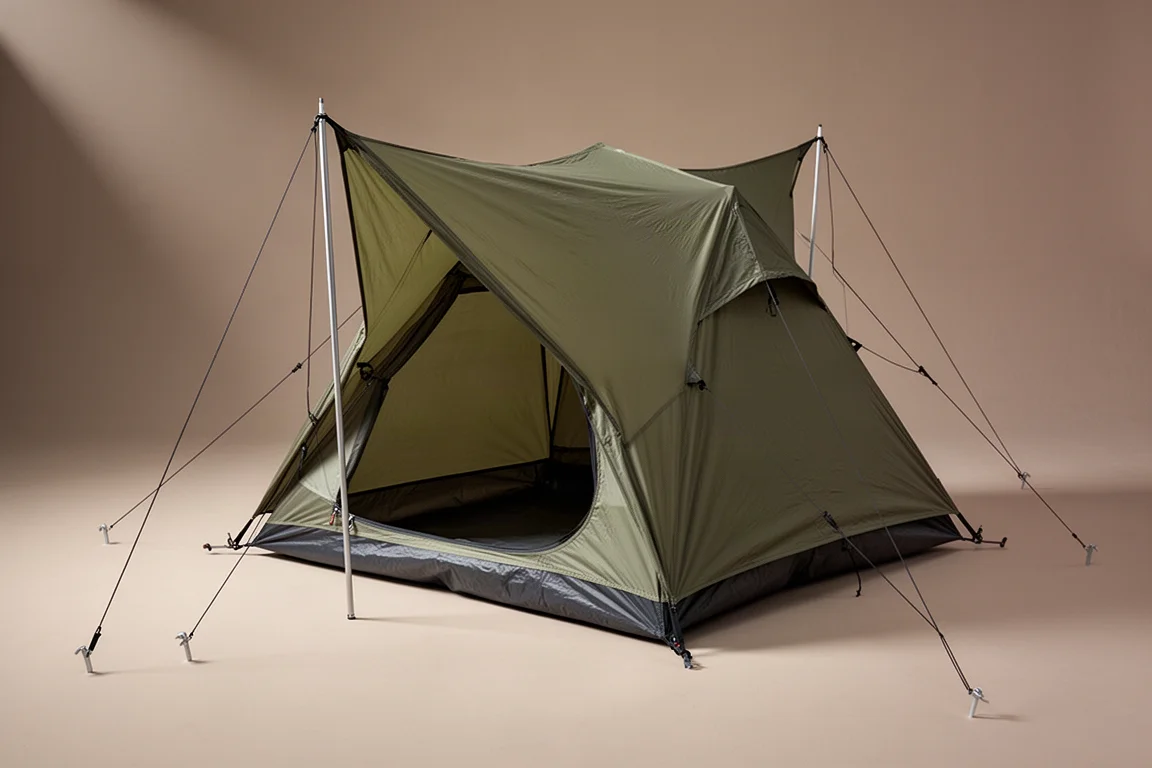
The Tarptent Stratospire is a familiar name in lightweight shelter design, and the version examined here pairs that long-standing layout with one of the more consequential material changes to reach backpacking tents in recent years. The tent uses a new fabric called Ultra TNT, a Dyneema alternative built specifically for tents and tarps.
That matters because Dyneema has long been the ultralight material of choice, and the lightest tents in the world are made from it. It is also expensive. Ultra TNT aims to keep much of the weather performance while reducing cost, and the Stratospire is one of the first shelters to show what that trade looks like in practice.

For backpackers who camp through shoulder season and winter, or who simply want more usable interior room from an offset pole design, the Stratospire deserves a careful look. The sections below cover its strengths, the points worth weighing before buying, and who it suits best.
Who the Tarptent Stratospire Is For
This is a shelter for backpackers who want a double wall tent that can be adapted to colder conditions. The inner can be switched out for a solid inner to create a four-season setup, which makes the same tent usable across a much wider range of trips than a fixed three-season design.
The 50-inch wide floor will fit two wide sleeping pads, so it works for two people who want space rather than a tight squeeze. Ventilation is a priority here too, with peak vents and corner vents that keep air moving and also add usable room on the inside.
It is less suited to anyone who wants the simplest possible pitch or the absolute lowest weight. The Stratospire uses a hexagonal footprint rather than a plain rectangle, and that shape asks more of the person setting it up.
Main Strengths
The Stratospire combines an offset pole design with a double wall build, a generous floor width, and ventilation that has been thought through rather than added as an afterthought.
Offset Pole Geometry and Headroom
The Stratospire was among the first tents to use an offset pole design, arriving before the better known Durston X-Mid. The poles are offset, but not so far apart that the walls close in sharply, which gives slightly better side-to-side headroom. Where poles are pushed further apart, the walls slope inward at an angle and cut into usable space. Because the Stratospire keeps its poles closer together, the interior feels more usable for two people sitting up.
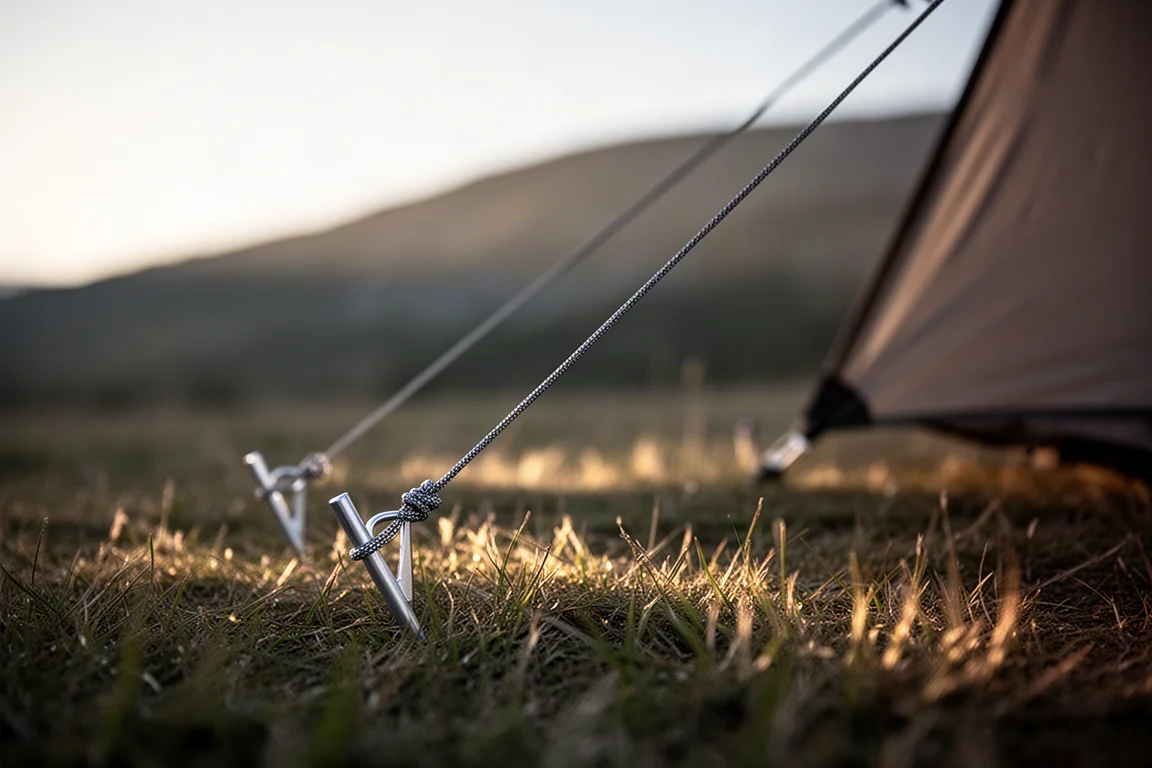
That geometry comes with a trade-off. The hexagonal shape is not as simple as a rectangular floor plan, so pitching takes practice and a poor pitch is possible, especially on rocky ground or in a cramped spot. Once the shape is understood, the extra effort is manageable.
Ventilation, Floor Width, and Ridge Guy Lines
Peak vents and corner vents provide strong airflow. The corner vents do double duty: they improve ventilation and add interior volume.
Ridge line guy lines are a genuinely useful detail. Even when the vestibule cannot be pulled fully taut, the ridge lines allow the ridge to be tensioned properly. They are also positioned out of the way when getting in and out of the tent, which keeps entry and exit clean.
The 50-inch floor fits two wide pads, and the double wall construction keeps condensation away from the sleeping area.
Ultra TNT: What the New Material Changes
Ultra TNT takes its name from tent and tarp, and it is positioned as a direct alternative to Dyneema. Dyneema is extremely strong and stretch resistant, and it remains the material behind the lightest tents available. Its main drawback is cost, with some of the more affordable Dyneema tents still landing around $600.
Weight, Strength, and Cost Against Dyneema
The first advantage of Ultra TNT is price. The Stratospire in Ultra TNT is about $200 cheaper than the same tent built from Dyneema, which is a meaningful difference for a shelter at this level.
The second is strength relative to weight. Ultra TNT comes in at just under one ounce per yard, while most ultralight Dyneema tents use half-ounce-per-yard fabric. That makes Ultra TNT roughly twice as heavy, but also roughly twice as strong, with performance comparable to one-ounce-per-yard Dyneema, which is essentially Dyneema at double thickness. As far as the available range goes, one ounce per yard appears to be the lightest Ultra TNT currently produced.
Dimensional Stability and Puncture Limits
Dimensional stability is where Ultra TNT pulls ahead. Dyneema is strong along its fibers, but pull it at 45 degrees to those fibers and it stretches. Ultra TNT runs fibers in three directions and resists stretch when pulled in any of them. Since a pitched tent is pulled in multiple directions at once, that translates into better wind and weather resistance.
The limitation is puncture resistance. Ultra TNT is not as resistant to punctures as Dyneema, so it should never be used as a floor material, and the fly should never be rolled with the fabric pressed against the ground. Ultra TNT will never be the lightest tent material available, but against one-ounce-per-yard Dyneema it outperforms in most areas that matter for a fly.
Things to Consider Before Buying
The magnetic door tie backs are the most frustrating detail. The design is widely used and generally works well, but on this tent the magnet is not strong enough to hold the door. Because the door sits under noticeable tension, even a light bump lets it come loose.
Pitching is less forgiving than a rectangular design. The hex shape rewards patience and a good site, and it can be awkward on rocky ground or in tight spaces.
During sustained heavy rain, water entered the tent once. The suspected cause was a seam tape failure in the bathtub floor. It was not possible to confirm the source given how much rain fell, and the issue appears to be specific to that individual tent rather than a flaw in the Stratospire design. The brand has been notified and has requested the tent back for assessment.
Finally, keep the material limits in mind. Ultra TNT should not be used for a floor, and it should not be rolled with the fly against the ground.
Buying Advice
The Stratospire makes the most sense for backpackers who camp beyond the mildest months. The double wall build, the option to swap in a solid inner, and the three-direction fiber construction of Ultra TNT all point toward shoulder season and winter use, where weather is more of a concern and a stronger fly matters more than the last few grams.

It also suits two-person parties who want a genuinely wide floor and usable headroom rather than a narrow, sloping interior. The savings against the equivalent Dyneema version are substantial, and for many buyers that difference will fund other parts of a kit.
Look elsewhere if your priority is the lowest possible pack weight, or if you want a shelter that pitches the same way every time with minimal fuss. Ultra TNT is a strong, weather-focused material rather than the lightest one, and the hexagonal footprint asks for more attention during setup.
Conclusion
The Tarptent Stratospire is an established design with a genuinely new material at its core. Ultra TNT is not the lightest fabric on the market, and it will not replace Dyneema for gram-counting backpackers. What it offers instead is more strength per yard than the ultralight standard, better stretch resistance in more directions, and a lower price.
Combined with a double wall structure, a convertible inner, a 50-inch floor, and effective ventilation, that makes the Stratospire a compelling option for anyone who camps in real weather and wants a shelter built to handle it.
Product link
View more details for Tarptent Stratospire
This product is mentioned in the review. Check the specifications, options, and compatibility before buying.
View more details for Tarptent StratospireFurther reading
Related Reviews
Backpacking Tents
3F UL Lanchan Pro 1 Review: A 1 lb 8 oz Single-Wall Trekking Pole Tent
A practical look at the 3F UL Lanchan Pro 1, a single-wall trekking pole shelter with a 1 lb 8 oz weight, 20D silnylon fabrics, and a roomy 90 x 31 x 49 inch interior.
Backpacking Tents
3F UL Taiji 2-Person Tent: A Convertible Backpacking Shelter Worth a Closer Look
A practical look at the 3F UL Taiji two-person tent, covering its materials, true two-person interior, fly-first pitching, and the seasonal inner swap that lets one shelter cover more of the year.
Backpacking Tents
3FUL Lanshan Twoerson Pro Review: A Light Trekking Pole Shelter That Struggled in Rain
A two-person trekking pole shelter with a 2026 redesign, pitched with sticks and put through a night of steady rain. Here is what worked, what did not, and what to check before buying.