Backpacking Tents
Tarptent Rainbow Review: A Two-Pound Semi-Freestanding Shelter Under $300
A close look at the Tarptent Rainbow, a two-pound semi-freestanding backpacking tent with a 40-inch floor, strong hydrostatic head ratings, and one clear condensation trade-off.
Introduction
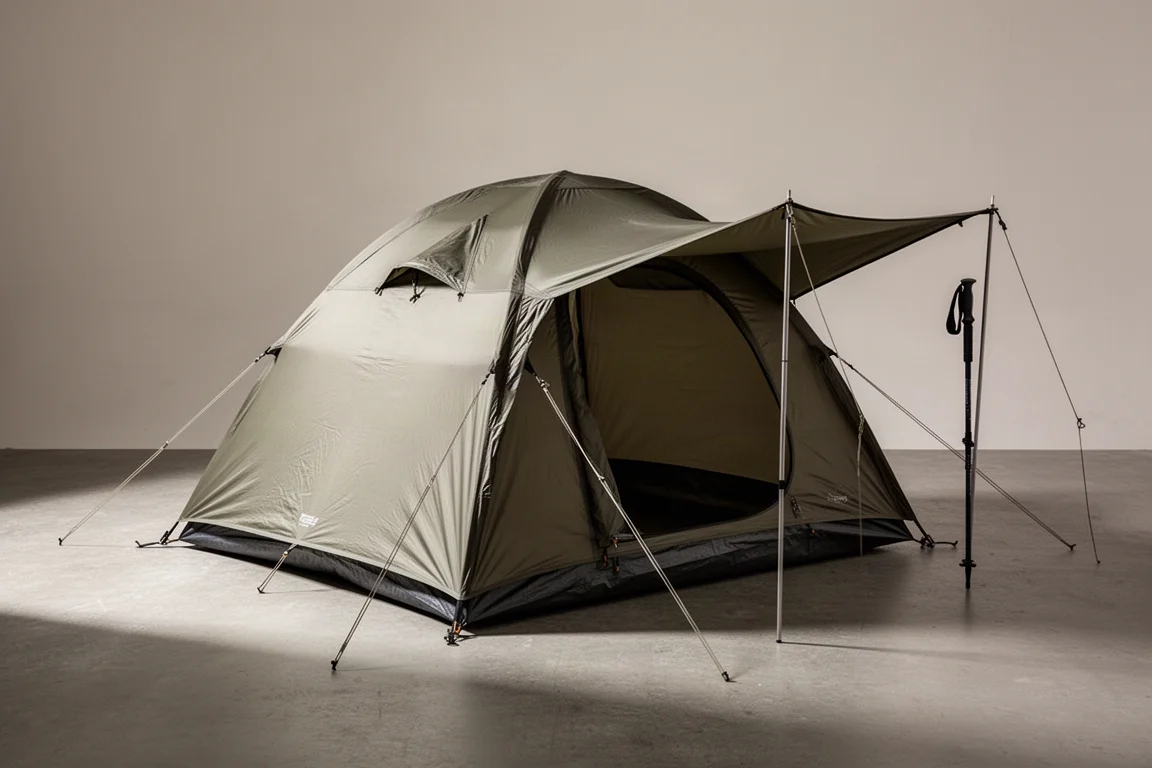
The Tarptent Rainbow fills a specific slot in the backpacking market: a semi-freestanding solo shelter that weighs about two pounds and sells for under $300. For backpackers who want real interior space without carrying a conventional double-wall tent, it is one of the more persuasive options available.
The layout is deliberately simple. A single arch pole runs from the head end to the foot end, and a small brow pole pushes the side walls outward to create more vertical wall space inside. The result is a shelter that pitches quickly, fits into awkward campsites, and still offers a 40-inch wide floor.
This review covers what the Rainbow does well, where it asks for compromises, and who should consider buying it. The sil nylon version is the focus here; the same shelter is also offered in Dyneema at a significant price increase.
Who This Tent Is For
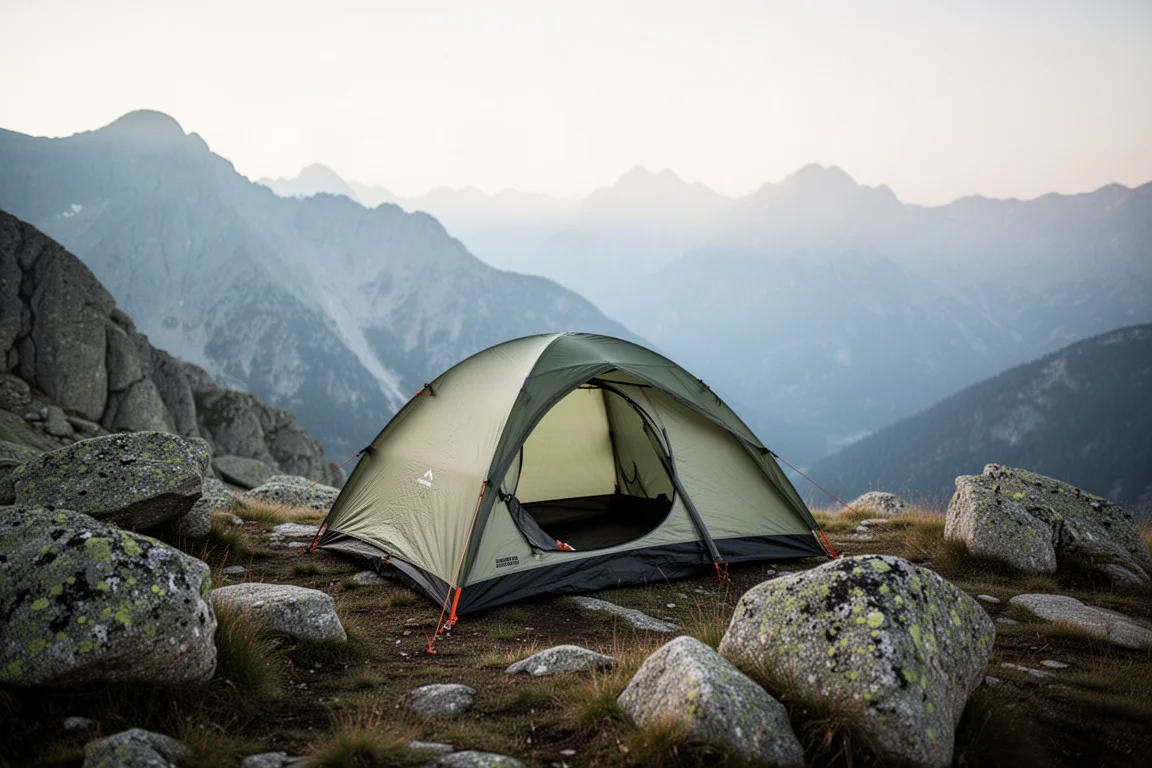
The Rainbow suits solo backpackers who want a light, compact shelter with generous living space and a straightforward pitch. A 40-inch floor width and 88 inches of length give one person room to spread out, and the fairly vertical head and foot ends mean a four-inch thick sleeping pad does not press a sleeping bag into the canopy.
The small footprint matters too. It makes the tent easy to place in tight campsites where a larger shelter simply will not fit. Backpackers who want still more floor space can look at the larger Double Rainbow, which applies the same design idea to a roomier interior.
Anyone who camps regularly in humid, cold, or still conditions should think carefully about the single-wall design, because condensation management is the central trade-off with this shelter.
Main Strengths
The Rainbow’s strongest argument is the combination of weight, price, and usable space. Total weight lands between 32 and 36 ounces depending on the pole you choose. With the carbon fiber pole the tent sits at $299 and saves 3.4 ounces compared with the aluminum version, which costs less.
Living Space and Pitching
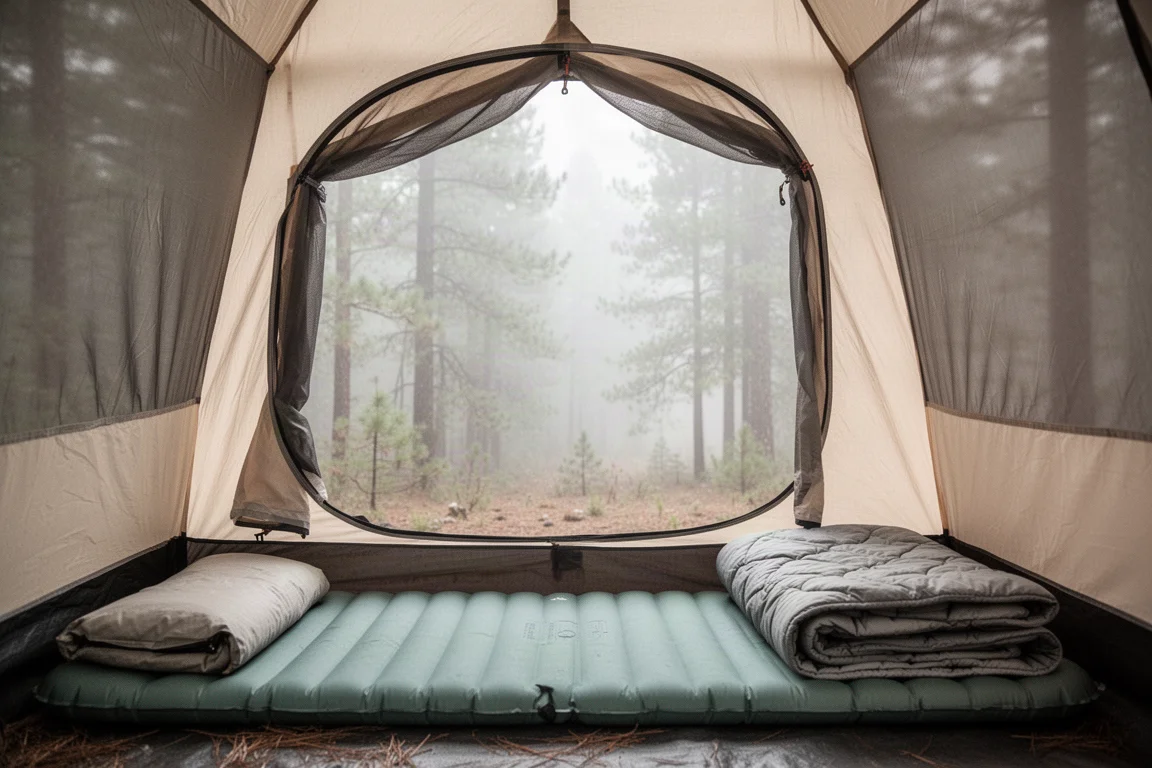
Inside, the floor measures 40 inches wide and 88 inches long, with over 40 inches of height at the peak. That is a lot of room for a one-person shelter, and the vertical head and foot ends keep a thicker sleeping pad from pushing bedding against the wall. The canopy does taper around the shoulders, so sitting up and moving around can bring your elbows into contact with the sidewall.
Pitching takes one arch pole, one brow pole, and a minimum of six stakes. The doors roll back all the way for open views in good weather, and the vestibule is generously sized. The D-shaped door stays where it is when unzipped instead of dropping to the ground.
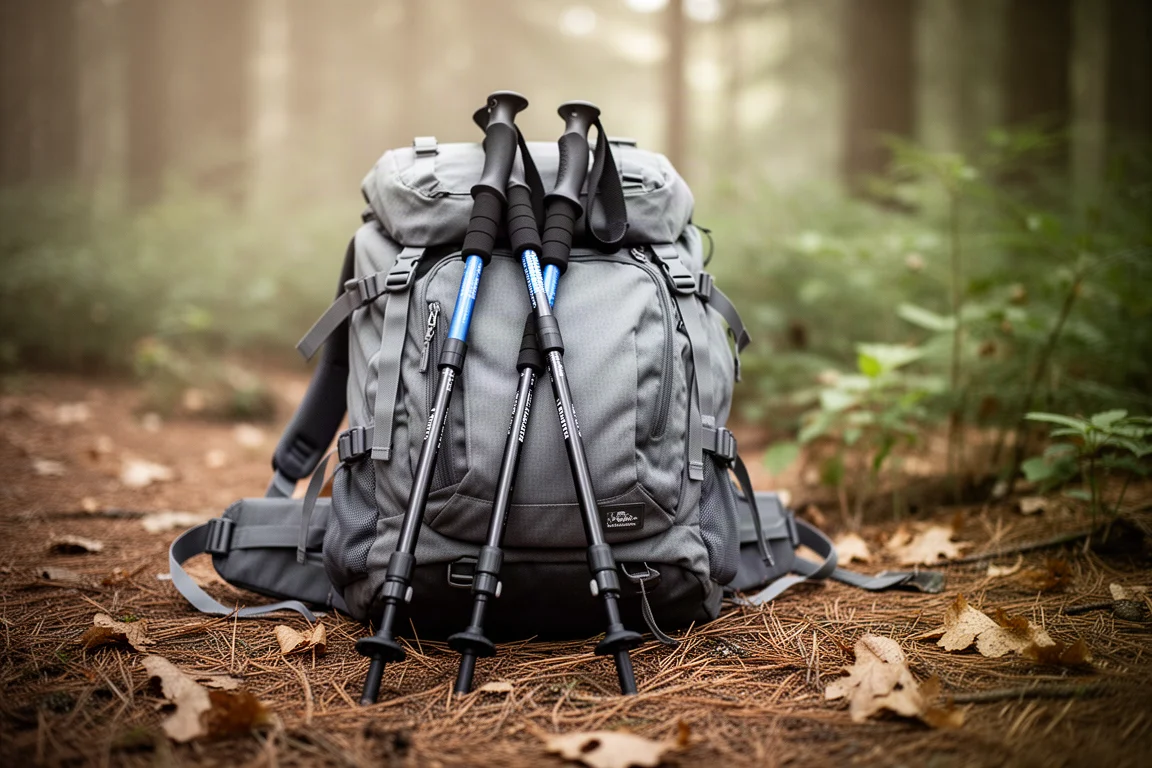
Trekking pole users get additional options. The tent can be set up fully freestanding at the head and foot ends by spanning poles across the width, which is useful on loose sand or snow where stakes will not hold. Grommets at the top front and back accept trekking pole tips driven down to the ground, adding stability in high winds, snow load, or heavy rain, since the pole structure does not run a dedicated pole down to every corner.
Weather Protection
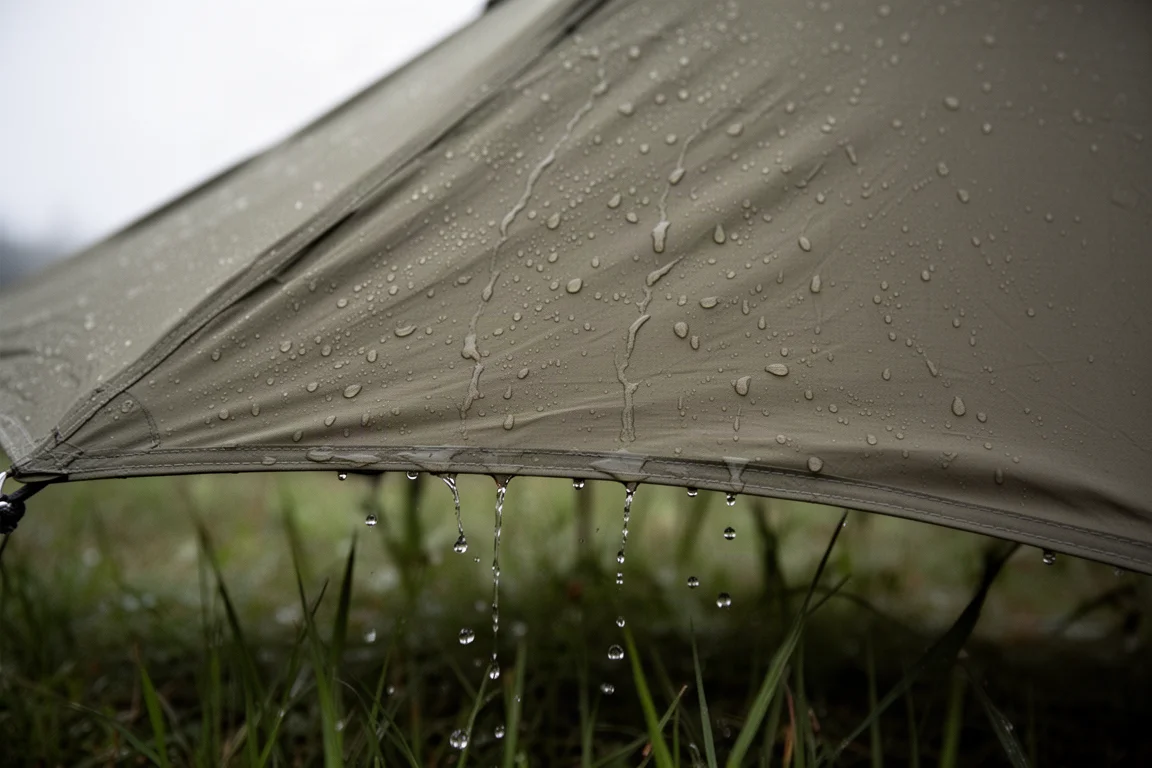
The fly carries a 5,000 mm hydrostatic head rating and the floor 3,000 mm, which is high compared with many lightweight shelters rated closer to 1,200 to 1,500 mm. The sil nylon version does not arrive seam taped or seam sealed, but sealing can be added for a small extra cost at purchase or done at home, and the result is a very watertight shelter.
Floor height is adjustable. Raised, the floor edge guards against splashback from rain hitting the ground. Dropped, it opens up ventilation at the head and foot ends. From inside, a ladder lock and an elastic loop with a mitten hook let you raise and secure the floor edge, and the same adjustment works at both ends of the tent.
Things to Consider Before Buying
The Rainbow is a single-wall shelter, and that shapes most of its compromises. There is a double-wall element at the door, where mesh separates the inner and outer layers, and mesh runs around the floor for ventilation. The rest of the canopy is single wall, which keeps the weight down but leaves you closer to whatever moisture collects on the fabric.
Understanding that structure is the key to deciding whether this tent fits your trips. The sections below cover the two practical issues worth planning around, plus one extra feature that will appeal to some backpackers more than others.
Condensation and Ventilation
Condensation is the biggest practical drawback. The sidewall opposite the door is the surface you contact most when shifting around at night, so a jacket or sleeping bag can pick up moisture. A liner is available that clips in and effectively converts the shelter into a double-wall design.
The peak vent is small, and it has no rod or strut holding it open, which limits airflow at the top of the tent where warm, moist air needs to escape. Rolling both doors back on clear nights is the simplest way to keep the interior drier and the view open.
Door Zipper Details
The vestibule door uses a #3 YKK AquaGuard watertight zipper. Its smaller teeth collect dirt and sand more readily than a larger zipper would, and the slider can become stiff over time. A #5 AquaGuard zipper would be easier to keep clean and smoother to operate.
The door also runs on a single slider, so there is no way to open the top edge for extra ventilation. Because the peak area has some flex, closing the door takes two hands.
Trekking Pole Awning
The vestibule door includes a Velcro tab that pairs with a matching patch on the door, letting a trekking pole hold the door open as a simple awning in light rain. It is a neat addition, though it depends on carrying trekking poles and may not suit every trip. For most situations, rolling the door back is quicker.
Buying Advice
At $299 with a carbon fiber pole, the Rainbow is a strong value in the two-pound class. The aluminum pole version costs less and adds 3.4 ounces, a reasonable trade for anyone watching the budget. Seam sealing is worth adding at purchase if you would rather not apply it yourself.
Choose the Rainbow if you want a light, compact solo shelter with genuine interior space and a fast pitch, and if you are willing to manage condensation. If more floor space is the priority, the Double Rainbow is the roomier alternative. If you expect consistently wet or humid conditions and want a true double-wall setup, plan on the liner.
Conclusion
The Tarptent Rainbow earns its reputation as a proven, well-built design: about two pounds, a 40-inch floor, vertical walls, high hydrostatic head ratings, and a pitch that works in tight places. Condensation and the smaller door zipper are the honest trade-offs. For solo backpackers who want the most living space per ounce under $300, it remains a very strong option.
Product link
View more details for Tarptent Rainbow
This product is mentioned in the review. Check the specifications, options, and compatibility before buying.
View more details for Tarptent RainbowFurther reading
Related Reviews
Backpacking Tents
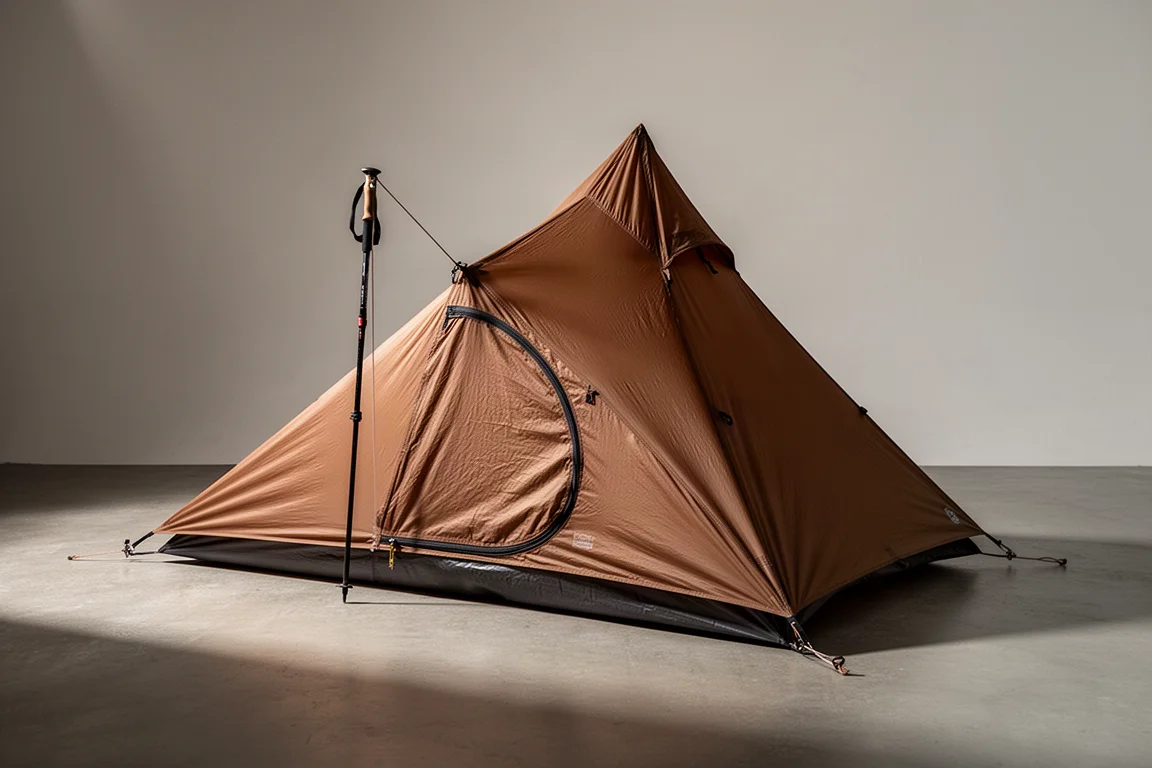
3F UL Lanchan Pro 1 Review: A 1 lb 8 oz Single-Wall Trekking Pole Tent
A practical look at the 3F UL Lanchan Pro 1, a single-wall trekking pole shelter with a 1 lb 8 oz weight, 20D silnylon fabrics, and a roomy 90 x 31 x 49 inch interior.
Backpacking Tents
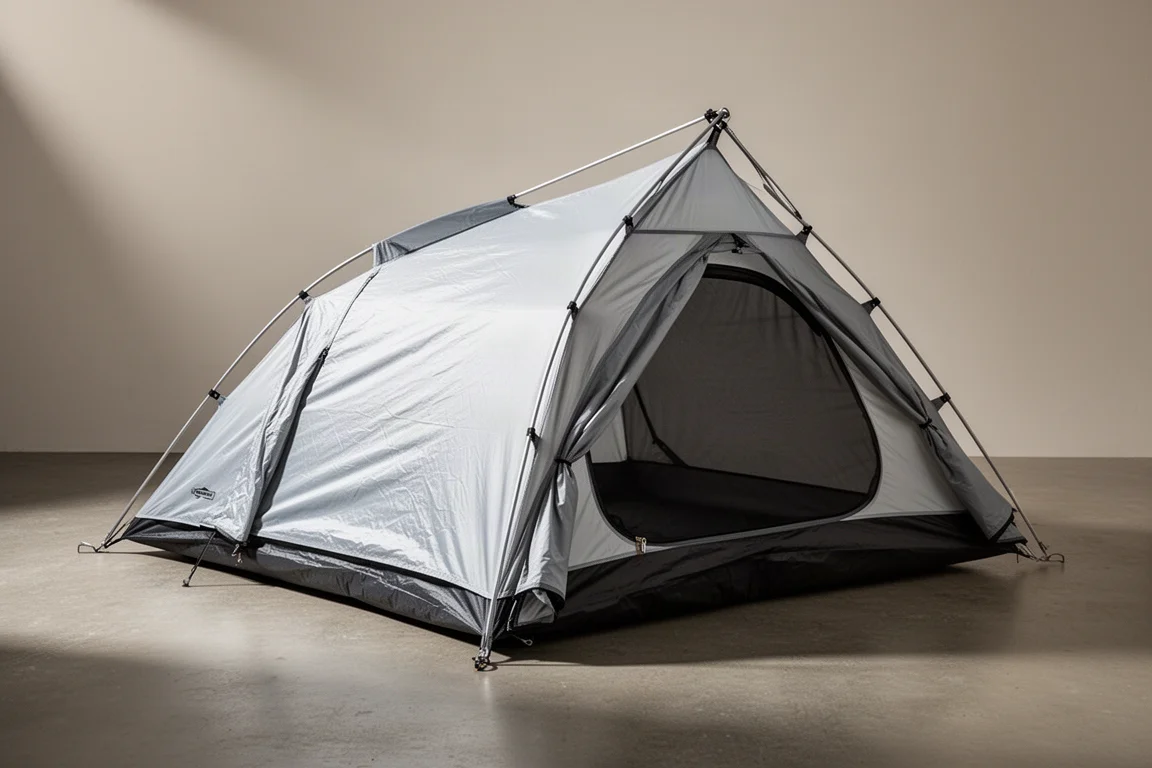
3F UL Taiji 2-Person Tent: A Convertible Backpacking Shelter Worth a Closer Look
A practical look at the 3F UL Taiji two-person tent, covering its materials, true two-person interior, fly-first pitching, and the seasonal inner swap that lets one shelter cover more of the year.
Backpacking Tents
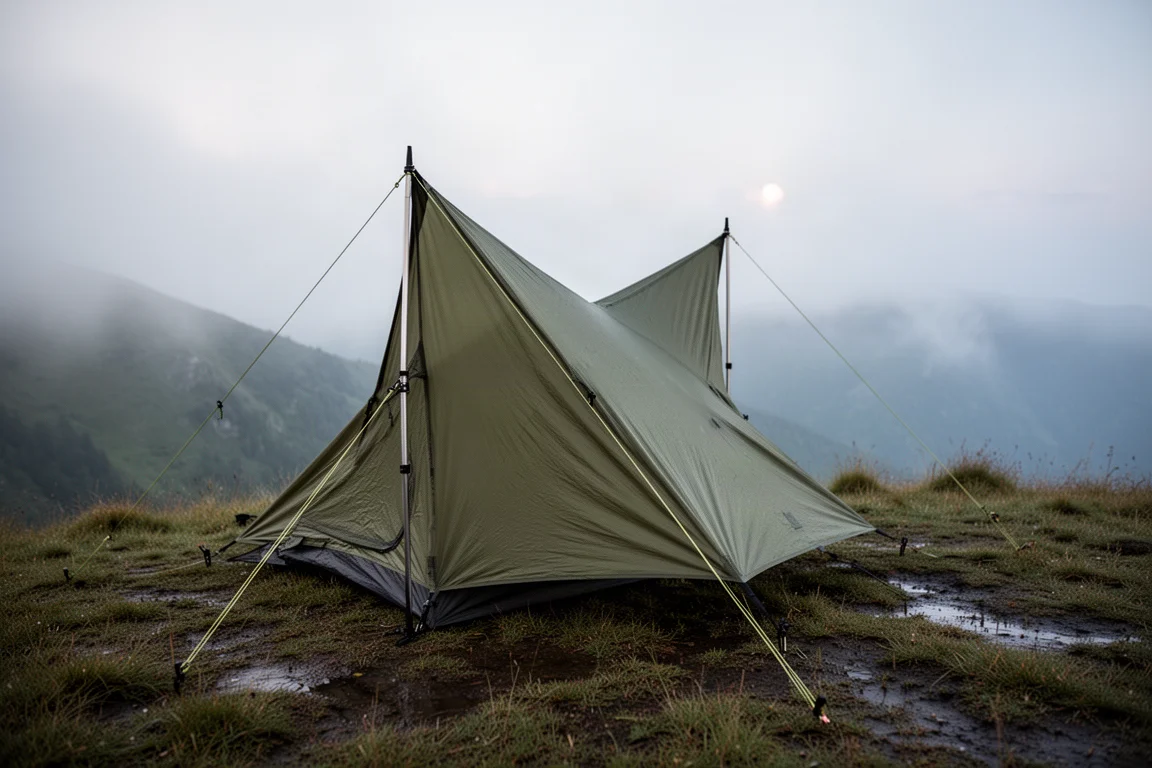
3FUL Lanshan Twoerson Pro Review: A Light Trekking Pole Shelter That Struggled in Rain
A two-person trekking pole shelter with a 2026 redesign, pitched with sticks and put through a night of steady rain. Here is what worked, what did not, and what to check before buying.