Backpacking Tents
Tarptent Double Rainbow DW Ultra Review: A Two-Person Shelter Built Around Ultra TNT Fabric
A practical look at the Tarptent Double Rainbow DW Ultra, a two-person double-wall backpacking tent built around the new Ultra TNT laminate fabric.
Introduction
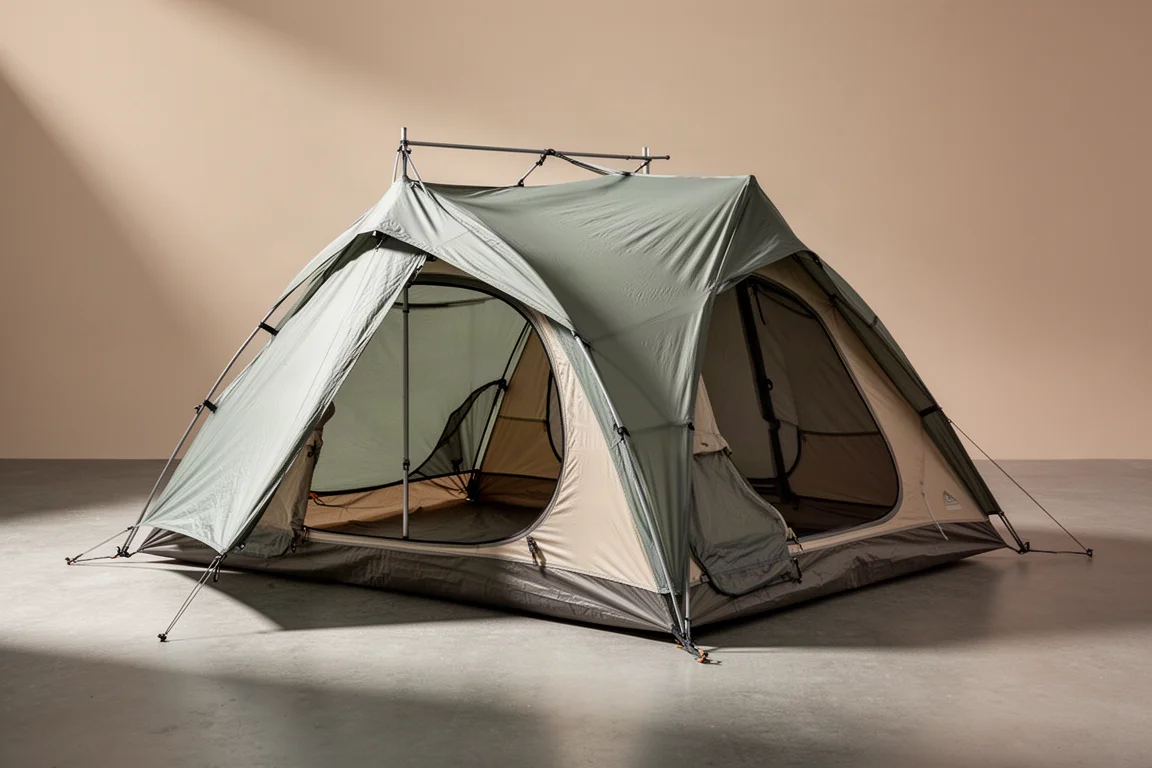
The Tarptent Double Rainbow has been a fixture of the ultralight backpacking world for years, and the newest member of the family changes the material story rather than the silhouette. The Double Rainbow DW Ultra keeps the familiar two-person layout and adds a double-wall build, pairing a semi-solid inner body with an outer fly cut from Ultra TNT fabric.
Ultra TNT, short for tarp and tent, is a laminated fabric that has not seen much use in tents before. It is the reason this version exists at all, and it shapes how the shelter behaves in sustained rain and wind rather than simply shaving grams off the packed weight.
With the carbon pole set, the DW Ultra comes in at just over 40 ounces and a price of $539. That places it in the middle of the Double Rainbow range: heavier than the single-wall Dyneema option, less expensive than it, and considerably more flexible when it comes to managing condensation.
Who the Tarptent Double Rainbow DW Ultra Is For
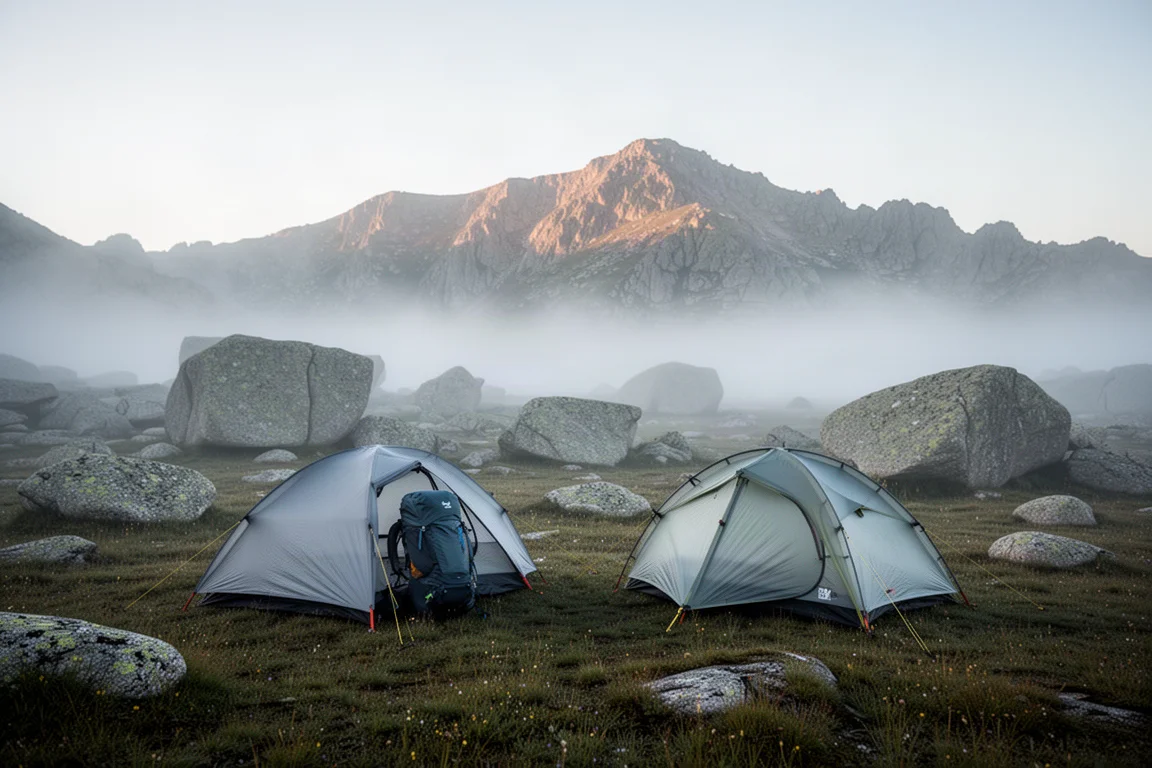
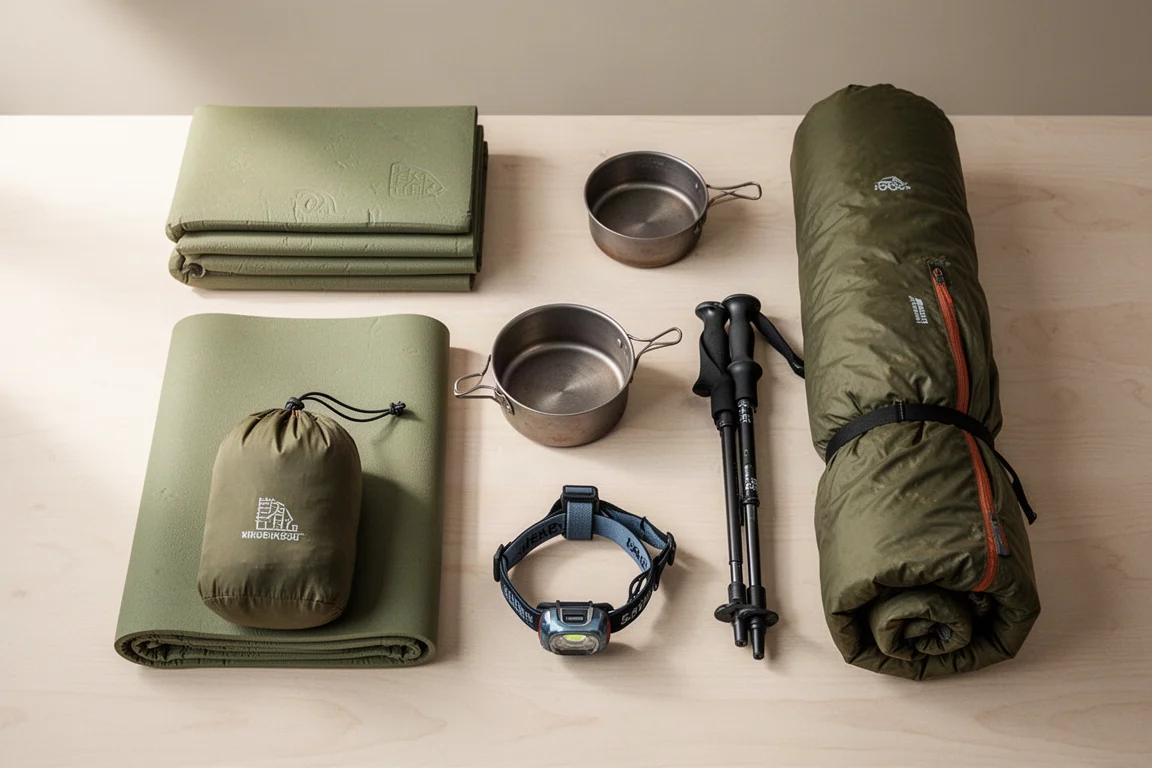
This is a two-person shelter with a 50 inch by 88 inch floor, which is enough for two wide sleeping pads side by side. It is not a palace: with two pads in place there is very little room left for gear inside, so the two vestibules do the storage work. Packs, shoes and the rest of your kit live outside the inner body but still under cover.
That trade-off suits backpackers who split the load. The tent packs down into several pieces, so two people can divide the components and carry roughly 20 ounces each, which keeps the per-person weight genuinely competitive for a double-wall shelter with this much interior height.
The 40 inch peak height makes it comfortable to sit up and move around, and the two doors and two vestibules mean nobody has to climb over anyone else in the middle of the night. It is a layout built for two people travelling together rather than one person spreading out.
Main Strengths: Ultra TNT Fabric and Weather Stability
Ultra TNT is a laminate: two layers of Mylar film with a 200 denier Ultra fiber laid in three different directions between them. Because the fibers run in multiple orientations, the finished material is dimensionally strong, and the whole sheet is heat welded rather than stitched. There are no stitch lines running across the fly, which removes a set of potential weak points.
The fabric weighs nearly twice as much as the half-ounce Dyneema commonly used on ultralight tents, but it costs close to half as much, and that balance is the core of the value argument here. The larger benefit is stability. Ultra TNT does not stretch and does not take on water weight, so the fly holds its shape through long wet nights instead of sagging as it soaks.
Polyester resists stretching and absorbs less water than nylon, but its coatings break down over time, and it will eventually pick up water weight and stretch a little. Ultra TNT sidesteps that slow decline entirely.
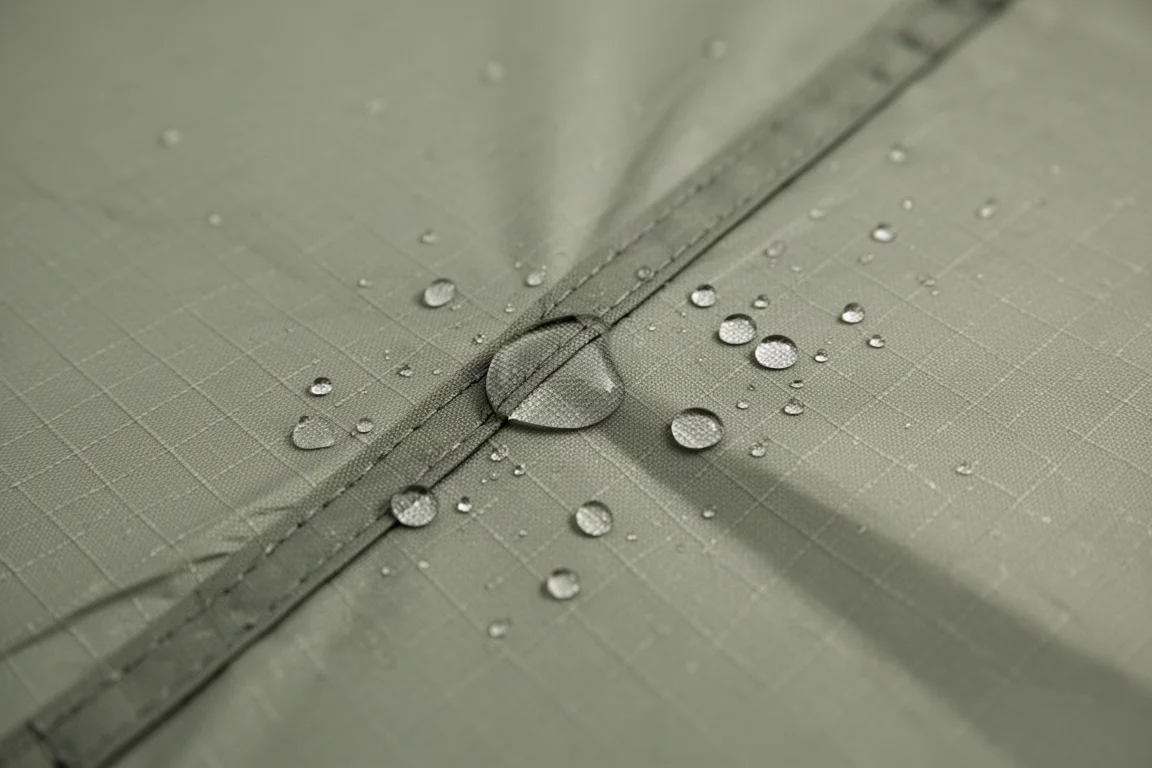
There is one important limitation. Because the Ultra fibers are laid with wider gaps between them, the material is not a good floor fabric, and it is not used in the floors of ultralight tents. The DW Ultra uses a 20 denier coated nylon floor instead, while the fly takes the full benefit of the laminate. The double-wall construction also makes condensation easier to manage than in a single-wall shelter, with the semi-solid inner body mixing solid fabric and mesh while the fly handles the weather.
Ventilation, Doors, and Interior Livability
Ventilation is where this design earns its keep. The fly door has magnetic tiebacks, and it can be zipped all the way down and then closed partway using a magnet at the top, which keeps some protection while still letting air move. There is also a peak vent with no mesh attached to it, so it moves air freely rather than filtering it.
The fly itself can be rolled up from the center. Unclip the center clip, loosen the sides slightly, roll the fabric a few turns and snug it back down, and you have a much more open shelter for a clear night. The inner body adds solid fabric panels that unfasten from a loop, opening up airflow while still blocking light rain and splashback. At the corners the body can be unclipped completely and rolled back for a stargazing setup, then rolled down again quickly if the weather turns.
Inside, there is plenty of mesh for airflow and solid fabric around the lower edge, which helps against wind-driven dirt, sand and snow pushing in underneath. There is a pocket on one side and a second pocket on the other, plus two doors and two vestibules for easy entry and exit.
Pitching Flexibility and Storm Stability
The cross pole across the top can be pitched on the outer fly or on the inner body, depending on how you intend to use the tent, which gives you a way to stiffen the structure or keep the fly simpler as conditions demand.
Stability comes from several small details working together. Velcro tabs attach through holes in the body of the tent, tying the inner and fly together rather than letting them move independently. There are also loops on each side of the arch pole that accept guy lines in opposing directions, which is what turns the shelter into something genuinely planted in heavy wind.
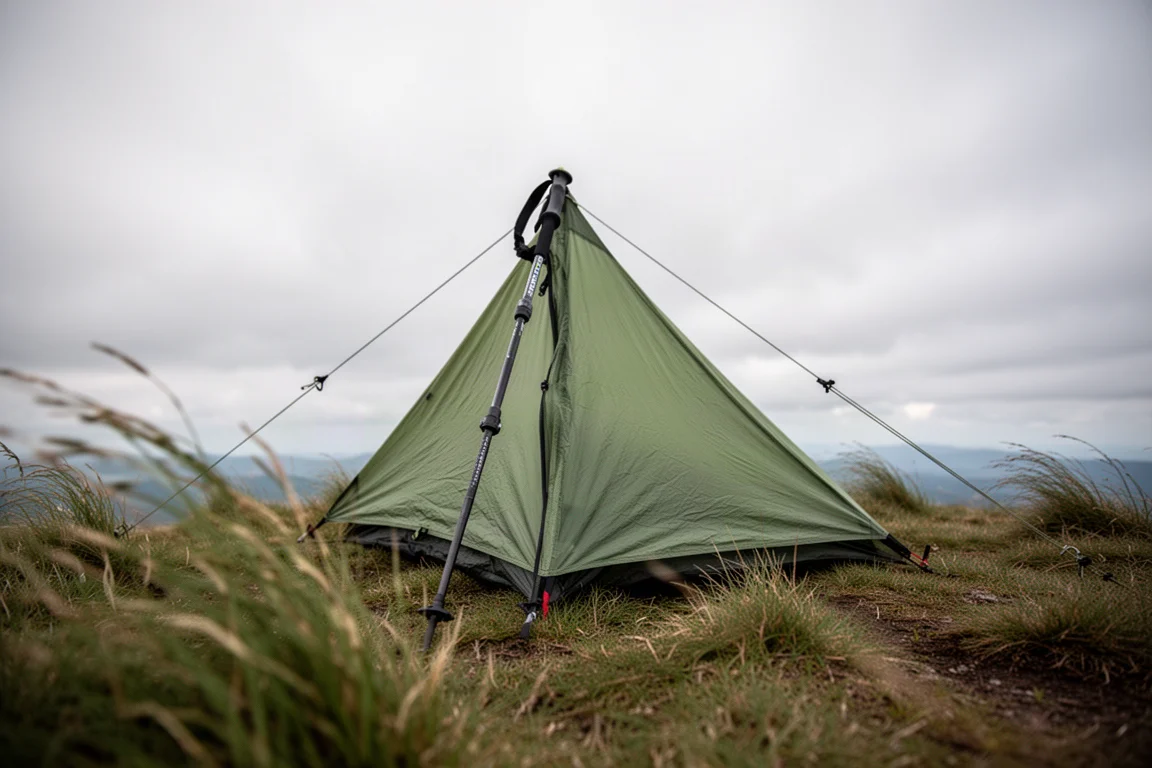
The tent is semi-freestanding as it ships, and with trekking poles it can be pitched as a fully freestanding shelter. That flexibility matters on rocky ground or hard platforms where stakes are difficult to place.
Things to Consider Before Buying
The main compromise is interior volume with two people. There are no vertical walls, so when two people are inside they sit shoulder to shoulder and it feels tight. Sitting opposite each other is the more comfortable arrangement, and the vestibules absorb the gear that will not fit inside.
Weight is the second consideration. The Ultra TNT fly does not save a dramatic amount of weight compared with the double-wall polyester version of the same tent, so the case for it rests on stability, no water uptake and the bonded, stitch-free construction rather than on the scale.
For buyers weighing alternatives, Tarptent also offers the Double Rainbow Lithium, a single-wall shelter using Dyneema Composite Fabric with the same dimensions. It comes in at $679 and just over 30 ounces with the newer nylon floor option, so it saves roughly 10 ounces for about $140 more, while giving up the double-wall versatility and condensation management of the DW Ultra.
Buying Advice
The DW Ultra makes the most sense for backpackers who want a two-person shelter that stays stable and predictable in wet, windy weather and who are willing to split the load between two people. The roughly 20 ounces per person that the split produces is the number that matters most when you are deciding whether the packed weight is acceptable.
Choose the carbon pole set if weight is the priority, since that is the configuration behind the just over 40 ounce figure and the $539 price. The aluminum pole set adds a few ounces, which is a reasonable trade if you would rather not worry about handling carbon poles roughly.
If saving every possible ounce is the goal and you accept a single-wall design, the Lithium is the lighter route. If you value condensation control, a semi-solid inner and the option to run the shelter in more conditions, the DW Ultra is the better fit.
Budget for the full system rather than the tent alone: poles, stakes and the way you plan to divide the components between two packs all affect what the shelter actually costs you in weight and money. Buying the pole set and floor configuration that matches how you camp is more useful than chasing the lowest possible number on a spec sheet.
Conclusion
The Tarptent Double Rainbow DW Ultra is an interesting shelter because it introduces a fabric that has not really been used in tents before, and that fabric changes how the tent performs rather than just how much it weighs. Ultra TNT brings dimensional stability, no water uptake and a fully bonded, heat-welded fly, at a cost that sits well below comparable Dyneema options.
Combined with a semi-solid inner body, a genuinely usable ventilation system, a 40 inch peak and two doors with two vestibules, it is a well-considered two-person tent for backpackers who expect real weather. The compromises are honest ones: tight interior space with two people, and a weight that is not dramatically lower than the polyester double-wall version.
For anyone who wants a double-wall shelter that holds its shape through a wet, windy trip and can be split evenly between two packs, this is a strong and thoughtfully designed option.
Product link
View more details for Tarptent Double Rainbow DW Ultra
This product is mentioned in the review. Check the specifications, options, and compatibility before buying.
View more details for Tarptent Double Rainbow DW UltraFurther reading
Related Reviews
Backpacking Tents
3F UL Lanchan Pro 1 Review: A 1 lb 8 oz Single-Wall Trekking Pole Tent
A practical look at the 3F UL Lanchan Pro 1, a single-wall trekking pole shelter with a 1 lb 8 oz weight, 20D silnylon fabrics, and a roomy 90 x 31 x 49 inch interior.
Backpacking Tents
3F UL Taiji 2-Person Tent: A Convertible Backpacking Shelter Worth a Closer Look
A practical look at the 3F UL Taiji two-person tent, covering its materials, true two-person interior, fly-first pitching, and the seasonal inner swap that lets one shelter cover more of the year.
Backpacking Tents
3FUL Lanshan Twoerson Pro Review: A Light Trekking Pole Shelter That Struggled in Rain
A two-person trekking pole shelter with a 2026 redesign, pitched with sticks and put through a night of steady rain. Here is what worked, what did not, and what to check before buying.