Fountain Pens
T AG Submarine Fountain Pen and Rollerball: Two Brass Pens With a Twist-Fill Party Trick
A hands-on look at the T AG Submarine collection, a pair of solid brass pens with a turbine-style internal converter and a rollerball that drinks fountain pen ink.
Introduction
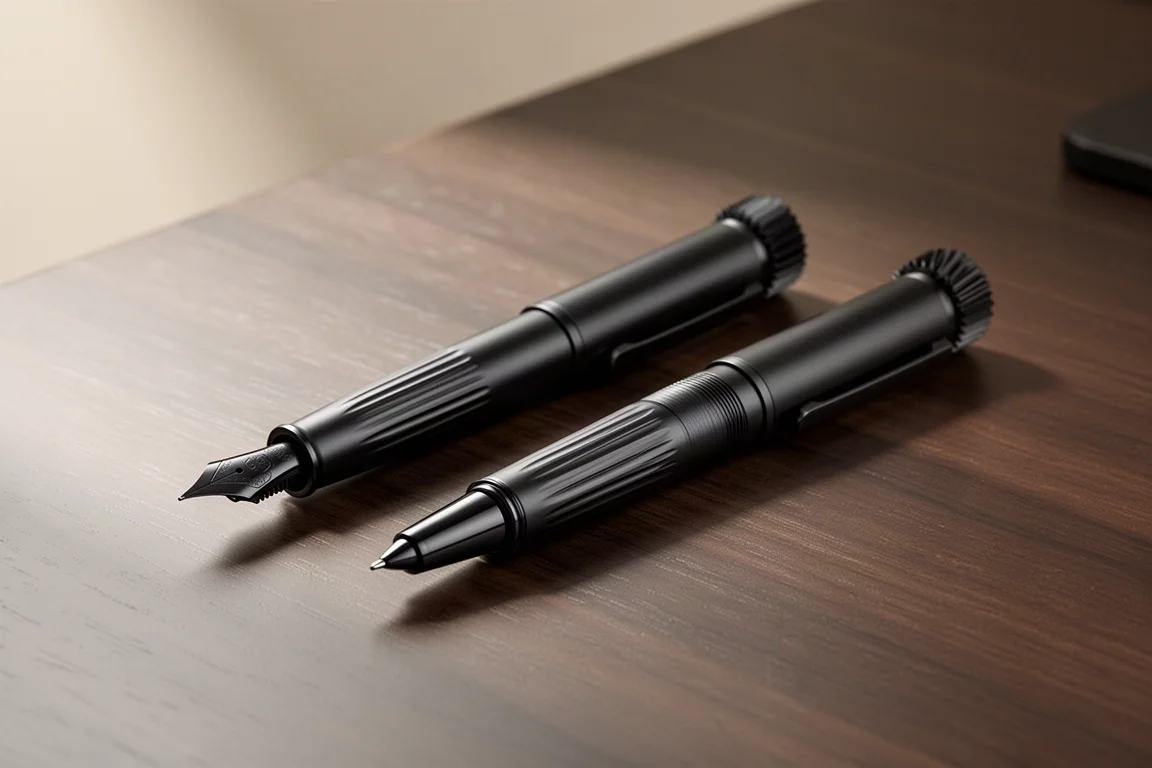
The Submarine collection from T AG, a Taiwanese pen maker, is a two-pen family that looks almost identical from the outside: one fountain pen and one rollerball, both built around solid brass bodies, a matte black finish and a distinctive turbine-style filling knob at the finial. The company has been promoting the collection through a crowdfunding campaign, so if these interest you, timing may matter.
We spent time with the full bundle, which includes both pens, and this article covers the design, the filling system, the writing experience and what to check before buying either one.
First Impressions and Design
Packaging is genuinely nice: a cardboard sleeve slides off to reveal an inner box that opens to cradle the pen, along with a description of the Submarine series and an instruction brochure covering how to fill it. It feels considered rather than generic.
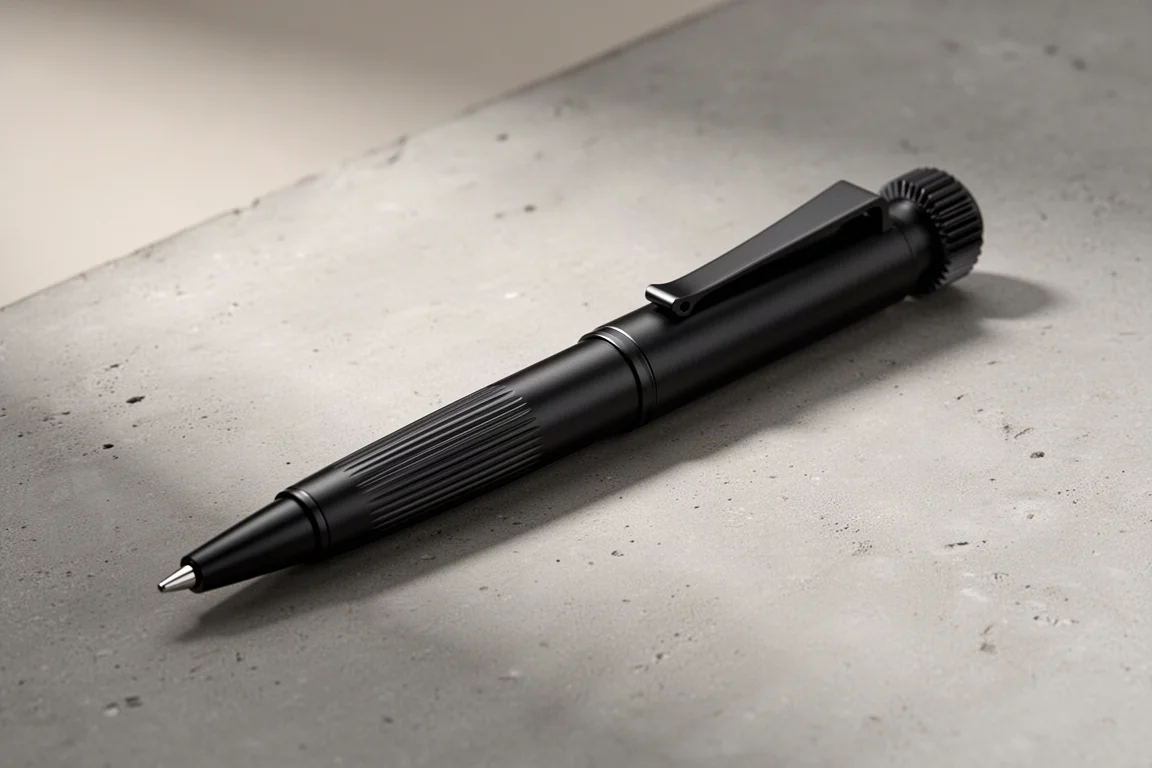
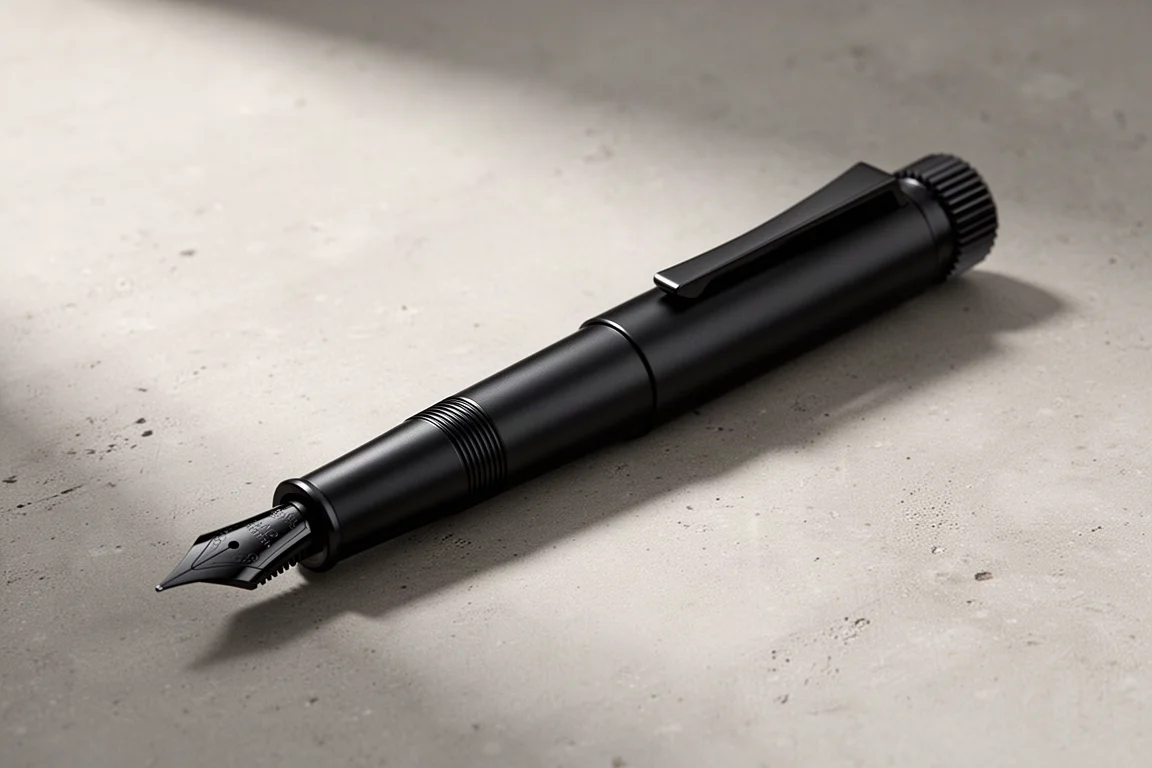
The design story is coherent. The Submarine theme carries through the whole pen, most visibly in the ridged turbine-style turning knob at the finial and a subtle detail on the finial that echoes the same motif. Over 80% of the pen is solid brass, so these are heavy pens with a reassuring density. Tapered, fiberlike grooves of varying length run along the barrel; they add visual interest and double as a grip texture. A blind T AG engraving sits low on the barrel, and the springy clip has a neat notched shape.
Build quality is the strongest overall impression. Tolerances are tight, gaps are minimal, and there are no sharp edges anywhere. The finial is made from a Lotus material developed in Taiwan and upcycled from sediment, which is a genuinely interesting and relatively sustainable material choice.
The Turbine Filling System
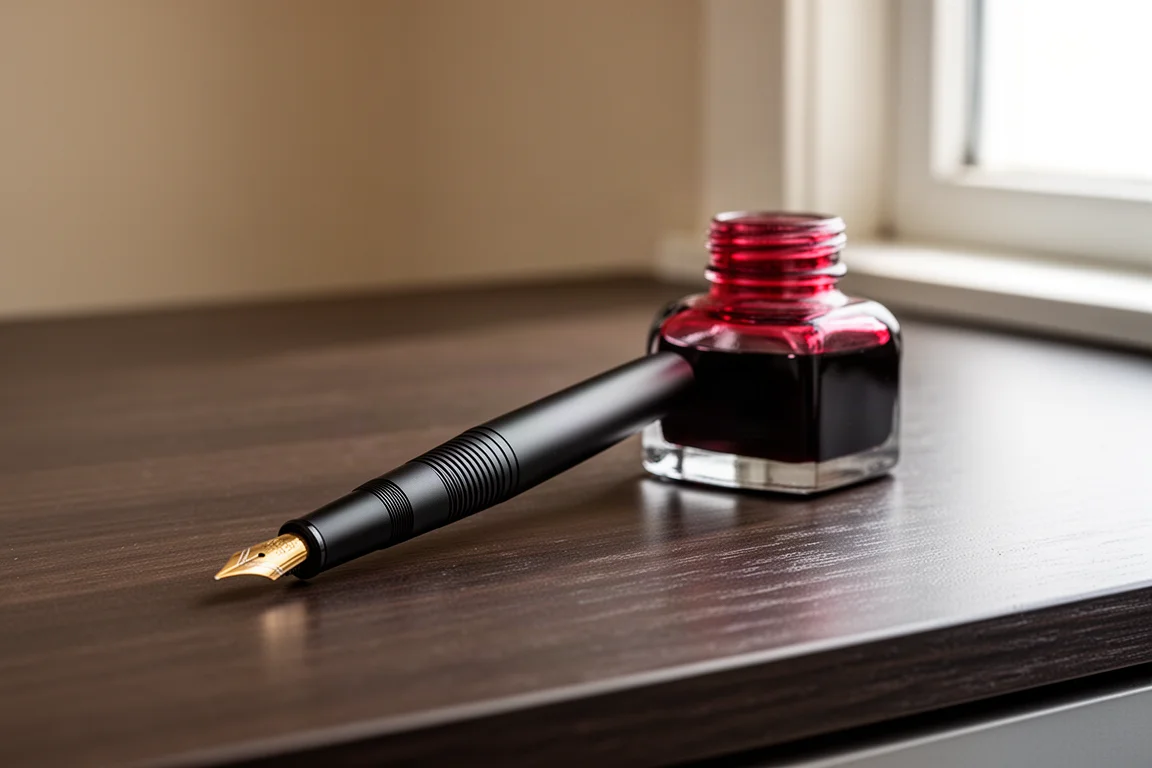
T AG markets what they call a “brilliant filling system,” and they are honest about what it actually is: an internal converter, in other words a captive converter. The turning knob at the end of the barrel drives a piston inside a converter that screws into the section, so there is no real chance of it accidentally coming loose, and it tends to rattle around less in the barrel than a loose converter might.
Filling is simple: dip the section into ink and twist the turbine knob to draw ink up. It works reliably and without fuss.
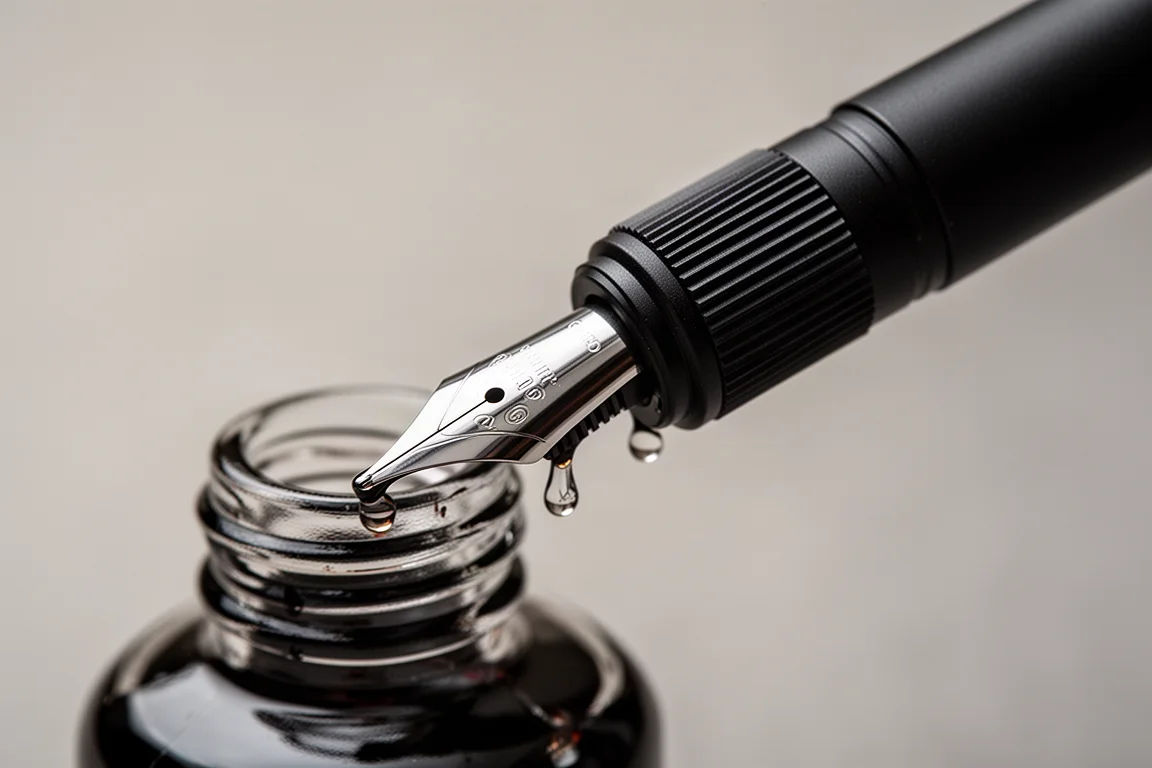
One small quirk to know about: a small metal piece that engages with the turbine can slide off, so be careful when cleaning. If you dislike captive converters on principle, note that the barrel unscrews and the converter can be removed from the section. Since the company openly describes it as an internal converter rather than pretending it is a piston filler, it is hard to hold that against them.
Writing Experience: Fountain Pen
The fountain pen uses a black PVD coated stainless steel nib commissioned from Schmidt, which looks like a number five size with a plastic feed. A gold-plated nib upgrade is available as an option. The fine nib we tested ran finer than expected and wrote with a round, consistent line; it is not a super wet writer, but it is nicely tuned and does what it is supposed to do.
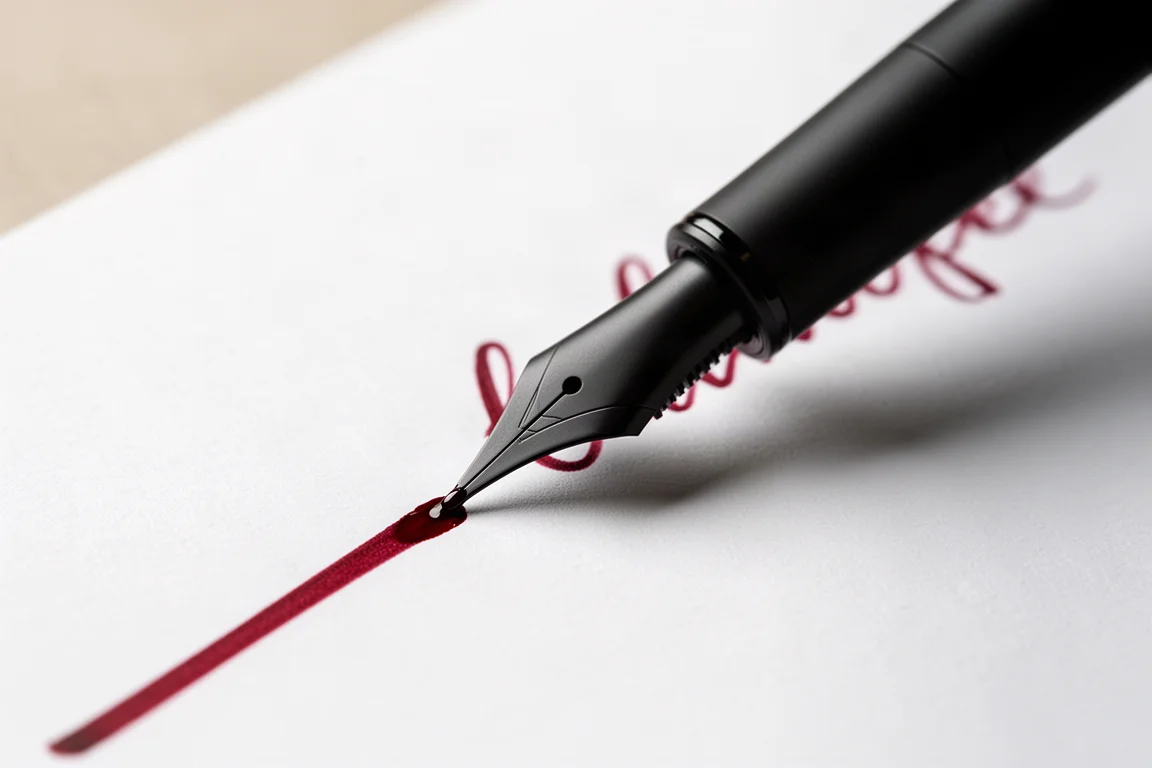
Here is the most important practical tip: hold this pen a little higher than you normally would. Held low on the tapered section, the nib felt feedback-heavy, to the point of being a bit scratchy. Once the hand position moved higher, the nib became noticeably smoother and genuinely pleasant. The grooves on the barrel appear designed as grip texture for exactly that higher hold, and the campaign materials show everyone holding it that way. If you get one, experiment with your grip before judging the nib.
A few nib caveats. The pen does not post, and you would not want to force it anyway, since pushing the cap over the back could engage the turbine knob and release ink. Reverse writing works poorly: it stays smooth but runs very dry. And while the nib is not listed as a flex nib, its somewhat long dry time means a careful writer can squeeze out a little line variation. That is entirely at your own risk.
Writing Experience: Rollerball
The rollerball is externally near-identical to the fountain pen, with a Schmidt rollerball tip in what feels like a medium width. The clever part is that it uses the same turbine knob to suck up fountain pen ink rather than relying on proprietary refills, which opens up a far wider range of ink colors and brands than the usual blue, black, and occasionally red or green refill world.
The writing feel is very smooth and very pleasant, with no line variation to speak of, as you would expect from a rollerball. The section feels slightly longer in the hand because of the tip, though the two pens are effectively the same size. Honestly, the rollerball ended up being the favorite of the two: it is a genuinely fun concept, smoothly executed.
What We Liked and What Could Be Better
The list of positives is long. The submarine-inspired design is cool and consistently executed. Build quality and craftsmanship are excellent for the category. The weight feels substantial and satisfying, provided you like heavier pens. The Schmidt nib fits the pen’s proportions well, the barrel grooves are both attractive and comfortable, and the turbine knob fills the pen easily and comfortably.
On the other side of the ledger: the higher hold takes a little getting used to, the pen does not post, and heavier pens will simply not suit riders, sorry, writers, who prefer lightweight pens. One tiny pet peeve: the clip sticks out far enough that the cap cannot be laid flat on a desk without tipping over. None of these are dealbreakers, but they are worth knowing in advance.
Which One Should You Buy?
The fountain pen lists at $109 and the rollerball at $100, with the bundle at $209, which is what was tested here. A gold-plated nib upgrade for the fountain pen is normally an extra $15, and campaign backers have been able to get it free by messaging with a code, so it is worth checking whether that offer is still live if you are buying during the campaign.
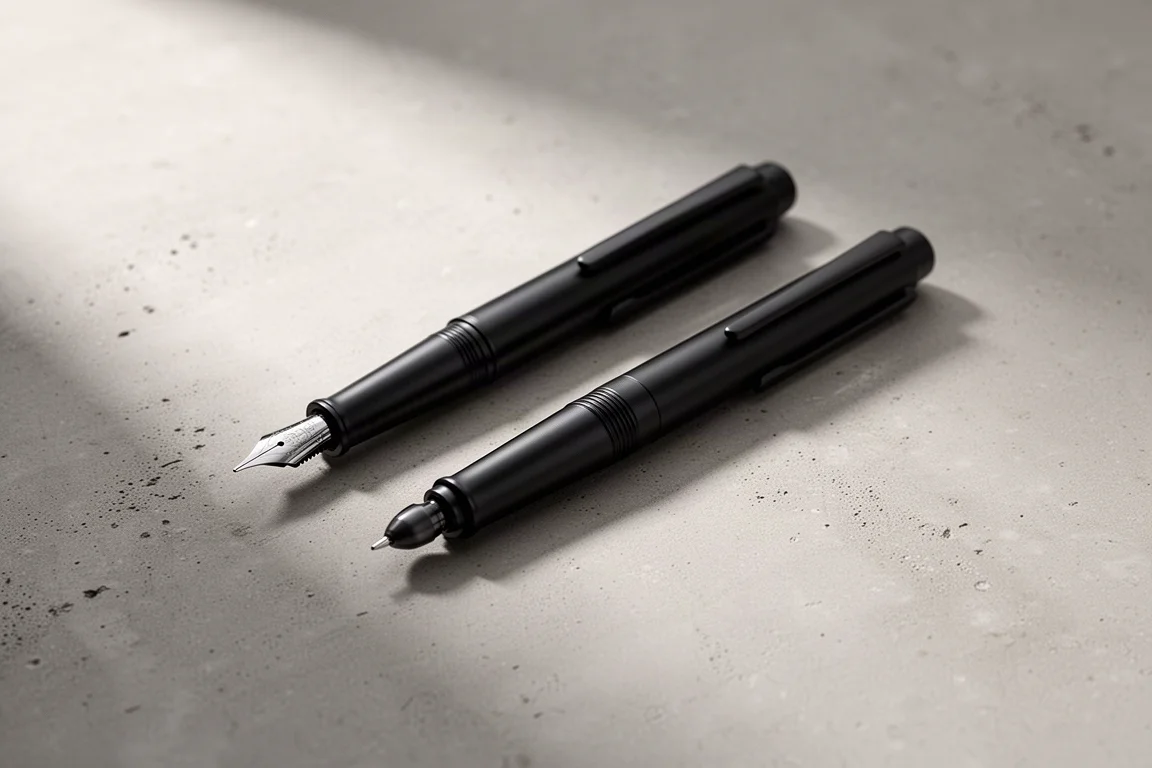
If you want the classic fountain pen experience and do not mind adjusting your grip slightly higher, the fountain pen is the one. If you love the idea of a rollerball that drinks any fountain pen ink you throw at it, the rollerball is arguably the more fun pick, and it was the preferred writer of the two here. If you like lighter pens or need to post your cap, neither is for you.
Conclusion
The T AG Submarine collection is a pair of well-made, heavy brass pens with a coherent design theme, a genuinely usable twist-filling system, and a rollerball that happily takes fountain pen ink. Hold the fountain pen a bit higher than instinct suggests and both pens turn into smooth, pleasant writers. They are fun, solidly crafted, and easy to recommend to anyone who enjoys pens with a bit of mechanical personality.
Further reading
Related Reviews
Fountain Pens
Best Budget Fountain Pens Tested: 9 Pens, One Clear Winner
A hands-on comparison of nine affordable fountain pens for everyday writing, calligraphy, and sketching, with a clear standout for flexible nib fans.
Fountain Pens
Aurora Optima Review: An Italian Piston Filler That Punches Above Its Price
A 14k gold nib, ebonite feed, and a beautifully deep oraloid body make the Aurora Optima one of the most rewarding piston fillers around.
Fountain Pens
Cross Bailey Light Review: The Entry-Level Fountain Pen Worth Keeping at the Office
A plastic-bodied Cross with a metal clip, snap cap, and famously smooth extra fine steel nib. Around $15, available almost everywhere, and easy to recommend.