Fountain Pens
Three Showstopper Urushi Fountain Pens from Taccia and Palisade
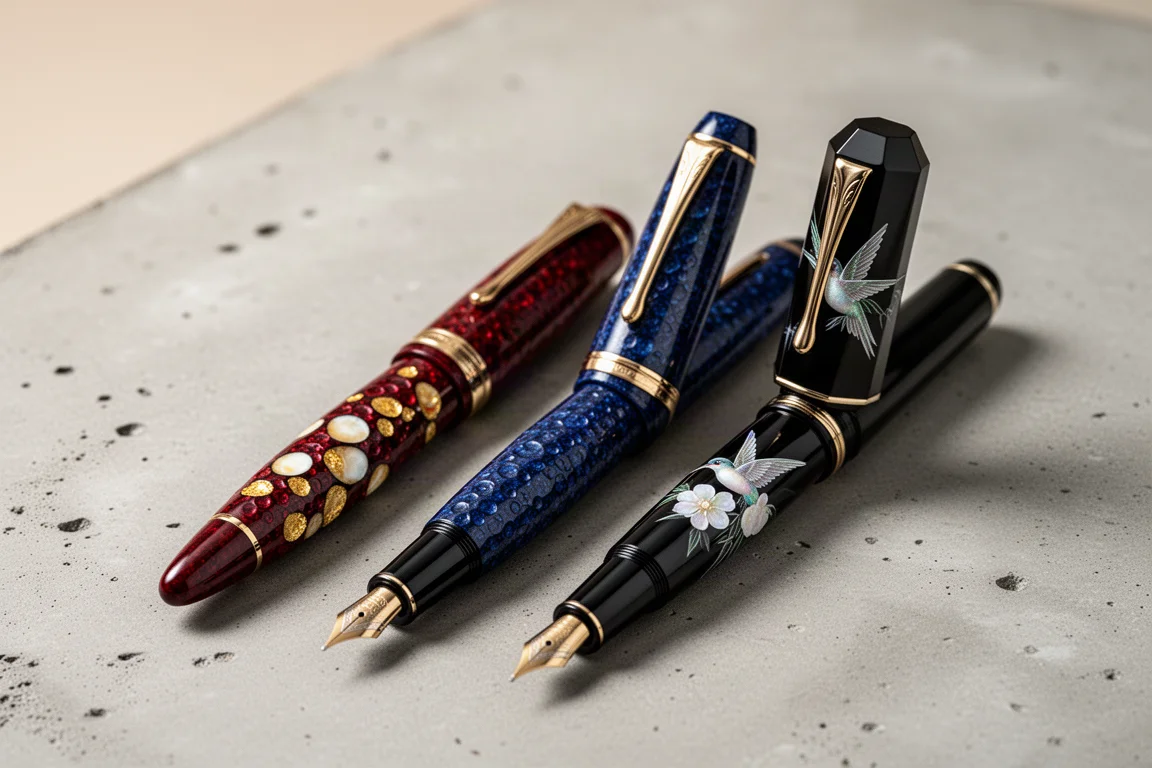
Two Taccia Emperor Shin Shugyoku Nuri models and the Palisade Octagonal Chinkin Hummingbird, three limited-edition luxury fountain pens with traditional Japanese lacquer artistry and Sailor nibs.
Introduction
Every so often a group of pens arrives that feels less like stationery and more like small works of art. These three, two from Taccia and one from Palisade, are exactly that. Both companies share a heritage, and both lean hard into traditional Japanese lacquer techniques applied to oversized, commanding pen bodies with Sailor-made nibs.
All three are limited editions priced in true luxury territory, so this is not an impulse-buy comparison. It is a look at what makes each one special, and which one might deserve a place on a collector’s desk.
Taccia Emperor Shin Shugyoku Nuri Amemiya Urushi
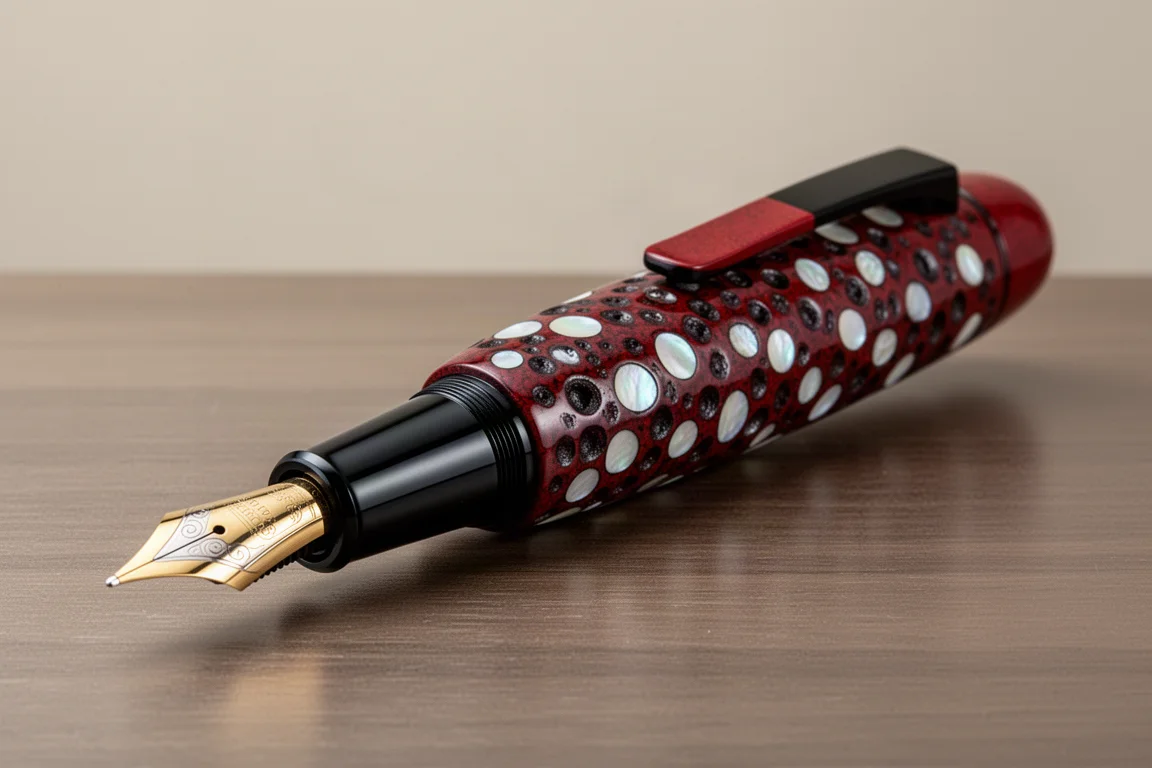
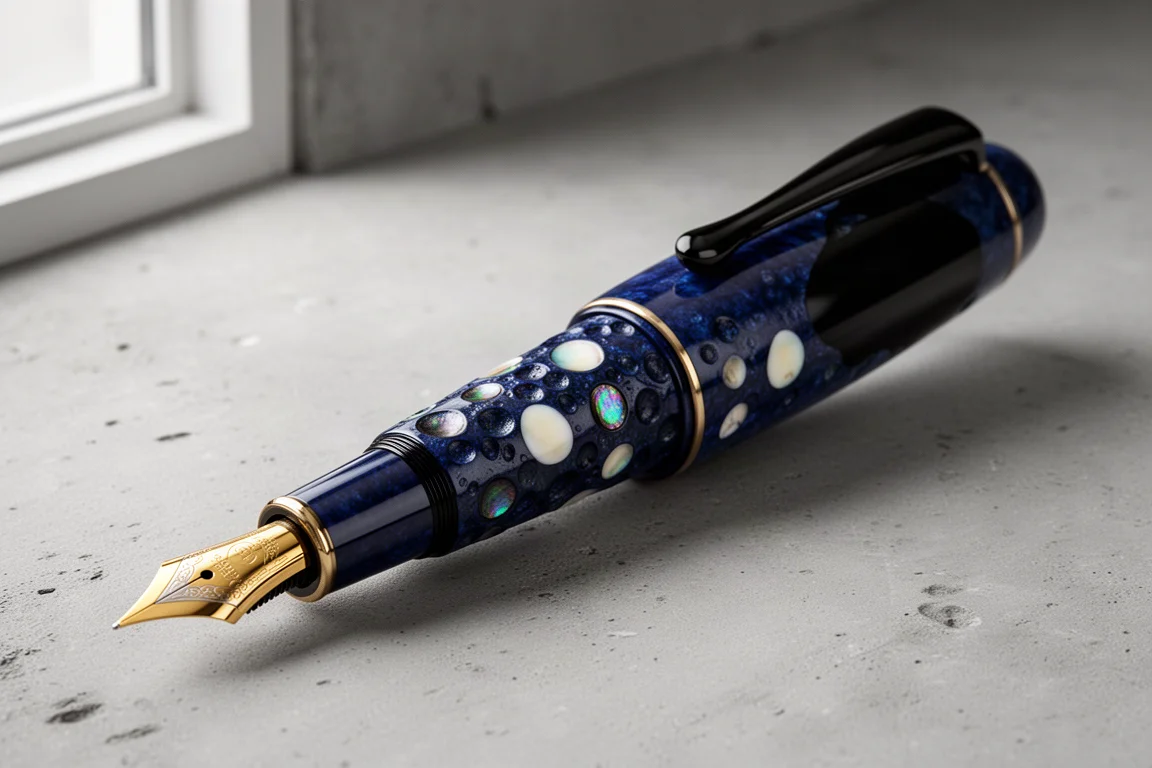
The Amemiya Urushi is the deep red model of the pair, and it is genuinely stunning. The body is Ebonite finished in deep red urushi, using Sagara Nuri, a centuries-old lacquerware technique from Japan’s Aomori Prefecture. More than 20 layers of urushi lacquer are polished away to create small crater-like depressions, each one then filled with either raden maki-e inlay or quail’s eggshell and sealed back with more lacquer.
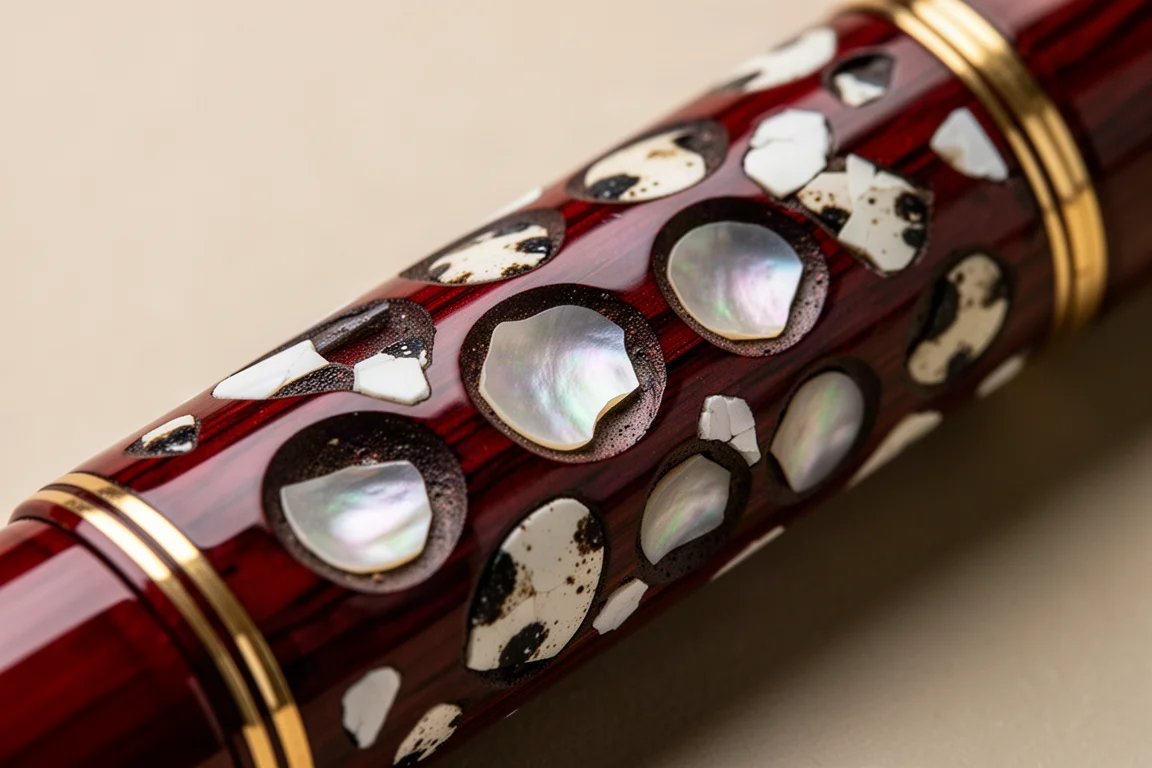
The result is a textured surface where every individual circle holds a tiny piece of craft: pearl here, eggshell there, with the deep red, gold, and yellowish layers visible between them. Rounded ends, a half-red half-black urushi clip, and an artist’s signature on the back barrel complete the picture. Each pen is a limited edition of 20 units, and the signature is a welcome reminder that a person, not an assembly line, spent serious time on this.
Under the cap sits a Sailor King of Pen nib branded Taccia, an 18-karat gold broad in this example. The section is chunky and comfortable, the pen is plenty long enough to use unposted, and posting is not really an option anyway, which is fine with a natural lacquer material. It is a cartridge-converter pen accepting Sailor cartridges, with a Sailor converter included, and it should not be eyedroppered.
Taccia Emperor Shin Shugyoku Nuri Ao Urushi
The Ao Urushi is essentially the same pen in a different color scheme. Here the base is a deep blue, with deep blue and black on the clip, and the color transitions between black and blue on the cap feel a bit more prominent, with larger black swatches than on the red model.
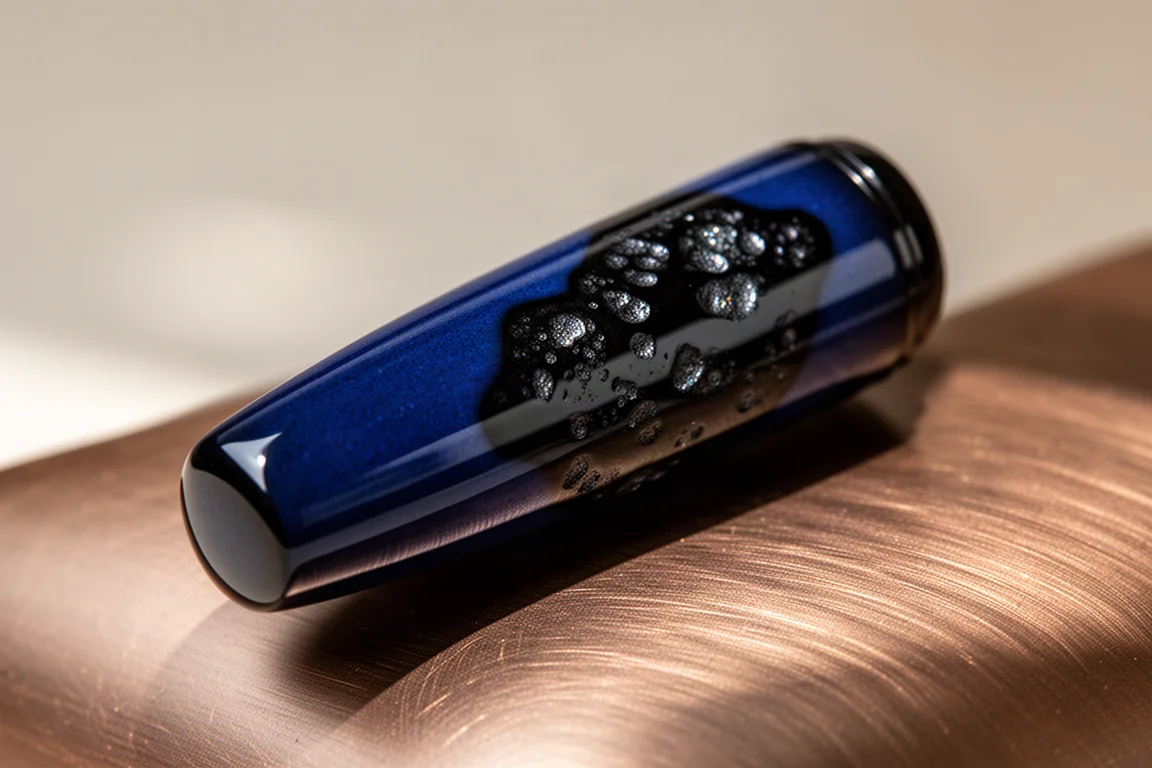
Both colorways look beautiful in their own right. The red model keeps its black-to-red transitions more subtle, and of the two the red edges ahead as a personal pick, but the blue is an incredible alternative for anyone drawn to cooler tones. This example carries the same Sailor King of Pen platform with a medium nib, which is spectacular in its own right. Pricing and limited-edition status mirror the red model.
Palisade Octagonal Chinkin Hummingbird
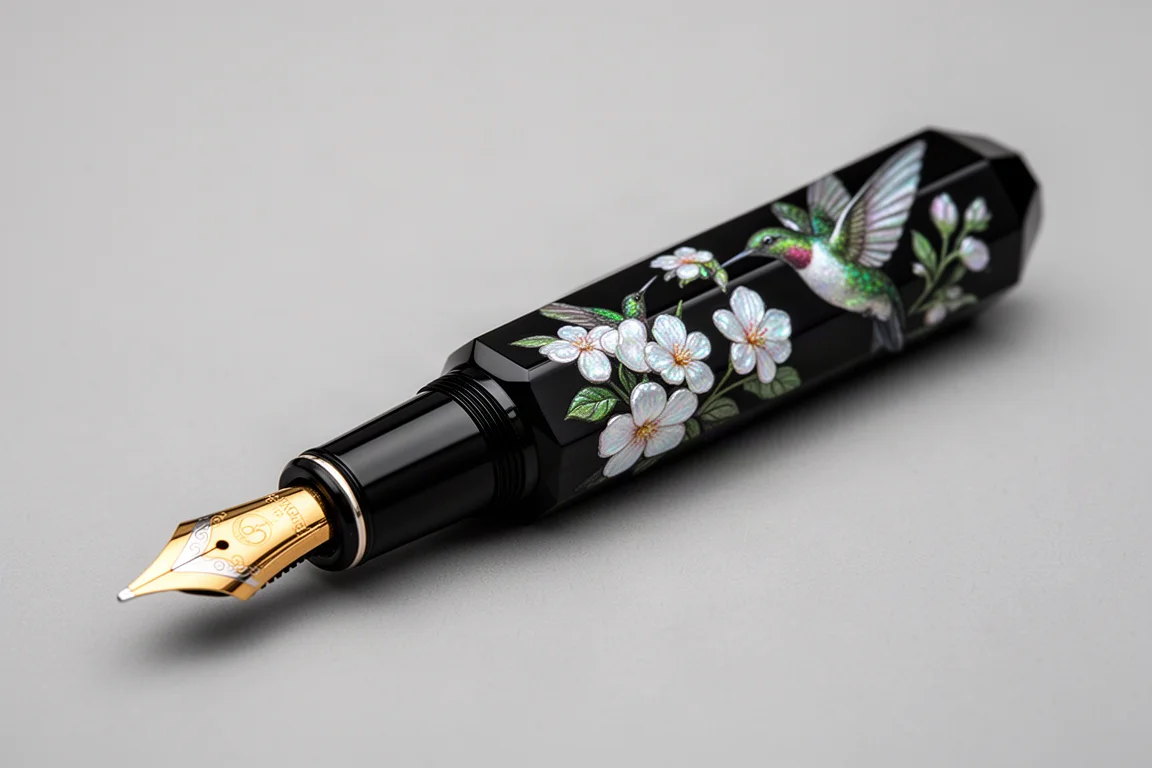
Chinkin is one of the most underappreciated lacquer techniques on pens, and the Octagonal Chinkin Hummingbird shows why. Rather than being painted on, the artwork is etched into the lacquer and then filled with color, which gives the piece real depth and permanence.
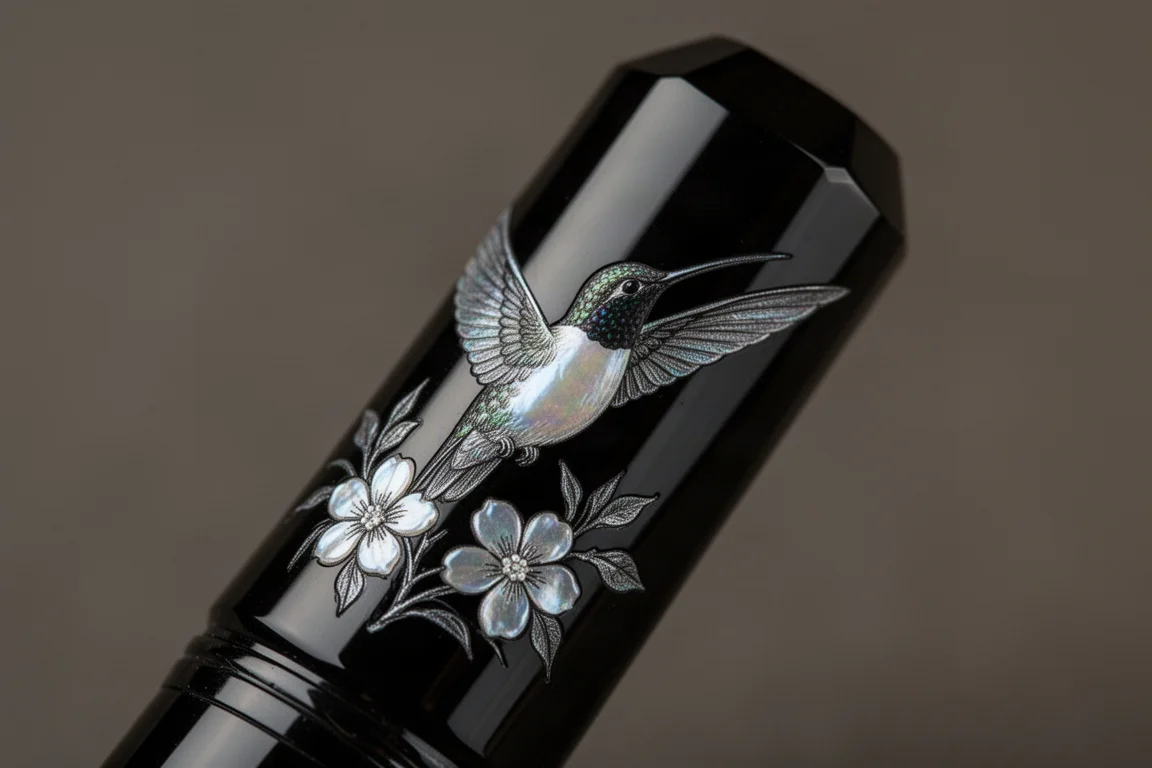
This pen is a limited edition of 30, with the artist’s name engraved and filled at the bottom of the barrel, consistent with the chinkin approach throughout. The artwork features one hummingbird on the top and another on the bottom, still hunting for a flower in flight, with pearlescent, shimmery feather and flower work that is simply outstanding.
Unlike the Emperor models, this pen uses a number six two-tone 18-karat nib, made by Sailor but branded Palisade. The section is a bit longer, beginning with a slight flare before the threads and a small step to the barrel, and while narrower than the King of Pen models, it remains very comfortable. It is also a cartridge-converter pen accepting Sailor cartridges with a converter included, and again not a candidate for eyedropper conversion.
Size and Handling
For scale, the Taccia Emperor models sit close to the Sailor King of Pen Ebonite body they are based on, though the Taccia version is slightly longer and a touch girthier. The Octagonal Chinkin Hummingbird is noticeably smaller but still a full-sized pen, comfortable next to large flagship pens like the Namiki Yukari Royale or a Pilot Custom 823. None of the three posts in any practical sense, which is normal for pens at this level.
Writing Performance and Nib Character
The King of Pen broad on the Amemiya Urushi is spectacular: buttery smooth, which is unusual for Japanese nibs that tend toward a crisper feel, with some line variation and a generous ink flow. Fast writing gets an immediate wow reaction from anyone who tries it. Reverse writing is not this nib’s strength, but that is a minor footnote on a nib this good.
The number six medium on the Hummingbird is also 18-karat gold and very generous for a medium. It carries a bit more feedback than the broad, but stays very smooth, and the feed keeps up easily with fast writing. With an ink like Taccia Sabi-Midori, which starts blue, dries green, and throws a heavy red sheen, both nibs put on a genuine show.
Which One Should You Choose?
All three are luxury pens at luxury prices: the Octagonal Chinkin Hummingbird retails for just under $2,900 in fine, medium, broad, zoom, or music nib options, while both Emperor Shin Shugyoku Nuri models retail for around $2,500 in medium or broad. If you want maximum artistry per square inch and a smaller, faceted body, the Hummingbird is the pick. If you want a King of Pen-scale statement piece with the richest layered lacquerwork, choose between the red Amemiya and the blue Ao based purely on color preference. Either way, with editions of 20 and 30 units, availability will not last long.
Conclusion
These three pens represent urushi and chinkin artistry at a level few manufacturers reach. The Taccia Emperor models deliver monumental size, layered Sagara Nuri texture, and a spectacular King of Pen nib, while the Palisade Octagonal Chinkin Hummingbird offers exquisite etched artwork on a more manageable body. For collectors who value handcrafted detail as much as writing performance, all three are easy to recommend.
Further reading
Related Reviews
Fountain Pens
Best Budget Fountain Pens Tested: 9 Pens, One Clear Winner
A hands-on comparison of nine affordable fountain pens for everyday writing, calligraphy, and sketching, with a clear standout for flexible nib fans.
Fountain Pens
Aurora Optima Review: An Italian Piston Filler That Punches Above Its Price
A 14k gold nib, ebonite feed, and a beautifully deep oraloid body make the Aurora Optima one of the most rewarding piston fillers around.
Fountain Pens
Cross Bailey Light Review: The Entry-Level Fountain Pen Worth Keeping at the Office
A plastic-bodied Cross with a metal clip, snap cap, and famously smooth extra fine steel nib. Around $15, available almost everywhere, and easy to recommend.