Fountain Pens
Taccia Miyabi Kaga and Kagayakijima: Two Urushi Fountain Pen Collections Worth a Close Look
Ten hand-finished urushi fountain pens across two limited Taccia collections, with Sailor nibs, ebonite bodies, and pricing details to weigh before buying.
Introduction
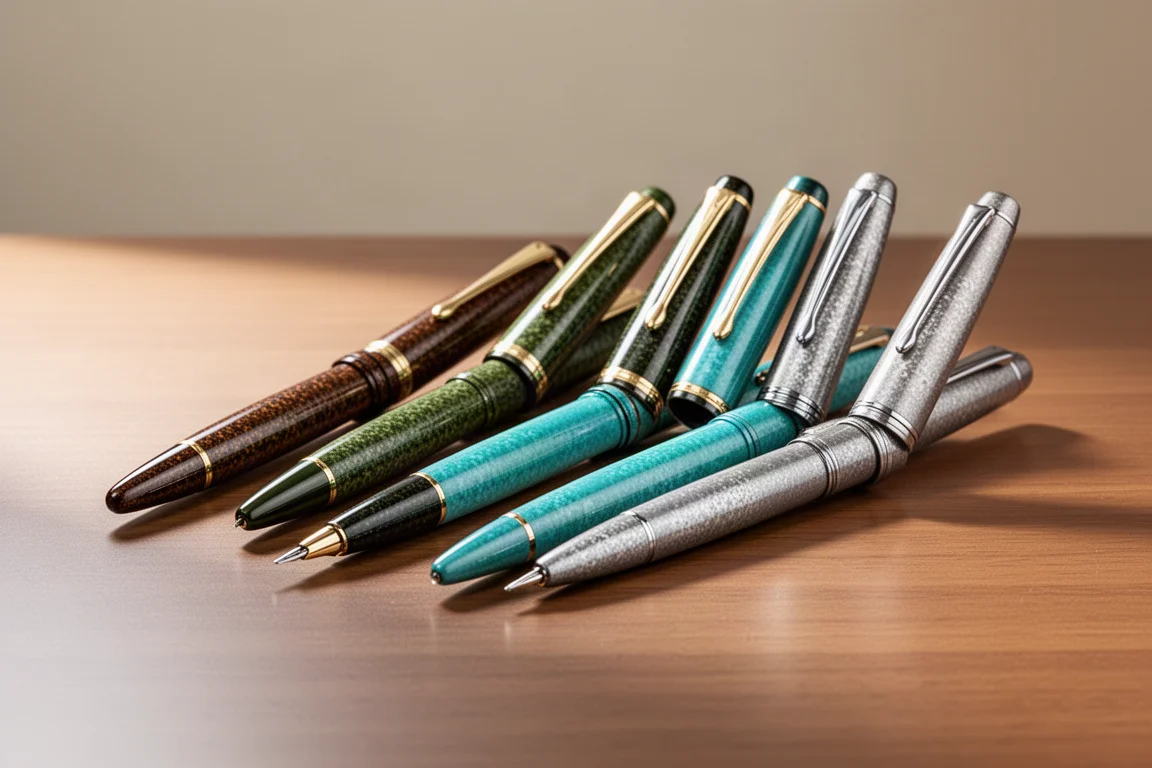
Taccia’s Miyabi Kaga and Kagayakijima collections are something unusual in the fountain pen world: ten different models, each hand-finished with urushi lacquer and precious metal inlay work, each produced in limited numbers. Both lines draw inspiration from the Kaga Domain, the region that controlled much of Japan during the seventeenth century and gave rise to a number of important craftsmanship techniques. The pens are made by hand in Taccia’s urushi studios in Wajima, Japan, and they share a close manufacturing relationship with Sailor, borrowing nibs, cartridges, converters, and several design elements.
This guide walks through both collections, what makes each pen unique, how they size up against well-known rivals, how the Sailor nibs actually write, and what to consider before spending.
The Miyabi Kaga Collection
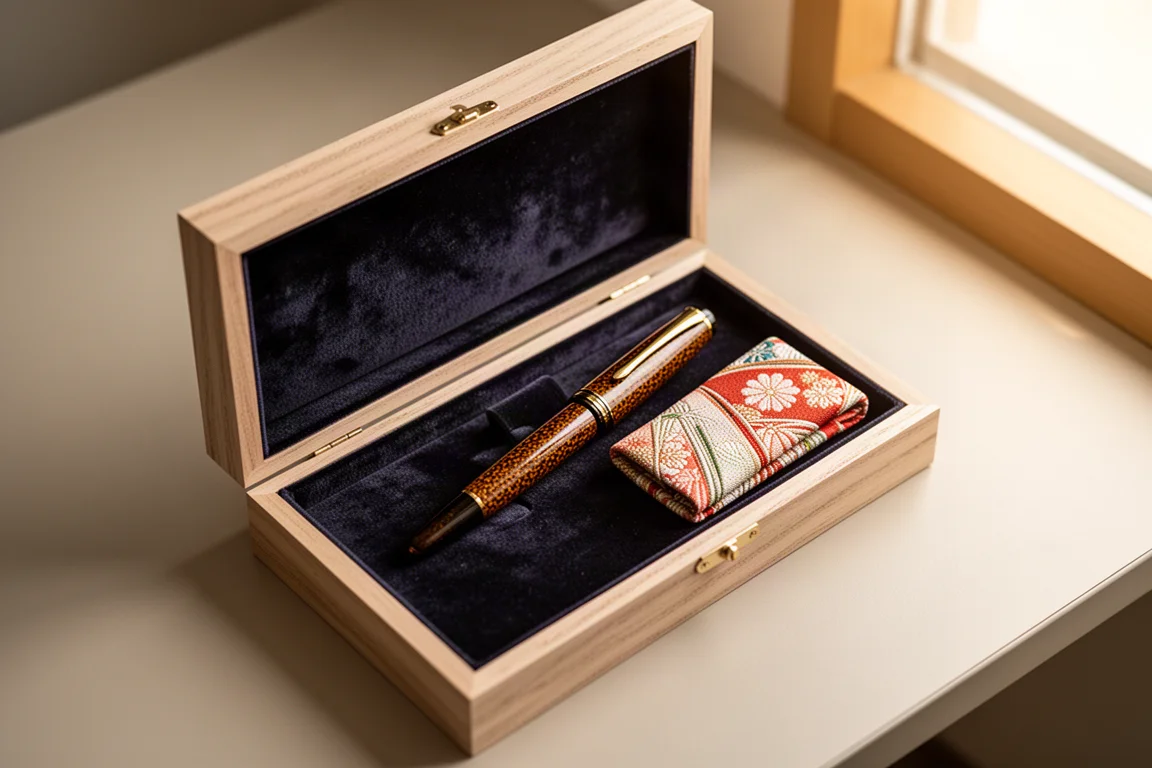
The Miyabi Kaga pens arrive in genuinely lovely soft wooden boxes. Inside you get information about the line, warranty paperwork, a couple of cartridges, and a kimono pen sleeve nestled in velvet that feels noticeably thicker and more luxurious than typical sleeves. The pens themselves are built on an ebonite base and sit close in size to the Sailor King of Pen, with Taccia and Sailor sharing parts and design language.
Four models make up the lineup, each limited to 100 units:
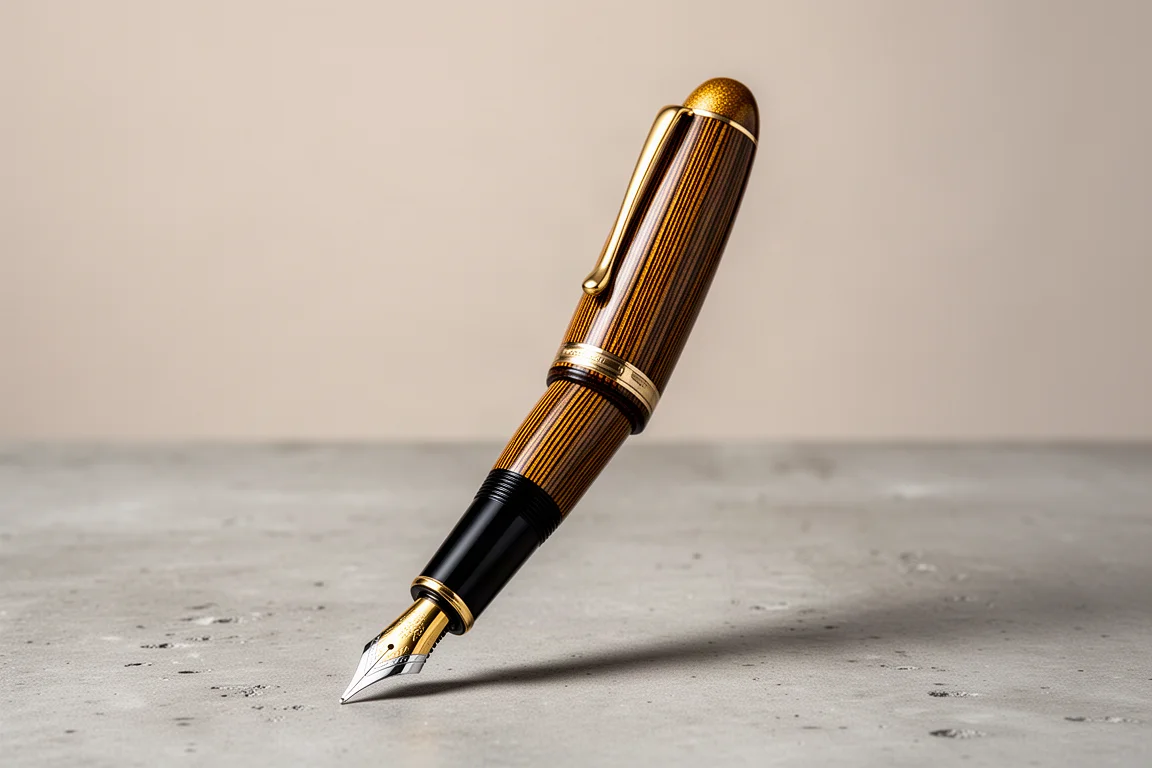
- Summer Shimmer: a muted brownish-yellow lacquer base topped with individually painted lines, rounded cap top with golden shimmer, plus the artist’s signature and limited edition number on the barrel.
- Winter Eclipse: a cool treatment reminiscent of ice, significantly raised on the cap and barrel to help with capping and grip, fitted with a music nib.
- Spring Willow: darker, more vibrant greens with a pebbling effect, some pebbles filled with raden inlay, and that texture carried onto the section for grip.
- Autumn Monsoon: a stormy turquoise urushi base with darker blue details and grey accents, paired with a silver clip that matches the silvery-grey patterning.
The Summer Shimmer is fitted with a number six 18k gold nib, available in extra fine, fine, medium fine, medium, broad, zoom, and music depending on the retailer. The cap twists off in just under two rotations, and the section has a slightly concave shape with a raised black surface treatment that genuinely improves grip. The pen is long enough to use unposted, and posting is best avoided anyway since the cap does not stay secure and could damage the artistic finish over time.
One design note worth flagging: the nib looks slightly small relative to the overall size of the pen, and a King of Pen-sized nib would suit the body better. It is a cartridge converter pen using proprietary Sailor cartridges and converter. Even though the barrel is solid ebonite with metal in the section, eye dropping is not recommended. Each model retails at $1,276.
The Kagayakijima Collection
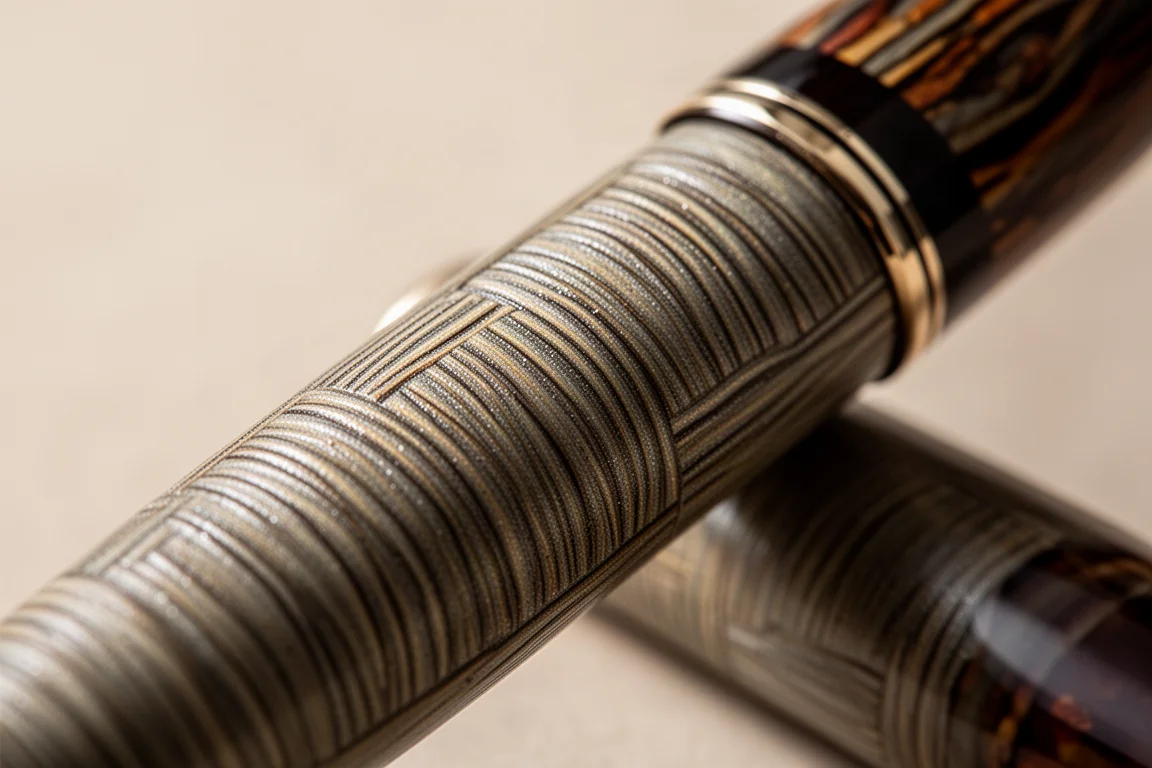
The Kagayakijima line also draws on Kaga Domain inspiration but takes a different design direction. Six models are available, each limited to 50 units. Where the Miyabi Kaga pens are thick and rounded, these are thinner with flat ends and a faceted body: twelve facets encircle both the cap and barrel, and the signature and edition number are painted on the back of the barrel. They arrive in a large pen sleeve that protects them well.
The lineup includes:
- Summer Shimmer: similar treatment to its Miyabi Kaga namesake but on a slimmer faceted body with a smaller, number-five-style nib that suits the thinner design better.
- Winter Blizzard: the Summer Shimmer technique over a silvery-grey base.
- White Birch: raised lines that resemble tree bark with a matte urushi exterior, a particularly sharp-looking model.
- Hakumei: subtle raden flake accents, with the cap transitioning from dark blue to darker green, an orangish-red barrel end, and a green section.
- Hakadoo: reminiscent of the Winter Eclipse but with a less prominent grey and raised black treatment.
- Autumn Sunset: the most unique of the group, with dark red and black urushi in the middle of the pen and a built-up matte texture on the cap and barrel ends, reminiscent of rubber-dipped grip gloves but executed in hand-applied lacquer.
These are cartridge converter pens using proprietary Sailor cartridges and converters throughout.
How the Two Collections Compare
The Miyabi Kaga barrels are similar in length to the Kagayakijima barrels, but the sections differ considerably: the Miyabi Kaga is significantly thicker. The clips differ too, with the Kagayakijima using a more traditional Sailor-style clip while the Miyabi Kaga carries Taccia’s pinched design. On the Miyabi Kaga, the nib is larger, roughly a number six, while the Kagayakijima’s nib is closer to a number five, which feels more proportionate on its slimmer body.
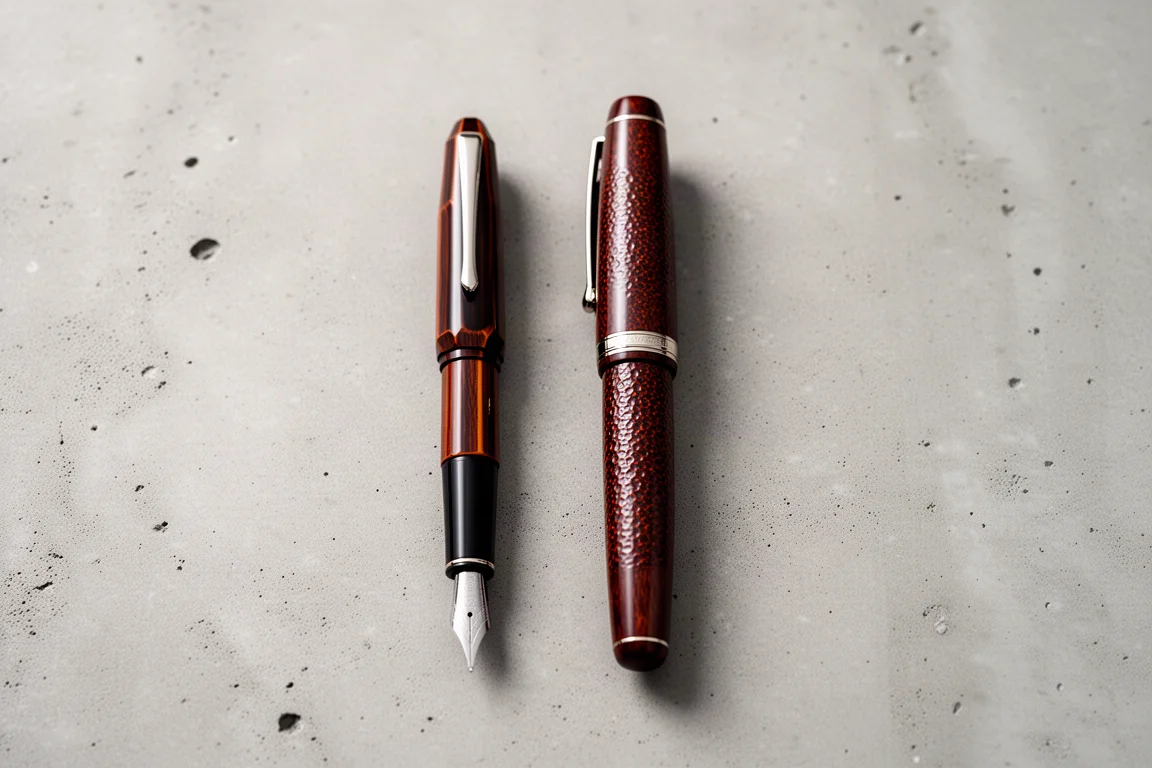
For context, the Miyabi Kaga pens sit slightly larger than a Sailor King of Pen in ebonite, and compare alongside the Pelikan M1000 and Montblanc 149. The Kagayakijima pens compare well against a Leonardo Momento Zero Grande and a Visconti Homo Sapiens, coming in slightly smaller than a Pilot Custom Urushi.
Nibs and Writing Performance
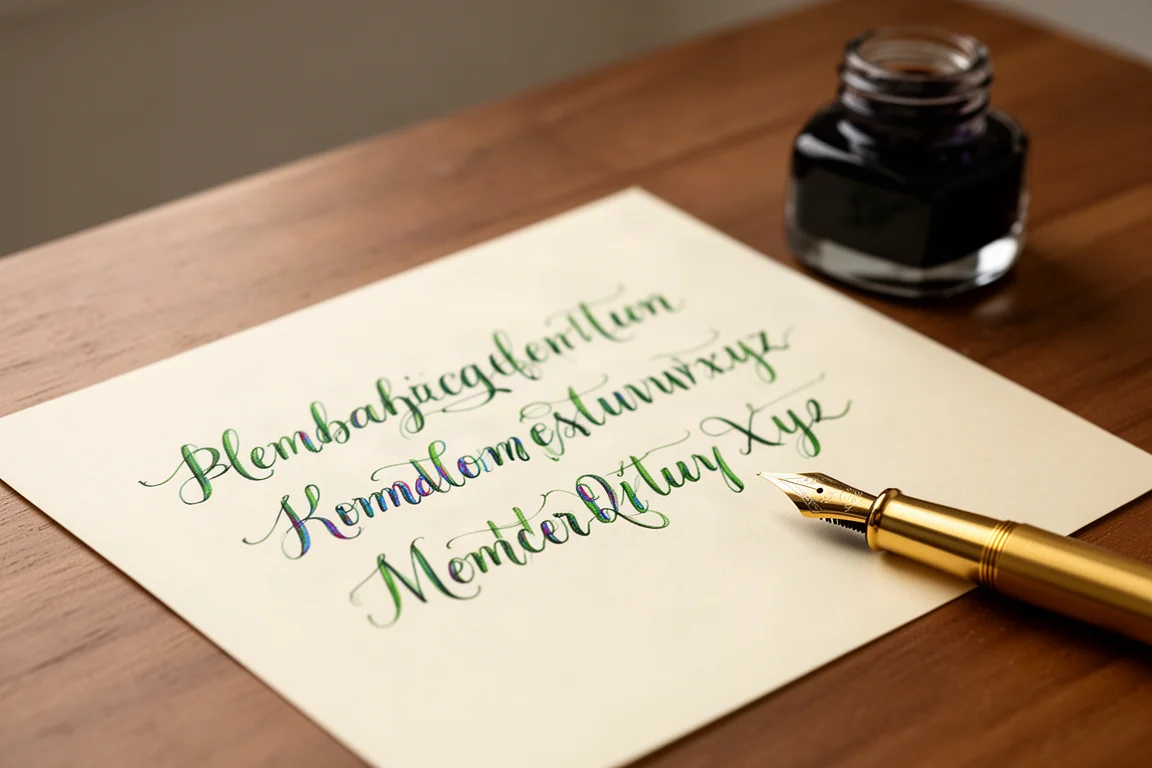
Taccia’s nibs are made by Sailor, and the writing samples underline why that matters. The Summer Shimmer’s medium nib is smooth with just a hint of feedback and very nicely controlled ink flow. Reverse writing is a little sharp but usable, and fast writing poses no issues. Paired with Taccia Suplementory, a green ink with a blue-red shimmer that shifts as it dries, the result has real personality.
The Winter Eclipse’s music nib is unusual in that it has a single tine slit rather than the two found on many music nibs. It lays down a generous amount of ink, producing very thick downstrokes and significantly thinner cross strokes around medium-to-broad width, with smooth, pleasant fast writing.
The Hakumei’s hard fine nib delivers a little flexibility, slightly more feedback than the other two, and a less generous but expected flow for a fine point. Reverse writing lays down an extra-extra-fine line without being overly sharp, and the feed keeps up with fast writing without trouble. Even for writers who normally avoid fine nibs, this one is genuinely pleasant enough to use all day.
Buying Advice
Retail pricing varies by line and retailer. The Miyabi Kaga models retail for $1,276 each. The Kagayakijima models have been seen anywhere from $1,595 down to $1,000, so it pays to shop around for a better price on those. Given the hand-finished urushi work, limited edition status, and Sailor nib performance, both lines are considered worthy of being called luxury pens and of their pricing.
If you prefer larger pens with more traditional rounded forms and want the wider nib selection, the Miyabi Kaga is the stronger pick. If you like a slimmer, faceted silhouette and subtler finishes, the Kagayakijima offers more models to choose from.
Conclusion
Both Taccia collections deliver extremely high quality construction, genuinely interesting lacquer techniques, and Sailor nibs that perform outstandingly. The Miyabi Kaga suits writers who want a large, tactile pen with bold urushi treatments, while the Kagayakijima rewards those who prefer faceted, slimmer pens with more understated artistry. Either way, you are getting a limited edition writing instrument with real craftsmanship behind it.
Further reading
Related Reviews
Fountain Pens
Best Budget Fountain Pens Tested: 9 Pens, One Clear Winner
A hands-on comparison of nine affordable fountain pens for everyday writing, calligraphy, and sketching, with a clear standout for flexible nib fans.
Fountain Pens
Aurora Optima Review: An Italian Piston Filler That Punches Above Its Price
A 14k gold nib, ebonite feed, and a beautifully deep oraloid body make the Aurora Optima one of the most rewarding piston fillers around.
Fountain Pens
Cross Bailey Light Review: The Entry-Level Fountain Pen Worth Keeping at the Office
A plastic-bodied Cross with a metal clip, snap cap, and famously smooth extra fine steel nib. Around $15, available almost everywhere, and easy to recommend.