Audio
Syng Cell Alpha Review: A Self-Calibrating Speaker That Reshapes the Soundstage
A close look at the Syng Cell Alpha: self-calibrating triphonic sound, force-cancelling sealed woofers, app-steered soundstage and the trade-offs to weigh before buying.
Introduction
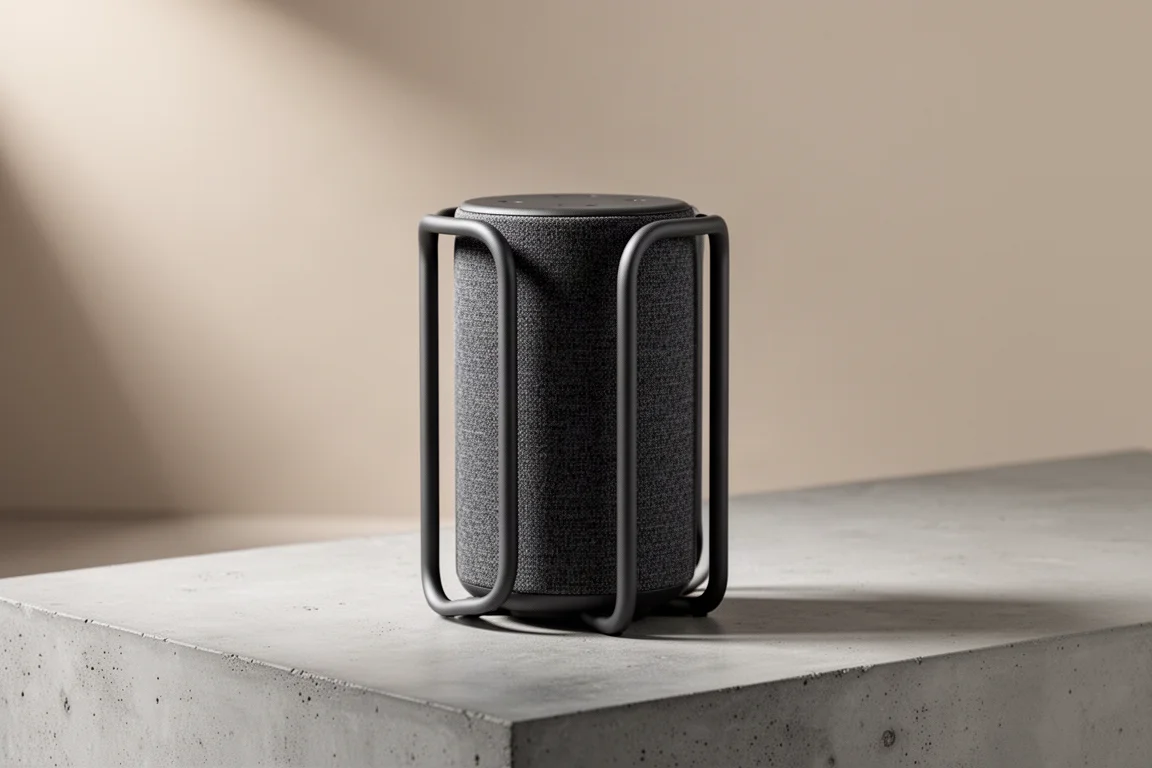
The Syng Cell Alpha is one of the more unusual speakers you can place in a room. It arrives as a compact cylindrical unit held in an open, sculptural frame, and its driver layout has almost nothing in common with a conventional two-way bookshelf design. Syng describes it as a three-way triphonic speaker, and the engineering behind that description is the reason it deserves a serious look rather than a quick judgement based on appearance.
The defining behaviour of the Cell Alpha is that it calibrates itself to the space it stands in. On power-up it detects nearby boundaries, including walls, the floor and the ceiling, and uses that information to steer its output. The result is a cardioid radiation pattern above roughly 80 Hz, with omnidirectional behaviour below that point. Syng’s reasoning is straightforward: most rooms are not larger than the wavelength of 80 Hz, so an omnidirectional approach below that frequency avoids the problems a directional pattern would create.
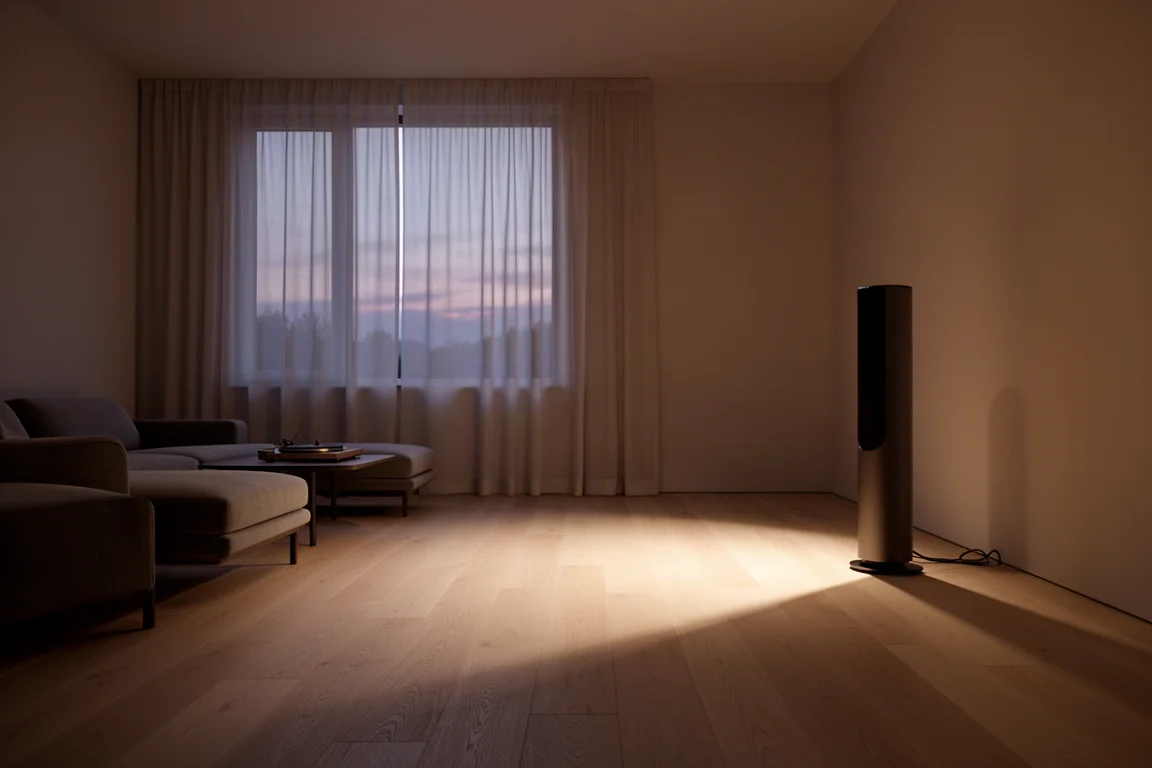
Everything else is managed through the Syng app, including the position of the soundstage itself. That single capability is what separates the Cell Alpha from nearly everything else in its price bracket, and it is the feature that most repays hands-on listening.
Who This Speaker Is For
The Cell Alpha suits listeners who want to shape the sound rather than accept a fixed sweet spot. Because the app lets you move and pan the soundstage, adjust the steering of each individual cell, and vary width, depth and side-to-side balance, it works well in rooms where the obvious listening position is not the practical one.
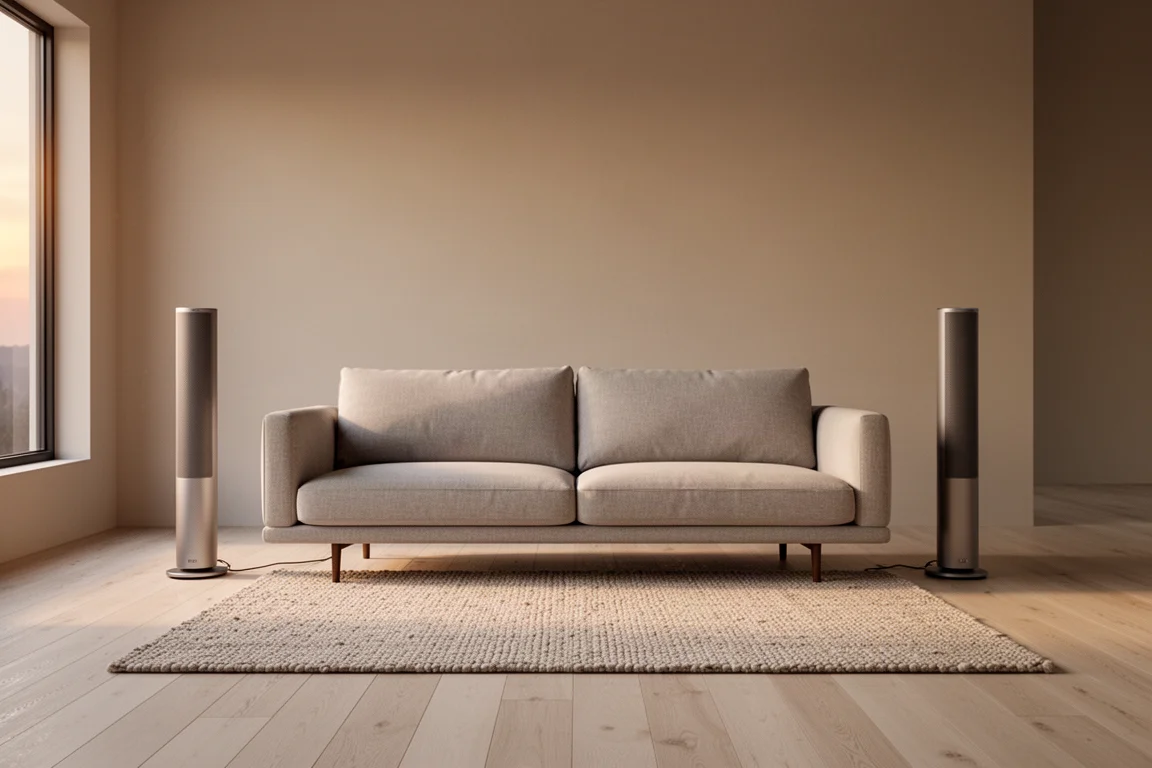
It is also a product for people who intend to build a system over time. A single unit delivers an enveloping presentation with a semblance of stereo, but it is not a replacement for a true left and right pair. Two units produce genuine stereo and let you sit either inside or outside the sound field, which is a very different experience from the stage-like presentation of a conventional pair. A third unit adds a fully immersive sound field and, just as importantly, more even bass, because the units detect one another and work together to fill in peaks and dips instead of reinforcing the same room modes.
This is not a speaker for someone who wants a single plug-and-play box with no setup decisions attached. It rewards listeners who enjoy tuning a system to a room and to their own taste.
Main Strengths
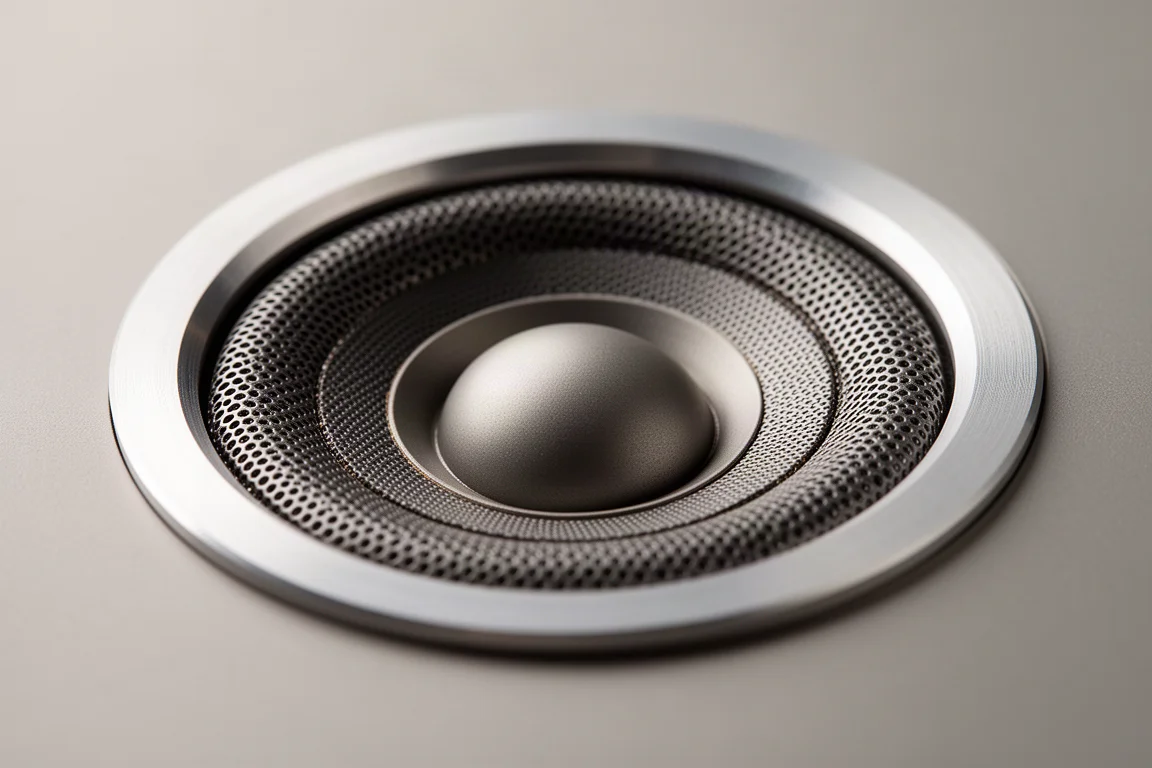
The headline strength is the driver array. Each Cell Alpha contains two 6.5 inch mid-bass drivers, three 3.5 inch mid-range drivers and three coaxially mounted 0.75 inch tweeters. Syng presents this as a true point source covering 20 Hz to 20 kHz, and the coaxial mounting of mid-range and tweeter is central to that claim.
Low-frequency output is the second standout. In-room extension down to 30 Hz, and in some cases toward 20 Hz, is no difficult task for these speakers. That is remarkable output for a cabinet of this size, and it explains why the bass settings in the app matter as much as they do.
The third strength is control. Being able to shift the soundstage between the speakers and hear the presentation change from focused and central to broad and diffuse is a genuinely useful tool. It turns room interaction from something you work around into something you can actively shape.

Force-Cancelling Woofer Design
The two 6.5 inch woofers sit in a fully sealed enclosure and fire in opposite directions. Acoustically they are in phase in the room, but mechanically they are out of phase with each other, which cancels much of the vibration that would otherwise be transferred into the cabinet.
In practice the effect is striking. A Cell Alpha can sit on a table with a glass beside it, and the glass stays where it is. For a speaker with this much low-frequency capability, that level of vibration control is unusual, and it makes placement far more flexible than the size and bass extension would otherwise suggest. The woofers use neodymium motors, stamped steel baskets and thick rubber surrounds, which point to generous excursion and real low-frequency authority.
Point Source Driver Array
The three 3.5 inch mid-range drivers and three 0.75 inch tweeters are mounted coaxially, with the mid-range firing through a waveguide that carries small openings for that purpose. The arrangement is designed so the drivers behave as a single source rather than as separate units spread across a baffle.
The practical benefit is a coherent presentation across a wide listening area. Because the driver groups are distributed around the cabinet and steer their output under the control of the self-calibration system, the speaker can project a stable image without demanding a narrow sweet spot.
Things to Consider Before Buying
The most important limitation is that the speaker always calibrates itself. There is no way for an end user to bypass that process, which means independent anechoic measurement is not possible. Buyers who rely on laboratory data will have to make their decision on in-room behaviour and on listening instead.
Tonality is the other consideration. The low end is powerful and well controlled, and the app offers both a standard and a reduced bass setting. The reduced setting is noticeably more neutral and is the better starting point for most rooms. In the treble, the in-room response shows a dip followed by a rising response, which can sound impressive at first but becomes less satisfying over longer listening sessions. There is currently no user equalisation or high-frequency trim to address that, so listeners who prefer a flatter top end should weigh it carefully.
Cost and configuration also matter. Pricing runs from approximately $1,799 to $1,969 MSRP in US dollars, and the variation reflects the mounting hardware you choose, either a table stand or a stack pole that raises the speakers higher off the floor. The stacked arrangement is useful for getting the drivers up around ear level without a table or stand, but it adds to the overall investment.
Buying Advice
The Cell Alpha makes the most sense when it is bought with a plan. One unit is a striking object that fills a room with an enveloping, non-directional presentation, but it will not give you proper stereo. Two units unlock genuine stereo and let you decide how wide and how deep the soundstage should be, which is where the product’s real character emerges.
If budget allows, three units are the configuration that delivers the fully immersive field and the more even bass response, because the speakers communicate with each other and behave collectively like a distributed low-frequency system. Anyone who has experienced the benefit of multiple subwoofers in a home theatre will recognise the logic immediately.
Because the product is so unusual, the sensible approach is to try it in your own room. The self-calibration system is doing real work, and how it interacts with a specific space cannot be predicted from a specification sheet alone. Before committing to a configuration, decide how much tuning you actually want to do. The Cell Alpha is at its best for listeners who will open the app, move the soundstage and adjust the bass setting to suit the room. Buyers who want one fixed sound will still get a capable speaker, but they will be paying for flexibility they may never use.
Conclusion
The Syng Cell Alpha is a serious piece of acoustic engineering wrapped in an unusual form. The triphonic driver array, the force-cancelling sealed woofers and the self-calibrating beam steering are not decorative features; they change how the speaker behaves in a real room.
It is not for everyone. The absence of user equalisation, the rising treble response and the cost of building a multi-unit system are genuine considerations. For listeners who want a soundstage they can shape, and a system that scales from one unit to a fully immersive field, the Cell Alpha offers something genuinely difficult to find elsewhere.
Product link
View more details for Syng Cell Alpha
This product is mentioned in the review. Check the specifications, options, and compatibility before buying.
View more details for Syng Cell AlphaFurther reading
Related Reviews

Audio
Apos x Geshelli Merlin DAC Review: A Natural Match for the Gremlin Amp
The Apos x Geshelli Merlin DAC pairs balanced and single-ended outputs with a smooth, natural sound that complements the Gremlin tube amp.
Audio
Audio Gear That Beats Pricier Rivals: Nine Value Picks for 2026
Nine turntables, streamers, speakers, and amplifiers that deliver far more than their price suggests, plus the trade-offs worth checking before you buy.
Audio
Best Amplifiers Under $200: Four Compact Stereo Amps Worth Considering
Four compact amplifiers under $200, from a class AB design with a headphone section to a DAC-equipped integrated amp and a low-cost pick from a US-based brand.