Outdoor Gear
Swagman Scarf Review: An Ultralight Wind Poncho With a Narrow Comfort Window
A close look at the Swagman Scarf, an ultralight nylon wind poncho that doubles as a warm-weather sleeping bag and liner, and where its limits show up in real use.
Introduction
The Swagman Scarf is a lightweight nylon accessory built around one core job: blocking wind. It comes from the same design family as the Swagman Roll, a highly adaptable piece of outdoor gear that works as a poncho, poncho liner, sleeping bag, blanket and more, but the Scarf is not simply a smaller copy. It is a narrower answer to a more specific question.
That question is whether a wind-blocking poncho that also works as a warm-weather sleeping bag or liner earns a permanent place in a pack. The product deploys fast, packs down impressively small, and costs a reasonable amount for what it delivers. What it does not do is insulate, and that single limitation shapes almost every buying decision around it.
This review covers how the Swagman Scarf is put together, what it genuinely does well, where the marketing claims stretch past reality, and which outdoor users will get real value from it.
Who the Swagman Scarf Is For
The Scarf makes the most sense for people who already understand the appeal of a dedicated wind layer. If you hike or camp in mild conditions and want something that cuts wind without adding meaningful weight, it fits neatly. It also suits campers who want a compact blanket or a sleeping bag liner for warm summer nights, and anyone who values gear that stores inside its own pocket.
It is a poor match for cold-weather sleepers, for anyone who needs rain protection, and for anyone hoping a single piece of gear can replace a proper sleeping bag or a reflective emergency blanket. The Scarf is best understood as one tool with a specific strength rather than a multi-purpose system.
Design and Construction
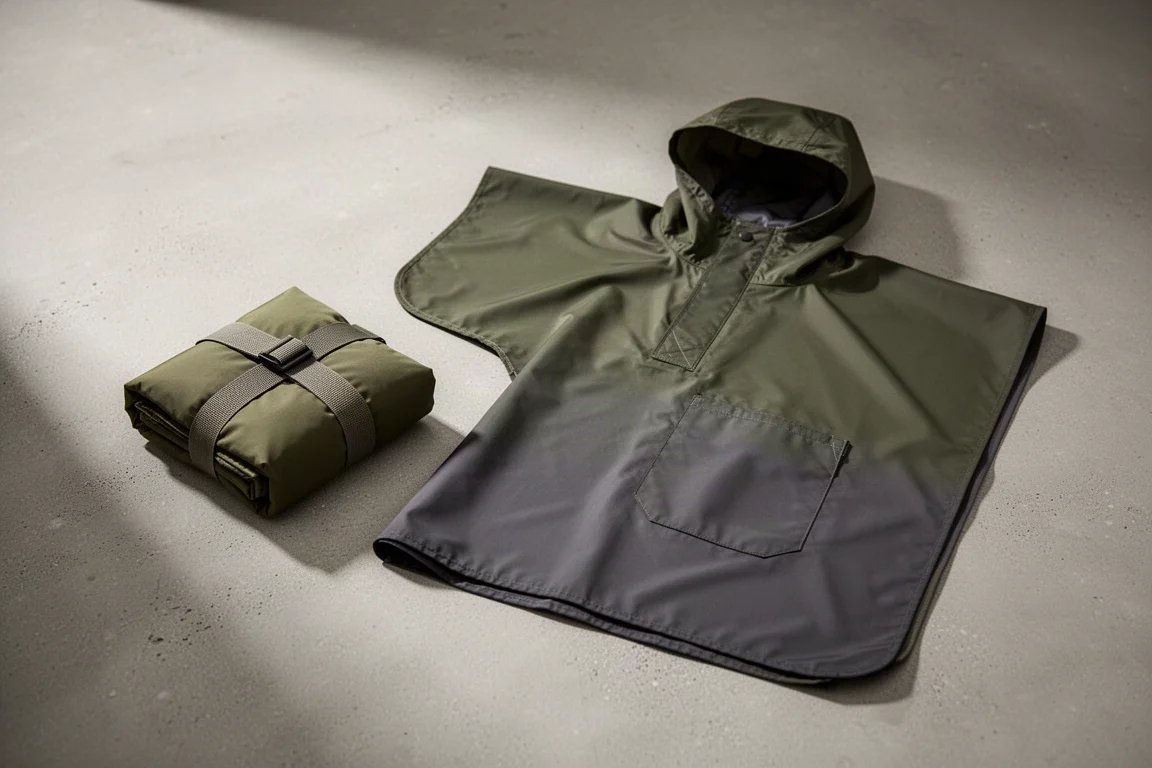
The shell is nylon, and the whole piece weighs 9.3 oz. When stored it measures 6 in by 7.5 in and 2.3 in thick, folding into its own chest pocket and held tight by a strap. A hood is built in, and a zipper lets the piece close up when it is used as a sleeping bag liner. Opened into sleeping bag form it measures 31 in wide and roughly 5 ft 4 in long. Colour options include black, coyote brown, a neon orange, and green.
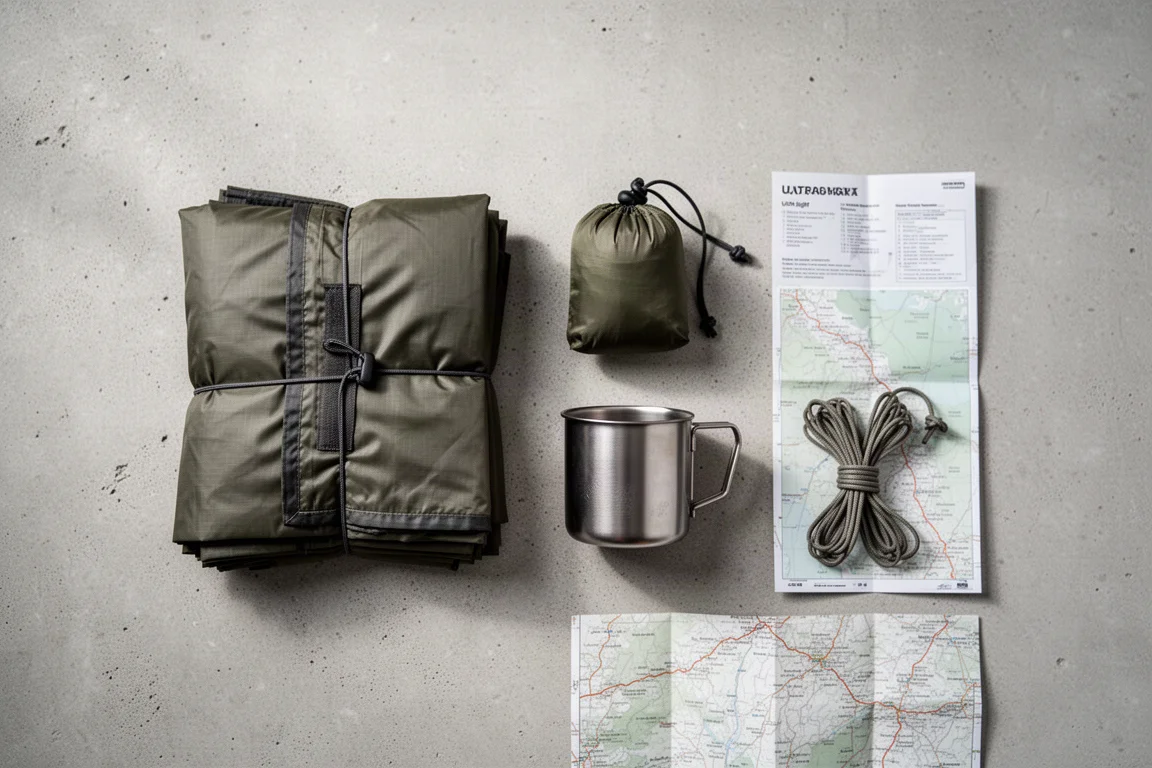
Construction quality is good for the price. There are a few loose threads here and there, but nothing that affects how the product works. Deployment is quick: it comes out of the pocket and goes on without fiddling, which matters when wind picks up on an exposed ridge or in an open camp.
Main Strengths
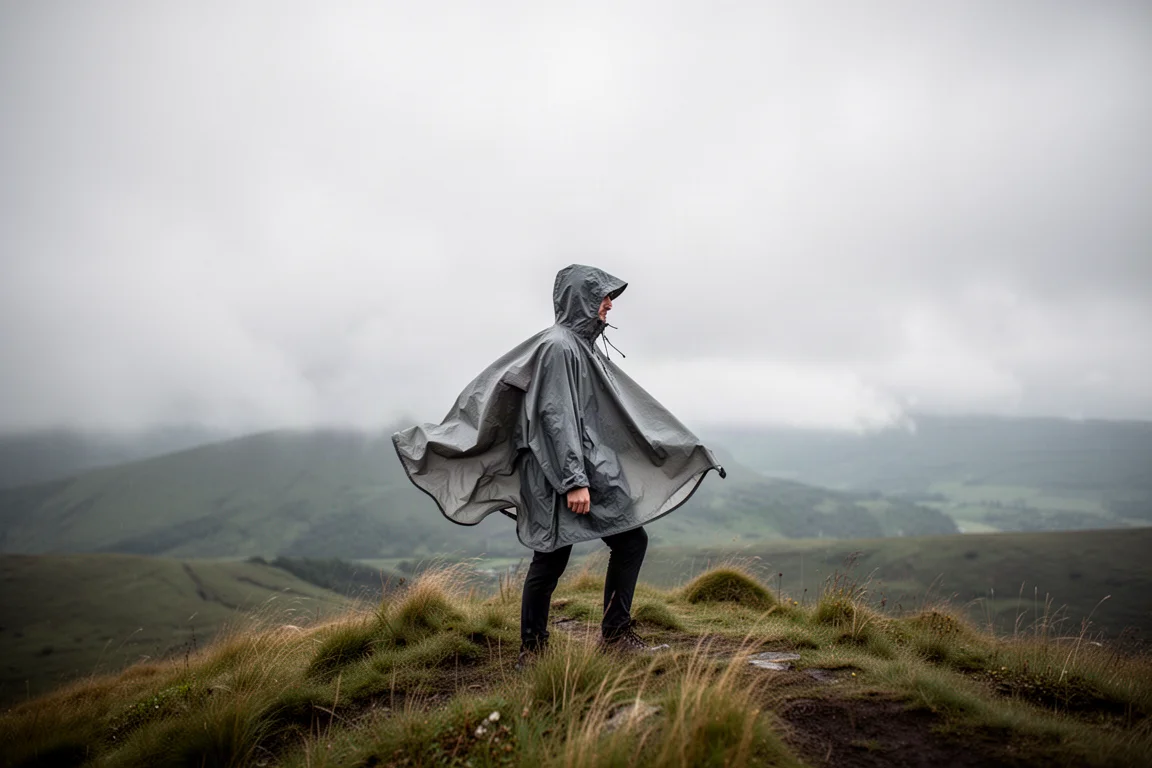
Wind blocking is the headline. Worn as a poncho, the Scarf cuts the wind effectively, and that is the reason it exists. It also traps a small amount of heat, which takes the edge off a cool breeze without pretending to be insulation.
Low weight and small packed size are the second strength. At 9.3 oz and roughly the size of a large sandwich when compressed, it disappears into a pack and can be carried on trips where a heavier shell would be left behind.
Flexibility is the third. The same piece works as a poncho, a neck scarf, a blanket, a warm-weather sleeping bag, and a sleeping bag liner, and it can be fastened into a makeshift jacket. That range is genuinely useful in mild conditions, even where some of those modes are stronger than others.
Value rounds out the list. For an ultralight wind poncho that doubles as a warm-weather sleeping bag or liner, the price is fair.
Things to Consider Before Buying
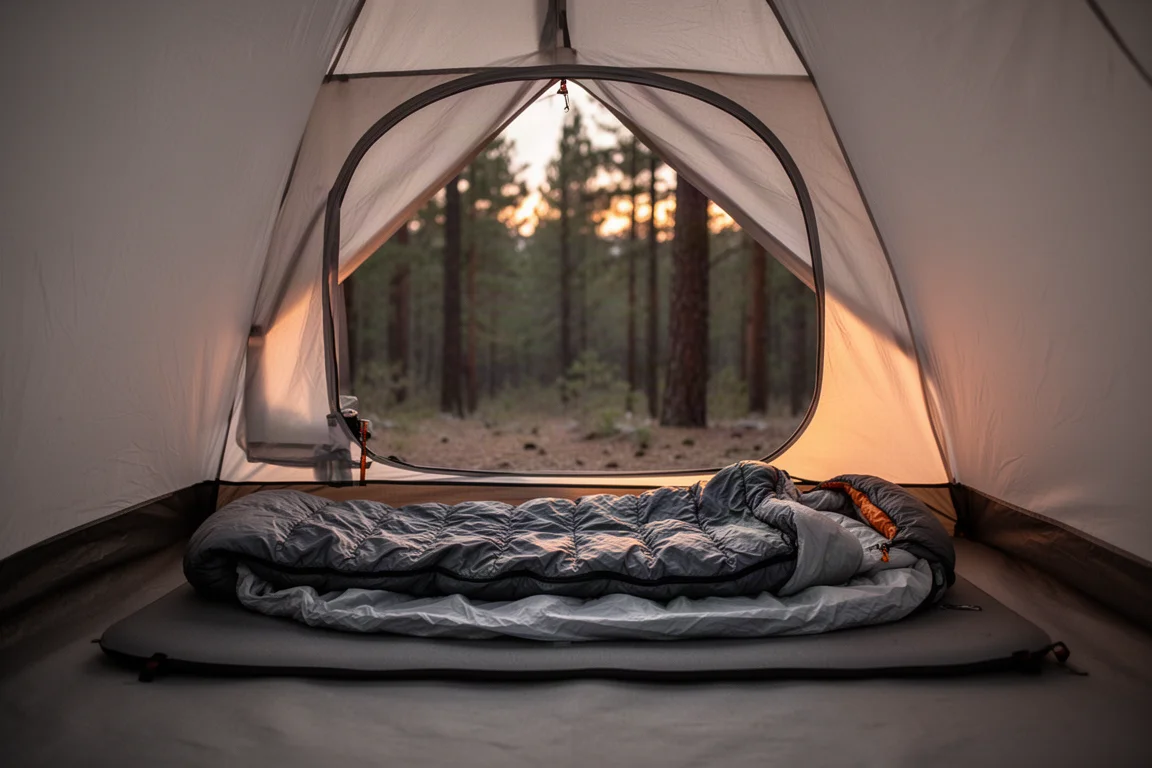
The most important caveat is that the Scarf is non-insulating. It blocks wind and holds a little warmth, but it will not keep you warm on its own. As a sleeping bag it is strictly a warm-weather option, best suited to overnight temperatures of about 65 degrees Fahrenheit and above. Anyone who sleeps cold may need conditions closer to 70 degrees and above for it to feel comfortable.
Length is the other practical limit. At roughly 5 ft 4 in, the sleeping bag configuration is short, and that is the most noticeable shortcoming when the piece is used overnight.
Bulk is worth noting for the scarf mode. Worn around the neck it works, but it is noticeably bulky for that purpose compared with a normal scarf.
A few of the manufacturer claims deserve scrutiny. Using the Scarf as a gear sack is possible in the loosest sense but reads as a stretch. More importantly, the Scarf is not a replacement for a reflective emergency blanket: it does not reflect heat back the way that kind of blanket does, and the two products should not be compared. The Scarf is also not a wet-weather poncho, so rain protection should come from something else.
Field Testing Notes
On a wet-weather backpacking trip with overnight temperatures dropping to around 59 degrees Fahrenheit, the Scarf was used as a sleeping bag. Wearing socks, trousers, a t-shirt and a fleece, the night still felt chilly. That experience lines up with the design intent: this is a warm-weather sleeping bag, not a three-season one.
The most promising use case is still being explored. As a wind poncho in cold, dry conditions, the Scarf looks far more compelling. It would not be appropriate in wet snow given the lack of waterproofing, but in dry, low-moisture snow with wind, a wind-blocking layer of this weight has an obvious role.
That distinction matters when planning trips. Dry snow contains very little moisture and will not cling or soak through the way wet snow does, which is precisely the kind of condition where a windproof but non-waterproof layer makes sense.
Buying Advice
Pricing sits at $53 through the brand’s own website, where shipping is an extra cost, and around $60 on Amazon, where shipping is generally free. The difference is small enough that convenience and delivery speed are reasonable deciding factors.
Buy the Swagman Scarf if wind is your problem. It is a sensible pick for warm-weather backpackers, summer campers, and anyone who wants a light poncho that also serves as a blanket or a sleeping bag liner without weighing down a pack. It is a good piece of gear at a fair price, and the construction supports that.
Skip it if you need insulation, rain protection, or a sleeping bag that works below mild overnight temperatures. In those cases the Scarf will not carry the load, and a different piece of gear will serve you better.
Conclusion
The Swagman Scarf is a well-made, ultralight, genuinely interesting piece of outdoor gear with a clearly defined purpose: blocking wind and holding in a small amount of heat. It packs small, deploys fast, and offers several useful configurations for mild conditions.
Its limits are just as clear. It does not insulate, it is short when used as a sleeping bag, and it is bulky as a scarf. Buyers who understand those boundaries and want a light wind layer for warm-weather trips will find a lot to like here. Buyers looking for warmth or weather protection should look elsewhere.
Product link
View more details for Swagman Scarf
This product is mentioned in the review. Check the specifications, options, and compatibility before buying.
View more details for Swagman ScarfFurther reading
Related Reviews
Outdoor Gear
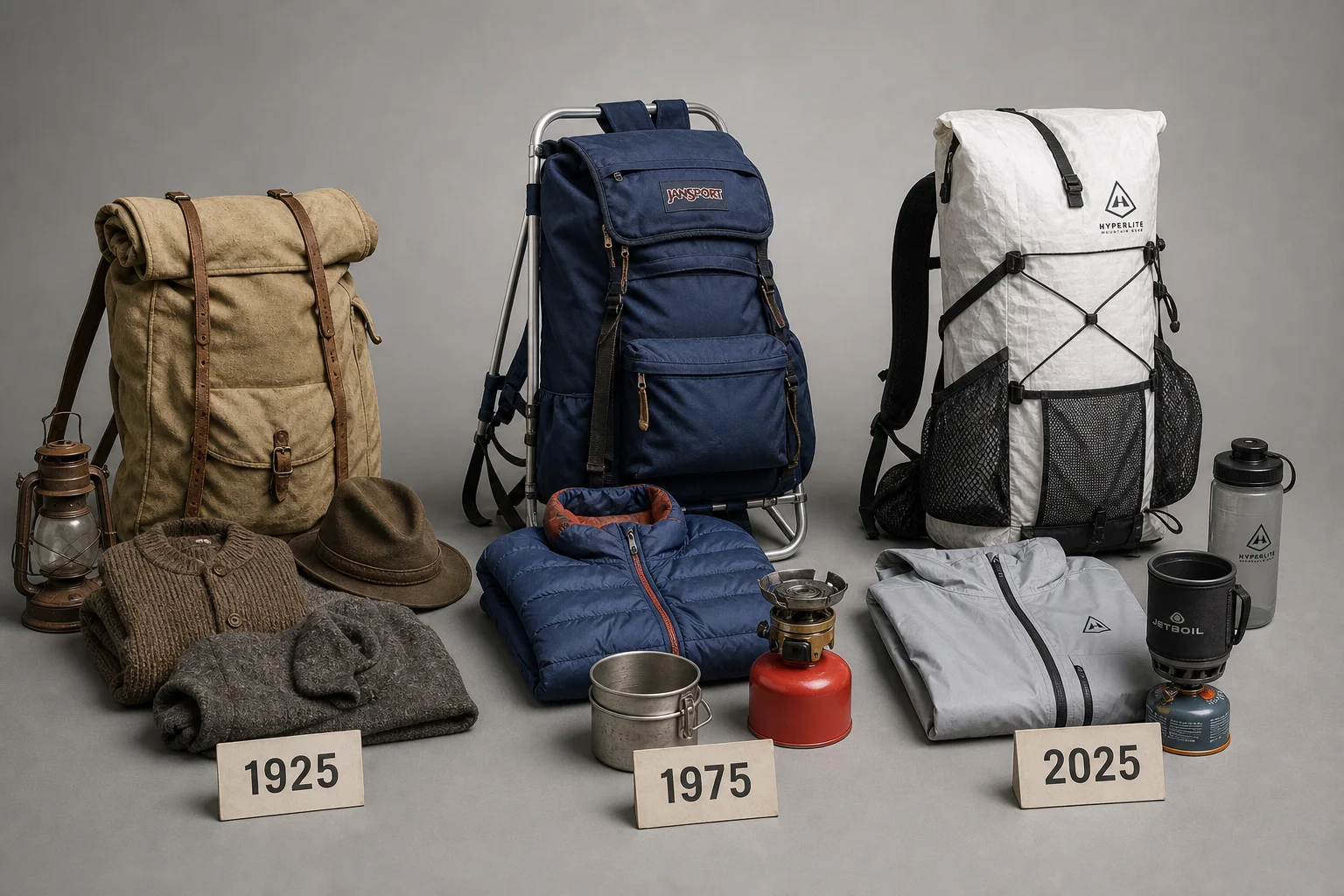
Backpacking Gear Evolution: 100 Years of Technology Compared
We tested backpacking gear from 1925, 1975, and 2025 across a three-day hike in Yosemite. Here's how technology has transformed comfort, weight, and the outdoor experience.
Outdoor Gear
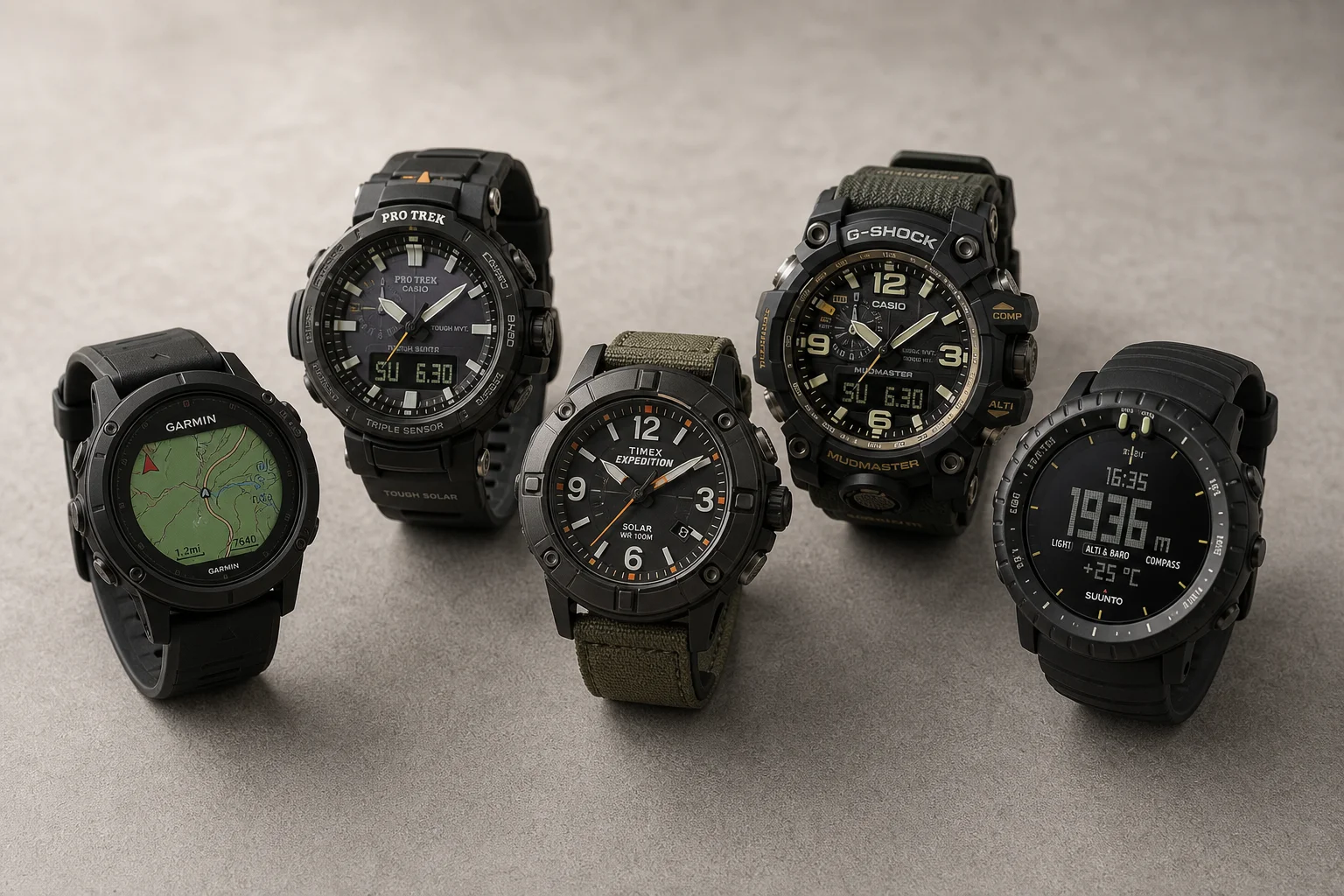
Best Affordable Hiking Watches: Five Rugged Options for Outdoor Adventures
Five durable hiking watches that balance ruggedness, functionality, and value for outdoor enthusiasts who need reliable GPS tracking and weather resistance.
Outdoor Gear
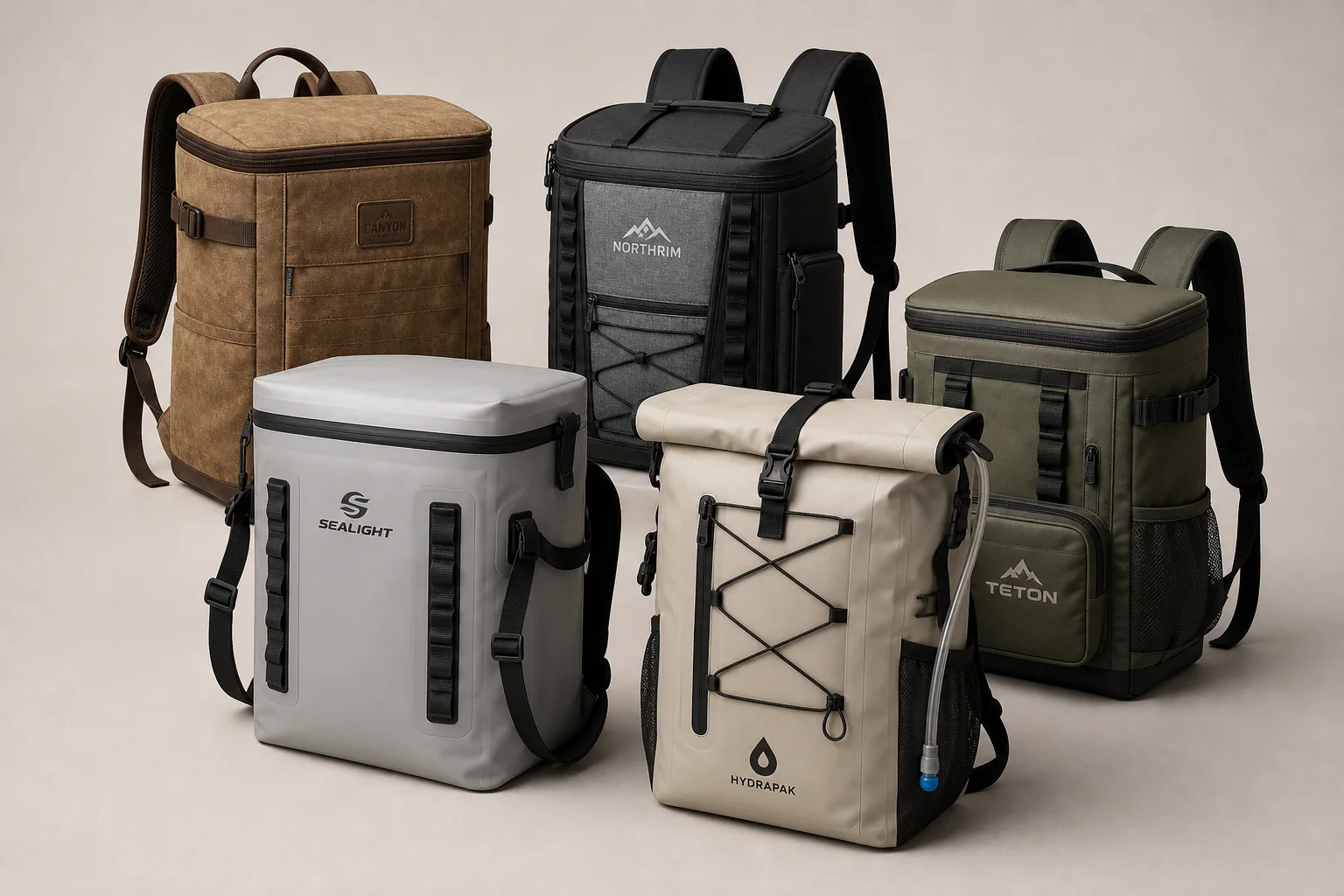
Best Backpack Coolers 2026: Five Practical Options for Outdoor Adventures
Five backpack coolers with distinct cooling capabilities, storage features, and design trade-offs to help you choose the right one for your outdoor needs.