Optics
SVBONY Spotting Scopes for Digiscoping: SV41 25-75x70 vs 20-60x80
We tested two SVBONY spotting scopes with a phone camera adapter for birding and digiscoping. Here is how they compare, and which one we would actually keep.
Introduction
SVBONY makes a range of affordable optics aimed at birders and hobbyists, and two of its spotting scopes ended up being tested back to back with the same smartphone camera adapter for digiscoping. The pairing matters: the adapter broadcasts the image through the eyepiece to your phone, but it only works with a compatible scope or with the right attachment in place. That makes the scope itself the bigger variable in the setup, as this comparison made very clear.
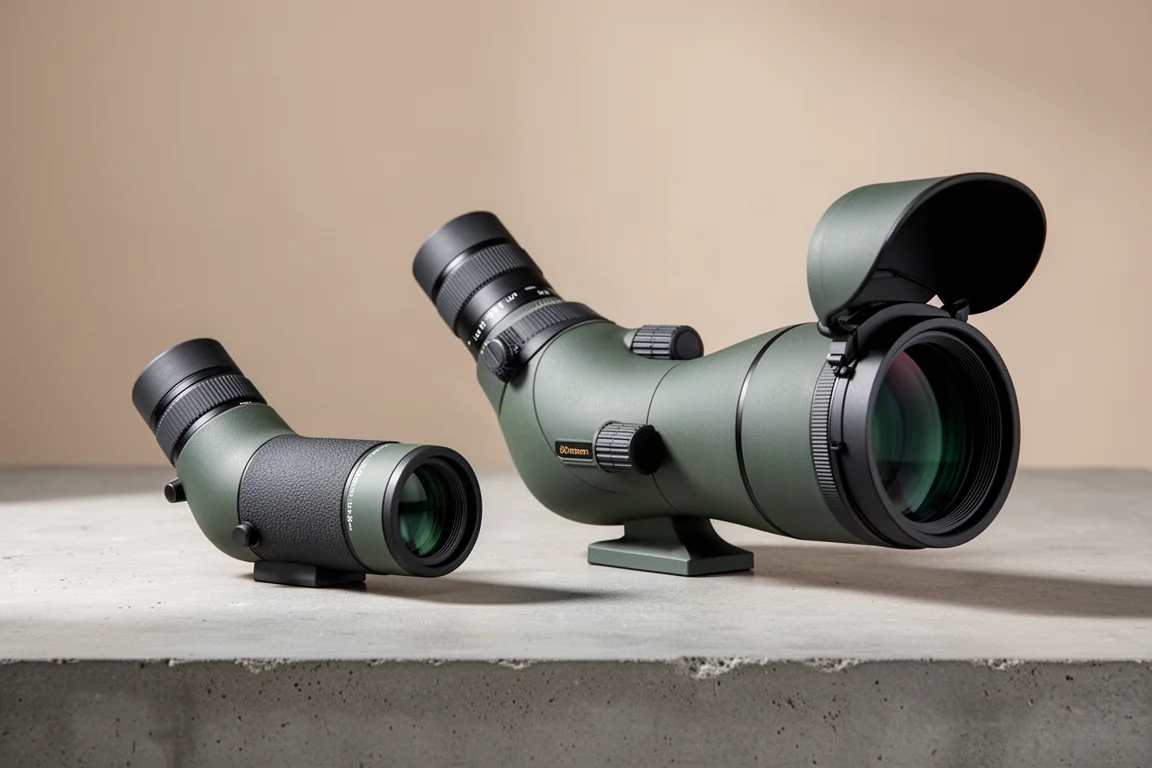
The two candidates are the SV41 25-75x70, a compact zoom scope with a 70mm objective lens, and the 20-60x80, a larger scope with a bigger 80mm objective, dual focus controls and a sun shield. Both were put through the same routine: glassing birds at varying distances, then attempting digiscoped photos and video with the phone adapter.
First Impressions: SV41 25-75x70
The SV41 25-75x70 arrives in a nice carry case with a small tripod, instructions and a turquoise cleaning cloth. Its headline numbers are straightforward: 25-75x magnification and a 70mm objective lens, which dictates how big the barrel is. The first thing that stands out is how compact it is. It feels like a little compact scope rather than a full-size field instrument, and that is genuinely appealing if portability is a priority. It feels light and uses two different materials on the body, and the overall build feels decent in the hand.
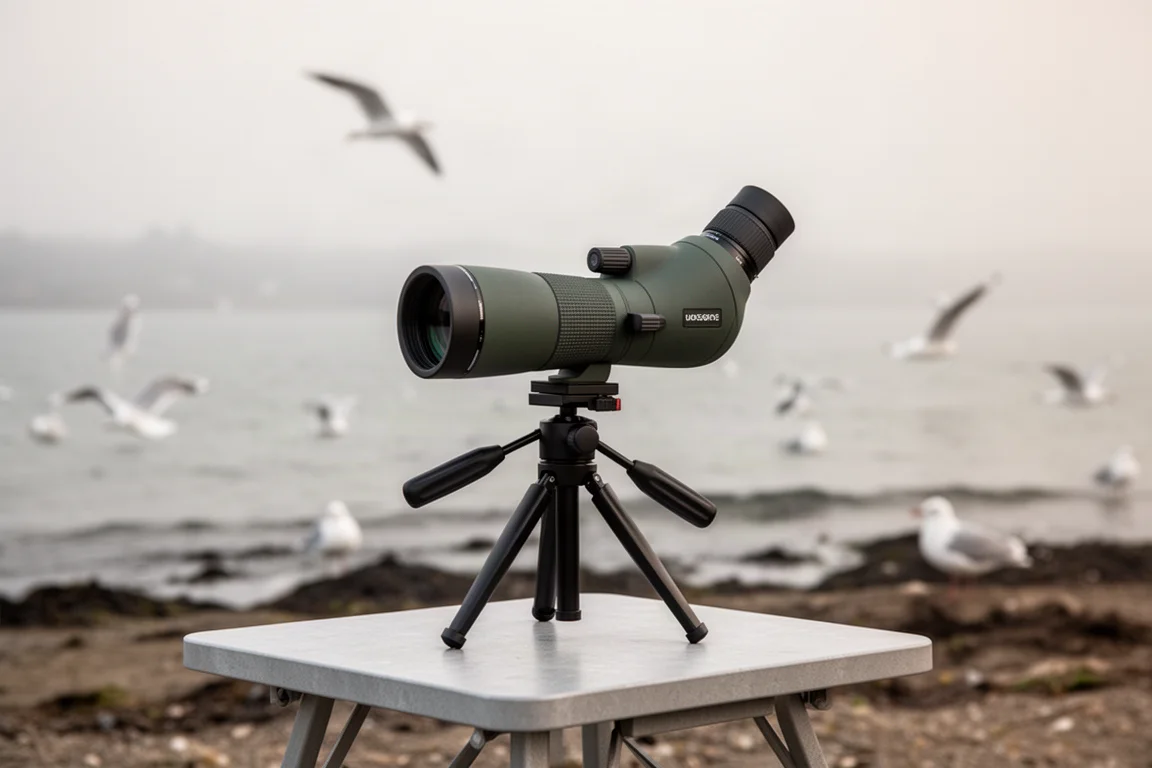
Looking through it, low magnification is where this scope is at its best. At 25x, detail on a gull is easy to read, though the edges of the image are not as crisp as you might hope. Pushing to 75x is where things fall apart somewhat: the view gets noticeably less clear, almost foggy, and the focus wheel is not smooth enough to make fine adjustments comfortable. Any touch of the focus wheel shakes the whole view. That softness at high magnification becomes a real problem once you try to digiscope, where clarity is already compromised by the phone camera.
Digiscoping with the Camera Adapter
The adapter setup works by removing the eyepiece attachment, inserting the adapter piece into the scope, and then mounting the phone. Right away, several practical frustrations show up. The image comes through inverted, so you have to flip vertical and horizontal orientation in the camera app. Finding targets is harder because the phone locks you at maximum magnification, and the usual technique of scanning at low power before zooming in is not available. Adjusting focus shakes everything, and getting a genuinely clear image takes persistent effort.
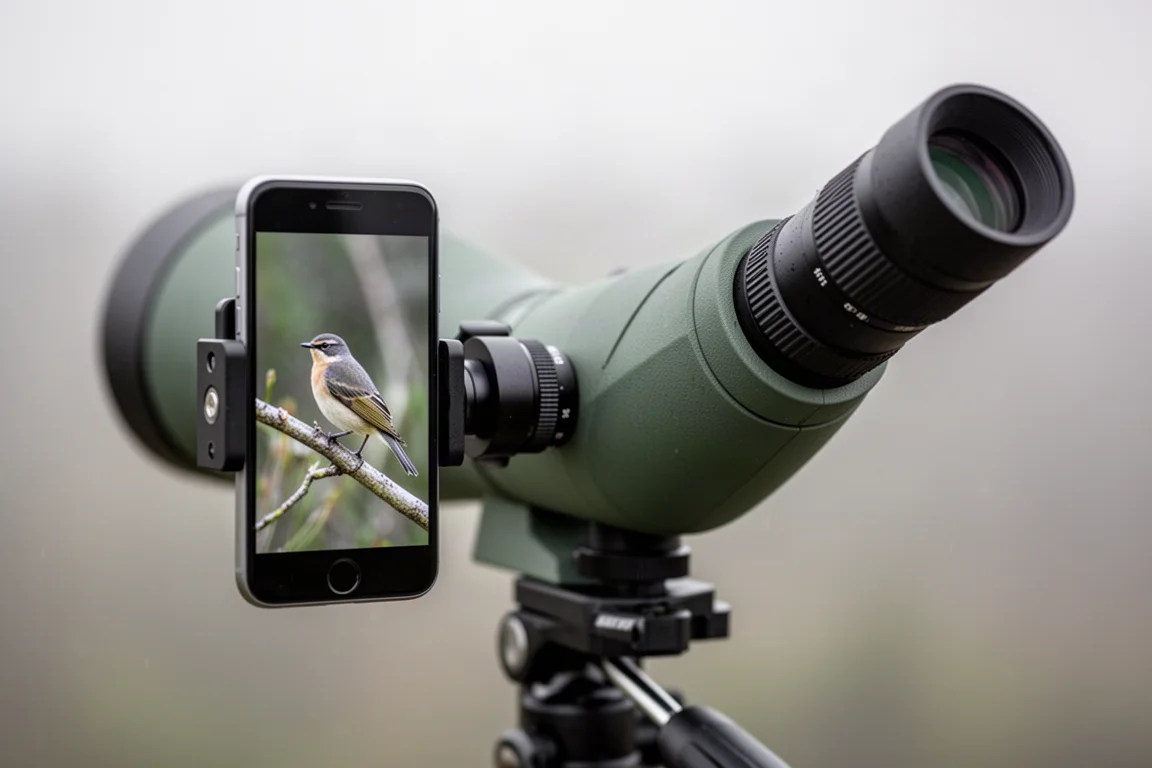
There is also a storage and fragility concern. With this kind of setup you are constantly taking parts off and putting them back on, and you need somewhere to keep the removed pieces in the field. Removing the eyepiece opens the internal part of the scope to dust, and the whole process feels more delicate than you want on a birding trip. The clearest use case is a backyard or feeder setup: leave the scope locked on a feeder in focus on a table, then simply open your phone and view the live image. In that static scenario, most of the friction disappears.
The 20-60x80: A Clear Step Up
The second scope, a 20-60x80, changed the whole assessment. With a 20-60x magnification range and an 80mm objective lens diameter, the view is significantly brighter than the smaller scope. It also has both a fine and a coarse focus, with a ring that adjusts smoothly, plus a sun shield on the objective end. Straight out of the case, which includes a cleaning cloth, it simply looks much clearer. Video capture of the view through the eyepiece undersells it; in real life the image looks noticeably nicer than anything recorded of it.
Digiscoping works better here too. The collar unscrews, the camera adapter goes in, and the same orientation quirks apply: you still need to flip inverted video, and the image direction follows the orientation of the phone. But focusing is far easier, the resulting image is solid, and while the digiscoped view still is not as clear as looking through the scope directly, it is close enough to be genuinely usable. You can adjust saturation or brightness in the app, leave it on auto, save video, and take stills. Ducks and geese at distance remain identifiable, and the whole process is dramatically smoother than with the smaller scope.
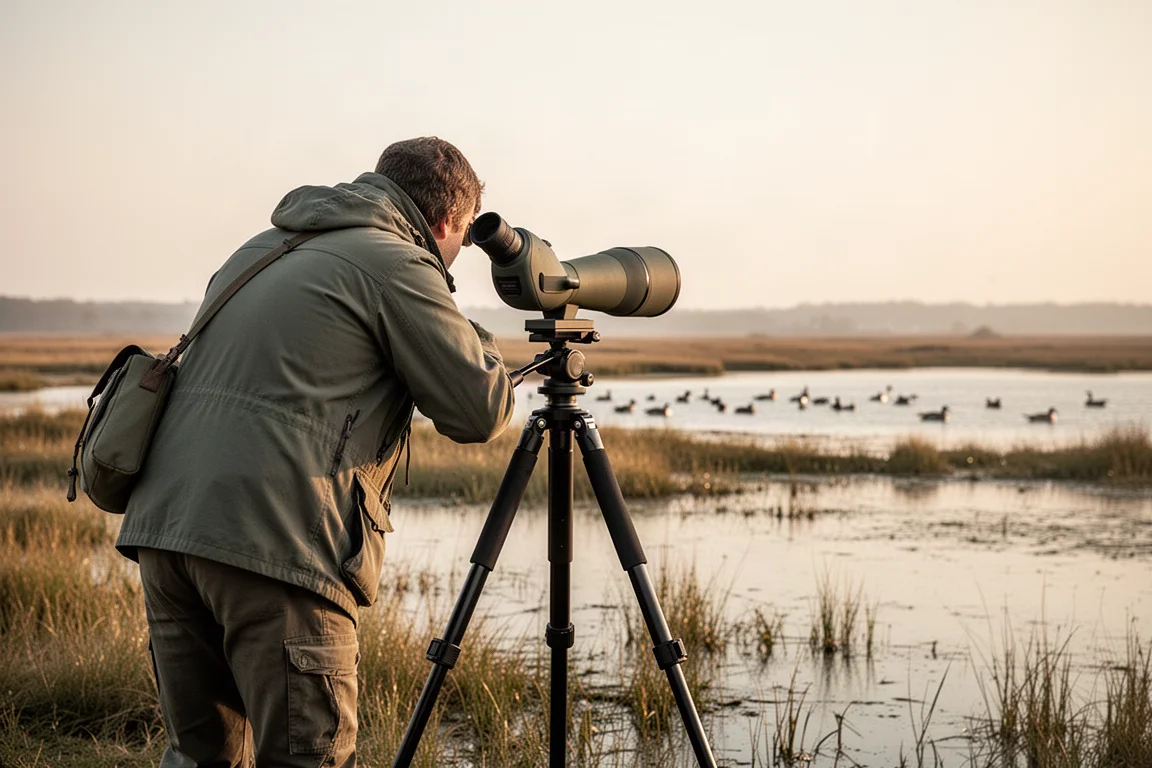
One caveat worth knowing: the case provided was not big enough for the adapter arrangement, so holding the phone on by hand was sometimes the fallback, and that is always awkward. The same eyepiece-removal concern applies here as with the smaller scope, since you are still opening the internal part of the scope and handling loose parts. Covers for the removed piece do help a little.
Overall Buying Advice
The core takeaway from testing both scopes is that the scope, not the camera adapter, drives the digiscoping experience. The adapter worked far better once paired with the brighter, smoother-focusing 20-60x80, which suggests the SV41’s soft, foggy rendering at high magnification was the bottleneck rather than the adapter itself. If digiscoping is your goal, prioritize a scope with a large objective lens, dual fine and coarse focus, and a bright, clear image before you spend anything on camera accessories.

A few habits will improve results with either scope: use the lowest magnification to find your target before zooming, keep the phone orientation settings in mind, and plan where removed parts will live while you swap between them. If your main use case is a fixed feeder station, the compact SV41 becomes more viable, since a locked, pre-focused setup sidesteps its weakest areas. For general field birding and digiscoping, the 20-60x80 is the more capable and more enjoyable tool by a wide margin.
Conclusion
These two SVBONY scopes make the difference between a good and a frustrating digiscoping setup obvious. The SV41 25-75x70 is compact and appealing on paper, but soft edges, a stiff focus wheel and a foggy view at 75x hold it back, especially with a camera attached. The 20-60x80 is brighter, easier to focus, and produced the better images and video of the two. If you are choosing between them for birding or phone-based photography, the 20-60x80 is the one worth your money, and checking the compatibility of any camera adapter with your scope before buying remains essential.
Product link
View more details for SVBONY SV41 25-75x70 Spotting Scope
This product is mentioned in the review. Check the specifications, options, and compatibility before buying.
View more details for SVBONY SV41 25-75x70 Spotting ScopeFurther reading
Related Reviews
Optics
Best Spotting Scopes 2026: Four Models Compared Side by Side
A practical comparison of four spotting scopes across different price points, with honest notes on optical quality, contrast, and value.
Optics
Choosing a Rifle Scope: Three Maven Models for Different Hunting Needs
A practical guide to selecting a rifle scope based on price, size, and features, with three Maven models that cover close-cover, all-around, and precision shooting.
Optics
SVBONY SV202 8x32 Binoculars Review: A Compact All-Rounder for Birding
ED glass, IPX7 waterproofing, and a pocketable build make the SV202 8x32 an easy pick for birders who want a lightweight pair under $200.