Audio
Suunto Wing vs Shokz OpenRun Pro: Bone Conduction Headphones for Outdoor Sports
A close look at the Suunto Wing's head-motion controls, LED safety lights and charging dock, and how it stacks up against the Shokz OpenRun Pro.
Introduction
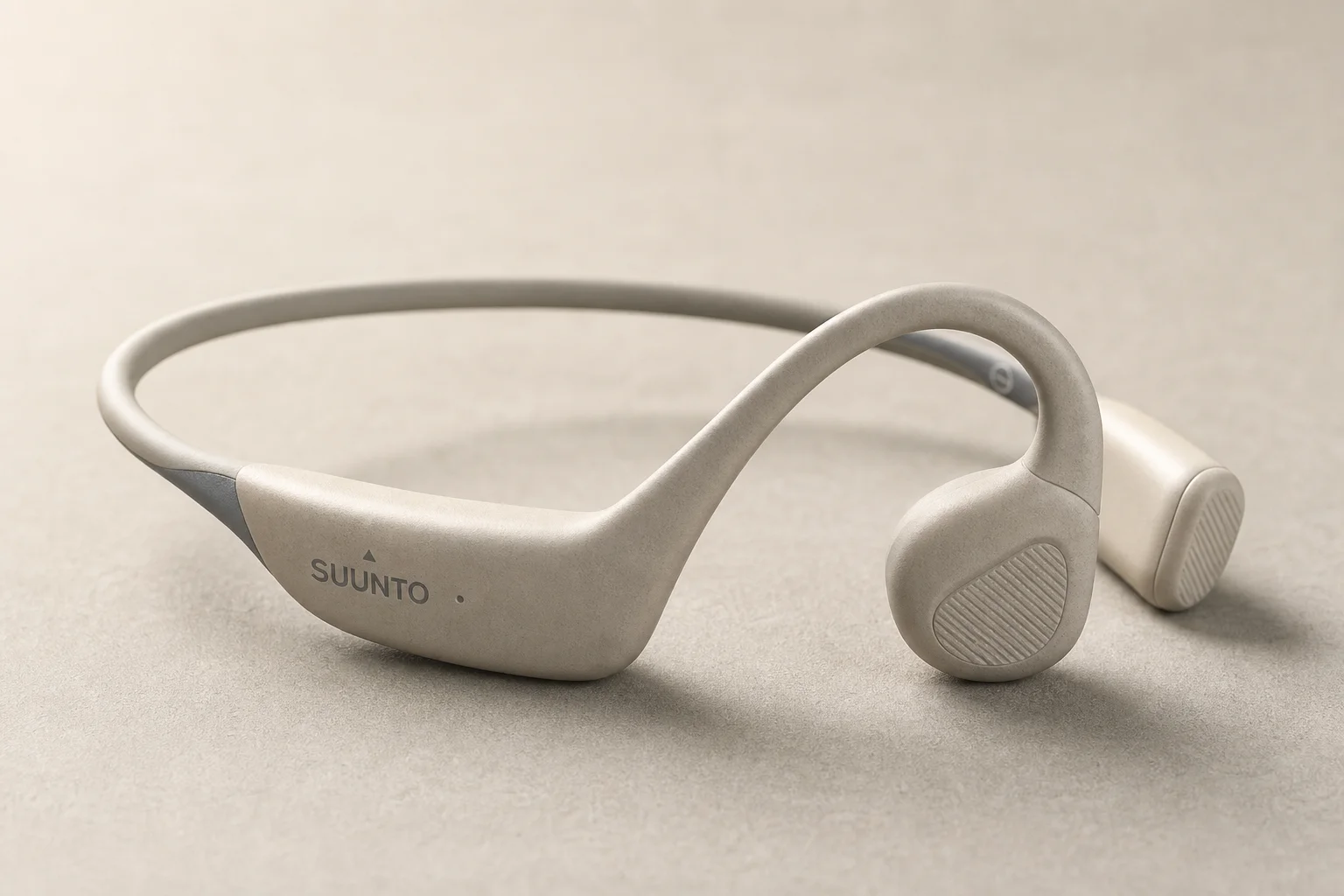
Suunto is best known for endurance sports watches, but the Suunto Wing marks the brand’s step into bone conduction headphones. That move makes sense given the audience: the same people who wear a Suunto watch for trail running or riding tend to want open-ear audio for exactly those activities. In this comparison we look at how the Wing performs against one of the strongest established options in the category, the Shokz OpenRun Pro.
Why Bone Conduction Works for Outdoor Sports
Bone conduction headphones skip traditional speakers entirely. Instead, small pods transmit sound as tiny vibrations through your cheekbone, which your brain interprets as audio. Your ear canals stay completely open, so you keep full awareness of traffic and your surroundings while still enjoying music or podcasts.
That matters because transparency modes on regular earbuds, however good, still pipe outside sound in through microphones. Any wind can distort that piped-in audio, sometimes making it sound worse than reality. With a fully open ear design, wind simply passes by. For anyone who rides or runs outdoors, this is a genuine safety and comfort advantage.

Design and Fit
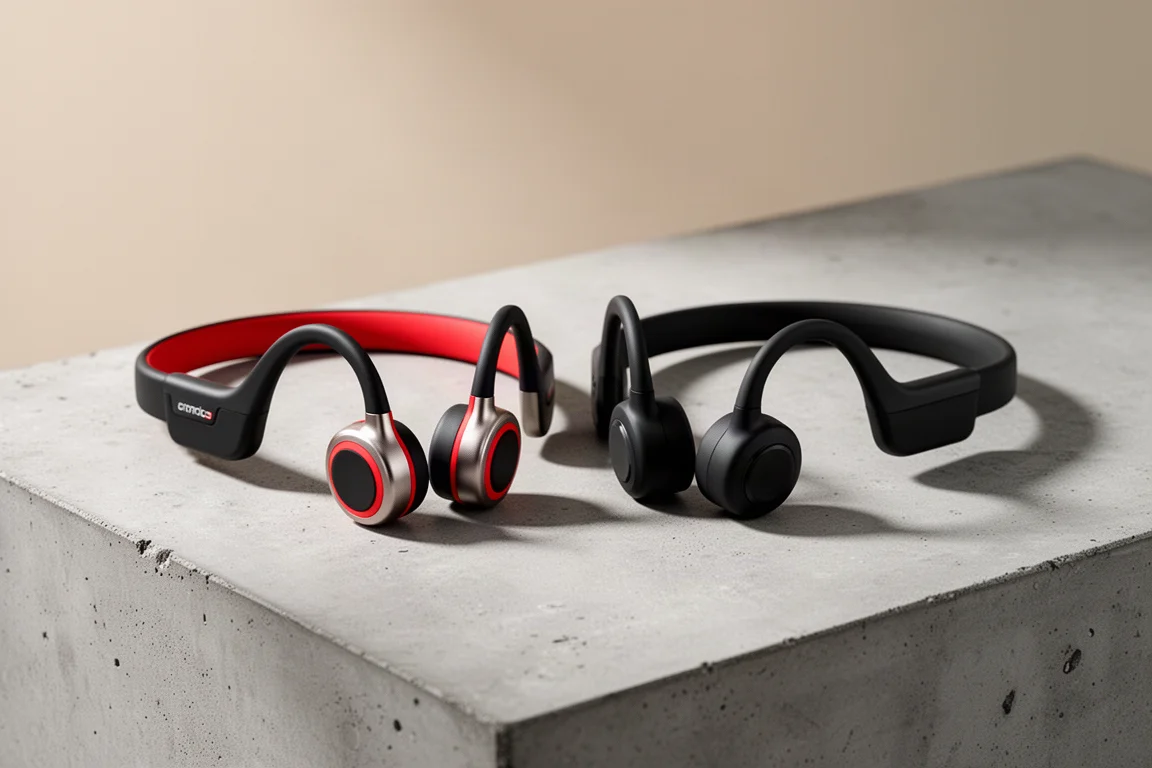
The Suunto Wing uses a silicone and titanium wraparound design that sits around the back of your head, with pods resting in front of each ear on the cheekbone. The one-piece over-the-head construction is about as secure as headphones get: there is no risk of one side dislodging, and it would take something serious to knock them off.
Comfort is springy rather than tight. They hold securely without excessive pressure, and on a larger head they remain comfortable for hours. The main caveat with any over-the-head design is possible fatigue on the top of the ears after extended use; plan on a short break after roughly three to four hours. It is also available in black and red or a subtler all-black color option, and it weighs 33 grams.
Compatibility with sunglasses, hats and helmets is excellent. Sunglasses with thinner temples sit most comfortably over the band. Standard road and trail helmets leave plenty of clearance for the rear band and retention system. Snow helmets with ear flaps work, though the pads can create some pressure over time. Full-face downhill or motorcycle helmets are not a realistic match due to their hard shell design.
Sound Quality and Wind Noise
For clarity, the Wing performs very well. Acoustic, rock and pop sound crisp and clear, and vocals are handled nicely. The expected trade-off of the technology shows up in the low end: electronica, techno and hip-hop lose some impact compared with earbuds.
A clever bonus is the included pair of earplugs. With your ears sealed, the bone-conducted signal is amplified perceptually, which increases bass response significantly. The trade-off is a slight loss of clarity, but it makes the Wing genuinely versatile for places like the gym where you may not want to hear your surroundings.
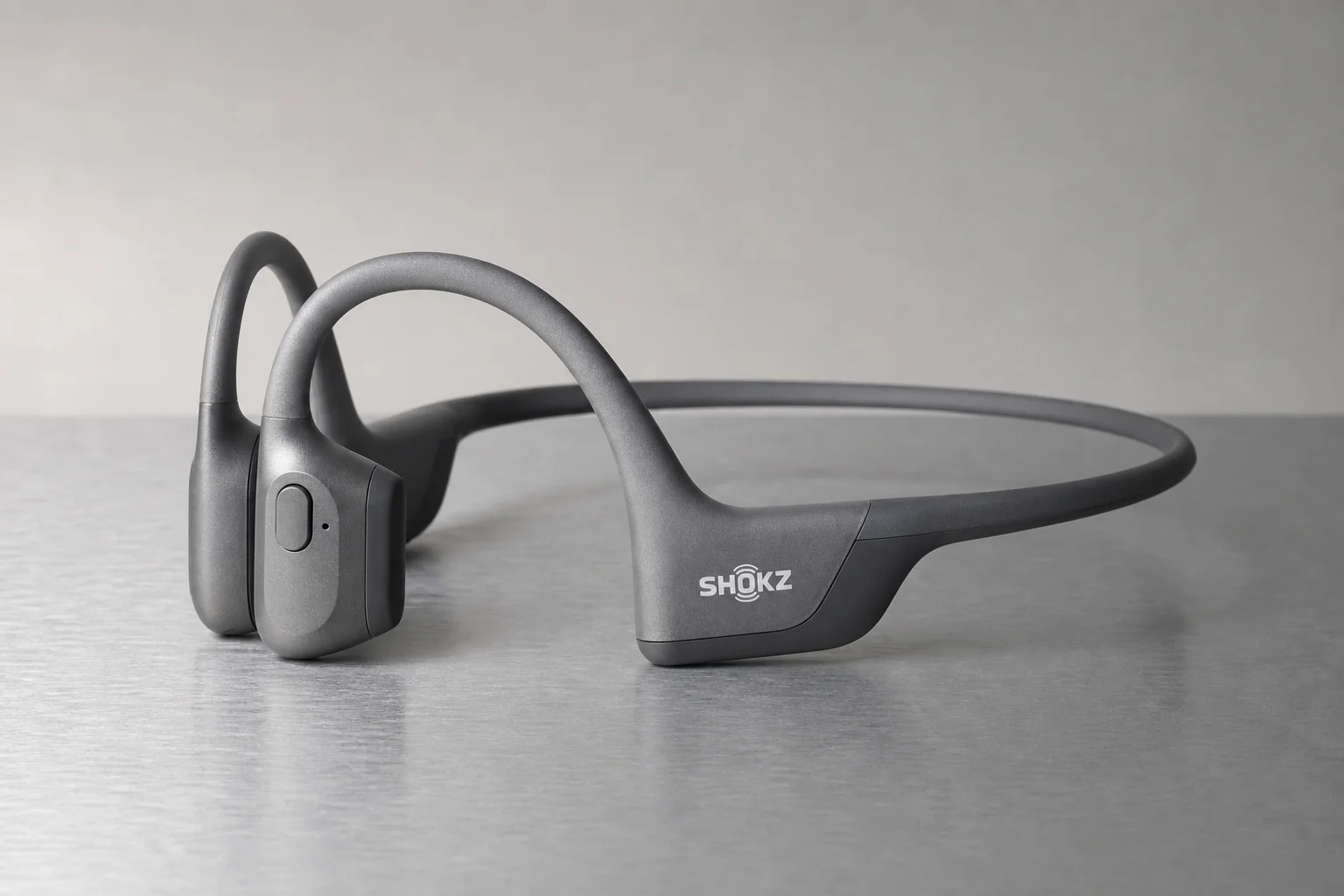
Against the Shokz OpenRun Pro, the comparison is closer than expected. The OpenRun Pro sounds a little fuller, delivering more in the mid and low end, while the Wing edges ahead on clarity. Overall it is close to a toss-up, which is impressive given the OpenRun Pro’s reputation.

There is also a Normal and Outdoor mode, switchable in the Suunto app. Outdoor mode raises the volume, useful for cycling where ambient wind noise is higher, though it can introduce a touch of distortion. Normal mode works well in most situations.
Head Motion Controls
The Wing’s most unusual feature is controlling playback and calls with head movement. A deliberate left-right-left head turn skips tracks, and a nod answers or declines calls. The gestures need to be deliberate: subtle movements do nothing, and during testing, normal running motion never triggered an accidental answer. If you prefer, the feature can be turned off entirely and the same functions handled by buttons.
Whether it is useful depends on the sport. For running, your hands are already free and turning your head mid-stride feels awkward. For cycling, with hands on the bars, or for rock climbing, it becomes genuinely handy. It currently covers skipping tracks and answering or declining calls, with no customization yet, though it seems like the kind of behavior an update could expand.
Built-in LED Safety Lights
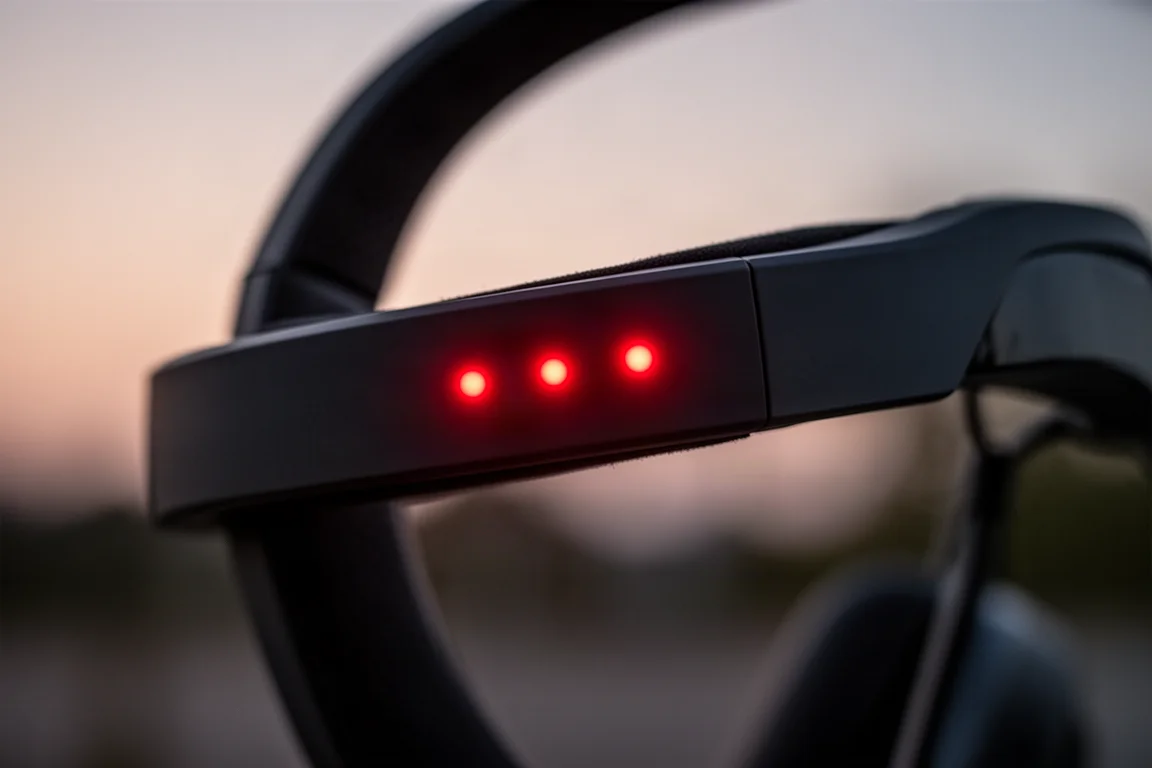
Each side of the band carries three built-in LEDs with constant, flashing and SOS modes, toggled by long-pressing volume down or through the app. It is an innovative touch for running or riding at night, and the lights do not add meaningful weight.
One limitation: they are not bright enough to show through a beanie or similar hat, so they work best when the band is exposed.
Battery Life and Charging Dock
The Wing offers 10 hours of playback on its own, with an additional 20 hours available from the included charging dock, for up to 30 hours total. A 10-minute quick charge delivers around 3 hours of playback when the battery runs flat.
The dock is more than a battery. It doubles as a storage case so the headset does not flop around loose in a backpack, and it clips on easily, making it simple to top up on the way to a trailhead. Both a USB cable and the dock are included in the box.
Durability and Water Resistance
The Wing carries an IP67 rating: complete dust protection and waterproofing down to about a meter for 30 minutes. Heavy sweat and heavy rain are non-issues, and you can even wear them in the shower. Swimming is technically possible within that depth limit, but Bluetooth does not travel well through water, so playback would only work between laps. There is also no onboard storage for offline music.
Buttons sit on the bottom of the right pod for power and volume, with a multi-function button on the outside of the left pod for play, pause, track skipping and calls. The multi-function button is easy to find by feel; the volume buttons could be slightly more pronounced.
Which One Should You Buy?
The Shokz OpenRun Pro remains a very strong choice and sounds slightly fuller in the mids and lows. It is lighter on paper too, at around 28 grams on our scale. The Suunto Wing counters with crisper clarity, useful sports-focused extras like the LED safety lights, head motion controls, the earplug-based bass boost and the excellent charging dock. Both are close in overall sound, so the decision mostly comes down to whether the Wing’s extra features appeal to how you train.
Conclusion
The Suunto Wing proves a watchmaker can build genuinely competitive bone conduction headphones. Sound clarity is excellent for the technology, the sports features actually work as intended, and the charging dock is the kind of practical detail you end up appreciating daily. The OpenRun Pro still holds its own on sound and weight, but the Wing’s feature set makes it a compelling pick for runners and riders who spend real time outdoors.
Further reading
Related Reviews

Audio
Apos x Geshelli Merlin DAC Review: A Natural Match for the Gremlin Amp
The Apos x Geshelli Merlin DAC pairs balanced and single-ended outputs with a smooth, natural sound that complements the Gremlin tube amp.

Audio
Audio Gear That Beats Pricier Rivals: Nine Value Picks for 2026
Nine turntables, streamers, speakers, and amplifiers that deliver far more than their price suggests, plus the trade-offs worth checking before you buy.
Audio
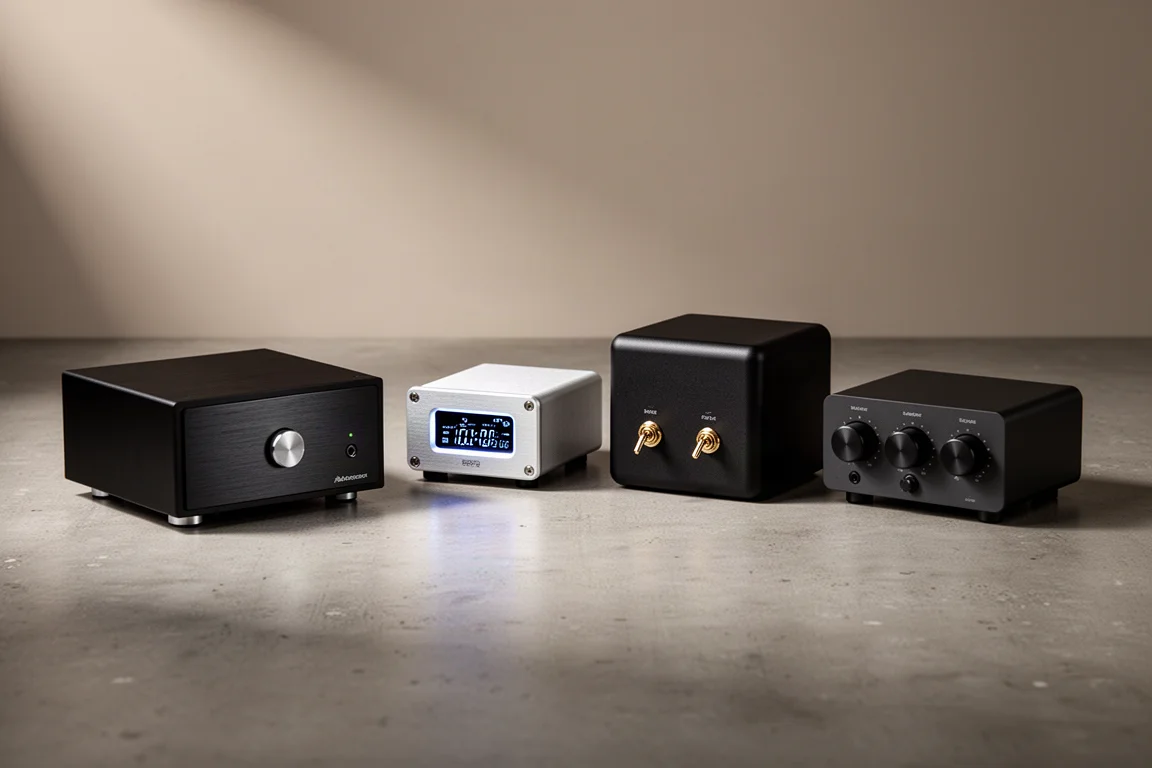
Best Amplifiers Under $200: Four Compact Stereo Amps Worth Considering
Four compact amplifiers under $200, from a class AB design with a headphone section to a DAC-equipped integrated amp and a low-cost pick from a US-based brand.