Snowboard Boots
Sun Snowboard Boot Review: A Hard-Shell Boot Built for Strap Bindings
A rigid multi-piece snowboard boot with a proprietary tightening system that breaks the mold in some interesting ways, but is not for everyone.
Introduction
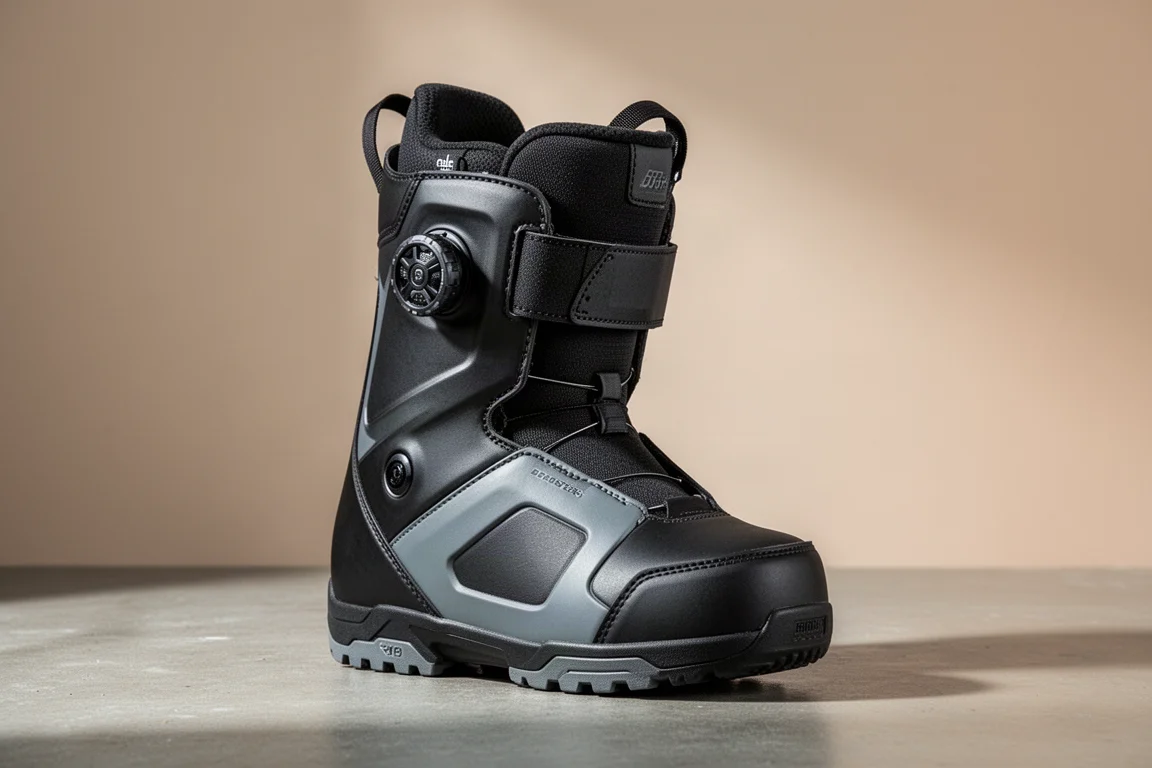
Every so often a product shows up that makes you stop and ask what exactly you are looking at. The Sun snowboard boot is one of those. It went viral on social media largely because of its unusual tightening system, and once you look past that first impression, there is a surprising amount of considered engineering underneath. This is a hard-shell boot, but with a twist: it is designed to be used in a regular strap binding, not a hard boot binding setup.
The short version of this review: it is not an end-all-be-all boot, and it is definitely not for the average snowboard consumer. But for a specific type of rider, it could genuinely make sense.
What Makes This Boot Different
The first thing you notice is the amount of plastic. This is a hard-shelled boot with a multi-piece design: a lower shell piece, a cover plate, and an upper section, each contributing differently to how the boot flexes. Despite the rigid construction, there is some give. The shell pushes down under pressure, and when you crank your toe strap, the boot does not collapse. Even deliberately trying to force a “last click” collapse, the structure holds.
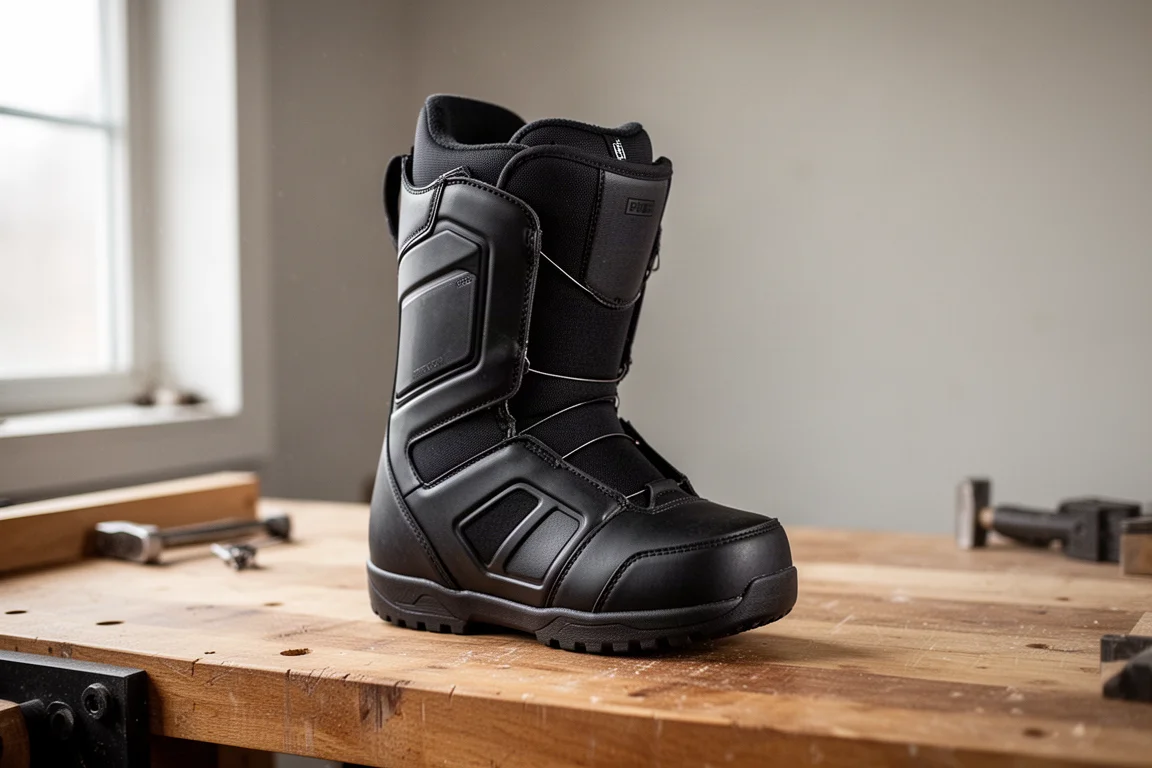
One practical benefit of the hard shell: if you need custom boot work, a specialist can heat and punch out the shell. Do not attempt that at home, but it does make this one of the more adaptable rigid boots around. The cover plate also changes how pressure is dispersed when the heel strap runs across it, spreading force differently than a traditional soft boot would.
Flex and Articulation
Flex-wise, this sits closer to a touring boot than a stiff ski boot. There are three distinct flex patterns across the range: slightly above middle of the road, stiffer than that, and the stiffest. The sample here was likely the softer-flexing option.
The backspine is a single piece, which delivers a lot of rebound. Down low, there is a cutout with two metal pieces acting like a suspension dampener, designed to flex and change ankle articulation while giving back rebound. A further cutout at the instep also affects rebound behavior. Because of this construction, the boot should hold its rigidity longer than a traditional boot that breaks down over a season.
Lacing and Fit System
The tightening system is proprietary and entirely its own thing. It is not a Boa knob; think of it as a dial that lets you generate serious torque. To release it, you slide it back and pop it out. The downside of a single knob design is limited adjustability: it does a great job of tightening you down, but you cannot fine-tune different zones the way a dual-dial or traditional lacing setup would.
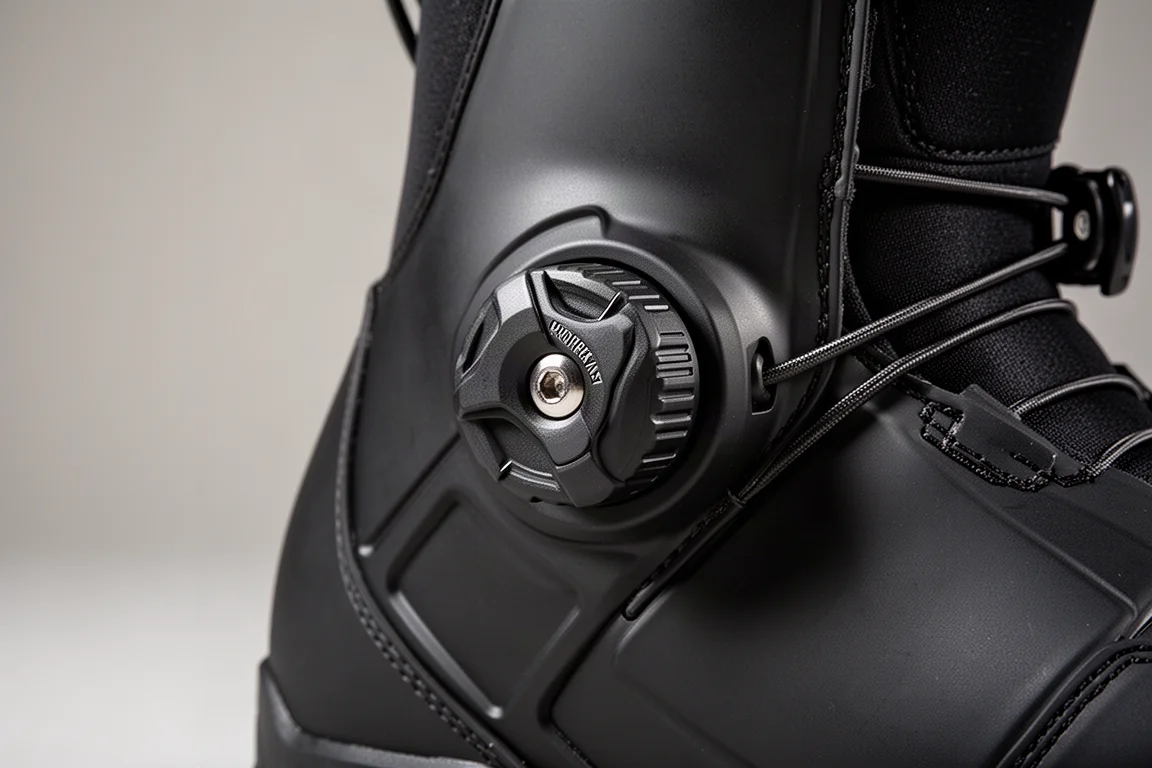
A booster strap across the top helps cinch the upper, and it can be removed if you prefer. Inside, the free-floating liner has its own harness with a grooved knob that allows crisscross tightening. One honest caveat: heel hold is not the strongest here, and you are really relying on the shell being cranked down to feel locked in.
An important fit note for the shell: big calves fit, but if you have a slim calf, expect extra room at the top and some tweaking. Even with a fairly large calf, there was noticeable movement inside the shell.
Liner, Footbed, and Measurements
The liner looks like a ski boot liner, complete with a treaded bottom. That tread matters because the inside of the shell has molding grooves, and the liner smooths those out. Combined with the boot’s rigid sole, the result is a very smooth ride. The foam is standard but a bit more rigid than expected, and the heel pocket is okay rather than aggressive, slightly V-shaped with plenty of foam that will pack out. Heat molding is recommended.
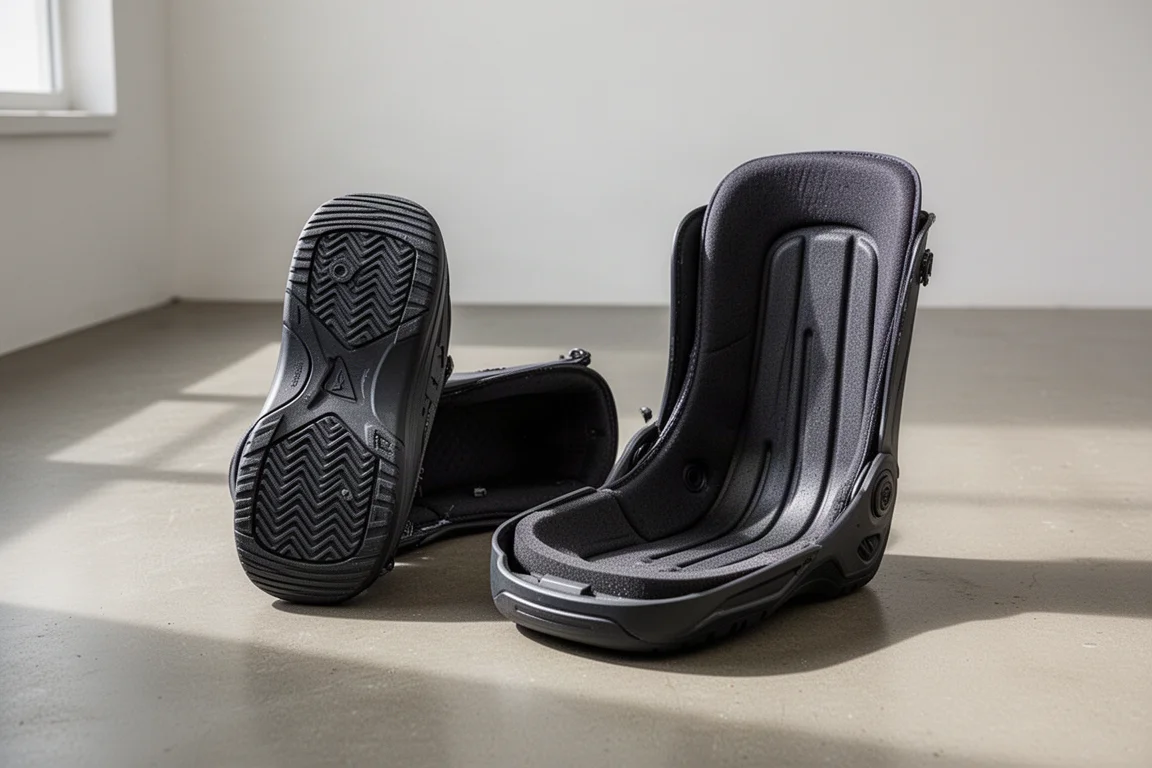
The stock footbed is genuinely overbuilt in a good way, with a deep pocket and rigid arch posting that takes real effort to compress. If you ride 15 to 20 days a season, it will probably be fine. Ride more than that or need specific support, and an aftermarket insole is the obvious move.
Measured specs for the US 10 / Mondo 28 sample:
- Length, toe to heel: about 12 inches
- Width at the widest forefoot point: about 4 inches, roughly average for the market
- Height with the liner in: just shy of 12 inches at the back, about 10.5 inches at the front
One thing to be aware of: you sit noticeably higher in your binding than in a traditional boot, which changes the power dynamic of toe-to-heel leverage. The rubber tread is very rigid and not especially impressive as a pattern, but it kills off kinetic energy underfoot effectively.
Who This Boot Actually Makes Sense For
This is not a boot for the average rider. It is a specialized product aimed at people who want something rigid, adaptable, and different: riders with foot issues who need the shell punched out and customized, heavier or more aggressive riders, carvers, and anyone coming from a hard boot background who still wants to ride a traditional strap binding.
Paired with a stiffer binding such as a Union Atlas Pro, Jones Apollo, or Rome Katana full wrap, this could be set up as a seriously responsive carving boot. It is stiffer overall than most soft boots, though stiffer boots do exist.
Things that could improve in future iterations: the dial system feels like overkill, and working out a deal with Boa for a smaller knob would be an obvious refinement. A different articulation point in the lower shell could open a middle ground for backcountry riders who want something stiffer and easier to tour in while keeping a traditional binding.
Conclusion
The Sun snowboard boot is not bad. It is just very unique. It is well constructed, the concept holds up under scrutiny, and the brand is not forcing heavy marketing claims on it, which is refreshing. There are concepts here that are genuinely cool, and it is interesting to see engineers thinking outside the box without being influenced by the usual designs.
If you fit the profile of a specialized rider who wants rigidity, adaptability, and a different flex feel in a strap binding, this boot deserves a serious look. Everyone else should wait and see where the design lands in a couple of generations, because the direction is promising and the eventual evolution may benefit a much wider audience.
Product link
View more details for Sun Snowboard Boot
This product is mentioned in the review. Check the specifications, options, and compatibility before buying.
View more details for Sun Snowboard BootFurther reading
Related Reviews

Snowboard Boots
32 Team Two Double Boa Review: 32's Highest-End Women's Snowboard Boot
A closer look at 32's top-tier women's snowboard boot, from the 3D molded toe box and double Boa lacing to the Performance Fit liner and heat-reflective footbed.

Snowboard Boots
Bataleon Acid BOA Snowboard Boot Review: A Serious First Entry from a Board Brand
Bataleon's first snowboard boot, designed by a former Burton boot designer, brings a stiff flex, dual BOA closure, and a heel hold system worth a closer look.

Snowboard Boots
Battalion Acid Boot Review: A Stiff, Aggressive Boot Built to Last
The Battalion Acid Boot is the brand's highest-end offering, built with seamless construction, TPU reinforcement, dual BOA lacing, and a heat-moldable liner. Here is what to know before buying.