Time Trial Bikes
Sturdy Cycles Time TR Review: A Made-to-Measure Titanium Time Trial Bike
A custom titanium time trial bike built around a single rider's position, with formed tubing, printed junctions and a modular titanium cockpit.
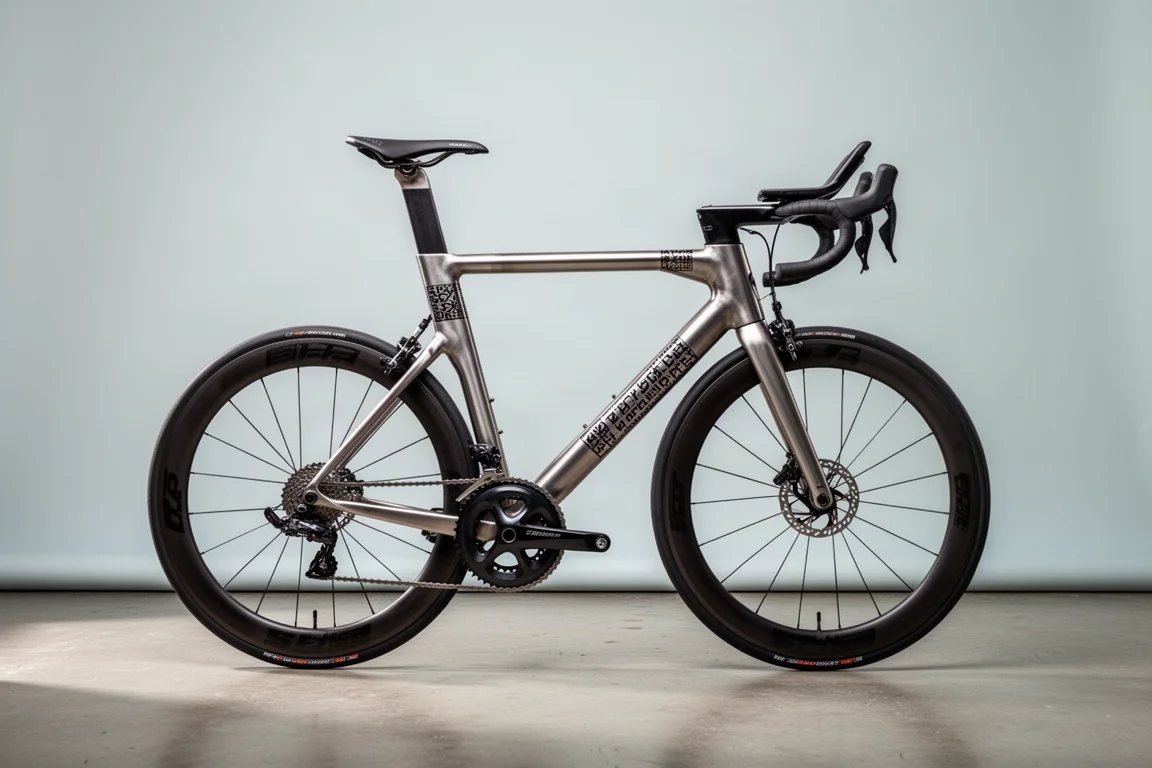
Introduction
Titanium is a common sight on road and gravel frames, but it is rarely used for time trial and triathlon bikes. The Sturdy Cycles Time TR is a deliberate attempt to change that: a made-to-measure titanium time trial bike from a builder who has been making custom titanium frames and components since 2014.
The thinking behind it is straightforward. Most off-the-peg time trial bikes suit a narrow band of body proportions, and riders who fall outside that band end up compromising their position. Because an aero position exaggerates every fit problem, the Time TR starts from the rider rather than from a stock geometry chart. The goal is a position the rider can actually hold and produce power in, paired with a frame and handling balance designed around that position rather than adapted to it afterwards.
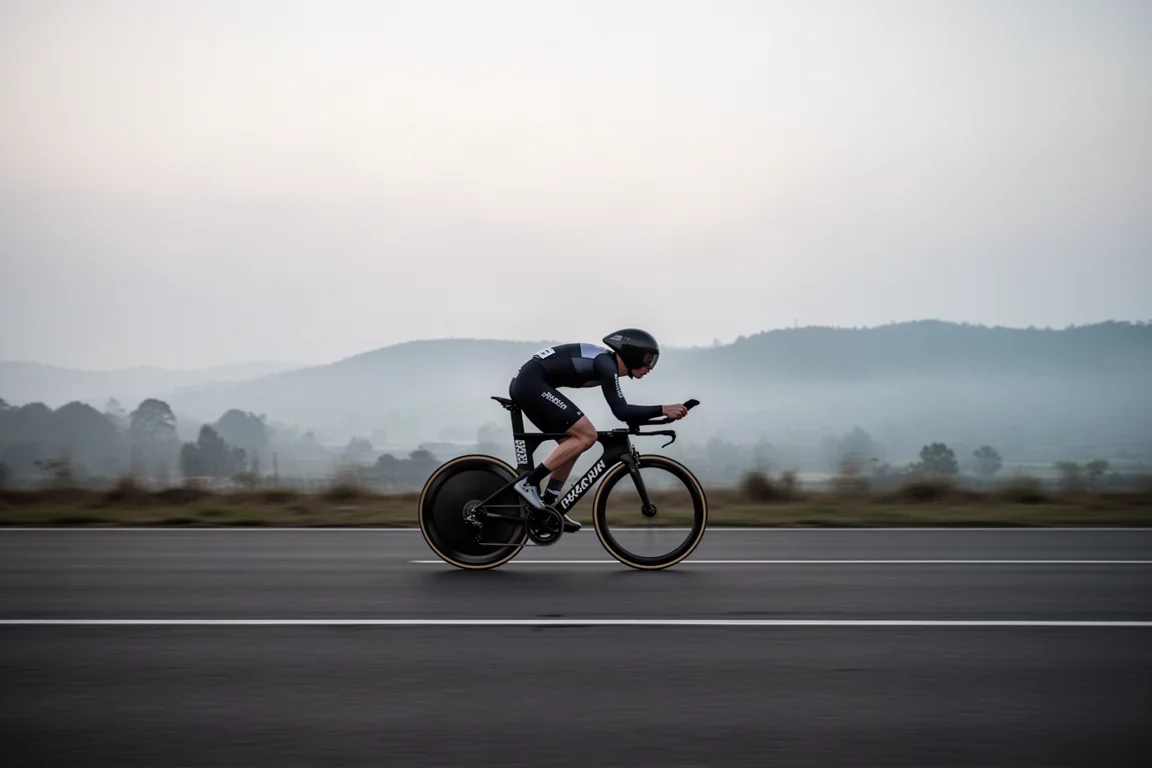
This review looks at what the Time TR is, how the titanium frame is actually produced, what the modular cockpit offers, and the practical trade-offs worth understanding before committing to a custom build of this kind.
Who This Bike Is For
The Time TR is aimed at riders who do not fit standard time trial or triathlon frames well. That includes athletes with unusual proportions, riders who have spent years adjusting stock bikes to reach a sustainable position, and anyone who has accepted a handling compromise because the alternative was no bike at all.
It also suits riders who want a dedicated aero race machine rather than a round-tube custom frame adapted into a time trial bike. The builder is explicit that the priority was aerodynamic performance without giving up fit, so the frame is designed from the outset as a race bike rather than a versatile all-rounder.
Finally, it appeals to riders who plan to keep a bike for a very long time. Titanium is chosen here partly for durability and fatigue behaviour, and the intention is that these frames serve as long-term, lifetime-style bikes rather than short-cycle race equipment.
Main Strengths
The clearest strength is the combination of custom fit and genuine aero intent. Rather than choosing between a comfortable position and a fast one, the frame is designed so that the rider’s position, the geometry that supports it, and the weight distribution over the wheels are worked out together. That matters most in an aero position, where a poor front-to-rear balance shows up as vague handling at speed.
Material behaviour is the second strength. Titanium sits between the common frame materials in a useful way: it is less stiff than steel but lighter, and stiffer than aluminium while being a little heavier. That middle ground lets a builder design a broad range of bike types from the same material, including a dedicated time trial machine.
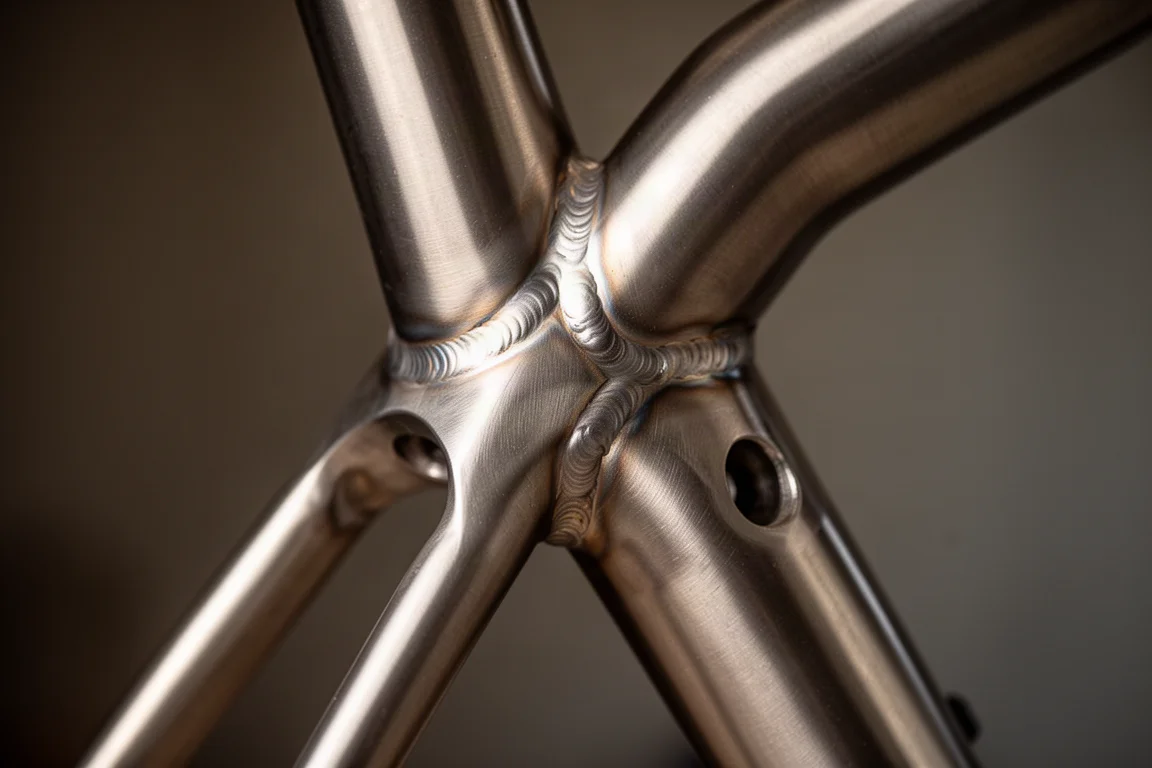
Durability rounds out the picture. Titanium has good strength and fatigue properties and does not corrode the way some other metals do, which supports the idea of a frame that stays in service for many seasons. Additive manufacturing plays a large part in making that durability practical, because it allows metal parts to take on shapes that would be difficult or impossible to produce by conventional fabrication.
How the Frame Is Built
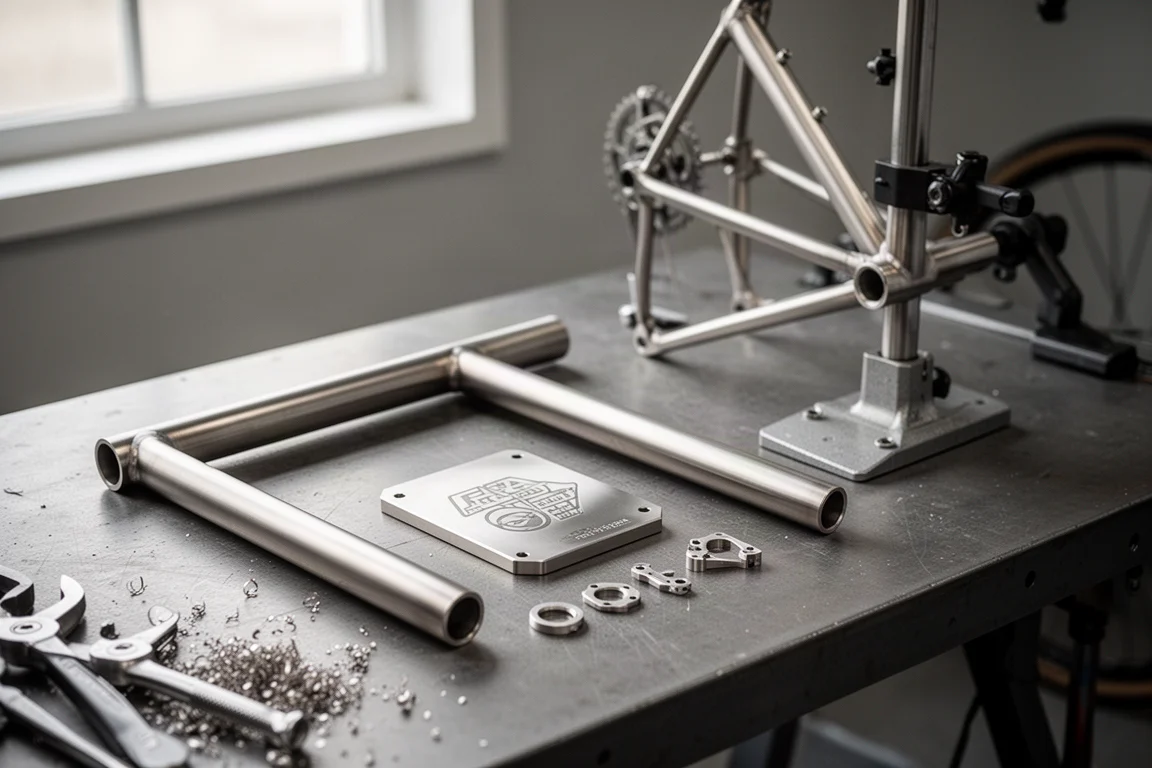
The frame is titanium throughout, but it comes together in two distinct ways. The top tube, down tube and seat tube begin as round drawn tubing that is then formed into more aerodynamic profiles. Forming is the limiting step, because there is only so far a metal tube can be reshaped, so the process starts with what a given tube can realistically become and works outward from there.
The junctions are handled differently. The head tube, bottom bracket and chain stays are printed in titanium and then welded into the frame. Printing allows complex shapes at exactly the points where loads concentrate, and it is one of the reasons titanium can be used in ways that conventional tube-and-lug construction would not allow.
Printing is not the end of the process. Parts still need machining afterwards, including cutting bottom bracket threads so they line up correctly and are the right size. Other components start as a solid plate of raw titanium and are machined down by removing material. That combination of printing, machining and welding is what makes the frame possible, and it is also what makes it time-consuming.
The Cockpit and Fit Adjustability
The cockpit is titanium and modular. There is a base bar, then risers, then end sections shaped to give a comfortable hand position. The base bar is unusually narrow at roughly 30 centimetres, which is a deliberate aerodynamic choice as well as a fit one. Some of the modular end pieces are currently made from a carbon fibre and plastic composite, with the intention of producing those in metal later.
Because the system is built from separate components, individual parts can be swapped, and the bike can also be paired with aftermarket aero bar systems. That flexibility is useful, but it is not unlimited: the cockpit is less adjustable than some of the highly adjustable systems it is often paired with, so the fit conversation matters more than the range of movement on offer.
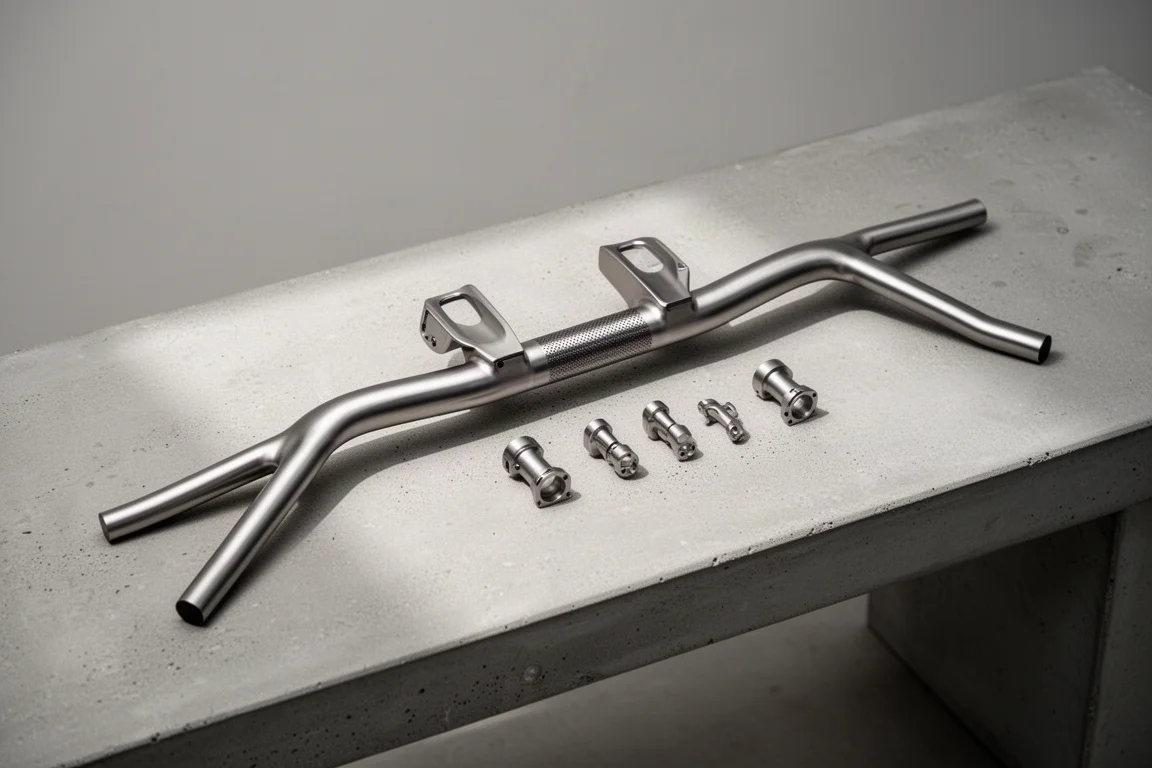
It is worth being clear about what is and is not made in-house. The frame, the cockpit and the great majority of the parts are produced by the builder. Wheels, derailleurs, pedals and bottles are not.
Things to Consider Before Buying
Weight is the first trade-off. A titanium build will typically carry a weight penalty compared with an equivalent carbon frame. Additive manufacturing has narrowed that gap considerably and brings the metal much closer to composite weights, but it does not erase it.
Cost is the second. Titanium is expensive as a raw material, and it is difficult to work with, so every stage of production is slow and costly. Machining a single component from titanium can take the best part of a day, where the same part in aluminium might be cut almost ten times faster. That combination of high material cost and high labour is reflected in what a finished bike costs.
Working with the material is genuinely demanding. Titanium work-hardens quickly, which makes reshaping it difficult and explains why printing has become such a valuable technique for this metal in particular. Buyers should also expect a build process measured in months rather than weeks, and should be prepared to discuss position and handling goals in detail rather than choosing from a specification list.
Buying Advice
This is a bike to consider when fit is the problem you are actually trying to solve. If you fit a stock time trial frame well and simply want the lightest or most aerodynamic option available, a custom titanium build is unlikely to be the most efficient route to that goal. If, on the other hand, you have struggled to reach a sustainable aero position on production frames, the made-to-measure approach addresses the root cause rather than the symptom.
Before committing, it is worth clarifying three things. First, the intended position and how the geometry supports it, including how weight is distributed over the wheels. Second, how much cockpit adjustment you will have after the build is finished, since the modular system is deliberately less adjustable than some alternatives. Third, which components will be supplied and which you will source yourself, as wheels, drivetrain, pedals and bottles come from elsewhere.
Expectations around longevity are also worth setting early. Titanium is chosen here for its strength, fatigue behaviour and resistance to corrosion, and the frames are intended to be kept for a very long time. That reframes the purchase as a long-term investment rather than a race-season expense, which is the most sensible way to judge the value of a build at this level.
Conclusion
The Sturdy Cycles Time TR is a rare thing: a time trial bike made from titanium, built to measure for one rider, and designed as a proper aero race machine rather than a converted round-tube frame. The formed tubing, printed junctions and modular titanium cockpit show how far metal frame building has moved, and the material’s durability supports long-term ownership.
It will not suit everyone. There is a weight penalty against carbon, the cost reflects expensive material and slow machining, and the cockpit is less adjustable than some rivals. For riders who have never fitted a stock time trial bike properly, though, the appeal is easy to understand: a fast bike that is built around you first.
Product link
View more details for Sturdy Cycles Time TR
This product is mentioned in the review. Check the specifications, options, and compatibility before buying.
View more details for Sturdy Cycles Time TRFurther reading
Related Reviews
Time Trial Bikes
Specialized S-Works Shiv TT Disc Review: A UCI-Legal Time Trial Machine Built for Fast Stages
A close look at the Specialized S-Works Shiv TT Disc, its truncated frame shapes, one-piece cockpit, and the purposeful race build that makes it a serious option for fast time trial stages.
Road Bikes
10 New Road Bikes Worth Watching: Aero, Titanium, Steel and Endurance Standouts
A practical roundup of 10 new road bikes, from aero flagships chasing single-watt gains to titanium, steel and endurance platforms built for real roads.
Saltwater Aquarium Setup
10 Questions About Cycling a Saltwater Aquarium: What You Need to Know
Essential questions and answers for cycling a reef tank or saltwater aquarium, from biome building to light management and bacterial supplements.