Alpine Skis
Stöckli Laser WRT Review: Precision and Energy for Firm Groomers
A close look at the Stöckli Laser WRT, a stiff, narrow frontside carver built for expert skiers who spend their days on firm, groomed snow.
Introduction
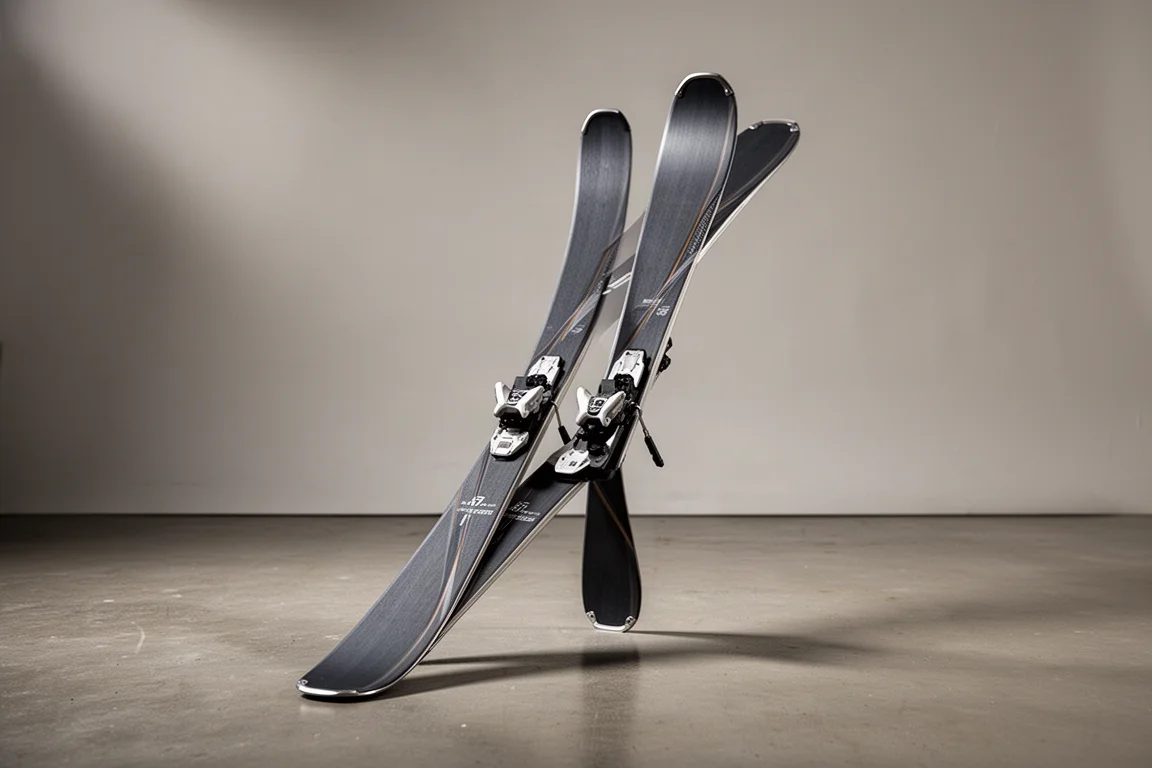
The Stöckli Laser WRT arrives for 2026 as a carryover model. The shape, construction, and graphics are unchanged from the previous season. For skiers who already know the model, that means no surprises. For everyone else, it is a useful reminder of what this ski is: a narrow, sporty frontside carver that delivers an unusually energetic and precise ride on firm snow.
At 67 mm underfoot, the Laser WRT sits close to race width. It is at its best on smooth, groomed runs and hard pack, where its stiffness and full camber profile translate into strong edge grip and a lively, rebound-rich feel through the turn.
Who This Ski Is For
This is not a versatile all-mountain ski, and it is not positioned as one. The shape and the narrow waist make it a frontside specialist. Skiers who split their time between groomers and soft, broken snow will feel the limits of that waist width as soon as conditions get deeper or more variable.
The Laser WRT rewards a race background or expert-level skills. On a platform this narrow, less experienced skiers can feel a little off balance, and the ski is unlikely to flatter them. A solid technical base is what allows the energy and precision built into the ski to come through.
For confident carved turns on firm snow, the payoff is immediate. This is a ski that wants to be driven from the top of the turn to the bottom, and it gives a great deal back when the pilot stays engaged.
Main Strengths: Energy and Precision
The defining characteristic of the Laser WRT is how much energy it returns. Positive camber underfoot pairs with carbon reinforcement to produce a strong rebound out of the turn, and the result is a ski that feels quick and alive underfoot without being heavy.
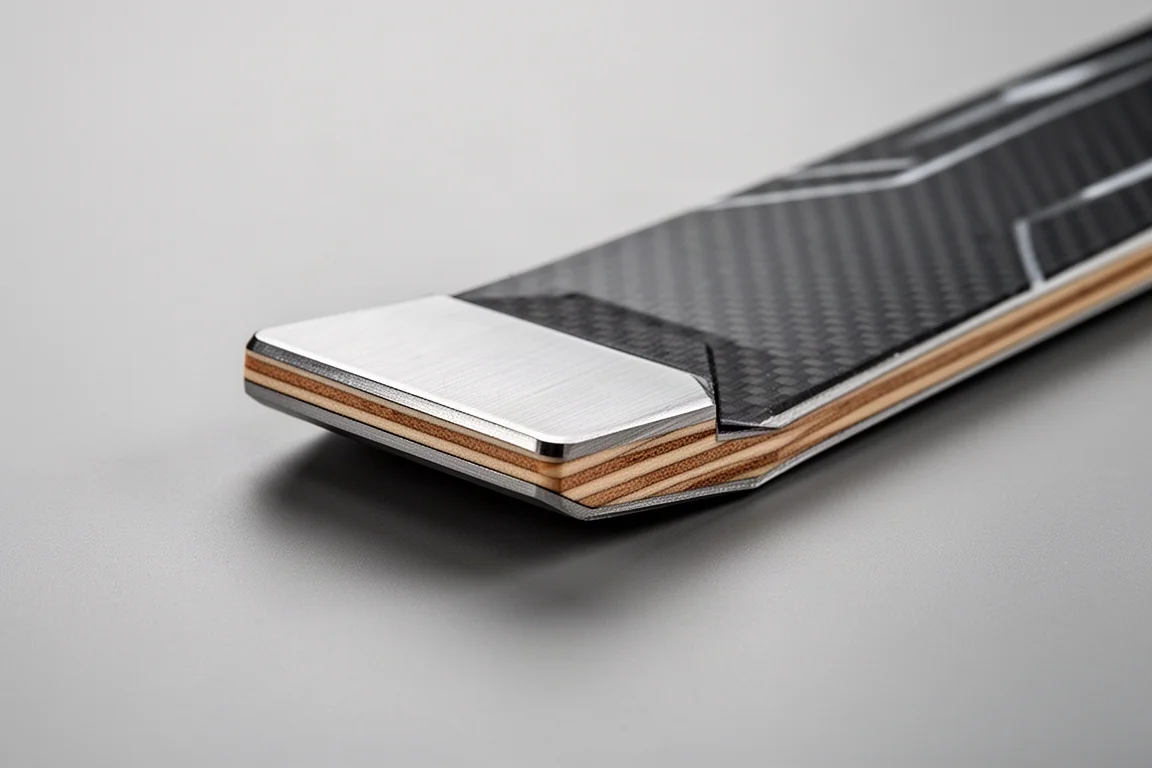
Edge hold is the other headline. The widest point of the shovel flares out, and the tail is square, sharp, and angular, matching the crisp, precise exit the ski produces at the end of a carved turn. The turn radius measures 13.7 m, which is short. The ski is happiest in that range, though it can be opened up and run when the terrain allows.
Construction and Materials
Under the topsheet, the Laser WRT uses a wood core blending poplar and beech, reinforced with two sheets of metal. Two separate carbon applications sit on top of that. The first, carbon steering control, is a central strip of carbon placed in the ski under stress to prevent counterflexing in the front. That keeps the ski engaged with the snow and feeds energy into the turn. The second, carbon power turn, is an additional carbon laminate underfoot that sharpens precision and drives energy to the edge.
Stöckli also uses rubber dust in its adhesive laminates, which adds another layer of damping, stability, and quietness to the ride. The overall profile is pure full camber, with no taper and no rocker, and a generous amount of positive camber underfoot.
Things to Consider Before Buying
Stiffness is the main trade-off. The Laser WRT is a stiff ski with a solid, strong ride, and that character is deliberate. It is built for firm conditions and for holding an edge. The same construction that makes it so precise on hard pack makes it less forgiving everywhere else.
Weight is moderate rather than extreme. At 166 cm, the ski comes in around 1,830 g. With two sheets of metal and a denser wood core, that is a reasonable figure, and the narrow 67 mm platform keeps overall volume low.
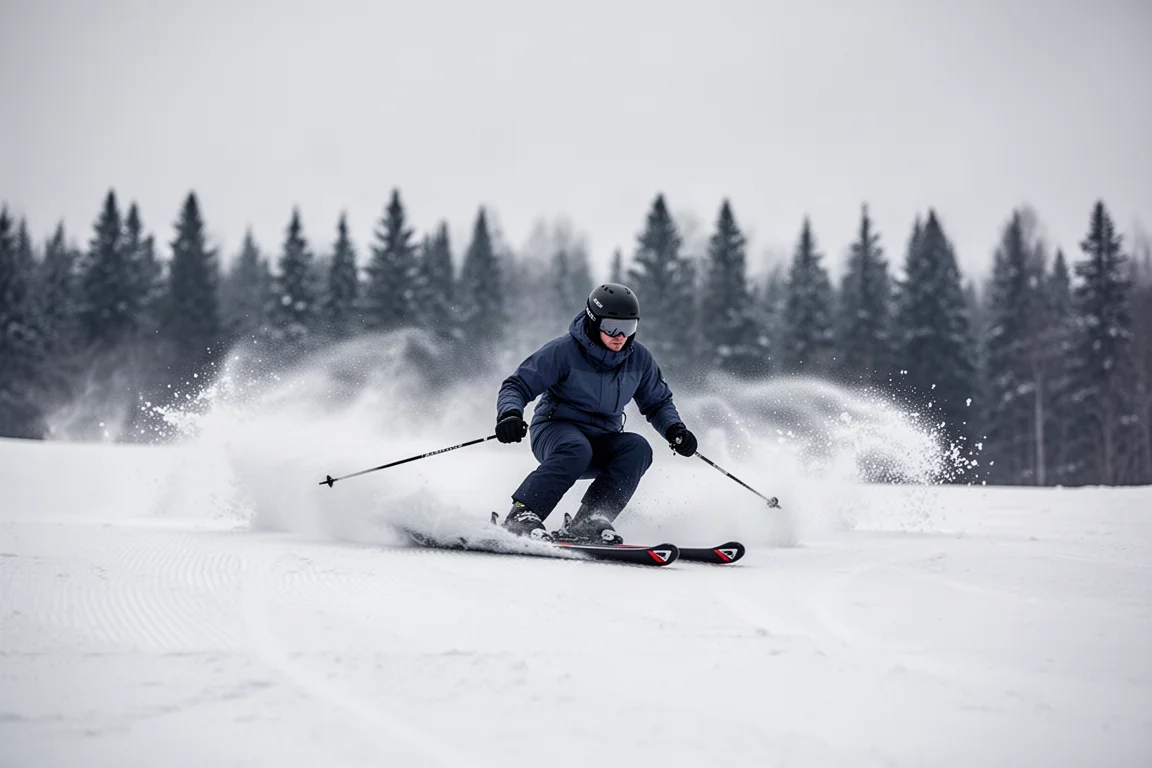
There are other skis at 67 mm underfoot that are stronger, heavier, and more powerful than the Laser WRT. What sets this one apart is its combination of energy and precision rather than raw muscle, and that distinction is worth weighing against how and where you actually ski.
Flex also matters when comparing within the range. The Montero series is more flexible in the shovel, and even the Laser SC has more flex. The WRT and WRT Pro sit at the stiffer, higher-performance end of the lineup.
Buying Advice
Choose the Laser WRT if your days are built around firm, groomed runs and you want a ski that responds to deliberate input with a lot of energy. It suits skiers who enjoy high edge angles, quick edge-to-edge transitions, and a strong rebound out of every turn.
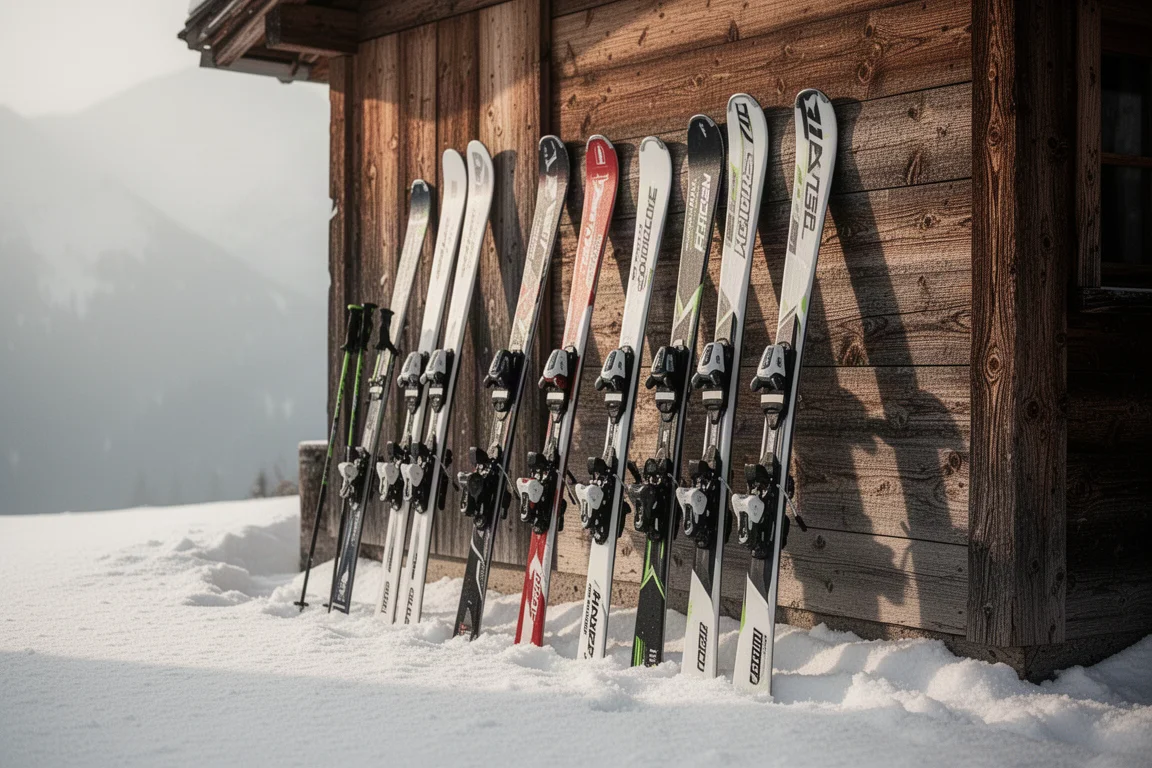
Look elsewhere if you need one ski to handle soft snow, broken terrain, and variable conditions. The narrow waist limits float and versatility, and the stiff flex asks for solid technique. Skiers who are honest about where they spend most of their time will find this an easy decision either way.
Conclusion
The Stöckli Laser WRT remains one of the most sporty and exciting skis on groomed snow. Its blend of a narrow waist, full camber, two sheets of metal, and two carbon applications produces a ride that is stiff, precise, and remarkably energetic. It is not a ski for every skier or every day, but for experts who live on hard pack, it delivers exactly what it promises.
Product link
View more details for Stöckli Laser WRT
This product is mentioned in the review. Check the specifications, options, and compatibility before buying.
View more details for Stöckli Laser WRTFurther reading
Related Reviews
Alpine Skis
Atomic Redster X9 Review: An Ultra-Precise Carving Ski for Firm Snow
A close look at the Atomic Redster X9, a 65.5 mm carving ski built for firm groomed snow, covering its construction, strengths, limits, and who should buy it.
Alpine Skis
Atomic Redster X9 S Review: A Precision Carving Ski for Firm Snow
The Atomic Redster X9 S pairs a 65.5 mm waist with race-derived construction and steel damping, delivering knife-like precision on firm groomers.
Alpine Skis
Blizzard Thunderbird R15 WB Review: A 76 mm Frontside Carver Compared With the Firebird HRC
A practical look at the Blizzard Thunderbird R15 WB, its TrueBlend core and Active Carbon Armor, and how it differs from the race-oriented Firebird HRC.