Kitchen
Staub Dutch Oven Review: Is This French Cast Iron Worth the Price?
Hands-on testing of Staub's enameled cast iron Dutch oven, covering heat retention, moisture control, and where it falls short against Le Creuset and Lodge.
Introduction
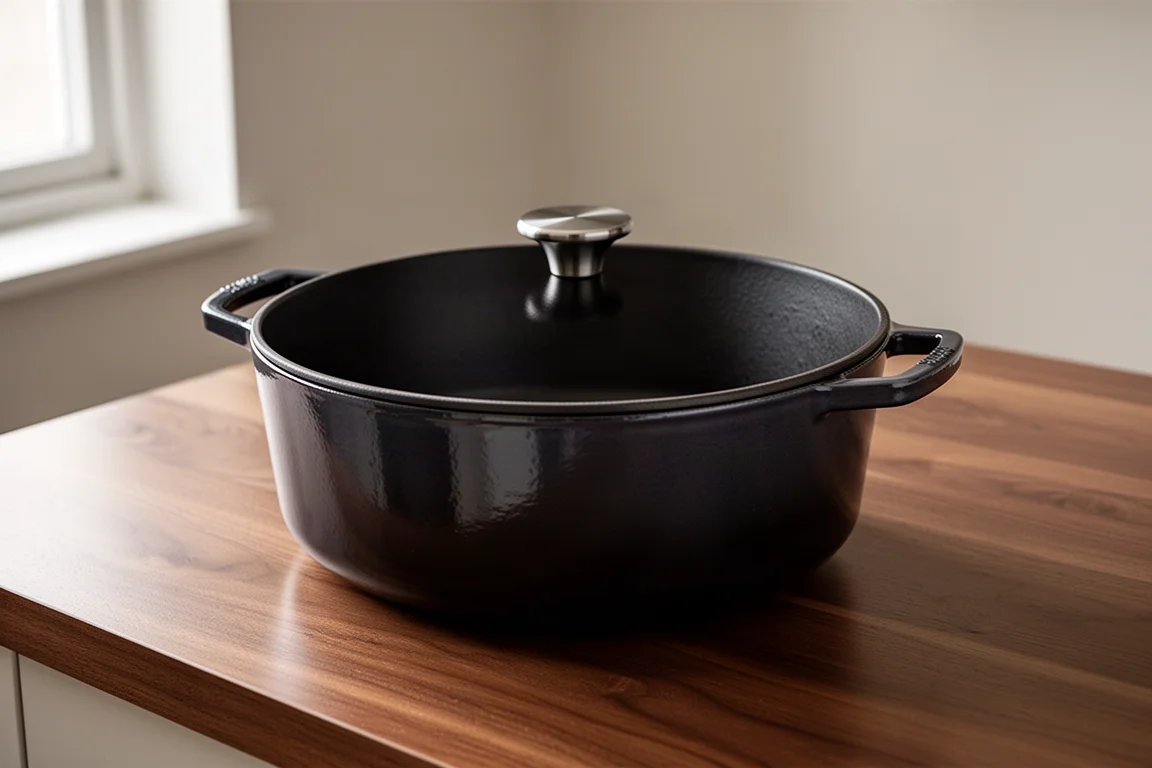
Staub is one of the most popular Dutch oven brands in the world, and its French-made enameled cast iron pots sit at the premium end of the market. With prices that rival Le Creuset, the obvious question is whether the design and performance justify the cost. We put the Staub 5.5-quart Dutch oven through a series of practical tests on heat retention, moisture control, and everyday usability to find out where it excels and where it falls short.
Who This Product Is For
Staub suits cooks who invest in slow-cooked meals: braises, stews, soups, and other dishes where even heat and trapped moisture matter. Its thick walls reward anyone who browns meat or fries food and wants stable temperatures. It is less appealing if you need something lightweight or budget-friendly, since alternatives from Lodge or Great Jones cost a fraction of the price.
Main Strengths
The Flat Lid and Self-Basting Design
Unlike the sloped lids on most Dutch ovens, Staub’s flat lid lets you rest ice on top without it sliding off. Hot steam from the pot condenses against the cold surface and drips back in, creating an even more moist cooking environment. The flat top also works as a resting spot for a spoon, spatula, or tongs.
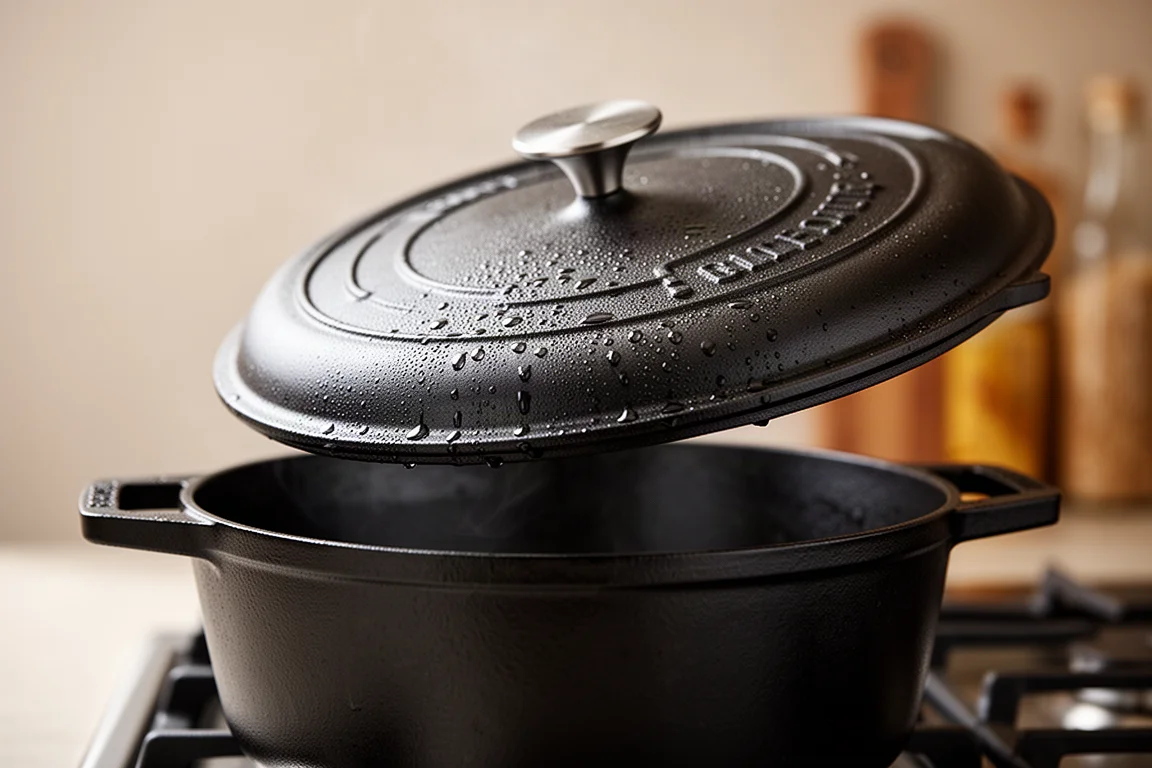
Inside, the lid has tiny bumps designed to capture evaporating liquid and redistribute it evenly back into the pot. Round steel knobs in nickel or brass are standard, and Staub also offers playful animal-shaped knobs like a cow, rooster, fish, pig, or lobster, which help identify what is inside each pot when cooking several at once.
A Matte Black Interior That Hides Wear
The matte black interior resists visible staining and scratching far better than lighter finishes. After years of use, staining and scratches are barely visible, while a Le Creuset sand-colored interior shows every imperfection clearly.
Heat Retention Testing
Staub’s walls are thicker and heavier than most: the 5.5-quart model has 4 mm walls and weighs 12.8 pounds, compared to the Le Creuset 5.5-quart with 3.6 mm walls at 11.5 pounds. That mass helps the pot cook more evenly, especially when browning meat or adding ingredients that drop the temperature, and it keeps frying oil at a stable temperature.
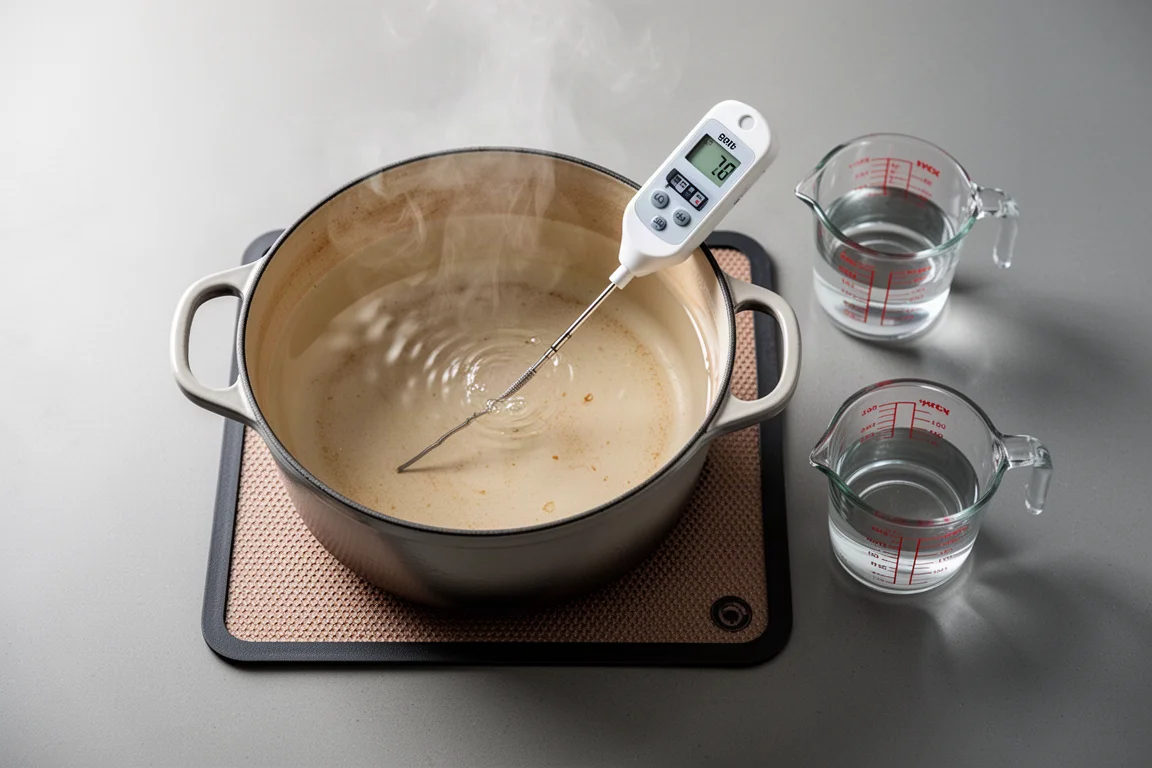
In a controlled test, 32 ounces of water was brought to a boil and then left to cool off the heat. After ten minutes the water read 136°F, and after twenty minutes it read 111°F. Repeating the same test with Tramontina, Lodge, Le Creuset, and Great Jones Dutch ovens showed Staub retaining heat better than all of them.
Moisture Retention Testing
A second test examined the bumpy lid. Two Dutch ovens, one Staub and one Le Creuset with a smooth lid interior, each held 32 ounces of boiling water bubbled for ten minutes. The lids were lifted onto paper towels for twenty seconds. The towel under the Staub lid was dotted with droplets evenly spread out, while the Le Creuset towel had fewer, less evenly distributed droplets.
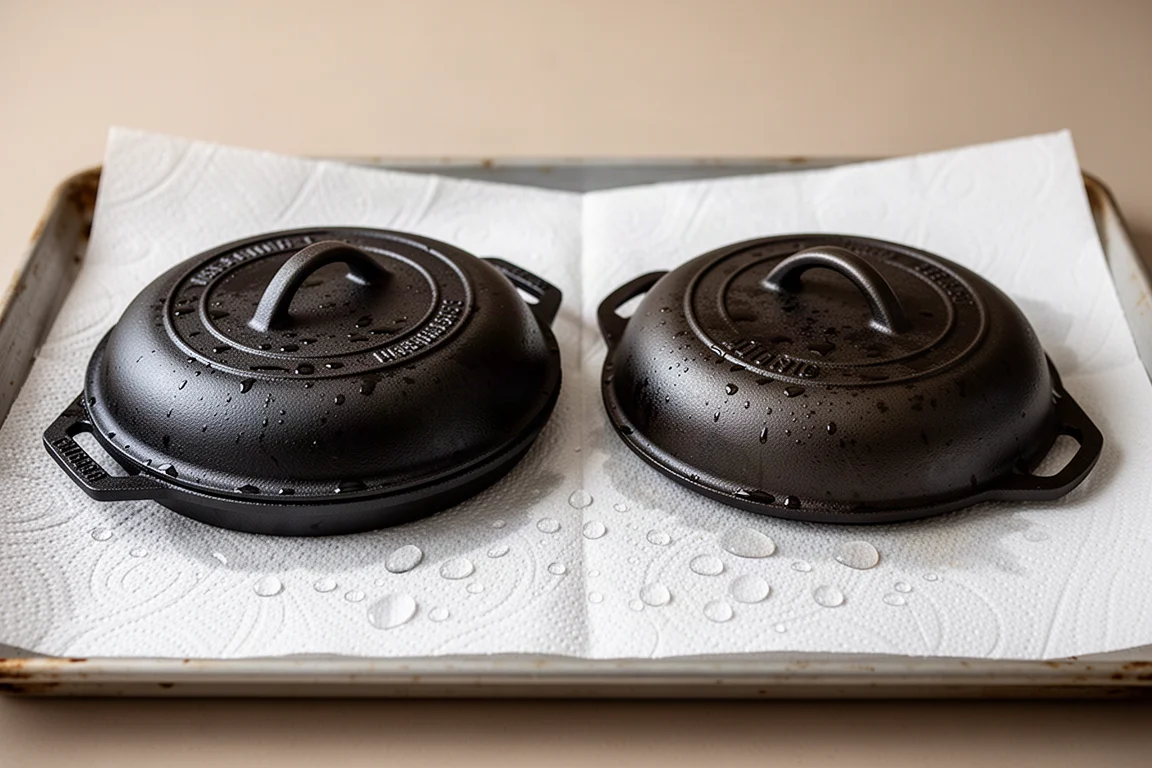
For dishes that benefit from continuous self-basting, that even redistribution is a real advantage. For soups, chilis, or sauces, it makes little practical difference.
A third test measured how well the heavy lid locks in moisture: 32 ounces of water boiled, simmered for 15 minutes, then rested 30 more minutes with the lid on. Staub retained almost the full 32 ounces and outperformed Lodge, Tramontina, Le Creuset, and Great Jones in the same test.
Things to Consider Before Buying
The side handles are on the small side, with less than an inch of space between handle and pot. Le Creuset offers a generous 1.25-inch opening, which makes a noticeably better grip when wearing an oven mitt. At three quarters of an inch in diameter, Staub’s knob is also smaller than competitors like Le Creuset and Made In, which makes lifting and tilting the lid harder.
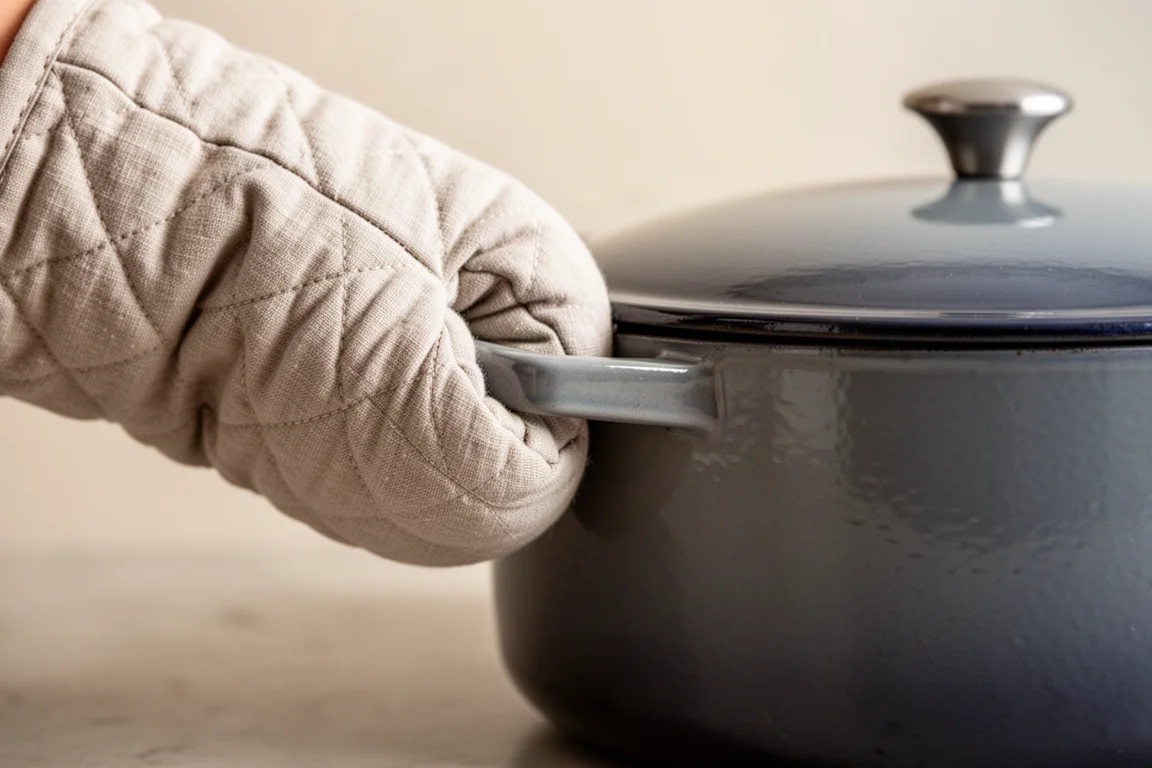
The dark interior cuts both ways. While it hides stains and scratches, it makes it trickier to spot fond development or see whether food is sticking or burning. Browning onions is far easier to judge against a light interior.
Finally, at 12.8 pounds empty, Staub is heavier than many alternatives. If maneuverability matters more than heat retention, a lighter Dutch oven from Le Creuset may be a better fit.
Buying Advice
Staub is one of the most expensive enameled cast iron brands aside from Le Creuset, and you could buy multiple Lodge or Great Jones Dutch ovens for the price of one Staub. Still, the testing shows its thick walls and tight-fitting lid retain heat better than the competition, and its self-basting lid distributes moisture more evenly than a smooth domed lid. Because the enameled coating does not degrade and the pot can last for decades, paying more for top performance is a smart investment if slow cooking is a regular part of your kitchen routine.
Conclusion
Staub delivers thoughtful design and measurable performance: class-leading heat and moisture retention, a genuinely effective self-basting lid, and an interior that stays looking new for years. The small handles and knob, dark interior, and heavy build are real trade-offs, but for soups, stews, and braises, Staub remains one of the best Dutch oven brands you can buy.
Product link
View more details for Staub Dutch Oven
This product is mentioned in the review. Check the specifications, options, and compatibility before buying.
View more details for Staub Dutch OvenFurther reading
Related Reviews
Kitchen
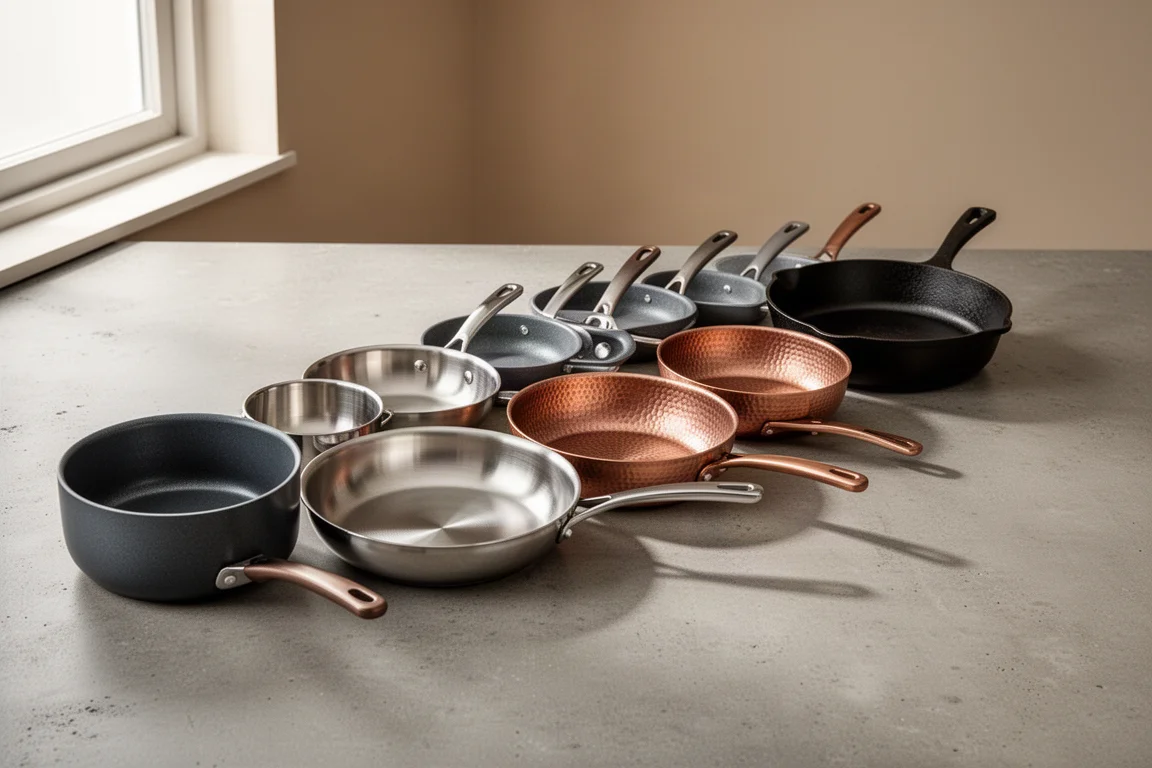
Best Nonstick Frying Pans Compared: 11 Skillets From $16 to $185, Tested
Eleven nonstick frying pans go head to head in pancakes, eggs, heat distribution, thermal efficiency, and scratch resistance to find out whether a cheap pan can really compete with a premium one.
Kitchen
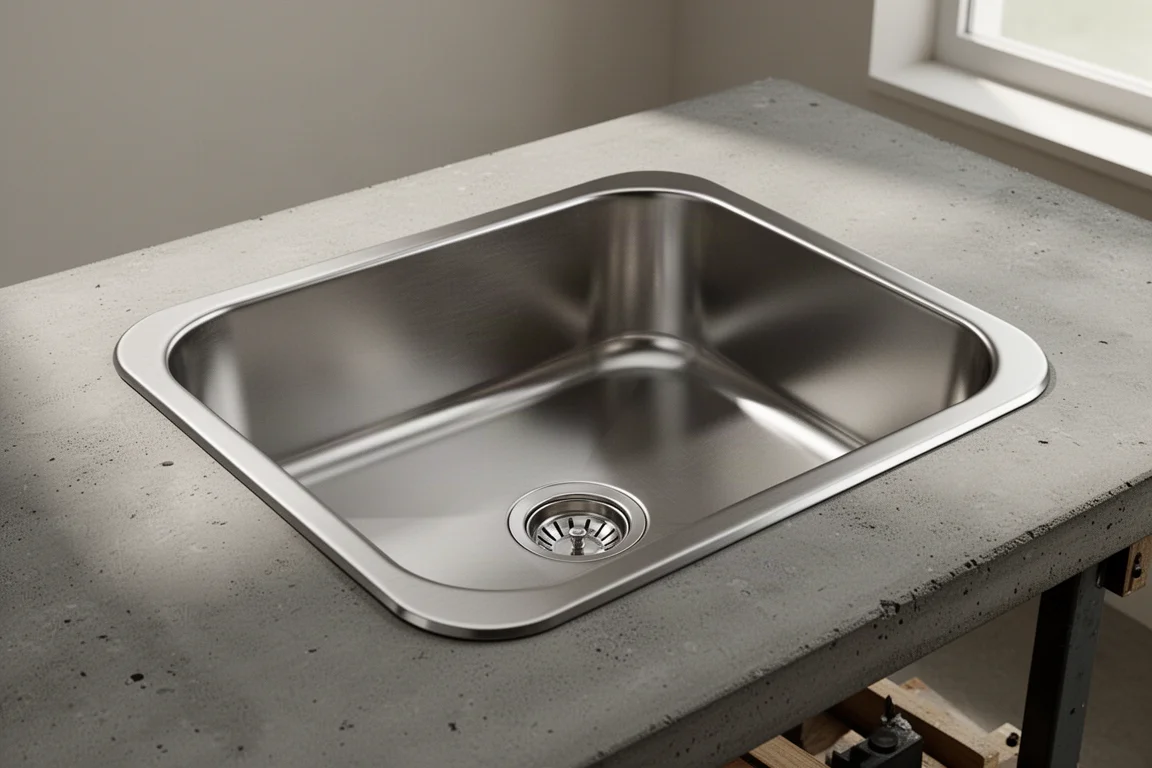
Vivor Stainless Steel Kitchen Sink Review: A Solid Drop-In Upgrade With One Weak Spot
An all-stainless single-basin drop-in sink with easy-clean rounded corners and a drain-sloped base, at a roughly $200 price point.
Kitchen
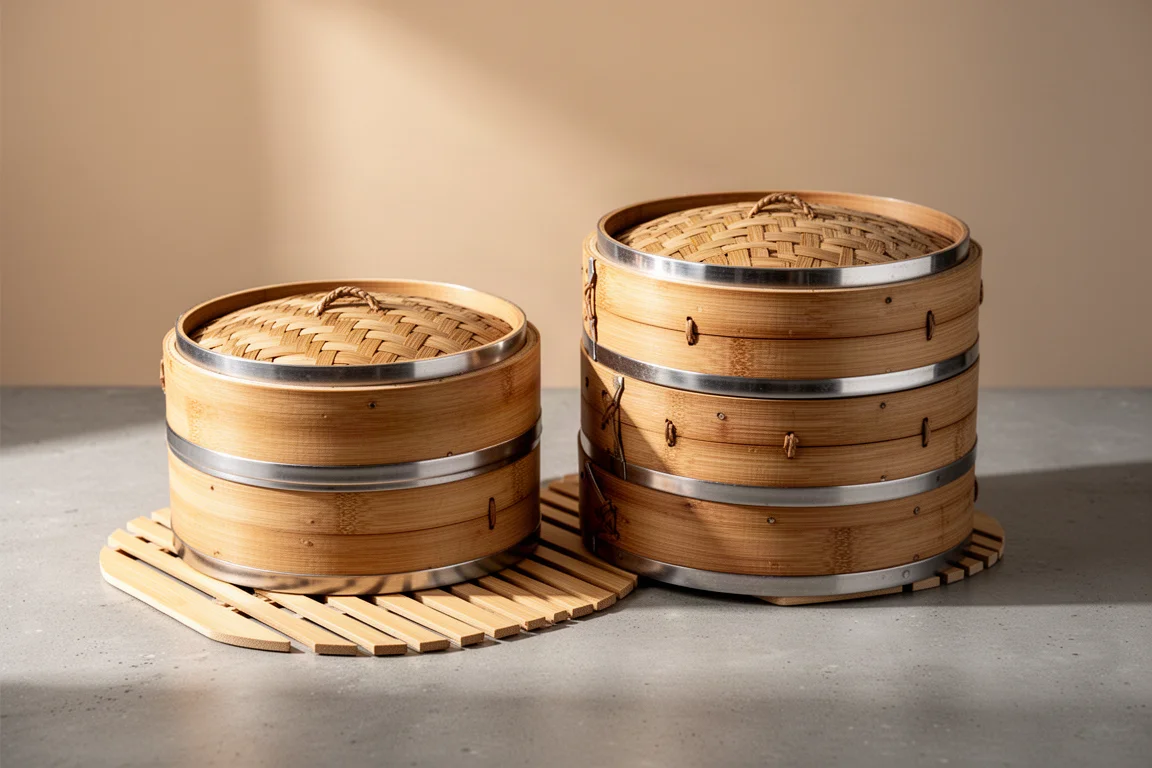
Best Bamboo Steamers: Two Tested Picks for Dumplings, Bao, and More
After hands-on steaming tests with dumplings and bao, two bamboo steamers stood out for build quality and staying in alignment.