Audio
StarkSound Beta 5 Review: Deep Bass From a Compact Standmount
A compact two-way speaker with surprising bass extension, a low measured sensitivity, and a placement rule that buyers need to take seriously.
Introduction
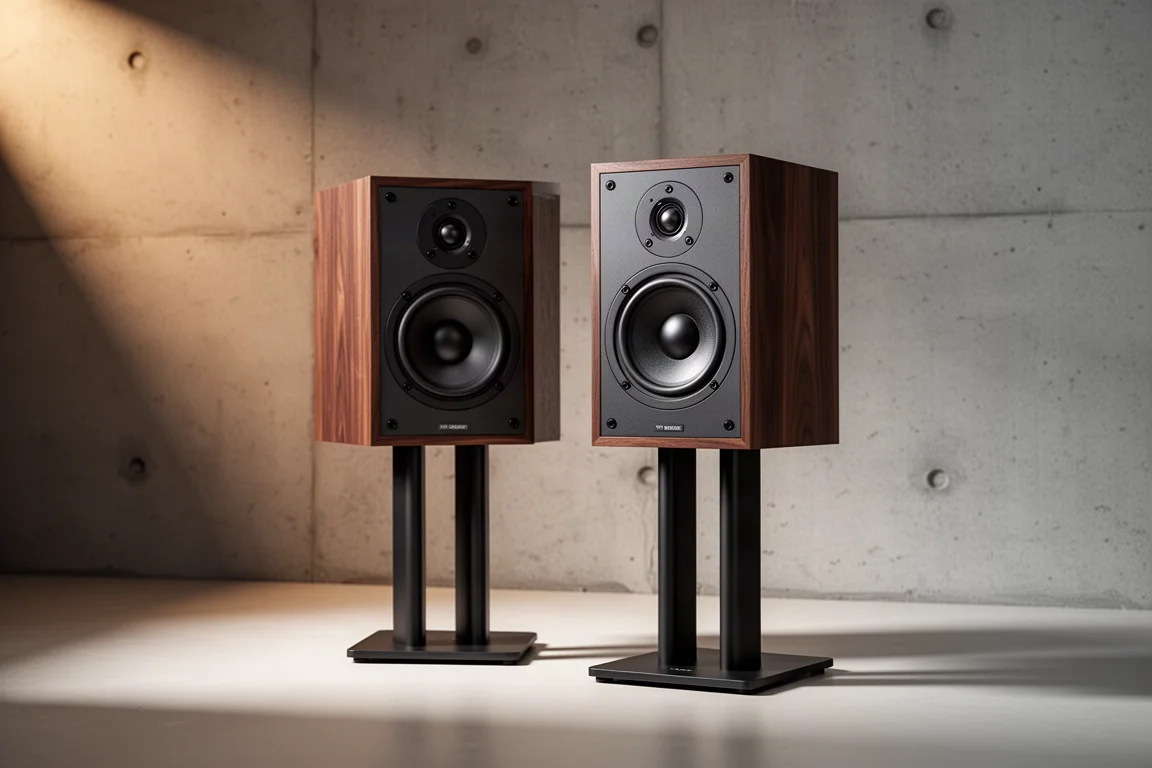
The StarkSound Beta 5 is a compact two-way passive loudspeaker built around a rear-ported cabinet. It combines a 29 mm voice coil tweeter with a 5.25 inch dry carbon acoustic sandwich woofer that uses ATMF technology, and it sells as a pair for around $500 in a choice of finishes. Recommended amplifier power spans 30 to 150 watts, nominal impedance is listed at 4 ohm, and each cabinet weighs roughly 15 lb, or about 6.8 kg.
Those numbers describe a fairly ordinary standmount, but the Beta 5 behaves like a speaker with a clear point of view. It reaches lower in the bass than its cabinet size suggests, and in exchange it asks for a particular kind of room and a particular kind of setup. Buyers who plan around those requirements tend to get far more out of it than buyers who treat it as a plug-and-play box.
Who the StarkSound Beta 5 Is For
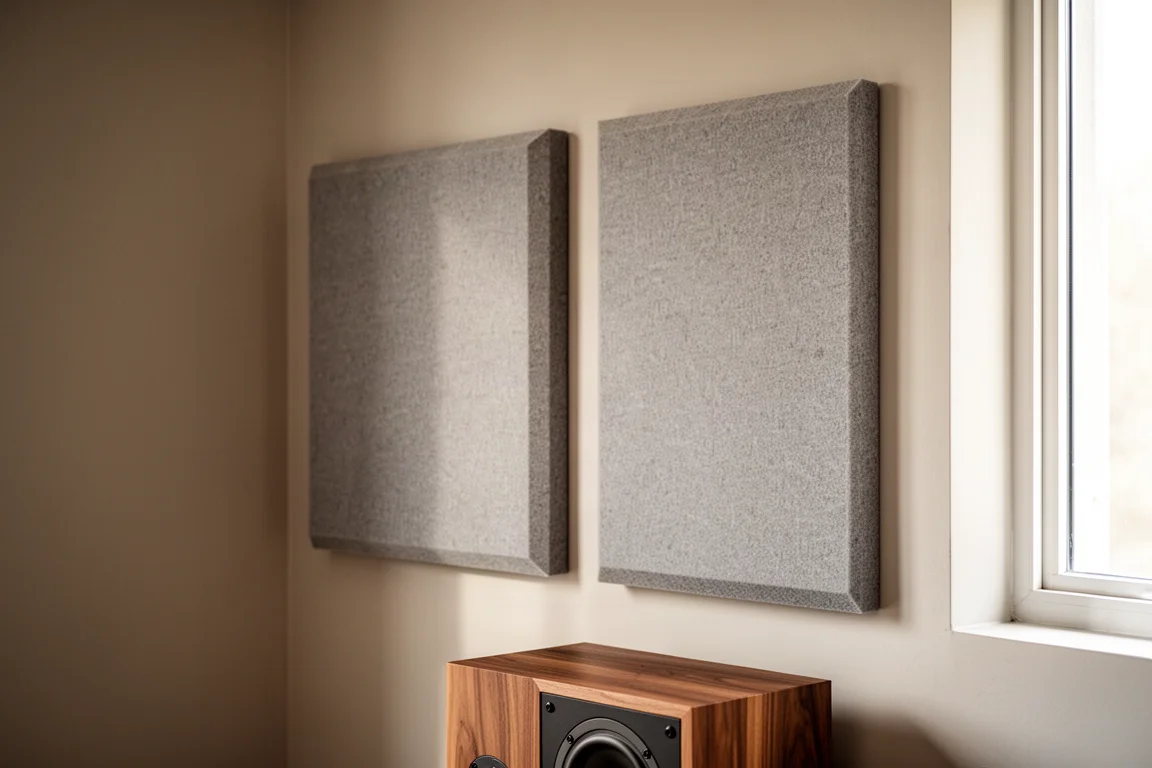
This speaker suits listeners who want real low-frequency output from a small cabinet and who can place it close to the wall behind it, roughly 10 inches from the back of the cabinet to the wall surface. It also fits rooms where the speaker can be angled slightly away from the listening position instead of aimed straight at the ears, and where the side walls can be softened with absorption.
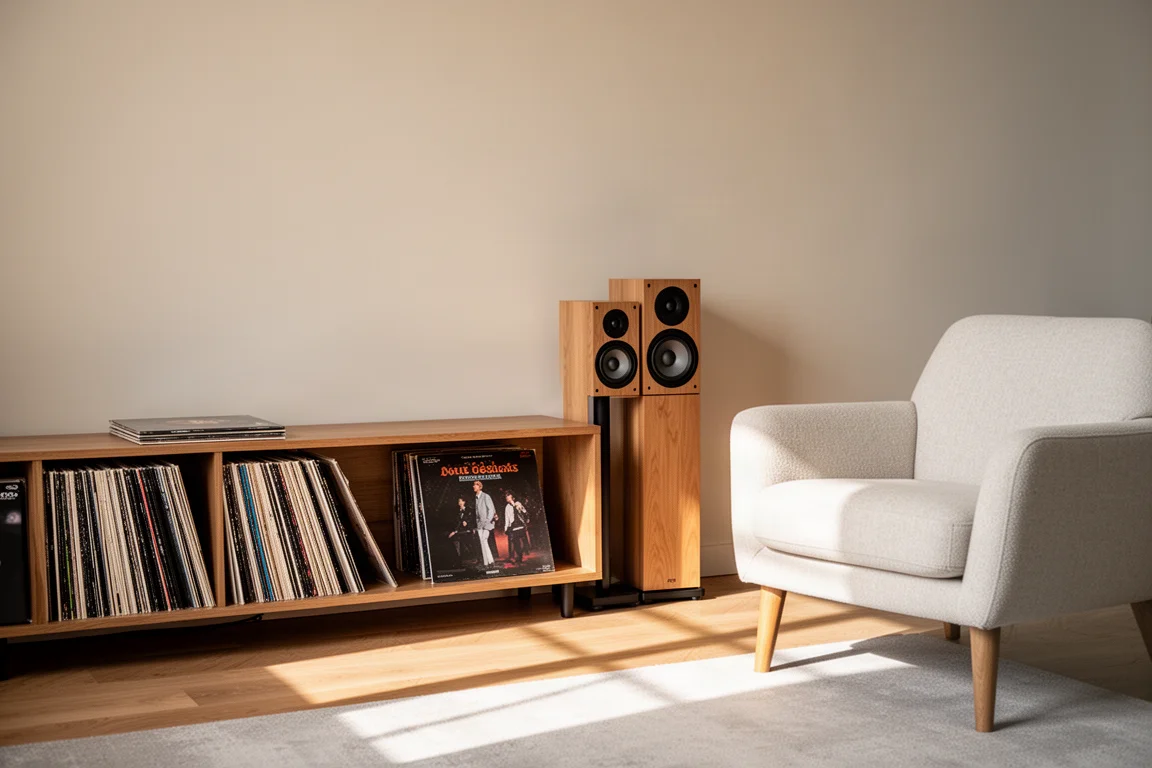
It is a weaker match for anyone who needs a speaker to stay neutral when positioned well out into the room, and for anyone running a low-powered amplifier, since the measured sensitivity sits below the published figure.
Main Strengths: Bass Depth and Dynamic Headroom
Bass extension is the headline. In-room output reaches down to roughly 40 to 50 Hz, with an F3 of 52 Hz and an F10 of 37 Hz. That is deep for a cabinet this size, and it translates into a solid, well-defined kick drum on most material rather than a thin or hollow low end.
Distortion performance is also strong for the price. Harmonic distortion at both 86 dB and 96 dB stays well controlled, and instantaneous dynamic range reaches about 96 dB at one meter, a reasonable figure for a compact passive design. Sound envelopment is a further strength: the speaker fills a room in a way that makes it feel larger than it looks.
Placement and Setup: Why Distance From the Wall Matters
Placement is not optional here, it is part of the design. Pulled out from the front wall, the Beta 5 sounds thin through the midrange, with treble that sits too far forward by comparison. Move the cabinet closer to the wall behind it and that midrange fills in until it lines up with the upper frequencies. Around 10 inches of clearance between the back of the cabinet and the wall is where the balance comes together.
The reason is baffle step behaviour. Low frequencies radiate in all directions from the cabinet, while higher frequencies become progressively directional and fire mostly forward. Once a wavelength grows longer than the baffle itself, sound wraps around the edges and radiates backwards as well. A speaker that compensates properly drops the upper range to match, producing a smooth, linear response. The Beta 5 does not appear to apply that compensation as thoroughly as it could, which suggests the design expects a nearby wall to act as an extension of the baffle and reinforce the lower midrange and bass.
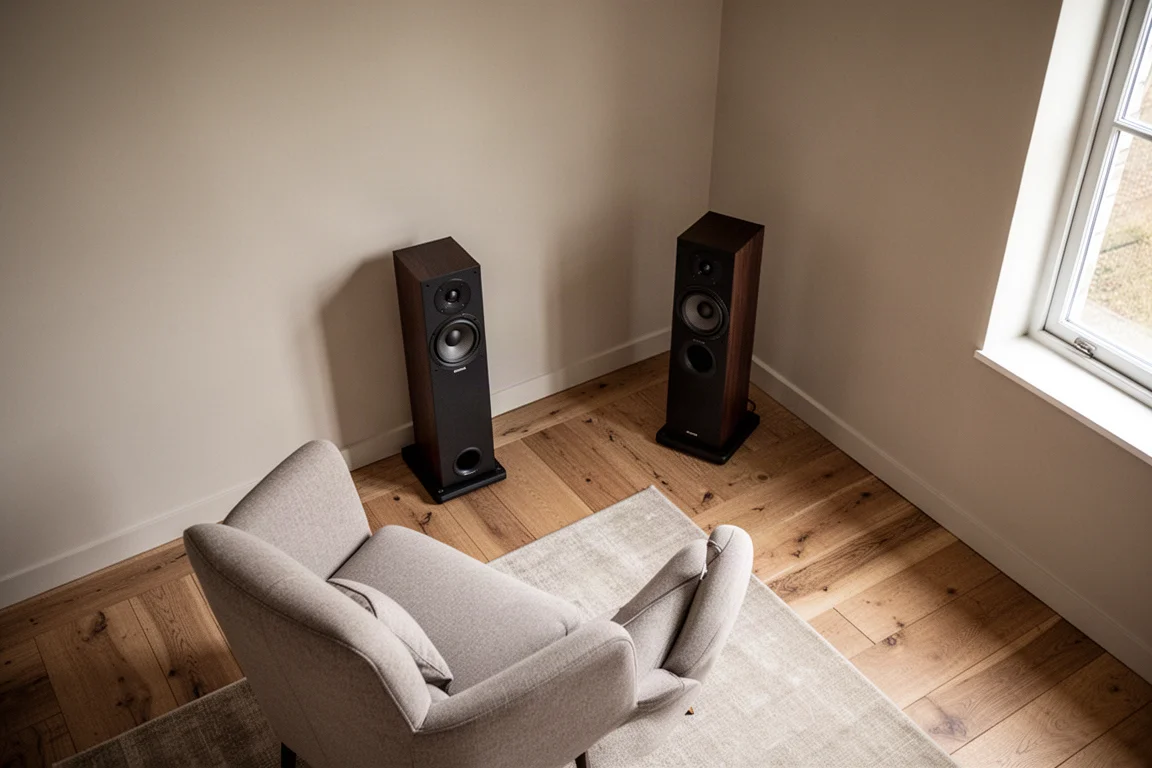
Aiming matters almost as much. Pointing the speaker directly at the listening position overemphasises the treble, and a toe-in of roughly 10 to 20 degrees is a better compromise. Vertically, the usable window runs from about 30 degrees above the tweeter axis to 5 degrees below it, so ears should stay level with or above the tweeter line.
What the Measurements Show
Sensitivity is listed at 86 dB, but measured output averages closer to 83 dB at 2.83 V and one meter. That gap is the price of the bass extension: the extra low-frequency output comes from trading away efficiency, and it is worth knowing before pairing the speaker with a small amplifier.
Impedance is specified at 4 ohm nominal, with a minimum impedance of 4.3 ohm and a minimum EPDR of 2.4, which is on the low side. In practical terms the speaker presents a demanding load at some frequencies, and an amplifier that is comfortable driving low-impedance speakers will be the safer match.
Where the Design Makes Compromises
A strong resonance sits in the upper midrange, and it shows up consistently across the data: in the on-axis response, in the burst decay where it produces excessive ringing in the same region, and in the impedance curve. Directivity is limited as a result, and horizontal radiation narrows through the 1 to 2 kHz range before handing off to a wider tweeter, a pattern that can make the speaker sound slightly bright or edgy when side wall reflections are left untreated.
Nearfield measurement of the port shows some leaked output, though it is not clear whether the port itself or an internal enclosure resonance is responsible. Multitone distortion reaches roughly 10 percent in the midrange between about 800 Hz and 1 kHz, and adding a subwoofer with an 80 Hz crossover reduces that figure noticeably, which points to woofer excursion as the underlying cause. At very high levels, around 102 dB at one meter, midrange and bass output begin to compress. Against a comparable alternative such as the ELAC DB63, the StarkSound gives up about 3 dB of sensitivity in exchange for deeper bass, with the ELAC’s F3 sitting at 76 Hz rather than 52 Hz.
Things to Consider Before Buying
The placement requirement is the first thing to plan around. This is not a speaker that wants to sit well out into the room, and buyers who cannot put it near a wall will be working against its tuning.
Sensitivity is the second. Measured output near 83 dB means the upper end of the 30 to 150 watt recommendation is more realistic than the lower end, particularly in larger rooms.
The low minimum EPDR of 2.4 is worth checking against the amplifier’s low-impedance capability. The vertical listening window is narrow enough that ear height matters. Side wall absorption is genuinely useful here rather than optional. The upper midrange resonance and the midrange multitone distortion are real characteristics of the design, and both ease when the speaker is used with a subwoofer and in a treated room.
Buying Advice
The Beta 5 makes sense for a buyer who can commit to a wall-adjacent placement, angle the cabinets 10 to 20 degrees off axis, and give the side walls some absorption. Under those conditions it delivers bass depth and a sense of scale that are unusual at this price, along with controlled harmonic distortion.
Pair it with an amplifier that is happy into a low-impedance load and that can supply the upper part of the recommended power range. If the room allows a subwoofer, crossing over around 80 Hz reduces woofer excursion and, with it, the midrange distortion figure.
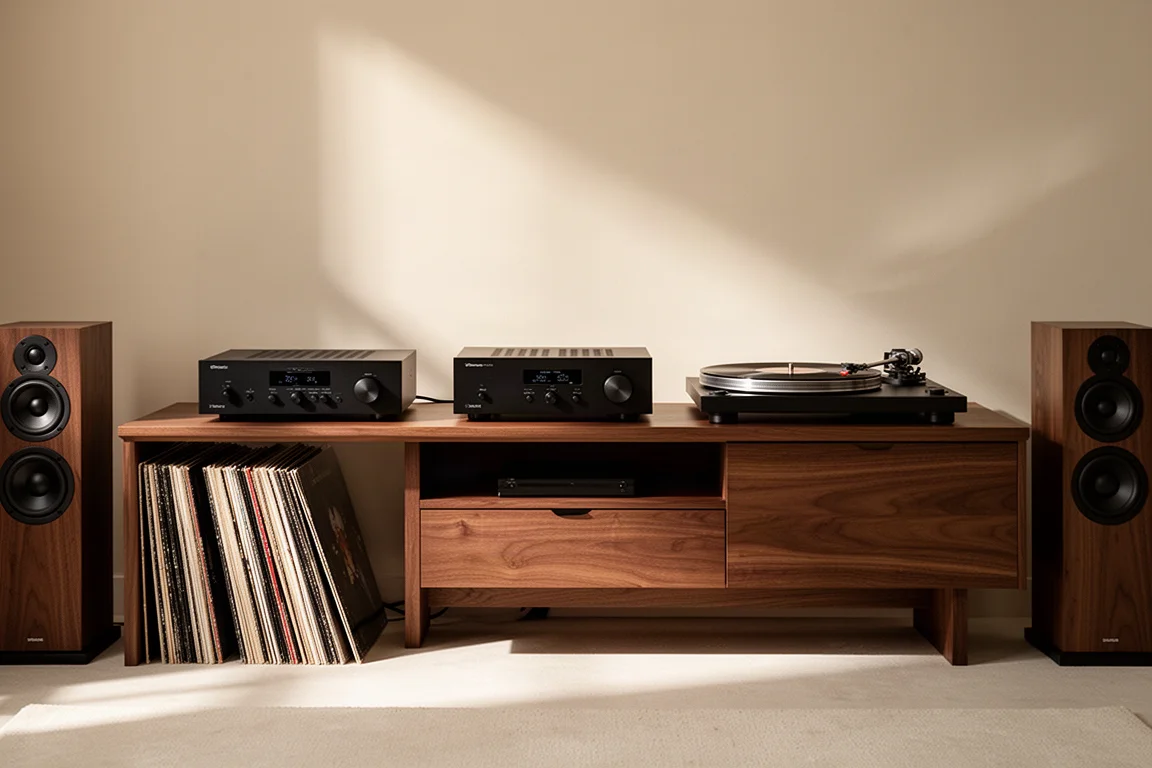
Buyers who need a speaker that stays neutral when pulled out into open space, or who listen at very high levels in a large room, should weigh those constraints carefully before choosing this model.
Conclusion
The StarkSound Beta 5 trades sensitivity and setup flexibility for bass extension, and it delivers on that trade. Placed close to the wall, angled slightly off axis, and supported with a little side wall absorption, it produces deep low frequencies, controlled harmonic distortion, and a genuinely enveloping presentation for around $500 a pair. Buyers who can meet its placement conditions will find a lot to like; buyers who cannot should look for a speaker with different priorities.
Product link
View more details for StarkSound Beta 5
This product is mentioned in the review. Check the specifications, options, and compatibility before buying.
View more details for StarkSound Beta 5Further reading
Related Reviews

Audio
Apos x Geshelli Merlin DAC Review: A Natural Match for the Gremlin Amp
The Apos x Geshelli Merlin DAC pairs balanced and single-ended outputs with a smooth, natural sound that complements the Gremlin tube amp.
Audio
Audio Gear That Beats Pricier Rivals: Nine Value Picks for 2026
Nine turntables, streamers, speakers, and amplifiers that deliver far more than their price suggests, plus the trade-offs worth checking before you buy.
Audio
Best Amplifiers Under $200: Four Compact Stereo Amps Worth Considering
Four compact amplifiers under $200, from a class AB design with a headphone section to a DAC-equipped integrated amp and a low-cost pick from a US-based brand.