Kitchen Appliances
KitchenAid vs Budget Stand Mixers: Six Mixers Tested to See If the Extra Cost Pays Off
Three KitchenAid tilt-head mixers go up against three cheaper alternatives across whipped cream, cookie dough, and pizza dough to see what the extra money actually buys.
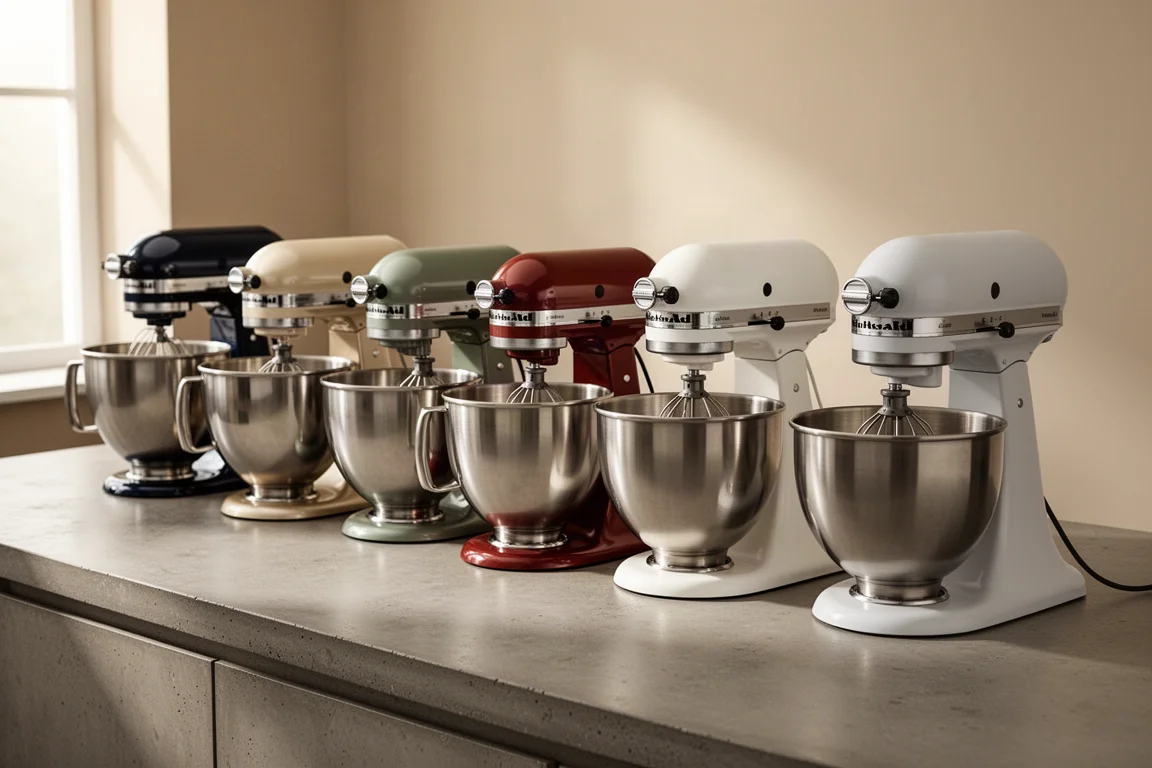
Introduction
Is an expensive KitchenAid mixer worth it, or are the cheaper brands just as good? To find out, three KitchenAid tilt-head mixers were tested against three top-selling alternatives that cost significantly less. The results revealed some surprising differences, including two safety features some of the cheaper mixers have that KitchenAid does not.
How They Were Tested
Every mixer went through the same set of tasks. Whipped cream made with only half a cup of cream showed how well each machine handled small amounts. Chocolate chip cookie dough revealed how well ingredients combined and how often the bowl needed scraping. A single batch of pizza dough, made in all six mixers and then baked, showed how each handled heavier dough. Noise, power draw, shaking and bouncing, controls, bowls, attachments, size, weight, cleanup, and ease of use were all compared too.
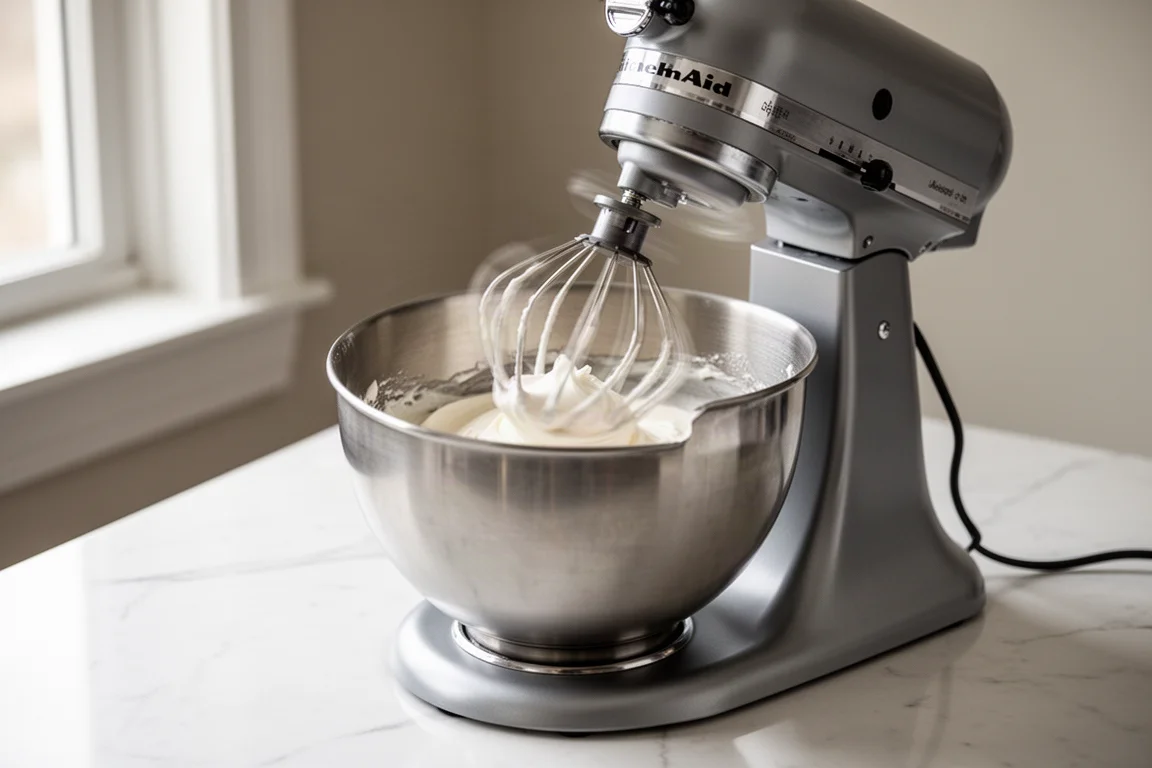
Hamilton Beach Stand Mixer
The Hamilton Beach is the cheapest mixer in the group. It has a 4-quart bowl, seven speeds, and comes with a flat beater, a whisk, a dough hook, and a pouring shield. It is much lighter than the others, and a large handle on top makes it easy to pick up and move.
The trade-off is the build. The lightweight plastic construction feels noticeably cheaper than KitchenAid, the whisk has a plastic hub, and the bowl has a large plastic base on the bottom. None of that caused problems in testing, but it adds to the budget feel.
Performance is where it struggles. Whipping half a cup of cream took over four minutes, more than twice as long as the KitchenAid mixers, because the whisk only reaches a small area near the center of the bowl. Cookie dough still had large chunks of brown sugar after several minutes, and the mixer head shook and bounced much more than the others. Pizza dough was the biggest issue: the mixer shook heavily and the dough hook was too rounded to grab the dough, so it had to be manually wrapped around the hook before kneading worked. The finished dough and pizza still came out fine, but the effort required is real.
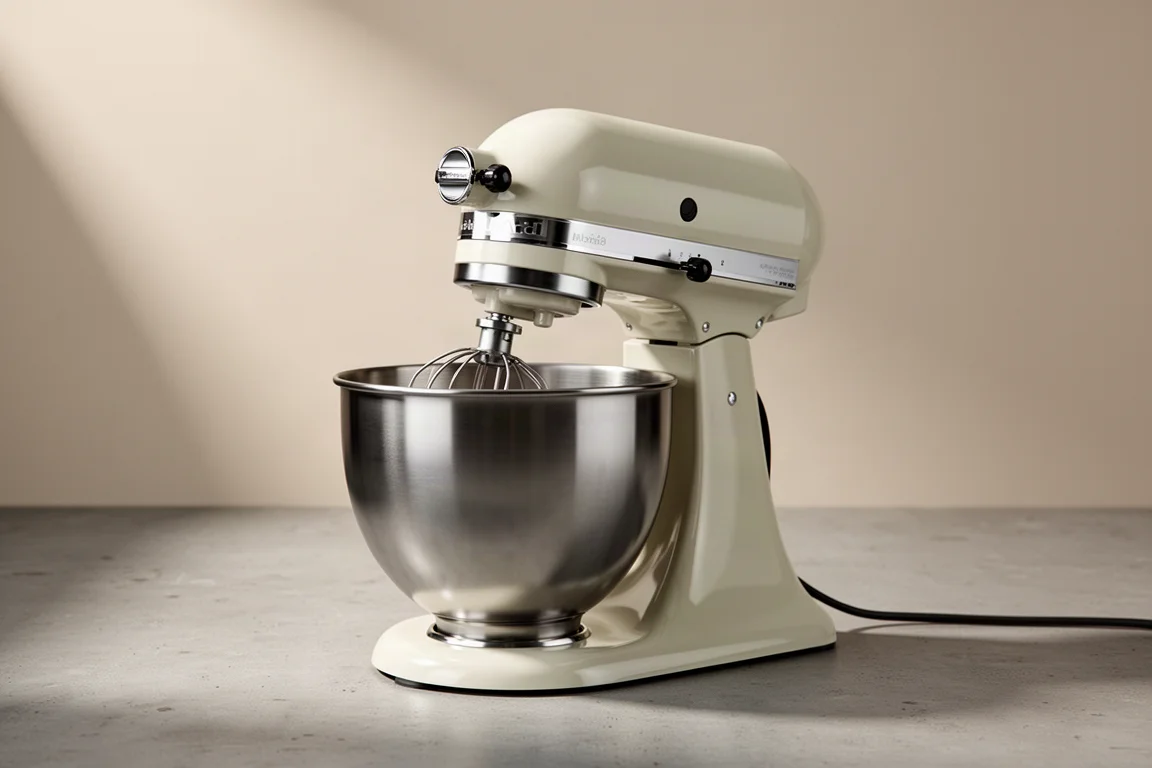
AUCMA Stand Mixer
The AUCMA has a larger 6.5-quart bowl, six speeds, and the same attachment set: flat beater, whisk, dough hook, and pouring shield. Like the Hamilton Beach it has a plastic body, and the bowl has two small side handles instead of one large handle, which makes it harder to tilt and pour with one hand while scraping with the other.
It did a good job whipping cream, but it was extremely loud, with a high-pitched sound that was far more annoying than the others. It was the loudest mixer at both medium and high speeds, and it also splashed more, with small specks of cream flying out of the bowl. With cookies, the flat beater did not reach the sides of the bowl well, a large chunk of butter got stuck inside the beater, and the mixture separated enough that several stops to scrape were needed.
Pizza dough and the final pizza came out fine, but the mixer shook throughout, threw more flour out of the bowl than the others, and kept up the irritating high-pitched noise. The speed dial is also smooth, so it gets slippery with wet or buttery hands, and the pulse setting sits past off, which led to accidentally activating it while trying to stop the mixer.
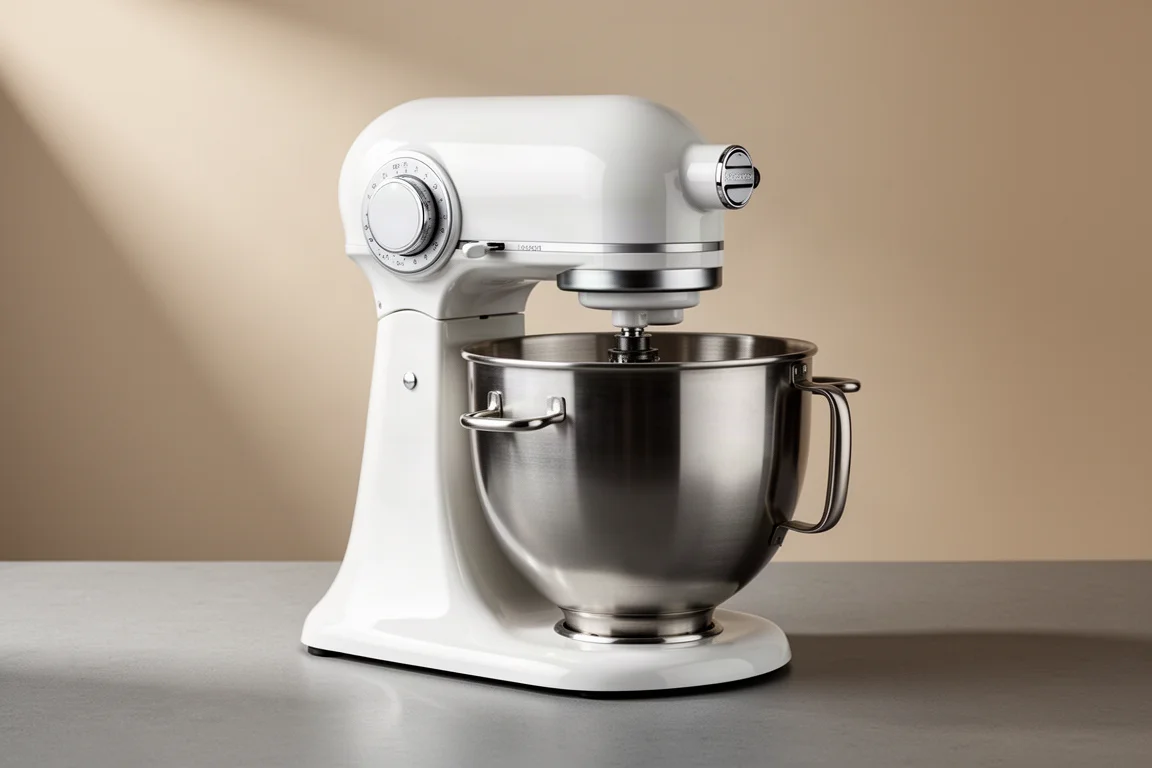
Cuisinart Stand Mixer
The Cuisinart is the closest of the cheaper mixers to KitchenAid in both price and performance. It has a 5.5-quart bowl, 12 speeds, a diecast metal body, and comes with a flat beater, whisk, dough hook, and pouring shield. It is much heavier and feels far more stable than the other two budget options.
It also has practical advantages. The bowl and all three attachments are dishwasher safe, unlike the whisks included with the KitchenAid Classic and Artisan, which need handwashing. There is a front power hub for attachments like pasta rollers and meat grinders, and it was the quietest mixer at low, medium, and high speeds.
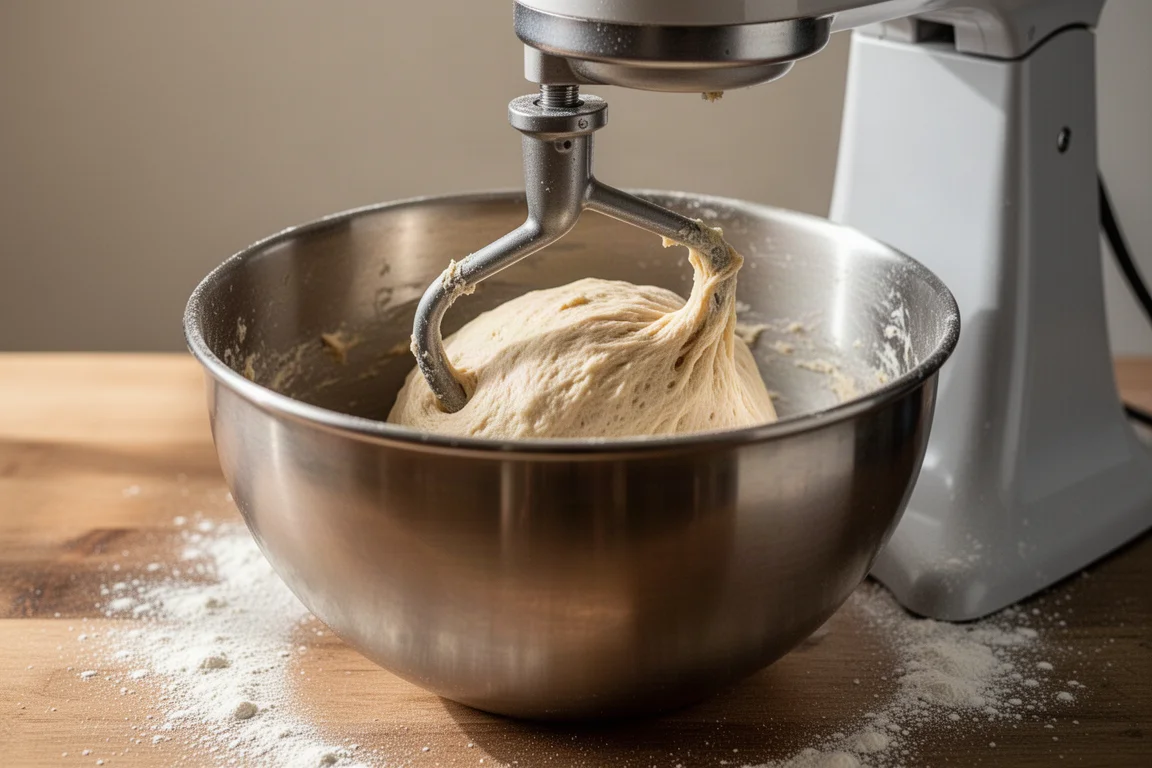
Whipped cream went well. Cookies were the weak spot: the flat beater did not reach the sides of the bowl, so butter and sugar stuck to the walls and several scrapes were needed, with some large chunks of brown sugar still requiring a spatula. Pizza dough went much better. The dough hook grabbed the dough properly, the mixer stayed stable, and the head remained securely locked throughout, producing a final dough and pizza that came out great.
KitchenAid Classic
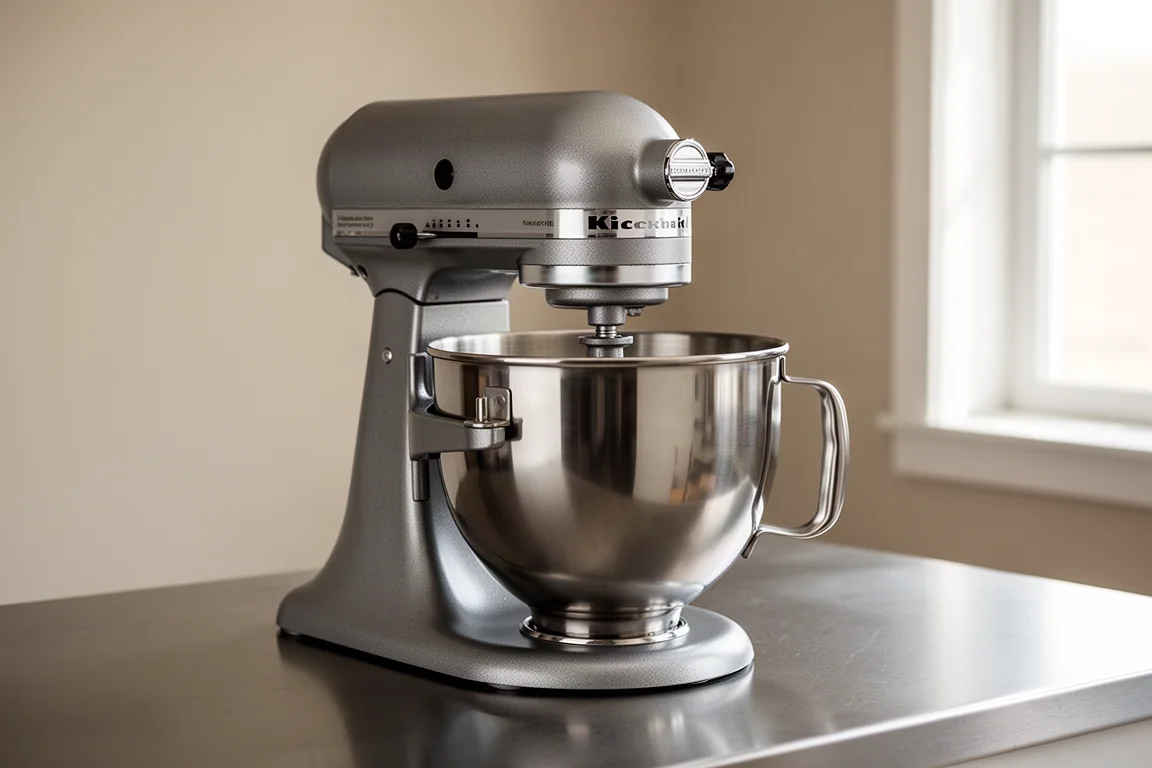
KitchenAid makes several mixer collections, but the three most popular tilt-head models were tested to compare fairly against the cheaper brands. All three cost significantly more and all three are much heavier, with diecast metal bodies and the same front power hub for optional attachments.
The Classic is the entry point of the lineup. It whipped cream in about two minutes without issues, mixed cookie dough well (though the bowl still needed several scrapes), and handled pizza dough well with excellent results. The head bounced more during kneading, and the locking lever shifted away from the fully locked position, which caused even more bouncing.
Two design issues are worth knowing about across the KitchenAid range. The head does not lock in the raised position, which could catch you off guard, create a mess, or pinch your fingers. And on the Classic, plugging the mixer in with the speed lever set above zero makes it start running immediately, which is a genuine safety concern if you store attachments in the bowl.
KitchenAid Artisan
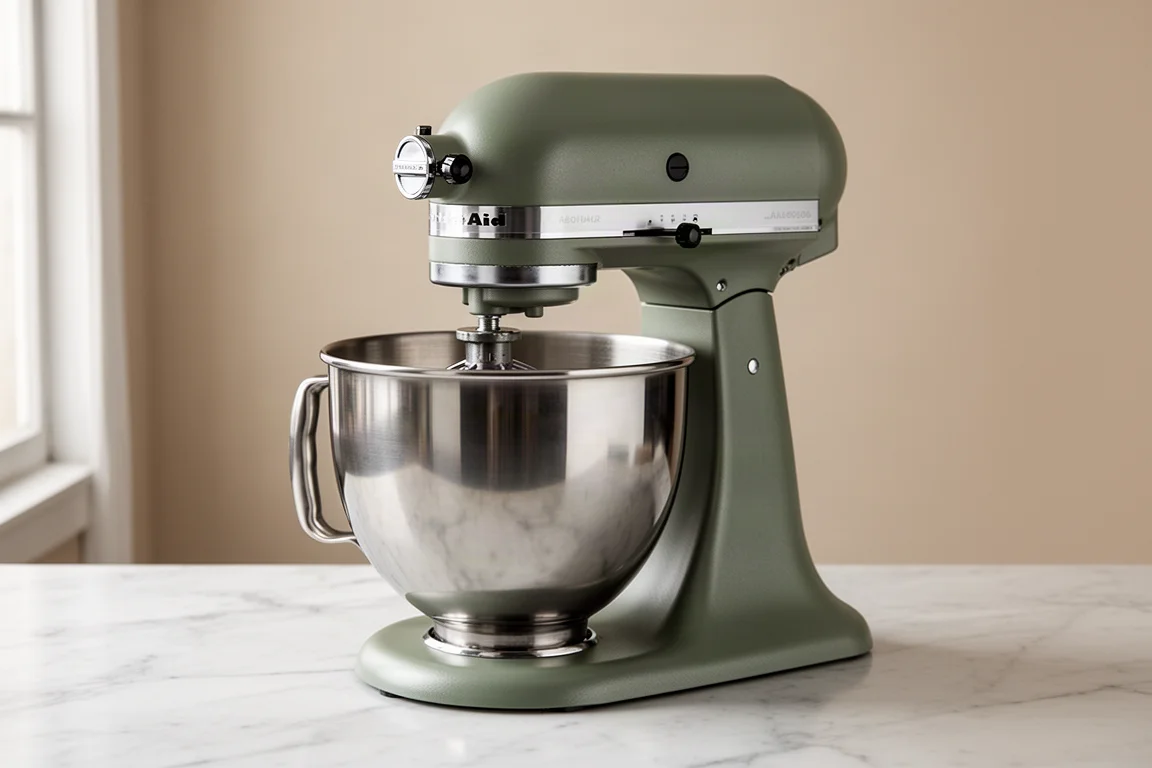
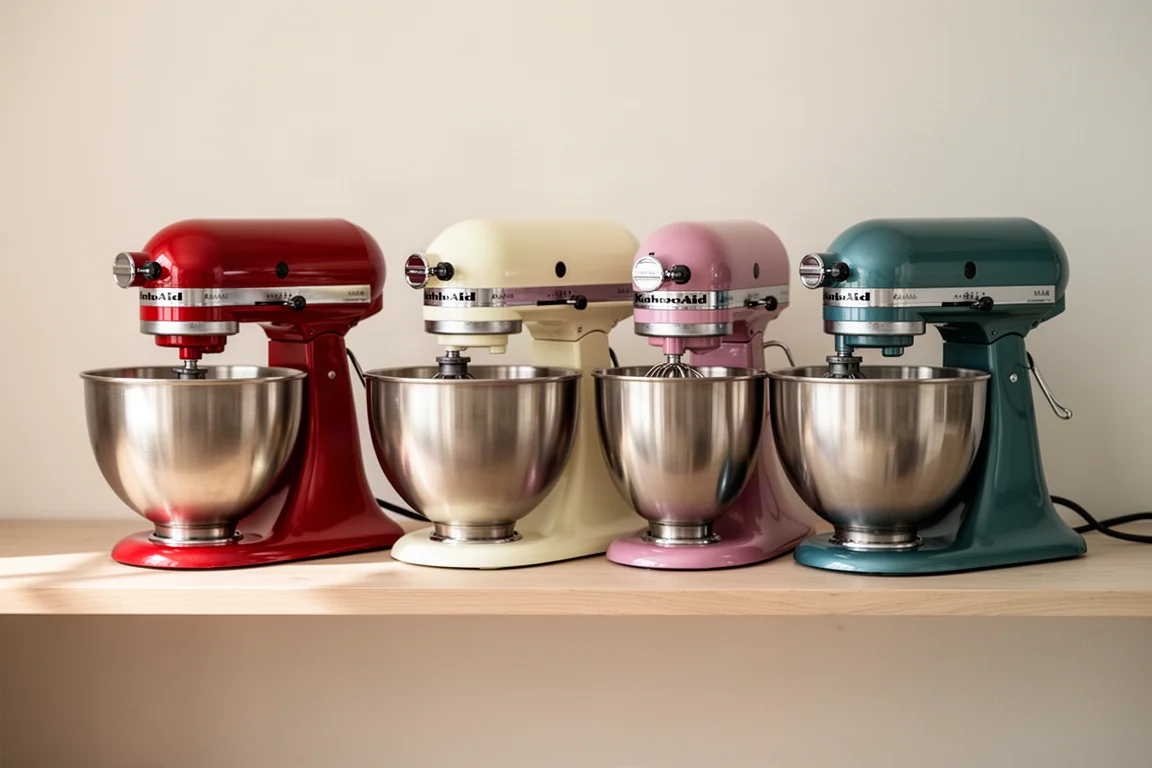
Stepping up from the Classic to the Artisan gets you a larger bowl with a handle and many more color options. The core performance story is similar: about two minutes to whip cream, good cookie dough with a few scrapes needed, and well-handled pizza dough with excellent baked results.
Like the Classic, the Artisan’s head bounced noticeably during kneading and its locking lever drifted away from the fully locked position. It shares the same raised-head limitation and also starts immediately if plugged in with the speed lever above zero.
The Artisan is worth considering if you want the larger bowl, a handle, or a specific color, rather than for a fundamental performance jump.

KitchenAid Artisan Plus
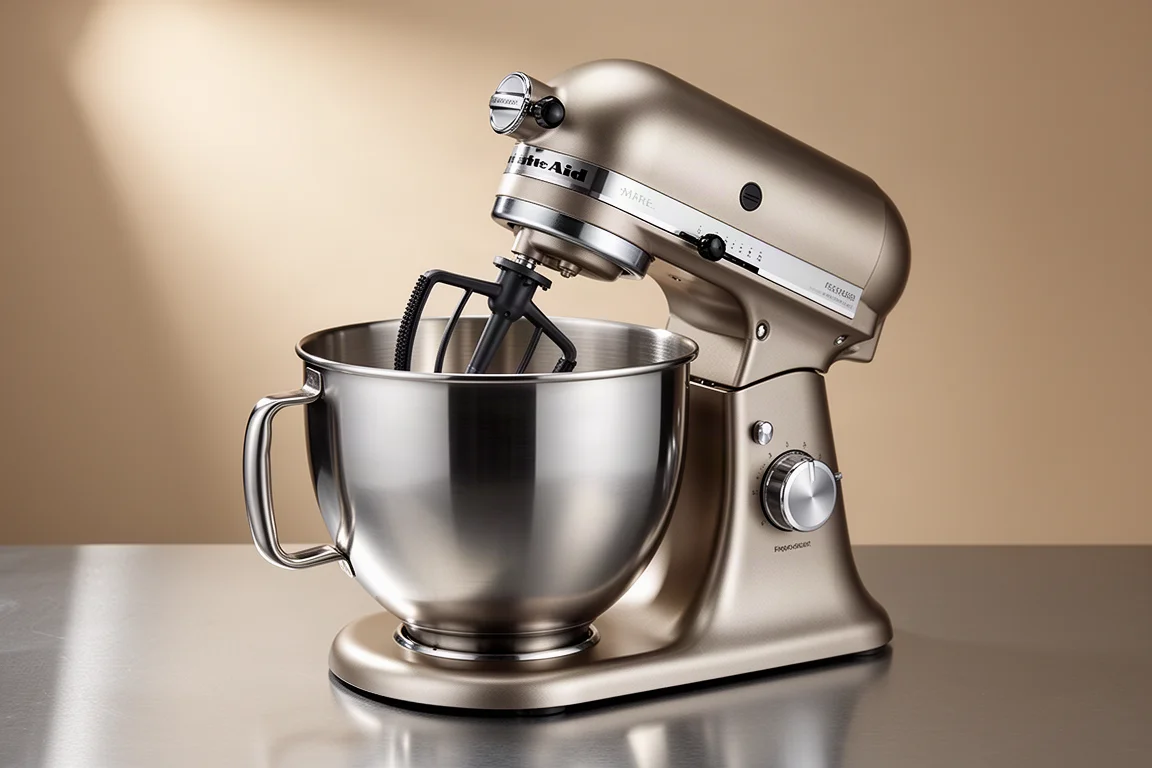
The Artisan Plus is the top of the three and the most convincing case for spending more within the KitchenAid lineup. You get a double flex edge beater, plus heavier stainless steel versions of the beater, whisk, and dough hook. All four attachments are dishwasher safe. There is also a redesigned speed control and a bowl light.
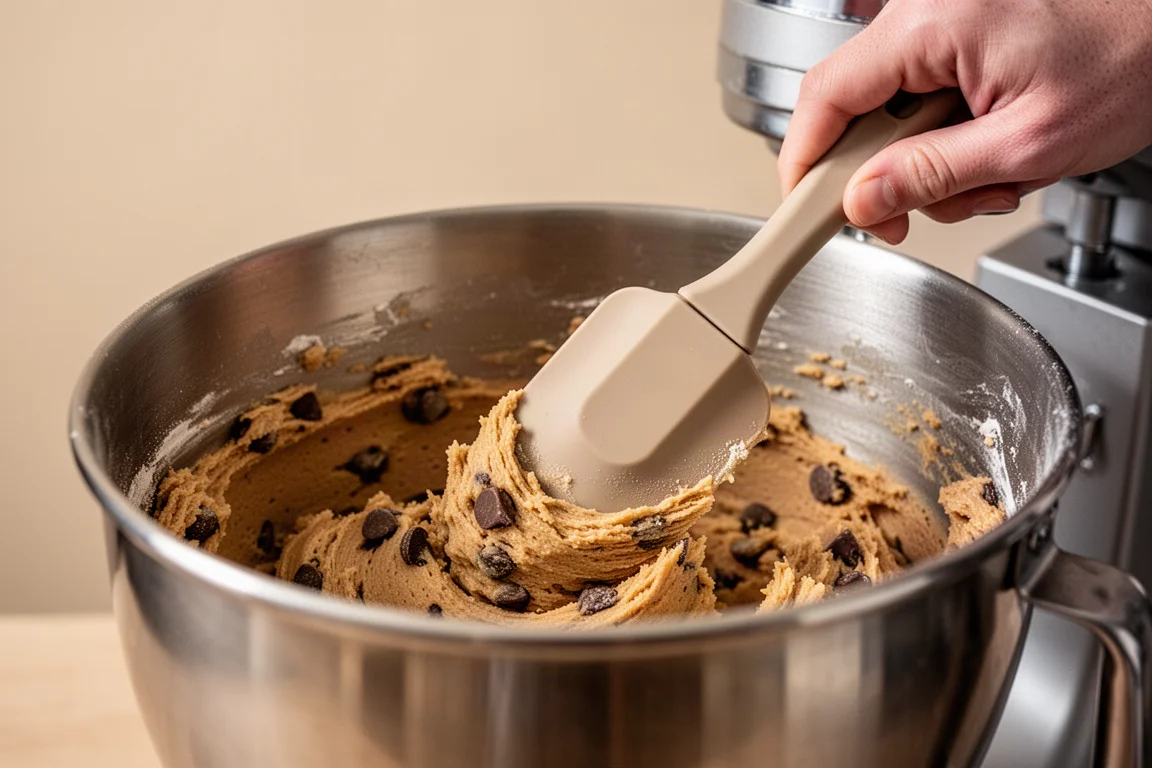
That double flex edge beater makes a visible difference with cookies. While the Classic and Artisan needed several stops to scrape the bowl, the Artisan Plus only needed one stop after adding the dry ingredients, and very little dough collected in the middle of the beater.
It also handled pizza dough well, and it was much more stable than the Classic and Artisan during kneading, with the locking lever staying in place throughout the test. One safety advantage: unlike the Classic and Artisan, the Artisan Plus will not start until the control is returned to zero, even if it is plugged in with the lever set above zero.
What You Gain by Paying More
After all that testing, the two cheapest mixers are hard to recommend. The Hamilton Beach and AUCMA both shake too much and require a lot of scraping, the AUCMA is extremely loud, and the Hamilton Beach dough hook could not grab pizza dough without manual threading. They can handle lighter batters, but neither inspires confidence with thicker dough.
The Cuisinart is the exception. It did a great job with whipped cream and pizza dough, was more stable than the KitchenAid Classic and Artisan during kneading, locks its head in both the raised and lowered positions, has a larger bowl than the KitchenAid Classic with a handle, and every attachment is dishwasher safe. The main complaint is the flat beater, which does not get close enough to the sides of the bowl. Aside from that, it is the only cheaper model that works as a real alternative to KitchenAid.
That said, KitchenAid is worth paying more for, especially if you plan to keep the mixer for years. All three KitchenAid mixers use the same internal gears, replacement parts are widely available, and there are companies that specialize in repairing them. The cheaper brands were asked about internal parts and repairability, but based on what is publicly available, there is nowhere near the same level of repair information or part support, and with Hamilton Beach and AUCMA a repair could easily cost more than the mixer is worth.
Conclusion
If you want a budget option, the Cuisinart is the one to pick, accepting the scraping around the bowl walls. If you decide to go with KitchenAid, the Classic is the best value, the Artisan makes sense for the larger bowl, handle, or color choices, and the Artisan Plus delivers the best overall experience with its flex edge beater, stability, and improved speed control. Whichever way you go, match the mixer to how you actually bake: light batters forgive a lot, while thick dough quickly separates the solid machines from the frustrating ones.
Further reading
Related Reviews
Kitchen Appliances
Arboleaf Smart Kitchen Scale Review: Connected Cooking Made Simple
A Bluetooth-enabled kitchen scale that syncs with a nutrition-tracking app, offering real-time weight monitoring and recipe guidance for home cooks.
Kitchen Appliances
Best Air Fryer Toaster Ovens Under 100: Five Practical Options for Budget-Conscious Kitchens
Five air fryer and toaster oven combinations that deliver real cooking performance without breaking the bank, each with distinct strengths for different kitchen needs.
Kitchen Appliances
Best Air Fryer Toaster Ovens: Three Top Picks for Multi-Function Cooking
Three high-performing air fryer toaster ovens tested for versatility, ease of use, and real-world cooking results. Find the right fit for your kitchen.