Cookware
Stainless Steel Cookware Myths, Tested: What's True and What You Can Stop Believing
We put nine common stainless steel cookware beliefs to the test, from cooking eggs without sticking to whether thicker pans are really better.
Introduction
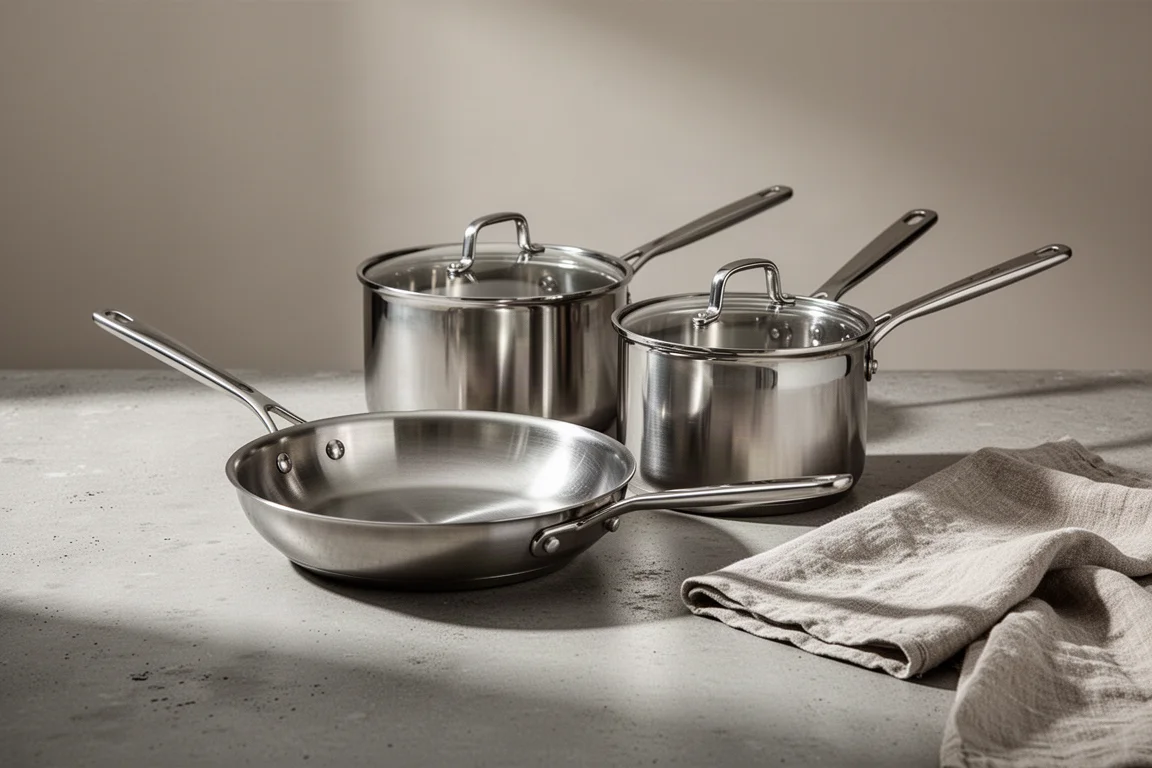
Stainless steel cookware has a reputation that is part reality, part folklore. It is supposed to last forever, cook restaurant-quality meals, and never stain, but a lot of the advice floating around is either outdated or simply wrong. After testing dozens of brands, we looked at the most common claims and separated the myths that hold up from the ones you can stop believing.
Myth 1: You Can’t Cook Eggs Without Sticking
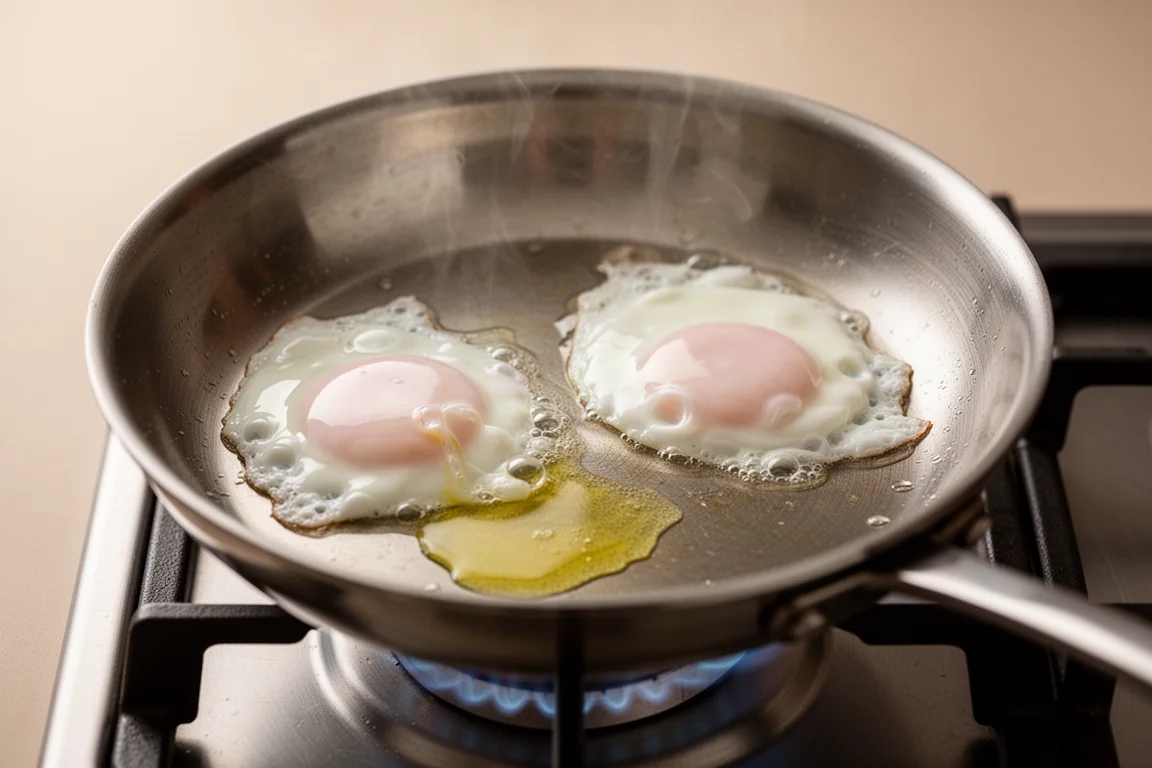
This is the biggest myth, and it is not true. Eggs will absolutely stick if you skip a few simple steps, but done correctly, they release easily and you do not need a mountain of grease.
The method is straightforward. Preheat the pan on medium or just below medium for two to three minutes, then add a drop of water as a test. If the water immediately evaporates, the pan is not hot enough. If it balls up and floats around the surface, you are ready.
Turn the heat down to low before greasing so the pan temperature stops climbing and the fat does not get too hot. Add one teaspoon of oil, coat the surface, then add around 5 grams of butter. The combination of oil and butter creates the best non-stick surface, and together it adds fewer than 80 calories to your eggs, much of which stays in the pan anyway.
Drop the eggs in and leave them untouched for 20 to 30 seconds. Give the pan a shake and the eggs slide around just like in a non-stick pan.
Myth 2: Meat Always Sticks and Ruins Your Pan
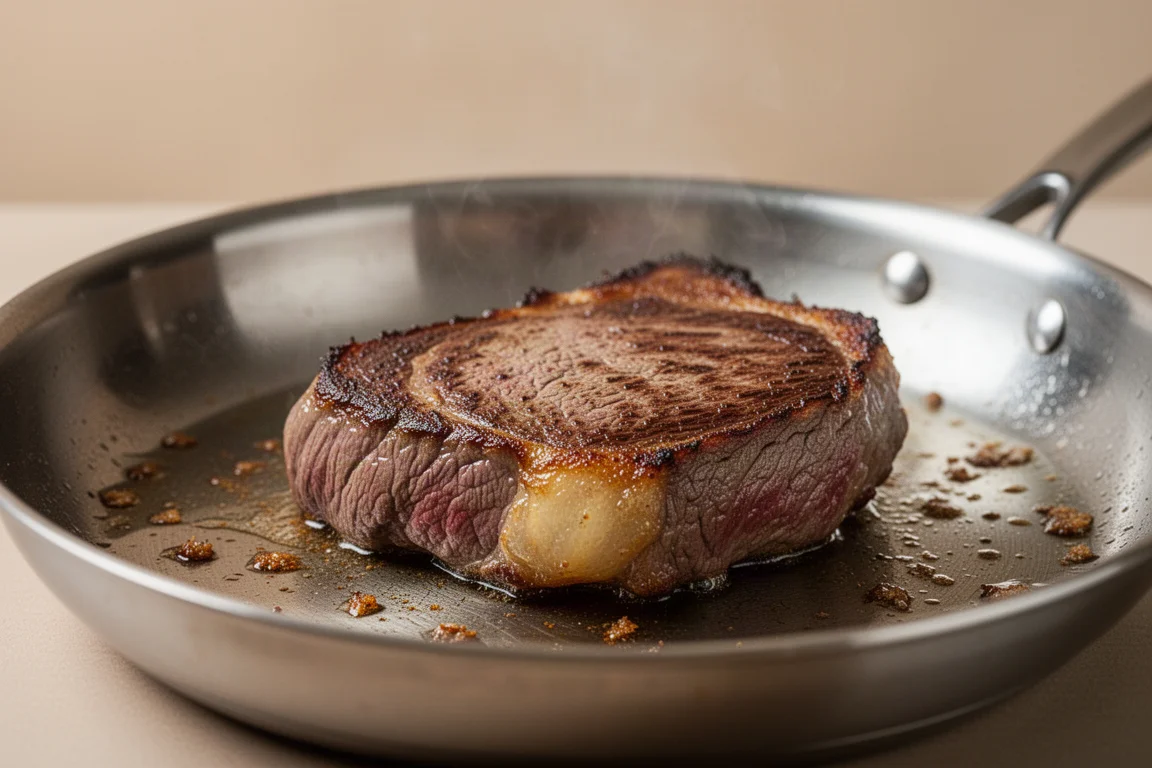
This one is partially true, but the sticking is more of a feature than a problem. After preheating and greasing, meat will stick for the first couple of minutes. If you let it sear and form a crust, it naturally releases from the surface.
The common mistake is moving or flipping the meat too early. Let it cook, then give it a nudge. If it moves without resistance, it is ready to flip.
That initial contact between the meat and the hot pan is exactly what builds a flavorful crust, and it leaves behind browned bits called fond. Deglaze with wine, stock, or another liquid to dissolve the fond and you have the base for a genuinely great pan sauce.
Myth 3: Stainless Steel Is Hard to Clean
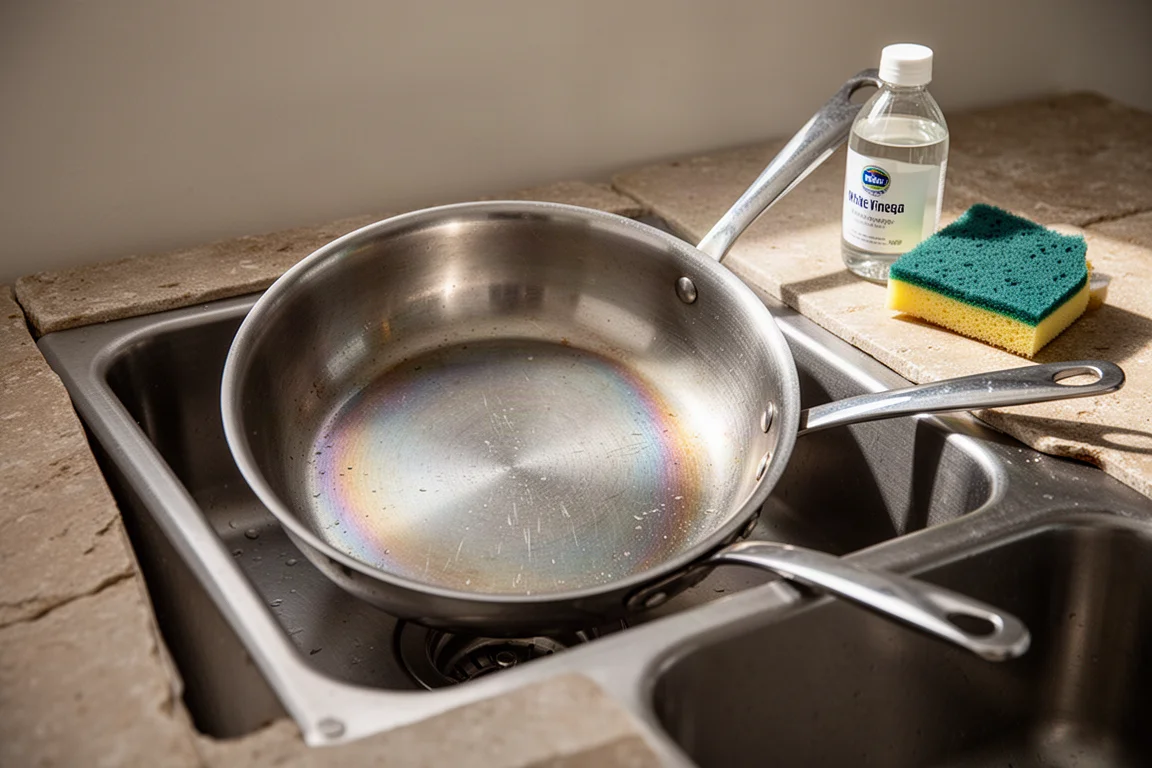
Despite the name, stainless steel does stain. Food bits stick to the surface, oil can bake into the exterior, oxidation creates rainbow tints, and tap water minerals leave white spots.
The good news: most of these are easy to remove. Everyday cleaning takes dish soap, warm water, and a sponge. White vinegar instantly removes rainbow stains and white spots. For discoloration and grease that has baked into the metal, you will need a scrubbing product like Bar Keepers Friend, some pressure, and a few minutes of patience.
So this myth is partially true. Daily cleaning is easy, but if you skip thorough cleaning, stains can bake in and become stubborn.
Myth 4: The Dishwasher Is Fine for Stainless Steel
Brands love to advertise stainless steel cookware as dishwasher safe, but that does not mean you should do it. High heat and harsh detergents can tarnish the finish over time, and there is a more serious issue: sharp edges.
The rim of most clad stainless steel pans is not sealed, so you can see the aluminum core sandwiched between steel layers. In the dishwasher, the aluminum core can shrink and recede over time, leaving thin exposed steel edges that become sharp. All-Clad settled a class action lawsuit over exactly this issue, alleging the pans were advertised as dishwasher safe while bonded layers became thin and sharp. All-Clad did not admit wrongdoing but agreed to refund or replace damaged pans, and now recommends hand washing.
Myth 5: Stainless Steel Lasts Forever
This is one of the main selling points, and it is mostly true. Stainless steel has no non-stick coating that will eventually fail, so with care it can last for many decades.
But three things can shorten its life. Warping is the most common: drastic temperature changes, like rinsing a piping hot pan under cold water, cause uneven expansion and contraction that leaves a wobbly, unusable pan. Pitting is the second: salt and moisture left on the surface for extended periods can corrode the steel. Denting is rare, but it concerns thin, cheap pans. Good quality pans around 3 mm thick, like Made In, will survive being dropped or knocked off the counter without structural damage.
Care for your pans and they really can last forever. Neglect them and there is no guarantee.
Myth 6: Thicker Is Always Better
Thicker cookware does heat more evenly, retain heat better, and resist warping. All true. But it also heats up slower and responds less to temperature changes, which costs you control.
In one test, a Made In pan about 3 mm thick reached roughly 360 degrees Fahrenheit in its center after one minute on medium heat. A Demeyere pan at 5.5 mm only reached 301 degrees in the same time. Heated to 400 degrees and removed from the stove, after five minutes of cooling the thinner Made In pan was around 130 degrees while the thicker Demeyere pan held 159 degrees.
Thicker pans win on heat retention, but for everyday cooking, 3 mm pans offer the best balance of conduction, retention, and weight.
Myth 7: Welded Handles Are Better Than Rivets
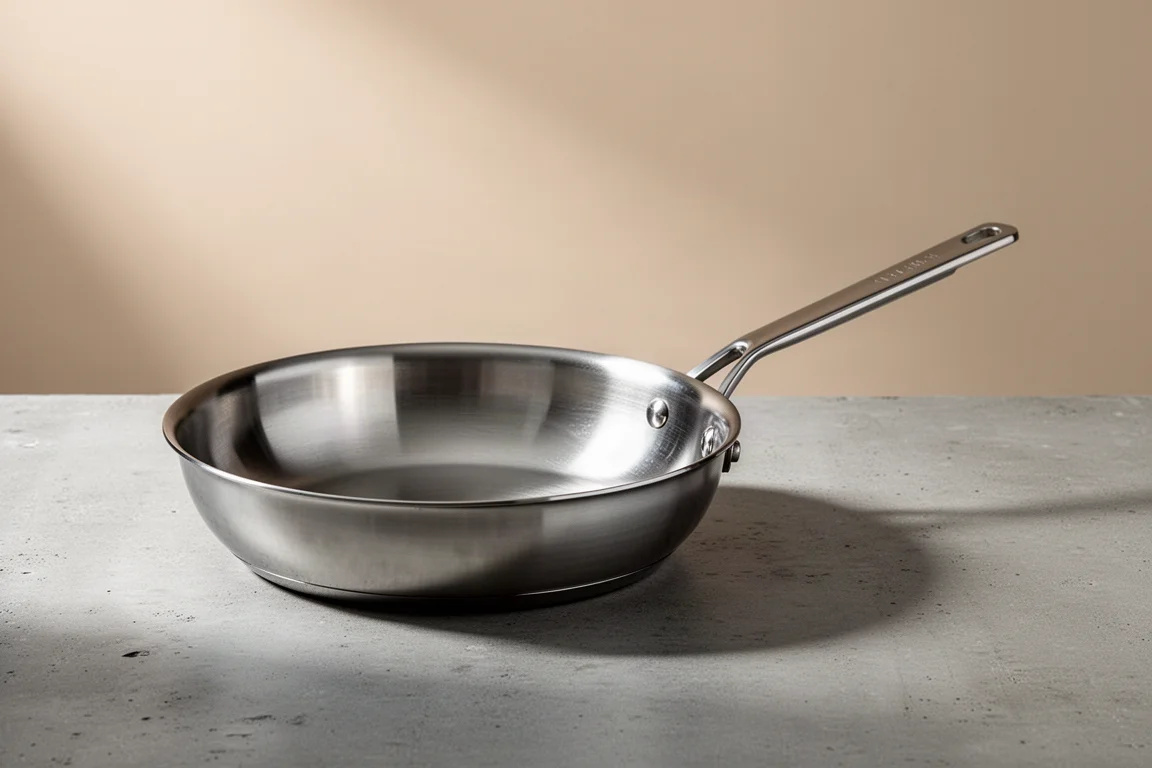
Welded, rivetless handles are an increasingly common selling point. They create a smooth, uninterrupted cooking surface that is easier to clean, and the companies making them claim the welds are secure.
That is not always true. In one case, the welded handle of a frying pan broke off after just a few months of testing. This is not to say it happens frequently or that all welded-handle pans should be avoided, but it is a risk most shoppers never consider.
Myth 8: Rounded Handles Are Always Better
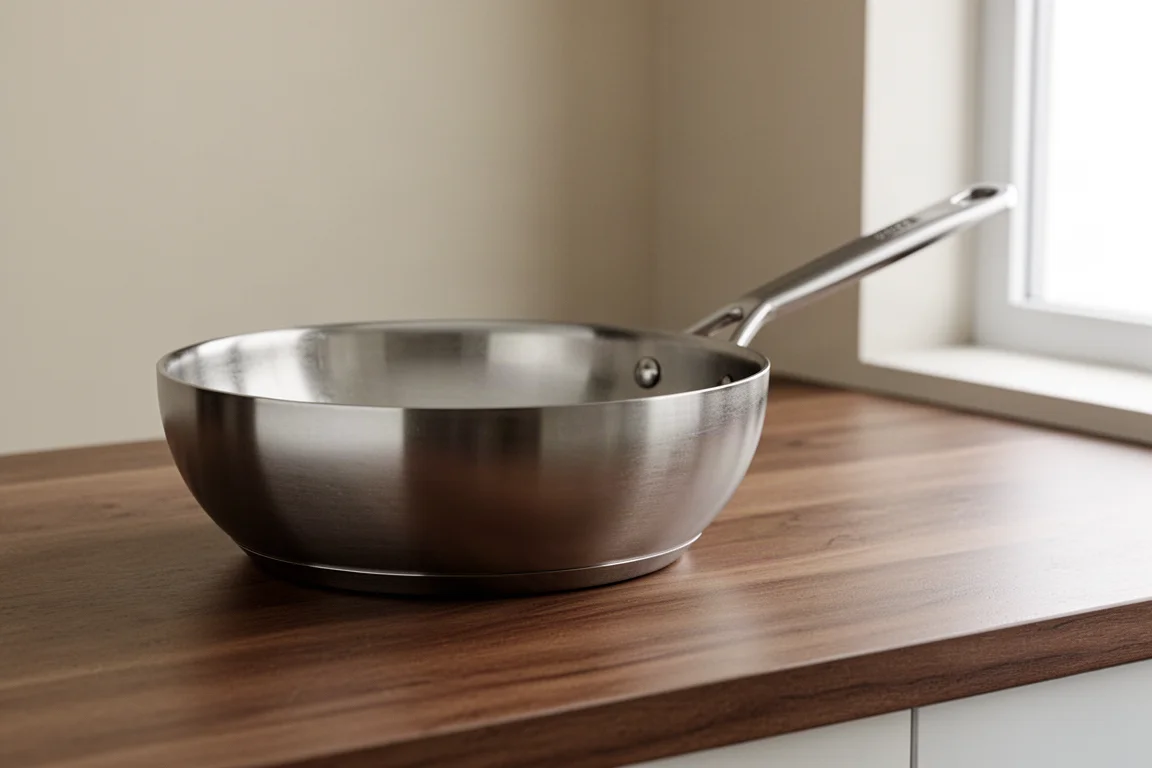
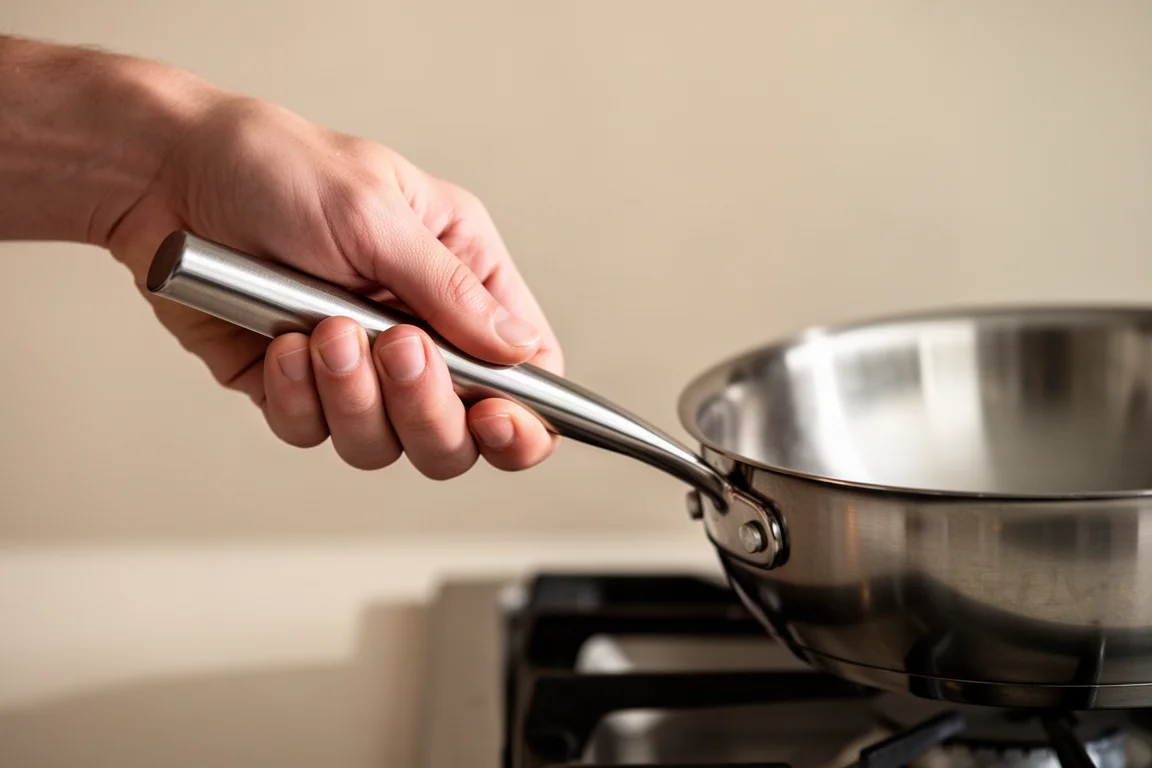
Rounded handles feel great in the store, and comfort is not the problem. Safety is. When a pan is piping hot, full of food, and your hand is slightly wet or greasy, a rounded handle is the last thing you want.
A handle that is flat on the top and bottom, or has a slight groove, lets you grip and tilt the pan without it rotating or slipping in your hand. It is a small design detail that matters most at the worst possible moment.
Myth 9: You Have to Spend Hundreds of Dollars
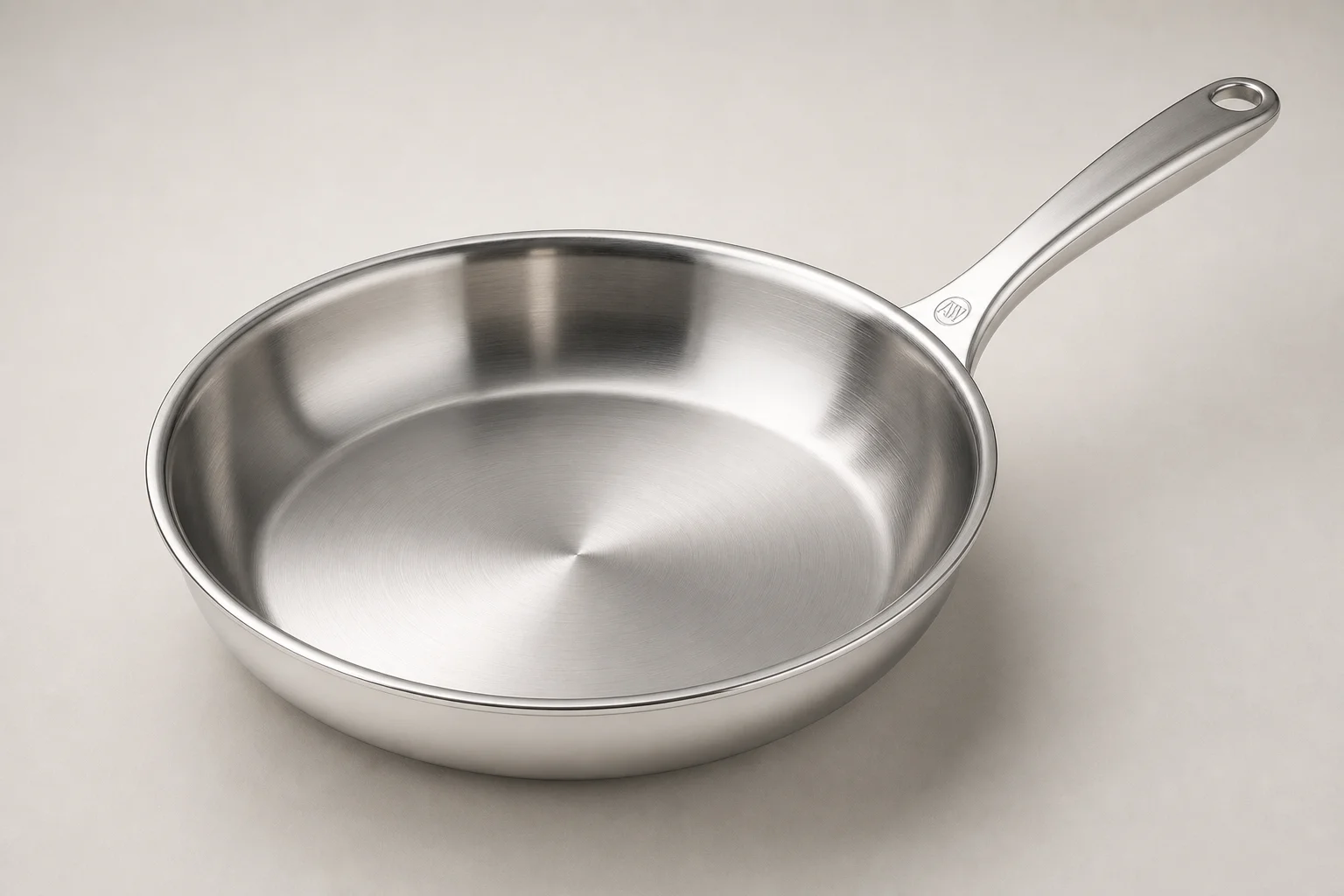
Brands like All-Clad, Hestan, and Demeyere sell single pans that cost hundreds of dollars, which makes stainless steel feel intimidating for beginners. But high performance does not require a premium budget.
Some brands cost less because they use cheaper materials, but others are affordable because they sell primarily online and avoid retail markups. Made In is the standout example: cookware good enough for Michelin Star restaurants, offered at fair prices that make it accessible to home cooks.
Buying Advice
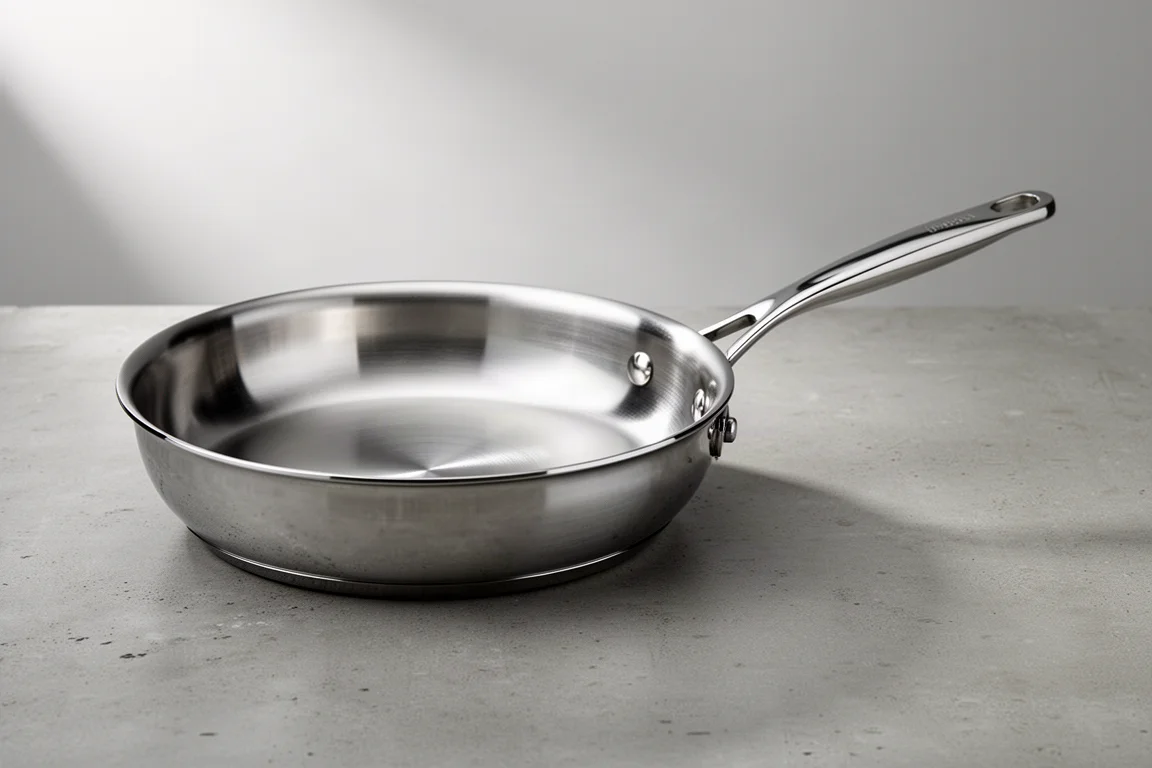
If you are starting out in stainless steel, prioritize a pan around 3 mm thick for the best balance of responsiveness and heat retention, choose handles with a flat or grooved profile, and stick to hand washing to protect the rim edges. Learn the preheat-and-grease routine and eggs will release cleanly. If you want premium construction and top-tier heat retention, the heavier European brands deliver, but an online-first brand like Made In proves you can get comparable performance for significantly less.
Conclusion
Most stainless steel “rules” are either fixable with technique or outright wrong. Eggs do not have to stick, cleaning is easy if you stay on top of it, and thicker does not automatically mean better. The real keys are sensible thickness, a secure handle design, and a brand that spends its budget on materials rather than markups.
Further reading
Related Reviews
Cookware
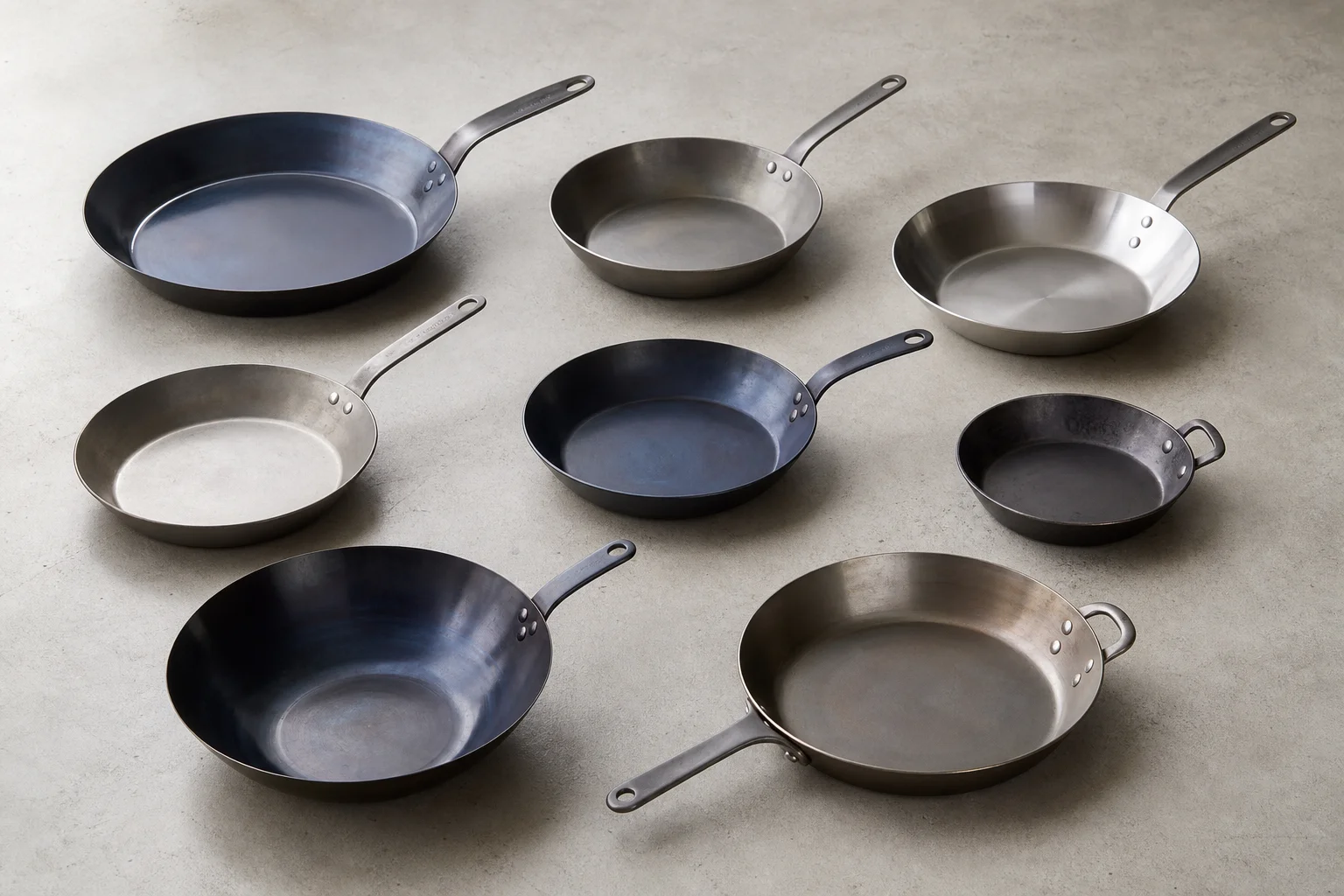
Best Carbon Steel Pans Tested: Which Brands Deliver Real Value
We tested eight popular carbon steel pans with controlled durability, heat, and cooking tests. Here's which ones perform best and which to avoid.
Cookware
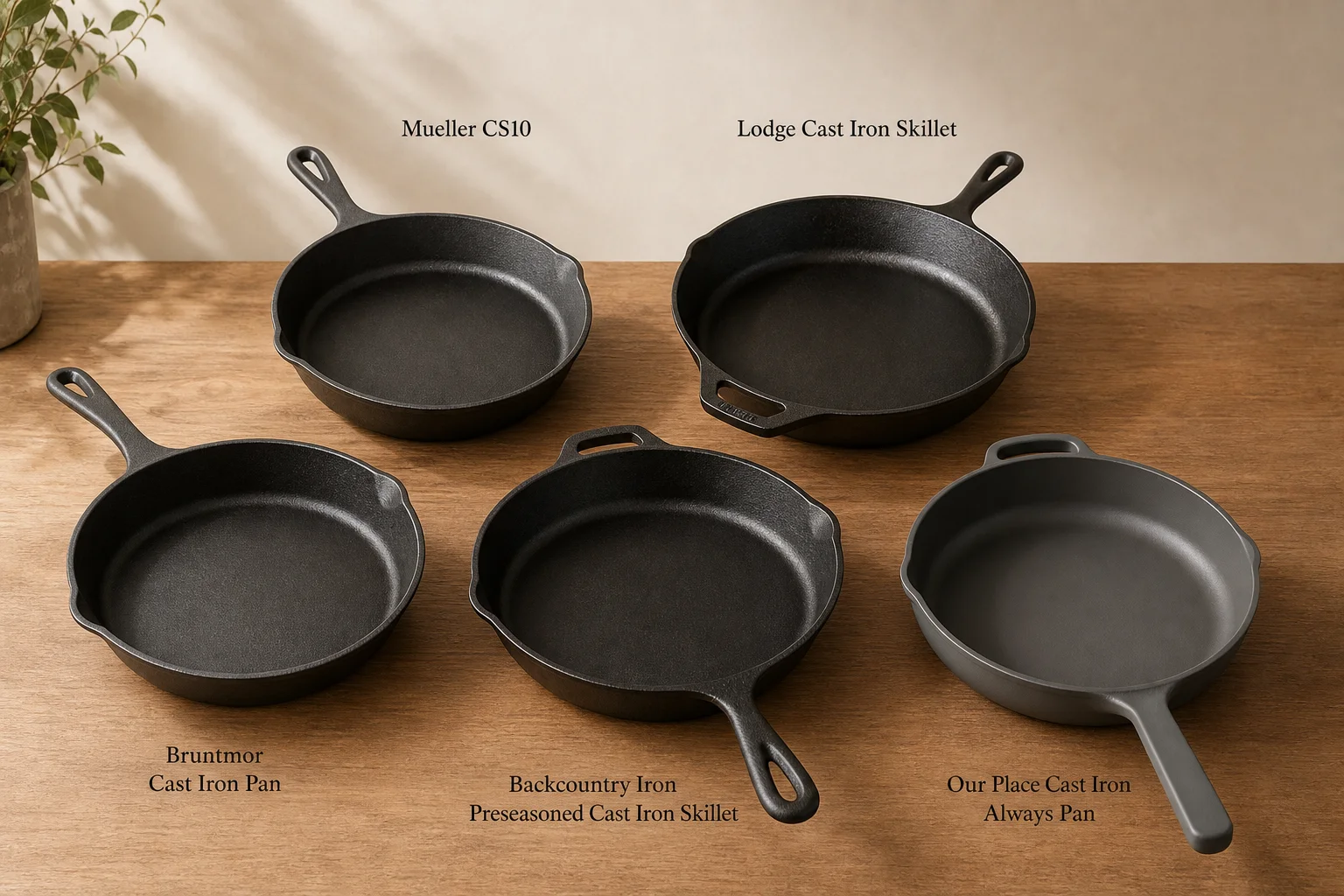
Best Cast Iron Pans 2026: Five Options from Budget to Premium
A practical breakdown of five cast iron skillets, from affordable Mueller to premium Our Place, with clear strengths and trade-offs for different cooking needs.
Cookware
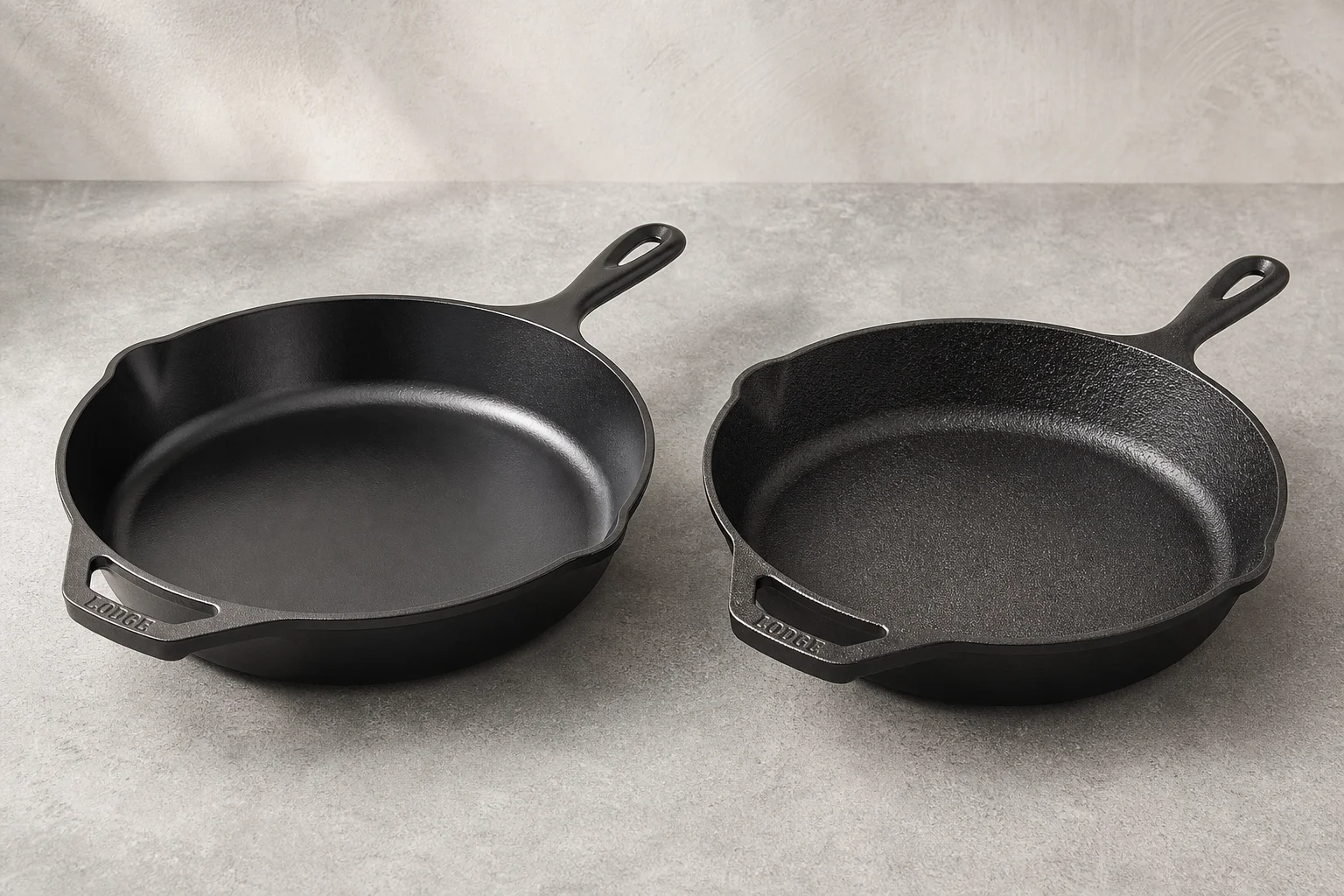
Best 12-Inch Cast Iron Skillets: Premium Craftsmanship vs. Reliable Budget Option
Two standout 12-inch cast iron skillets tested for heat retention, surface finish, and durability. One premium choice and one budget-friendly alternative that both deliver.