Art Supplies
Staedtler Pigment Brush Pens and Multi Ink Blending Liquid: A Mixed Media Pairing Worth a Look
A closer look at Staedtler's pigment brush pens and the Multi Ink blending liquid designed to work alongside them, with the strengths and trade-offs to know before buying.
Introduction
Staedtler’s pigment brush pens have been drawing attention for good reason: rich, vibrant pigment ink, a genuinely useful brush-style nib, and one of the more thorough lightfast rating systems we have seen on a pen at this level. What makes the system interesting, though, is the companion product Staedtler built to go hand in hand with them, the Multi Ink blending liquid. Together, the two products turn what could have been a straightforward fiber tip pen into a flexible mixed media tool.
What’s in the Box and the Palette
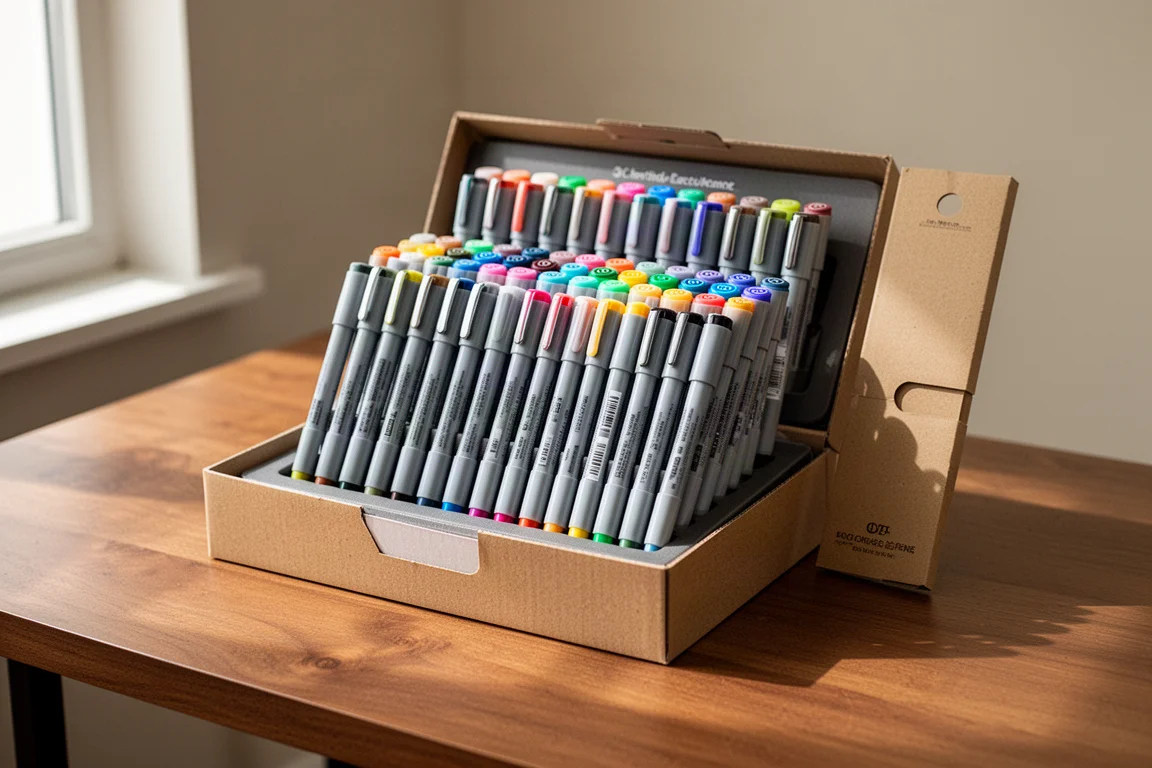
The largest set in the range is the 60-pen set, and it is organized into removable tiers with simple thumb tags that make lifting out each layer easy. The palette moves logically through pale yellows, corals and oranges into deep reds, then plums, violets and magenta, followed by pinks, blues, teals, a full green section including olive tones, and finally portrait and natural colors, browns and grays.
The barrel construction is a quiet eco-friendly bonus: Staedtler states the barrels are made from 97% recycled material. Pens should also be stored horizontally, something worth noting for long-term care.
Color Quality and Swatch Impressions
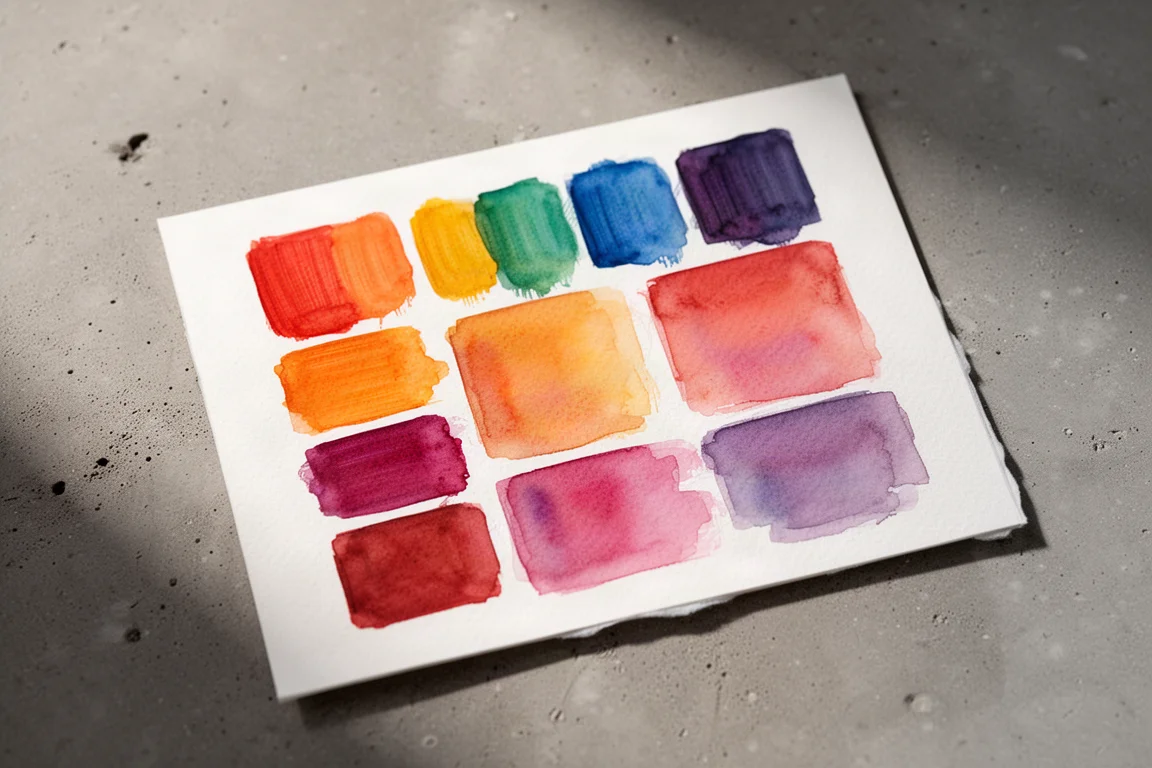
A full swatch completed on hot press watercolor paper shows what this palette does well. Each color was tested raw straight from the barrel, and then a second application was worked over with the Multi Ink blending liquid to show how the color can be manipulated and spread. The colors are rich and vibrant throughout, and the palette feels thoughtfully curated. Unlike many large sets, there is no cluster of near-identical shades. Even the reds, the closest group in the set, show visible differences between cherry, carmine and wine red when placed side by side.
The gray section is worth a closer look: two warm grays, three cool grays, a light black and an intense black. The light black reads very much like a dark warm gray, sitting naturally alongside the warm grays, while the intense black is genuinely deep and punchy.
Lightfast Ratings: The Detail That Matters
Lightfast information is printed on every barrel, with pigment names, a blue wool rating expressed in stars, and the rating also written out in four languages. In the 60-color palette, 30 colors carry a five-star maximum lightfast rating, 27 carry four stars (very good lightfastness), and only three colors sit at three stars (good lightfastness). Nothing in the set rates below three stars.
For artists who sell original work, that is a meaningful margin. Roughly 57 of the 60 colors can be used in originals with confidence about fading, while the three-star colors are better reserved for work destined for archival prints.
The Pens Up Close
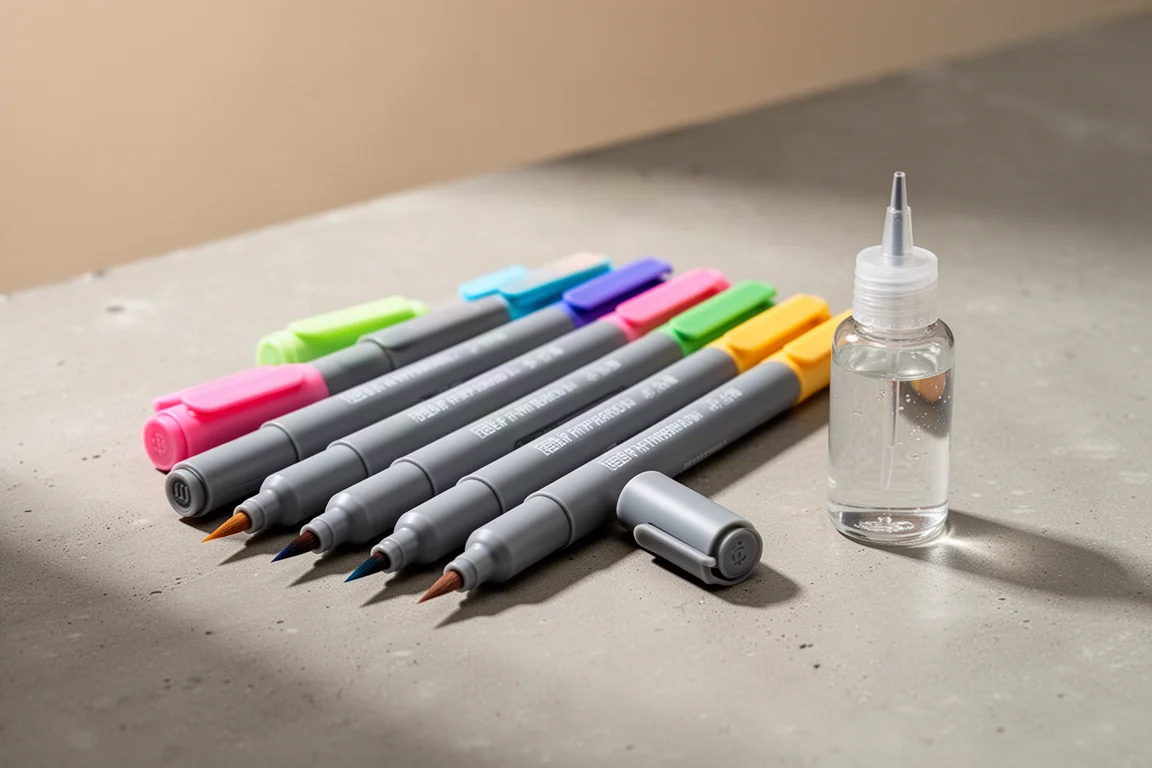
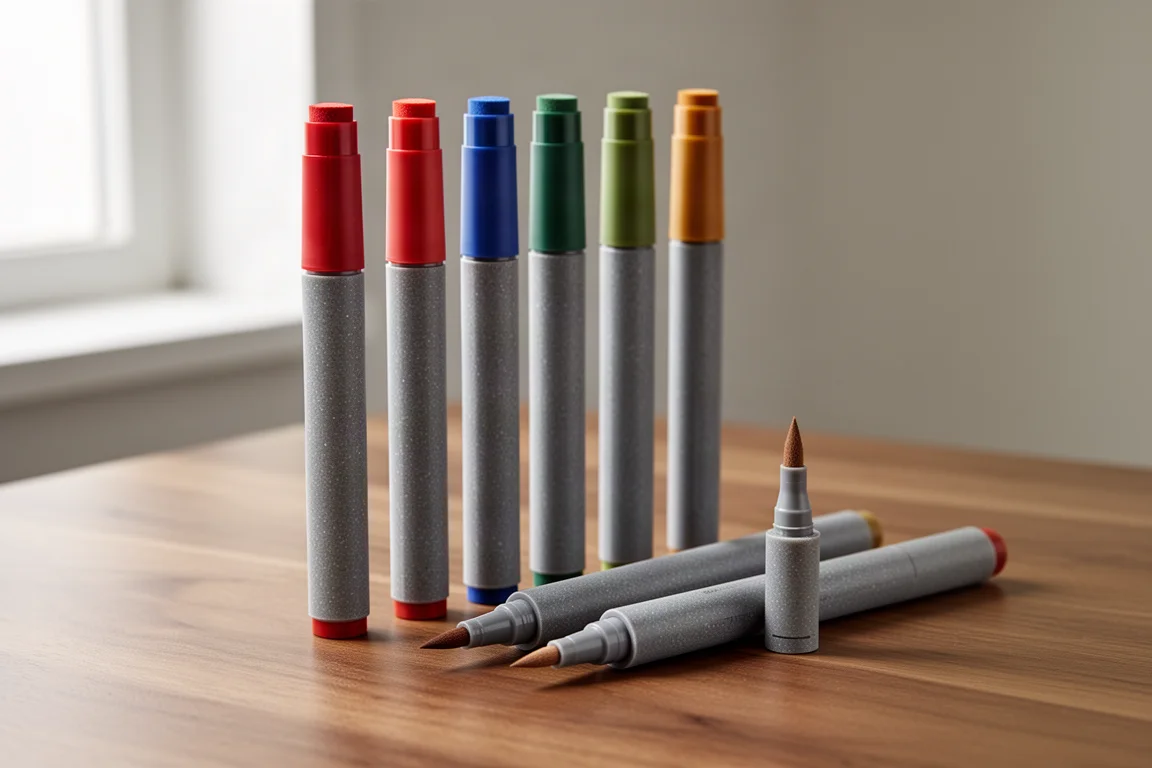
The barrels have a matte brushed gray finish with a very slight texture, and the cap and end cap are color-coded to the ink. Although the barrels are round, a small fin on the lid prevents rolling, and the cap posts securely on the back of the barrel while you work, so that safeguard stays in place even mid-session.
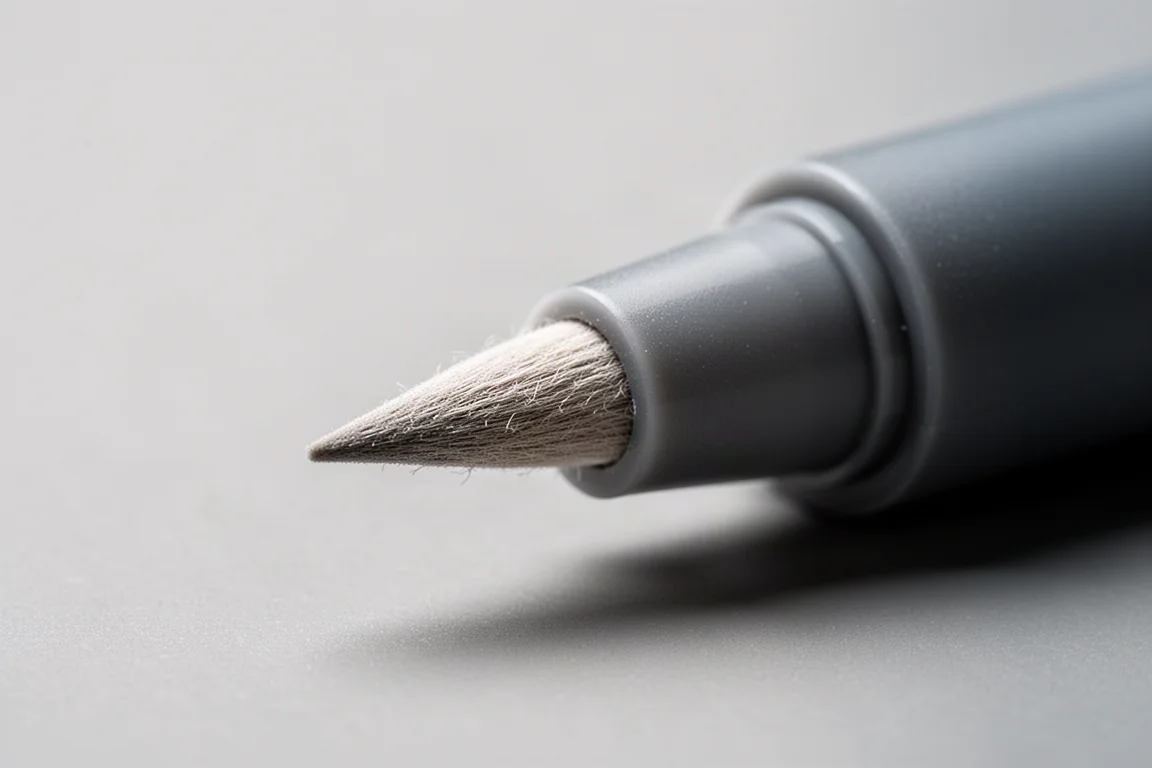
The nib itself is a high-quality felt tip rather than a traditional watercolor-style brush nib. It offers a little flexibility, but not the super-soft flex that some artists find difficult to control, which makes it approachable for detailed illustration, manga, lettering and calligraphy work. In testing over pigment liner ink, the pens did not smudge or feather the underlying line work. Where you apply the ink is simply where it goes.
How the Blending Liquid Performs
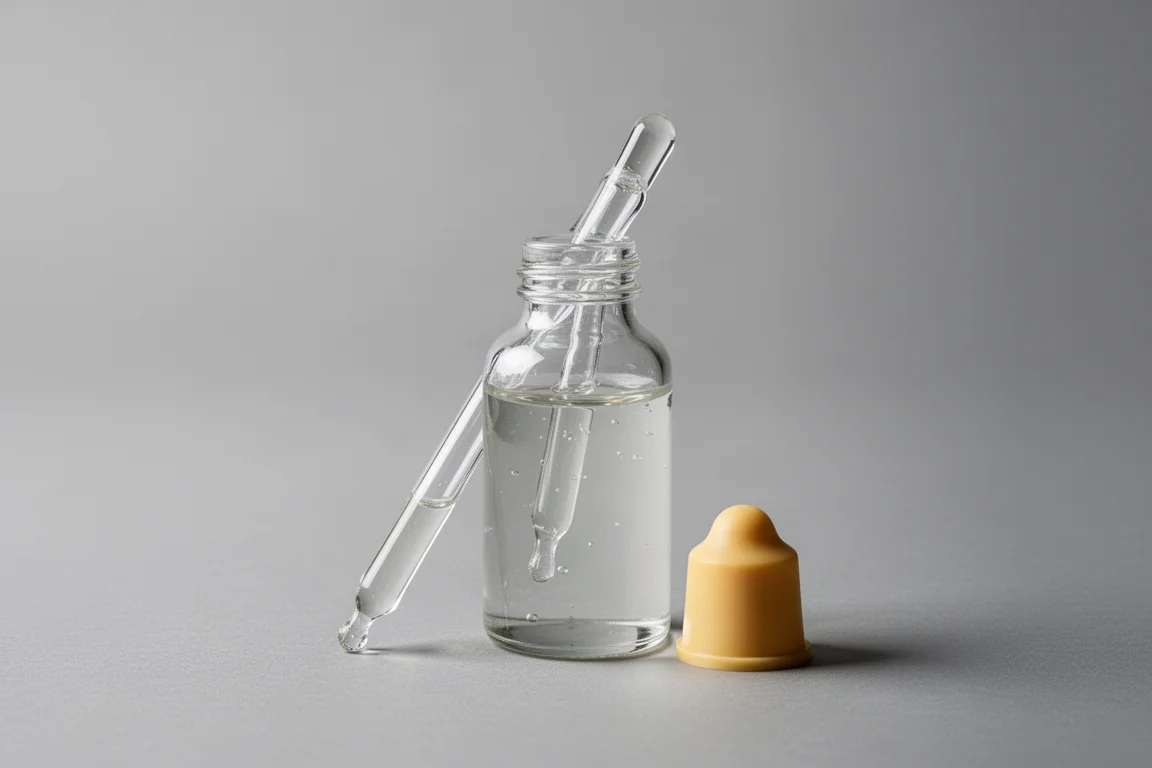
The Multi Ink blending liquid comes in a 50 ml bottle with a pull-off cap and a narrow applicator attached to the bottle. That applicator is a smart detail: it fits directly into the opening of a water brush, so you can fill the brush and get to work, or pour a little into a dish and use a traditional round or flat watercolor brush instead. It is odorless, which is a genuine advantage over solvent-based blending methods.
A small amount goes a very long way. A couple of light strokes of pen color, worked over with a little blending liquid, covered a surprisingly large area while keeping the color’s vibrancy. Like watercolor, over-diluting with more liquid will reduce tonal strength, but once a blended layer has dried it is permanent, so further layers can be built on top.
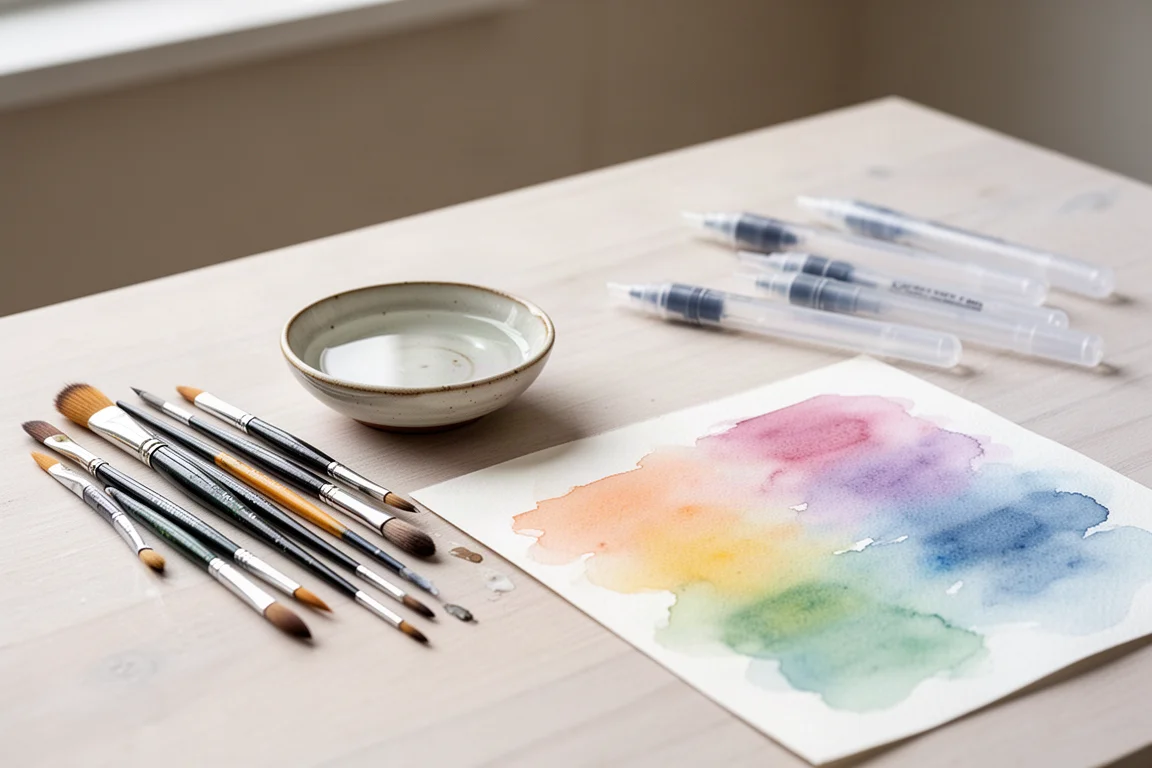
The techniques this opens up are extensive. You can lift color directly off the nib with a water brush and apply it like paint, apply a light layer of blending liquid first for a wet-on-wet feathering effect, or mix two pen colors into a new shade. Colors mix well, though the pigment is slightly staining, so a trace of the original color can remain underneath a blend. Layering other media on top also worked cleanly: watercolor pencil applied over dried pigment pen layers and soft colored pencils applied afterward disturbed nothing underneath.
Choosing Between the Two
If you want the full palette and maximum flexibility, the 60-pen set is the flagship, with smaller color-coded sets available in sizes from six pens up through 12, 24 and 36, plus open stock singles and themed sets such as portrait colors. Botanical artists, for example, can pick up just the natural color sets rather than the full range. The blending liquid is best treated as part of the same purchase decision, since it is what unlocks the mixed media effects the pens are designed for. A single 50 ml bottle will last a long time given how little is needed per session.
Conclusion
The Staedtler pigment brush pens are a strong all-rounder: vibrant pigment ink, solid lightfast documentation, a controlled brush-style nib, and recycled barrels. Paired with the Multi Ink blending liquid, they stretch into watercolor-like washes, color mixing and layered mixed media work without losing permanence. For illustrators, manga artists, letterers, urban sketchers and crafters alike, this is a pairing that earns its place on the desk.
Further reading
Related Reviews
Art Supplies
Art Pop Watercolor Pencils 48-Color Set: A Thoughtfully Designed Student-Grade Option
The Art Pop 48-color watercolor pencil set blends well, dissolves smoothly, and includes artist-friendly details like barrel-printed color names, all at an affordable price.
Art Supplies
Artics Acrylic Markers 3mm Review: Versatile Paint Markers With a Few Caveats
A 48-color set of water-based acrylic paint markers that blend while wet, dry permanent, and keep the price low, though safety transparency remains a question.
Art Supplies
Best Art Supplies Worth Your Money: Pencils, Pens, Paints, and Paper That Earned Their Spot
After years of daily use and testing, these are the pencils, pens, watercolors, gouache, brushes, sketchbooks, and erasers that stand above the rest.