MTB Drivetrains
SRAM T-Type Eagle Transmission Review: XX SL, XX, and the Entry Tier Compared
A close look at SRAM's hangerless 12-speed T-Type Eagle Transmission range, including the XX group set, long-term shifting performance, and what a full upgrade really costs.
Introduction
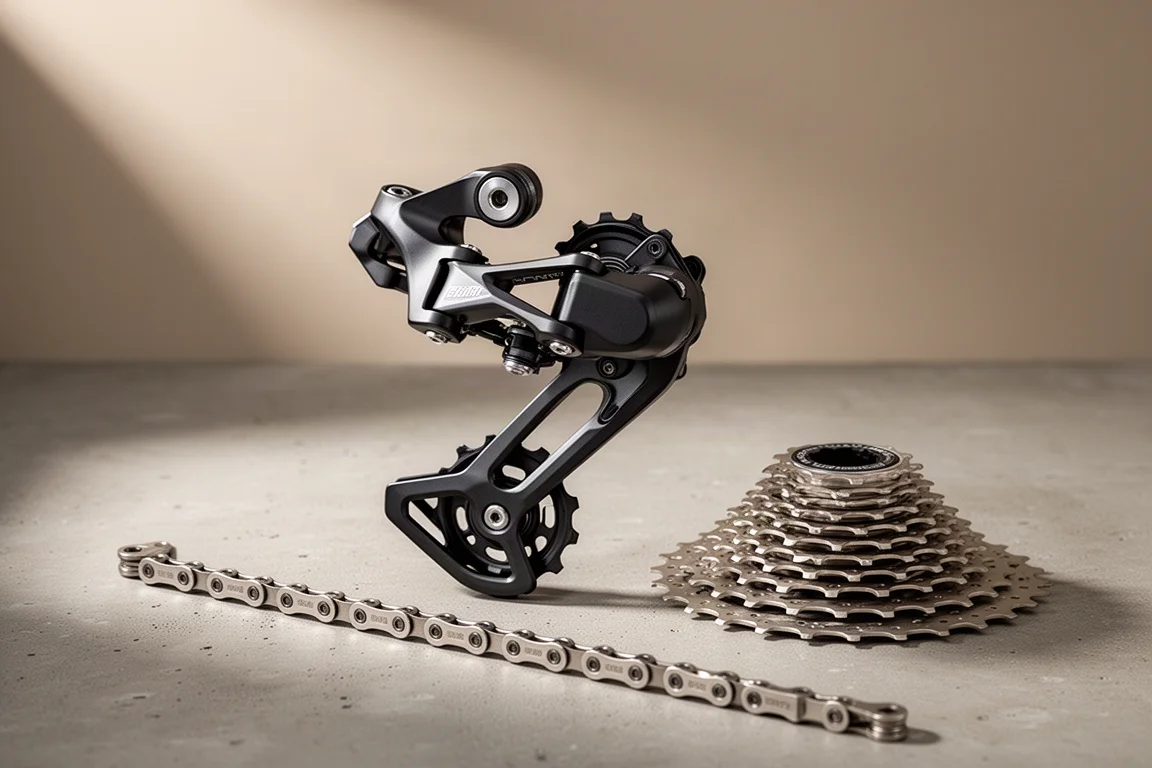
SRAM’s T-Type Eagle Transmission family is a 12-speed mountain bike drivetrain platform that removes the derailleur hanger entirely. Instead of hanging from a sacrificial tab, the rear derailleur clamps the frame at the rear axle using SRAM’s hangerless interface. The range spans three levels, XX SL, XX, and a more affordable entry group set, with prices that start at a serious figure and climb quickly. There is no backwards compatibility with earlier Eagle drivetrain parts, so moving to T-Type is a full commitment. Here is how the tiers differ, what changed on the derailleur, cassette, chain, and cranks, and how the system holds up over months of hard riding.
What SRAM Changed With T-Type
The headline change is Full Mount, SRAM’s name for the hangerless mounting system. Machined aluminium struts clamp the frame from either side at the rear wheel axle, so the derailleur is anchored solidly rather than hanging from a replaceable tab. SRAM positions this as the biggest product introduction in its history, and the goal is dramatically better shifting under load with easier setup.
Removing the hanger also removes the variables that used to require limit and B-tension screws. With the derailleur locked in a fixed position relative to the cassette, there is no distance variation to tune out. Riders can still make small inboard and outboard trims through the AXS Pod controller or the AXS smartphone app.

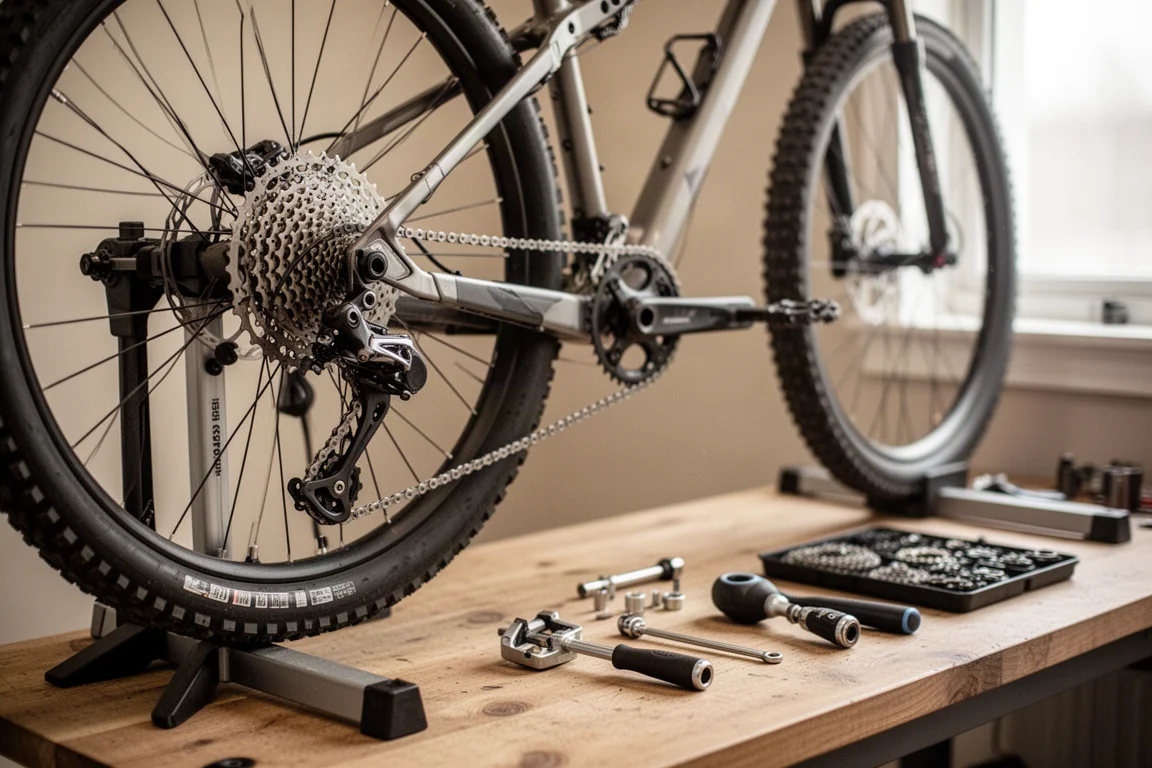
Setup is handled differently as well. Every derailleur has a cage mode button, previously known as cage lock, which holds the cage forward for taking out the rear wheel. A second position, the setup key, is used during installation. Engaging the setup key with the dedicated setup cassette sprocket sets the correct gap between the derailleur and the cassette, removing the need for B-tension adjustment. Chain length is defined by a chart that uses chainstay length and chainring size, which matters on full suspension bikes where those measurements vary.
Durability has been addressed too. An overload clutch protects the derailleur’s motor and gearbox during hard impacts, and the body sits 10 mm further inboard than previous Eagle AXS derailleurs to reduce the chance of contact with rocks. The widest section carries a user replaceable skid plate, the upper and lower parallelogram outer links can be swapped, and the cage unscrews from the knuckle without tools. Built-in fail-safes are intended to stop the chain dropping into the back wheel or jamming against the frame.
Cassette, Chain, and Crank Updates
One long-standing criticism of earlier Eagle cassettes was the large jump between the second largest and largest sprockets, a gap that became more noticeable with 10-52 tooth options. T-Type tightens the spacing at the top of the cassette, with the second and third largest cogs now measuring 38 and 40 teeth, both two teeth larger than before. The cassette uses SRAM’s alternating tooth thickness X-SYNC pattern, and the flat top chain is designed to sit on it in a specific way, with shift lanes that either allow or block a shift into the next gear. SRAM claims the system shifts cleanly under load, even through a 1,000 watt sprint on an e-MTB. The cassette is built around the 55 mm chainline of the new cranksets, which should reduce the angle between chainring and cassette and help wear life.
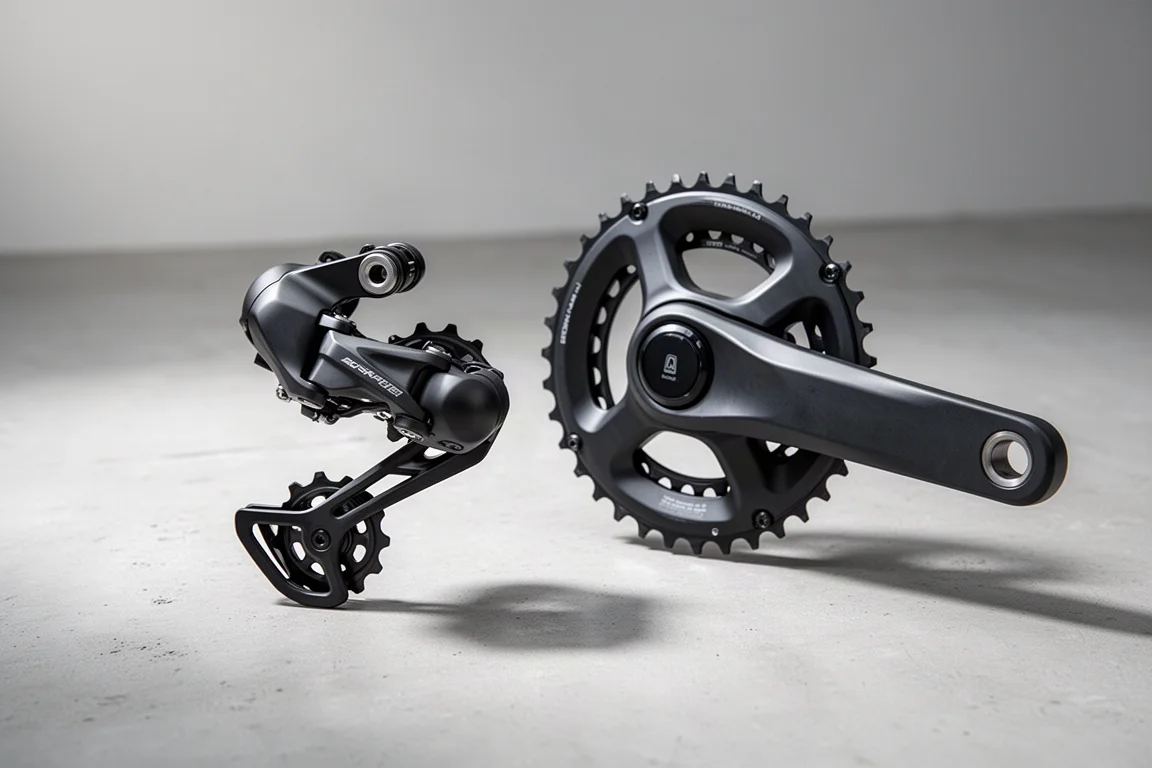
The chains are described as the strongest SRAM has produced, borrowing the flat top profile from its road chains while remaining incompatible with them. Cranks stay on the DUB bottom bracket standard but move from a three bolt direct mount chainring to the 8-bolt system used on the road side. The X-SYNC tooth profile is updated for the flat top chain. On XX and the entry tier, the chainring accepts a removable and replaceable two position bash guard. Every crankset in the range is power meter ready: XX SL uses a chainring based power meter, while XX and the entry tier use a Quarq unit housed inside the crank axle spindle.
SRAM T-Type Eagle Transmission: The Entry Tier
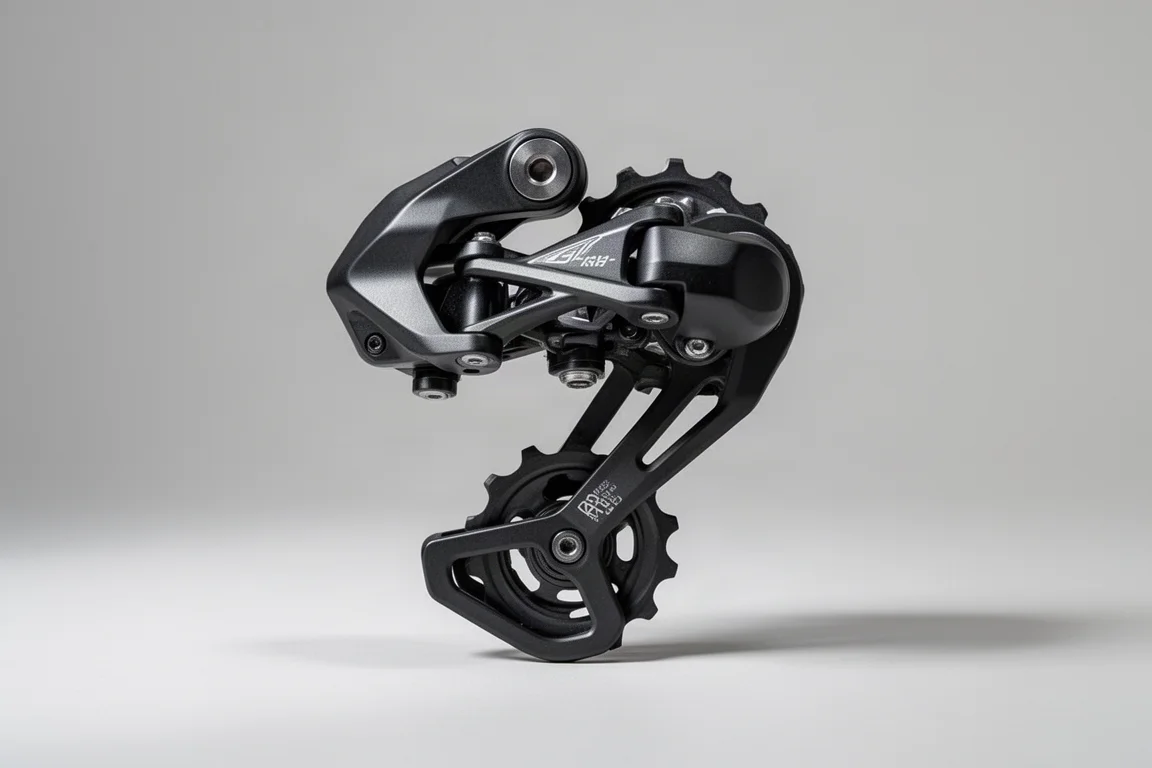
The most accessible complete T-Type group set keeps the same derailleur architecture and the same shifting behaviour as the rest of the family, with a quoted price of around £1,715 or $1,599 for a full transmission. The differences sit in the details rather than the fundamentals. Instead of the Magic Wheel lower pulley found higher up the range, this tier uses a regular lower pulley wheel.
SRAM XX T-Type: The Balanced Tier
XX sits in the middle of the range and adds the Magic Wheel, SRAM’s name for the lower jockey wheel whose toothed outer section rotates independently of its centre. If something blocks the pulley, the outer portion keeps turning, which reduces the chance of a chain jam and the damage that can follow. XX is quoted at around £2,195 or $2,049 for a complete transmission.
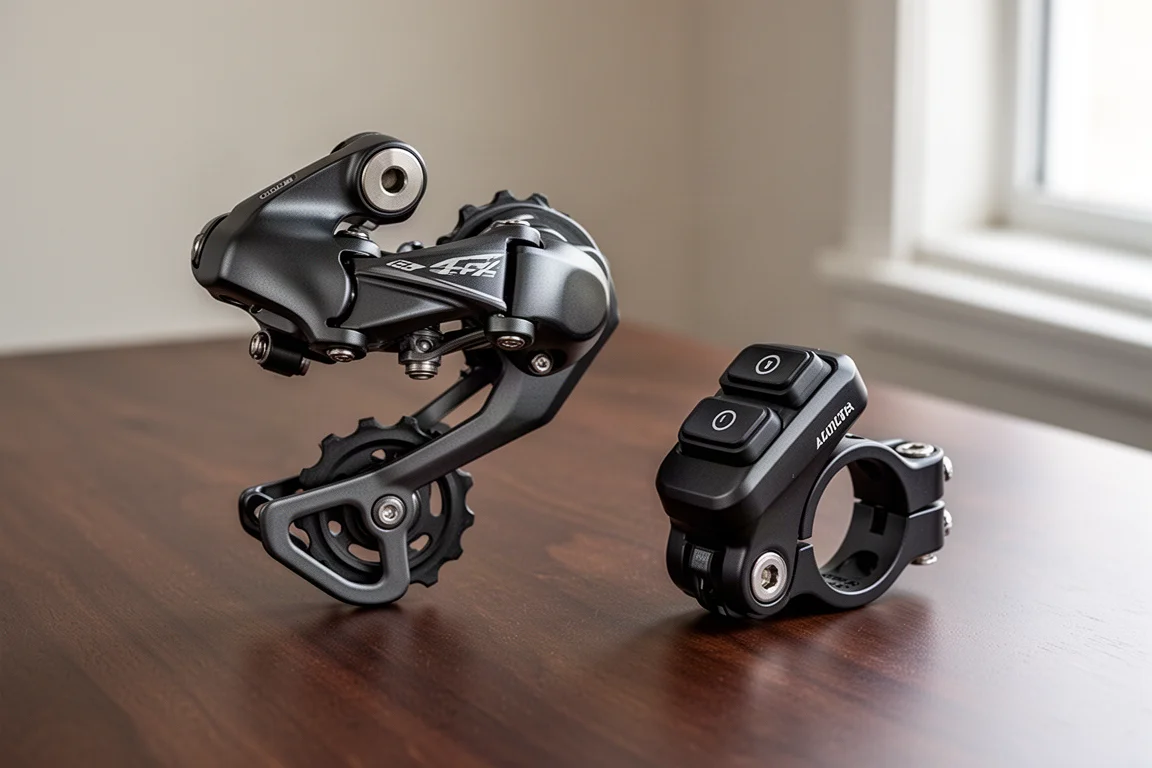
The controller side of the system has changed too. AXS Pod controllers use two stacked buttons rather than a rocker paddle, and the buttons can be reassigned in the AXS app, for example to control a Reverb AXS dropper post or Flight Attendant suspension. The Ultimate version of the pod takes interchangeable concave or convex buttons, and the pods are modular, so a broken clamp or a damaged electronic section can be replaced on its own. Two mounting options are offered. The Infinity clamp is a figure of eight shape whose interface matches handlebar diameter, so the pod can be mounted either way around, while the bridge clamp replaces the Matchmaker X direct mount system and slides from side to side rather than sitting in two fixed positions.
Button feel has been revised as well, with larger, chunkier buttons that are easier to find by touch and a higher click threshold to reduce accidental shifts on rough ground.
SRAM XX SL T-Type: The Lightest Tier
XX SL is the lightest and highest performing group set in the family, and the most expensive, quoted at around £2,890 or $2,699 with the optional power meter. It shares the Magic Wheel lower pulley and the full set of replaceable derailleur components with XX, and it uses the chainring based power meter rather than the spindle mounted Quarq unit found lower down the range.
Real-World Shifting and Durability
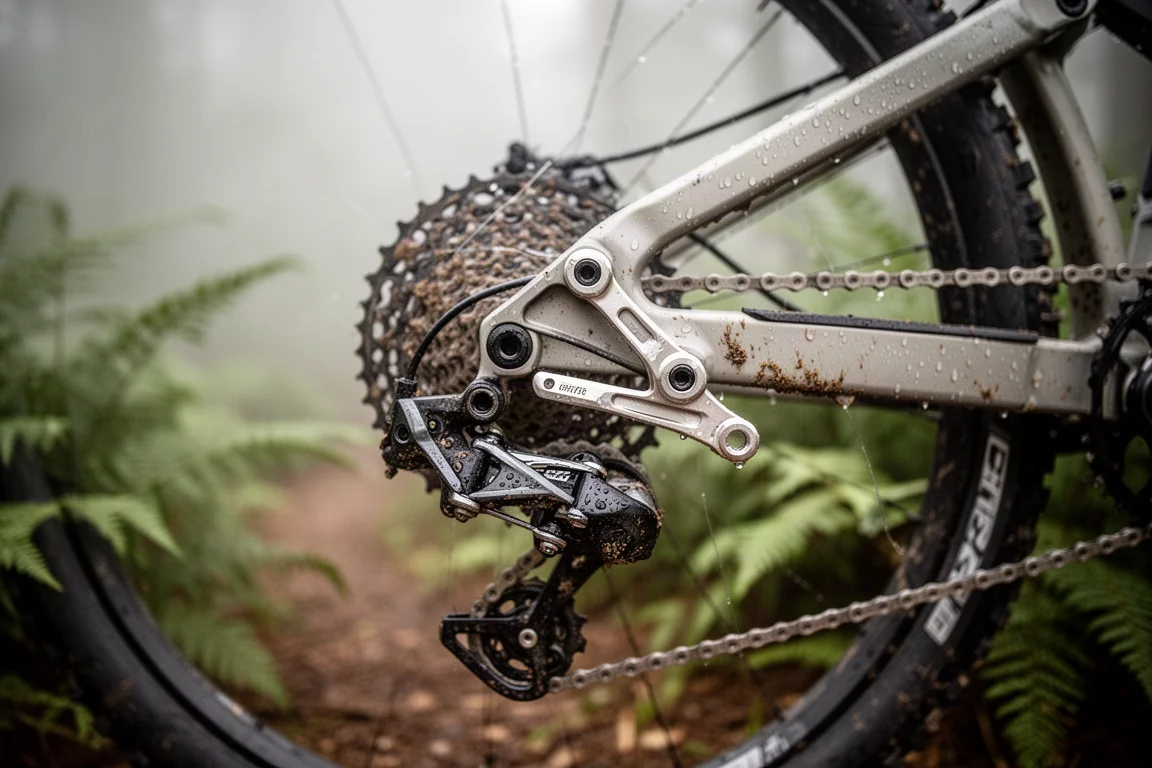
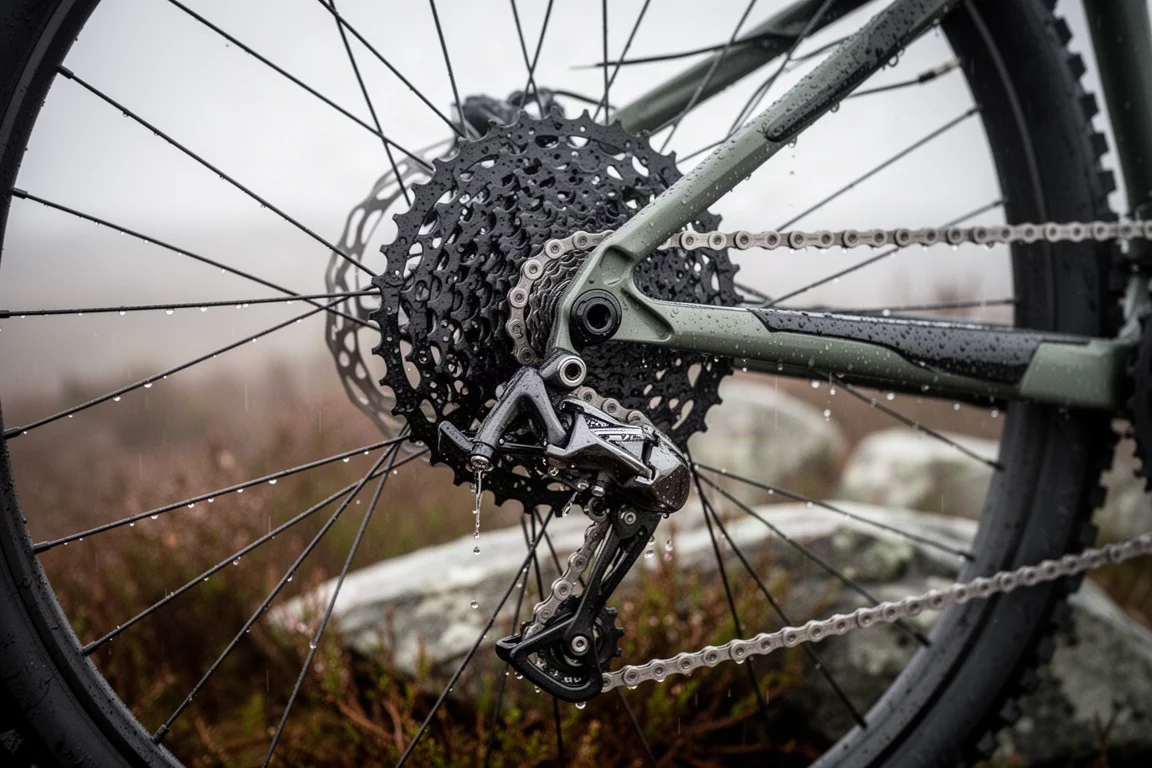
Extended testing covered more than 1,000 km and 35,000 m of climbing and descending, including a cold, wet, and occasionally frozen winter with dust, sand, and rocks thrown in. The derailleur picked up obvious cosmetic scars but kept its day one function: shifts stayed crisp, the pulley wheels remained free of slop and play, and the teeth showed no significant wear. Concerns that removing the sacrificial hanger would invite expensive frame or derailleur damage did not materialise in use.
Shifting under power is where the system separates itself from what came before. Gears land immediately after a button press and behave the same way every time, and shifting actually becomes smoother and quieter when the pedals keep turning, which encourages riders to stay on the gas through climbs and sprints. No missed shifts were logged during the test period, and no chain was dropped even though the test bike ran without a chain device. The stronger clutch contributes to a quieter bike overall.
There are limits worth knowing. Dumping most of the cassette in one sweep is not possible, because the shift ramps and cassette mapping hold the chain until the next gear is ready. That behaviour is noticeable in a work stand but effectively invisible on the trail, where quick successive shifts still feel immediate rather than lethargic. Cassette and chain wear measured minimal, the polished cassette teeth resisted scoring, and the chain showed no measurable stretch against a new one. The cranks shrugged off rock strikes and felt solid and stiff underfoot, while the chainring and bash guard came through hard stops on rocks and fallen logs without damage or deformation.
Compatibility, Setup, and Buying Advice
T-Type is a whole-system design, and it does not work with current generation Eagle drivetrain parts. The two exceptions are the existing AXS controller and battery, which remain compatible, and the new AXS Pod controllers, which work with both generations. The frame must support SRAM’s UDH hanger standard, because the derailleur replaces the hanger entirely. Riders without a UDH frame cannot fit the system at all, which makes this an upgrade that may also mean a new bike.
Setup, once the frame requirement is met, is simpler than previous Eagle drivetrains. The setup key and dedicated setup sprocket remove the B-tension guesswork, chain length comes from a chart, and fine trimming happens through the pod or the app. What remains is cost. Full transmissions are priced at the premium end at every tier, and there is no partial upgrade path, so the decision comes down to how much value is placed on shifting under load, quiet running, and the durability described here.
Choose the entry tier if the goal is T-Type shifting without paying for the lightest components, XX if the Magic Wheel and a middle price point make sense for the build, and XX SL if weight and the chainring based power meter are the priorities.
Conclusion
SRAM’s T-Type Eagle Transmission rethinks the derailleur, the cassette, the chain, and the controls as one system, and the result is a drivetrain that shifts reliably under power, runs quietly, and holds up to hard use. The trade-offs are clear: no backwards compatibility, a UDH frame requirement, and prices that make this a considered purchase rather than an impulse upgrade. For riders who want the current benchmark in mountain bike shifting and can accept those terms, the range makes a strong case.
Further reading
Related Reviews
Cycling Components
AliExpress Cycling Bargains 2026: Ten Parts Worth Buying and One to Avoid
A practical guide to low-cost cycling parts, from a Pass Quest chainring and ZTTO drivetrain kit to Ride Now TPU tubes, plus the items that disappointed and how to shop safely.
Mountain Bike Wheels
Berd PolyLight Spokes and a Custom Wheelset: Noble TR35 G2 Rims and Onyx Vesper Hubs Tested
A trail-tested look at Berd PolyLight fabric spokes alongside Noble Wheels TR35 G2 carbon rims and Onyx Racing Vesper hubs, including the weight saved and the trade-offs to weigh up.
Cycling Pedals
Best Bike Pedals 2026: Road, Trail and Flat Pedal Systems Compared
A practical guide to the main road, off-road and flat pedal systems, covering the designs worth buying, the fit options that matter, and the ones to skip.