Mountain Bike Drivetrains
SRAM GX Eagle Transmission Review: Entry-Level Wireless Shifting Without the Compromises
SRAM GX Eagle Transmission brings hangerless wireless shifting to a lower price point. Here is what it includes, how it performs, and who should consider it.
Introduction
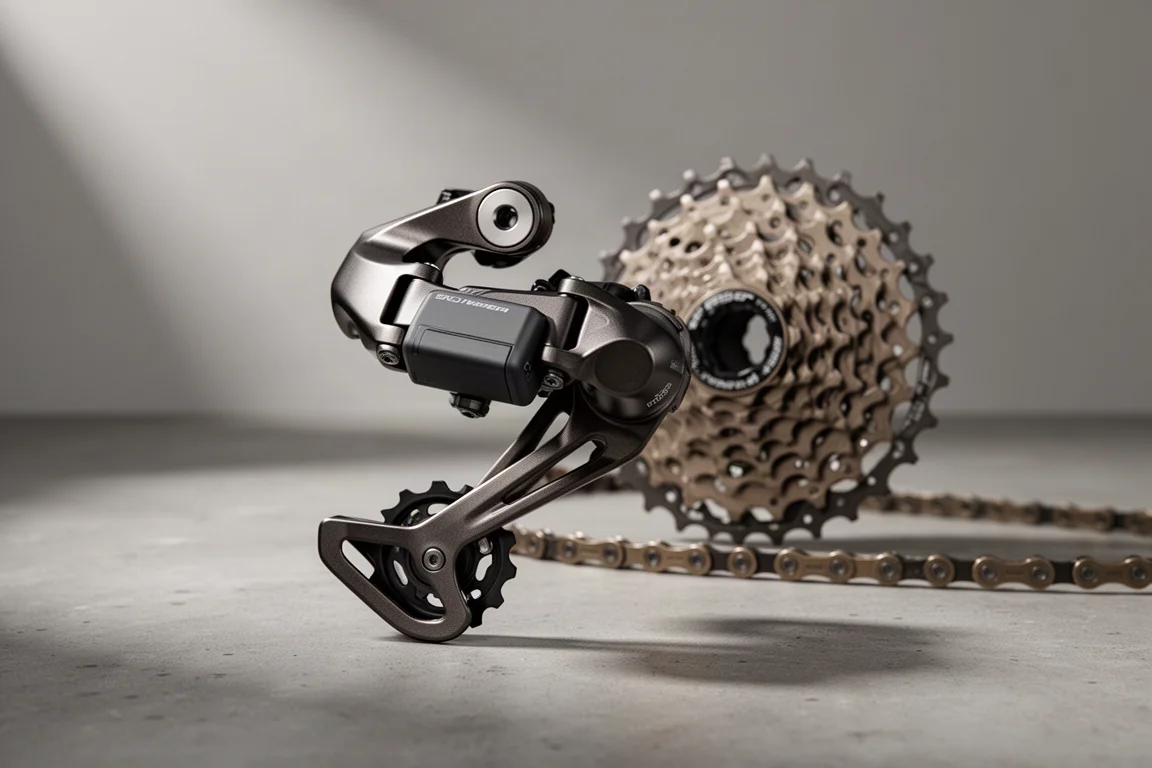
SRAM has spent the last decade shaping how mountain bike drivetrains work, and the arrival of its hangerless Transmission family pushed that idea further than most riders expected. What matters for anyone shopping on a budget is how quickly that technology has moved down the range. It took less than two months for the platform to trickle down, and the result is GX Eagle Transmission.
The headline is straightforward. GX Eagle Transmission is a complete wireless, hangerless groupset priced at 1,180 pounds or 1,099 dollars, which is roughly 200 pounds or 200 dollars more than the older GX AXS drivetrain. It is still far from cheap, but it costs less than two-thirds of the previous entry point to the Transmission ecosystem, XX Eagle Transmission, at 1,715 pounds or 1,599 dollars.
That price gap raises the obvious question: how much of the flagship experience actually survives the cost cutting? The answer, based on real trail time, is more than you might expect.
Who the SRAM GX Eagle Transmission Is For
This groupset is aimed at riders who want the feel and the shifting logic of SRAM’s newer Transmission platform without paying flagship money. If you have been curious about hangerless mounting and fully wireless shifting but could not justify the XX price, GX is the version that makes the conversation practical.
It is also the sensible choice for riders replacing a worn mechanical or first-generation AXS drivetrain on a frame that already uses the UDH standard. That last point is not optional. The hangerless interface bolts directly to the frame through the wheel axle, so if your bike does not use UDH, this groupset will not fit at all.

The appeal is strongest for trail and enduro riders who ride hard terrain regularly, value a quiet bike, and want shifting that keeps working when the trail gets rough. It is equally relevant for riders who simply dislike cables, batteries in the wrong places, and the fiddly setup rituals of traditional drivetrains.
Main Strengths
The standout quality of GX Eagle Transmission is the shift itself. Each change is crisp, smooth, and precise, and it only gets better the harder you pedal. There is no need to back off the power to change gear, even at maximum effort, and shifts that would grind on a conventional drivetrain come through smoothly and quietly.
Transmission controls shift timing by waiting until a usable shift ramp is available on the cassette. That approach has drawn some grumbling about shift speed, but in practice the changes do not feel slow, and they never feel like they need to be faster. By removing the possibility of an overzealous derailleur moving before the cassette is ready, SRAM has eliminated the noisy, clunky, grinding character of missed shifts.
Clutch tension has also increased over the previous generation. Chain control is noticeably better than on GX mechanical and earlier AXS drivetrains, which makes the bike quieter over rough ground. The fixed full-mount design removes the floppy knuckle and bolt of older AXS derailleurs, and that damps chain slap and noise further.
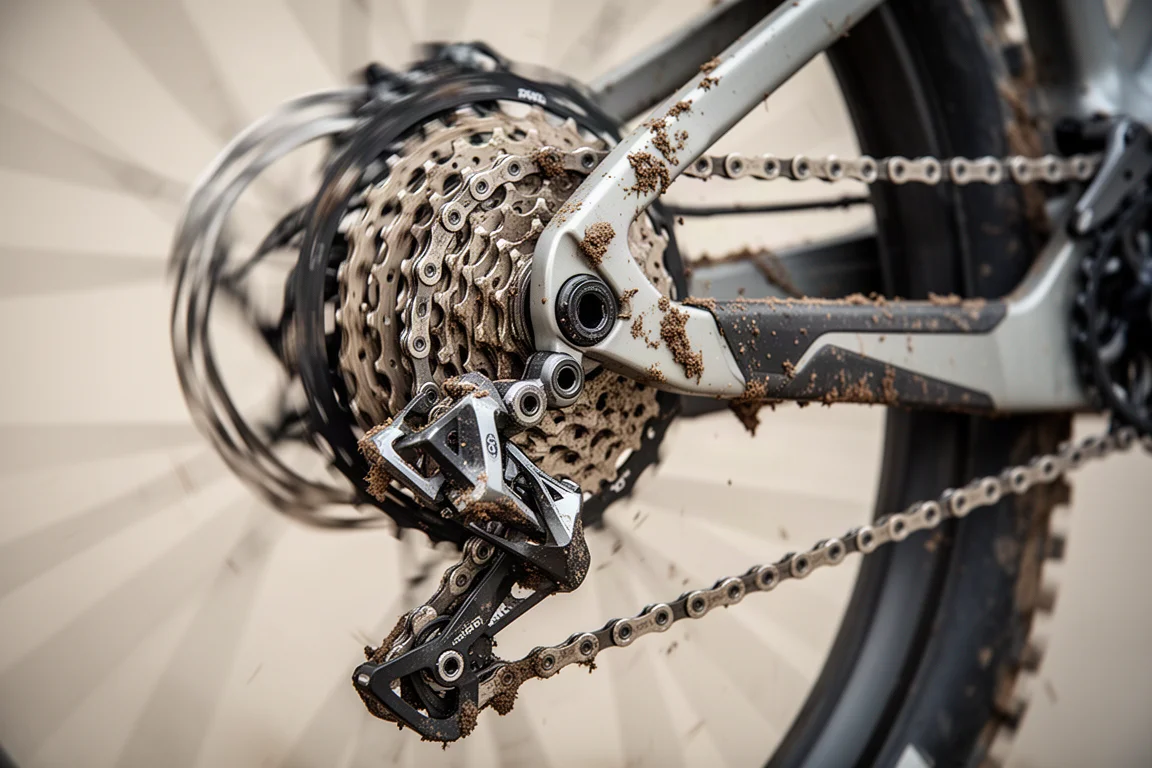
The relationship between shifter and derailleur is different here too, and it shows. On older SRAM groupsets, a top-tier shifter feels distinctly better than a lower-tier one doing the same job. That hierarchy does not carry over to Transmission. GX feels as good as XX, because the physical connection between the shifter and the derailleur is gone.
Cassette ratios match the X01 Transmission spread, so the jump between the 52-tooth bailout gear and the 44-tooth second gear is less pronounced, which means smaller changes in cadence and speed when you drop down the range.
Installation and Setup
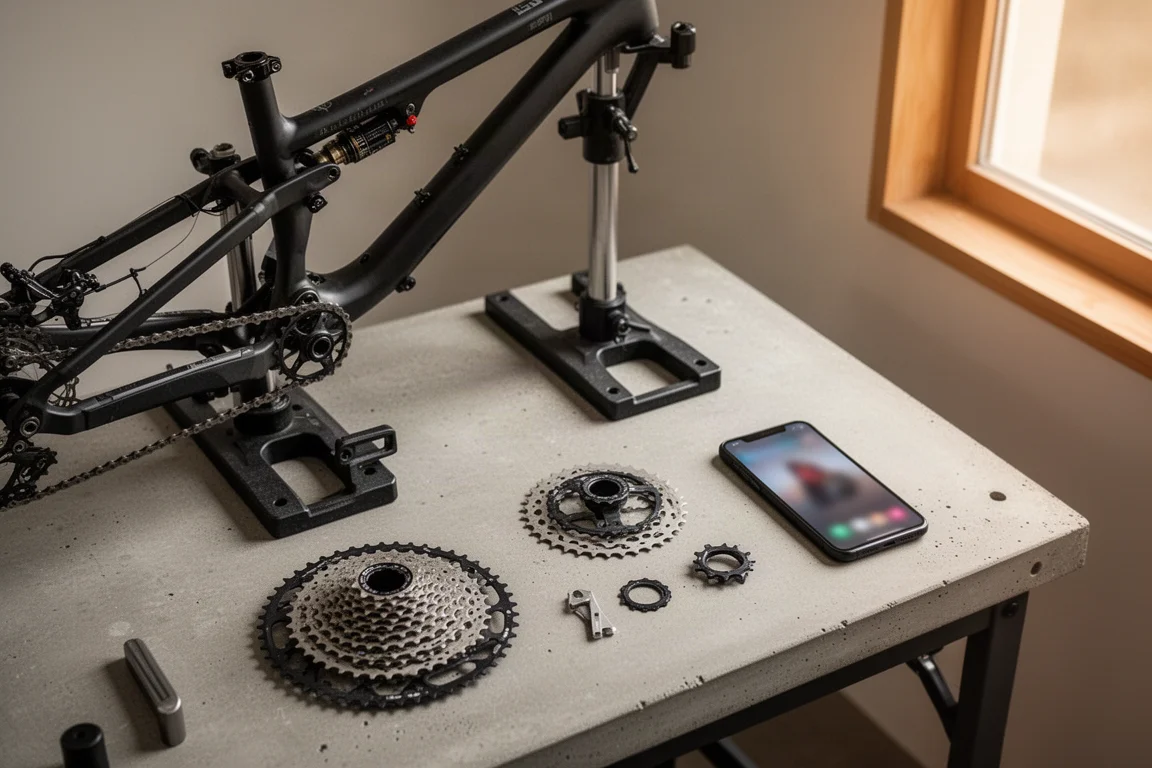
Setup looks intimidating at first because it differs so much from what came before, but in reality it is intuitive and quick. Fitting every component to a test bike took less than 45 minutes from start to finish, and it produced the promised full-mount setup with no fuss.
The bigger change is what you no longer need to do. There is no measuring the cassette and derailleur chain gap with a dedicated tool while the bike sits at sag, which has always been awkward with only one pair of hands. Connecting the pod controller was simple, and linking it to the smartphone app was just as easy. Anyone who has used a previous-generation AXS system will recognise the process.
Cassette, Chain, and Cranks
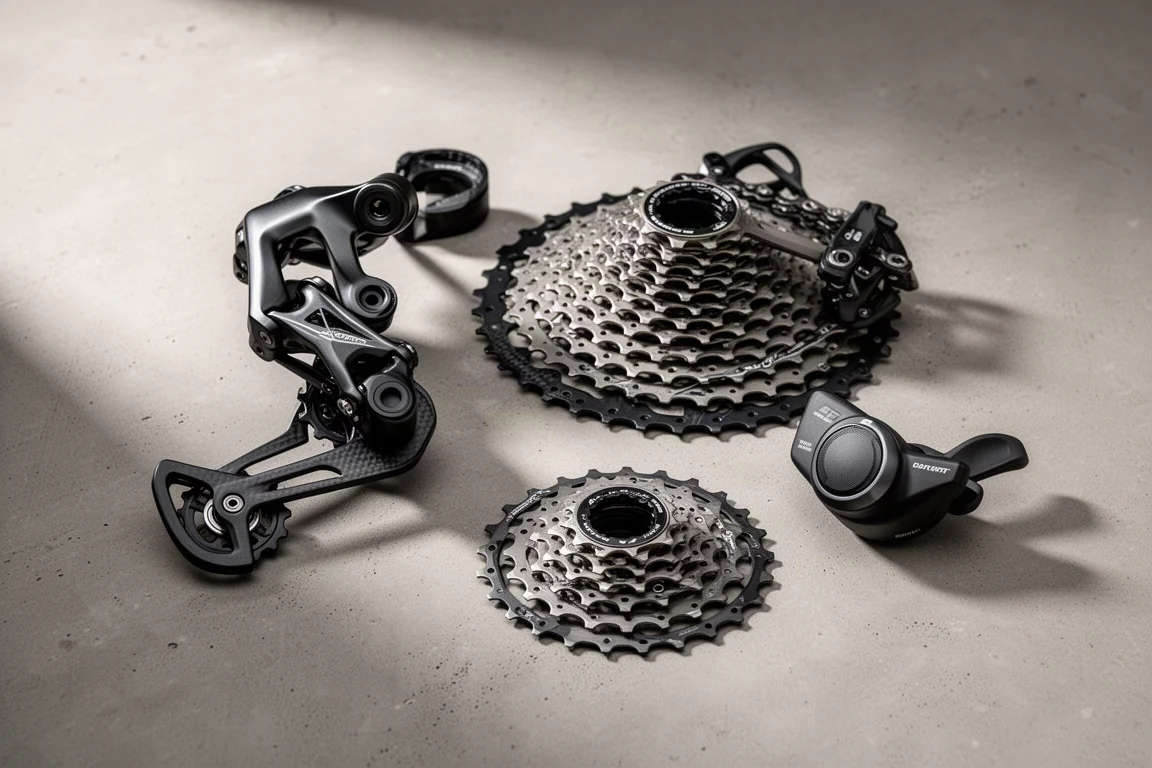
The cassette keeps the full 520 percent range and 10 to 52-tooth spread of its more expensive counterparts, with the larger 38 and 44-tooth cogs at the upper end arranged to optimise the steps between gears all the way up to the 52-tooth plate. A red setup cog is included to make installation close to foolproof.
Where GX differs is construction. Instead of the single-piece machined X-Dome design used on the higher tiers, GX pins the cogs from gears one to eight together and uses single-piece construction for the final four gears. This adds weight, but the cassette is nickel plated, which SRAM says improves durability and reduces noise.
The chain is a more humble affair, using solid rather than hollow pins and link plates with SRAM’s flat top profile. It is rated as suitable for e-mountain bikes. The cranks are forged aluminium with a 55 millimetre chainline for a better chain angle when paired with the Transmission cassette, and they use the same 8-bolt mounting pattern as the higher-end groupsets. The independently removable two-piece bash guard is composite here rather than aluminium, and there is no carbon crank option.
One small but useful detail for anyone who rides in wet or gritty conditions: the derailleur’s inner cage is steel rather than aluminium, as on the more expensive versions. That saves cost and adds a little weight, but the trade-off is said to be better durability.
Things to Consider Before Buying
The most important consideration comes before price: frame compatibility. GX Eagle Transmission uses the hangerless interface and attaches through the wheel axle, so it requires the UDH standard. There are no traditional adjustment screws, and there is no workaround for frames that do not use UDH. If your bike is not compatible, this groupset simply will not fit.
Weight is the second factor. The steel inner cage and the pinned cassette construction both add grams compared with XX, and there is no carbon crank option at this tier. For most riders this will not be noticeable on the trail, but anyone chasing the lightest possible build should factor it in.
SRAM has also reconfigured the derailleur’s gearbox compared with the higher-tier units without publishing details on how or why, which is worth knowing if you like to understand exactly what you are buying.
The battery position is different from the earlier XX and X01 Transmission derailleurs. GX moves the battery inside the hangerless interface struts rather than at the rear, which SRAM says improves impact protection and keeps the derailleur shifting sharp through the hard life a rear derailleur leads.
Finally, the cost saving is real but relative. At 1,180 pounds or 1,099 dollars, this is the most affordable route into Transmission, not a budget drivetrain in absolute terms.
Buying Advice
If you are already committed to the Transmission platform, GX is the version that makes the most financial sense. It delivers the same shift feel as XX for less than two-thirds of the price, and the areas where SRAM cut cost, the cage material, the cassette construction, and the crank finish, are the ones you are least likely to notice while riding.
If your bike is UDH compatible and you want wireless, hangerless shifting, this is a straightforward recommendation. If your frame is not UDH compatible, no amount of enthusiasm will help, so check that first.
E-bike riders have a dedicated option too. There is an e-bike groupset at 1,015 pounds or 949 dollars that uses identical components but ships without a crank set. Riders who want a fully matched setup can buy an e-bike compatible GX Transmission crank set that uses the ISIS bottom bracket interface.

There is also a cosmetic angle for anyone building a complete bike around this groupset. New bronze Stealth Code and Level brakes are sold separately to tie in with the GX Transmission launch. They join the Ultimate and silver brakes in SRAM’s range and use a sleeker stealth architecture that places the master cylinder closer to the bar for a cleaner cockpit.
Riders upgrading from an older GX drivetrain should expect a clear step forward rather than a sideways move. That verdict holds even after limited time on the trail, though long-term durability is still being tested over more miles.
Conclusion
GX Eagle Transmission succeeds at what it set out to do. It brings the feel of SRAM’s flagship Transmission drivetrains down to a lower price point without gutting the experience, and it does so with the same crisp, quiet, precise shifting that defines the platform.
The compromises are real but modest: a little more weight, a steel inner cage, a pinned cassette, and a composite bash guard. What is not compromised is compatibility and setup simplicity, provided your frame uses UDH.
For riders who want hangerless wireless shifting and can meet the frame requirement, GX Eagle Transmission is the version of the platform that makes the most sense.
Product link
View more details for SRAM GX Eagle Transmission
This product is mentioned in the review. Check the specifications, options, and compatibility before buying.
View more details for SRAM GX Eagle TransmissionFurther reading
Related Reviews
Mountain Bike Drivetrains
TRP EVO 12 Drivetrain Review: A Capable Alternative That Is Hard to Recommend
The TRP EVO 12 is durable, quiet over rough ground and paired with one of the best shifters around, but pricing and shift quality keep it behind its Shimano and SRAM rivals.
Mountain Bike Drivetrains
TRP EVO 12 Review: A Serious Drivetrain That Is Hard to Recommend
TRP's EVO 12 shifts well, feels durable, and offers some of the best shifter ergonomics around, but its pricing and shifting polish make the established options easier to justify.

Backpacking Gear
Building a 10 lb Base Weight: An Ultralight Backpacking Gear List
A practical walkthrough of the ultralight pieces behind a 10 lb base weight, from a 765 g pack and a roomy one-person tent to a full camp chair and a dependable water filter.